THE GASLIGHT DOGS

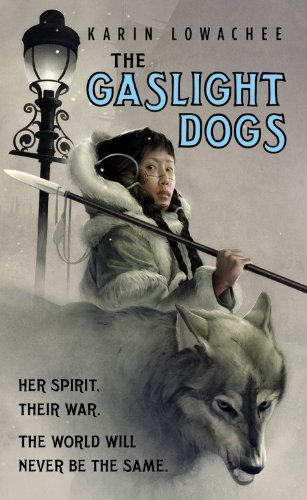
The Gaslight Dogs

By Karin Lowachee

Reviewed by Briana Stone

Before reading The Gaslight Dogs I thought the story to be of shape shifting. However after reading it, I realized the story went beyond shape shifting and even more complex then I could have imagined. This is a true journey into fantasy with a familiar tone of colonialism, culture, religion, politics, the search to find oneself, and the struggle to maintain one’s identity.

The Gaslight Dogs is based on two perspectives of two different people living in a world colliding with each other’s ways of life: the Ciracusan (Kabliw) army who are trying to gain control of the land and the Abo (Aniw) people who inhabit the land. The terms of the groups of people shift from whomever’s perspective it is. Sjennonirk is the femaleAkagago (Spiritwalker) of the Aniw tribe. She references the Aniw and Kabliw. Captain Jarrett Fawle is a Ciracusan military man who references Circacusan and Abo.

The story begins with the Aniw people being visited once again by the Ciracusan army that travel by ships to the North shores. Sjennnonirk realizes this visit is different from the rest she has seen because they have brought guns. Father Bari, a priest representing the church of the seven deiteies, has befriended the Aniw and tells her that the guns come on the army’s orders and there was nothing he could do to stop it.

“These Kabliw, these people of the boats, went where they would and did as they pleased” (pg. 1).

Sjennonirk is thrown into a foreign atmosphere of ship and of city when taken prisoner as a murderer. It is on the ship that Father Bari warns her not to speak of her spiritwalker ways. However she finds herself making a deal with General Cillein Fawle to gain her freedom by teaching his son about her spiritwalker rituals. General Fawle’s son, Captain Jarrett Fawle is reluctant to learn anything about the Abo as he refuses to accept them for who they are.

Jarrett is a man struggling with who he is. He despises his father and fights with his own racist views of the Abo people. Keeley, an Abo tracker from the Wishishian tribe is ordered by General Fawle to assist Jarrett and protect Sjennonirk. Keeley is a silent character but an important part of the story. A striking similarity to the residential school system in Canada comes into play when Jarrett meets Keeley and tries to figure out why he is helping and why he should trust him:

“Transplanted children, taken from their tribes and reared in Ciracusan schools. Not with Ciracusan children, though. The idea had been to tame them. Instead they had became merely trained and like wild beasts, they found ways to disobey” (Pg. 68)

Jarrett slowly discovers he may be more similar to these two Abo characters then he thinks. Jarrett disagrees with his father’s orders to communicate and learn from Sjennonirk. He simply wishes to return to the open field of his army’s position, where he feels more at home.

I was quite interested in the way Sjennonirk maintains her identity regardless of the obstacles she faced. She is not use to being locked up or wearing the Kabliw fabrics and she refuses to eat the unfamiliar food except for bisuits. Sjennonirk yearns for her freedom and the familiarity of home:

“Where do you think you’re going?” His voice approached behind She kept her eyes closed.

“I don’t want your world.”

“Well, you’re stuck with it.”

“I can’t breath here!” She let go of the gate and turned around, pressing her back to it, to feel the cool lines through the dress. Not quite like lying on the ice, but better than too much heat, the sticky pull of the dress when the day was at its height.

“Why can’t you breath? Just slow yourself down” He stood more then an arm’s length away, white-shirted under the gaslights, untucked as usual. He seemed not to care when the general was still away. He was unshaven and untrustworthy, and these were the first words he’d spoken to her in four days.

“Your World is a box.” She gestured up to the house.

“You live in boxes with lids. You keep yourselves in. This isn’t my world!”

“I can’t help that. You’re her now”

Her heart ran, but it had nowhere to go. (Pg. 152)

By the middle of the story Jarrett is forced to relate to the Abo while trying to keep the trust of his army’s men. It is an uncanny turn of events. I was excited to learn about the teachings and skills of Sjennonirk and Jarrett’s cooperation. Throughout the book I felt a spiritual connection to Sjennonirk and an empathetic connection to Jarrett.

Sjennonirk encounters Ciracusan (Kabliw) children being orphaned by the war between the Ciracusan army and the Soreganee tribe:

“War made orphans more readily then it did heroes.” (Pg. 258)

“They collected the children from the orphanage in the city-–a place where young ones without family were kept, an idea she did not understand. Why didn’t some other family take them in? with all the seemingly endless Kabliw in this place, why would children end up all in one house, with only a few adults to mind them and no family but each other?” (Pg. 314).

There is a mysterious and rebellious Abo warrior named Qoyotariz from the Soreganee tribe who leads his own army in protecting the land from the control of the Ciracusan Army. We are introduced to him during the first war battle and reintroduced to him towards the end.

As I got near the end of the book I was anxious it would end to soon and too short but was surprised at the intense outcome. It’s the making of a cliffhanger for a series of books. It’s amazing how Sjennonirk and Jarrett are two of a kind but with extreme moral differences. I wanted to read more and find out where the two characters end up.

It did not take me long to feel a sense of poetic writing in The Gaslight Dogs unlike any science fiction or fantasy book I’ve previously read. I was emotionally and visually drawn into the scenes and characters. I felt like the different scenery was painted with emotion as I read into the story. The implications of dreams and the use of tattoo art is unique. The story takes you into the minds of two people who are living in a world that does not know the word colonialism but lives it with an added fanciful twist to its definition.

Briana Stone is a Dakota Sioux and Plains Cree Native from Saskatchewan. She soughtresidency in Toronto, Ontario to attend post-secondary school for art. Establishing herself as a youth artist in the Native community, Briana assisted workshops, art projects and murals. She took some time away from art to pursue an education in community work, later to return to art. As an artist today, she has done work with animation, murals, graphic design and photography with her main focus on graphic design.

Tune in to Black Coffee Poet Wednesday June 1, 2011 for an inclusive interview with Karin Lowachee.

Posted in Uncategorized | Tagged , , , | Leave a comment

TARA MICHELLE ZINIUK READS HER POETRY

I first met Tara-Michelle Ziniuk at an event at Buddies In Bad Times theatre last year.  We both read alongside the ever awesome Eli Clare.  That was one of the biggest moments for me as a poet.  

Reading alongside Tara-Michelle for the second time this past May, she took some time to read for you all.

Enjoy!

Tune in to Black Coffee Poet May 30, 2011 for a review of The Gaslight Dogs by woman of colour fantasy writer Karin Lowachee.

Posted in Poetry | Tagged , , , | Leave a comment

INTERVIEW WITH TORONTO POET TARA-MICHELLE ZINIUK

Tara-Michelle Ziniuk is a writer, performer, activist, and new mother working in Guelph and Toronto. She has been published across North America and is the author of two collections of poems: Emergency Contact and Somwhere To Run From.

BCP: Why poetry?

TMZ: I’m completely ADD, is part of it. I also love poetry and playing with language. I think poetry offers an avenue to write literal things that are absurd even if true, and have them questioned and challenged. I like the juxtaposition of being able to be completely literal at times and entirely language based at times. Ultimately poetry is smarter than me and I like the challenge.

BCP: What is your process?

TMZ: To date, I’m a writer who writes in spurts when I’m inspired. I’m good at setting aside time to write query letters, to edit— to do the “work” of writing. But the creative part isn’t as easy for me to schedule. I’ve had writing groups in the past, which have been good for offering some set time as a structure. I don’t imagine I’ll become very regimented, but right now I want to write longer prose and do think I need to figure out something less variable in terms of structure.

BCP: How long have you been writing poetry?

TMZ: Definitely since I was 9, in my memory. I had an early classic about a lion trapped in a cage (I spent a lot of my young life grounded.) My first poem was published when I was 18, my first book when I was 25.

BCP: Who are your influences?

TMZ: This is a hard one. My partner plays music and gets annoyed when people say their influences are who they enjoy listening to, rather than what their music sounds like.

There are writers I admire, ones I am compared to and overlap. I’m also influenced by lyrics—whether that’s hip-hop, old punk, weepy local country. I think even the language of your environment gets caught in your mind as a way words are regularized and at different times find myself playing on activist language, pop culture references and lots in between.

More specifically— people compare my writing to Bay area dyke writers Michelle Tea and Daphne Gottlieb, both of whom I’ve read and I think share a certain amount of common history with. There are writers who work in poetic prose, like Ann Carson and Gail Scott, who I wouldn’t say I write like, but who really inspire me and my desire to continue writing and work beyond my current capacity. Then there are writers like Chrystos and Mattilda Bernstein Sycamore whose writing inspires me, but beyond that whose personalities, politics and processes inspire me. These are the writers I’d want on my team if there were to be an authors Survival scenario.

“These writers refuse to play by the rules! Their desks are a mess! They keep falling asleep at weird times and taking strange tinctures! Why are they winning??”

BCP: What do you try to convey to your readers?

TMZ: That you have to laugh at trauma to get over it, or pretend you’re over it. That things are all interconnected. That the toughest of us are still fragile. That shit is never going to stop being complicated, but maybe it’s not that complicated. That even some of the most complex emotions and problems are actually pretty universal. That it’s okay to eat $7 ice cream and watch an entire season of Project Runway when you come home from saving the world.

I say these things generally but usually use personal examples to convey them, especially about the interconnectedness of things. I think it’s regular to find love and lust and sex and heartbreak in our political circles. I think that activists and queers are able to and do reproduce systems and cycles of abuse and abuse of power. I think we can have the best intentions and still be indulgent. And I’m happy enough to cull personal, and sometimes humiliating, examples from my own life to get people to feel comfortable talking about these things. If that’s not too much of a manifesto, that’s what I’d like to convey.

BCP: You’re a new mother. How has that changed your writing life?

TMZ: Well, beyond an application to grad school (which I wasn’t accepted into) I haven’t written since having a baby. That said, I wasn’t writing much when I was working full time before that, or dealing with a long, emotionally consuming family crisis before that.

I guess there are a bunch of things I could say here. Having a baby has me sort of midway between my old life and my life as a parent and I’m not sure what that will mean in the long run. Right now I feel conscious of wanting to be responsible to this other person as I put work out into the world. It’s changed my day-to-day life entirely, so I’m sure that will be reflected, as I tend to write about personal experiences. That said, I’m probably also likely to be more objective about my past given that I really do feel quite removed from it at this point.

Since getting pregnant I think I’ve made a shift from thinking about the short and medium term to being differently interested and invested in the long term— so on a theoretical level I’m thinking about my writing on that level as well.

BCP: I’ve had the pleasure of seeing you read three times, and reading alongside you two of those times. Each time you read from a different place: 1) activist 2) love 3) work. What changes have you noticed in yourself as a poet over the years?

TMZ: I think it’s fairly common for young women writers to put out a first collection of poetry that is my-life-to-date, then to narrow in their focus in subsequent book— and I certainly fell into that to some extent. Performance wise, I think there’s a reality to having started performing in the 90s when spoken word culture was something very different than it is now, and riot girl was having its moment.

What’s changed? I’ve stopped being a teenager. I’ve slept with less people, and even less people who’ve made me want to hate them publicly into a microphone. What’s funny here is that I’m not sure of the third event you saw me read at, and I’m not sure which is which in that I think my activist/work/love lives have seen some major overlap over the years.

BCP: What is it about public readings that you like?

TMZ: I like to think I’m a little less of a prude and a little funnier as a performer than I am as a person. I like knowing that my work doesn’t exist in a vacuum and that people are engaging with it. I like knowing that there is something relatable about my experiences that people can engage with. I like knowing that there are different subcultures and scenes I can remark on and perform to that are going to hear themselves reflected and be responsive. I like hearing what other people are working on.

Mostly I like the anecdotal part of performing— that I can give context and commentary that doesn’t have a place on the page, and that I can hear more about where people are writing from and what they’re thinking at a particular moment in time or on a particular subject.

BCP: Have you ever attended writing workshops? If so, what do you think of them? Do you recommend them?

TMZ: I have, and they’ve all been pretty different. I’ve done a creative non-fiction course through a writers federation, a couple of one-off workshops that have been more niche based, and one university course in short fiction. That’s what I can remember, at least. I do recommend them, but I’d also recommend figuring out what you want to get out of the experience first, and asking questions before you sign up to make sure you’re on the right track.

I have a friend who writes pretty wildly “alternative” fiction for young adults, who swears by her writing group of grandmothers and old school librarians— because they’ve been active in the children’s market for years.

You might be looking for substantive editing, publishing advice, more proof-reading, a place to run ideas and concepts off of people—think about who you want to be doing workshops with, if that’s important to you, and what you want to get out of it. Maybe stupid example, but I had a really offensive driving instructor and always said that as long as he taught me to drive I could take it. But if you’re looking for someone to give you ethical advice about things you’re writing about, for example, you’re going to want to look to a space where people share values.

I do very much suggest writing groups. They’re casual and free and can be really impressive. So often there’s such a huge knowledge bank within our peer groups.

BCP: You recently applied to an MFA Program. As someone with two books to their name why did you decide to apply?

TMZ: Again, I didn’t get into that program, but I can still tell you why I applied. I like to think of the program as a “good ex.” Sometimes people badmouth exes and you want to say, “That person is actually decent, it just didn’t work out.” People seem stressed for me that I wasn’t accepted.

I don’t have an undergrad and was excited to be able to apply without one, as the program is very craft/portfolio based and I do have professional experience. On a pragmatic level, I hoped it would open up job and education options that aren’t currently available to me.

On a writing level, I really wanted the mentorship. I respect the writers I’m familiar with who are involved as faculty. I really want to write prose (poetic prose, young adult fiction and the text of a graphic novel— more specifically) and feel like I need outside structure and teaching to do that.

BCP: Your acknowledgement section lists the names of great writers and artists such as Trish Salah, Zoe Whittall, Emily Pohl-Weary, and Ryan G. Hinds. How important is it to be in touch with, or surrounded by, other writers and artists?

TMZ: I think it’s important to be surrounded by smart people in general and am lucky that I have been. Of the list you mention, some are close friends, some I know professionally. I think the places I’ve lived have offered some amazing brains to connect with.

BCP: Many writers look back at their first book with agony. How do you feel about your first book Emergency Contact?

TMZ: I may have covered this earlier, but if not— I feel some shame around it. I also think it reflects my age at the time I wrote a lot of the material, and the time period. I’m happy to have some documented some of that era of Toronto and activist movements I was part of here. I think my first book is a bit crass, a bit earnest, but honest. I really have my heart on my sleeve in Emergency Contact, which is hard not to feel self-conscious about, but I don’t regret putting it out at all. Sometimes I go to read something sexually explicit, or about someone or something I haven’t thought about in a long time, and get startled by my own writing, but ultimately I’m not sure that’s a bad thing.

My grandfather told me Emergency Contact was over my grandmothers head, and my grandmother said she wished it were. She’s also requested that I just be straightforward in my writing from now on.

BCP: Your two book covers are very different. Emergency Contact has a very attractive picture of you holding a gun. Somewhere To Run From is not as eye catching: title, name, a straight line with sprinkles. Why such a big difference? Was it a reflection of where you were in life?

TMZ: In part, probably. I think Emergency Contact has a lot of stream-of-consciousness work in it, a lot going on at once. It tries to cover a lot and so does the cover. The base image was done by Courtney Trouble and originally had nothing to do with the book, it was her own art. She agreed to alter it, and Suzy Malik did some later design to incorporate it into the book cover. The photo was taken by a friend, Megan, also unrelated to the book, and used with permission. I mention all this to credit the artists who worked on it, but also to explain how the cover got so crowded. I hope people can look at it and notice different things at different times, and I hope that for the content of the book as well.

Romy Ceppetelli did the cover for Somewhere To Run From, and Tightrope (the publisher who put it out) prints at Coach House, so they have access to gorgeous paper and unusual book sizes and cuts. Overall the cover is less full, but there are a lot of subtleties I appreciate.

BCP: What are you working on now?

TMZ: I’d like to wean my baby and start sleep training. I’m planting some leeks in my yard. I’m editing an anthology about the Toronto Women’s Bookstore, which is dear to me. I really want to work on some prose projects, and eventually maybe theatre, but they’re all on hold for the moment.

The young adult book I’m dreaming of is set in the late 90s/early 2000s in queer/trans anarchist circles: hitchhiking, summit hopping, being so in love you want to die all the time.

The novel, which I hope to make poetic, is part-memoir but largely a fictionalized account of the year my younger brother lived with me while under house arrest. The other is less clear, but is a non-linear zine style literary graphic novel, dealing with mental and physical health, most likely.

BCP: When do you expect to have your third collection of poetry published?

TMZ: I honestly am not sure. If left to my own devices, I might focus elsewhere for the moment. I definitely would bring a poetic element to whatever I write next, but I know my heart is elsewhere for this very moment. Parenting, trying to figure out next steps on a practical level. I want to work on these other projects. I hope to look for an agent. And to publish with a mid-size press next. I’d also love to contribute to more journals and places that prioritize poetry that is not book length.

BCP: What advice do you have for other writers out there who are having difficulties with their writing, or who have yet to see their work in print, or who are afraid to perform their poetry?

TMZ: Think about what you like and why you like it. Research how authors and performers have gotten to where they are based on your own interests and preferences. Go through the Ontario Arts Council’s Writers Reserve program list of publishers, look for the genre you write, and research what local small presses are putting out. Go to the Women’s Bookstore and open the inside covers of books you love and find out more about their publishers. Self-publish, put out zines and chapbooks, and blog. Don’t be afraid to say you’re working.

Posted in Poetry | Tagged , , , , , , , , , , , | 1 Comment

SOMEWHERE TO RUN FROM

Somewhere To Run From

By Tara-Michelle Ziniuk

Reviewed by Jorge Antonio Vallejos

I first heard Tara-Michelle Ziniuk read at a Toronto Women’s Bookstore event five years ago.  She stood confidently in front of the small crowd and read poems about sexwork and activism.  Her poem about traveling to Montreal with other activists and being disappointed at their comments got me; I could relate. 

When I heard Ziniuk had a book, Emergency Contact, I bought it from Toronto Women’s Bookstore the moment I saw it.  “It’s really good,” said former manager Janet Romero as I admired the cover which sees Ziniuk wearing a pearl necklace and black wristbands while holding a revolver. 

Two years ago while traveling in Montreal I missed Ziniuk’s launch of her then new, and second, book Somewhere To Run From by a week.  “Shit!” I said to my traveling partner. 

Yes, I am a fan.

A year later, January 2010, was huge for me as I was asked to read my poetry alongside Ziniuk and Eli Clare, two of my favorite poets, at an event at Buddies in Bad Times Theatre.  How many poets get to read alongside some of their favorite poets?

Why the fanship?  Here’s a taste:

“This time it’s commemorative. 

Persuasive thirty-eight-year-old men bellow

“In 1989!…

It’s for a good cause.” 

(“I know it’s for a good cause.”)

Is this your way of picking up women,

or doing your daughter a favour?”

The above is from December 6 (Dufferin Station).  For my non-Canadian readers, December 6th 1989 is the day 14 white women were killed in an engineering classroom at a Montreal university by a misogynist.  It’s an important day to remember.  I’m just as surprised as Ziniuk that pizza was being sold at Dufferin Station to raise money for stopping violence against women.  The problem is that 14 white women had to die for Canada to care about violence against women.  Aboriginal women, women of colour, Trans women, and sex workers don’t count.  Maybe that’s why Ziniuk didn’t give a shit about pizza day at Dufferin Station.

While many gave money for December 6th without questioning the politics behind it, Ziniuk walked by a man yelling “Massacre, massacre.”  Ziniuk describes the situation as “like buckets of beer for sale at a sports game.”  (Reminds me of the white guy who runs the Canadian Federation of Students).  

Ziniuk questions her own politics in the poem:

“Unsure if I’m supposed to feel guilty

for not contributing my bus money

or for being alive.” 

No guilt needed Tara.  I wouldn’t have given money.  My contribution to December 6th is showing up to the vigil with the yellow sign you see at the top of this website.

In Poem for Palestine Ziniuk takes you on a ride, questions big groups that speak for Palestinians, talks about being tokenized for votes, and writes that there is no hero in the Palestinian movement.  It’s bang on!

“I smashed a mug with Rachel Corrie’s face on it today.

Not because it was meaningless to me

but because today, if my grandparents had one slightly progressive friend—

not to worry because they don’t—

Lebanon wouldn’t look like a photo of Rachel Corrie’s face.”

Rachel Corrie was an American activist murdered by the Israeli army in 2003.  Ziniuk, half Israeli, writes of “Talmudic genocide” and the atrocities that the state of Israel does to its neighbours and their supporters.  Corrie’s smashed face is a metaphor for what is going on in the Middle East, activism, Ziniuk’s life, and how Ziniuk feels amongst activists who use her because she’s “Jewish enough just to count”.  “Call me anti-semitic,” says Ziniuk, “my blood family does.”

Ziniuk’s clever use of language and interwoven critiques of movements she participates in are what make her work shine.  She is way past the all too boring chants heard at rallies outside the Israeli consulate.  And she is not scared of exposing truths about her family and the people she has worked with: Ontario Coalition Against Poverty, Boycott Divestment campaigners etc. 

Poem for Palestine ends with a Q & A session:

“Someone asks who is the, uh, Nelson Mandela of this fight,

I want to tell him

that it’s not OCAP,

not the guy we sent to that cell so many miles away,

not the U.S war photographer who sent snapshots home,

That at this rate, we may never know.”

Titled after a quote by writer Ariel Gore, Somewhere To Run From is split into two parts:

1) You’re So Pretty When You’re Faithful To me

2) You Walk Like A Healthy Meal

There are poems set in Toronto (Bloor Street Between Clinton and Christie), list poems (Leftovers From My Cancelled Party), and short, punchy poems (Cocktail).

Not only can you read Somwhere To Run From in one sitting, you’ll find yourself reading her poems over and over again running back to, and from, them.

Tune in to Black Coffee Poet Wednesday May 25, 2011 for an inclusive interview with Tara-Michelle Ziniuk.

Posted in Poetry | Tagged , , , , , , , , , , , , , , | Leave a comment

BLACK COFFEE POET ON VACATION

Dear Readers,

Black Coffee Poet is taking the week of May 16 to 21, 2011, off.

Tune in next week for a review of Tara Michelle Ziniuk’s book Somewhere to Run From (Monday), an interview with Ziniuk (Wednesday), and a fun video of Ziniuk reading her poems (Friday).

Things to look forward to:

JUNE 2011: Celebrating Aboriginal Month and LUMINATO on BlackCoffeePoet.com

JULY 2011: Celebrating the Short Story Month on BlackCoffeePoet.com.
 
Thanks for your time and support.

Peace,


Jorge Antonio Vallejos
Black Coffee Poet
blackcoffeepoet@gmail.com
Posted in Poetry | Tagged , , , , | Leave a comment

MAY LUI READS HER POEM IN FIREWEED #75: THE MIXED RACE ISSUE

Hanging with May Lui to tape her reading her poem in FIREWEED #75: The Mixed Race Issue was a pleasure.  We’ve known each other by face for years via Toronto Women’s Bookstore and other activist and reading events but we never had a real conversation until two years ago at Race Conference in Montreal.  After hearing what she had to say I’m not surprised she co-edited FIREWEED #75.

Hearing May read her poem from such an important journal gave a different perspective to her piece.  I invite you to experience that.

May Lui is a writer, blogger, book lover, and anti racist activist.  Enjoy her poem.

Posted in Poetry | Tagged , , , , | 1 Comment

INTERVIEW WITH FIREWEED #75: THE MIXED RACE ISSUE CO-EDITOR MAY LUI

May Lui is a Toronto-based writer who is mixed-race, anti-racist, feminist and an all-around troublemaker. She blogs at maysie.ca, ranting and raving at any and all injustices and uses the f-bomb regularly. She’s been published in the Toronto Star, Fireweed Magazine, Siren Magazine, in the anthology With a Rough Tongue: Femmes Write Porn, at section15.ca and rabble.ca. Contact her atmaysie@rogers.com

BCP: Why poetry?

ML: I write poetry to use few words to express feelings. I think of poetry as a challenge, to write something, about love let’s say, in a way that hasn’t been written in quite that way before.

BCP: What is your process?

ML: Sometimes I’m inspired by a particularly strong feeling that must be written, and it must be in poetic form, not prose, and not from that cognitive brainy place that is so comfortable for me. Other times I have a deadline. There’s a writing exercise in which you describe sounds, smells, touch, what you see around you. Some of my better poetic writing comes from that.

BCP: How long have you been writing poetry?

ML: I’ve been writing poems for years, but only started reading my work in public about 10 years ago.

BCP: Who are your influences?

ML: I love modern Canadian fiction, so Dionne Brand, Wayson Choy, Elizabeth Ruth, Farzana Doctor.

BCP: Your writing is life based and challenging.  What do you try to convey to your readers?

ML: I try to convey my experiences as experiences that we all have. Love, lust, loneliness, humour, anger at injustice.

BCP: You’ve blogged for years and you’ve written for rabble.ca regularly.  What compels you to place fingers on a keyboard?

ML: I have a lot of smart-assed opinions and enjoy expressing them verbally and in written form. I’m passionate about the world, and how fucked up it is, and the moments of beauty that can happen as well, a gorgeous phrase, an unpublished writer I love who I only get to see reading at events, and everything in-between.

BCP: How did FIREWEED #75: The Mixed Race Issue come to be?

ML: Leah Lakshmi Piepzna-Samarasinha, one of the co-editors, approached Fireweed about guest editing an issue on mixed- race women. She, Lisa Amin and I worked together for almost a year, on a volunteer basis, to do the call-out, review submissions, select the pieces, decide the order, and make the deadline. It was fun, tiring, and an amazing experience.

BCP: As co-editor of FIREWEED #75: The Mixed Race Issue what were you looking for?

ML: The call-out was very broad, we wanted to reach as many people as possible. As mixed race women we’re used to straddling and challenging boundaries and preconceptions of other people, so we opened up the definitions of both “women”, “mixed” and “race” to reach many possible contributors. It was a pleasure to read of the many different ways women were expressing their identity as mixed race.

BCP: How long was the editing process?  Did you enjoy it?  Would you do it again?

ML: I did enjoy it, and would for sure do it again. Deciding on the order, something I thought would be really difficult, wasn’t at all. I remember the three of us just agreeing pretty much on everything, and the pieces, by theme, length, genre, just fell into place, looking random, but really falling together in a really great way.

BCP: You wrote about being in a mixed race women’s writing group.  How was that experience different than a regular writing group?  Did you feel you grew in that setting?  If so, how? Although it was a mixed race women’s writing group was it still hard to build trust and share your writing with the group?

ML: The writing group came about from a 4-week course at the Toronto Women’s Bookstore in the late 1990s, a course on mixed race women’s fiction writing, which was taught by Camile Hernandez Ramdwar, a writer I first read in Miscegenation Blues, a book that has had a huge influence on my life and identity as mixed race. We all went out after the final class for a coffee, and decided to start a writing group. We met for about 3 years in total, quite a long time, and for a while it was just me and one other woman.

BCP:  There have not been many anthologies or journals focused on mixed race issues.  Miscegenation Blues came before FIREWEED #75: The Mixed Race Issue and Mixed Tongues has recently come out.  There seems to be an 8 to 9 year gap between such important projects.  Why do you think that is?

ML: I’m not sure. I know there’s a lot of amazing material coming out of the US, and Mixed Race Studies departments are springing up in a few universities there. I think that we, mixed folks, go through different waves and times in which we struggle with our mixed identities, but someone needs to take a chance, and pitch an idea to an editor or a publisher to make something happen. I think it’s also important to note that Miscegenation Blues was published by Sister Vision Press, a small Canadian press run by a woman of colour. Fireweed was a small, Canadian quarterly journal. Sometimes really wonderful and radical stuff comes from the small presses.

BCP: Has anything changed in terms of mixed race issues since you put the journal out?  Do you still get the same problematic questions?

ML: Not much has changed. Since I’m older now, most people have “nicer” ways of being “polite” or “enthusiastic” about my racial identity. And yes I still get the same questions, and “what are you?” tops the list, and always will. It’s funnier to me now, since I know that the question is about the asker, and not about me. But don’t get me wrong, it can still tick me off and start a rant.

BCP: You write about identifying as white for much of your life.  How did you start identifying as a woman of colour?

ML: I don’t identify as a woman of colour. I identify as mixed race, and sometimes I will say “light skinned mixed race”. Most of my professional work for the past 15 years has been with understanding and recognizing privilege. I think to call myself a woman of colour, when I’m fairly light-skinned and continue to be assumed to be white by the majority of white folks that I meet, to call myself a woman of colour is to identify with an experience that I haven’t really had. I’ve been harmed very little by racism in my life, and it allows me to do anti-racism work in particular ways.

BCP: What are you working on now?

ML: You’ve inspired me to work on grant applications for both Toronto Arts Council and Ontario Arts Council. I have a book, an anti-oppression primer, that’s been simmering for a number of years. I’ve started to write it, and it’s going to be funny, smart, engaging and will hopefully be used as a way to introduce people to understanding oppression, privilege and all that fun stuff.

BCP: When do you expect to have your own collection of poetry, or book, published?

ML: I haven’t given up on that dream, but at this point it’s very far in the future in terms of reality. I will shout from the rooftops when (not if!) it happens.

BCP: What do you want the mixed race and non-mixed race communities to get from hearing you read your writing?

ML: I want to be heard, from my voice, sharing my experiences, whether that’s something painful, like racism or sexism, or something such as falling in love. I want to add my voice to the amazing voices and writers out there already.

BCP: What advice do you have for mixed race writers out there who are having difficulties with their writing, or who have yet to see their work in print, or who are afraid to perform their poetry?

ML: Take a chance. Read for the first time. Share your work, even just with friends. Be bold. And write sexy stuff, that’s always a hit.

Tune in to Black Coffee Poet Friday May 13, 2011 for a video of May Lui reading her poem in FIREWEED #75: The Mixed Race Issue.

Posted in Poetry | Tagged , , , , , , , , , , , , , , , , , , , | 3 Comments

FIREWEED #75: THE MIXED RACE ISSUE

FIREWEED #75: The Mixed Race Issue

Edited by

Lisa Amin

Leah Lakshmi Piepzna-Samarasinha

May Lui

Reviewed by Jorge Antonio Vallejos

Being mixed race always has its challenges: isolation, language barriers, not fitting in, not being ‘enough’, and the many forms of racism that come with all that.

Every time I tell people that my mom is Peruvian and my dad is Lebanese I get:

1)    Exotic!

2)    Interesting.

3)    How did that happen?

4)    You look more…

One time a famous playwright of colour stroked my cheek and whispered “exotic” in my ear after I identified myself to him.

When I break it down even more (Mom: Indigenous/Spanish/Chinese + dad: Arab, moved to South America in his teens) I get the insult that people think is funny and acceptable: “you’re a mutt.”  It gets worse when I say my dad isn’t in my life, but I really don’t want to go there right now. 

Reading FIREWEED #75: The Mixed Race Issue was not only fun it was refreshing.  Its contributors wrote about a lot of what I have experienced over the years; and they wrote from the heart, holding nothing back, and well. 

Published in 2002 and guest edited by Lisa Amin, Leah Lakshmi Piepzna-Samarasinha, and May Lui, all mixed race women, FIREWEED # 75 was a follow up to a similar anthology, Miscegenation Blues (1994).  Amin writes in the intro, “This one is for the beige babies.”  It’s that and more.

Heinz 57 by Anne-Marie Estrada is my life story.  Except, I’m not Anne-Marie and she isn’t writing about me, she’s writing about herself.  A very short piece, Heinz 57 speaks to many of us mixies. Broken down into two sections, “HERE.” and “THERE.”, twelve questions Anne-Marie constantly gets are displayed throughout, many of which a lot of mixed race people get:

1)    Where’s your accent from?

2)    Are you…?

3)    Did you go to school in…?

4)    What do you speak at home?

5)    What do you eat at home?

6)    What do you know about your family?

7)    How did she come to marry a man from…?

Marie writes:

“When someone sees my name they think one thing.

When they hear my voice they think another.

Then they see my face and are mildly confused.”

Marie ends her short, fast paced, punchy piece with: “Because you just can’t tell by looking.”  True!

Jesse Heart has two pieces in FIREWEED #75: Pinky Rant and Really Not ReallyPinky Rant, a non-fiction piece, short essay really, possible Op Ed too, goes deep in a small space.  Heart explores race and gender and colonialism better than most academics in a concise, cutting manner.  Heart starts off with a solid slap to the ear:

“I think I am reaching a point of exhaustion.  I am tired of explaining…explaining my orientation…my identity as trans, as butch, as boi, as dyke.  Explaining my “origin”…?”

The explaining is tiring but not as bad as what Heart so beautifully calls “Colour fucking adjectives.”  Heart is referring to comments like “drunken native” when people find out about their Indigenous ancestry.  And then there’s the ogling on public transit:

“And if it’s not my “origin”, it’s the public debate I must witness, like on a fucking subway, “is that a man/dude/guy…or woman?…**giggle, giggle**”. 

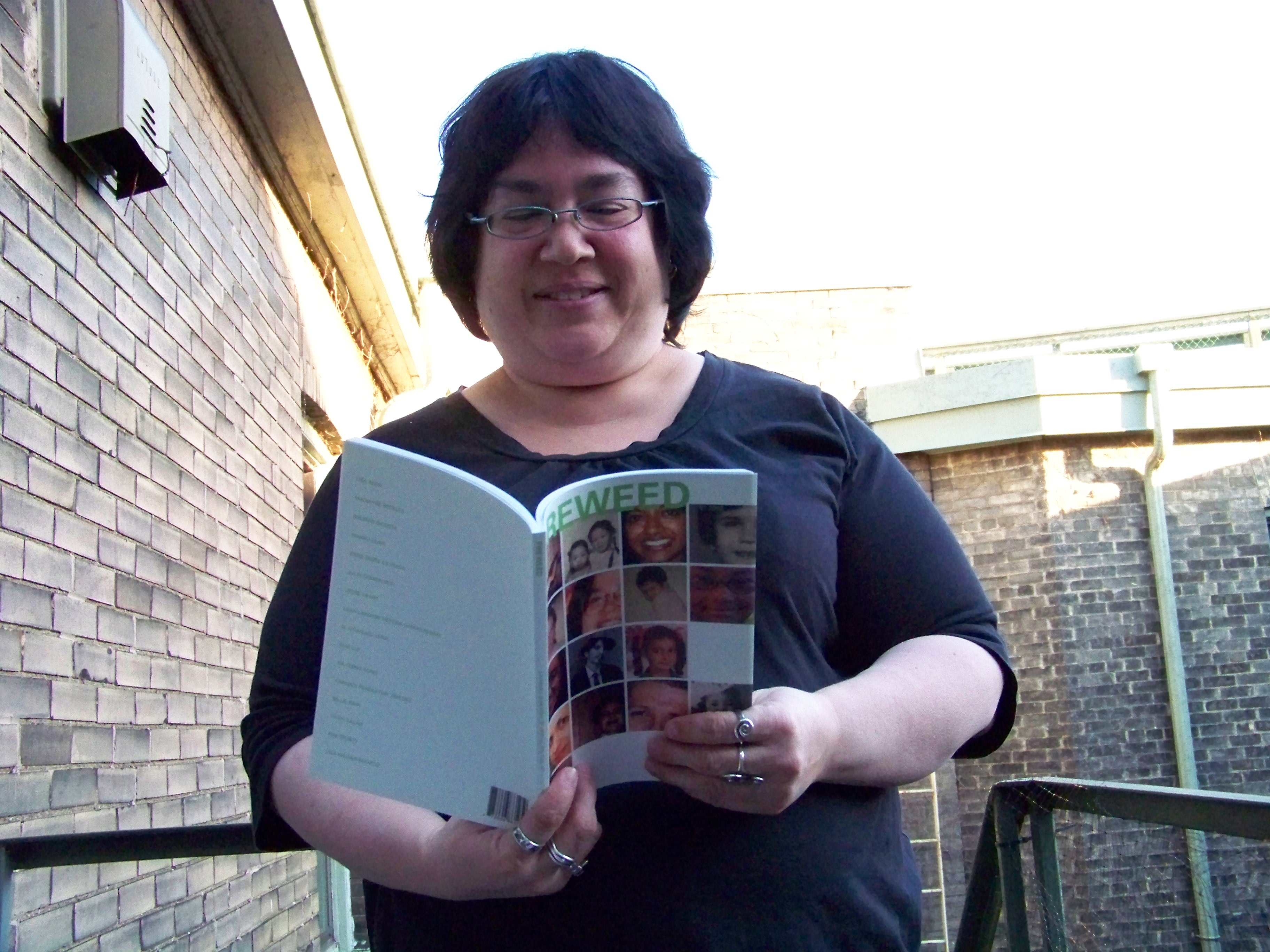
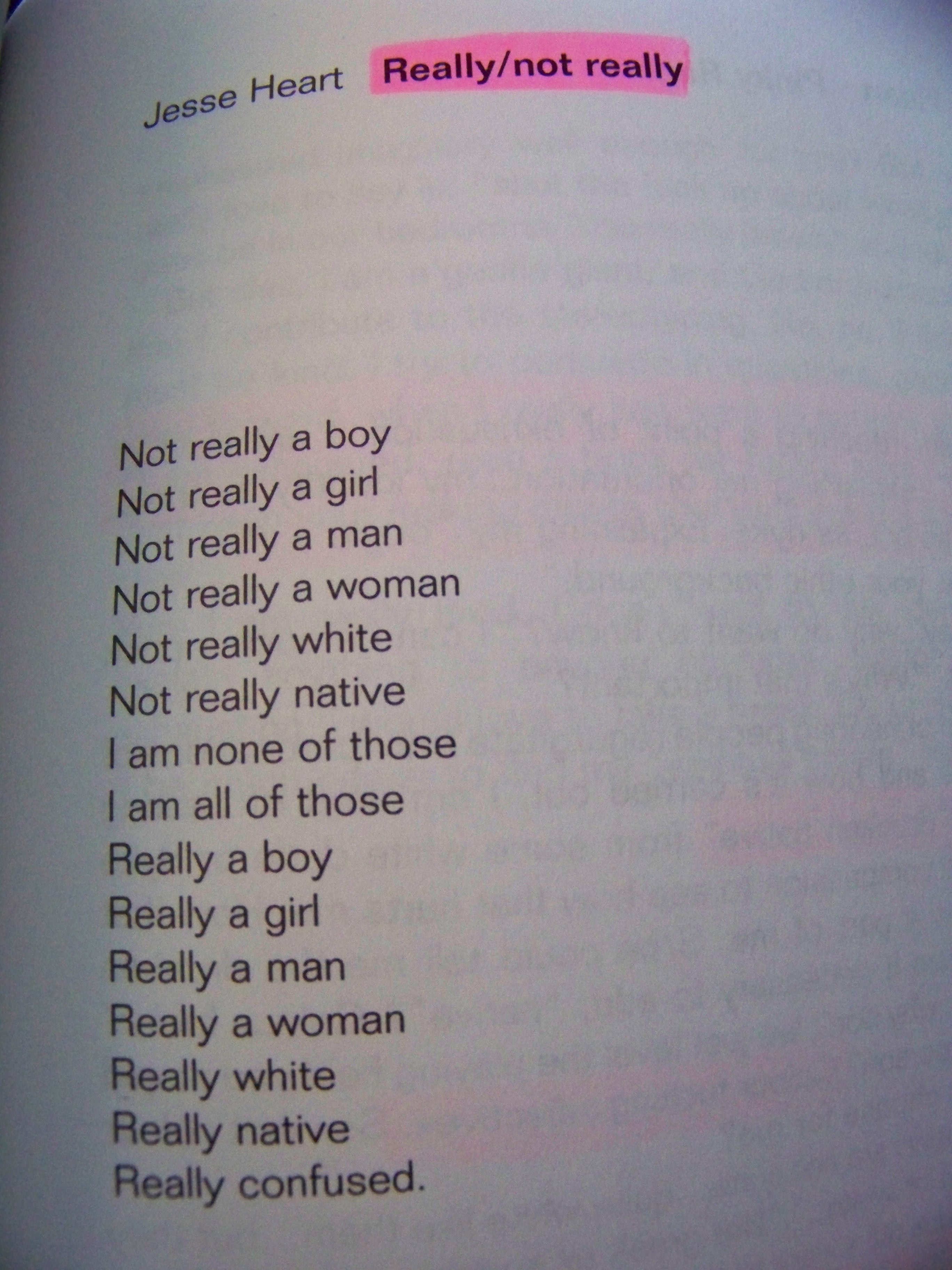
Heart shines again in their simple yet poignant statements in Really/not really:

In her untitled essay, Lisa Weiner-Mahfuz (a half Arab and half Jewish woman) explores hypogamy, racism, the intersection of Zionism and racism, and the ever present racism in feminist/activist circles.  It’s deep, hard, honest, and sad. 

As a half Arab who doesn’t fit in with the Arab community I love Weiner-Mahfuz’s essay.  And I can see why it’s untitled; some things can’t be named or labeled such as many experiences in mixed race life.

Being a different shade of brown, speaking Castellano (dialect of Spanish) and not Arabic, raised by a single mom, eating South American food my entire life, and using my mothers Spanish-colonial surname has left me outside of the Arab box.  Trying to explore my Arabness in university I joined the Arab Student Association (really a Palestinian solidarity movement that has gone through many names and is now Toronto’s biggest Palestinian activist group).  Although I met some good people, every problem written in FIREWEED #75 surfaced: questions and explanations, lateral racism, misogyny toward female members, colour fucking adjectives, tokenism etc.  Weiner-Mahfouz had similar experiences in feminist activism and at a race conference.

While recently talking with another mixed race friend (Native American and Black) about not fitting in with the Toronto Arab activist scene she said, “You’re too Indian for them.”  I prefer the word Indigenous, and I identify my indigeneity as Mestizo (Indigenous and Spanish; read Gloria Anzaldua for a much more detailed explanation).  But I got what she meant.  How can I relate to middle to upper class Arabs, who speak francais and Arabic, and hang mainly with other academics involved in activism, many of whom are white skinned and pass in the white world?  I grew up with Blacks and Latinos and Persians, all of colour, who’s parents, like my mom, worked in factories, restaurants, hotels, and as delivery people and taxi drivers and janitors.  I’m one of two in my crew who have gone to university; more of us have been incarcerated!  I don’t think that’s a coincidence.  And most of the friends I have, old and new, mainly of colour, have never heard of Edward Said, Ward Churchill, bell hooks etc.; and they don’t care to. 

Weiner-Mahfouz writes of the exclusion she experienced in family circles for being both Arab and Jewish.  And she painfully writes of literally having a door slammed in her face at a race conference in Boston titled Race and Racism in the 90s:

“I raised my hand and asked where mixed race people were to go…The white women in the room, including the white facilitator, said they felt I should caucus with them because  I could pass for white.  Most of the women of colour concurred with this…

“The discussion proceeded with the facilitators spending ten minutes talking to the group about the privileges of being able to choose—as if I were not in the room…Finally, the group resolved that I could choose where to go…

“It was not resolved for me.  I felt alone.  I felt that regardless of where I chose to go it would be the wrong choice.  I felt like the illegitimate bastard child that no one wanted and/or knew what to do with.  Many of the women of colour were angry with me.  Many of the white women felt as if they had made an anit-racist intervention by challenging me on my racism.  Still as the group broke up, I made a choice and walked towards the room that the women of colour were to meet in.  As I approached the door it quickly slammed in my face.” 

Not only do I believe that most of the contributors to FIREWEED #75, and most mixed race people, have felt like Weiner-Mahfouz, but they’ve probably had real doors slammed in their faces like her.  I understand where the women of colour were coming from but that was cold.  Weiner-Mahfouz’s experience at the conference was horrible and one that continues today.  And so do all the problems laid out in the journal.  How far have we come along?

Weiner-Mahfouz poetically states that as mixed race peoples we are feard:

“We are feared because interracial relationships are still taboo in our culture.  We are feared because our mere existence often calls into question the status quo and the way that race is constructed in our society.  We are feared even by people on the Left who propose to be working to challenge these deeply rooted beliefs and constructs…We are not considered whole just as we are.” 

FIREWEED #75: The Mixed Race Issue has many brave, honest, entertaining and emotional pieces.  Karleen Pendleton Jimenez writes an erotic piece exploring her life as a white skinned Chicana and the complexities of skin politics in her dating life; Billie Rain’s essay title explains her piece: The Myth of the White Jewish Race; Lisa Amin writes about passing and failing as a mixed race person; Kim Trusty writes about her white mom; and there is so much more in this extraordinary and important collection.

Although we mixed race people are not considered whole, we are.  And FIREWEED #75: The Mixed Race issue shows that.

Tune in to Black Coffee Poet May 11, 2011 for an inclusive interview with FIREWEED # 75: The Mixed Race Issue Co-Editor May Lui.

Posted in Poetry | Tagged , , , , , , , , , , , , , | 15 Comments

BLACK COFFEE POET READS AT MAYDAY POETRY MARATHON 2011

I had the honour of reading at the MAYWORKS Poetry Marathon in Toronto May 1, 2011.  I shared the stage with many great poets, including two of my favorites: Tara Michelle Ziniuk and Zoe Whittal.  

The poem I read, No Les Da Verguenza (Aren’t They Ashamed), was published in OUR TIMES: Canada’s Independent Labour Magazine (May 2009).  The poem is about my mom and my aunt and their experiences as women of colour at their places of work.

Enjoy!

Posted in Poetry | Tagged , , , , , , | Leave a comment

TORONTO MUSICIAN SARAH GREENE SINGS A SONG

Sarah Green is a poet and song writer who hast a new CD out: Toronto Blues.  

Performing at open mics around Toronto, Greene also hosts an open mic event at the Transac club once a month.

Enjoy Sarah Greene sing a song.


Posted in Poetry | Tagged , , , | Leave a comment