Footprints show you were a person has been and where they are going. Some are deep, others are surface, all footprints tell a story.
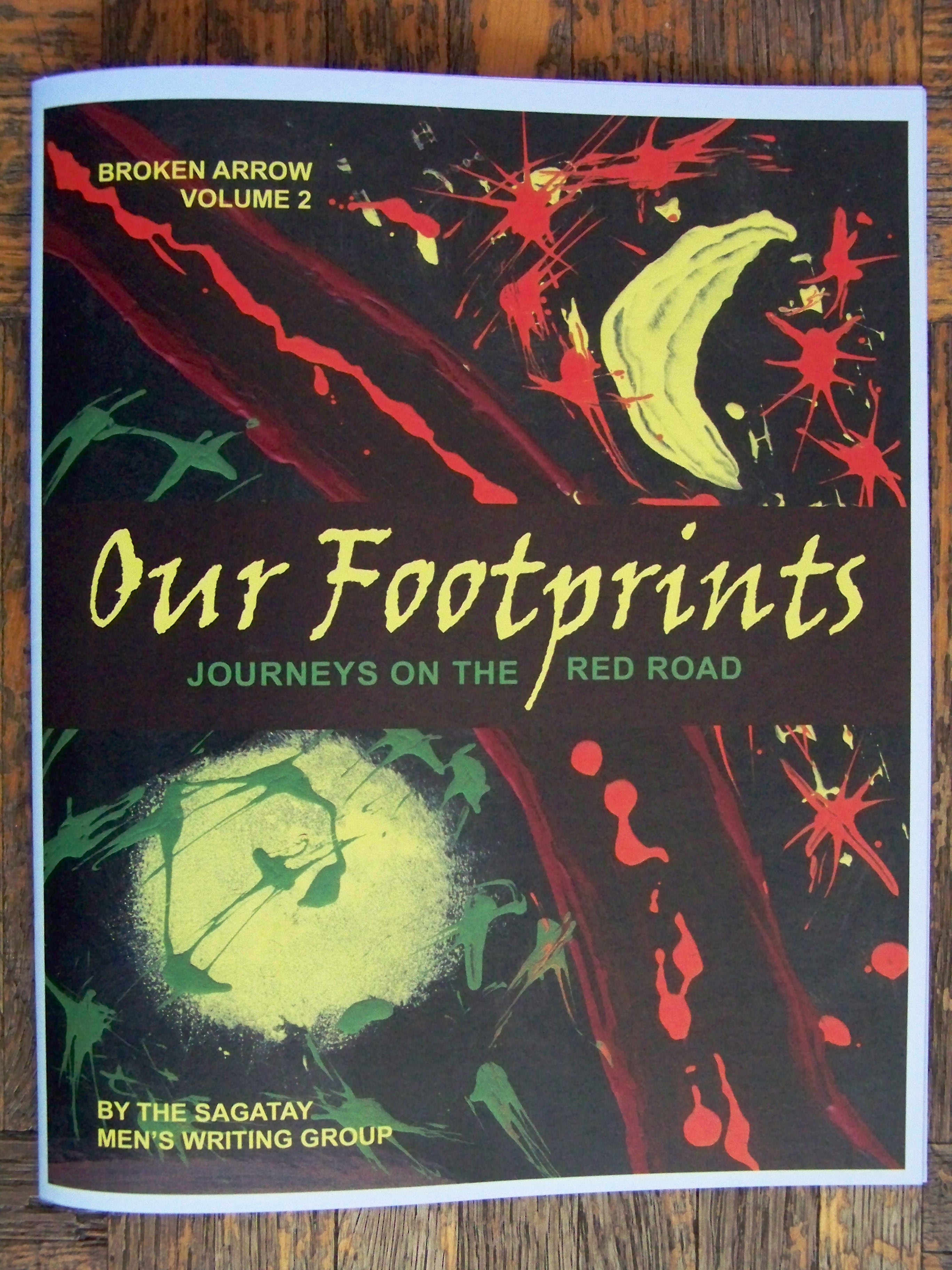
The Sagatay Men’s Writing Group has put together another fantastic zine. Several journeys are compiled into 50 pages of poetry, memoir, song, artwork, and experimental verse.
Looking at the cover you know once you open Broken Arrow 2 you’re going on a ride. Splashes of red, yellow, black and green make up images that are all part of Indigenous ways of being: sun, moon, stars, and the Read Road.
The zine’s words will provide light, insight, and paths into the lives of its 23 writers.
The Trail by Kevin Copegog is a poem, a herstory lesson, and teaching all in one. The succinctness that poets are known for is evident on Copegog’s 6 lines. Copegog’s first line tells readers they are on Native land and her name is Turtle Island. He locates himself as a member of one of the many First Nations of the land now known as Canada:
Ours is the oldest and best trail.
The poet shows pride in the place where he is from by writing of its beauty found in “every corner, hill, and tree”. The herstory lesson turned description turns to teaching as Copegog leads his reader to the present:
All trails lead to something,
It’s up to you to see what’s at the end of yours.
Copegog ends by locating himself as a member of Sagatay Native Mens Residence:
Or is it a new trail, on a new beginning, from Sagatay?
Beautiful!
Sagatay is a place of healing, new beginnings, a part of the Red Road, a starting point for Native men to walk a new path. My Resurrection by Jason Boucher shows readers all that and more by sharing his history of loneliness, pain, and holding on the past. When reading the first few lines of the poem you can see the scars that once marked Boucher’s soul. The middle starts to show a man transforming, embracing change, and writing humbly:
You helped me to learn its OK to cry,
to trust without reason and never ask why.
Accept who I am and to let go of the pain,
For life cannot grow without the rain.
It’s hard for most men to admit they cry let alone tell the world via a piece of writing. Boucher is living Indigenous teachings on the page: truth, bravery, humility, love and more.
Boucher’s choice of title can be interpreted as many things: accepting Christianity, leaving addiction for a life of sobriety, embracing his inner child so as to grow into a man. One thing for sure is that Boucher has picked himself up, stands tall, and walks the Red Road on two stable feet.
The rawness that made the first Broken Arrow a great read has followed itself to its sequel. Where I’m From by Wes is a repetition poem that shows honesty, contemplation, and growth. Writing of his negative childhood, mixed race identity, and colonization, you see where Wes cam from, who he was, and who he is.
Starting every line with “I am from” Wes talks of “dysfunction”, “confusion”, and “hurt”. He acknowledges past, present, and future followed by a change in how he perceives himself and no longer accepting what this racist, colonial society tells Indigenous peoples:
I am from savagery, I’ve been told.
Not once before this line was a comma or questioning tone used. It is here where Wes changes the paradigm of how he views himself.
What follows is a man showing that he loves, forgives, and accepts himself:
I am from likeableness
I am from worthiness
I am from time and gentleness, again and again
I am from willingness
I am from wanting
I am from the Pow Wow.
Broken Arrow 2: Our Footprints: Journeys On The Red Road is filled with many stories of lives most people don’t get to see, or want to see. Two Spirit singer Robbie Madsen shares 6 pages of his forthcoming memoir; S Keyokey drew a comic; Ed Bennett shares a poem about his Inuk guides; Roger M. writes about his Kookum—grandmother; Kurtis Carter writes about hope. Broken Arrow 1 contributors James C. Miles and Rainkeeper also appear with poems of love and comedic, yet sad, list poems.
Broken Arrow 2 isn’t about following in someone’s footsteps, it’s about making your own. See how the men at Sagatay found their footing and enjoy writings of their journeys on the Red Road.
To grab a copy of Broken Arrow 2:
c/o Sagatay, 26 Vaughn Road
Toronto, Ontario, Canada
M6G 2C4
416-651-6750 x 2230
rdefant@nameres.org
Tune into Black Coffee Poet Wednesday December 14, 2011 for interviews with Broken Arrow 2 contributors Ryan Rainville and Tristan Martell.
Susan Blight is a member of Couchiching First Nation, Anishinaabe, Turtle Clan. She received an M.F.A. from the University of Windsor (2007) in Integrated Media, a Bachelor of Fine Arts in Photography (2004) and a Bachelor of Arts in Film Studies (1999) from the University of Manitoba.
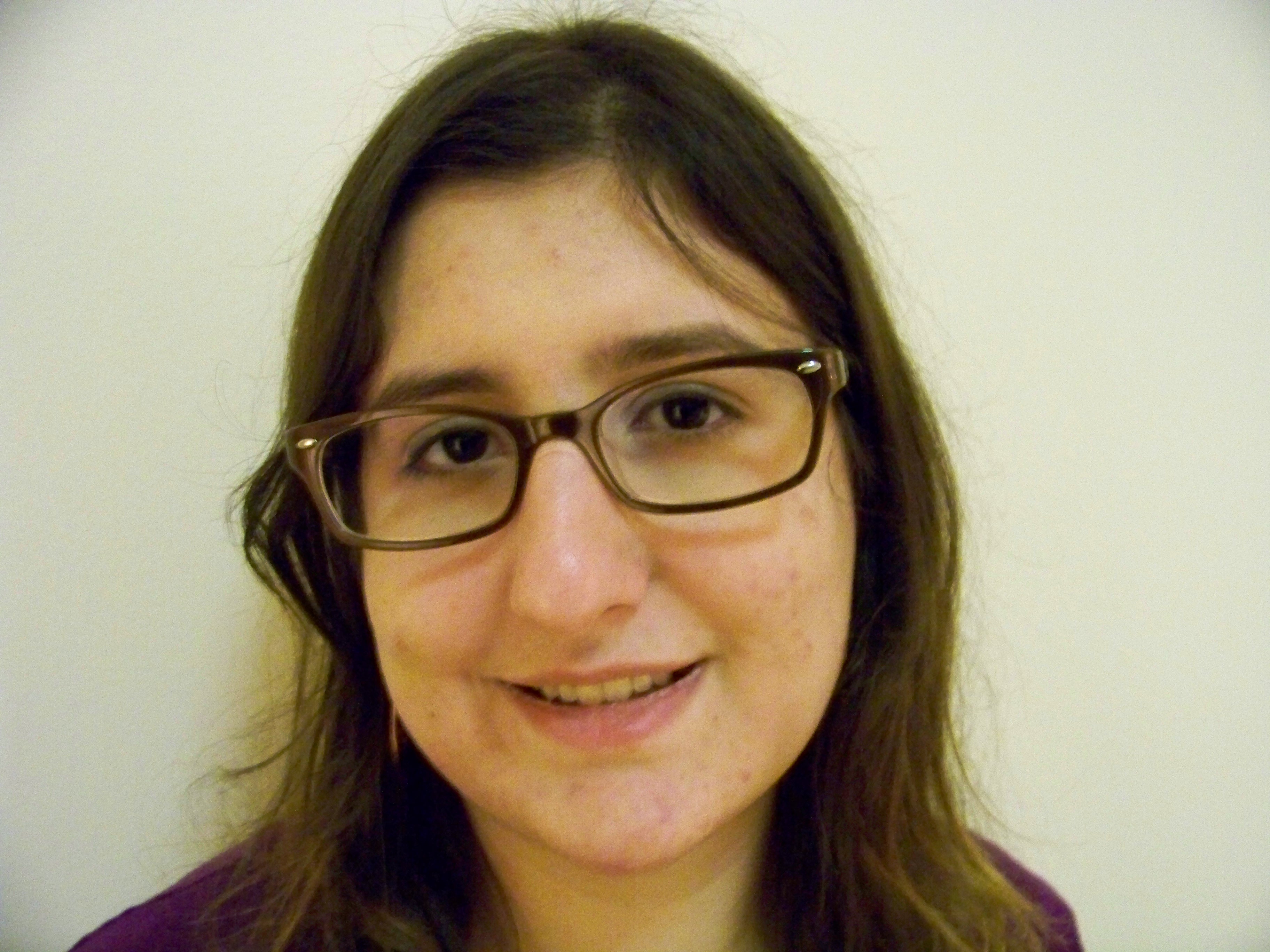
Lindsay Czitron is a queer femme disabled activist/writer type. When she is not trying to save the world (or problematizing the idea of saving the world), she also enjoys photography and music. She is currently studying equity studies and religion at U of T, which she hopes to turn into some radical, spiritual activism some day.
A video roundtable and interview as part of the “Remembering the Forgotten Women of December 6th” week were posted prior to today.
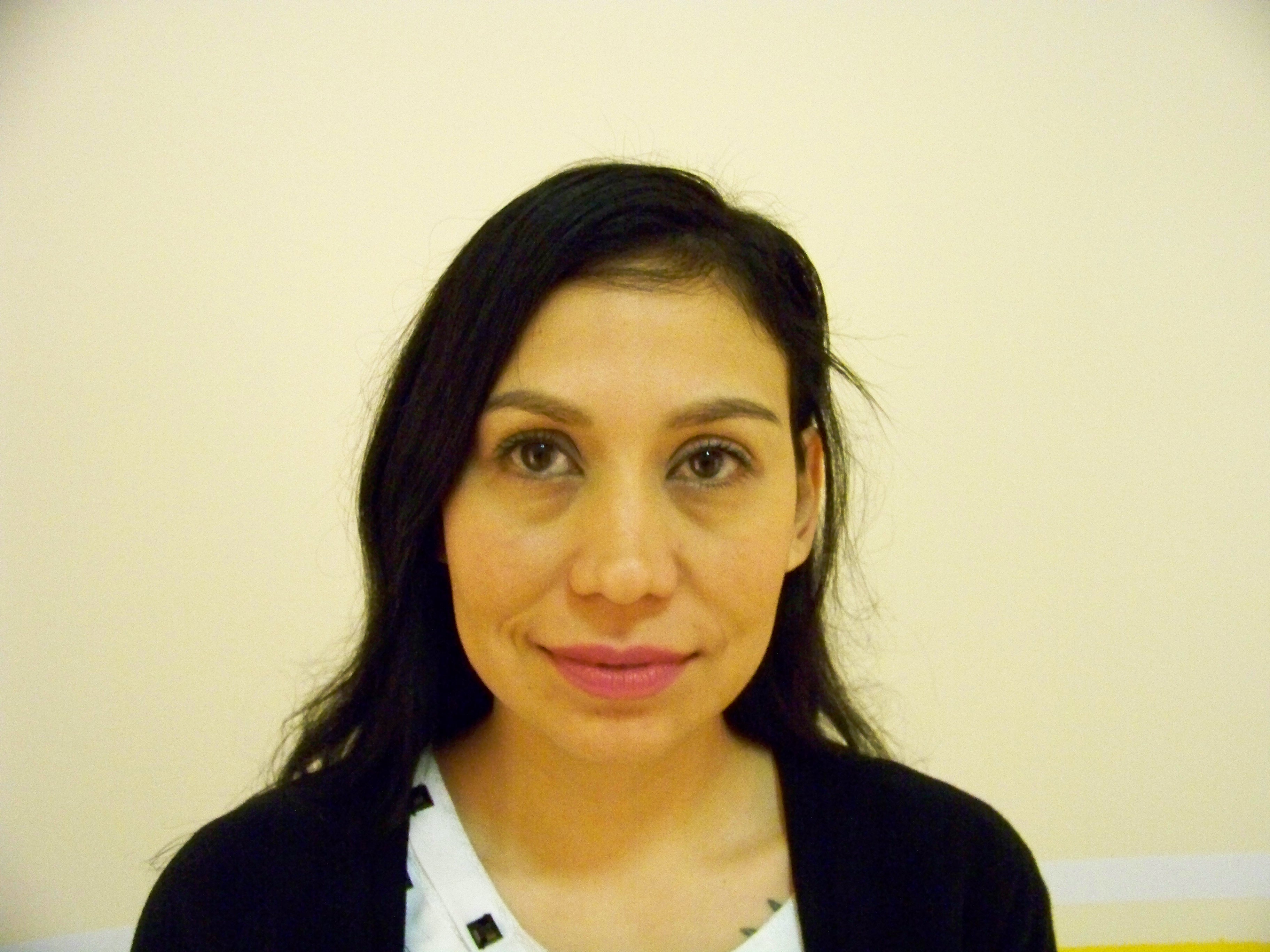
Michelle Basha a native of Trinidad & Tobago who migrated to Canada at the age of 8. Basha faced racism head on at an early age along with repeated acts of sexual assault, up until the age of 14. Basha married out of the home, on her own, where physical and emotional violence became my new nemeses. Becoming a mother gave her a new outlook on life as she tried to see what her children saw. Deciding then, that her children were not going to think violence in the home was normal, she separated from, then subsequently, divorced her abuser. That decision ultimately took her down a path she had never considered, a path towards healing, not only for herself, but for others. Basha is a knowledge-seeking mother, grandmother, lesbian, feminist, activist and crisis line counselor.
Watch a video roundtable about the Forgotten Women of December 6th taped at Toronto Rape Crisis Centre.
May Lui, for Black Coffee Poet: What position do you hold at Toronto Rape Crisis Centre/Multicultural Women Against Rape (TRCC/MWAR)?
MB: I am currently a Crisis Line Counselor with the TRCC/MWAR. In the past, I have also covered the Front Desk and served as a member on the Collective Board.
ML: What work do you do at TRCC/MWAR?
MB: At the TRCC/MWAR I counsel women who have either recently experienced some sort of violence whether it be physical, sexual, emotional, financial, even social, or who are re-living a past experience through flashbacks, which can be brought on by what is known as a “trigger”. A trigger can be anything from a sound to a scent.
ML: How long have you been working at TRCC/MWAR?
MB: I have been working with the TRCC/MWAR as a crisis line counselor for 6 years now, but have been associated with the centre for 9 years.
ML: Why is an organization like the TRCC/MWAR necessary?
MB: An organization like the TRCC/MWAR is necessary because of the many barriers facing women of colour, Aboriginal women, trans women, disabled women and queer women, that to have a place that is non-judgmental and that will not violate them again and again is not only necessary but crucial. Here they can find support, understanding, individual and group counseling, resources, others that they can relate to and who can relate to them and even a shoulder to cry on.
ML: What is your understanding of racialized violence against women?
MB: From what I understand of racialized violence against women in Canada, Aboriginal women and foreign domestic workers are more likely to experience physical and sexual violence than any other group of women. Many foreign domestic workers flee abuse or violence in their native countries only to then be abused by the Immigration system when seeking refuge. Women who are, or who are assumed to be, poor, prostitutes or drug addicts are ignored for the most part when trying to report a crime. Police seem to be less enthusiastic when it comes to investigating cases of assault against Indigenous women than they are when it comes to cases of assault against Caucasian women. A woman’s ethnicity, the area she lives in, disappears from or is murdered also determines the amount of effort that is put into solving her case. For Indigenous women, authorities would rather assume that she is transient and has moved on, than to investigate. Indigenous women, along with physical and sexual violence, also face political, structural and economic violence which all feed off of each other. Violence against women is the consistent marginalization of their concerns. It is the constant attempts to prevent women from having attention, influence, or power. Racialized violence against women is an ongoing concern.
ML: Feminism is thought by many people to be for white women only. Many women of colour and Aboriginal women have rejected the word feminism for their activism, given experiences they’ve had of racism within the mainstream feminist community. Yet others have adapted it and use it. Do you identify as a feminist? Why or why not?
MB: If by feminist, one means standing for the protection and propagation of women’s rights wherever they are being stifled, then yes, I am a feminist. I believe that women and women’s rights need to be enforced and recognized everywhere without persecution. As for “feminism” being for white women only, that may have been true in the past but it is up to us as women of colour to make it for WOMEN. As individuals we draw on our own experiences and as individuals we also have the choice to learn, adapt, accept, embrace and reclaim what has negatively impacted us and our lives.
ML: Do you have a critique of the ways in which the events of December 6, 1989 have been taken up in the mainstream anti-violence movement in Canada? Specifically, violence against women of colour, Aboriginal women, trans-women, disAbled women, queer folks that often gets sidelined in many conversations?
MB: What I didn’t understand, back in 1989, is why I never saw, before that day, rapes, kidnappings and murders of women profiled in the media with such vigor. Many Aboriginal women, trans-women, disabled women, queer women and women of colour were assaulted and killed before December 6th, 1989, yet I don’t recall their stories making the headlines much less creating such a media frenzy as we saw in 1989. It seemed to me, in 1989, to be the first news story told of violence against women. Now was this because it was so many women at once or because the women were Caucasian? December 6th, now a National Day of Remembrance and Action on Violence Against Women, will always be remembered as the day that 14 women were tragically murdered for being women and for being in what was considered a man’s field of study. In today’s anti-violence movement, the faces of these 14 Caucasian women still overshadow the countless number of women of colour, Aboriginal women, trans women, disAbled women and queer folks whom are still unaccounted for, whose cases remain unsolved and whom have been simply forgotten to all but those who love them.
M: What are your thoughts on the SLUTWALK event held in April this year?
[Background: After there was a sexual assault at York University in the spring of 2011, a police officer spoke to a group of students and told young women that if they didn’t want to get raped they shouldn’t dress like sluts. Slutwalk was organized and was intended to raise awareness about what women wear being irrelevant to being targets for harassment and assault. It ended up sparking many offshoots of arguments and discussions about race, class, exclusion, and what it means to reclaim the word “slut”, and who can do such reclaiming.]
MB: “Slutwalk”…I was appalled, angered and disgusted by the police officer’s comment. It only reinforces the fact that they, police officers, do not know how to handle assaults on women and need to be trained on how to handle assaults on women. First lesson being that it is NOT their fault. That no matter what a woman may say, do or wear, it DOES NOT give any man the right to harass or RAPE her. I wonder if this is the same advice the police officer would have given to the 18 month old baby girl, the 2 year old girl, the 90 year old woman or the paraplegic woman who had been raped. It is unfortunate, that as we approach the year 2012, women are still being held liable for the actions of some men.
Yes, SLUTWALK ignited discussions on race, class, exclusion and the reclaiming of the word “slut” all of which need to be discussed in hopes of one day ending all of the “isms”.
SLUTWALK therefore was a great event brought forth by the ignorance of someone in a position of power and in an organization that is supposed to protect the innocent. I think SLIUTWAL needs to be an annual event in order to serve as a reminder.
ML: Since this week’s theme at blackcoffeepoet.com is violence against women, are there other thoughts, insights that you’d like to share? Are there any public events coming up at TRCC/MWAR that we should know about?
MB: When it comes to violence against women, I believe the work is not complete unless we counsel boys and men as well. I think that unless women and men alike are counseled, the end of violence against women will always be “in the future” and not “now”. Teaching the basics in “the treatment of women” the same way we are taught the basics in reading, writing and arithmetic, I believe, will go a long way in our fight to end violence against women. After all, prevention is key. Violence against women is a global problem and is one that needs to be eradicated.
At the TRCC/MWAR we are doing what we can to help with the eradication of violence against (our grandmothers, mothers, daughters, nieces, sisters…) women. We do outreach work in different communities, such as Take Back the Night, fundraisers, etcetera to keep our organization up and running so we can continue to support the women that need it.
Our next fundraising event, Bowl-a-thon 2012, will take place on Saturday, March 17th, 2012 at Bowlarama West (5429 Dundas St. West). So get a team together and fundraise, sponsor a lane, donate a prize, come on out and bowl for a good cause. For more information visit our website at www.trccmwar.ca .
ML: Thank you so much, Michelle for sharing your insights and analysis. And thanks for your work at the TRCC/MWAR, a very important organization for all women.
May Lui is a Toronto-based writer who is mixed-race, anti-racist, feminist and an all-around troublemaker. She blogs at maysie.ca, ranting and raving at any and all injustices and uses the f-bomb regularly. She’s been published in the Toronto Star, Fireweed Magazine, Siren Magazine, in the anthology With a Rough Tongue: Femmes Write Porn, at section15.ca and rabble.ca. Contact her atmaysie@rogers.com
Tune into BlackCoffeePoet.com Friday December 9, 2011 for videos of Women Forgotten on December 6th reading poetry and prose.
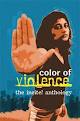
I remember hearing about Color of Violence for a number of months/years before it was published, and anxiously waiting for it at the time. Until 2005, I had spent almost 10 years working for the Toronto Women’s Bookstore, so I’d had years of experience in waiting for a great new book. This one in particular was significant because of the centering of women of colour in the narratives, in the analyses and in the articulation of the solutions, many of them across communities. All the essays include an understanding of intersectionality, meaning that many women have multiple sites of oppression and to single out only one site for analysis (gender) is to prioritize white, middle class, heteronormative cis-women and to mute the voices of all who don’t fall into that narrow view.
There are some well-known writers and scholars who contributed to the anthology like Andrea Smith and Julia Sudbury as well as various members of the Incite! Collective such as Janelle White, Andrea J. Ritchie and Nadine Nabar. As an emerging writer myself, I also appreciate being exposed to writers I had not previously heard of, as well as reading about movements and actions going on in various local areas and regions.
Before I get to the review, I want to share a bit about me and why Black Coffee Poet asked me to review this collection. I worked in VAW in the early 90s, doing front-line work in a group home for young women aged 14 to 18. I was there for five years and it was my first social service employment. The group home where I worked had a very strong feminist analysis, but it sadly lacked much of a class or race analysis within that framework. It was very queer-friendly for both the staff and the young women we worked with, but I could see the challenges of putting theory into practice since bureaucracy and working with institutions such as the police and the various children’s aid societies were necessary. Nonetheless, the place did good client-centric work, and the front-line workers did our best to empower the young women we worked for, to facilitate them to find their voices and to reclaim their lives after experiencing various kinds of violence, mostly within their families of origin. I’ve also worked as a manager in a VAW phone referral service agency, and for the past 6 years have worked as a consultant with mostly VAW service organizations, doing trainings, organizational support, planning and evaluation with staff teams, management teams and boards of directors.
My analysis of VAW comes from a deeply inclusive anti-racist anti-oppression feminist perspective, which encompasses the many ways in which systemic and institutional violence is perpetuated against women, as well as individual acts of violence.
Color of Violence is divided into three sections: Reconceptualizing AntiviolenceStruggles, Forms of Violence and Building Movement.
When we read or hear the word “violence”, we often think of a very particular kind of violence: one person striking, hitting or assaulting another. The fact of state violence, that is, legalizing violence against groups of people, is of course included, but not always mentioned in anti-violence politics. So the idea of reconceptualizing antiviolence struggles is important.
Nirmala Erevelles’ article, Disability in the New World Order talks about the links between poverty and disability, colonialism and economic dependence from a macro-IMF-“Third World” perspective (“Third World” is in quotes as Erevelles uses it, and it’s also a stand-in for the term “communities of colour”). She connects issues of health, health promotion, inequity and disability. She describes a chilling World Bank policy in which people are ranked and valued based on the disease they have, their potential future productivity, and given aid or support on that basis. Children, the elderly, and anyone who is disabled who is assumed to be unable to work are given a value of zero and little to no access to public health services.
Also in the first section is Andrea Smith’s now-classic essay Heteropatriarchy and the Three Pillars of White Supremacy. I’ve used this article many times in intermediate and advanced anti-oppression workshops that I’ve conducted over the past five years.
The first pillar is Slavery/Capitalism and “the logic of slavery” which Smith describes as Blackness being equated to property and “slaveability”. While the forms and methods of slavery have changed over the years of the existence of the state of the U.S. , the logic of slavery persists, and is a foundational reality of the formation and maintenance of the prison industrial complex.
The second pillar is Genocide/Colonialism, “the logic of genocide”. The settler mentality, in both the U.S. and Canada has been that all indigenous peoples and communities need to disappear, so that the lie of the settler state, unfettered access resources and land ownership by non-Natives can gain legitimacy. Under this logic, it’s okay to take and use land if the previous owners not longer exist.
The third pillar is Orientalism/War, “the logic of Orientalism”. Smith uses the term more broadly than Edward Said meant in his ground-breaking book Orientalism, and she describes it as meaning the process of “othering” any country that the U.S. is targeting for war or invasion. The practice of orientalism also serves to support anti-immigration policies domestically.
Smith’s analysis is that any of the pillars can be used to ignore or diminish the other two, and in order to resist this, and to prevent our movements and activism from duplicating this structure, attention must be paid to each. She brings all three pillars together with her final section on heteropatriarchy and white supremacy, which she describes as the underpinning of capitalism in the nation-state. Smith states “in order to colonize people whose societies are not based on social hierarchy, colonizers must first naturalize hierarchy through instituting patriarchy”.
The second section of the collection, Forms of Violence, describes many different forms of state violence against women of colour, all of which could be expanded to be separate volumes on their own. This section has essays and articles that cover state violence in the forms of: border patrols, prisons, wars, law enforcement, the INS and the immigration system in the U.S., and medical violence.
I will be discussing Patricia Allard’s piece Crime, Punishment and Economic Violence. Allard talks about the right-wing talking points “tough on crime” and the “war on drugs” as the primary mechanisms to incarcerate different communities of colour in the U.S. She lists some statistics on rates of women in prison populations in the U.S. and how they’ve massively increased since 1980. Women are further penalized in addition to their incarceration in a few ways. Some of those ways include the infamous “welfare reform” brought in by Bill Clinton in 1996; an amendment to the Higher Education Act, making it impossible to receive federal education grants if a woman was convicted of a drug-related misdemeanor while attending a college or university; and an eviction from public housing for anyone with a felony or misdemeanor conviction. Put together, we can see how even the few options available for women to get themselves out of poverty, and many of the conditions that lead to drug-related crimes, were curtailed or eliminated over time.
This is perhaps the most challenging of all forms of violence to dismantle, given that the mechanisms are those in which we all move and function in various ways. But since these same mechanisms are killing our neighbourhoods and families, it’s vital that we find some solutions, separately and together, so that we can move past surviving to healthy and thriving communities.
The third section, Building Movement, has many practical, creative and incredible essays and articles. Topics range from building alliances to collective leadership to specific examples from a few different communities about how to resist and to make change real.
Included in this section is a statement by the Incite! Collective, called Gender Violence and the Prison Industrial Complex. It’s powerful and moving and is worth reading and passing on to others. Another very strong statement is “Trans Action for Social and Economic Justice” by TransJustice, a project of The Audre Lorde Project, which calls for a Trans Day of Action. As an aside, for 13 years there have been international events held on November 20th, marking the Trans Day of Remembrance. The TransAction project also calls for a Trans and Gender Nonconforming People of Color Job and Education Fair in New York City.
Because of my employment history (and present), I was very interested to read Emi Koyama’s piece Disloyal to Feminism: Abuse of Survivors within the Domestic Violence Shelter System.
By adopting the view that domestic violence is not the act of one abuser against his or her victim, but all men against all women, we have made it easier to frame the violence and abuse by women against other women within the anti-domestic violence movement as individual rather than systemic, and thus, less worthy of our collective attention.
Koyama describes how shelter workers “police” the women they are working for and how the rules are applied more harshly to women of colour and women either in recovery or dealing with substance abuse issues. She became a volunteer and employee in various anti-violence organizations, hoping she could work from the inside to make changes for women of colour. She found many structural barriers. Koyama shares the stories of two women who name, among other things, not being able to talk about their struggles with substances/drugs, their involvement with sex work and for one, her experience of Transphobia. Koyama also talks about the professionalization of anti-violence work, and how it leads to depoliticization. As more government funding is received and depended upon, so are anti-violence organizations subject to greater scrutiny and restrictions placed on their work, in particular the inability to use a feminist anti-oppression framework, and constraints on advocacy and prevention projects. Koyama ends with a call to activism: “What if we had an organization that did not provide any services itself, but organized survivors and advocates to fight for survivors’ collective as well as individual interests…?” She further argues for a meta-organization to fight for the rights of front-line shelter workers. She describes this strategy as hyper-institutionalization which would in theory create a balance in the power structure, since the professionalism and government funding on the one side currently holds all the power, compared to isolated groups of survivors who seek services from shelters and other anti-violence organizations. It’s an intriguing idea.
This is an extremely important book for anyone connected to anti-violence moments, services or activism.
Many of the essays used highly theoretical language and structures that sometimes obscured the points being made. I firmly believe that writing should be accessible to all, and especially such an important work as this is, that people don’t feel like they have to be formally educated to make sense of the ideas and theories of the various contributors. At the same time, the inclusion of poetry, journal and personal-narrative style pieces were a welcome grounding for me, since the theory must be practiced and actualized in order to become real. The hope and energy to make a difference in all the ways in which violence is perpetuated against people considered “other” or those who don’t matter to the status quo must be practiced and actualized.
I had admired the work of the Incite! Collective for a few years prior to the publishing of this anthology. A radical, grassroots U.S.-based collective founded and run by radical feminists of color, they are an inspiration to how feminist politics could be practiced in Canada.
Since the publication of Color of Violence, the collective has published The Revolution Will Not Be Funded: Beyond the Non-Profit Industrial Complex. Andrea Smith, co-founder of Incite! wrote Conquest: Sexual Violence and American Indian Genocide. There are also numerous free publications in pdf format available on their website: www.incite-national.org
May Lui is a Toronto-based writer who is mixed-race, anti-racist, feminist and an all-around troublemaker. She blogs at maysie.ca, ranting and raving at any and all injustices and uses the f-bomb regularly. She’s been published in the Toronto Star, Fireweed Magazine, Siren Magazine, in the anthology With a Rough Tongue: Femmes Write Porn, at section15.ca and rabble.ca. Contact her atmaysie@rogers.com
Tune into BlackCoffeePoet.com Wednesday December 7th, 2011 for an interview with Michelle Basha of the Toronto Rape Crisis Centre.
Alec Butler is a 2Spirit playwright and filmmaker. He was a nominee for the Governor General Award for English Drama in 1990 for his play Black Friday. Butler has also worked on artistic projects with the 519 Community Centre as their first artist-in-residence. He was named one of Toronto’s Vital people by the Toronto Community Foundation in 2006. He is a Metis of Mi’kmaq heritage
BCP: Why poetry and filmmaking?
AB: I always wanted to be a visual artist but I grew up working class so being an artist of any kind was not encouraged, I might as well be queer. The reasoning was one couldn’t make a living from art, so I never learned to draw or paint like I wanted so I draw and paint with words and film. Getting a typewriter for xmas when I was 12, after asking for years, was a lifeline for me; my way of expressing my creativity seems to be through words.
Also, a typewriter was something secretaries used so considered more practical. Not that my parents were philistines, they had to leave school in grade six and go to work, so it wasn’t their fault. They were smart but limited because of their class and the racism in what they thought my choices could be, they were also very protective because I was born intersexed and went through hell growing up because of it. I was never in the closet, I always out by default I couldn’t be any other way, even if I wore dresses and makeup because the “f” box was checked off on my birth certificate, I looked like a baby drag queen.
BCP: What is your process?
AB: It always starts with the images, when I was writing plays back in the 1980’s and 90’s, I saw the major scenes in my head, like snapshots, and filled in what was happening in the scenes with dialogue and action. Same with the films. Poetry is different, emotions are a lot more involved, how people and incidents make me feel. So I read a lot of poetry, look at a lot of images by other artists, I get out the scissors and glue and make collages, “cut and paste” old school. Juxtaposing different images against each other fires up my creative synapses every time, they trigger memories and conversations from the past as well as inspire scenes and images that could happen in what ever I am working on. I also surround myself with inspiring people who tell me things, about themselves, and tell me how amazing I am.
BCP: How long have you been writing poems and making films?
AB: Been writing poems since I was a tweensy (before teenage hood), plays since 1982, films since 1999.
BCP: Who, or what, are your influences?
AB: Other queer visual artists, writers, filmmakers who went through similar struggles as an outcast, revolutionaries critical of the status quo, Jean Genet, Rimbaud, Henry Miller, Allen Ginsberg. Also work by people of color, James Baldwin is a favorite. Audre Lorde’s essays and mythobiography blew my mind when I was in my twenties. Before I moved to Toronto I saw a Fassbinder film called fox and his friends in German with French subtitles on the French channel, but I could still follow it. Fassbinder plays a gay male hustler, that’s where I got my butch fashion sense when I first moved here to escape the road in the bush where I grew up. I wanted to move here to be an artist and a gay male hustler. Back then I couldn’t stand the idea of having sex with men, so that was a drawback, I had a romanticized idea about it too, quickly dispelled by the man who directed some of the first plays I wrote, he was a gay male hustler as well. Sex work is just another job. I don’t feel that way about having sex with men now though.
BCP: Your poetry is raw, honest, and stimulating. What do you try to convey to your listeners?
AB: Courage is worth the risk. Love conquers all.
BCP: How long were you working on the poem to be featured on blackcoffeepoet.com?
AB: I wrote in Stolen Land last September after the G20 last year, did another re-write before I read it at the premiere of My Friend Brindley last night (November 28, 2011). Are poems, plays, novels really finished for the artists who create them? Tennessee Williams constantly rewrote plays even after they were enshrined on film. This weekend I also rewrote a play called medusa rising that I wrote 17 years ago, it’s a play about activists trying to change the world, “the personal is political” was my mantra when I wrote it back then, I was inspired to re-write it recently by the occupy movement, wish there was such a movement back then, maybe the play would have had more of a life beyond me producing it on my own. Most of my plays were produced by my own theatre company mainly out of necessity I was so different and ahead of my time that nobody really knew what do with my work. One also has to prove oneself, which is fine when you’re part of the status quo to begin with, someone will produce or publish you because they can put your work in a pigeonhole and sell you but when you’re not, you’re fucked unless you do it yourself.
BCP: Is your writing influential in your filmmaking? Vice versa?
AB: Of course, I don’t know how it could not be. Many of my films started out as poems or poetic monologues. Interviewing Brindley for My Friend Brindley inspired the monologues in the film. Very symbiotic relationship in my experience.
BCP: How was it working on My Friend Brindley, a film about a friend who was slowly leaving this world?
AB: It was heartbreaking and healing at the same time, editing the film was hard, I didn’t want to cut anything. Brindley as an angel looking over my shoulder made it easier.
BCP: Brindley was your mentor. Are you mentoring anyone at the moment?
AB: Wish I had more time to mentor, most people don’t want to be challenged and I challenge people and advocating for my communities takes up a lot of my time. And scratching out a living to keep from being homeless myself is a constant pressure.
BCP: Do you see your writing and film making as activism?
AB: Even when I was a teenager I thought of what I was doing as working for the dignity of my people, my people meaning working class people, mixed race people, queer people. I saw so much beauty and resilience in my people, and the gallows humor, which is the refuge of the oppressed, always makes it into my work. Surviving without being jaded bitter and cynical about the world is hard work.
BCP: In our interview for XTRA! you mentioned that you believe LGBTQ film festivals practice transphobia. Can you elaborate?
AB: The “T” in the LGBTQ that they have in their title stands for “token” not “trans”, they have a one 90 minute slot in a festival that lasts more than a week and we all have to fit into that one slot, so if we make longer films or films that don’t have anything to do with being trans is shit out of luck for being programmed. It’s like a trans ghetto effect unless you’re from out of town and made a film about your transition, how many films do we need about transitioning, it’s become like a fetish for non-trans people to watch films about trans people transitioning. If we want to make a drama or doc about other things that inspire us then we’re in competition with the LG films, B filmmakers I am sure deal with the same issues, if they get programmed at all. A lot of non-trans filmmakers think it’s cool to make films about trans issues, and programmers are more likely to program their films than films by actual trans people. And they pat themselves on the back by saying they are helping the trans community. They are patronizing the community not really helping us at all, just their own careers. Then there’s the gaystreaming effect, the chasing the money of rich white gay men who want to see their own privileged lives up there on the big screen. Certainly not the hard scrabble reality of the majority of us who live on the margins. Lots to deal with when we submit our films makes one wonder why we bother making them in the first place. We need our own festival we had our own festival in the late 1990’s called “counting past two”. The organizers got burnt out though because they had to use their own credit cards and went into debt to put on that amazing festival 3 years in a row.
BCP: What do you want the Trans and non-Trans communities to get from watching your films and listening to your poems?
AB: That we were considered important valuable members of the community, worshipped even, before colonialism, patriarchy and capitalism made us persona non grata, and elevated the obedient consumer who shops to keep the reality of how shallow their lives are at bay.
BCP: Do you identify as an artist or Trans artist?
AB: I hate that question. When I was a dyke playwright 20 years ago I got asked that all the time, however I answer it I am damned. Trans people will accuse me of being a sellout if I say I just identify as an artist, if I say I’m a trans artist I ghettoize myself. Which is what happened when I stuck by my identity as a dyke back then, I was ghettoized. It’s a stupid question.
BCP: You’ve been doing the openings for many LGBTQ events in Toronto lately. You’ve also mentioned that you are upset when people call you last minute to open with an Aboriginal calling on the directions ceremony. Do you have any words for Toronto’s LGBTQ community on this issue?
AB: It’s become trendy to ask Aboriginal, or in my case Metis, people to do these ceremonies, whether they have ever done one before or not as long as they are Aboriginal that’s all they care about so they won’t be accused of being racist, then people sit through the ceremony politely and hope it goes by quickly so they can get back to the main event, they basically tune it out. As for asking at the last minute, doesn’t anybody realize I have a busy life too, that it takes time to prepare, that I can’t drink or do other things I like to do for days before I call on the directions, that I still have a moontime so that affects if I can handle the sacred medicines or not. 2Spirit people and Indigenous sovernity issues, that Canada was created on stolen land, is the last thing they want to think about, if it even crosses their mind at all, they are mainly thinking about the after party and getting laid for being so fabulous. It sucks to still be tokenized like this after 30plus years of being out.
BCP: What advice do you have for other queer and Trans writers out there who are having difficulties with their writing and filmmaking, or who have yet to see their work featured in print or on screen?
AB: Believe in yourself no matter what, keep doing what you love and what nourishes you, do it for yourself most of all. Produce or publish it yourself, or with like-minded friends.
Create your own reality.
Tune into BlackCoffeePoet.com Friday December 2, 2011 for a video of Alec Butler reading his poetry.
“Woman of colour friend needs urgent help, facing homelessness. She does not have a car or a personal support network. Needs boxes immediately for packing. In January or before would need help driving a moving van to a storage unit. Davenport/St. Clair West and Dufferin neighborhood.”
This story and photo originally appeared on xtra.ca on November 22, 2011
Toronto filmmaker Alec Butler met Kathleen Brindley in the 1990s while at a Village rally against racism and the white supremacist group Heritage Front.
“Take an egg. Throw it at a Nazi,” said Brindley.
“I’m like, ‘okay,’” says Butler.
Butler remembers his friend with kind words, a smile and a recent film, My Friend Brindley.
“She was like an elder, a mentor,” Butler says, “a teacher to me.”
Butler was 13 years old when he first saw Brindley, who was 15 years his senior.
She was on CBC television news, representing a Toronto gay rights association. Butler recalls watching in awe as Brindley spoke up for gay rights.
Alec Butler says Kathleen Brindley taught him how to be proud of being queer and different.
“I was really inspired by her and how she presented herself against great odds,” Butler says. “She was a proud butch lesbian who was out.”
Butler continued to be inspired by Brindley after they eventually became friends.
He learned that Brindley was a civil rights activist who had met Martin Luther King Jr. She had also been expelled from high school for exposing one of her teachers as a Holocaust denier. Later, Butler says, Brindley had her windows shot out after she confronted KKK members in her home state of Indiana.
Brindley’s activism eventually got her on an FBI list, and she moved to Canada in exile.
Butler sees Brindley as a warrior who fought for human rights. “That’s what she passed on to me: the pride of being queer and being different and loving no matter what.”
When Butler got news that Brindley was sick with cancer, he decided to make a film about her.
Butler told Brindley, “I have to make a video about you, get your unique stories about growing up and coming out as a lesbian in the ’60s, getting kicked out of school because of it, what things were like for you.”
“I think it’s important for youth now, and for me, to remember what it was like to be gay and be lesbian in the early ‘60s. It was really hard; it was really dangerous,” Butler says.
The film was taped in three stages, with one-on-one interviews, in 2006 and 2007.
“I called it My Friend Brindley because I think one of the most important relationships we can have is friendship,” Butler says. “That level of trust, comfortableness and safety is very precious.”
Butler’s film was finished after five years of work, long after Brindley’s passing. It is set to premiere at the University of Toronto Trans Film Screening Series on Nov 28.
“We had been wanting to feature Alec’s work for a while, mostly because he’s a local artist who is very present and active in our communities,” says Claro Cosco, co-creator and co-facilitator of the series. “He has produced to date a large and wide-ranging body of work and because he is historically relevant as an artist who has been out as trans while living and working in Toronto for many years.”
Butler, who notes his films have been rejected by larger gay and lesbian film festivals, says, “I’m really excited and proud that they’ve taken this on.
“My work is not mainstream. It’s pretty out-of-the-box in a lot of ways,” he says.
Butler believes his films, and the work of other trans filmmakers, is rejected by other festivals because of transphobia.
And, like Brindley taught him, he is fighting to change that.
“I’ve said that in the past and gotten in trouble. I’m not gonna stop saying that,” he says. “That’s me. I’m here and I’m queer.”
The Deets:
My Friend Brindley
Trans Film Screening Series
Mon, Nov 28 at 6:30pm
William Doo Auditorium, 45 Willcocks St
Free
Tune into BlackCoffeePoet.com Wednesday November 30, 2011 for an inclusive interview with Alec Butler.
“Woman of colour friend needs urgent help, facing homelessness. She does not have a car or a personal support network. Needs boxes immediately for packing. In January or before would need help driving a moving van to a storage unit. Davenport/St. Clair West and Dufferin neighborhood.”
I guess they haven’t listened to Indigenous Waves Radio on CIUT 89.5 FM.
Even better would be for doubters to be on the show or in studio as the show happens.
I had the opportunity of doing both last Monday.
My slot was between 4:35 and 5pm. I showed up early, set up my camera to videotape the show, and watched Indigenous Waves in action.
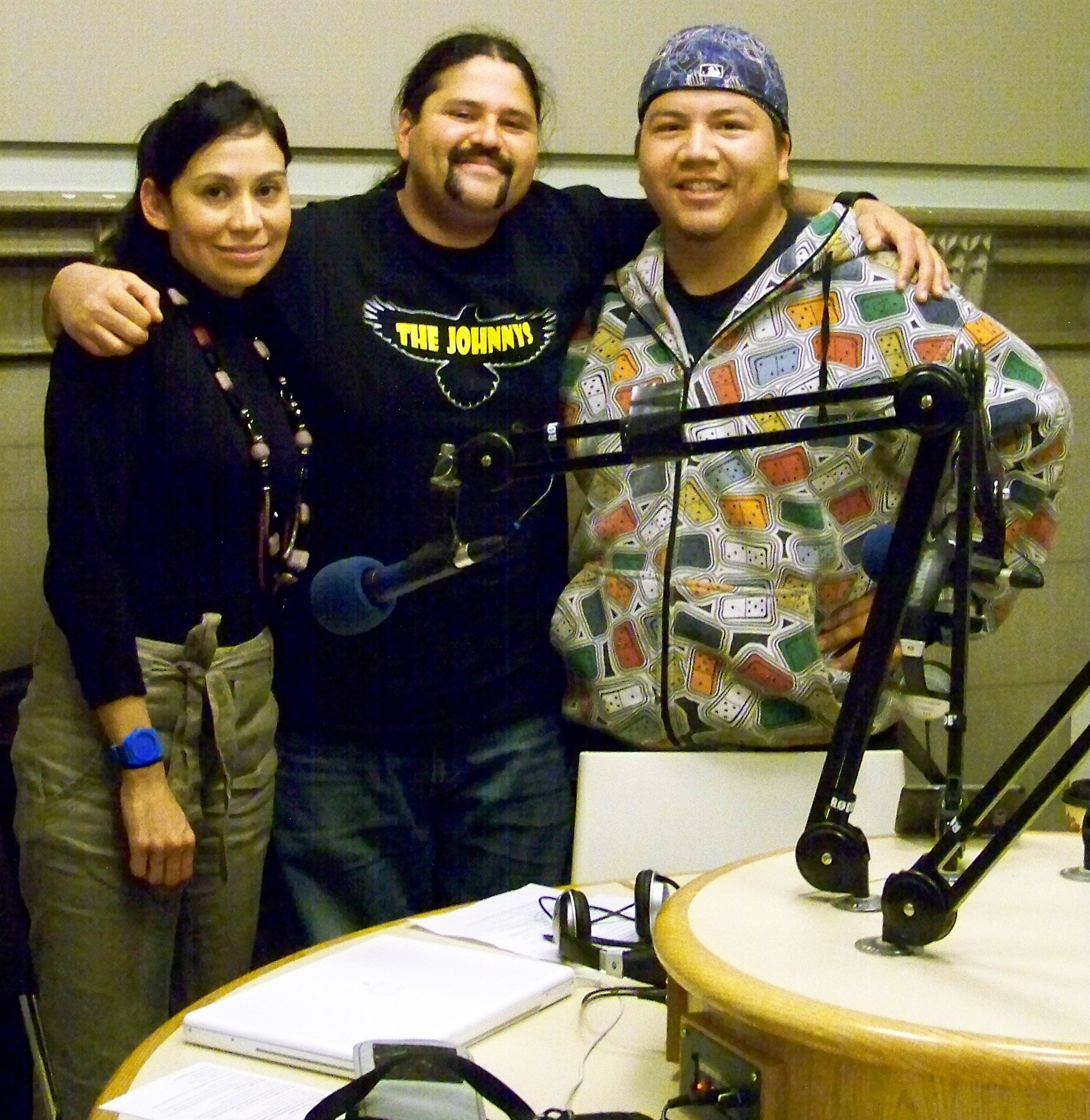
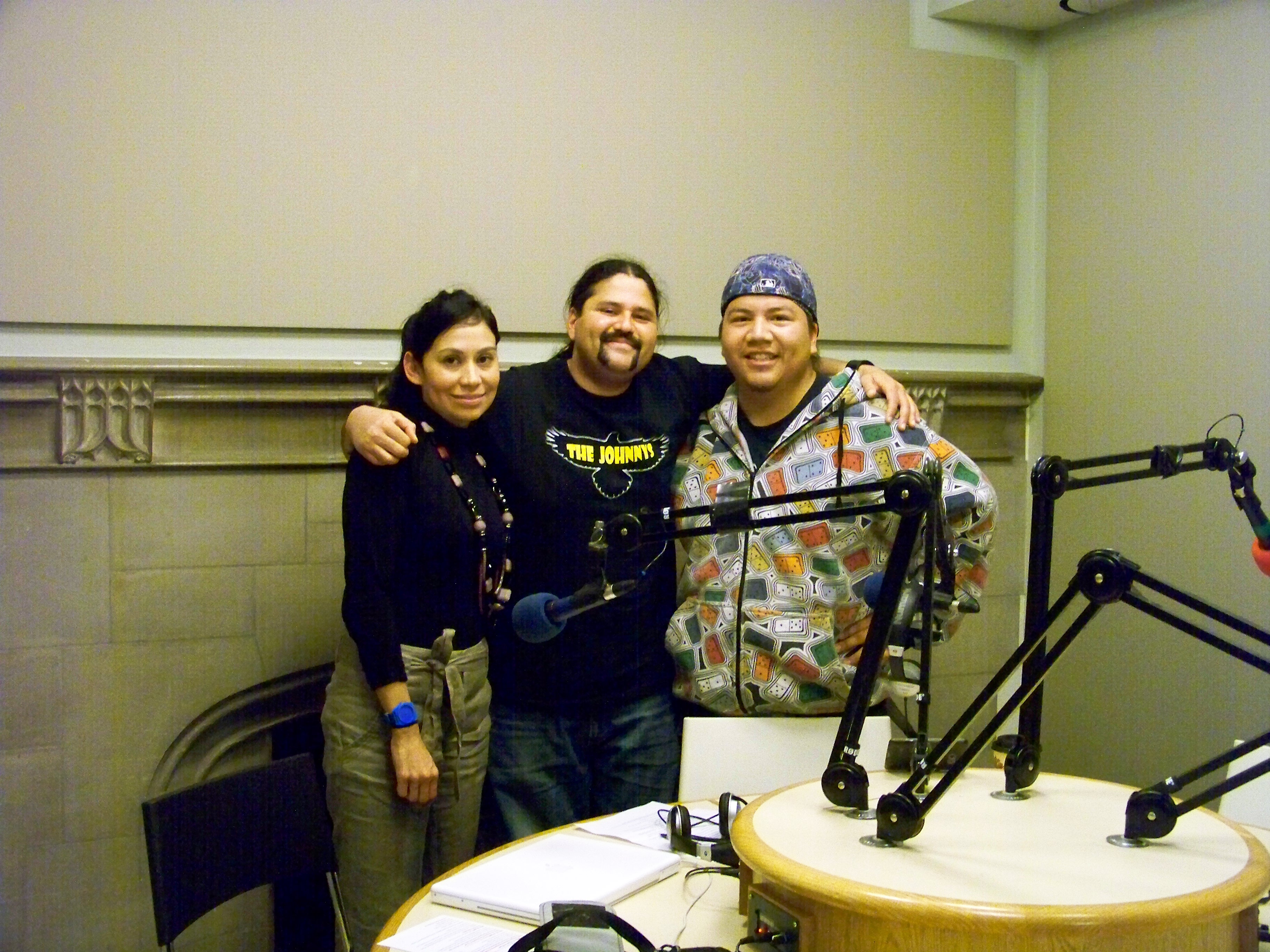
Susan Blight and Lindy Kinoshameg were on the mics with their first two guests as Jamaias Da Costa did tech in a separate room.
There was a calm feel in the studio. Both hosts and their guests chatted, everyone had smiles, and words flowed easily around the room. There were no “ums” and “ahs” or trick questions to stump guests. And the hosts did their research; they knew what they were talking about.
4:30 pm hit and the first half of the show was done. The three guests were thanked for their time, a song was played followed by Lindy reading some news and community announcements.
I shook hands with the previous guests and I sat in a chair, put a pair of headphones on, and moved the mic in front of me to the side. I don’t like things in front of me so close. But it’s radio. Susan looked at me with an expression that said, “Hello! You’re on the radio!”
After realizing what I had done (which made no sense) I started laughing. Susan also laughed. I had to cover my mouth so my giggles didn’t hit the airwaves.
Lindy and Susan introduced me to listeners, welcomed me to the show, and asked me to read a poem.
“We are very lucky because Jorge has agreed to do a reading for us,” said Susan.
They Still Around?, a poem about me reading After and Before the Lightning by Simon Ortiz on the subway, is what I read on air. (Watch the video to see and hear.)
“Meegwetch! Thank you, that was fantastic!” said Susan after I finished.
Then came the questions.
You never know what you’re going to be asked by interviewers. Even when they tell you the focus of the interview things can change and questions that surprise you can come up.
None of that happened with Indigenous Waves.
Not that I don’t welcome the unexpected but it’s great to see people stick to what they said is going to happen.
Susan and Lindy, both followers of blackcoffeepoet.com, knew what was happening on my site and asked about past, current, and future weeks. Throughout the 25 minutes we talked about why I started my site; my special week Remembering Reena Virk Week; local band The Johnnys; the benefits of blogging; who reads and views blackcoffeepoet.com; the political impacts of blogging; electronic vs print media; and my activism.
Like my site, my interview on Indigenous Waves Radio was about me, the guest, but it was also about so much more. The hosts weren’t solely focused on Indigenous issues. They asked questions about my work on different communities and made links.
Although the room was plain, had a table and chairs and a few mics, there was lots of good energy filling the space.
I felt at home.
The comfortable feeling didn’t just come from being around people who looked like me and who had similar beliefs, there was a care in the room, a welcoming feeling that felt like a hug.
The two hosts had only worked with each other two times before our show but it seemed like they’d been working together for years. They knew their roles, sat and talked in a relaxed manner, laughed a lot, complimented each other, and remembered that it was about teamwork and the listeners.
Lindy and Susan described one another as “awesome” a few times.
There was no ego in the room. Neither Susan or Lindy fought for air time. True to the shows name there was a flow, an energy, a force. They took their job seriously but were not anal. There was a real community spirit throughout the entire interview: sharing, smiling, learning, and giving thanks.
After many good questions and a flowing conservation I ended with a poem about my mom: I Use My Mothers Last Name.
I’m listening to Bro Hymn by Pennywise while sipping on a hot coffee, black coffee of course.
Bro Hymn pumps me up and coffee is now a staple for me. With both ingested, song through my ear and coffee down the pipe, I plan to bang out a good post.
The cold weather has brought on a sickness in me. My throat hurts, my chest feels weird, and I’m exhausted. Still, I’m at the coffee shop on a Monday morning working on my site. This is my life. Monday, Wednesday, Friday are blackcoffeepoet.com days.
There is no other option.
I never make plans for either of those mornings. It’s the way it is and has been for a while. One year and two months now.
Hard work is what I believe in and what I attribute to the success of my site. But there’s more than just hard work.
Coming to the page (the laptop in this case) is not always easy. Although I’m my own boss there is a schedule and standard I’ve set. When I think of Monday, Wednesday, and Friday my site is the first thing that pops up. It’s ingrained. I don’t even write down BCP on my to do lists because it’s a no brainer.
People complain about Monday’s, but most people don’t love what they do. I’m different. Pressing every key on my laptop, cutting and pasting my articles on wordpress, and pressing PUBLISH is a great feeling.
Then there’s the days you feel like shit, like today. Those days where you want stay in bed, sleep, lounge around in your room watching TV or cruising the net. That weakness that prevails your entire body and has you questioning how important your work really is that day.
Then, in my case, I think of you, my readers. I think of how I made a commitment to you and myself: 3 days a week blackcoffeepoet.com will be updated with new material.
So, I push through.
I’ve heard and seen so many people I admire put the work in and push through: my writing mom, Lee Maracle; my friend Clifton Brown who was a Muay Thai kick boxing champion; and the best example in my life, my mom.
With no partner to lean on my mom had to do it herself. I remember countless mornings while growing up seeing my mom get up early, put the coffee on, get dressed, do her makeup, and go to work. Many a time she was sick. Real sick. She was the only one with an income in the house, the only provider, the one who manned up while my dad left never to return; so, she got up, worked, kept her commitment to me, and pushed through.
Clifton Brown, former Muay Thai world champ, once told me, “When you’re exhausted, that’s when you push yourself to workout more.” He experienced losses in the ring, injuries, and was left in a room once for three days with no food and bruised and swollen legs after losing an important match, in turn having the promoter lose money. (Things are done very different in Thailand.) He pushed through, trained harder, and eventually became world champion.
Lee Maracle, my writing mom, told me a story of when she was a little girl helping her mom collect clams. The tide was coming in and her buckets were heavy for her young arms. Her mom offered to carry the buckets for her but she persisted, pushed through, and carried those heavy buckets back to shore as the tide came in, hard. Maracle attributes that defining moment as helping her get through many obstacles in life.
In my life I’ve been hospitalized a few times. When I was young I broke my femur (thighbone), the biggest bone in your body. It was a 4 month hospital stay with a long recovery afterward that saw two surgeries, traction, a huge cast, a month of me laid out in bed followed by a wheelchair, a walker, a stroller, a cane, and finally nothing.
I think of those days when I feel down or weak.
Memories of those days give me strength.
We all have moments where we’ve pushed through. Think of them during the tough times and they’ll carry you forward and see you surpass what seems to be a giant roadblock.
The same goes for writing. If you’re stuck, if things aren’t flowing, if what you are writing seems pointless or crappy, keep writing! Keep putting pen to pad, fingers to keyboard, voice to recorder, however you write, push through!
I’ll end with a poem about my biggest inspiration, my mom:

 BROKEN ARROW 2






 Black Coffee Poet