BLACK COFFEE POET READS “THE BULL PEN” AT THE LAUNCH OF DESCANT 150: WRITERS IN PRISON + AN INTERVIEW WITH DESCANT 150 EDITOR JASON PARADISO

2010 has been my biggest year as a writer.  

I was published in The Kenyon Review (Winter 2010) and Descant 150: Writers in Prison (Fall 2010).  

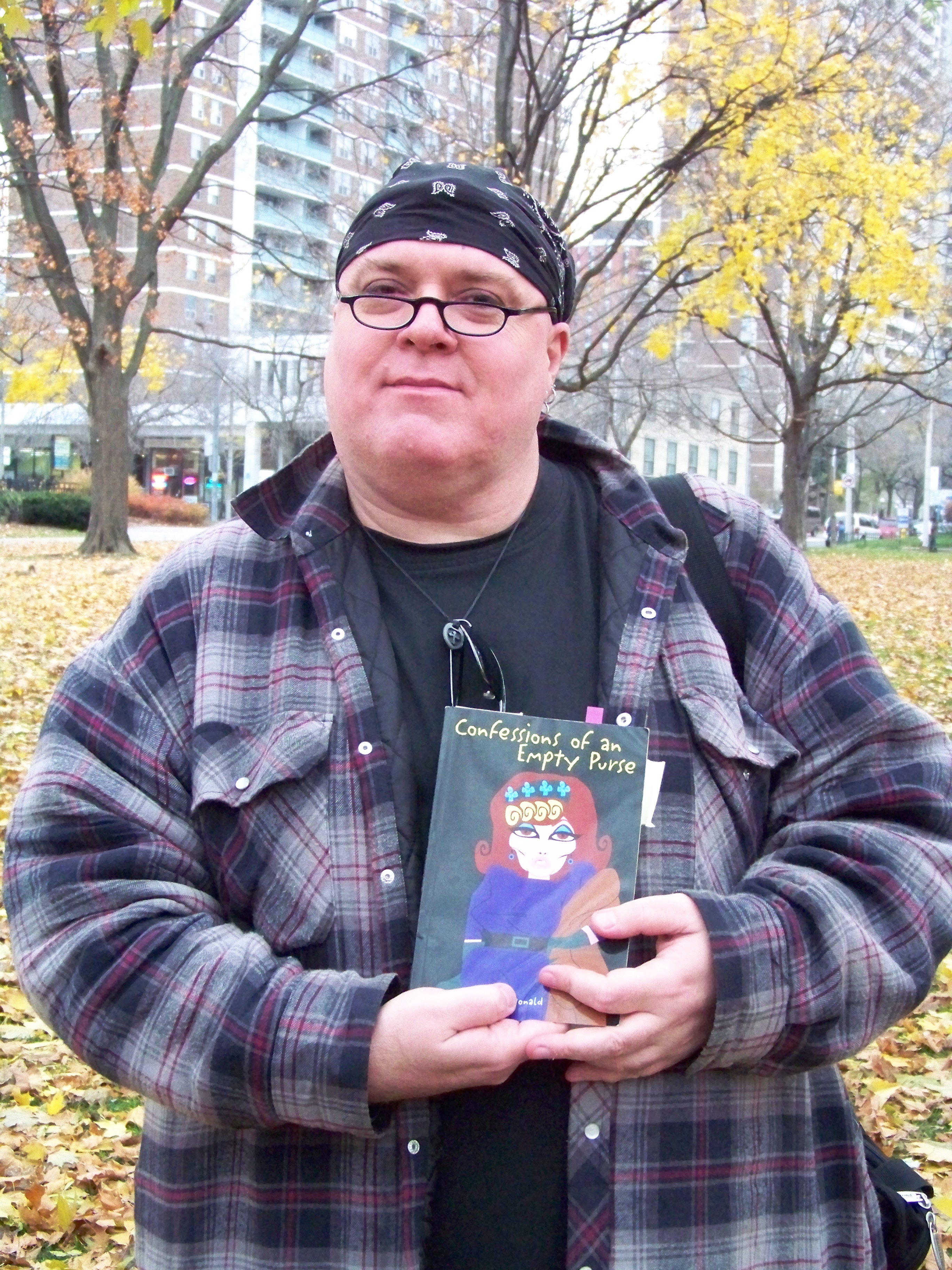
Descant asked me to read my essay The Bull Pen (published in Descant 150) at the October 6, 2010 launch of the issue.  

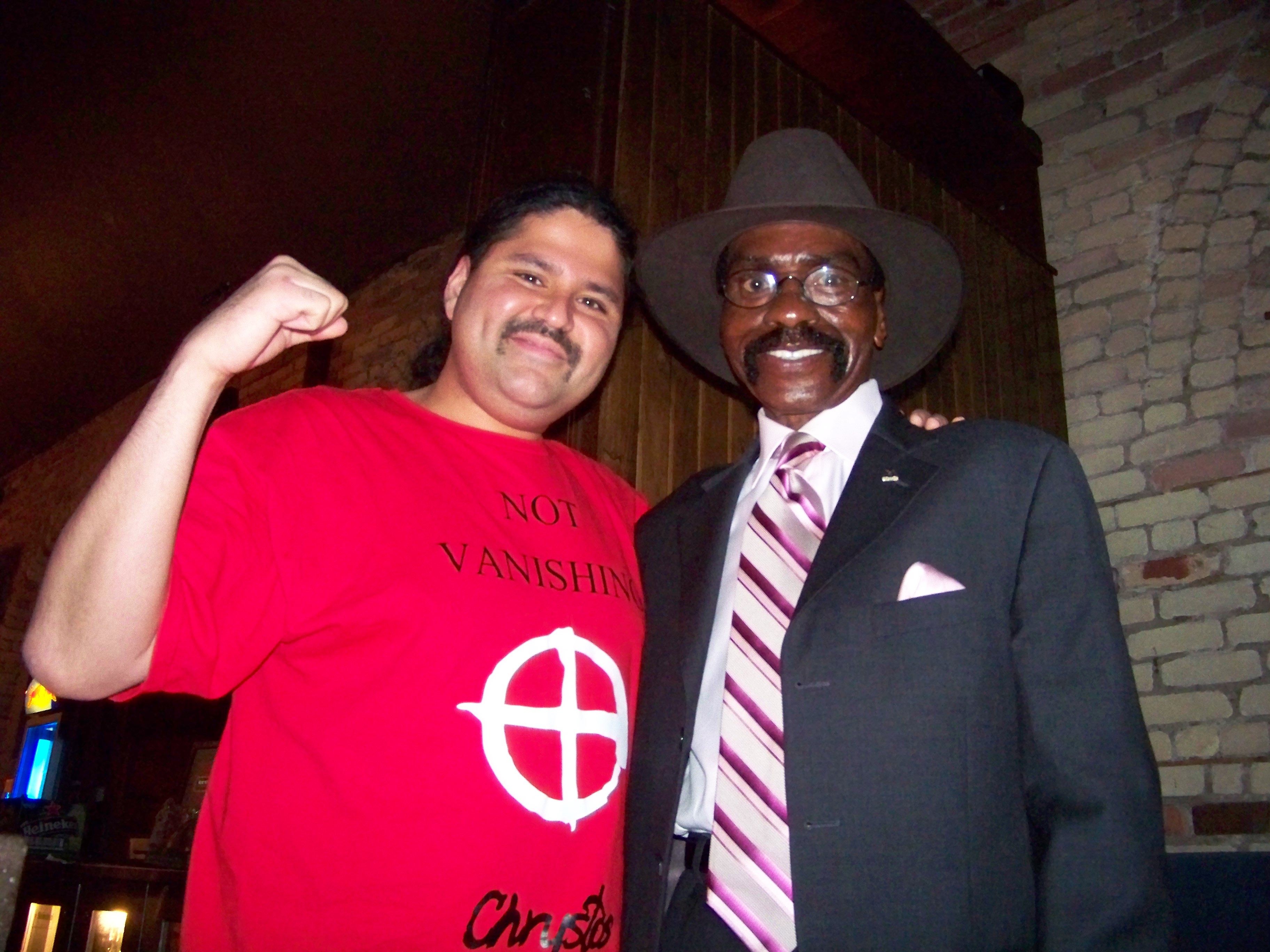
I opened the event and had the privilege of meeting Rubin “Hurricane” Carter, also featured in Descant 150.  Carter also read at the launch.  

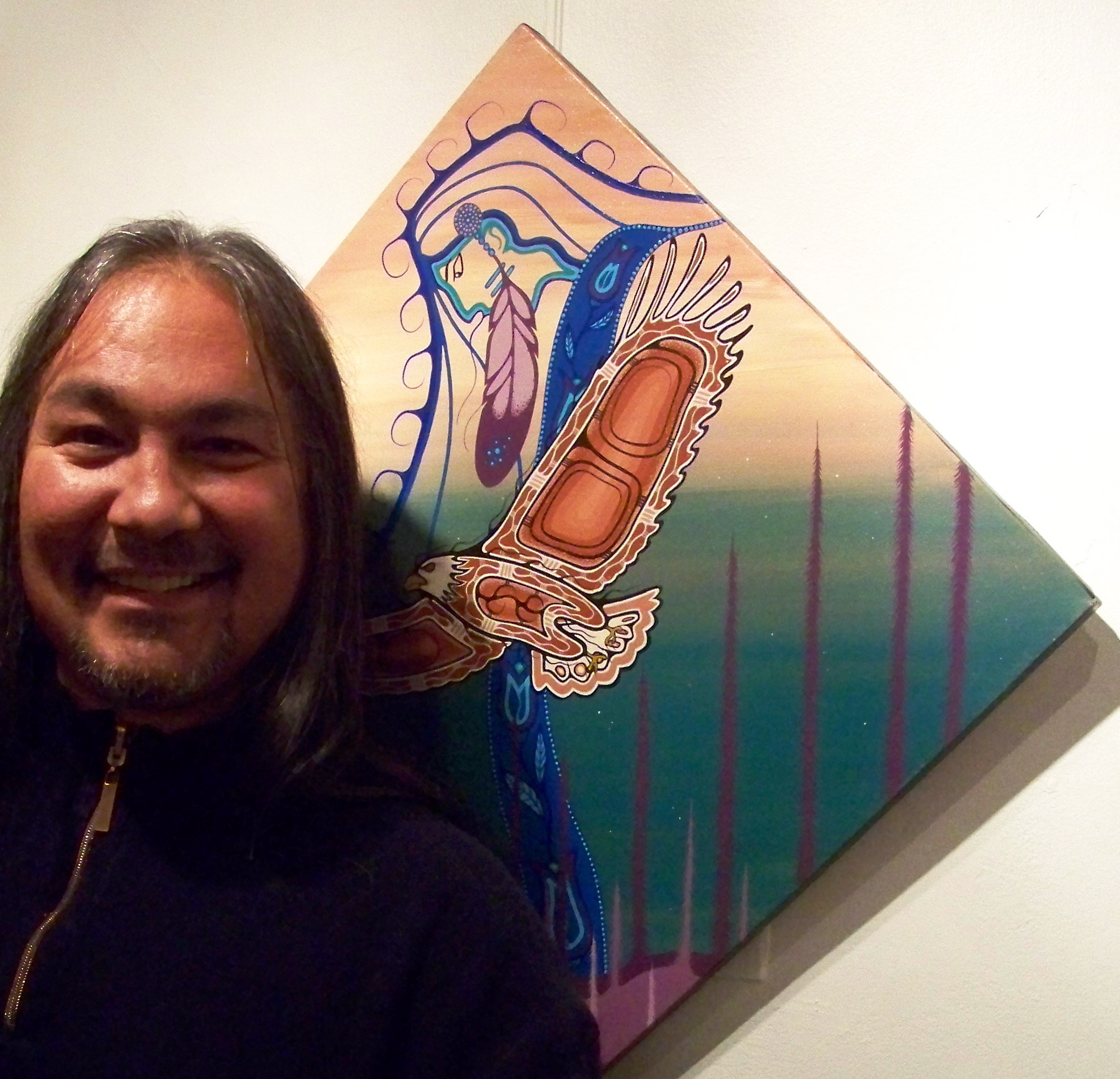
Pictured above are Rubin “Hurricane” Carter and I.  

Please enjoy a video of me reading my essay The Bull Pen at the launch of Descant 150: Writers in Prison.

Interview with Descant 150 Co-Editor Jason Paradiso:

BCP: Why did Descant decide to do the prison issue?

JP: The idea was first suggested a number of years ago after the editorial assistant at the time, piKe Krpan, noticed that we were receiving a number of submissions from prisoners. Descant’s themed issues are scheduled years in advance, and piKe eventually left to pursue other things. The Editor-in-Chief, Karen Mulhallen, then entrusted us with the issue.

BCP: I was told this issue had the highest submissions of any other in the history of Descant. Is this true? What was the selection process? What were you looking for? How long did it take to come up with the final selection that is now Descant 150: Writers in Prison?

JP: I’m not positive, but I think it’s fair to say that Writers in Prison did not receive the most submissions. I’d love to be wrong though. Our main focus was to collect an array of contributions from people (not just writers) who had been affected by the prison system. We circulated our call for submissions as widely as possible. Outside of contacting the usual literary people, we contacted social service agencies, prisoner justice organizations, in-prison volunteer groups. We sent letters to the Inmate Welfare Committees of over thirty prisons of various sizes and securities across the country. Once the submission deadline had passed, the three of us spent a few months reading through and discussing the submissions.

BCP: Some of you are writers. Did being a writer inform your editing?

JP: I write a lot of different types of things, and I also get the opportunity to edit a lot of different types of things. I’d like to think that writing and editing have a symbiotic relationship.

BCP: Was it hard to juggle submissions that were written in different genres?

JP: Not at all. The three of us (and our fellow co-editors) regularly read a wide range of submissions for Descant.

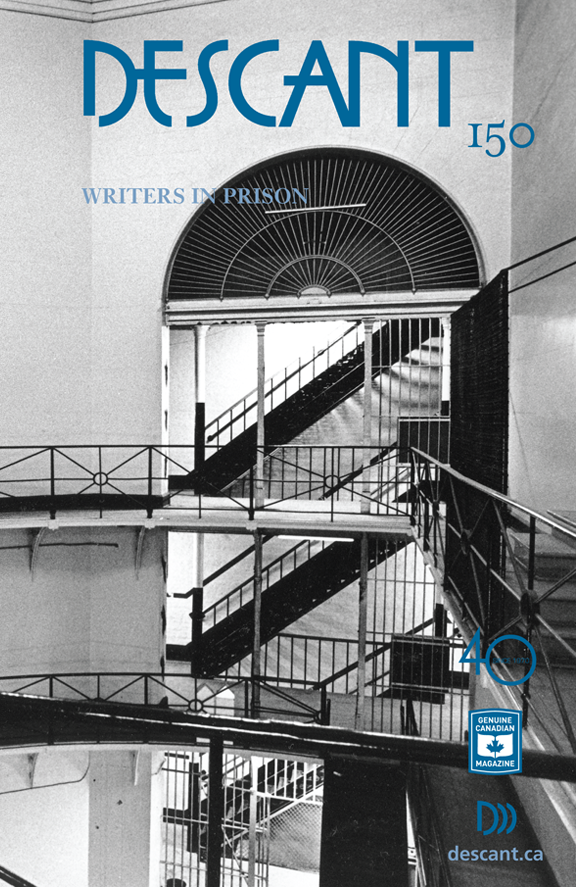
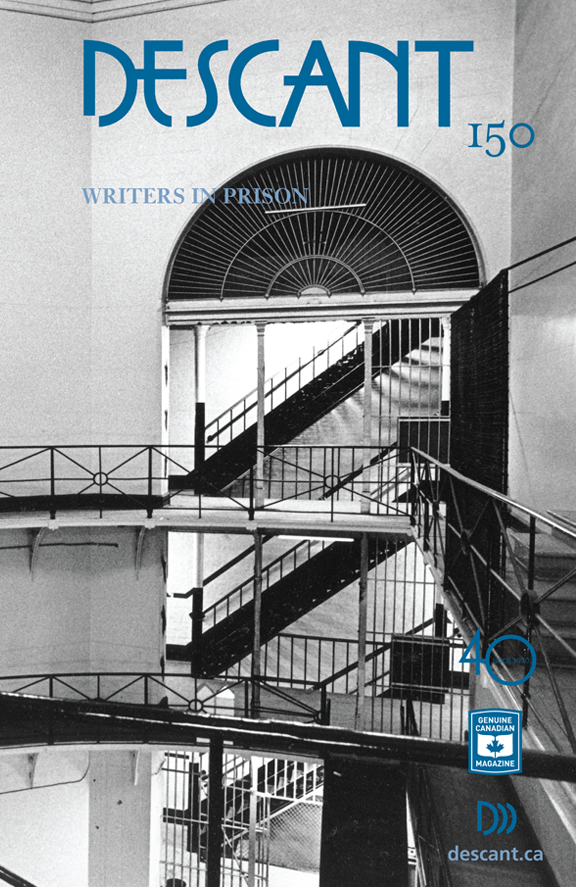
BCP: The cover of Descant 150 is an old photo of the Don Jail in downtown Toronto, Canada. While the issue was being put together several men were murdered in the Don Jail (November/December 2009). How did that make you feel? What were/are your thoughts?
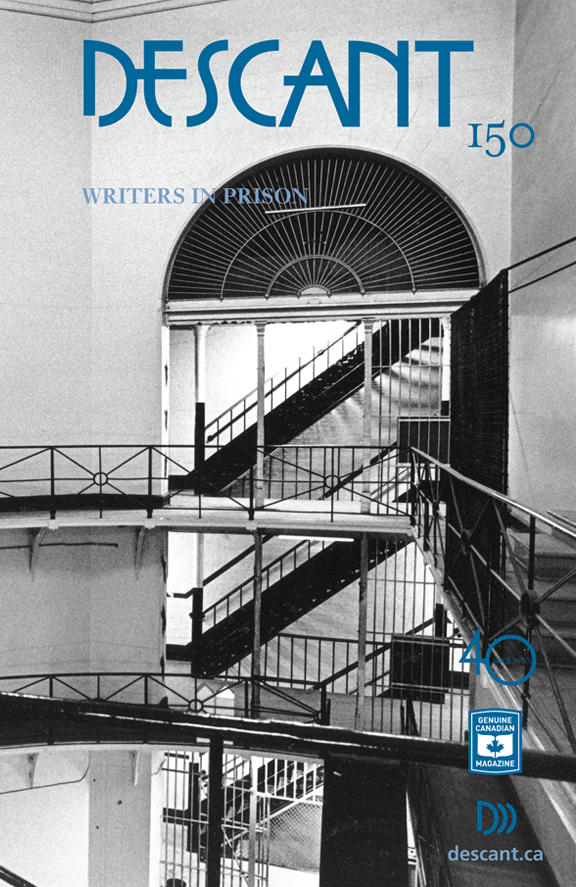
JP: For a couple of months, I lived directly across the street from the Don Jail. It sort of became a symbol of my old neighbourhood and since then whenever it comes up in the news I always pay a little more attention. I remember hearing about the third death and thinking about my old porch and the overcrowded prison across the street. We could do an entire issue on the Don Jail. There were a number of tragic prison-related news stories that caught my attention over the years while we worked on the issue. I’m not sure that I would have taken note of any of them otherwise.

BCP: None of you have been incarcerated and none of you are people of colour. Did it feel strange to be editing an issue about writers in prison with North American prisons being largely housed with peoples of colour?

JP: If anything it felt strange to be editing an issue about writers in prison. Race/ethnicity didn’t play into the way I felt (unless that’s what the piece was trying to evoke). Editing the work of a multiple murderer: that felt strange.

BCP: Most of the contributors for Descant 150: Writers in Prison have never been incarcerated. Can you comment on that?

JP: The majority of contributors have been directly affected by the prison system. A good portion of them have been incarcerated, some of them have volunteered/worked with prisoners and more than a few of them are currently being held. There are also a couple of contributors who have been separated from loved ones, stuck on the outside. We also accepted a few pieces by those with looser connections to prisons because they were well-written and intriguing. Prisons, as institutions and symbols, affect people in different ways.

BCP: Much of the writing in Descant 150 is political. Were you open to, or did you also want, writing about the rare happy stories of prison life? Why or why not?

JP: We were open to any and all well-crafted prison-related work.

BCP: Do you see Descant150 as a form of activism?

JP: We were able to help tell thirty-plus stories of incarceration and oppression and if they get people to talk then I certainly do.

BCP: Non-accessible academic writing, long and boring speeches, and yelling slogans on a megaphone are given precedence over poetry/literature in the activist world.

What role do you see poetry/literature having in activism? Other than literature journals such as Descant, how can poetry/literature get more than a quarter of a page in a magazine (if at all) and be used as more than an opener at political events?

JP: This is a good and complicated question. Poetry/literature can play a large role in getting people to start thinking about, discussing and understanding various situations. The new forms of social media are certainly helping writers to get their messages out.

BCP: Aboriginal peoples are the highest percentage per population who are incarcerated in Canada. There are no pieces written by Aboriginal peoples in Descant 150 and no mention of this sad colonial reality.Why?

JP: A valid point and a good question. There’s really no specific reason other than that, despite our best efforts, our call for submissions didn’t reach far enough.

BCP: Was reading the poetry/literature of incarcerated peoples a big help in understanding and forming Descant150?

JP: I’m not sure how big of a help it was considering that we were restricted by the submissions we received, but it certainly did help.

BCP: Rubin “Hurricane” Carter is featured in Descant 150. How did that come to be? Were you looking at other high profile names to feature in the issue. 

JP: The Rubin Carter and Ken Klonsky piece, Surviving Prison, came in the mail and was considered just like everything else. We didn’t solicit/commission any of the written work. It’s possible that Carter and Klonsky heard about our call for submissions through a member of the Descant family, but if that’s the case the three of us were unaware.

BCP: Did you think about teaming up with PEN Canada for Descant 150? Did any info by PEN Canada help out with the issue?

JP: There was some contact in the initial stages a couple of years ago, but I can’t say whatever became of it.

BCP: What advice do you have for people thinking of editing or starting up a literature journal?

JP: I’m not the person to ask for advice about starting up a journal (there were 132 issues of Descant before I was ever involved).

BCP: What advice do you have for young writers hoping to be published in literature journals such as Descant?

JP: a) submit your best work b) be patient c) rework your best work and resubmit. Try not to take rejection personally because it’s more than likely nothing personal.

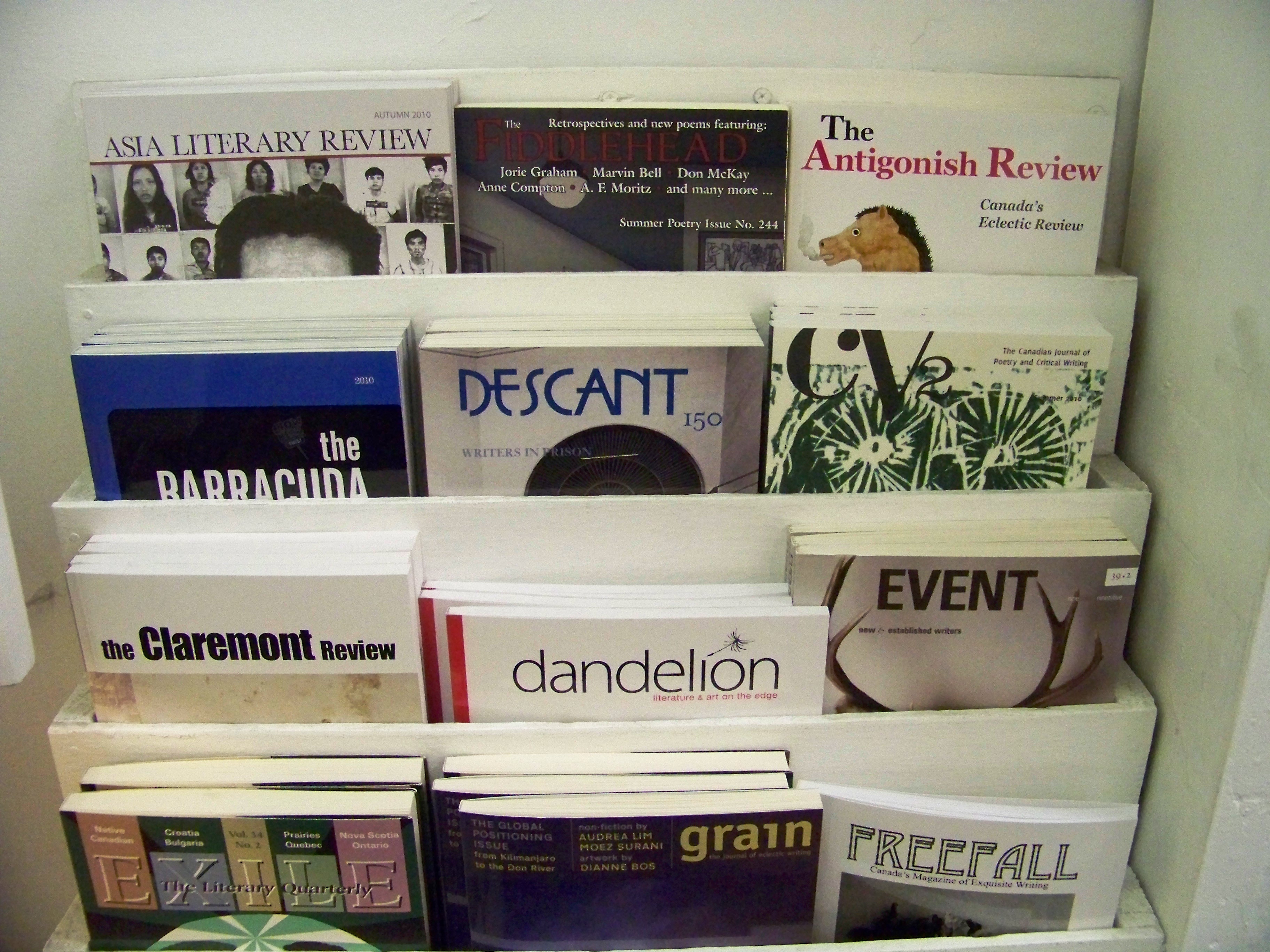
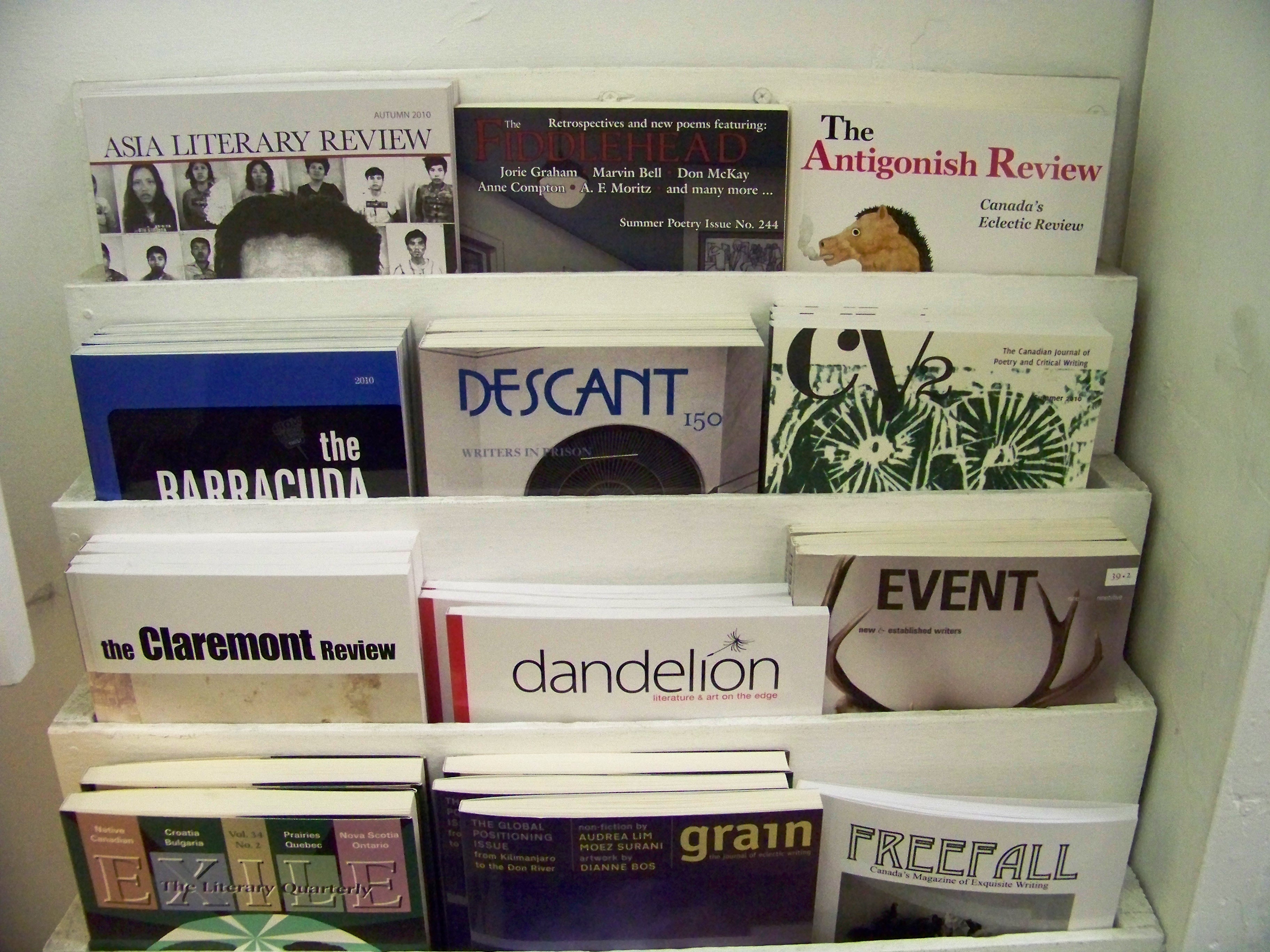
Get your issue of Descant 150: Writers in Prison in stores now:
Tune in to Black Coffee Poet Monday December 6, 2010 for a special week: Remembering the Forgotten Women of December Sixth.

********************************************************************************
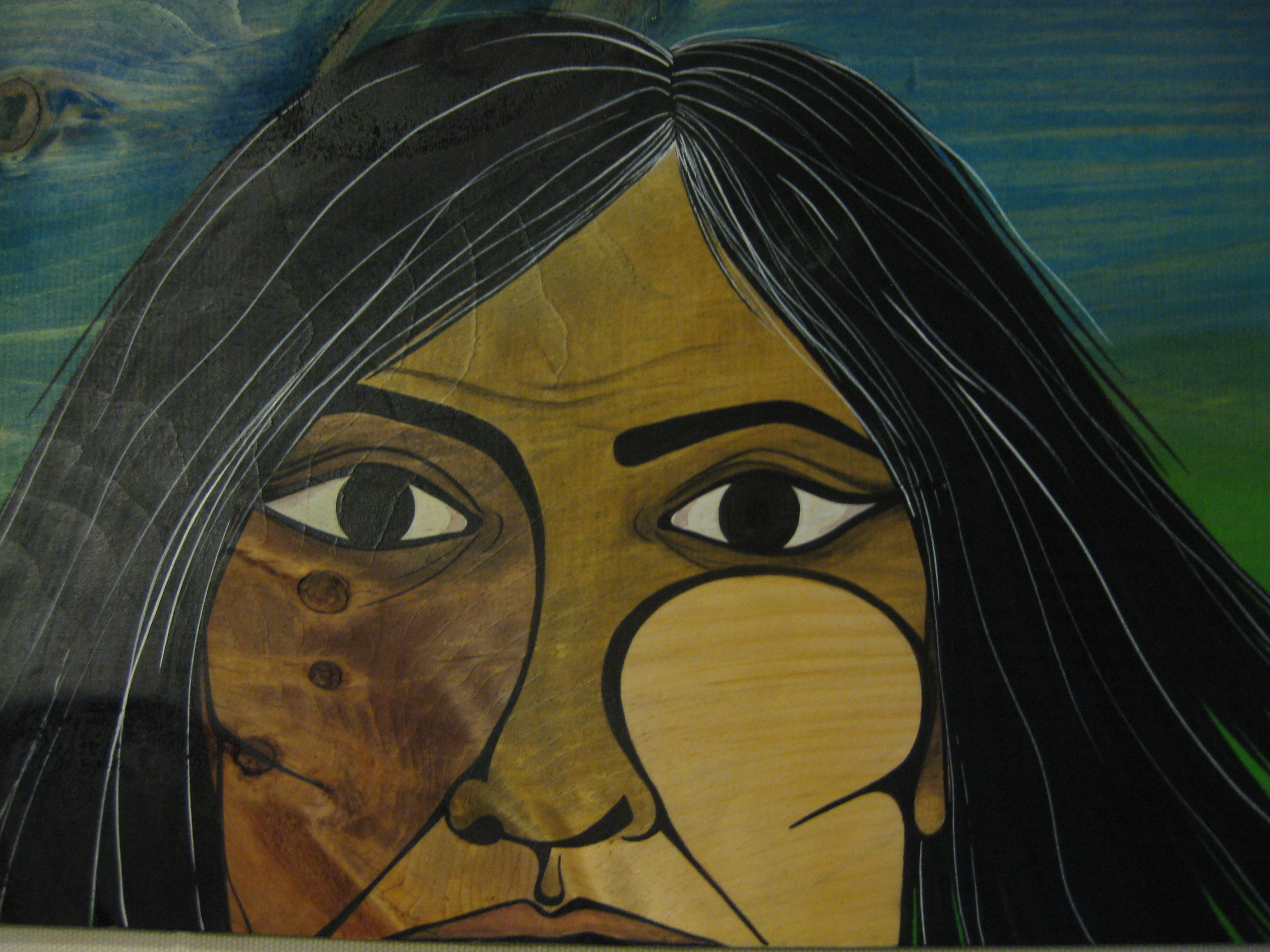
The Holiday Arts Cafe:

An event featuring local artists selling art and crafts, accompanied by readings and performances.

 Saturday December 4, 2010 2pm to 9pm, readings/performances from 6pm to 7:30pm 28 Marshall St. (south of Dundas, off Brock).

Come spend your saturday eating delicious vegetarian food, supporting local artists and checking off all those special people on your holiday list (items from as little as 2$), all the while enjoying some fabulous queer entertainment.

Featuring: Alyssa Poma, Belinda Poolay, Clara Ho, Karleen Pendleton-Jimenez and Trey Anthony.

For inquiries email: janetmrl@yahoo.com

********************************************************************************

Posted in Poetry | Tagged , , , , , , , | 2 Comments

INTERVIEW WITH DESCANT 150: WRITERS IN PRISON EDITORS AND D150 LAUNCH PHOTO ESSAY

Black Coffee Poet is honoured to have been chosen as a contributor for the Descant 150: Writers in Prison issue.  Below is a photo of BCP and Descant 150 editors Matt Carrington, Kathryn Franklin, BCP, Jason Paradiso, and Production Editor Kim Kim.

Enjoy Kathryn Franklin’s thoughts on Descant 150: Writers in Prison:

BCP: Why did Descant decide to do the prison issue?

KF: It was a subject that has been percolating for a while during our editorial meetings. Over the years we have received so many submissions from inmates, mostly in Canada and the US, as well as political prisoners and writers in exile. Truthfully, I think it was a really bold choice for editor-in-chief, Karen Mulhallen, to kick off Descant’s 40th Anniversary with this issue.

BCP: I was told this issue had the highest submissions of any other in the history of Descant. Is this true? What was the selection process? What were you looking for?How long did it take to come up with the final selection that is now Descant 150: Writers in Prison?

KF: I wasn’t aware that this issue had the highest submissions! You’ll have to tell me where you heard that. I love to think that there are Descant rumours circulating! There really was no magic to the selection process. My interest is first and foremost on the quality of the work presented to me. It took months going through the pieces that I felt spoke to the theme of the issue, and then, of course, I had to confer with Matt and Jason.

BCP: Some of you are writers. Did being a writer inform your editing?

KF: Most of the writing I’m currently involved with is academic so it was actually really refreshing to be reading fiction and poetry as well as reading essays that had nothing to do with my dissertation.

BCP: Was it hard to juggle submissions that were written in different genres?

KF: Not especially.

BCP: The cover of Descant 150 is an old photo of the Don Jail in downtown Toronto, Canada. While the issue was being put together several men were murdered in the Don Jail (November/December 2009). How did that make you feel? What were/are your thoughts?

None of you have been incarcerated and none of you are people of colour. Did it feel strange to be editing an issue about writers in prison with North American prison being largely housed with peoples of colour?

Most of the contributors for Descant 150: Writers in Prison have never been incarcerated. Can you comment on that?

KF: I hope it’s all right, but I’m going to amalgamate the above three questions because I think they all speak to a similar important issue. The call out for the Writers in Prison issue was asking for submissions concerning prisons that are both physical and metaphorical. From Bedlam to the Gulag, prisons have been depicted in many forms, and being in prison does not necessarily require one to be in an institution. My interest, therefore, was to go beyond the typical prison narrative and open up the dialogue about what it really means to be in exile, which I think speaks to issues of race and gender that go beyond the prison bars.

BCP: Much of the writing in Descant 150 is political. Were you open to, or did you also want, writing about the rare happy stories of prison life? Why or why not?

KF: It wasn’t really a question about maintaining an aura of austerity for the issue, rather it was the quality of the writing that informed our issue.

BCP: Do you see Descant150 as a form of activism?

KF: All writing is a form of activism.

BCP: Non-accessible academic writing, long and boring speeches, and yelling slogans on a megaphone are given precedence over poetry/literature in the activist world. What role do you see poetry/literature having in activism? Other than literature journals such as Descant, how can poetry/literature get more than a quarter of a page in a magazine (if at all) and be used as more than an opener at political events?

KF: This is a really good question. Perhaps I’m just being idealistic but I think because of the rise of social media, poets and writers have way more opportunity to express their message. I mean, look at this interview right now! (yep, things have just gone meta).

BCP: Aboriginal peoples are the highest percentage per population who are incarcerated in Canada. There are no pieces written by Aboriginal peoples in Descant 150 and no mention of this sad colonial reality. Why?

KF: As I mentioned before, Descant 150 wasn’t exclusively concerned with writers in physical prisons. That being said, you rightfully point out that there are no Aboriginal peoples (at least that we know) that were published in this issue. I can’t answer why, but the fact that we’re discussing this as a result of the publication of our issue at least demonstrates the need for this dialogue especially within the Canadian literary landscape.

BCP: Was reading the poetry/literature of incarcerated peoples a big help in understanding and forming Descant150?

KF: Absolutely. As you had pointed out before, none of us had ever been incarcerated and therefore reading poetry and literature from people writing to us from jail was particularly instructive in understanding what it means to be so isolated from traditional society as opposed to reading works from those who were in more imagined prisons.

BCP: Rubin Hurricane Carter is featured in Descant 150. How did that come to be? Were you looking at other high profile names to feature in the issue?

KF: Dr. Carter has known our former managing editor, Mary Newberry, for a very long time (Mary details this relationship very nicely in her co-editor’s diary in the issue) and he submitted his piece for the issue. While we are very pleased with Dr. Carter’s piece, we actually were not actively approaching any high profile names. We wanted the writing to be the focus.

BCP: What advice do you have for people thinking of editing or starting up a literature journal?

KF: Have patience and time.

BCP: What advice do you have for young writers hoping to be published in literature journals such as Descant?

KF: Patience and time.

Below is a photo of BCP and Rubin “Hurricane” Carter at the launch of Descant 150: Writers in Prison

Please enjoy Matt Carrington’s thoughts on editing Descant 150: Writers in Prison:

BCP: Why did Descant decide to do the prison issue?

MC: As discussed in the preface to the issue, this issue came about because Descant was receiving regular submissions from prisoners. PiKe Krpan was Descant’s editorial assistant (and later became a co-editor) and began corresponding with prisoners who were submitting to Descant. She worked previously with PEN Canada and was, as far as I know, engaged in prisoner justice activism. The issue was her idea. She later decided to leave Descant for other projects.

BCP: I was told this issue had the highest submissions of any other in the history of Descant. Is this true? What was the selection process? What were you looking for? How long did it take to come up with the final selection that is now Descant 150: Writers in Prison?

MC: Although I never know the exact number of submissions for other guest-edited, special issue of Descant, my understanding is that the number of submissions for this issue was relatively low. I know that the forthcoming Ghosts issue has received almost twice as many submissions, and it’s a similar case with the Cats/Dogs issue (which became two separate issues due to the large number of submissions).

Kathryn, Jason, and I worked together reading the submissions. We were looking primarily for texts from individuals who had experienced incarceration, but were also looking for sophisticated literary texts. Of course this latter evaluation contains a difficult value judgment, but this evaluative task is essentially the task of editors. We were looking for finished texts ready for publication, although Jason did a great job championing a very long text by a writer currently in prison, editing it down to a suitable length.

BCP: Some of you are writers. Did being a writer inform your editing?

MC: I write and study poetry. This means that I was looking for poetry, and was more open to non-traditional forms than other editors might have been. We did not receive a lot of poetry, and so did not end up publishing as much poetry as I would have liked.

BCP: Was it hard to juggle submissions that were written in different genres?

MC: No. We received a wide range of genres. It’s understandable that a themed issue focused on a particular experience provokes a fair amount of prose life-writing.

BCP: The cover of Descant 150 is an old photo of the Don Jail in downtown Toronto, Canada. While the issue was being put together several men were murdered in the Don Jail (November/December 2009). How did that make you feel? What were/are your thoughts?

MC: I did not know about the murders. It’s perhaps worth noting that the photos of the Don Jail in the issue are of the old Don Jail, which has not been in operation since the ’70s (and was deemed unfit for human occupation, as shown by the photos).

BCP: None of you have been incarcerated and none of you are people of colour. Did it feel strange to be editing an issue about writers in prison with North American prisons being largely housed with peoples of colour?

MC: I agree that prisons are a racialized space; prisons are the most visible means of managing subjects who are antagonistic to contemporary, neoliberal discourses and institutions. It is not, however, fair to assume that I have had no contact with incarceration through either family or friends; it is also true that I bring empathy and anti-oppression politics to my reading, writing, and editing. I can repeat here what I said at the launch, that reading the submissions for this issue was a humbling experience.

Does the question imply that we were the wrong people to edit this issue? The three of us took on this project because we believed it was important and because it would have otherwise not been published. I will leave it to others to consider whether we should have approached someone with more direct experience with incarceration to take on this project.

BCP: Most of the contributors for Descant 150: Writers in Prison have never been incarcerated. Can you comment on that?

MC: A large number of the contributors have experienced incarceration personally, have worked with people who have been incarcerated, and several are currently in prison.We decided to also accept pieces from writers who had less (explicit) experience with prison, because we thought the texts deserved to be included. The three of us worked hard to circulate the call for submissions outside of Descant’s usual audience, specifically to prisons, to groups that work with recently incarcerated individuals, and to other publications and prisoner justice organizations. We did not solicit any submissions directly; we then chose the best pieces that we received.

BCP: Much of the writing in Descant 150 is political. Were you open to, or did you also want, writing about the rare happy stories of prison life? Why or why not?

MC: Yes, I was open to happy stories of prison life. However, I was also wary of using the prison setting to tell exotic stories that have been cleaned up for easy consumption. I did not want to romanticize prisons. The photos of the Don Jail, for example, do a great job of showing that beauty can be found anywhere, while also showing what a horrible place the Don Jail was.

BCP: Do you see Descant150 as a form of activism?

MC: I do. I think it is important to give voice to writers who are hidden by institutional structures. I also think that this issue of Descant deals with racialization, class oppression, and other oppressions more than any other issue Descant (but I can’t speak to all the issues published in the decades before my involvement).

BCP: Non-accessible academic writing, long and boring speeches, and yelling slogans on a megaphone are given precedence over poetry/literature in the activist world.

What role do you see poetry/literature having in activism? Other than literature journals such as Descant, how can poetry/literature get more than a quarter of a page in a magazine (if at all) and be used as more than an opener at political events?

MC: This is a really complicated question. I do see a role for poetry and literature as part of political activism. My thinking follows theorists like Foucault in seeing that fiction can tell truths that the facts of essays and journalism cannot. I believe that poetry can function as a kind of knowledge that makes possible things that are otherwise impossible. All of this is utopian and possibly naïve.

BCP: Aboriginal peoples are the highest percentage per population who are incarcerated in Canada. There are no pieces written by Aboriginal peoples in Descant 150 and no mention of this sad colonial reality. Why?

MC: Good question. We didn’t receive any submissions from aboriginal people that I know of.

BCP: Was reading the poetry/literature of incarcerated peoples a big help in understanding and forming Descant150?

MC: I read some Canadian writing, such as the recent anthology Words Without Walls: Writing & Art By Women in Prison in Nova Scotia.

BCP: Rubin Hurricane Carter is featured in Descant 150. How did that come to be? Were you looking at other high profile names to feature in the issue?

MC: My understanding is that he submitted like anyone else. I know he is an acquaintance of one of Descant’s former managing editors. I was not particularly interested in high-profile names.

BCP: Did you think about teaming up with PEN Canada for Descant 150? Did any info by PEN Canada help out with the issue?

MC: I know that there was some contact with PEN Canada. I don’t know what happened with this. PEN Canada did not help with the issue.

BCP: What advice do you have for people thinking of editing or starting up a literature journal?

MC: I think that literary magazines are essential to literary culture. They should be the places where experiments are taken, where pieces are published that are published nowhere else. If a magazine already exists that publishes the kind of work you want to publish, I would reconsider your project. I think that the move to publishing online makes a lot of sense, since printing and distribution can be very expensive. No one, of course, will ever make money running a literary magazine.

BCP: What advice do you have for young writers hoping to be published in literature journals such as Descant?

MC: Submit. Write a lot. Learn to be OK with rejection. Submit again. There are a lot of literary magazines in Canada. Look for the magazines that publish the sort of work you write.

Get your issue of Descant 150: Writers in Prison in stores now:

Tune in to Black Coffee Poet Friday December 3, 2010 for a video of Black Coffee Poet reading his piece “The Bull Pen” featured in Descant 150: Writers in Prison.

Posted in Poetry | Tagged , , , , | Leave a comment

DESCANT 150: WRITERS IN PRISON

Descant 150: Writers in Prison

Edited by Kathryn Franklin, Matt Carrington, and Jason Paradiso

Reviewed by Rain Keeper

This issue of Descant magazine is all about writers in prison. It’s an important piece of work. The writers lament their sorrows, separation from society, recidivism and political exploits. Voices speak out from the bowls of prisons across worlds. These are fellow writers who one day took a turn for the worst in life, maybe for no apparent reason, because they thought it was a good idea at the time. They’ve already been judged and found guilty, be it for crimes great or small, and in cases that have come unraveled through political endeavors.

I’m not concerned about whether or not they deserved to be in prison because the poetry so beautifully describes the soul and mourns a dull hollow drone from the heart.

I’ve never been in prison, nor can I comprehend what it would be like inside, save for reform school. I know I’ve done enough dumb things in my life time to warrant a few life terms, I’d probably be cell mates with some of scribes writing poetics for Descant.

The Writers in Prison issue envisions the true nature of prison: how people are taught to vilify themselves and to weep not for their sins. Sorrow is replaced by despair, patience replaced by desperation, and humanity broken down to be replaced by hate.

Dorothy Field, writer of Inside Guy: Who They Are, tells a tale of living in a no man’s land between clean and unclean, having to choose between an unforgiving society and hell. She places her root of thought midway: guys so quiet you want to speak for them. Hardcore living begets hardcore time is what I think she’s saying, and all crime is only one step away behind bars.

Life will always outweigh the variables. For some, prison life is most important, writes Paul Brown, Prison Poets, because freedom is on the other side of the wall and yet only inches from grasp. He writes about the realization that he’s made mistakes but can’t seem to fathom the normal values that keep him inside his own prison, forever frolicking in memories of lost love. And there’s a candid realization that it doesn’t have to be this way. It seems to me he’s one of the very few who really knows the difference.

Gifted children born with intelligence are being snuffed out says Concetta Principe in Al Aqsa Intifada; a very real and dangerous game of truth or dare politics is being played out with the lives of her loved ones. This is a game I know all too well, when I myself was whisked away into a sea of confusion and a world of assimilation, where death’s face is colonialism. Be they friend or foe, bestowed adulthood can’t take the place of son or daughter. Heaven can always wait till the children grow old, till their hate subsides and their hearts flow with peace. Principe composes her heart and mind not with just mere words but with conviction.

Descant 150: Writers in Prison will give you haunting visions. The writing speaks of loss, whether it’s empowerment, the little white house with the white picket fence, or that cute girl next door. Memories and dreams that were once actual people full of life now faded. Where do the boundaries lie between prisoner and poet, empowerment and freedom asks Paul Brown in his poem Prison Poet that even that tiny whiff of freedom can be a powerful catalyst for change.

Descant 150: Writers in Prison is a step into uncharted waters. Inmates put their vulnerabilities at the mercy of people like myself. But what they don’t know is they are teaching us undiscovered levels of fearless abandon. Take a chance and you discover it’s not always about pen and paper (or in my case laptop and word processor). It’s about responsibilities and being responsible. Or, as my grandmother use to say: Who’s minding the store.

Rain Keeper is an accomplished Technical Administrator and Clerk of Statistics Canada in Ottawa. Upon leaving the Federal Government in 2000 after twenty years of service, Mr. Keeper moved to Toronto to pursue his interests at the not-for-profit level. Keeper has worked for a variety of organizations for the past 10 years such as NaMeRes (Native American Mens Residence), Evangel Hall Mission and the Parkdale Activity – Recreation Centre. Mr. Keeper has also served as a Forensic Support Security Officer patrolling the rough areas of Toronto’s high risk neighborhoods. Keeper is now working on his first novel and is pursuing a writing career; this is his first published book review.

Tune in to Black Coffee Poet Wednesday December 1, 2010 for an inclusive interview with the editors of Descant 150: Writers in Prison.

Posted in Poetry | Tagged , , , , , , , , , , | Leave a comment

BCP HONOURS INDIGENOUS SOVEREIGNTY WEEK 2010 WITH CREE POET CANDACE BRUNETTE READING HER POETRY

This is the last post on Black Coffee Poet dedicated to Indigenous Sovereignty Week 2010.  We started by featuring Marilyn Dumont, a very strong female poet, who shared her wisdom via text and interview.  We are now ending our week with another strong female Aboriginal poet in Candace Brunette.

I first met Canadace Brunette at First Nations House University of Toronto in 2005.  She taught a free Yoga class for students. Canadace was always friendly, kind and understanding.  You could see she took her spirituality seriously and practiced it via giving of herself in different ways.  

Candace and I built a strong friendship that is still strong today.  Lots of sharing, caring, and laughter.  You can hear it in her poetry.  

Enojy!

Tune in to Black Coffee Poet Monday November 29, 2010 for a review of “Descant 150: Writers in Prison”.  

********************************************************************************
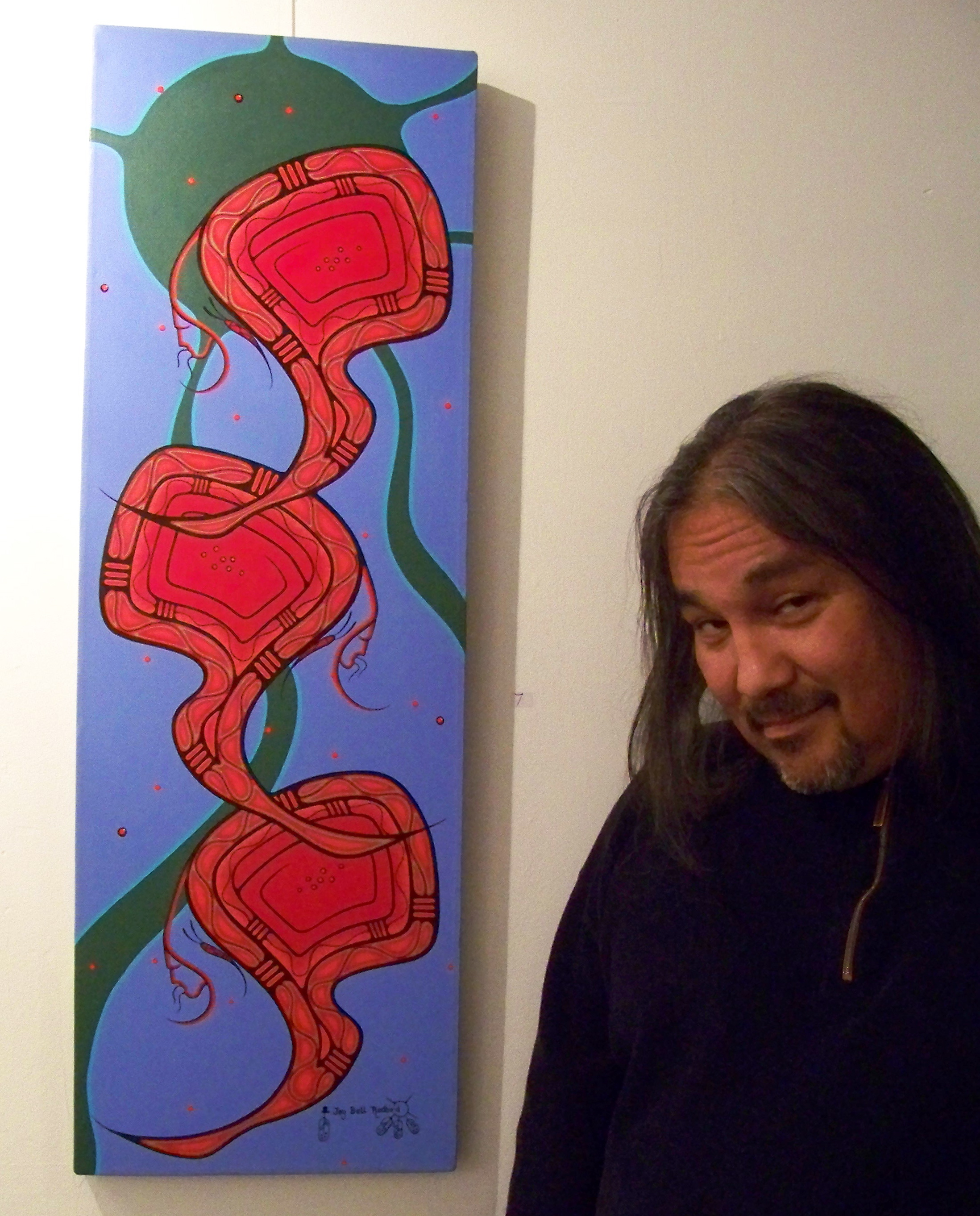
REDBIRD ARTIST GALLERY 

1216A Dufferin Street 

Toronto, ON, Canada


http://www.jaybellredbird.com

Email: jredbird@hotmail.com

Phone: 416-531-4375 or 416-985-2516

********************************************************************************


Posted in Poetry | Tagged , , , , , | Leave a comment

BCP HONOURS INDIGENOUS SOVEREIGNTY WEEK 2010: INTERVIEW WITH CREE/METIS POET MARILYN DUMONT

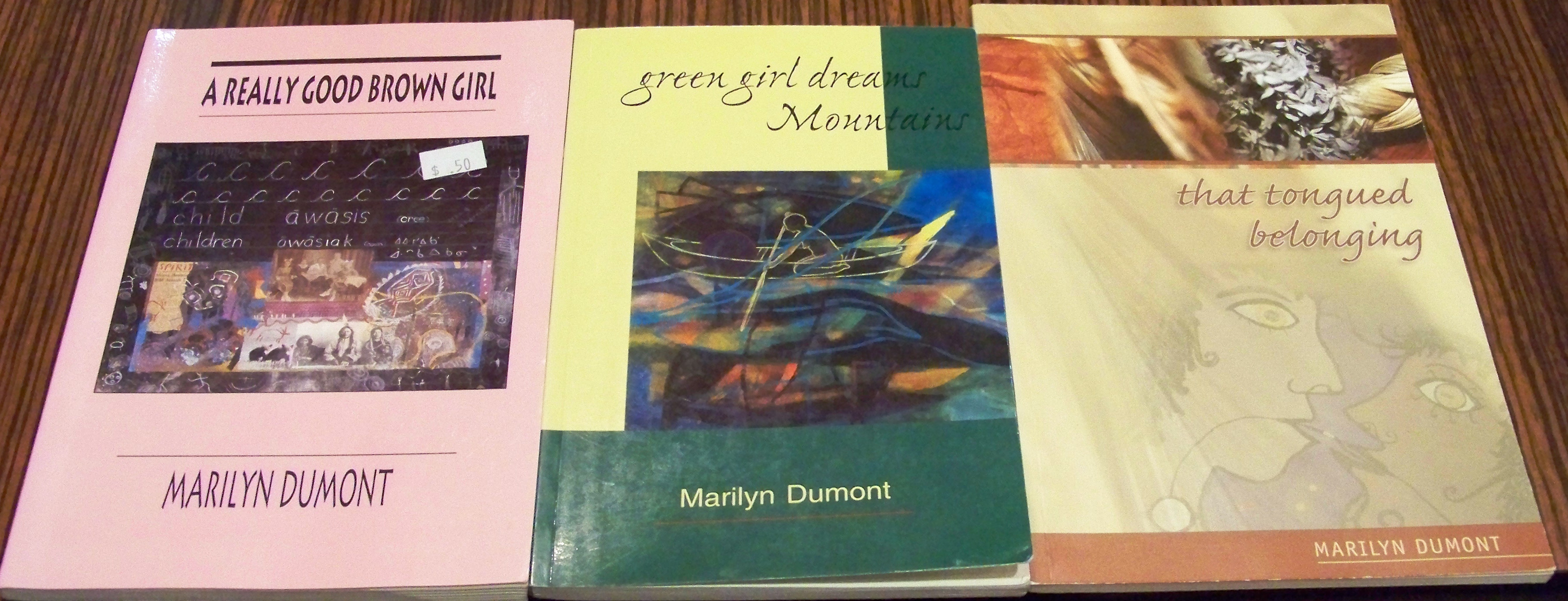
Marilyn’s first collection, A Really Good Brown Girl, won the 1997 Gerald Lampert Memorial Award presented by the League of Canadian Poets. This collection is now in its twelfth printing, selections from it are widely anthologized in secondary and post-secondary literary texts, and it is a course text in twenty-three post-secondary institutions in Canada and the U.S.  

Her second collection, green girl dreams Mountains, won the 2001 Stephan G. Stephansson Award from the Writer’s Guild of Alberta. Her third collection, that tongued belonging, was awarded the 2007 McNally Robinson Aboriginal Poetry Book of the Year and the McNally Robinson Aboriginal Book of the Year.

Marilyn has been the Writer-in-Residence at the Edmonton Public Library, the University of Alberta, the University of Toronto-Massey College, Windsor University, and Grant MacEwan College. She has also been faculty at the Banff Centre in Literary Arts and since 2009, she has taught in the Aboriginal Emerging Writers Program at the Banff Centre.  In 2009 Marilyn published her first novella, entitled Stray Dog Moccasins

She is on-leave from Athabasca University while fulfilling the role of Writer in Residence at Brandon University and working on her fourth poetry manuscript in which she explores Métis history, politics and identity through the life and times of her ancestor, Gabriel Dumont. Marilyn serves as a board member on the Public Lending Rights Commission of Canada.

BCP: Why did you start writing poetry?

MD: I was drawn to the honesty and courage of poets.  I was also fascinated with language since I grew up in a bilingual home: Cree and English which made me aware of the power of language.  I was curious to unlock the codes of English which seemed to always be privileged over Cree.

BCP: What is your writing process?

MD: I am struck by a phrase, a quality of light which reminds me of something, an observation of nature or human beings which provokes an impulse in me to follow the language that emerges in my mind.  I feel this compulsion to write it down as if it were a force from the universe bidding me follow it and discover something.  The desire to discover this mystery makes me write it down.

BCP: Much of your writing is political.  Do you also write about the fun stuff of life?  Why or why not?

MD: In my early writing, particularly A Really Good Brown Girl, I was working through anger, shame, hurt, disillusionment and grief about the subjugation and mistreatment of Aboriginal peoples and traditions in Canada,  so I vented these emotions in that collection. Many of those poems were politically inspired and conveyed explicitly through charged political language which had its place then.

Experience has taught me that sometimes directness doesn’t always bring about the response in readers that I want.  So now, I try to reach my audience in different ways- through humour, through pathos, through sleight of hand, through elegance.

BCP: This week is Indigenous Sovereignty Week.  What does that mean for you?

MD: I can’t say that I am very motivated by such an event.  I think it’s great that someone is initiating it, but whether it will bring about the kind of awareness it’s designed to, it will have to convince the instruments of power that it’s important: political parties, education institutions etc.

BCP: How can Indigenous literature help with Indigenous sovereignty?

MD: Indigenous literature can education and inform readers, but generally people who read Indigenous literature are the already informed.

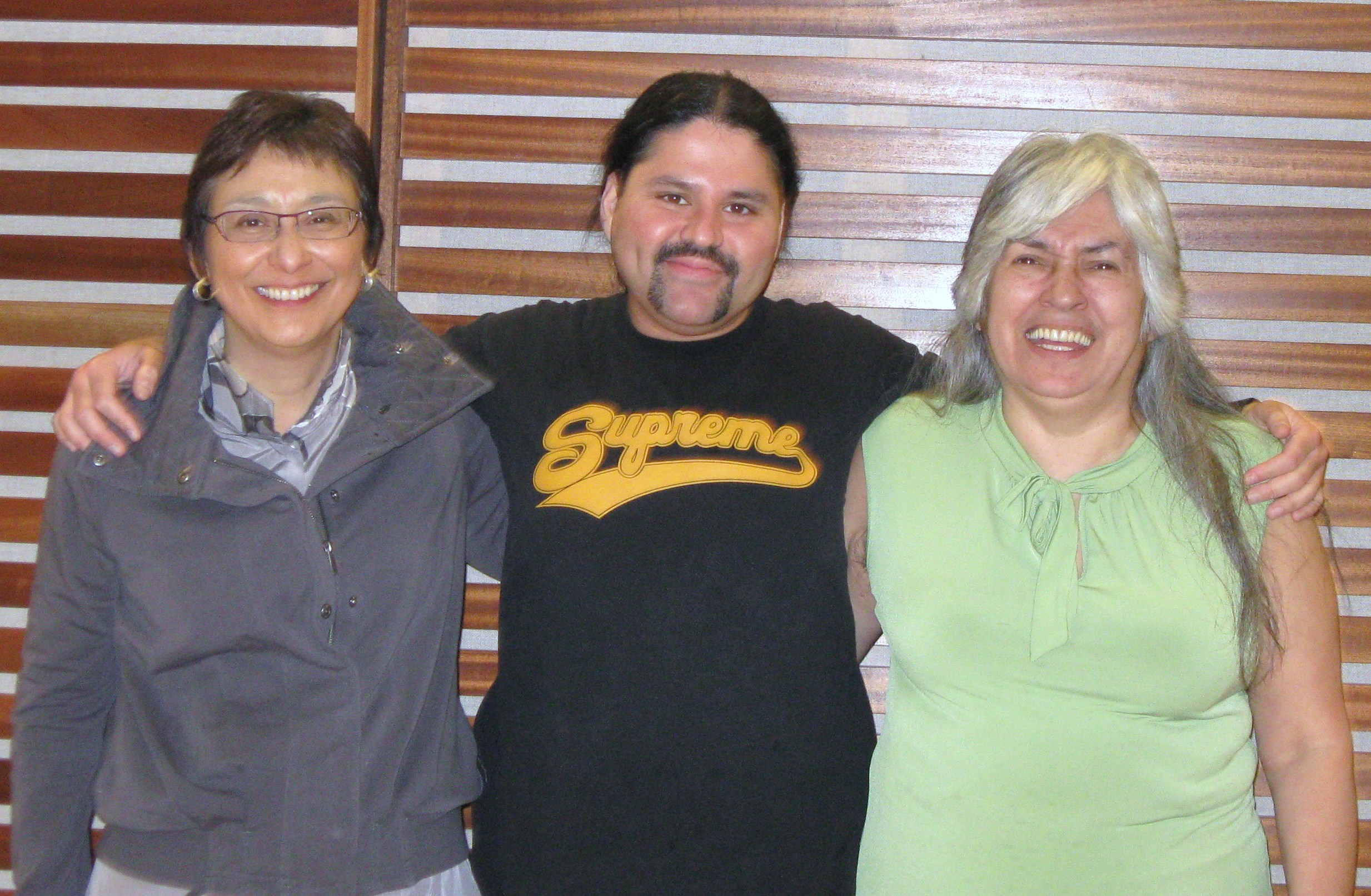
Marilyn Dumont, BCP, Lee Maracle

BCP: Who are your favourite writers?

MD: There are so many, but some of them are: Sharon Olds, Joy Harjo, Leslie Marmon Silko, Simon Ortiz,  Louise Erdrich, Gwendolyn  Brooks, bell hooks,  Dionne Brande, Philip Levine, Stephen Dunn, Tim Siebles and more.

BCP: You have said that Sharon Olds was a big influence on you.  How?  Is there are particular collection or poem of hers that you feel influenced you the most?

MD: The Dead and the Living was a collection that gave me the courage to write about family.  It taught me that one can write about all that a family holds: love, fear, joy, hurt, terror, confusion, safety etc.  It provided a model for me to write honestly and compassionately about family.

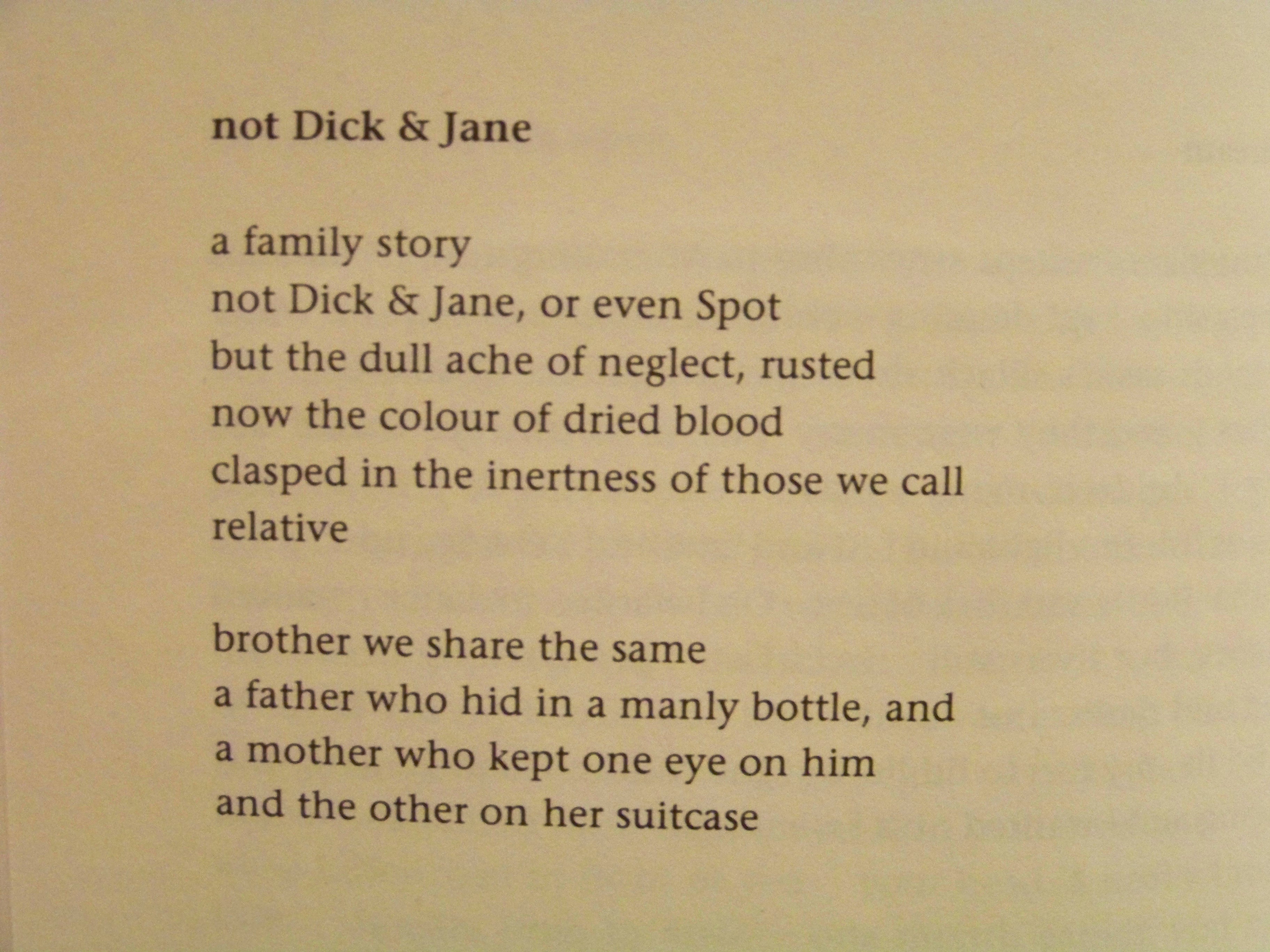
BCP: My favorite poem of yours in not Dick and Jane.  Can you talk about this poem a little bit?

MD: I grew up in an alcoholic home where drinking was the major conflict between my parents.  My mother never drank and my father was a binge drinker.  The pervasive tension in the home I grew up in was one of insecurity and not knowing if my parents would stay together.  They did for 50+ years and in the end found a way to reconcile their differences and alcohol became less of an issue.  My family experience like most is fraught with love, loyalty, fear, joy, terror, compassion, jealously, tenderness; somehow we survive our families and sometimes thrive.

BCP: At the 2009 Aboriginal Writers Symposium held at University of Toronto you said, “Not enough Aboriginal writers are being published.”  Why do you think this is?  How can this change?  Do you see this changing?

MD: This is changing slowly because there has been a paradigm shift about the contributions of  Indigenous peoples, traditions and knowledge in the world and publishers have been influenced by that shift too. 

Written storytelling is a new media for Aboriginal peoples even though our story tradition has existed from time immemorial, so we are learning to present our stories this way and it will take some time yet.  However, new media gives us an opportunity to tell our stories in ways other than text and that’s exciting.

BCP: How does your aboriginality influence your writing?

MD: My ancestry and the history of imperialism and colonization in Canada, place me as a witness to the untold stories of this continent.  I can either take up that role of witness or ignore it.  I choose to witness and remind Canadians of their dependence on Aboriginal people to survive and thrive here from our appropriated land and resources.

BCP: Your second collection green girl dreams Mountains has more prose poetry than your other two collections.  How and why did that come about?

MD: I believe it’s poetry not prose.  What’s the difference?  For me, how the text is placed on the page bears little significance to the music (poetry) of the language.

I guess it depends on one’s definition of poetry and prose.  Poetry for me is the attention to the inherent music of language.  I know that prose writers regard the music of language when they write, but poets employ it even more so.

BCP: The section City View in green girl dreams Mountains is hard hitting.  You describe poverty and its environment and its effects perfectly.  Is much of your poetry inspired by the place and time you are in? 

MD: Much of it is, but this new collection I’m working on about Gabriel Dumont, Louis Riel and the Resistance Period is obviously historically informed.

BCP: Your third collection that tongued belonging has many poems inspired by other poets such as Simon Ortiz.  How often do you find other poets inspiring your poetry?

I’m constantly inspired by other poets.  I do believe that one of poetry’s devices is referencing the significant work of other artists and playing with the works of past forms.

If one reads poetry (unfortunately not enough beginning poets read poetry), one cannot help be inspired by their work.  Language is the medium we work with.

BCP: Your poetry touches upon hard subjects that many people do not want to talk about.  Do you see your poetry as activism?

MD: Definitely.  In some literary circles, resistance writing is not perceived as “real” literature; however, I remind those circles of  all the writers in history who have resisted:  Dostoyevsky, Akmatova, Baudelaire, Sartre, Steinbeck, Achebe, Soyinka, Lorca and the list goes on.

BCP: Small publishers and independent bookstores are dying every month.  How do you see this affecting poetry? 

MD: Poetry and Prose solely in print, is dying.  New media is the next wave.  In the future, books may be considered eccentric and static  objects, while new media applications of poetry and prose will involve audio-visual, interactive forms of communication, and that might be a good thing.  In other ways it might not be because sitting with a book can be a meditative and introspective experience which is what is sought in the rush of our modern lives.

BCP: With people having much shorter attention spans these days do you see poetry having a comeback? 

MD: Music such as rap and hip-hop has fueled a renewed interest in poetry, in prosody- alliteration, assonance, internal and slant rhyme, repetition etc.

BCP: Do you see the E Reader benefiting or hindering poetry?

MD: I have never read from an E Reader.   I find reading from a screen uncomfortable, but it may result in benefitting poetry because audio-visual applications may make it more accessible to more people.  If people read poetry without being told it’s poetry, they may lose their preconceptions and resistance to it.

BCP: What are you working on now?

MD: I’m working on a collection which is set historically during the Riel Resistance  1869- 1885 period and it is the most challenging poetry I’ve written because it is informed by historical accounts of the people and places which I must research and immerse myself in to write.  I’ve been working with collection for five years now and I want to finish it and start new projects.

BCP: What advice do you have for young writers?

MD: Read as much poetry and as widely as possible, don’t just read poets who write in English, find translations of work from writers all over the world.

Keep a notebook and record your sensory perceptions of the world – ordinary things which can be used in one’s work.  We all notice different things and these differences in observations distinguish poets from one another.

Tune in to Black Coffee Poet November 26 for a video recording a Cree poet Candace Brunette reading her poetry.

********************************************************************************

REDBIRD ARTIST GALLERY 

1216A Dufferin Street 

Toronto, ON, Canada

http://www.jaybellredbird.com

Email: jredbird@hotmail.com

Phone: 416-531-4375 or 416-985-2516

********************************************************************************
Posted in Poetry | Tagged , , , , , , , , , , , | 3 Comments

BCP HONOURS INDIGENOUS SOVEREIGNTY WEEK 2010 WITH GREEN GIRL DREAMS MOUNTAINS

green girl dreams Mountains

By Marilyn Dumont

Reviewed by Jorge Antonio Vallejos

My friend Brian has said many a time, “You only have one mother!”  He has his index finger pointed in the air as he leans in real close to your face while saying it.  Brian loves his mom.  It’s a feeling that rings true for many folk.  But not all people can describe their feelings in person, or on a page, as well as Cree/Metis poet Marilyn Dumont does.

Feelings, thoughts, observations, rants, almost every emotion you can think of fills the ninety-eight pages of Dumont’s second of three collections of poetry green girl dreams Mountains

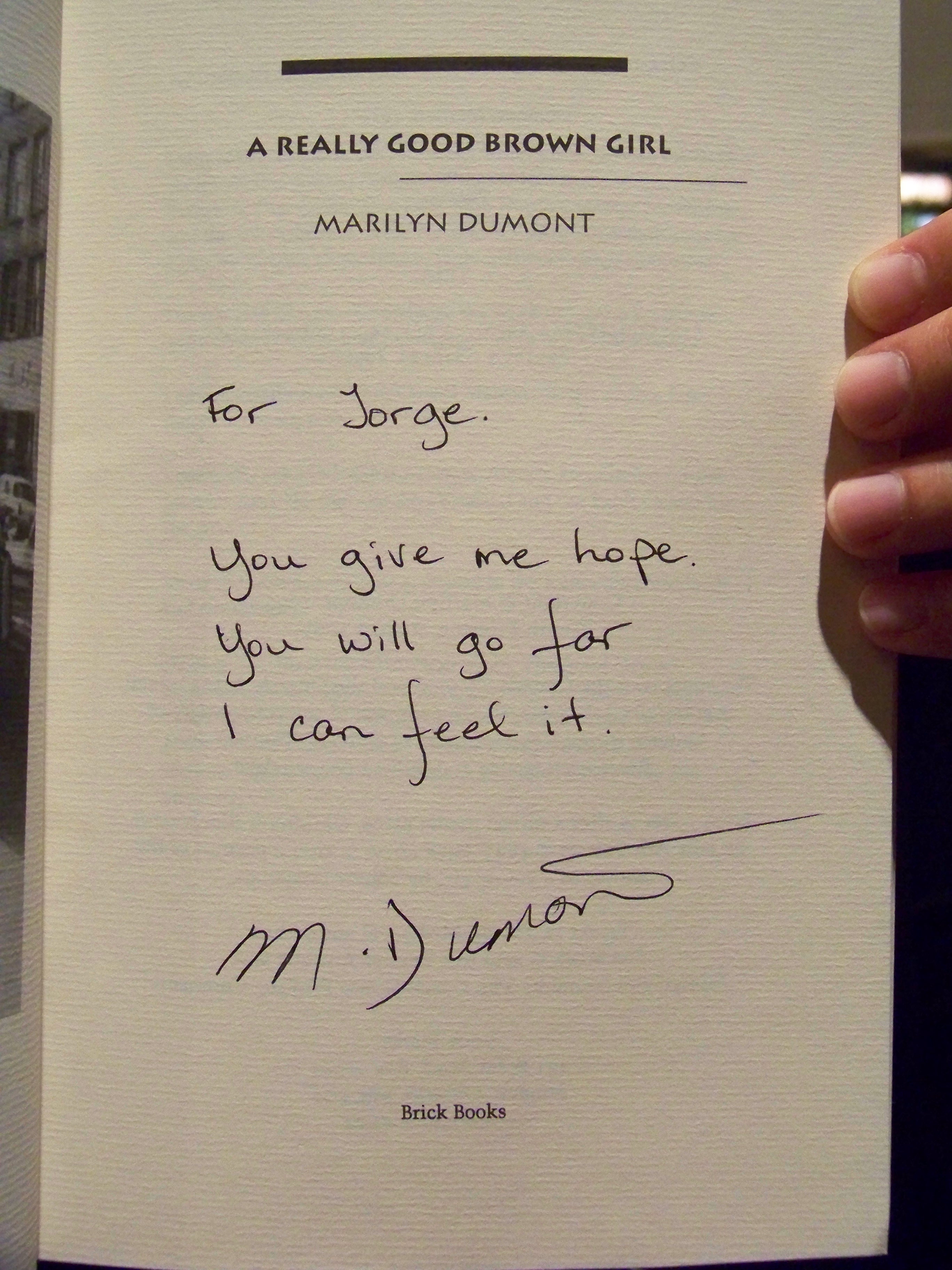
Published in many literature journals across Turtle Island (Canada), Dumont is the recipient of the 1997 Gerald Lampert Memorial Award from the League of Canadian Poets for her first book A Really Good Brown Girl

Dumont writes from experience.  At times she is bitter and angry but always truthful and always displaying technique.

The Cree poet is a resistance writer.  She exposes historical truths about the colony known as Canada with poems about the abuses of Aboriginal women at the hands of the colonizer in her collections. Dumont writes about things no one wants to touch or remember.  And she wins awards and fellowships while doing so. 

Famed Chinese Canadian writer Wayson Choy once told me, “If you write well enough you will transcend their bigotry.”

Marilyn Dumont writes that well!

Homeground, the first section of green girl dreams Mountains, is filled with poems about love for Dumont’s mother.  Poems with long titles bring you to the places Dumont’s mother lived and what she did in those places.  The titles give a hint of what you are about to read.  And the dense paragraphs of prose poetry leave you wanting to know more about the poet’s mother.

Mother, Ice Cream, Cigarettes, Newspapers, and Sin is a great poem.  You can feel the strong emotions and respect Dumont has for her lifegiver.  Dumont writes in the order of the times and places described in the title.  Many of her poems start with her mother as the title suggests. They move from one theme and action to another, literally, mother, ice cream, cigarettes, newspapers, and sin.

Dumont uses metaphor and description to show how “beguiling she can be, so sweet and yet so fierce, how these things can co-exist in one person, in one place, in one ice cream cone.”

You are with Dumont’s mother as she smokes, prays, and reads the newspaper.  The gifted writer has you sitting “at the end of” her mothers “bed” and seeing “her head slightly at an angle” as she reads her newspaper.  And you are with the poet as she eats an ice cream cone at “age forty” remembering her mother doing the same.  Remembering a parent happens to most of us; and Dumont knows how to bring such familiarity to her reader.

In Yellow Bird Dumont writes, “I was fixed to her            adored her like pollen.”  Later, in the place you left open the poet remembers her mother during a reading, how she spoke Cree, and how she was weak, barely holding up her dangling head a month before dying. 

Although Dumont spells out her attachment in Yellow Bird, she shows you their connection much before that in many different poems and in many different ways. 

City View, one of my favorite sections in the collection, is filled with descriptions of Vancouver’s Downtown Eastside.  Having the opportunity to visit the poorest postal code in Canada I remember what I saw when reading Dumont’s poems.  Whether you’ve been to Main and Hastings or not you can see the deals, dirt, and destruction that Dumont writes about.  And you know that Dumont is not writing from a top down position, it is writing that takes you where she’s been without judgment, something that you don’t find much in the poetry that likes to romanticize the poor and act as voyeurs on a trendy, dangerous, weekend vacation.

Dumont’s fairness in her descriptions is something that should be taught to many aspiring poets.  What is missing in City View is the sounds and smells of all she writes of.  Coffee, pizza diners, transit tunnels, peoples from different communities, are written of without aromas or screeching tires or the languages that make up the scenery and time. 

The award winning poet not only takes you to the special moments with her mother and the ignored places and populations of our society, she brings you to her most personal places and feelings in erotic poems like lover.  You know what Dumont means when writing of the want to “taste the heat of your skin” and feasting “on your nipples”.  The beauty is you don’t know if she is talking of a man, woman, or a gender bender, as we all have nipples and hot skin.  

green girl dreams Mountains is the second collection of three and I hope many more to come. Dumont has you in bed with her.  You want the poet to whisper those dreams in your ear, have them tattooed on your brain, and never wake up.

Tune in to Black Coffee Poet Wednesday November 24, 2010 for an inclusive interview with Cree/Metis poet Marilyn Dumont.

********************************************************************************
REDBIRD ARTIST GALLERY 

1216A Dufferin Street 

Toronto, ON, Canada

http://www.jaybellredbird.com

Email: jredbird@hotmail.com

Phone: 416-531-4375 or 416-985-2516

********************************************************************************
Posted in Poetry | Tagged , , , , , , , , , , , , , , , , | 2 Comments

BCP HONOURS TRANS DAY OF REMEMBRANCE WITH TRANS POETS S. MCDONALD AND REVEREND CINDY BOURGEOIS READING THEIR POETRY

S. McDonald is one of Canada’s most talented poets.  A true performer, McDonald knows how to work a crowd of people whether at the Rhubarb Festival or a park full of passersby.  

McDonald writes of life experiences straight from the heart.  *Zir kindness and attention to detail comes out with every line.  A very private person, BlackCoffePoet.com is very appreciative of McDonald’s willingness to read poetry for the magazine.  

Enjoy McDonald’s touching and challenging poetry and then go out and buy zir book Confessions of an Empty Purse published by Frontenac House 2010.

 I’ve had the pleasure of being friends with Reverend Cindy Bourgeois for three years. *Ze has taught me a lot about Trans life, identity, and politics.  

Cindy is the FIRST Trans Reverened of the United Church of Canada and Black Coffee Poet is proud to say he was at zir ordination this past summer 2010.  

“You’re my only guy friend,” said Cindy to me a few months ago.  “Guy” as in non-Trans, heterosexual guy.  And at this point in my life Cindy is my only real Trans friend.  Through two to three hour talks on the phone almost every week we celebrate our friendship through laughter, challenge, questions, story, profanity, and prayer. 

After the 2009 Trans Day of Remembrance ceremony at the 519 Community Centre in the LGBTQ Village of Toronto, Cindy and I went out for some tea and chat.  At the tea shop ze shared with me zir psalm to GOD about being Trans.  Please enjoy Cindy’s powerful Psalm/poem.  

Read a great interview with Cindy Bourgeois and S. McDonald to get some great insight on poetry, Trans life, and Trans Day of Remembrance.

Enjoy great poetry by Trans poet Eli Clare in a previous posting by Black Coffee Poet.

*Ze: gender neutral subjective third person singular pronoun

*Zir: gender neutral objective third person singular pronoun or gender neutral possessive pronoun

Tune in to Black Coffee Poet November 22, 2010 for a review of “green girl dreams Mountains” by Cree/Metis poet Marilyn Dumont in honour of Indigenous Sovereignty Week 2010.

Posted in Poetry | Tagged , , , , , , , , , , | Leave a comment

BCP HONOURS TRANS DAY OF REMEMBRANCE: INTERVIEW WITH TRANS POET S. MCDONALD

S. McDonald was born, raised, and continues to relentlessly live in Toronto.  Ze grew up in pre-gentrification Cabbagetown and Regent Park.

Ze is the love child of Christine Jorgensen & John Rechy & the spiritual godchild of Jacqueline Susann, and has performed Zir’s alternative spoken word performance pieces at The Calgary International Spoken Word Festival, Buddies in Bad Times Theatre’s annual Rhubarb Festival, Proud Voices and ,Paddy’s Playhouse.

Zir’s debut poetry collection Confessions of an Empty Purse (Frontenac House, 2010), was one of ten manuscripts chosen as part of Frontenac House’s Dektet 2010 competition, using a blind selection process by a jury of leading Canadian writers: bill bissett, George Elliott Clarke, and Alice Major.

This interview was conducted by guest writer Reverend Cindy Bourgeois.

CB: Why did you start writing poetry?

SM: I think one of the main reasons I began writing was because all the books and articles I’d ever read on the subject of transsexuality (which was everything I could get my hands on ever since my ‘70‘s adolescence) I didn’t find my particular life or “story” in all of those words.  Certainly, I’d found similarities and common threads and shared feelings but never anything really close to what I was living on a day-to-day/year-to-year basis.

I’d always had a special love and affinity for poetry and so when I started writing about my life I wrote it in a way that I’d whish I’d been able to read when I was a teenager and that was poetically.  That‘s why I call my book, Confessions of an Empty Purse, a poetic transmemoir.

CB: What is your writing process?

SM: It’s an odd combination of inspiration and focus; perseverance and desire.  Sometimes the words flow and sometime drip out, slowly, one. at. a. time.  It’s mostly about the need I have to make some kind of sense (and sometimes nonsense) out of what I’m feeling and thinking

CB: Much of your writing is political.  Do you also write about the fun stuff of life?  Why or why not?

SM: Well, yeah it is and yeah, I do.  I think all writing, all art is political but even though I wrote about the pain of growing up “gender terrified” and what it’s like to live internally somewhere between the lines in Confessions of and Empty Purse I hope that my humour, dark though it can be (well — is, I suppose) comes creeping through.

Honestly, if I didn’t have a sense of humour and if I hadn’t been able to laugh – even in those “dark night of the soul” years – I wouldn’t be here today.  My poems do have humour in them and some are flat out funny but maybe it’s just how I express my humour and what I think is funny.  Interesting.

CB: Who are your favourite writers? Do have any favourite trans writers?

SM: Some of my favourite writers (just to name a few off the top of my head) are Jacqueline Susann, John Rechy, Anne Sexton, Flannery O’Connor, Margaret Atwood, Thomas Merton, Edmund White and Audre Lorde.  I’m also a great reader of autobiography — I find the human journey endlessly fascinating. 

One of the lifelines that kept me alive as an adolescent though were the words of other transfolk (mainly in the form of autobiography) like Canary Conn, Jan Morris, Christine Jorgensen, Renee Richards and Mario Martino.  Currently, some of the trans writers I read and enjoy are Kate Bornstein, Leslie Feinberg, Jennifer Finney Boylen, S. Bear Bergman and Patrick Califia.

CB: Do you do anything for Trans Day of Remembrance?

SM: I’ve been “online” for many years and began such on AOL in the mid/late ‘90s.  Gwen Smith used to moderate the trans boards/area and that’s when I first became aware of the Trans Day of Remembrance.   I lead a fairly isolated and almost hermetic life – if not always physically then certainly emotionally – and so what I do on this day is something along the lines of contemplation and silence … quiet and personal, in remembering our dead.

CB: What does Trans Day of Remembrance mean to you?

SM: Trans Day of Remembrance means to me that at some moment during that day/evening, and however you choose to personally observe that time/moment be it private or public — I feel it is perhaps the one time in the year where all transfolk are on, more or less, the same page.  The differences, the “cliques”, the pettiness, the *politics* pause for a “moment” as we remember those who are no longer with us.

Also, to the world at large? One word: visibility.  What most people know and, more to the point, don’t know about the real lives of transfolk is little to nothing.  It’s a time for people to see us in a way that the media at large doesn’t often portray us and that is as a tribe of strong, diverse survivors who have a long and continuously evolving  narrative.

CB: How does your gender or gender identity influence your writing?

SM: My gender variance or at this point I’d probably say my transvariance of course, absolutely has very much informed my writing.  I can only write about my life and what interests me and for many, many years it’s been about my gender variance.  I find that even when I think I’ve exhausted this subject there is always something else that bubbles up from somewhere inside me and that I need to express.  Always.

CB: Do you think that that your gender variance makes you a better poet? If so, why?

SM: I don’t know if it’s made be a “better” poet (well … maybe) but I think I can say that my gender variance has made me a writer, a poet.  The writing, like my artwork, was a way for me to work out so much that was just spinning and spiraling around inside of me.  Writing poetry was a way to get in out and to be able to look at it in a very black and white on-the-page way and to try and make some sort of sense of what, of who I was — of who I am.

It also, I believe, has given me an unique perspective and artistically that’s a great place to be.

CB: Do you see your poetry as activism?

SM: I see my poetry first and foremost as poetry.  I was once asked if my book could be seen as a “how to” book for transfolk and my immediate response, without even pausing to think about it was: “no, I think it reads more as a cautionary tale”.  Well, that stopped me cold for a moment.  Where did that come from?  What my response did though was open a door for me to talk about how we need to hear all aspects of the trans *experience* and, of course, no matter how many (or few) common threads we share that no two transpeople are alike and even if you decide not to transition or even de-transition it doesn’t in any way mean that you are not longer trans.  For whatever your reason(s) may be to not physically transition they are yours to share or not and I’ve chosen to share.  

That’s why I do think of my poetry as “activism”.  As it expresses a specific experience or *voice* of one transperson and maybe (and that’s a big ‘maybe’) sheds a little light on it — our — cause as a whole then, great.  Also, as I mentioned earlier, I had longed to see an experience closer to my own reflected back at me in all the reading I’d done growing up and so, if one other transperson (especially a young transperson) experiences this while reading my poetry then I’d feel that I’d really accomplished something beyond just the satisfaction of my artistic expression.

CB: What advice do you have for young writers?

SM: This is cliché as all hell but I’m going to say it anyway:  just write, write, write.  At this point it almost matters not what you’re writing but the fact that you’re writing it down to express what you are feeling and thinking.  It doesn’t even matter what other folks think of your writing (or if you even show it to anyone).  You’re writing and that is what matters.

When I was a teenager in the 1970’s and living in Regent Park there was absolutely no one I could speak to about everything that was going on inside of me.  Nobody.  All I had were all the books or articles on transsexuality that I could find and what I would write down about myself.  It saved my life; of that I’ve no doubt.

So, write. Please.

Cindy Bourgeois is the first known out and proud trans person to be ordained to ministry by a mainline Christian denomination in Canada. On this coming International Woman’s Day ze will “make [zirself] a eunuch for the sake of the kingdom of heaven. Let those accept this who can” (Matthew 19:12).

Please read a previous interview with Trans poet Eli Clare and Black Coffee Poet published in XTRA!

Tune in to Black Coffee Poet Friday November 19, 2010 for video recordings of S. McDonald and Cindy Bourgeois reading their poetry about Trans life.

********************************************************************************
The Trans Inclusion Group hosts a FREE screening of: “TWO SPIRITS”

co-hosted by the Women and Gender Studies Student Union

 Everyone welcome. Allies welcome.

 ► TWO SPIRITS: In 2001, 16-year-old Fred Martinez was brutally murdered near his hometown of Cortez, Colorado. Two Spirits is a compelling documentary about a life that was cut short for a Navajo teenager who was nádleehi – person with both masculine and feminine essences. The film is more than a story of what it means to be poor, transgender, and Navajo, but also looks at the lives of the friends, family and larger community of Fred Martinez, reaching beyond the violent act that ended with his murder, and exploring issues of gender, spirituality and sexuality. http://www.twospirits.org * regretfully the film is not closed-captioned *

Date and Time:            Monday November 22, 2010     6pm-8pm

Location: William Doo Auditorium, 45 Willcocks st.

Open community discussion afterwards

** This event is part of “LINKED OPPRESSIONS: Racism, Homophobia, and Transphobia” organized by the Equity Students Student Union, Women and Gender Studies Student Union, LGBTOUT and The Centre for Women and Trans People UT **

** TRANS DAY OF REMEMBRANCE EDITION **

This screening is part of The Centre’s week long series of TDOR programming (Nov.15-22).

Check the website for full details and updates.

womenscentre.sa.utoronto.ca

womens.centre@utoronto.ca           

416-978-8201

For accessibility accommodations contact: tig.action.toronto@gmail.com


Post-event a DVD copy of TWO SPIRITS will be available through The Dr. Chun Resource Library (a social justice library and joint project with OPIRG Toronto located at The Centre for Women and Trans People).

http://library.opirguoft.org/ 

********************************************************************************
 

Posted in Poetry | Tagged , , , , , , , , , , , , , , , , , , , , , , , , , , , , , , , | 1 Comment

BCP HONOURS TRANS DAY OF REMEMBRANCE WITH CONFESSIONS OF AN EMPTY PURSE

CONFESSIONS OF AN EMPTY PURSE

By S. McDonald

Reviewed by Reverend Cindy Bourgeois

Part way through the S. McDonald’s book of poetry Confessions of an Empty Purse I said to myself, “Do we really need another transition narrative?” The corpus of literature related to trans issues are littered with transition narratives. *Cis people are inordinately interested in our transitions. What did we look like? What were our real names? When did we first know? It is as if we are summed up by our transitions, that who we are is not as important as who we “were”. That being said, I do not want to underestimate the healing power of sharing one’s narrative. It is often necessary for tans folk to share their stories in order to facilitate their healing.

Regardless of the ethics of transition narratives McDonald’s words paint a picture of growing up differently gendered in Toronto in the 1960s and 1970s. In *zir first poem, Transsexuals On Parliament, we see the trans women walking down the street in fur and stilettos or shopping in Loblaws or arguing with zir boyfriend in the convenience store. Or, in Our Lady of Playtex it is easy to zir secretly putting on zir mother’s girdle in order to fit into zir confirmation robe so that ze would

at least be able to zipper

that fucking robe up and able to sit down in church

without bursting out of it like an overstuffed Wardinski sausage.

It is beautiful to see how when presented with a robe that is too tight McDonald’s solution is to don zir mother’s girdle. While it does solve the problem it also allows zir to go out in public wearing an article of clothing that only women are allowed to wear. Zir path to solving the problem is to express zir femininity as much as *ze is able.

McDonald paints zir pictures often through prose rather than verse although zir verse cane have a frenetic power as it trips over the page like in Transsexuals On Parliament when ze sees the possibility of actually living as trans woman:

a swearing,

boyfriend having,

winter coat walkin’

laughing and talkin’,

staring and green visor wearin’,

paperback writing & Casa Loma posing,

Loblaws shopping transsexual woman

on Parliament Street

Here, McDonald’s imagery creates great pathos. We feel zir desire to express zir womanhood. In the verse above ze captures the feelings that one has when one finds out that one is not alone. The wonder and possibilities when one sees a real live trans woman, that there are trans women on Parliament Street in Toronto not just in the media. 

But it is not necessarily McDonald’s gender variance that challenges us the most. In fact it is zir treatment of suicide that McDonald really shines. Zir one line poem Slip exposes the intersection between suicide, unrealistic body images for women, and the trap of passing. When ze writes:

I want to be as thin as the scars on my wrists.

You see the scars on McDonalds’s wrists from a suicide attempt. You feel zir desire to be “as thin as the scars on my wrists” that speaks to the societal construct that the right body for a woman is a thin body. One is reminded of all the average sized women who feel fat and the need to lose a few pounds. Or, all the fat women who face the oppression of fat phobia on a daily basis.

But there is also the notion that in order to be a real woman a trans woman must be able to pass. That those of us who consistently get clocked as trans are somehow lesser than those who do not. In this one line we see how the pressure to conform to society’s obsession with thinness cause death.

In the final poem in the book, Confession 4, McDonald reveals zir “Sharon Tate as Jennifer North in Valley of the Dolls is probably my favourite screen suicide” and we see how for McDonald suicide is always on the table, always an option. The very fact that ze has a favourite screen suicide shows how important it is in zir life.

While McDonald’s prose paints such vivid pictures, zir verse with its frantic quality, always near the edge, is what can take the breath away. Perhaps it is the essentialist in me that might like to see a collection dedicated to more verse and less prose.

In the end, it is the pathos, the raw emotion that makes this an important collection. McDonald’s openness about zir gender variance and the place zir gender variance has in zir despair that contributes to zir suicide attempts.

In this week leading up to Transgender Day of Remembrance as we trans folk remember our dead, not only the trans sex workers of colour, but all those who commit suicide, those who suffer through poverty; perhaps this transition narrative can contribute to healing. Not simply McDonald’s healing but healing of the world. Because McDonald’s despair is not due to zir gender variance but rather the oppressive systems that do not allow people who are differently gendered live their lives as they really are. Because S. McDonald is perfect the way ze is created; it is the world that is broken. Perhaps Confessions of an Empty Purse can in some small way heal this broken world.

*Cisgendered: The opposite of transgendered, someone who is cisgendered has a gender identity that agrees with their societally recognized sex. Many transgender people prefer “cisgender” to “biological”, “genetic”, or “real” male or female because of the implications of those words. Using the term “biological female” or “genetic female” to describe cisgendered individuals excludes transgendered men, who also fit that description. To call a cisgendered woman a “real woman” is exclusive of transwomen, who are considered within their communities to be “real” women, also.

*Ze: gender neutral subjective third person singular pronoun

*Zir: gender neutral objective third person singular pronoun or gender neutral possessive pronoun


Cindy Bourgeois

Cindy Bourgeois is the first known out and proud trans person to be ordained to ministry by a mainline Christian denomination in Canada. On this coming International Woman’s Day ze will “make [zirself] a eunuch for the sake of the kingdom of heaven. Let those accept this who can”, (Matthew 19:12).

Please read a review of The Marrow’s Telling by Trans poet Eli Clare.

Tune in to Black Coffee Poet Wednesday November 17, 2010 for an inclusive interview with S. McDonald conducted by Reverend Cindy Bourgeois.

Posted in Poetry | Tagged , , , , , , , , , , , , , , , | 4 Comments

TORONTO RAPPER SPORADIC “THE DARK POET” RAPS HIS RYHMES

I first met Sporadic three years ago through my older brother Sifu Rupert Harvey (http://www.goldenharmonykungfu.com/).

Sporadic, always a hard worker, impressed me with his humility.  Already a black belt in Karate, Sporadic put his ego aside and started training as a beginner in Tai Mantis Kung Fu to better his martial art skills.

Sporadic’s humility is not only present in the training hall, you can hear the humility in his voice while talking with him.  A calm warrior, Sporadic doesn’t boast about his many accomplishments; rather, he shows you his skills on the mat and on the mic.

Enjoy Sporadic’s versatile verse.  

At Black Coffee Poet we believe that poetry takes many forms: written, spoken, and movement.  Latino Breakdancer Rodri Breaker is our first feature in our Poetry in Motion Series.  Sporadic and I ran into Rodri Breaker at St. George Station by chance while taping Sporadic for this week’s video.  Full of life and open to new opportunities Rodri agreed to be taped showing his moves.  Enjoy. 

Sporadic, a community minded artist, dedicates this next verse to all the people under the heel of oppression.

To get a copy of Sporadic’s CD, or to book him for a show, email Sporadic at sporadic.thedarkpoet@gmail.com.  

Tune in to Black Coffee Poet next week for an entire week honouring Trans Day of Remembrance with guest writer, interviewer, and psalmist Cindy Bourgeois, the first Transgendered Minister of the United Church. Cindy will review “Confessions of an Empty Purse” by Toronto Trans poet S. McDonald and interview the author. 


Posted in Poetry | Tagged , , , , , , , , , , , , | Leave a comment