EMBRACING DIVERSITY: LETTER FROM A CALGARY READER

Matt aka RustyMonday December 10, 2012

Dear Jorge Antonio Vallejos aka Black Coffee Poet, 

My letter addresses the need to embrace diversity within the individual. Only after diverse individuality, and individual diversity, is cultivated can social justice begin. 

As a recent graduate from a First Nations program in a Canadian university, blackcoffeepoet.com has been an incredible resource.

I am an ally. 

My own mixed heritages speak loudly this week. Honoring my Jewish blood, I light the menorah and remember not only my European Jewish ancestry, but also the Palestinian Nation, whose struggle is ongoing. I stared fervently into the first lit candle unto its risen wisp of smoke. I prayed for the dogmas of militant nationalism to subside with compassion. I prayed for an end to the perpetual malevolence linked to modern Jewish identity under the Israeli apartheid regime. 

This year has been an auspicious one for me, and surely one of the most foundational in my creative life. At the beginning of the year, when I first subscribed to Black Coffee Poet, I received my first print publication. As an emerging writer, first-time publishing is as much an odyssey as creative development.    

I could never have put so much hard work and emotional resilience into this year’s literary aspirations without such community support as exhibited on Black Coffee Poet. 

As a world fusion musician, I performed regularly with Iranian and Vietnamese artists. As a visual artist, my first live gallery exhibition was held in support of local immigrant artists. As a writer, I have published across Canada, the U.S. and the UK.

I may not be racially marginalized, however, in my chosen vocation as a self-taught, multidisciplinary, immigrant artist, I am ever led towards greater human compassion. The life of an artist is one of deep listening, to one’s intuition and to the language of the human heart. 

In solidarity,

Matt aka Rusty

Matt Hanson is a contributing journalist to The Dominion, Canada’s only independent news cooperative. Based in Calgary, Hanson regularly performs world fusion music. Under penname Rusty Kjarvik, Hanson has written poetry, short fiction, essays, and exhibited manuscript art for over thirty literary publications across Canada, the U.S. and the UK. 

Find out how to submit a Letter or Opinion Editorial here.

Posted in Uncategorized | Tagged , , , , , , , , , | 2 Comments

SUBMIT A LETTER OR AN OPINION EDITORIAL TO BCP!!!

Monday December 10, 2012

Dear Readers,

Do you have something to say about activism, academia, blackcoffeepoet.com, current events, literature, life, or politics?  Is there something on your mind that mainstream media is not covering?  Have you written something that has not found a home?

Write a Letter to Black Coffee Poet or an Opinion Editorial!

There is no need to pitch a Letter or Op-Ed as they are not articles.  Keep in mind that not all Letters and Op-Eds submitted will be published, and they are their own genres of writing to be written with care, respect, and thoughtfulness like any other genre.

If you are new to blackcoffeepoet.com read the publication and find out what it’s about before submitting.  Here at three resources for that: ABOUT and Black Coffee Poet and Popular Posts.

See some recently published letters to BCP:

Letter From A Seattle High School Teacher by Paulette Thompson

A Thank You Letter To Helen Betty Osborne From A Young Cree Woman by Megan Bertasson

See some recently published Opinion Editorials:

The Romney Doctrine by Dr. Gene Grabiner

Lest We Forget: Remembering Helen Betty Osborne by Robyn Bourgeois

Submit to blackcoffeepoet@gmail.com with Letter to BCP or Opinion Editorial in the subject line.  

Submissions must include full name, phone number, and address of sender.  Home addresses and phone numbers will not be published.  I reserve the right to edit letters and opinion editorials.  Letters run from 50 to 30o words.  Opinion Editorials run from 700 to 800 words.  Due to the volume of submissions I can not acknowledge or publish every submission.

Thank you for your support, time, and consideration.

Peace,

Jorge Antonio Vallejos

Black Coffee Poet

Posted in Uncategorized | Tagged , , , , , | 3 Comments

A POEM BY CHRYSTOS FOR THE FORGOTTEN WOMEN OF DECEMBER 6TH

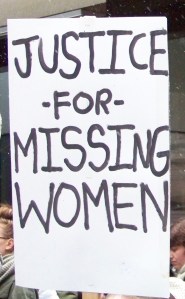
Signs at Feb 14th Rally Toronto 2012Hundreds of candlelight vigils were held yesterday for the 14 white women that were killed by Marc Lepine in 1989.  It was a horrible, sexist, misogynist killing.  

Thousands of Aboriginal Women, Women of Colour, Queer Women, Disabled Women, Transgender Women, and Sexworkers have been killed prior to 1989 and since.

We honoured and remembered them on blackcoffeepoet.com this week:

Challenging The Whiteness Of The December 6th Vigil.

Honouring The Forgotten Women of December 6th.

Here is a poem by Chrystos, published in 1988, that fits what is happening with the December 6th vigils across the country.

Signup to the Black Coffee Poet YOUTUBE Channel Free: 138 videos:

Poetry, song, interviews, VLOGs, readings and roundtables.

Posted in Uncategorized | Tagged , , , , , , , , , , , , | 2 Comments

HONOURING THE FORGOTTEN WOMEN OF THE DECEMBER 6TH VIGIL: INDIGENOUS, OF COLOUR, DISABLED, QUEER, TRANSGENDER, SEX WORKER…

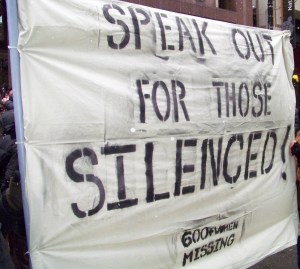
Big Sign at Feb 14th rally 2012 TorontoEvery year in the land now known as Canada a vigil is held for the 14 white women killed in 1989 at Ecole Polytechnique in what is called The Montreal Massacre.  These women should be, and are, remembered.  

So should the many other women who are no longer here because of violence: Indigenous Women, Women of Colour, Disabled Women, Queer Women, Transgender Women, and Sex Workers…

In Decemeber 2011 we remembered the women who are often left out via a video roundtable seen below and through a review, interview, and poetry:

Day 1: Review of The Color of Violence.

Day 2: Interview with TRRC counselor Michelle Basha.

Day 3: Poetry by Chrystos and Lindsay Czintron.

Tune into Black Coffee Poet December 7th for poetry about Women Forgotten at the December 6th Vigil.

Posted in Uncategorized | Tagged , , , , , , , , , , , , | 3 Comments

CHALLENGING THE WHITENESS OF THE DECEMBER 6TH VIGIL

Chalk Outline of WomanThis video interview with Deb Singh of the Toronto Rape Crisis Centre Multicultural Women Against Rape was filmed in 2010.  

It was  part of a special week challenging the whiteness of December 6th called Remembering The Forgotten Women of December 6th:

Day 1: Review of The Eraseable Woman by Shaunga Tagore.

Day 2: Interview with Shaunga Tagore, photo essay by BCP, poem by Lena Recollet.

Day 3: Poetry by Shaunga Tagore, Mel Gayle, and Black Coffee Poet 

The critiques  and advice in the video below still hold true today.

Tune in to Black Coffee Poet Wednesday December 5 2012 for a video roundtable discussion about the December 6th Vigil by women of colour.

Posted in Uncategorized | Tagged , , , , , , , , , , , , | 2 Comments

BCP ON “ONE VOICE RADIO” WITH MALIKAH AWERI AND DANE SWAN

BCP, Malikah, DaneEarlier this month I had the pleasure of being on One Voice Radio hosted by the ever talented poet and singer Malkah Aweri.  

My co-guest was Toronto poet Dane Swan, author of Bending The Continuum.  We all participated at the International Festival of Poetry of Resistance the month before.

The three of us chatted poetry, craft, art, and read a couple of poems.

I read:

1. The Buzz (for my mother)

2. Licence To Kill: A Poem For Michael Bryant and Co. (in memory of Metis cyclist Darcy Allen Sheppard: 1976 -2009)

Watch, enjoy, SHARE, Tweet, and comment.

Subscribe to the Black Coffee Poet YOUTUBE Channel: 139 videos:

Poetry, song, interviews, VLOGs, readings and roundtables.  

Posted in Uncategorized | Tagged , , , , , , , , , , , , , , , , , , , | 1 Comment

WRITING FOR THE SAKE OF STORY: NOTES FROM A FICTION WORKSHOP BY RICHARD WAGAMESE

Writing For The Sake Of Story:

Notes On A Fiction Workshop By Richard Wagamese

By Jorge Antonio Vallejos

Photo by Jorge Antonio Vallejos

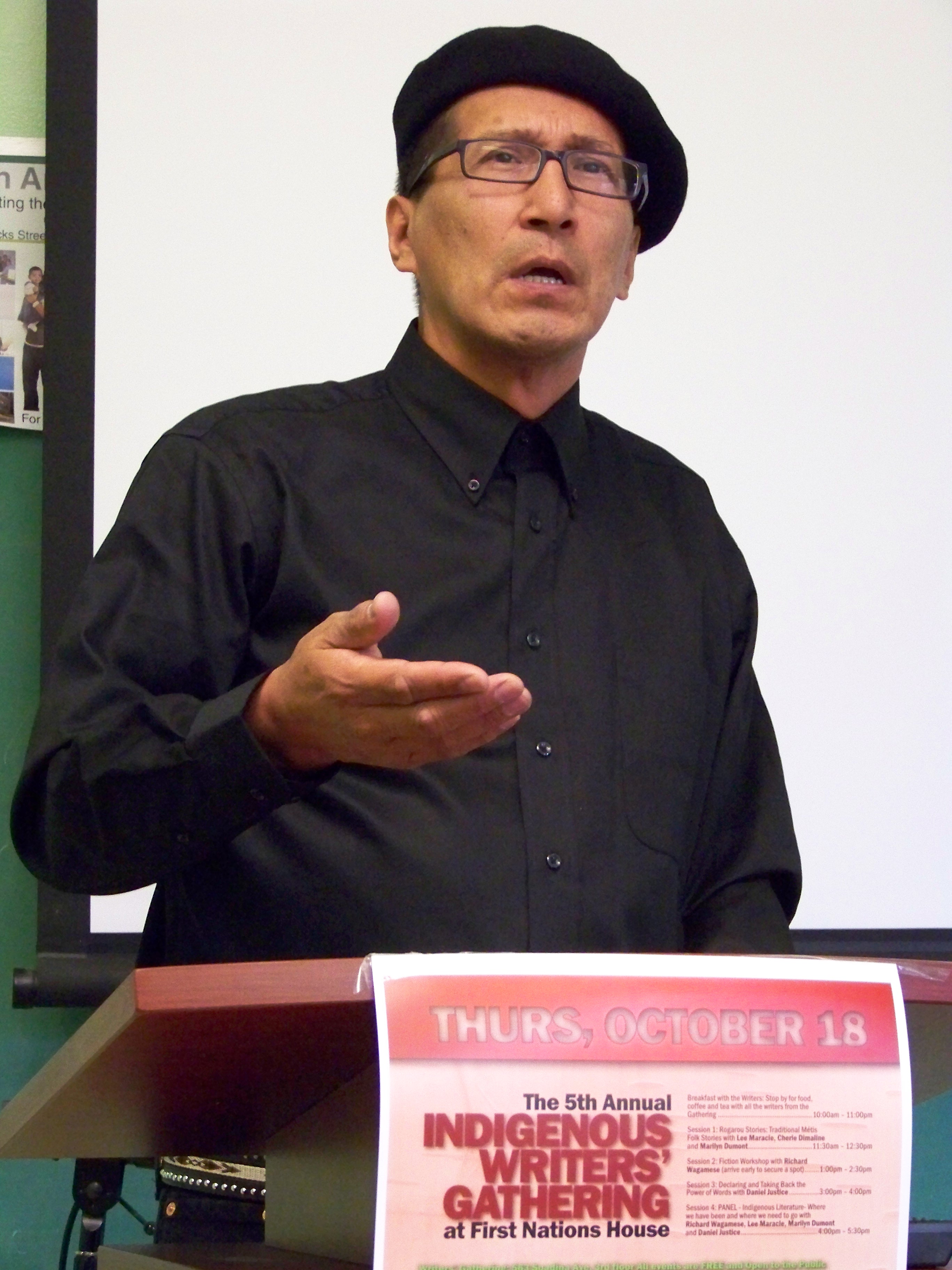
In October 2012, Richard Wagamese, an Ojibway who is a member of the Sturgeon Clan, gave a talk about fiction writing at the 5th Indigenous Writers Gathering at First Nations House University of Toronto. 

With 11 books to his name, Wagamese, a survivor of the 60s Scoop, addiction, incarceration, and homelessness, shared stories about his life, culture, and craft.  Having only a grade 9 education Wagamese became an award winning journalist and author.  In this one talk Wagamese taught me more than many of my university professors. 

To Be A Writer You Must Be A Reader 

  • “What I did do was immerse myself in the culture of books.”
  • Libraries: “These places were mine.”
  • One book opened a doorway to another.
  • “I drowned in an ocean of words and images.”
  • Read book reviews.
  • Read two to three hours a day.
  • Don’t limit yourself to your own cultural niche.  Read everything.
  • Looking for appropriation of culture takes you away from the story.
  • Look at how the story is being told.
  • Reading adds elements and substance to your craft.

Study Speech/Dialogue

  • “Dialogue is speech.”
  • “Language is so magical.”
  • “The way we talk to each other is literature.”
  • Keep your ears open.  Listen in on conversations.
  • Notebook carrying: “I scribbled what I thought they said.”
  • Record conversations.
  • Looks up words on un-busy days and uses them in sentences.

Wagamese’s Writing Process

  • Yoga + meditation in the morning.
  • Smudges and drinks tea.
  • “I open up the channel that lives in all of us and I start to work.”
  • Faces a blank screen every morning.
  • “I work for the story’s sake.”
  • Writes 3 to 4 hours every morning—7 publishable pages.
  • “I breathe through my fingers.”
  • “I’m writing there trying to find my own answers…trying to find my own views.”
  • 1 draft writer.
  • Wrote first book in 5 months.
  • “Hit that bar and go over it!”
  • “The final period completes the whole voyage.”

Spirituality

  • “We were born on the breath of creation; we carry that breath within us.”
  • Our nature is to be storytellers
  • Feel the land: “The land will inform you.”
  • “We reach out because we want to be connected.”

Faith

  • “I was afraid to look like a stupid Indian.”
  • “I had a hard time looking up because I was ashamed and afraid.”
  • Find Another Indian To Hassle
  • “I have faith now.  And that faith is a byproduct of courage.”
  • The way you get into the fabric of a story comes from within you.

What You Need To Be A Writer

  • Dedication
  • Love of language
  • Courage
  • Belief

Advice

  • “There’s a story calling you.  There’s a story in you that wants to be told.”
  • Challenge yourself.
  • “If you’re gonna live as a writer you have to live and die by the agreement you make with yourself.”
  • Commit to yourself, your work, excellence.
  • “You have to work dang hard!”
  • Story lives in everything: music, theatre, dance, photos.
  • Find your political peace.
  • Hang your ego on the hook of the door of your writing space. 
  • Mean what you say.
  • Say what you mean.

Richard Wagamese has two works of fiction forthcoming in 2013.

Click here for notes on a talk by Cherokee writer Daniel Heath Justice: “Declaring and Talking Back The Power of Words”.

Posted in Uncategorized | Tagged , , , , , , , | Leave a comment

DECLARING AND TAKING BACK THE POWER OF WORDS: NOTES FROM A TALK BY DANIEL HEATH JUSTICE

Declaring and Taking Back the Power of Words:

Notes From a Talk by Daniel Heath Justice

By Jorge Antonio Vallejos

Photo by Jorge Antonio Vallejos

This past October I attended the 5th Indigenous Writers Gathering at First Nations House University of Toronto.  My brother, friend, and mentor, Cherokee writer Daniel Heath Justice gave a talk about the power of words.  Here are my notes.  Use them wisely and responsibly.

The Power of Words 

  • The power of words shouldn’t just be one voice but multiple words.
  • Words are power: great power, great responsibility.
  • You want the stories that you tell to offer something different.
  • Corrosive words undermine our experience in the world.
  • Sometimes the difficult truths are the ones that need to be spoken but aren’t.
  • We need to be sure we’re telling the truths that need to be told.
  • If stories aren’t challenging us they’re likely not challenging others.
  • Writing shouldn’t be a solitary experience.  Writing connects us.
  • We have to think of these things as living beings not just words on a page.

The Disempowerment of Words

  • Words can mute you.
  • Words are reinforced with policy and fists.
  • We can all create words that counter the narratives of disempowerment.
  • Face Book updates give people permission to disempower.
  • I don’t see the technology being the danger as much as the anonymity.
  • You have to be accountable to your words.
  • Anonymity = 2 sides.

Time

  • Sometimes it takes years to go back to a piece of writing.
  • Certain pieces are not meant to be continued; it did what it was supposed to do and now it’s radioactive.
  • Is time fear or gestation?
  • If you put stuff out there it might survive you in ways you don’t want it to.
  • Sometimes it’s good to write something and then burn it.
  • Sometimes there doesn’t have to be more than an audience of one.

Lies

  • We don’t have something to offer.
  • Only some people have something to say.

Ask Yourself

  • What are the stories that we’re not telling one another?
  • What is the duty of a writer?
  • What is the duty of a storyteller?
  • What happens when we tell our stories?
  • What are the consequences of our stories?
  • What are the dangers of our stories?
  • What are we doing with story?
  • What is the goal of us telling our story?
  • What are we reading?
  • Why are we reading what we’re reading?
  • What are the words we are taking in?
  • Writing is labour; writing is a craft; how are we developing that craft?
  • When’s the last time a story scared you?
  • What stories matter to you?

Responsibility

  • It isn’t only about telling the happy story.
  • Sometimes it’s better to be kind than right.
  • Some people don’t know the responsibility they have to words.
  • Some ignore the responsibility they have to words.
  • Telling the stories that remind us of our humanity builds community.
  • We have to be open to diverse stories of our own.
  • There are all kinds of stories and perspectives that matter.
  • We are big enough to accommodate all of us.
  • There’s no one right story.

Daniel Heath Justice is a U.S.-born Canadian citizen of the Cherokee Nation and the author of Our Fire Survives the Storm: A Cherokee Literary History (2006) (University of Minnesota Press) as well as an Indigenous fantasy trilogy, The Way of Thorn & Thunder–Kynship (2005), Wyrwood (2006), and Dreyd (2007)–all published by Kegedonce Press.  He teaches at University of British Columbia.

Justice’s critical work has often centered around themes of identity, authenticity and decolonisation. His work is known for accessible and enjoyable prose that discusses difficult issues in an approachable manner.

Posted in Uncategorized | Tagged , , , , , , , , , , | 3 Comments

STEFOKNEE WOLSCHT READS A POEM

Photo by Jorge Antonio VallejosStefoknee Wolscht is fun to hang out with and watch in action.

The documentary based on her life, Living 2 Lives/Dying 1000 Deaths, sheds much light on who Stefoknee is and where she came from.  

My interview with Stefoknee was widely read and appreciated because of her transparency and thoughtful answers. 

Watch, enjoy, Tweet, and SHARE Stefoknee reading her poem Hey Look Looky.

Subscribe to the Black Coffee Poet YOUTUBE Channel: 138 videos to view: Poetry, song, interviews, VLOGs, workshops, readings and roundtables.

Posted in Uncategorized | Tagged , , , , , , , , , , | 1 Comment

INTERVIEW WITH STEFOKNEE WOLSCHT

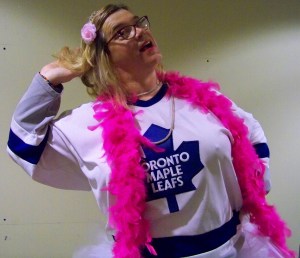
Photo by Jorge Antonio VallejosStefonknee Wolscht is a 49 year young Canadian spiritual transwoman; passionate defender of trans rights; resource navigator for marginalized LGBTQ people at Stefonknee.com ; public speaker;  activist; dad/mom of 7 wonderful kids; Opa to Jake & Rebecca; sexy and single.  

Stefoknee is the main feature of the documentary film Living 2 Live/Dying 1000 Deaths. Read a review of Living 2 Lives/Dying 1000 Deaths, a documentary about Stefoknee’s life.

BCP: Why did you agree to do this film?

SW: This is my story it seems unbelievable, watching it helps me get it out of my head.  There is a sense of closure knowing it has been documented,  I can let some of it go and try to move on. It takes the pressure off of me, the pressure of having to have to remember all the details while everything spirals out of control.

BCP: What was the process in making the film?

SW: I met Dana at Ryerson when I spoke about oppression at her homeless in society class.  Her teachers  Pascal Murphy and Sarah Harrison took time to prepare their class for the many issues that I have been forced to confront… the students really got it and really cared.  It was Dana that called me and asked if she could do this as her class project, how could I say no? She was validating everything that I had endured and wanted to take away some of the pain.  We filmed for five days to make a thirty minute film, we all cried so much during the filming; it was all so new and very raw for me.  When it was done she got 110% for her effort, and everyone that watches it, including myself, were moved by the way she could say so much in thirty minutes and still make it seem unrushed and very relaxed. It broke my heart that the story was mine, as if I never heard myself tell it. I knew every part, but distanced myself from the actual events.

BCP: With Trans folk constantly misrepresented by media, how did the film maker earn your trust?

SW: From the very beginning, Dana was extremely emotional and extremely committed to validating what was happening to me. I had to trust her, there was no one else listening!
BCP: What do you want people to take away from the film?

SW: I hope the viewer realizes that this is not a unique experience for trans-persons. This is far too common.  I hope they begin to understand that, despite looking different on the outside, we are really all the same on the inside.

BCP: You are very transparent about the difficulties of your current life as a Trans woman in this film.  Was the film a form of healing? 

SW: Yes extremely healing.  As I stated before it has helped me deal with most of the baggage from my separation due to my gender issues.  The only thing I can’t seem to deal with is the loss of my children.

BCP: Have any things changed for the positive since the film?

SW: My personal situation hasn’t improved.  Systemically, our provincial government has passed Bill 33 (Toby’s Act) and now the various ministries are creating ways to apply our newly achieved human rights.  It is a slow process but things are getting better all the time for young trans-persons dealing with all the issues for the first time. I have created a website www.stefonknee.com and it is very clear to me that while I am adding links and resources for the trans community, I see a huge increase in acceptance within society toward youth beginning their transition now, they don’t seem to have to lose everything. For those of us that have suffered so much loss it seems almost impossible to get back to living a normal life.

BCP: What has been the overall response to the film?

SW: Those thirty minutes of words change people’s lives. I can’t explain it. I have given out hundreds of copies and I know the people who’ve taken the time to watch it, they are compelled to contact me and let me know how it has affected them.  The rest?  I’m not sure, I guess they got too busy to drop it into their DVD Player and take thirty minutes to watch it, or have since lost it or forgotten about it.  One day they will find it and when they do they will let me know.
BCP: Has your family seen it?

SW: I don’t think so. A few friends from my old church have copies and they have watched it many times.  They don’t know how to express what is real from what they have been told to believe. It’s very hard for a Catholic to accept it despite knowing it’s true. So they don’t show my kids.

BCP: Trans Day of Remembrance is this week.  What does TDOR mean to you?

SW: TDOR is a very confusing time for me, I seem to envy the dead, they don’t have to wake up and deal with the same negative attitude day after day.  Yet I miss the people that have worked so hard to make this a better world, I seem to think they deserve to see how much is changing because of their activism and hard work. It isn’t fair that they can’t enjoy the fruit of their labour.

BCP: There are a lot of problems around TDOR such as passing Trans men, and white folk, taking over, amongst other things.  Can you speak to these problems?

SW: I don’t want to talk about division within our community or for that matter within any minority.  We suffer enough, isolation from each other should not be added to the mix.  There are various levels of privilege but we are all oppressed, dwelling on slight differences is counterproductive.  I believe *CIS gender people with privilege perpetuate the *“passing” index factor as a way to add preconceived stereotypes back into our lives.  This is a way for them to divide and conquer, a technique that has always been very effective in keeping marginalized people from joining together  to rise above oppression and compete as equals within society and receiving their piece of the pie so to speak.

BCP: When I asked my friend Cindy Bourgeois, a non-passing Trans woman, to collaborate on doing something for TDOR on my website she said, “I’m a white, middle class, trans woman.  TDOR isn’t about me; it’s about Trans women of colour who are sex workers.”  Cindy feels by stepping away she is being an ally to Trans women who are most affected by violence: Aboriginal women, women of colour, and sex workers.  What is your opinion?  

SW: I have heard that before, even from my friend Kyle Scanlon who had a job and some privilege, but he took his life on July 3rd, 2012. I am white and I haven’t worked in the sex trade, but that doesn’t mean I have privilege.

Wendy Babcock was white (not transgendered) but she spoke for up for sex trade workers while working hard to become a lawyer, a place of privilege , but she killed herself too.  I have lost my children, have been disowned by family, church and friends, been homeless, I’ve lost all I worked forty-six years to achieve, I am unemployed for the first time in my life, I am now a convicted criminal, I suffer from PTSD and am constantly thinking of killing myself… I could go on and on, how much difference should my skin colour and sexual practices make when there is nothing left to live for? Again, I suggest that this is another attempt to divide and conquer. 

Could my situation be worse? Of course! There are many people that suffer much worse than Cindy, Kyle and myself throughout the world… but in the end Kyle is still dead.  I envy him and Cindy seems to be coping, great but no one would suggest that Cindy and I are not qualified to speak about what it’s like to be transgendered in 2012, and some of the reasons Kyle is dead.  Many transgendered people and sex trade workers are killed, and many kill themselves, either way, it is caused by various forms of oppression, discrimination and bullying.  Whether you kill me or make me want to kill myself, I still end up dead.  The dead can’t speak, so now it is our responsibility to speak for them.  It is a far worse sin to remain silent hoping that someone else will speak up… I speak up now and I will keep speaking up until I too am dead too, then someone else will have to speak for me.
BCP: How can non-Trans people be good allies to Trans peoples?

SW: Pathos! (suffer vicariously) empathize, sympathize, comfort.  Join our numbers and demand change, help us get out of this rut, create safe spaces, accept us for who we are, comfort us when we are weak or when we mourn, defend us and stand with us when we are being bullied or attacked, give us a reason to live.  Don’t remain silent just because you are not transgendered, shine a light into our darkness and give us hope when we feel hopeless.  If you have a reason to live, share it, we need a reason to live too!

BCP: Would you like add anything that I have not asked?

SW: I am not angry. I am tired, frustrated and confused.  I work really hard to give our community a voice, please watch more documentaries about us and take a moment to visit my website www.stefonknee.com.  I did not create it for me, I created it to help others find help and to navigate the scattered resources that I had to search for while isolated and oppressed.  Link me to other resources you know of that are trans friendly and link them to me.  Talk about music, sports, politics, money and religion with your families and friends, but share the video too, open up the dialogue and educate them about oppression and suffering and help make this a better world.  Take them out of their comfort zone and become our voice.

And… if you see my kids hug them and tell them I love them.

(((Hugs))) Stefonknee

*Cisgender (adj.): A cisgender person is someone who identifies as they gender/sex they were assigned at birth. For example, your birth certificate says female, and you identify as a female woman. 

The colloquial use of cisgender suggests that it is the opposite of transgender. If you’re not trans*, then you’re cis (abbreviated form of cisgender). This is not entirely true, because there are people who transition (eg. take hormones, identify as a different gender than what they were assigned with at birth, surgeries, etc.) who do not identify as trans* or transgender. 

*Pass (verb): In the trans* community, to pass is to be perceived as the gender you identify as. It’s typically, but not always, used in the context of a trans* person discussing their experience in the public world. There’s some debate around the term in that it connotes that one is trying to pass under the radar as someone they aren’t when that isn’t the case. 

Tune into Black Coffee Poet Friday November 23, 2012 for a video of Stefoknee reciting a poem.

Posted in Uncategorized | Tagged , , , , , , , , , , | 3 Comments