LITERARY NIGHTS AT LUMINATO 2011 PART 2: JOYCE CAROL OATES

Literary Nights at LUMINATO 2011 Part 2: Joyce Carol Oates

By Jorge Antonio Vallejos

After upsetting the crowd with one of my famous “Jorge upsets the crowd questions” (Why is it that Arab writing hasn’t blown up in the West like Indian, Turkish, and Latin American literature?  And does the vilification of Arabs in Western media have something to do with that?) Susan G. Cole’s LUMINATO interview with Hanan al-Shaykh was done. 

Actually, my follow up to my question is what had the Arabs in the room hiss at me in disgust:

“The only writer we hear of in North America is the ever tokenized Khalil Gibran,” I said. 

Hanan al-Shayk agreed that Indian literature has blown up in the West.  She reduced Latin American literature to “magic realism”.  And she dodged my media question.  I was not surprised.  People have a tendency to dodge my questions.

After talking with Dionne Brand earlier I was determined to chat with Susan G. Cole and internationally published Arab journalist Mona Eltahawy.  Yes, lots of big-timers were in attendance to see Hanan al-Shaykh.

I waited patiently as an Arab family hogged Eltahawy.  It’s all good.  I’ve done it before.  And I was waiting so I could do it.  Plus, I’m half Arab.  So, I’d be another Arab hogging the famous Arab journalist.

Eltahawy started giving out her business card and I asked for one.

“Are you with them?” she said.

“No, I’m not.”

“Were you the one who asked the question about Arab literature in the West?”

“Yes.”

“I’m going to talk to you, give me one second,” said Eltahawy; she pointed at my chest first and then put up for finger in the ‘give me a sec’ fashion as she spoke to me.

While Eltahawy was saying her goodbyes the mother of the Arab family said, “I agree with you about Khalil Gibran.” 

That’s one person who didn’t want to rip my head off.

Eltahawy was chill, super cool, and intelligent.  No pretension.  Published in all the big places (New York Times etc.) she was very down to earth.  We talked browness, culture, mixed race identity, racism, violence against women of colour, and how the black and white dichotomy in North America leaves people like her and I out of the picture.  Eltahawy informed me that Arabs aren’t even on the American census.  They have to check “OTHER” if they want to participate.  Edward Said would have a field day with that one.  I can already see the essay.

After taking a photo with Eltahawy (she loved my Indigenous Resistance t-shirt) she said, “Make sure you email me, Jorge.” Me, Jorge, the brown guy with the lisp, limp, who wears fatigues and political t-shirts that piss people off, and who sticks out at every cultural event he attends?
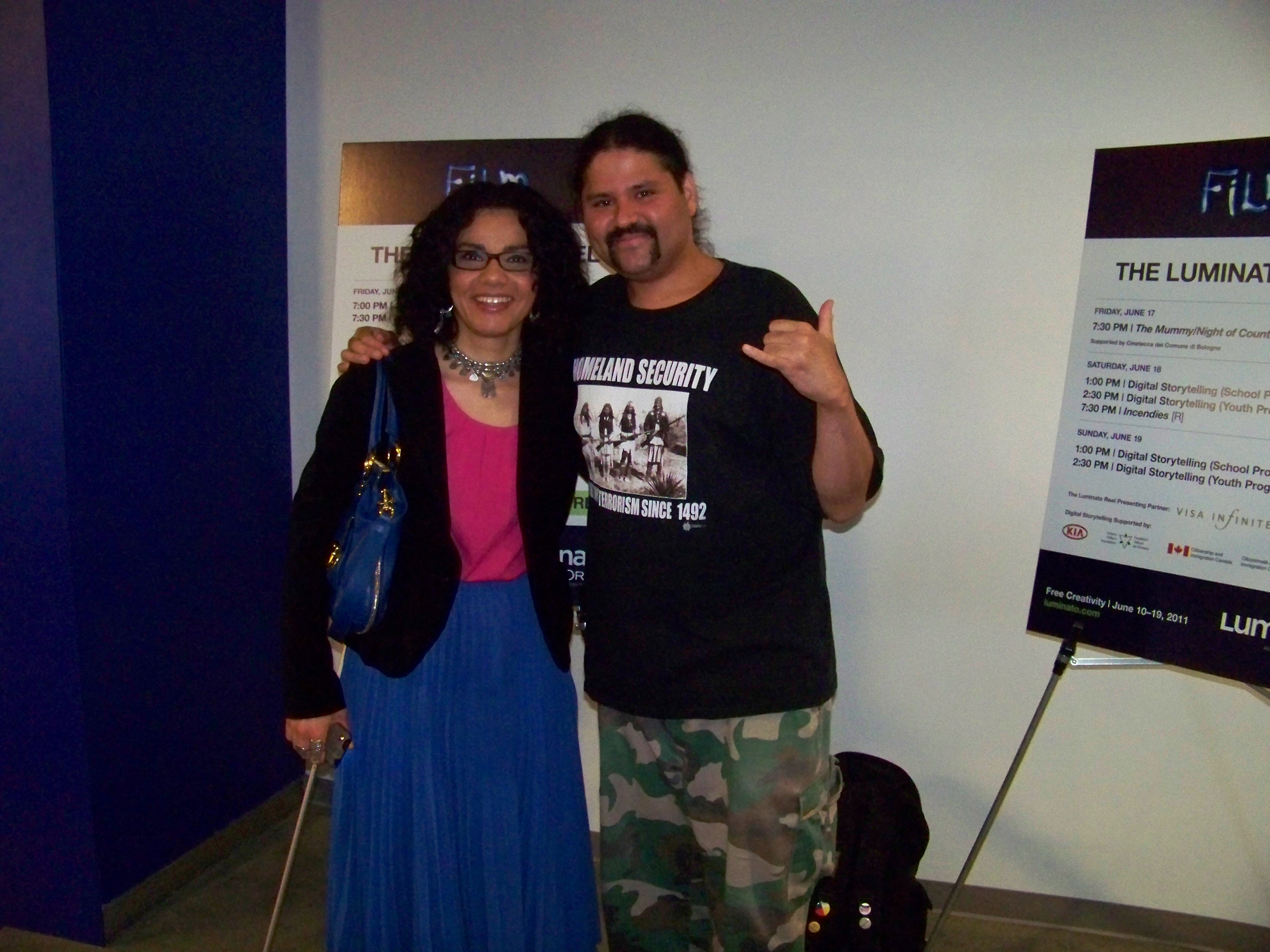
Brand and Eltahawy in the same night! 

I was on a roll and planned on keeping that ball rolling.

Susan G. Cole was next on my list.  I had given her a package of my writing two years ago and heard nada.  The following year I had asked a question at the International Festival of the Auhtors at Harbourfront that she liked.  So, I emailed her the next day; subject line: The Guy Who Asked Brando Skyhorse the Question that You Liked.

Nada.

This was my chance, again.

“Susan G. Cole, I’m Jorge Antonio Vallejos.  I love your interviews!” I said. 

Cole and I talked about Skyhorse and then I mentioned that I write for XTRA! and Anishinabek News and that I wanted to write for her.

“You have to call me,” said Cole. “My inbox gets tons of spam.”   

Pen in hand, this brown boy took down that number fast and finished with a “thanks” and a handshake.

I then moved in on Hanan al-Shaykh.  We took a picture together and then I asked for an interview.
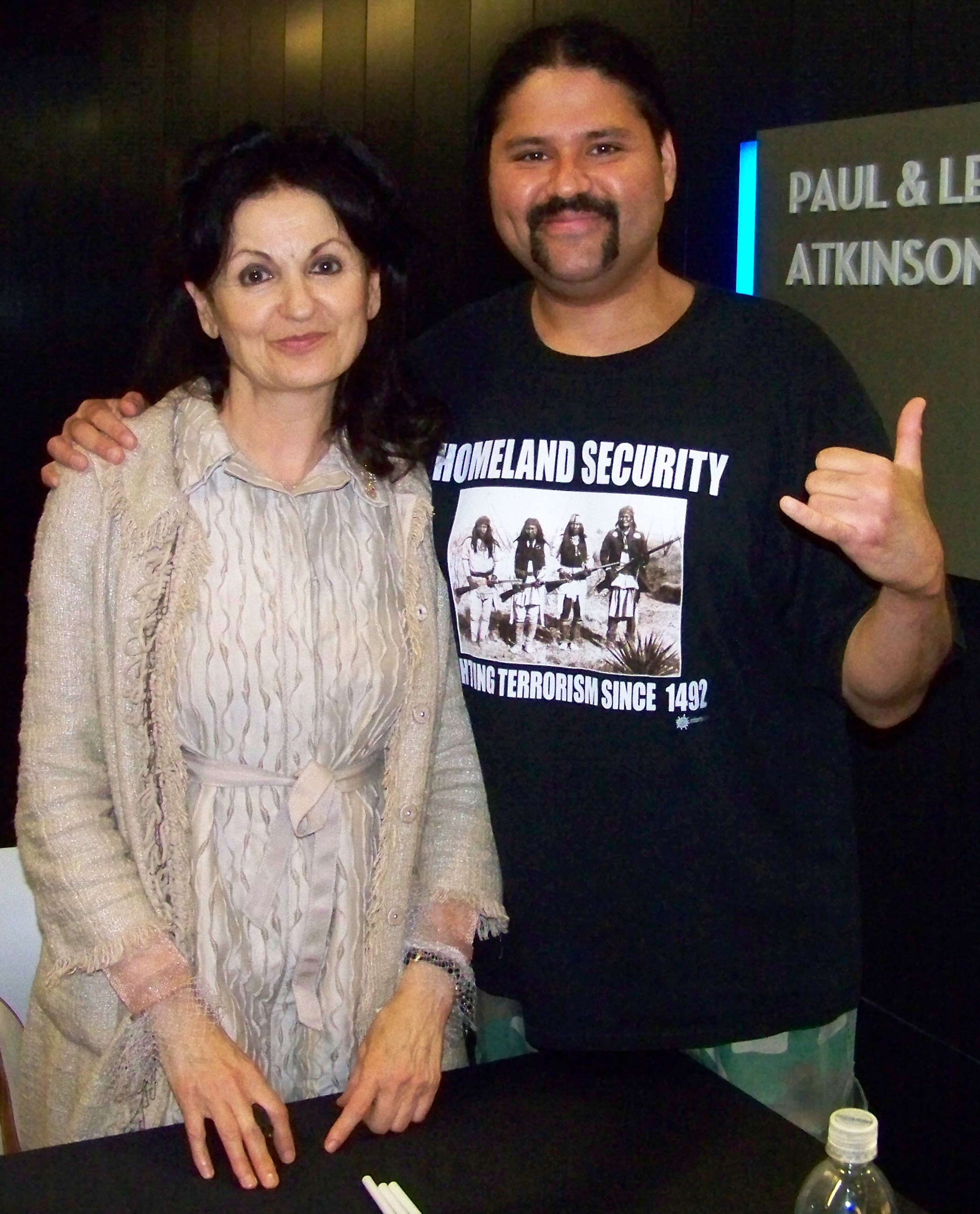
“I don’t have time,” she said.

“Can we do it over email?”

“I don’t do email.”

“Thank you,” I said.

Three out of four aint bad!

I left Monday’s LUMINATO event more excited than after experiencing my first kiss.

Tuesday night I was to attend a poetry reading of Arab writers at LUMINATO. Attending Monday’s event saw my sickness get worse.  I spent Tuesday in bed.

Wednesday’s event was an interview with Joyce Carol Oates.  I enjoy her writing on boxing and her poems: two things she is not really known for.  Her short stories are great too.

When checking my email on Wednesday morning I had a message in my inbox I did not expect:

Hi Jorge,

I am following in regards to you requesting to attend Arabic Poetry last night and not showing up, I have removed all of your events from our records.

Regards,

X

I emailed back and explained my sickness. A response a couple of hours later said there was no room for me.

I went down anyways.

Wednesday’s event was at the CBC building.  I took the streetcar down from Spadina Station and walked in to the Glen Gould Studio and approached the media table.

“Hi, I’m Jorge Antonio Vallejos,” I said.

“Yes, I remember your name.  Black coffee…” said the kind person behind the counter as she checked my name off from a list and pulled out an envelope with my name on it.

She placed the ticket in my hand.  “Thank you,” I said and walked in.

There was lots of room at the back of the theatre; about twenty seats, maybe more.  And many single seats in between the crowd.

Joyce Carol Oates was at LUMINATO talking about her recent memoir A Widow’s Story.  Oates is known for writing stories that have horrific murders and violence.  A memoir about death was no surprise.

The first thing I heard form Oates once sitting down was, “You try to seem normal so people don’t think you’re deranged.”  It was the start to a very open and honest talk.  One where Oates placed all her cards on the table: delusion, sadness, fits of rage, waking up to reality.  Essentially, being human.  Something that readers forget about writers they look up to.

Similar to Monday, interviewer and interviewee sat on couches across from each other.  Jane Urquhart was the interviewer on this night.  She asked good questions but talked a little to much about her own widow experience at times. 
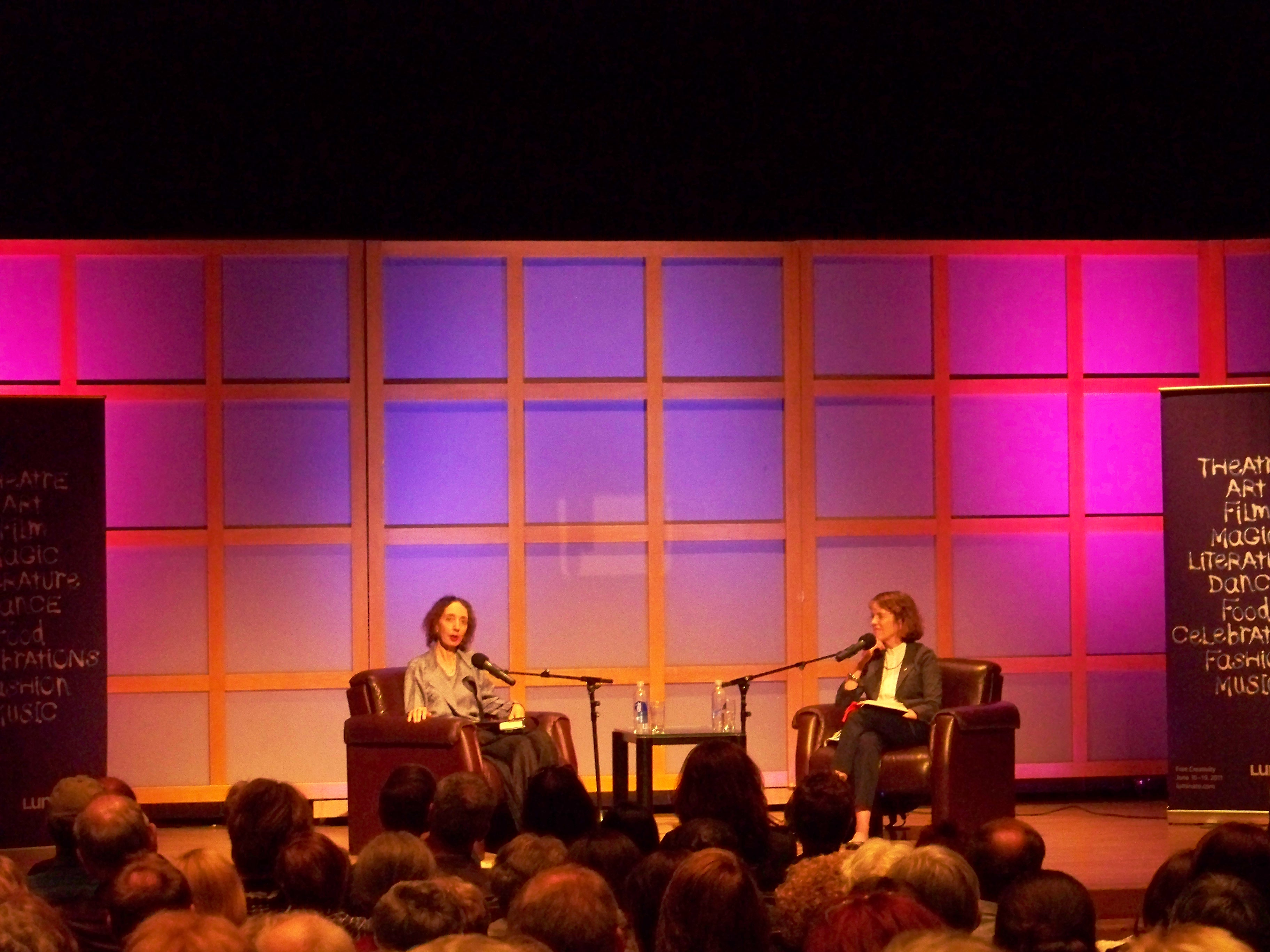
Mourning was talked of for quite a long time. 

“Grief is very repetitive.  Thoughts keep coming back like a prayer wheel,” said Oates. 

The thoughts Oates described were more like torture than prayer. 

“There’s a compulsive feeling to go back in time to do something different,” said the American icon.  Examples of the wishes to take her husband to a different doctor and hospital were shared, as well as dreams of the hospital calling to say her husband was OK only to see her awaken to the grief she was living.  Oates played(s) the ever losing game of “coulda, woulda, shoulda” like many of us.  Her confessions on stage were a leap off the pedestal that many of her fans place her on.  And it’s why her stories are what they are:

“I’m very sympathetic with people who can’t cope,” said Oates.  

Oates talked of time being “a curious experience in our lives” and how it’s “subjective”.  She later talked of her best friend, now dead, who is still her best friend because of all the time they shared.  Now that she is re-married, is Ray, her dead husband, still her husband?

Urquhart and Oates talked about the Ontario Review, a literature journal that Oates and her husband, Ray, started in 1974, and which is now defunct.  Oates bigged up Canadian poet Tom Wayman: “The poet we published most was Tom Wayman.”  I’m a big fan of Wayman’s poetry so that made me happy.
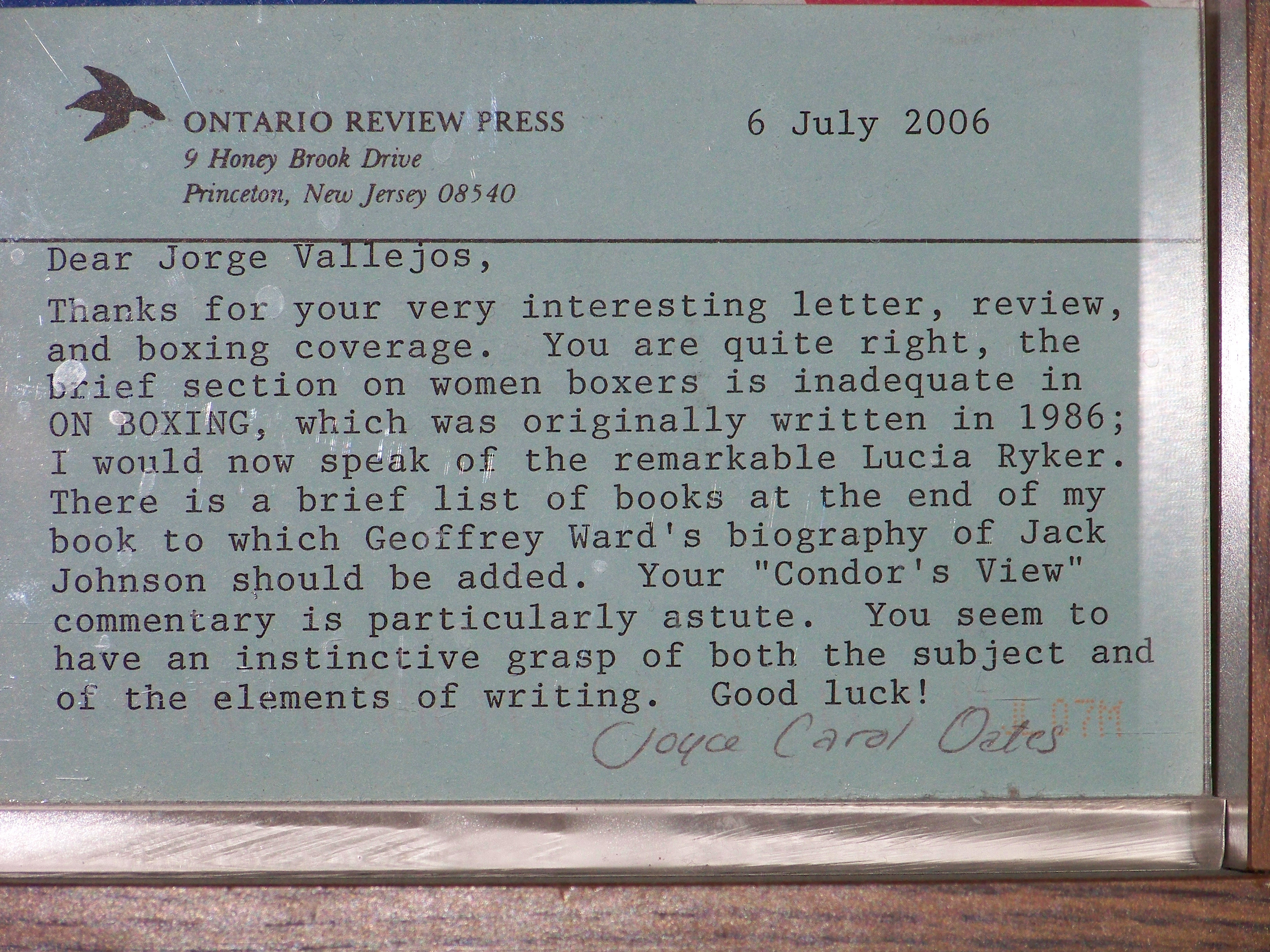
 

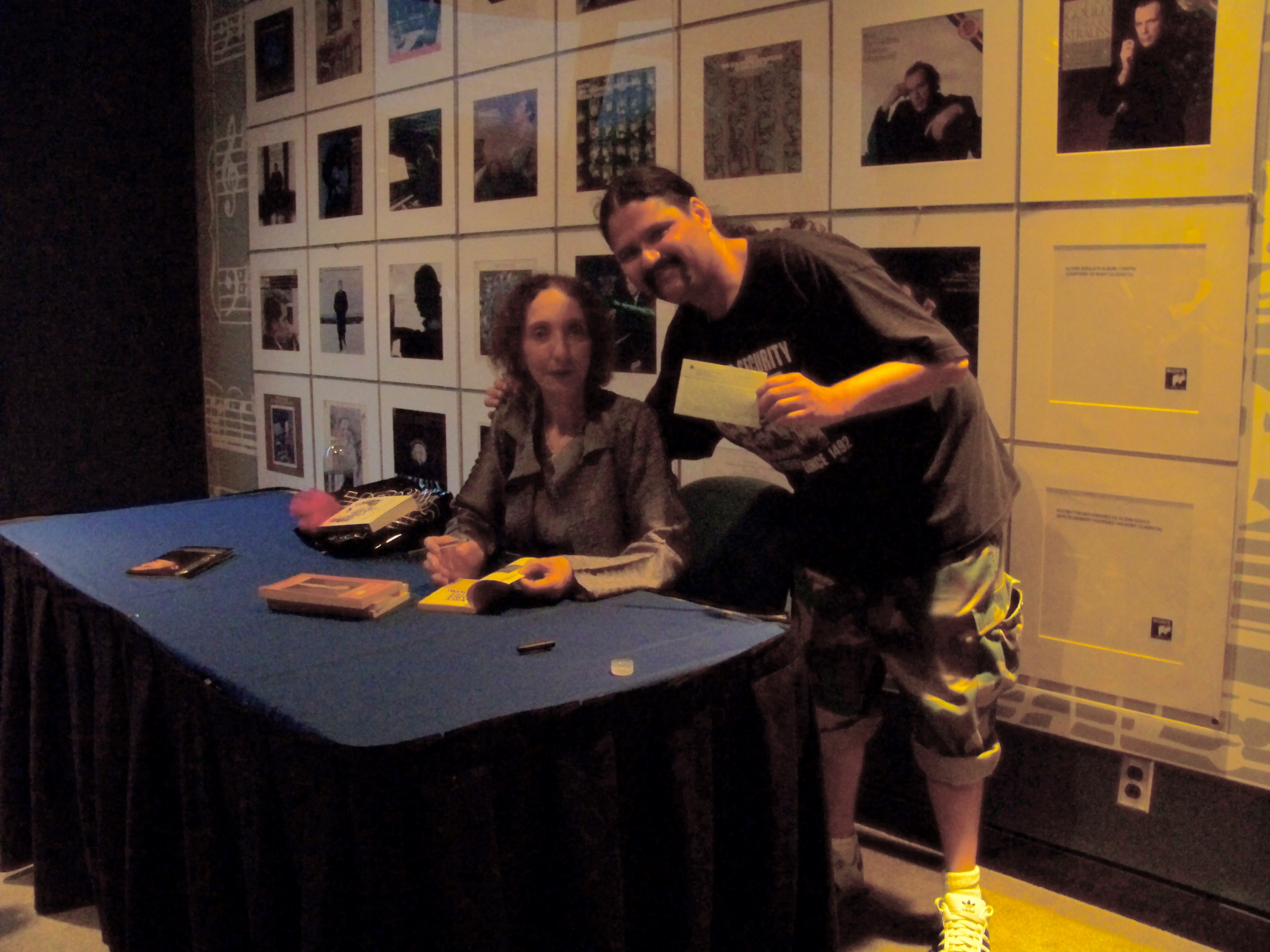
Above: Joyce Carol Oates wrote me in 2006 after I sent her a review I wrote of her book “On Boxing”.  See the letter in my hand in the pic with Oates at the top of the page.

Oates later described poetry as “a gift from grace that comes out of nowhere.”  I disagree.  Poetry comes from sitting down and writing; it’s no different than any other genre in that sense.  A line in A Widow’s Story describes the process well:

“To be a writer you have to be strong enough to write.” 

One of the world’s most prolific writers, described by some as “The Queen of American Letters”, Oates said, “I’m overwhelmed by ideas.”  This is the reason she constantly journals; a practice that many writers do; something to keep in mind.

A great poet, essayist, short story writer, novelist, and now memoirist, Joyce Carol Oates a widowed newlwed said, “It doesn’t matter where I am.  I’m homeless now.”

Tune in to Black Coffee Poet Monday June 20, 2011 for a review of “Louder, Faster, More Fun” by The Johnnys.
Posted in Poetry | Tagged , , , , , , , , | 1 Comment

LITERARY NIGHTS AT LUMINATO 2011 PART 1: HANAN AL-SHAYKH

Literary Nights at LUMINATO 2011 Part 1: Hanan al-Shaykh

By Jorge Antonio Vallejos

It was well worth hitting up LUMINATO this week.  Although I was sick and wanted to stay in bed I couldn’t pass up the chance to see acclaimed authors Hanan al-Shaykh and Joyce Carol Oates. 

Being half Lebanese, it was pride and curiosity that pushed me out from under the covers, onto the subway, and in to the TIFF Bell Lightbox Theatre on Monday night.  Also, Hanan al-Shaykh’s book The Story of Zahra being banned in several countries in the 1980s had me intrigued. 

Upon arriving at the theatre I was told a bit of bad news:

“We’ve overbooked media and might not have room for you,” said the media contact. 

I’m not the Toronto Star.  I’m Black Coffee Poet. Event organizers have no idea that you, my readers, are from four different continents. This type of stuff happens. 

“No problem, I’ll hit the washroom and you can let me know when I get back,” I said.

A ticket was in my hand five minutes later. Not flipping out was the key. 

As I walked in to the theatre I saw Dionne Brand.  Yes, Dionne Brand!  Toronto’s Poet Laureate and recent Griffin Poetry Prize winner.  I thought, “I have to talk to Dionne,” and I did.  For someone who just won $65 000 and the biggest prize in Canada for poetry, Brand is humble, kind, and willing to work with a young poet like myself.  (Brand has agreed to be on blackcoffeepoet.com in future!).  After a short talk I left Brand to enjoy her evening.

The theatre was small and not as filled up as I expected.  With seating for maybe 100 people there were about 85 folk in attendance, mainly Arab. 

Susan G.Cole, Arts Editor at NOW Magazine, was interviewing Hanan al-Shaykh.  Cole always does great interviews.  I enjoy what she does at the International Festival of the Authors at Harbourfront every year; her interview with Brando Skyhorse last October was awesome.  Cole asks good questions, is funny, and you can tell she reads the book being discussed.

After a short intro from Cole, “Hanan al-Shaykh wrote her first book at 19…very distressing for us who haven’t written a book of fiction yet,” followed by clapping and laughter from the crowd, Hanan al-Shaykh talked about her new book The Locust and the Bird: My Mother’s Story.  “I’m going to read to you how my mother tried not to marry my father,” said al-Shaykh before reading for 15 minutes.  The crowd laughed, again.

Interviewer and interviewee sat across from each other with mics propped in their faces.  Cole wore black shoes, jeans, and a black button up shirt.  Hanan al-Shaykh contrasted Cole with her all cream outfit. 

Hanan al-Shaykh read descriptions of food, place, and a marriage not wanted: “Please help me, I don’t love him.”

Cole watched Hanan al-Shaykh read and entertain the crowd. The interviewers legs were crossed, right hand hanging over the leather arm rest showing a silver bracelet, and her pen and pad filled with notes resting in front of her on a table.  Cole’s smile and focus showed she was enamored with Hanan al-Shaykh as much as the people watching.

Hanan al-Shaykh’s long brown hair was tied back as her glasses rested on her face as she read.  “I usually choose sections where my mother is very funny,” said the Arab writer.  This night was different: an unwanted marriage, domestic violence, and cheating were the images shared.  After recently seeing a photo of her mother the writer decided to change from the norm: “It’s not fair to always portray my mother as a funny person.”      

Hanan al-Shaykh shared her family history, her wisdom, her complex relationship with her mother, and why she now lives in London, England: the civil war in 1980s Lebanon.  

Sitting on leather couches a meter apart, and probably meeting each other for the first time twenty minutes before the event, the two writers talked like old friends and as if there weren’t almost 100 people in the room.

Talking of her books and recent work on the play One Thousand and One Nights Hanan al-Shaykh said, “They would mean nothing if we didn’t have a plot, a goal, where we were heading with the stories.  Humililty, forgiveness, love, this is what we are aiming for.”  

After leaving Lebanon in the 1980s Hanan al-Shaykh asked herself two important questions that lead to the writing of her legendary book The Story of Zahra:

“Where do I come from?  Why am I here?” 

Two simple questions lead to a historic novel.

Two simple questions that many people ask themselves.

Two simple questions that not enough people ask themselves.

Published in 27 languages and being the biggest writer out of the Arab world it’s unreal that most North American readers don’t know Hanan al-Shaykh. 

“I’m happiest when I’m sitting on my own.  I only write when I’m in London behind my desk,” said Hanan al-Shaykh during the question and answer period.

“Is there a particular reason for that?” asked a member of the crowd.

 “Yes, stability,” said Hanan al-Shaykh.

Tune in to Black Coffee Poet Sunday June 19, 2011 for “Literary Nights at LUMINATO Part 2: Joyce Carol Oates

Posted in Uncategorized | Tagged , , , , , , , | 3 Comments

CELEBRATING ABORIGINAL HISTORY MONTH 2011: 2-SPIRIT METIS WRITER SHARRON PROULX-TURNER READS A POEM

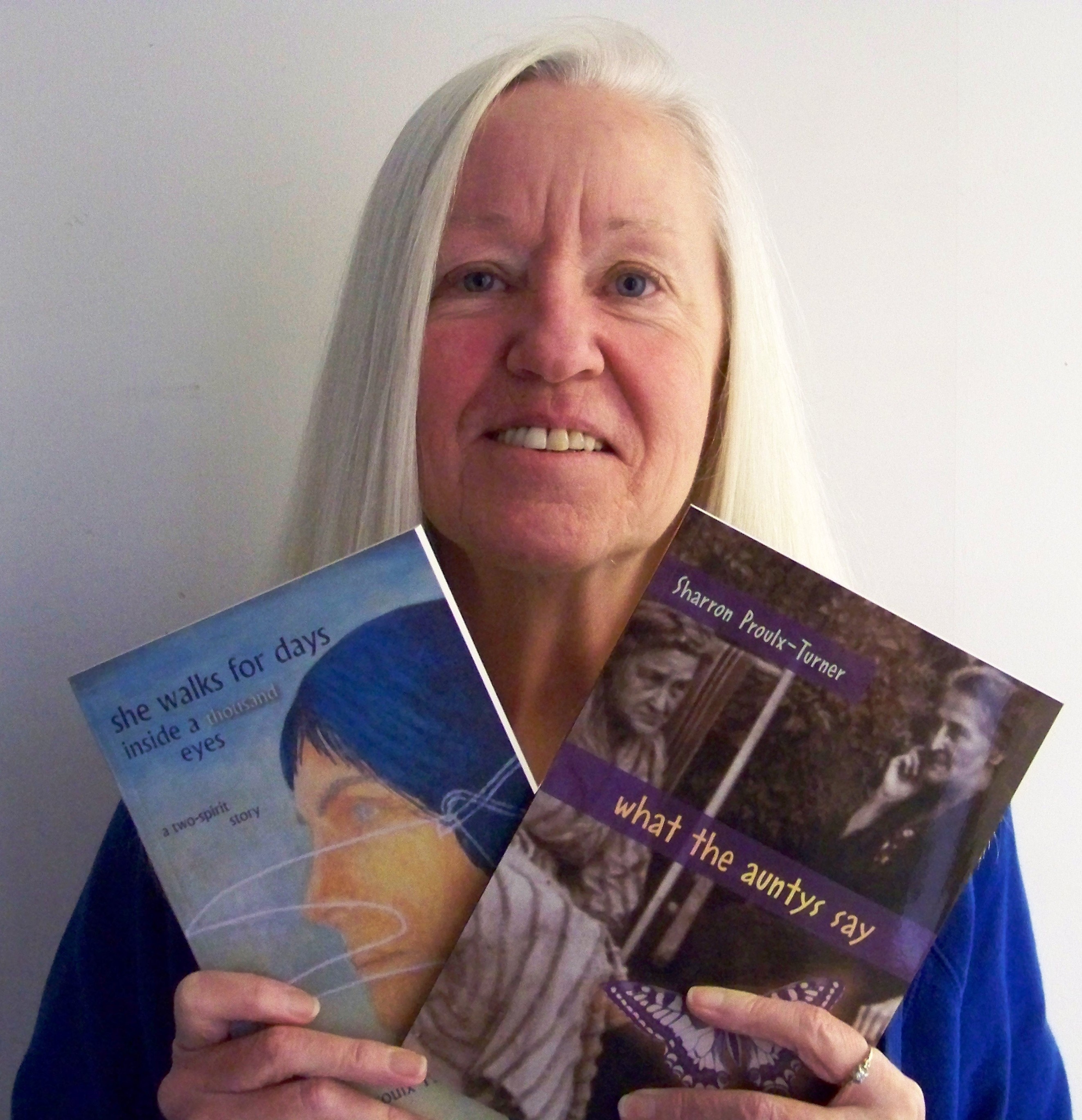
I remember seeing Sharron Proulx-Turner’s What The Aunty’s Say years ago at First Nations House Library University of Toronto.  The title caught my attention and the poetry inside was great.  

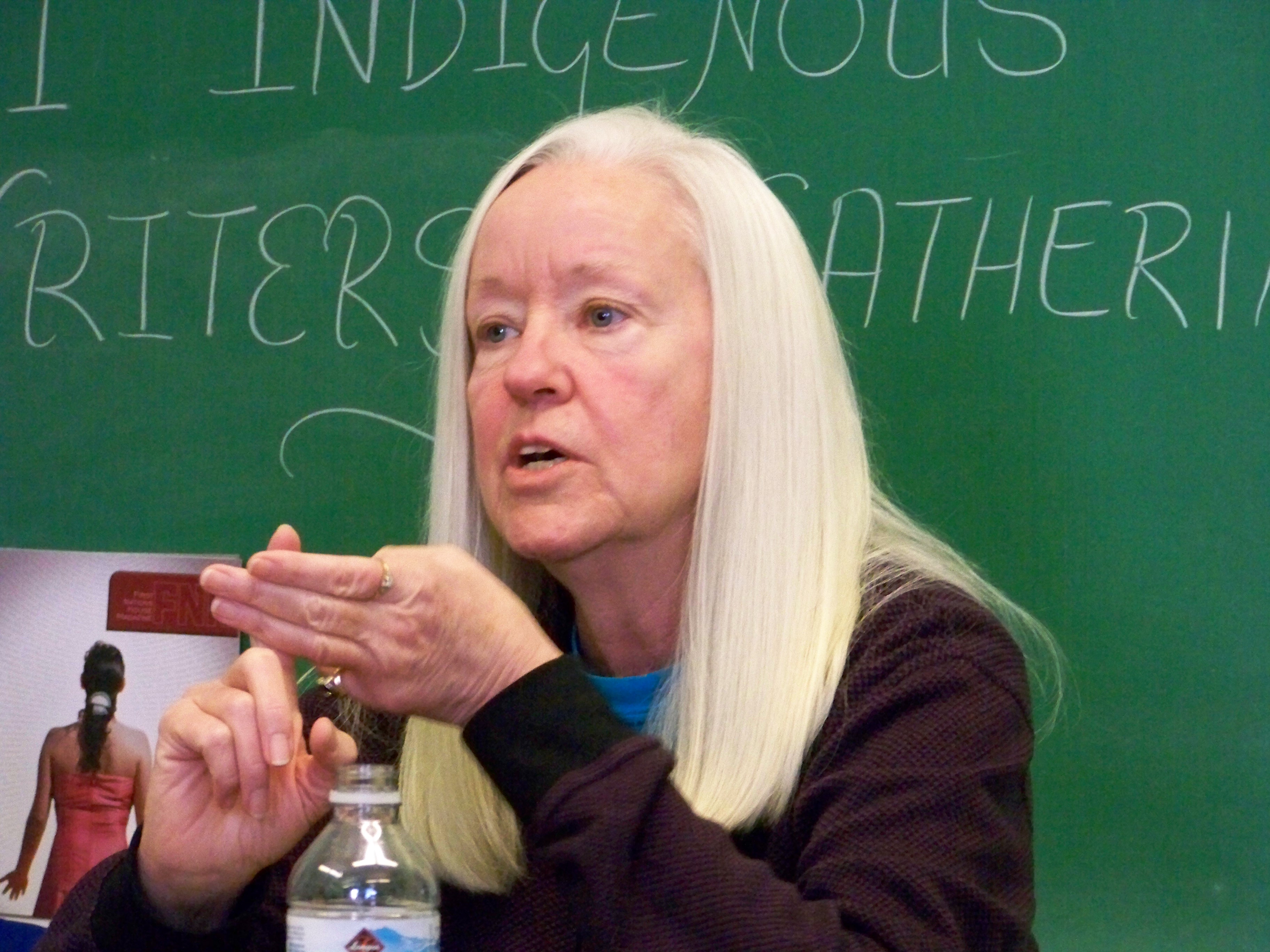
Meeting Turner in winter 2011 was greater. Within the first ten minutes of introducing myself Turner laid all her four books on my lap as a gift and talked enough knowledge to fill up four more books.

Turner gives of herself on the page, in person, and in spirit.

Enjoy Sharron Proulx-Turner read a story from she walks for days/inside a thousand eyes (a two-spirit story).

Tune in to Black Coffee Poet Monday June 20, 2011 for a review of “Louder, Faster, More Fun” by The Johnnys.

Posted in Poetry | Tagged , , , , , , | Leave a comment

CELEBRATING ABORIGINAL HISTORY MONTH 2011: INTERVIEW WITH 2-SPIRIT METIS WRITER SHARRON PROULX-TURNER

Sharron Proulx-Turner is a member of the Métis Nation of Alberta. Originally from the Ottawa river valley, she’s from Mohawk, Algonquin, Wyandot, Ojibwe, Mi’kmaw, French, Scottish and Irish ancestry. She’s a two-spirit mom of three adult children, Graham, Barb and Adrian, mother-in-law to Harold, and nokomis to Willow, Jessinia and Mazie. Her previously published memoir, Where the Rivers Join (1995), written under a pseudonym, was a finalist for the Edna Staebler award for creative non-fiction, and her second book, what the auntys say (2002), was a finalist for the League of Canadian Poets’ Gerald Lampert Prize for best first book of poetry. Sharron’s work appears in several anthologies and journals. She has an upcoming book, she walks for days/ inside a thousand eyes/ (a two-spirit story), with Turnstone, Fall, 2008.

BCP: Why poetry?

SPT: Why poetry? First I’ll say, I don’t think of my self as a poet, but more as a storyteller. My first book, Where the Rivers Join, is a memoir about part of my childhood. That one is written under a pseudonym, Beckylane.

My second book, what the auntys say, is being called a “Canadian long poem.” It’s a story about a Métis lady who’s about four hundred years old and the story is told by old auntys and a middle aged Métis narrator. These are some of the stories of the women in my family — my grandmothers, my mother, my auntys, my daughter, me. These stories are weaved together in short, fragmented lines that reflect and imitate the ways the Métis women in my family have survived — despite tremendous attempts at genocide — since contact.

My fourth book, she walks for days/ inside a thousand eyes/ a two-spirit story, though called poetry, is a story, as the title indicates. It is an historical fiction written in an unconventional way and often the line is used as the breath rather than as punctuation. About twelve lesbian women are brought forward from contact until the indian act and relocations in the States; these women come to life and tell a version of their story to contemporary characters in the novel. I was led to do research in the white man’s way to bring these women’s stories together in a book. To personalize their stories that were told by missionaries, explorers, priests — men. The homophobia embedded in the stories was palpable. I’m really happy with the work done by the publisher on this book. It’s not a book that can be picked up and read like a crime novel or a new york best seller, and they honored the spirit of the story. Much of the book grew out of dreams, as much of my writing does. I honor the grandmothers in that way.

My third book, she is reading her blanket with her hands, is a book a poetry. Each poem is a dedication to a person in my life. After a dear friend of mine passed away, I wanted to let those I loved know how I felt about them while we’re both still alive. These poems were written over an eighteen year period.

I am now working on a manuscript with an Indigenous publisher. That one’s a book of poetry.  It’s called, the trees are still bending south.

I am also working on a book of short stories, two of which are published in Tales from Moccasin Avenue, called, Young Crow-Caw Caught in Calgary and Young Crow-Caw Loses and Eyeball. I’ve also been writing contemporary Roogaroo stories.

I also write Creative Non-Fiction, and I am published in several anthologies and journals.

BCP: What is your process?

SPT: My process? That’s a big question. I’ll be as simple as I can. I love writing. First of all, I didn’t save my writings until after 1990. Before that I wrote, but recycled everything or put them in the garbage. Long story. I started publishing in 1990 at the encouragement of writer, Daphne Marlatt. I tried. I sent out a poem I’d workshopped with her to several journals she recommended and included her name as she suggested. The poem, mean and lazy steps the giant, never did get published until eighteen years later in she is reading her blanket with her hands. But I sent out other writings in 1990 and I was published before the year was out.

My “process” has developed slowly over the years. Because quite a bit of my writing comes from the grandmothers in my dreams, and it is made clear to me what dreams are meant for my writing, I keep a diary. Not that I record my dreams as such, but keeping a diary keeps me fresh. Before I sit down to write at my computer, I smudge and light a candle to honour the grandmothers and grandfathers who help me with my writing. There are times when a poem will come in its whole and I make no changes. There are times when a poem or a paragraph or a story will take literally years. The good news is, I always know when they are done.

I will work from early morning, all day, when I’m on a roll. I don’t often work in the evening. I’m not one of those through-the-night-and-into-the-morning writers. My inspiration for my creative writing comes in dreamtime and peters out around supper time. I have many other obligations (including other writing obligations for anthologies and journals) in my life and there are times when I’m unable to write for whatever book I’m working on because of those obligations, but I wouldn’t say I’m a person who has ever had “writers block.” During the times when I may not be writing creatively at all, I’ll usually be keeping a diary.

All of the titles for my books have come from dreams except the most recent, the trees are still bending south. That one comes from a good friend. We were driving one late spring day. We’d planned to go for a walk, but it was really windy so we decided to take a drive instead. At one point she said, the trees are still bending south. I searched around for a slip of paper so I could write that down and I asked her, can I borrow that for the title of my book? She said, “Sure you can.”

I work on one title at a time and another title comes in a dream. I’m not a fast writer, even when I’m writing for months on end, but I am slow and steady. I spend years on each manuscript. I am an editor for publishers, writers and students, and not only do I edit other people’s writing, but I rewrite and rewrite and rewrite my own work until I feel it’s ready or until I have that dream with another title. Did I say I love writing?

BCP: How long have you been writing poetry?

SPT: That answer’s short and simple. I’ve been writing since grade four when I won a prize for the best poem in the school. I thought I’d cheated because I already had a poem written that I’d worked on for what seemed like forever. But I woke up in the middle of the night the night before the poem was due, wrote out a poem ver batum that came to me in a dream, and handed in that one. I was totally shocked when I won first place in competition I didn’t even enter.

BCP: Who are your influences?

SPT: My biggest influences are Indigenous writers. Still are. Too many to list. Some are Shirley Bear, Maria Campbell, Daniel David Moses, Rita Joe, Basil Johnston, Jeannette Armstrong, Paula Gunn Allen, Lee Maracle, Linda Hogan. Shirley Bear has reached into my bones with her visual art and her voice. Daniel David Moses is a man whose poetry and theatre challenges my every writerly fibre. Lee Maracle has unraveled and created theories of writing that have helped me to find my own voice. Linda Hogan is the author right now that I most admire. To me, her writing is absolutely brilliant. Other influences for me are Luce Irigary, a french feminist writer from france. From her, I learned something intellectual about myself as a writer. I learned my womanness can be expressed in English in an entirely unique way that challenges the white, male norm. And from Susan Sontag I learned the beauty of the mind when the heart is woven in. 

BCP: You mention pencils in some of your poems.  Do you write by hand?

SPT: I do write by hand sometimes. I write in my diary with a soft lead pencil. I started that way because I’m a terrible speller and it just stuck. I love pencil. I love to draw with pencil. I would say that most of my writing is done on computer, but that’s probably not true. I think it just feels that way because of my love of rewrites.

BCP: Your poetry is emotional, honest, and brave. Was it hard to start publishing such revealing work?

SPT: Was it hard? Yes. Still is. But my auntys, my grandmothers tell me it’s my duty, so I do. It’s one way I give back to all my relations, to acknowledge the help I’ve had over the years to help me stay alive. If I can help one Indigenous person, it’s worth it.

BCP: Many artists identify themselves in different ways.  Do you identify as an Aboriginal writer?  Metis writer?  A writer?

SPT: I identify as all three.

BCP: You give thanks to Great Spirit and Mother Earth and you write of medicines throughout your collection.  How much does your spirituality play a part in your writing?

SPT: My spirituality and my writing are not separate. When I write, when I create, I am part way into my spirit self. That’s where I write from. That’s how the grandmothers and grandfathers help.

BCP: One of your poems is called prayersong.  Do you see poetry as a form of prayer?

SPT: Every moment in life is a prayer and myself, I not only see poetry as a form of prayer, but also as a form of resistance. I am of the mind that the artists, the writers, the musicians, those in theatre and entertainment — not only comment on life, but provide a means to change. Louis Riel predicted today’s movement. As Shirley Bear says, “Artists are the movers and changers of the world.”

BCP: When you spoke on a panel at University of Toronto in Winter 2011 you mentioned that you see your writing as stories and not poems.  Can you elaborate?

SPT: I answered this question earlier in the interview.

BCP: At your University of Toronto talk you mentioned how not enough writers of colour, Aboriginal and non-Aboriginal, are given jobs in the writing field at post secondary institutions.  Do you still see this happening?

SPT: I do. There are literally hundreds and hundreds of us writing and publishing and we still seem to be the tokens in the ivory towers. Here at U of T you are lucky. You have a very strong First Nations House and I was thrilled to see so many brown folks here during this event. That indicates the level of hard work done by writers and educators like Lee Maracle and others. In our communities, nothing is done in isolation. It would be so nice to have this kind of welcome, this kind of event at every college and university, every friendship centre across the country. It will happen. It’s only a matter of time. 

BCP: How do you come up with such amazing and unique titles such as the intimacy of bark growing inside quiet rain?

SPT: Thank you, BCP. Titles like that come to me in quiet moments on the land.

BCP: Your poem anxiety of influence is about violence against women.  You write of Helen Betty Osborne, the 27 Aboriginal women found on Picton’s farm, police inaction and apathy concerning missing and murdered Aboriginal women in Manitoba and other things.  How did this poem come about?  Was it hard to write it?

SPT: This was a poem I began in a creative writing course with author Fred Wah, after the women engineering students were slaughtered in Montreal in 1989. Then came Oka. During the course of the previous year I had gone through the local Calgary papers and clipped articles about violence against women. I was shocked at the volume, at the piles and piles of clippings. I researched white “Greek” patriarchal stories that seemed to birth themselves from a hatred towards women that was systemic and embedded in the institutions of this country. The poem came together from there, and, yes, it was extremely difficult to write.

BCP: What are you working on now?

SPT: As I said earlier, I have a poetry manuscript with a publisher. I guess I was called a poet for so long, I began to be influenced by the mainstream rumors. I also have a book of short stories in progress about a crazy crow who’s friends with a Métis boy and girl. These stories cover some of the history of the Métis from Tadoussac (the original home of the Métis in Canada) to Calgary. I’m also writing contemporary Roogaroo stories. New things are birthing themselves all the time.

BCP: When do you expect to have your fourth collection of poetry published?

SPT: Soon, I hope. Within the next year or two.

BCP: What do you want the Aboriginal and non-Aboriginal communities to get from hearing you read your poems?

SPT: I write for Indigenous audiences and when non-Indigenous folks get something from my work, that’s good too. I hope my words reach people with both beauty and resistance.

BCP: One of your poems is about International Aboriginal Day.  It is Aboriginal History Month now.  What does that mean for you?

SPT: To me, every month is International Aboriginal month! I think you’re talking about a poem dedicated to Shirley Bear called, coffee among the poles of a tipi on national aboriginal day, 2004. Shirley Bear co-facilitated a twelve week residency in Banff, Alberta and I was fortunate enough to be one of the participants for six of those weeks. I am honoured to say this poem is the introduction in Shirley Bear’s book of poetry and thought called, Virgin Bones. Shirley Bear is one of the great thinkers of our time.

BCP: What advice do you have for other writers out there who are having difficulties with their writing, or who have yet to see their work in print, or who are afraid to perform their poetry?

SPT: Keep trying. Keep writing. I have dyslexia and at least one other learning disability. When I first started university, I failed a required writing test and I had to take an English course. I was really scared. On my first essay, the prof wrote, and I quote, “This is no essay but you sure as hell can write.” After several “C’s” I asked the prof how to write an “A” paper. “An essay’s just a formula,” I said. Can you help me learn that formula. The prof said, “Have you thought that maybe you’re just not capable of writing an “A” paper? You write in circles,” that prof said. I thought, hmmm, I think I am capable. I just need to figure out how to write in a straight line. I borrowed a paper from an “A” student in the class. I copied her form, her structure, right down the line, and I got an “A.” 

If you’re afraid to perform your writing in front of an audience, practice reading in front of people you feel safe with, like your family and friends. Read to yourself out loud. Performing with comfort usually takes time. Like anything you want to become good at, it takes time. My knees and hands shook so bad the first time I read out loud, I couldn’t see the paper. A friend of mine, Métis writer Kelly Benning, says before her first reading she told her dad how nervous she was. He said something like, “If standing and reading into a microphone in front of a hundred people is the worst moment of your life, you’ve lived a charmed life, my girl.”

Tune in to Black Coffee Poet Friday June 17, 2011 for a video of Sharron Proulx-Turner reading a story.

Posted in Poetry | Tagged , , , , | 1 Comment

CELEBRATING ABORIGINAL HISTORY MONTH 2011: SHE IS READING HER BLANKET WITH HER HANDS

She Is Reading Her Blanket With Her Hands

By Sharron Proulx-Turner

Reviewed by Jorge Antonio Vallejos

Two-Spirit Metis poet Sharron Proulx-Turner writes, “I am humbled by the women and girls in my world”, in the intro to her third collection of poems she is reading her blanket with her hands.  I am humbled by Proulx and the way she writes; the titles she comes up with; the way she infuses different Aboriginal languages in her poetry; the way she makes her culture shine on every page.

The first page you see once opening the book foretells the following 81 pages: transparency.  Proulx lets the reader know who she is, what she believes, and why she writes:

“I’m told my great-grandmother rosina lafrance-proulx, was a poet, that she talked to the trees, to the plants and animals.  and now she talks to me.” 

A common criticism of literature is that it does not speak to the reader.  Turner not only speaks, she sings on the page.  At times she whispers.  Many times it feels like she’s in your kitchen sipping tea with you.  One thing is for sure Turner always has the reader’s attention.

muskiki-ah-won-ah-hey-ney, the first poem in the collection, is dedicated to George Blondeau (white buffalo) 1951-2003.  It starts off with a song, has you driving with her, recounts her friendship with Blondeau, and ends with a song.  The poem is circular, from the heart, and giving.  Starting off her collection with a dedication shows the kind of person and poet Turner is.  It’s not about her.  Her poems are not self-absorbed.  They are for others; those they are dedicated to, and those that read them. 

Mixing prose, verse, and song, Turner honours Blondeau in the best way she knows how: on the page.  The piece for Blondeau is part song, poem, and journal entry.  And one-hundred percent love:

“george’s death is hard for me to accept.  I don’t feel anger towards george or the deer or the motorbike or the mountain or the rock.  I feel robbed of george’s presence in my life.  I know he’s here in a new & profound way, but my eyes witness the beauty of the trees, my ears, my body, my heart wants to revive his songs,” writes Turner.  Not only does she revive them, she shares them.  Although the reader may not know Blondeau, his memory and songs carry on every time someone opens “she is reading her blanket with her hands”.

Much of the collection is a journey.  You travel with Turner to Kamloops, Wasauksing First Nation, the prairies, Petawawa, Vancouver…  Turner turns travel writing on its head.  She uses verse as well as prose.  Famous writers like Bruce Chatwin are known for their travel essays and books that are described as “poetic”.  Turner skips that stage and writes straight up poems to share where she’s been, what she’s seen, and what she’s learned.  It was a whole new experience for me to read travel writing like this.  As was the point with starting this magazine I learned from Turner; a big thanks to her!

Not only are her poems beautiful, you are struck by the beauty of her titles before you get into what the poems are about.  Turner is unconventional in her titles.  There is a spirit to them.  They are teachings.  Some can be used as affirmations.  Others are prayers unto themselves.  They are from the heart and can’t be taught; Turner lets her pen leak what she feels on the page:

the intimacy of bark growing inside quiet rain

hers was the hand of a woman

eye inside eye & the underbelly of the moon

your wind a song & deep inside the hand hills

his eyes the colour of voice

east of moon & west of sun & birthed from river rain

waves on the water & a talking north wind

anxiety of influence is not only a poem with a title that is different and one that I like it is about a topic close to my heart and Turner’s: stopping violence against women.  Turner dedicates the poem to the 14 white women murdered in Montreal in 1989 at Polytechnique and the 27 Aboriginal women found murdered on Picton’s farm in 2007.  Split in 10 parts (colonization, education, artifact, psychology, philosophy, democracy, hypocrisy, mythology, prayersong, memory), Turner uses prose to explore and critique the state of violence against women that exists in Canada.  Part history, protest, education, honouring, and prayer, anxiety of influence is productive anger as opposed to corrosive anger found in much ranting disguised as poetry. 

anxiety of influence starts with “inferiorizaion. that’s us.  the female.”  In democracy she writes:

“a provincial inquiry in Manitoba reveals that

police have long been aware of white men

preying on native women and girls. the police

were quoted saying they did not feel that the

practice necessitated any particular vigilance.

saddle up, men and boys.”       

In hypocrisy Turner writes:

“case no. 1. helen betty Osborne. 19. cree first nation. brutally raped

and slaughtered by 4 white men.  4 x 4 and 16 years to bring the

men to trial. horseshoes up the ass.”

memory ends the poem of protest, education, and prayer:

“dear diary: this is my standpoint. still.   

as metis woman: orfice. clitoris. minora. labia majora.

as poet: blood. breasts. bones.

empowered. firepowered. because I remembered to remember. us.

women: we are. our children are. our lands are. our houses are. still.

imagine that.” 

anxiety of influence is a much need poem.  It gets the reader thinking. It talks history, theory, pschology, colonization and more.  Although Turner talked about Helen Betty Osborne and police apathy toward violence against Aboriginal women in Winnipeg, I think Turner could have pointed out the differences between Aboriginal women and women of colour from white women in Canada.  The end of the poem, “women: we are” puts all women on the same grid.  That’s not the case, evidence is  how media, government, and police gave much attention to the Jane Creba killing, and do nothing in terms of the 800+ Missing and Murdered Aboriginal women/womyn in Canada, and the many murders of women/womyn of colour.  

Turner titled her book she is reading her blanket with her hands.  Many times throughout the collection I felt like I was reading Turner’s poems as she held me.  There is an embrace that happens once you open the book.  Your eyes hit the pages that are opening a door to Turner’s past, present, and what she wants as a future.  You are warmed by the blanket written of in the book’s title during the chilling stories that are recounted. You are hugged during the rough and tough parts in the book.  You are sung to as you turn from poem to poem.  Just as Turner’s grandmothers were with her during her writing, Turner is your abuela, kokum, nokomis, grandma while you read her book.    

Tune in to Black Coffee Poet June 15, 2011 for an interview with 2-Spirit Metis writer Sharron Proulx-Turner.

Posted in Poetry | Tagged , , , , , , , | 1 Comment

CELEBRATING ABORIGINAL HISTORY MONTH 2011: ANISHNAWBE POET JOANNA SHAWANA READS HER POETRY

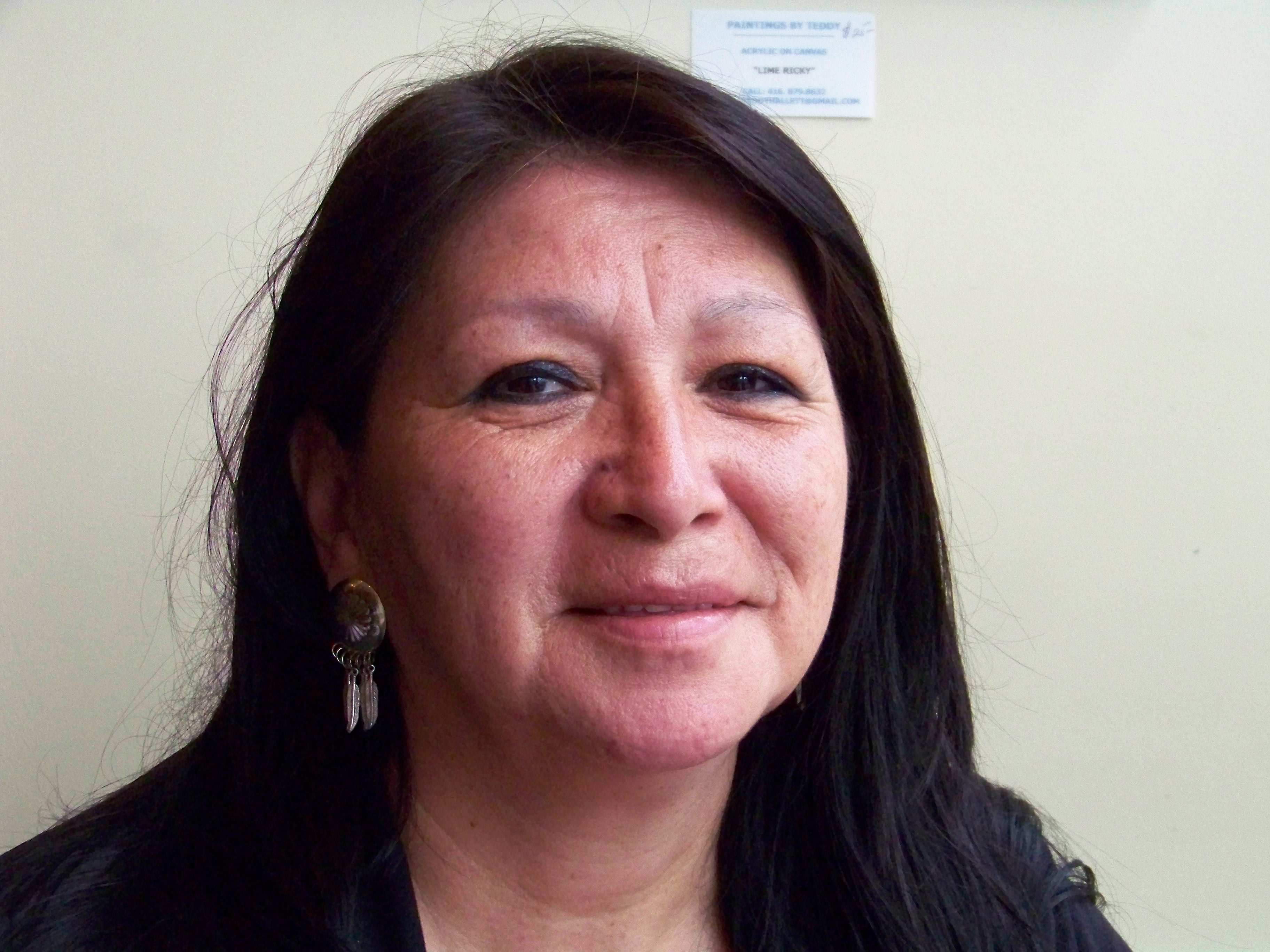
Meeting Joanna Shawana was a pleasure.  

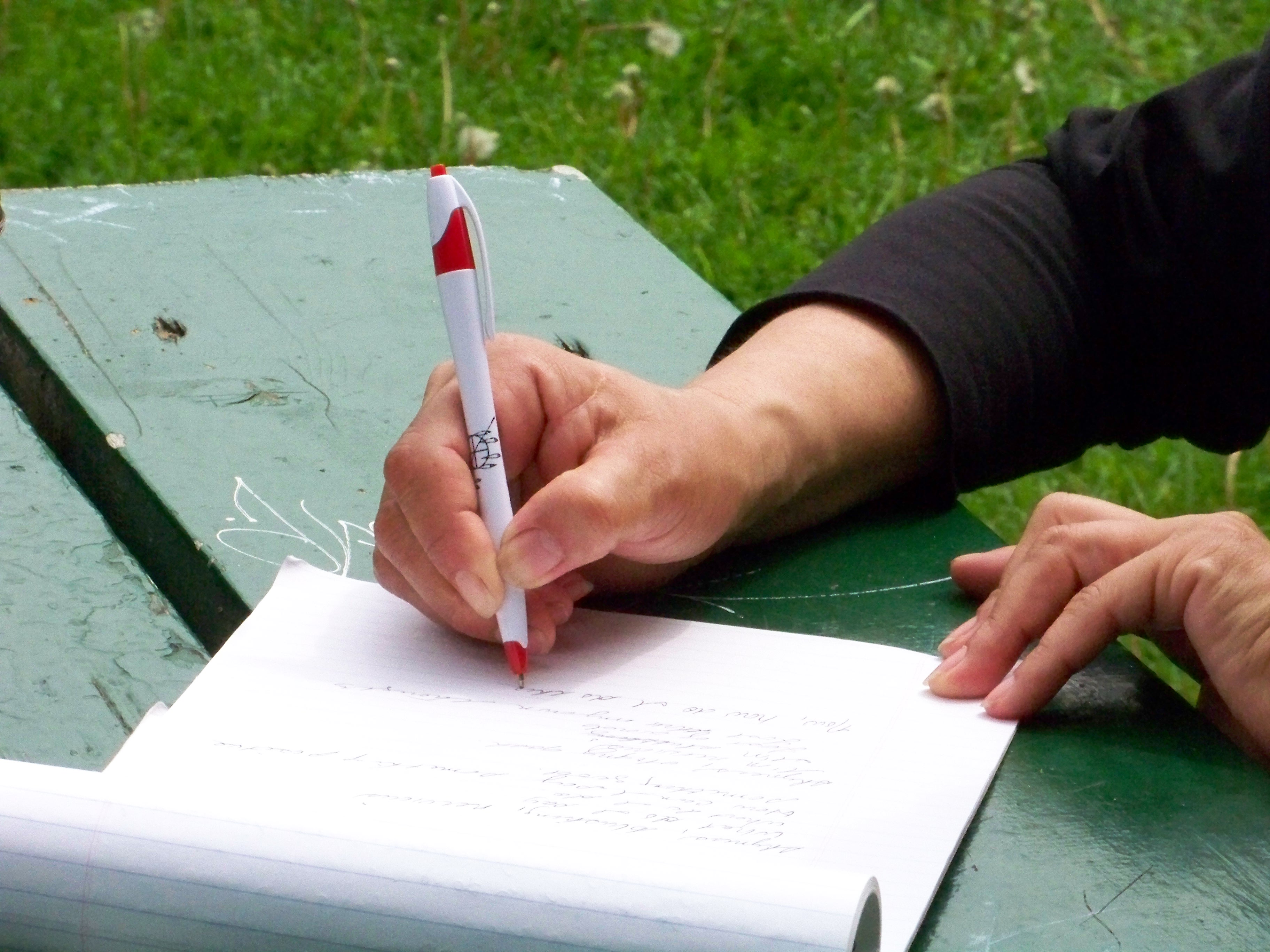
We drank coffee, chatted, took some photos and hit the park to do a recording of her reading her poems.  

Shawana wrote  a poem on the spot and then read it for blackcoffeepoet.com; a first for the magazine!  

Enjoy Joanna Shawana’s poetry.

Tune in to Black Coffee Poet Monday June 13, 2011 for a review of “She Is Reading Her Blanket With Her Hands” by Two-Spirit Metis poet Sharon Proulx-Turner.

Posted in Uncategorized | Tagged , , , , , | Leave a comment

CELEBRATING ABORIGINAL HISTORY MONTH 2011: INTERVIEW WITH ANISHNAWBE POET JOANNA SHAWANA

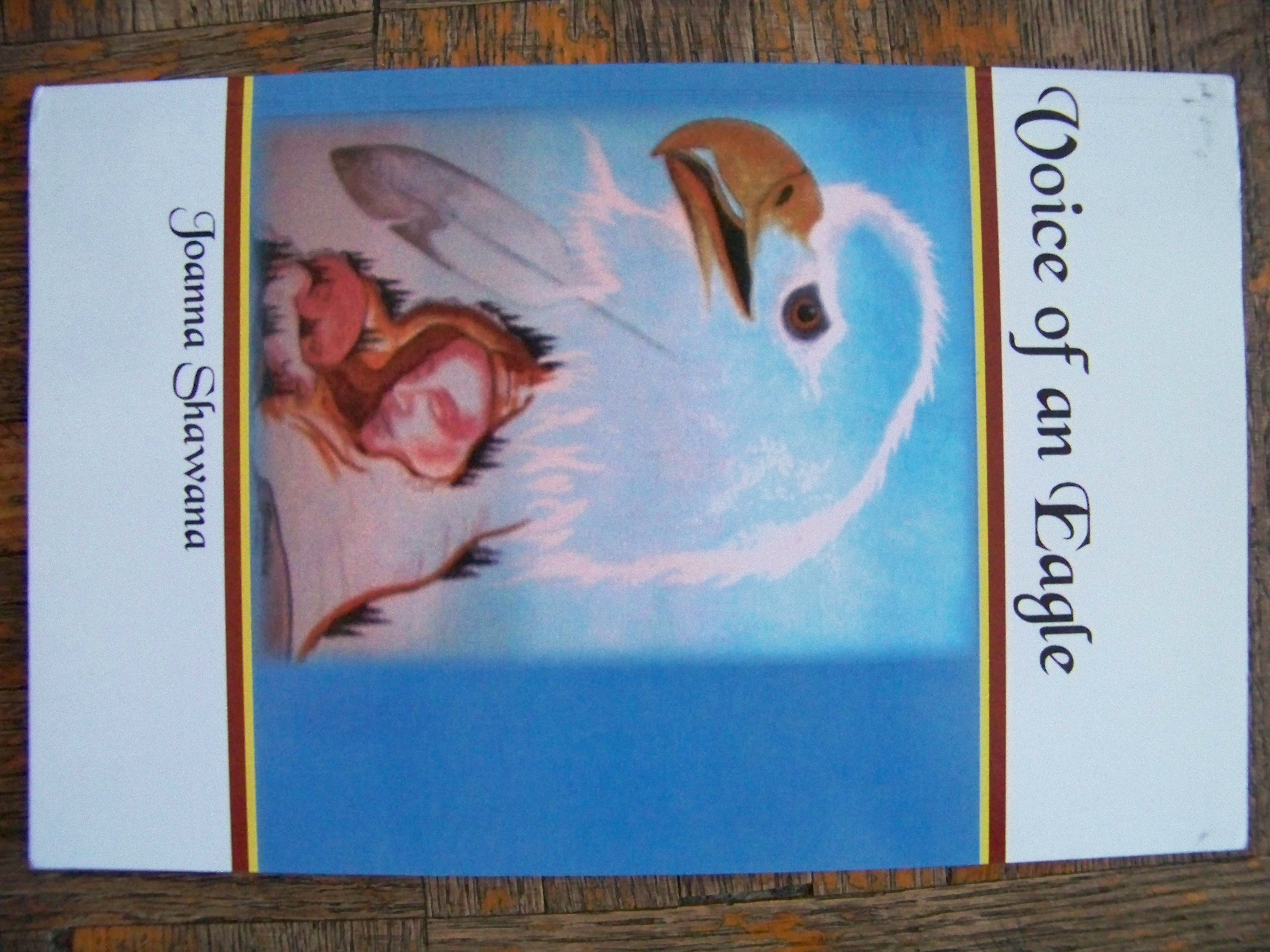
Joanna Shawana is Anishnawbe from Wikwemikong Unceded Indian Reserve.  Author of Voice of an Eagle, Shawana makes and sells Aboriginal crafts and works at a women’s shelter. Her poetry shows us all that there is beauty beyond abuse. Voice of an Eagle is a collection of poems and aboriginal teachings that walk us through her struggle of abuse and show us that no matter how dark the situation looks that we can break free and be with the “eagle’ to find our voice and say NO MORE! Joanna plans on writing another book explaining the signs of abuse and how both men and women can break free from the chains holding them.

BCP: Why poetry?

JS: Poetry is the only way I can express my feelings, my thoughts, what I see, and what I hear.  And when I write, it is another form of releasing; this is the only way that I can  express. The more I write and I have never really re-read what I have written till months later, this is when I started putting my writing in a form of poetry.

BCP: What is your process?

JS: Process…just sit and write. No, really, at times it just comes to me and I just start writing till all the thoughts and feelings are gone. Other times, the city is so busy, I’m unable to think, unable to write when something comes to me and at those times, I need to be around the water, around nature, so that I can concentrate on what I need to write.

BCP: How long have you been writing poetry?

JS: The first time I started writing was in the late 80’s and back then I never kept anything that I had written. I would tear up my writings, burn them and the reason for this because I did not want anyone know how I was feeling, what my thoughts were. I kept all these feeling deep within. But, the poetry writing did not start coming to me till the mid 1990’s.

BCP: Who are your influences?

JS: My influences? I would say my father (who passed away in 1993) and my children. My father was a believer in the church and by that time, I had started to learn my culture and for myself I was not much of church person.

One day, a gift was given to my father for donating game meat (moose, deer and fish) to Anishnawbe Health Toronto to help feed the homeless that were living on the streets but, also for the memories that took place. He never asked for money for this game meat, so in return he received a gift, this was given to me to hand to him. This gift was a book, a book which was called Wisdom of the Elders; man I kept this book for a few months, too afraid, too scared to give him the book, knowing how he felt in the life I have chosen to follow and which he did not believe in. But, I knew I had to give him this book, it took a lot of courage to hand him this book.

A month later, I went back home to the rez to visit him. As I walked in he had two books with him, one was the black bible and the other Wisdom of the Elders. I sat quietly waiting for the lecture from him, but the words that I heard that day was, “This is what I have been trying to say” (putting his hand on the book of the Wisdom of the Elders) but I had been following this one (hand on the other book, the Bible) When I heard those words, I felt some relief coming over me. When I heard those words, I knew he was fine in what life I had decided to follow. Through our visit, he showed me what he had written based on his own teachings he had learned throughout his life, based on what he had read. He wrote, “These Are Our Responsibilities”, and this is what he believed in and tried to teach his children and grandchildren.

A month later after I had the visit with him, he passed away. For me this meant, he had come to terms within himself, what he believed in. And this is when I started writing.

Other influences are my children; they have always encouraged me to start putting a book of poetry together. Till this day, they still give me that support and encouragement.

BCP: Why did you title your book Voice of an Eagle?

JS: Coming up with a title for this book was hard, a lot of thinking things through. In my early years of writing, putting all my poems together sharing them with people in my life. I called it Heart of Gold. The Heart of Gold was based on the person whom I have become. A woman that shares what comes from her heart. After sharing the writings with the publisher, and as we went through all the poems, she asked me to find another title for the book based on a voice of a First Nations woman, and me being from the Eagle Clan. With those two combined together, I decided on Voice of an Eagle.

BCP: Your poetry is emotional, honest, and stimulating. What do you try to convey to your readers?

JS: I guess, what I am trying to say is, “Don’t be afraid to speak up, don’t be afraid to share your experiences in what you have been through, only by sharing, it’s one way of letting go the negativity that one is feeling”. There as too many women, men and children that keep holding on to their negativity and this negativity only destroys who we are. But, we need to keep in mind by letting the negativity go, we replace it with the positive things that we experience in life.

BCP: Your spirituality plays a large part in your writing. Is that intentional or does it just happen that way?

JS: Native Spirituality is not what I grew up with. I remember the first time when I heard spirituality, cultural teachings, I was so against it, I did not want to learn. As time passed learning the culture, the teachings, it grew in me and now it will always be with me.

When I start writing (poems) the spirituality just comes out, there is no intention, the poems just come the way they do.

BCP: Do you see poetry as a form of prayer?

JS: There are a couple of poems, I can say “yes” too. The one that I can share is the one that I wrote when I went on a hunting trip with my brothers and my father. This is the same year that my father passed away. On this hunting trip, I was too sick to travel with them throughout the weekend. I stayed in a tent while the others went out. As I was going through my sickness, I prayed to Creator to give strength, and as I was going through this, I heard nature around me, heard water rippling, the birds sing and I gave thanks to Creator for what I heard and experienced. This poem is called I Offer. This poem was also used in a documentary back in 2008 and this documentary is called Living through Dying.

BCP: Is poetry a form of healing for you?

JS: All my writings are healing for me. As I mentioned earlier, I did not have anyone to talk to about my thoughts and feelings, the struggles that I had encountered throughout my life. The other part of me is, I am a very shy individual, I get nervous when I start sharing with people that I meet. So, when I am writing I don’t have that shyness within myself, I don’t get nervous because there is no one there to judge me in what I am writing about. The only person that would judge me is “myself”. So, I am free to express myself the way I want to in my writings.

BCP: Do you share your poetry with your clients at the shelter you work at?

JS: I like to share a bit of this work. I remember the first time I did my placement work with Nellie’s, I felt I was out of place and being a First Nation’s woman, I really felt odd. The women that I worked with had more experience in this field of work and it did not help much being “shy” and not outspoken. Years went by and each month I was getting comfortable working in this field, the women were very encouraging, gave me confidence within myself that I can do the work.

The first time I shared my poems and writing was in a group that a co-worker and myself started. This support group (Violence Against Women) would help the women to have a better understanding, gain knowledge, feel confident within themselves to have a voice. Each week we would have different topics and women would share their stories and this is when I would share one of the poems that would help the women. Each time I did this, it helped them to be a bit stronger within themselves.

So, yes I do share my poems with the women that I work with. When I work with women, I need to keep reminding myself to be compassionate, to be understanding, to be respectful and listen to the women when they share their stories of abuse. I work with them at their level, I don’t talk to them, I don’t feel superior or have that authoritarian way of speaking to them. I bring myself to where they are because I have been in their shoes before. Working with the women in the past 10 years has been challenging. I learn from my co-workers and the women that come through the doors.

I would like to share this poem which came to me as I was sitting in a workshop:

All I Ask

My fellow woman

My sister’s

I am weak

I am hurt

All I ask of you is

Please

Hear what I have to say

Hear what I have to share

I am not here

To be looked down

I am not here

To be judged

For what had happen to me

All I ask of you is

Please

Hear what I have to share

My fellow women

My sister’s

Listen to my words

See the pain in my eyes

All I ask of you is

Please

Hear what I have to say

Hear what I have to share

Help me

To get through my pain

Help me

To understand what is happening

Help me

To be a better person

So please

Hear what I have to say

Hear what I have to share

©Joanna Shawana 2005

BCP: A lot of your poems are personal. Was it a hard decision to have them published where everyone can read them?

JS: One never thinks of sharing their personal work with the world and that was on my mind when I started writing poems; I only shared with people who were close to me like my children and my family. And yes, it was a hard decision to get them published. Even at the end of it all, it was still hard receiving the book after it was published. All I thought to myself was, “Oh God, now everyone is going to find out what I have been through in life. They are going to judge me for the wrong doings, the struggles, the obstacles and the abuse I had encountered later in life.” But, through my own healing in ceremonies, counseling, the teachings from the Elders/Healers, I have learned that part of healing oneself is to be able to share stories (poems) through any form. As my father use to say “Don’t judge me for who I was, judge me for who I am today.” This saying will always stays with me. Now, I feel comfortable sharing this with people.

BCP: Many of the poems in your book are dedicated to family members. What did your family think of the book?

JS: My family is my children, my grandchildren, brothers and sisters most of all my parents and grandparents. Family is very important to me, they will always be. It does not matter what we go through in life, whether we have misunderstandings, disagreements, we will always be a family and learn to take things in value in what we share in each others life, and not to look things as a lecture.

Each poem is dedicated to my children, grandson’s, brothers, sisters and my parents. They were excited after all the encouragement they have given me to start sharing my poems. The only regret I have is that my father did not have a chance to see this happening, but I know deep within he is watching.

BCP: What are you working on now?

JS: Right now, I have “writers block” as they call it. All my writings, I have put aside waiting for the momentum to start writing again. I do have enough to put a second book together. One other wish I have is to be able to reprint Voice of an Eagle and this will eventually happen; maybe when I win a lotto.

I would like to share this for the ones that know me: my second book is based on a little girl growing up in her community living with her family. The little girl writes about what she had witnessed, what she had heard while growing up, and wonders what will the people think. So for now, my writing is on hold.

At the moment, I do have a project happening. For me another form of healing is to be creative, so I do a lot of custom jewelry, one of kind, unique work with porcupine quills. When I do this work, it helps me to release any stress that I have encountered, to let go of any negativity that I feel, and I put a lot of positive work into my jewelry and I’m proud what I have accomplished.

Right now, my daughter Joni is developing a website for my work, where people can view the work that I do and they can also place an order. Joni helps me a lot in the work that I do, there are many nights and days that she will sit by the computer make business cards, bookmarks, and many other things. And I am totally grateful for all her work.

BCP: When do you expect to have your second collection of poetry published?

JS: Second book? I am hoping in the next few years. In this book, I will be sharing poetry that my family members have written which they have already sent to me years ago.

Again, this is going to be another hard decision to make, to be able to share my stories through poetry.

BCP: What do you want the Aboriginal and non-Aboriginal communities to get from reading your poems?

JS: Honestly, I have not really thought about that. I guess what I can say is, “To all the ones who are afraid to speak, who don’t have a voice, don’t be afraid to speak.  You are not only helping yourself, you are helping others to feel confident within themselves to speak. We have been silenced from people that we love, from the people in our society, people we have trusted in our lives, let us not hide anymore, let us speak up and say that is enough.”

BCP: It’s Aboriginal History Month now. What does that mean to you?

JS: What it means to me is to be proud of who we are as First Nations Peoples. It’s a time to celebrate and to honour our heritage. June 21 was declared National Aboriginal Day, but we as First Nations, I believe we celebrate our heritage every day.

BCP: What advice do you have for other Aboriginal writers out there who are having difficulties with their writing, or who have yet to see their work in print, or who are afraid to perform their poetry?

JS: The only thing that I can say is, don’t give up, even though we have come up with a “writer’s block” just keep on trying. When we try to make a mark in the world we live in, it’s the hardest thing to do, it takes patience and commitment. Writing is a voice, a voice that calls us from our dreams, telling us to open our eyes, to open our hearts and let our voice be heard.

Most of all, the gift that we were given by Creator is a beautiful gift, a gift of writing and through these writings, we encourage ourselves to continue to do the work that we need to do, and by doing this we are encourage others too.

The ones who afraid to speak, to voice themselves, or afraid to perform their poetry, we are afraid that our words will not be heard or accepted. So we feel its best that we live in silence rather than voicing out. We should never be afraid to sit and think and write our thoughts down, we should not be afraid to put our work out there for the people to read and see. The best solution or advice is, don’t be afraid of life, believe that life is worth living, and that we can share our own experiences in life so that others can gain the strength to let go of fear. So it is better to speak.

On this note, I will need to remind myself not to be afraid.

Tune in to Black Coffee Poet Friday June 10, 2011 for a video of Joanna Shawana reading her poetry.

Posted in Poetry | Tagged , , , , , , , | 2 Comments

CELEBRATING ABORIGINAL HISTORY MONTH 2011: OPENING SONG BY DAWNIS KENNEDY AND A REVIEW OF “VOICE OF AN EAGLE” BY JOANNA SHAWANA


Voice of an Eagle

By Joanna Shawana

Reviewed by Jorge Antonio Vallejos

Voice of and Eagle by Joanna Shawana soars high.  The Anishnawbe poet brings truth and humility to every page having the reader feel like they are sitting with a friend as opposed to several sheets of paper glued together.  The reader goes through the emotions of empathy, understanding, and amazement at how much Shawana reveals of herself.  Strength and vulnerability is the voice of this Eagle Clan member who authored Voice of an Eagle.

The title poem, Voice of an Eagle, begins the collection.  The reader starts off flying high seeing the people below as the eagle sings “a song of their sorrows, a song of their happiness.”  The eagle’s songs are teaching the people “that they can also sing from their hearts, sing as they walk Mother Earth.”  And this is what Shawana does throughout her collection.

In Walk In My Moccasins Shawana shows her growth as a person through her Anishinawbe spirituality.  Rather than dare people to walk in her shoes, Shawana invites folk to walk in her moccasins.  “Take a walk with me” starts off the poem of redemption via forgiveness.  The poet recounts the pain that once imprisoned her and the ability to let go that has freed her:

“After you have taken a walk

In my moccasins

I ask you

To let go of the sorrow

That you might have felt

Because today, I know

I would have done it differently.”

Shawana shows the importance of giving thanks for all she has in I Offer.  Laying tobacco down at sunrise everyday Shawana says, “Mii-gwetch”, (thank you) for all she has and all that surrounds her.  Repetition is used throughout the poem emphasizing her grateful nature and demonstrating technique and style. 

I Offer reveals Shawana’s cleverness in her way of providing translation within the poem as opposed to offering a footnote at the end. Writing “I give thanks” once in the early stages of the poem, “I say, Mii-gwetch” starts off the rest of the stanzas.  Shawana gives thanks for gifts many people often overlook:

sunrise

trees

birds

ancestors

Mother Earth

Shawana not only gives thanks for Mother Earth she dedicates a poem of thanks to all her Elders and teachers who’ve helped her on her healing path. Inspiration tells of the inspiration Shawana has felt after each teaching from different mentors.  With so many people to name, and not wanting anyone to feel forgotten, Shawana addresses them all with “Each of you”:

“Each of you

Had shown me bravery

Had taught me how to express my most

Inner feelings

Through all these inspirations

Now I have found the strength, the will

Within myself

To build a new formation as I travel on

This journey.”

Voice of an Eagle is not just about spirituality and healing.  Shawana expresses her wants and needs as a human being, as a woman.  Her poem Dreams is not about a vision or a teaching, it’s about her dreams for a man and intimate moments with that man.  Shawana is not only truthful about her past, she shares her dreams of the future while showing her erotic side.  Using repetition Shawana tells of her wants for a man’s touch and taste and affection.   She ends with: “Dreams of burning desire within ready to explode”. 

Many poems in Voice of an Eagle are dedicated to family: My Dear Brother, My Daughter Tracy, My Son, My Grandson Keegan, In Memory of Country Boy, Mother.  Shawana’s poem for her daughter, Joni, uses a cool technique not seen often.  In the middle of the poem Shawana starts different stanzas with each letter of her daughters name: J, O, N, I.  Every poem for a relative shows the reader who this relative is and the special relationship and affection Shawana has with each of them.

More than a collection of poems Shawana includes teachings of her people, her tribe, her nation–the Anishinawbe, throughout the book.  Naming Ceremony and Teachings of the Ojibway are teachings on paper.  Great Spirit is a prayer.  The Change Within is a journal entry that shares Shawana’s growth as an Anishinawbe-Kwe—Anishinawbe Woman. 

Voice of an Eagle has much to offer.  The only fault the book has is that there are no page numbers and no table of contents.  Reviewing this book saw much flipping of pages to return to poems that were to be explored. 

If you are looking to learn about Anishinawbe people, enjoy Native art, and like to read poems of empowerment, pick up Joanna Shawana’s Voice of an Eagle and fly with her on her spiritual high.  

Tune into Black Coffee Poet Wednesday June 8, 2011 for an inclusive interview with Joanna Shawana.

Posted in Poetry | Tagged , , , , , , , , , , , , , , | Leave a comment

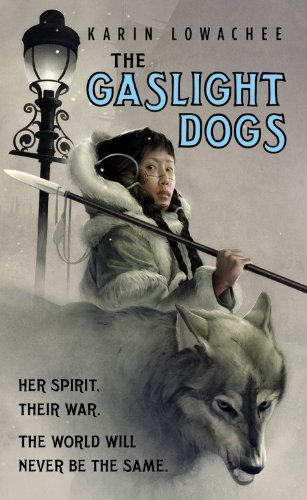
KARIN LOWACHEE READS FROM “THE GASLIGHT DOGS”

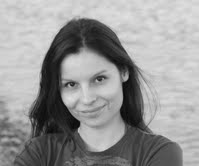
Karin Lowachee is one of the few writers of colour and women of colour in the fantasy lit world.  

A multiple award winner, Lowachee was postively reviewed in The New York Times.  

Her new novel The Gaslight Dogs is making waves. 

Tune in to Black Coffee Poet Monday June 5, 2011 for the start of Aboriginal History Month on BCP with a review of “Voice of and Eagle” by Anishinaabe Kwe Joanna Shawana.

Posted in Uncategorized | Tagged , , , , , , | 1 Comment

INTERVIEW WITH FANTASY WRITER KARIN LOWACHEE

Karin Lowachee was born in South America, grew up in Canada, and worked in the Arctic. Her first novel WARCHILD won the 2001 Warner Aspect First Novel Contest. Both WARCHILD (2002) and her third novel CAGEBIRD (2005) were finalists for the Philip K. Dick Award. CAGEBIRD won the Prix Aurora Award in 2006 for Best Long-Form Work in English and the Spectrum Award also in 2006. Her second novel BURNDIVE debuted at #7 on the Locus Bestseller List. Her books have been translated into French, Hebrew, and Japanese. The Gaslight Dogs, her 3rd book, was published in 2010.

This interview was conducted by Briana Stone.

BLS: How long have you been writing and when did you first consider yourself a writer?

KL: I’ve been writing pretty much my entire life. As a kid, before kindergarten, I made up stories and drew pictures for them, and it hasn’t stopped since then. Obviously my stories have become a little more complex, though. I can’t remember when I explicitly thought of myself as a ‘writer’ but I’m fairly certain that since I’ve been doing it for so long, it’s been quite awhile. I became an ‘author’ much, much later.

BLS: Why Science Fiction/Fantasy?

KL: I just love using my imagination and not being bound by strict history or contemporary politics and places. SF/F is the genre of metaphor, it technically has the most freedom in storytelling while being capable of a lot of depth and resonance, and I like that.

BLS: Who are your influences?

KL: Anything and everything. I think you have to be interested in the universe and everything in it, so I try not to limit myself. Writerly influences are from all different genres and time periods. Artistic influences are from every discipline: music, visual art, film. And events in the ‘real’ world are also a heavy influence, past and present and the possibilities of the future.

BLS: How has poetry influenced your writing fiction?

KL: Reading poets like Octavio Paz, Pablo Neruda, William Shakespeare, Siegfried Sassoon, Wilfred Owen, TS Eliot, Maya Angelou … poetry has the ability to say beautiful, visceral, profound things in a very distilled manner. Every word has to count and be placed perfectly. I strive for that in my stories. I think of sentence structure and dialogue oftentimes in rhythm and beats. I want to illustrate what I mean in my stories, through words, the way poets do. Writing a good novel, for me, isn’t just about delivering a story in a competent manner. I want to create a world and characters, using the best language I can, to show them to the reader so they respond emotionally.

BLS: What elements of poetry would you say you include in your writing?

KL: Like I said above, I’m pretty conscious of the rhythm and beat of sentences, and individual words. I like to round off parts or scenes on a good ‘note’. I don’t always stick to expected paragraph structure, but would rather break up sentences to suit a certain rhythm that reflects the character or the scene’s emotionality. I want to show how my characters feel by using imagery and metaphor, sometimes, because I think that resonates deeper than just working on a single narrative level. To me it’s about finding precise but not plain ways of telling the story, when needed, to use words effectively and to their potential. That’s the beauty of language.

BLS: Can you talk about being one of the few women of colour in the industry?

KL: I’ve never taken a headcount, but when I look around at the industry, I see people from all different walks of life, different shades of skin and different backgrounds. I think it’s fantastic, but it’s not my primary focus. Maybe that isn’t a popular opinion but I don’t navigate the world thinking of my race or gender before my humanity — or even before my abilities, what I’m capable of — nor do I interact with others that way.

My (mixed) race and multiculturalism is a part of my humanity but it’s not the whole of it, and I’m wary of the train of thought that microfocuses on one or two aspects of a person without considering the whole. I understand, respect, and support the importance of talking and writing about gender and race (I do it myself), and celebrating our different heritages; I think it’d also be great to be respected as a writer first, for the work, and the fact that I’m a woman of colour is an aspect of that but doesn’t need to be the primary focus all of the time.

I really chafe against labels of any kind, anything that would pigeonhole me and give people preconceived notions, good or bad, before they’ve even read my work. I know it’s inevitable, we all get judged or assessed one way or another and I’m pretty conscious of that, so anything that would minimize that in my life, I would prefer it.

BLS: What is the idea behind the title for your book The Gaslight Dogs?

KL: I like evocative titles. To me The Gaslight Dogs is an image appropriate for the book. The image of furtive dogs beneath gaslight, in a city, evokes a certain time period and directs a certain focus. The concept of the Dog is important in the novel, and the setting is too. But I never use that phrase specifically in the book. So there’s the title.

BLS: Why did you choose the North as the location of your story?

KL: I lived up there for a short time and simply fell in love with the culture and the people. I think it’s an interesting, unique, and beautiful culture that doesn’t seem to be much of a focus in fantasy literature like some other cultures tend to be. Since living up there I wanted to write about it somehow, so this was my attempt.

BLS: How did you come up with the names of the groups of people such as the Abo/ Aniw people and the Ciracusan/Kabliw people?

KL: It’s a sort of alchemy. I’m no linguist. I play around with language, use my ear and my eyes for the aesthetics of it, and try to cohere the names within the individual cultures. The bottom line is it has to feel right and follow its own rules.

The Aniw names are an odd amalgamation of Icelandic, Inuktitut, Japanese, and my imagination. Ciracusan names … I tried to use “English”-looking names but not make them common or totally recognizable. “Fawle” looks like an actual English name but I made it up, a play on “fall”. I have to say that when I chose “abo”, I wasn’t consciously aware of its usage in Australia and I regret that. I never would’ve used it, had I known. Lesson learned, though I did intend its usage in the book to not exactly be flattering from the Ciracusan point of view. It’s their shorthand, the generality of naming rather than looking on people and their cultures as individual. Which of course is one of the issues I wanted to explore in the book.

BLS: What similarities and what differences of colonialism did you want to include in the story?

KL: I didn’t think about it in those specifics, not at the outset anyway. I wanted to just tell an honest story driven by human behaviour (and the spirits), through my observations, reading, and understanding of those parts in history (particularly of this continent) that are similar. The overrunning of a culture by another culture being one of those similarities. The usurption of another culture’s “power” by another. The connection between knowledge and conquest, and the consequences of that. The changes in spirituality or beliefs when cultures clash; the resistance to or acceptance of truths, whether they’re recognized as truths or not. I can’t really list everything, it’s too broad and there’s too many.

BLS: What message would you like readers to have grasped from the story?

KL: I don’t go into books wanting to impart a “message”, but obviously I have things that I’m passionate about, that move me enough to write about in depth. Hopefully readers get a lot of different things out of this book, not the least of which is the importance of compassion and knowing who you are. That’s one of the bedrock “issues” of the book.

BLS: Do you have any advice for other writers?

KL: Just write. If you don’t discipline yourself to do that, nothing else is going to matter. And read a lot of everything good.  

Briana Stone is a Dakota Sioux and Plains Cree Native from Saskatchewan. She sought residency in Toronto, Ontario to attend post-secondary school for art. Establishing herself as a youth artist in the Native community, Briana assisted workshops, art projects and murals. She took some time away from art to pursue an education in community work, later to return to art. As an artist today, she has done work with animation, murals, graphic design and photography with her main focus on graphic design.

Tune in Friday June 3, 2011 for a video of Karin Lowachee reading from “The Gaslight Dogs”.

Posted in Uncategorized | Tagged , , , , | 1 Comment