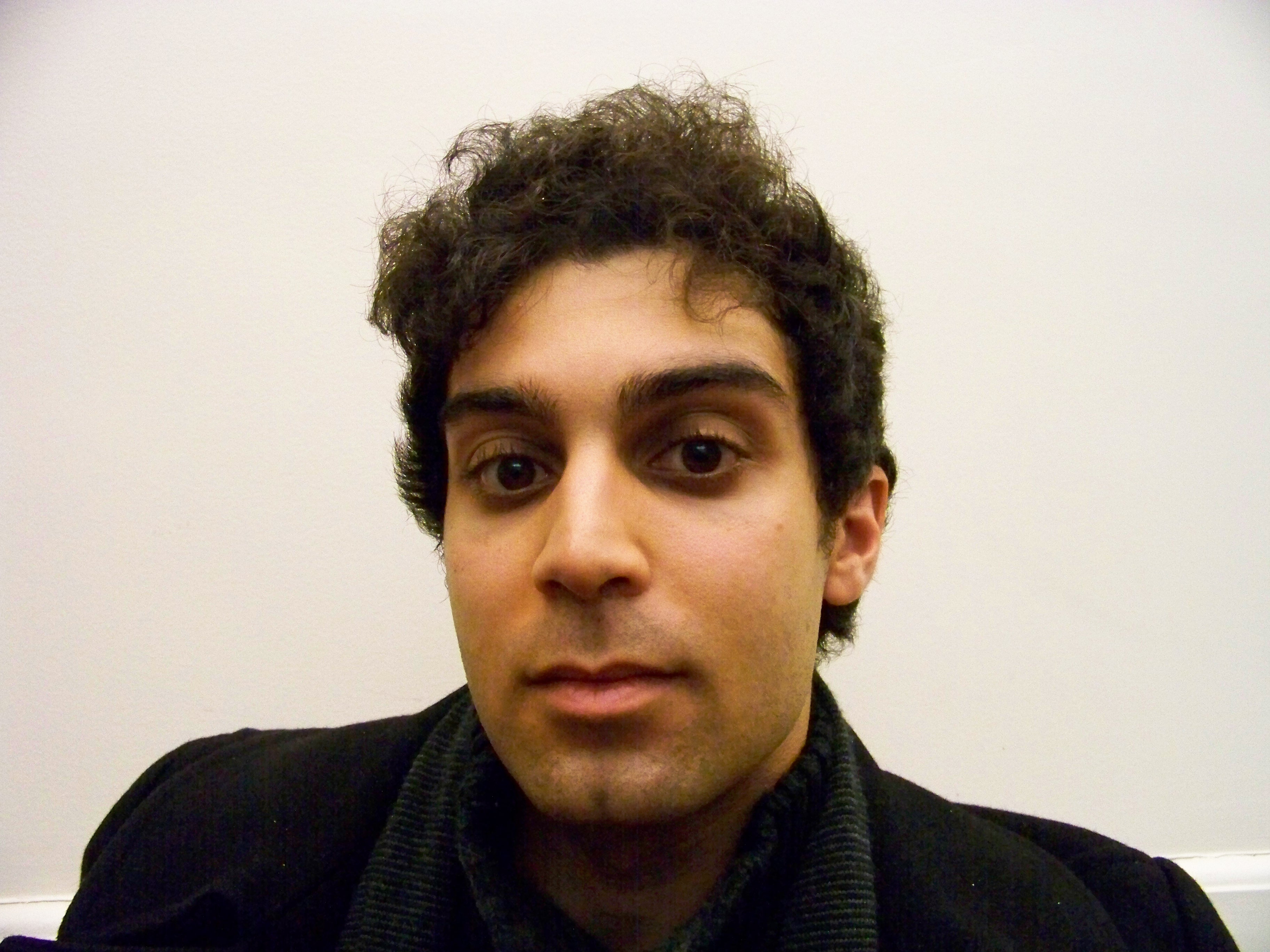
INTERVIEW WITH ARAB POET ADAM ABBAS

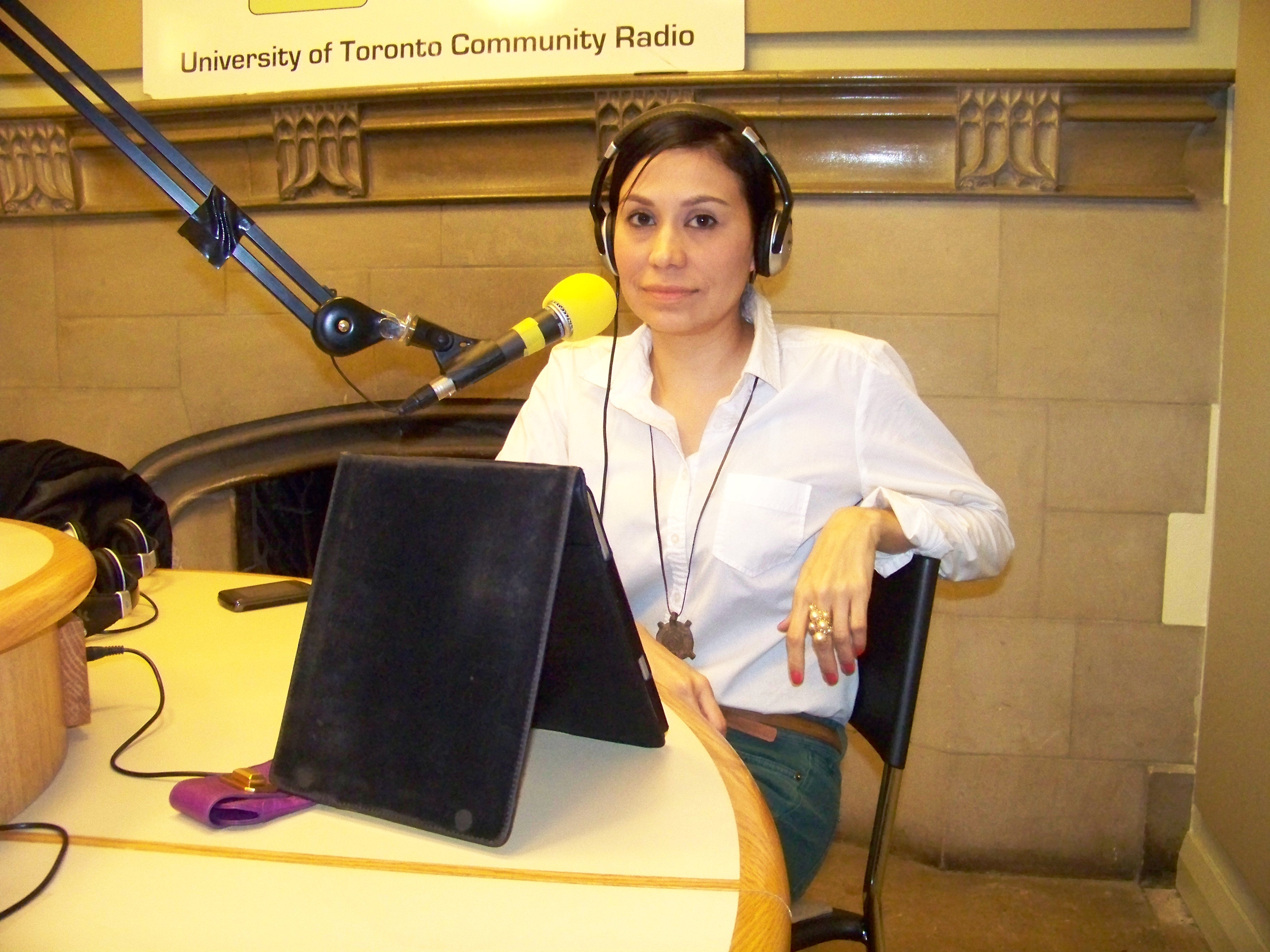
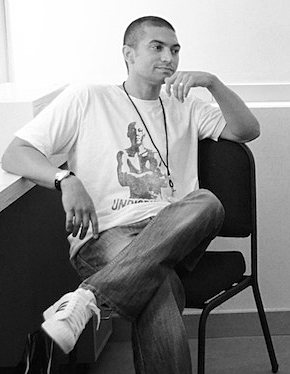
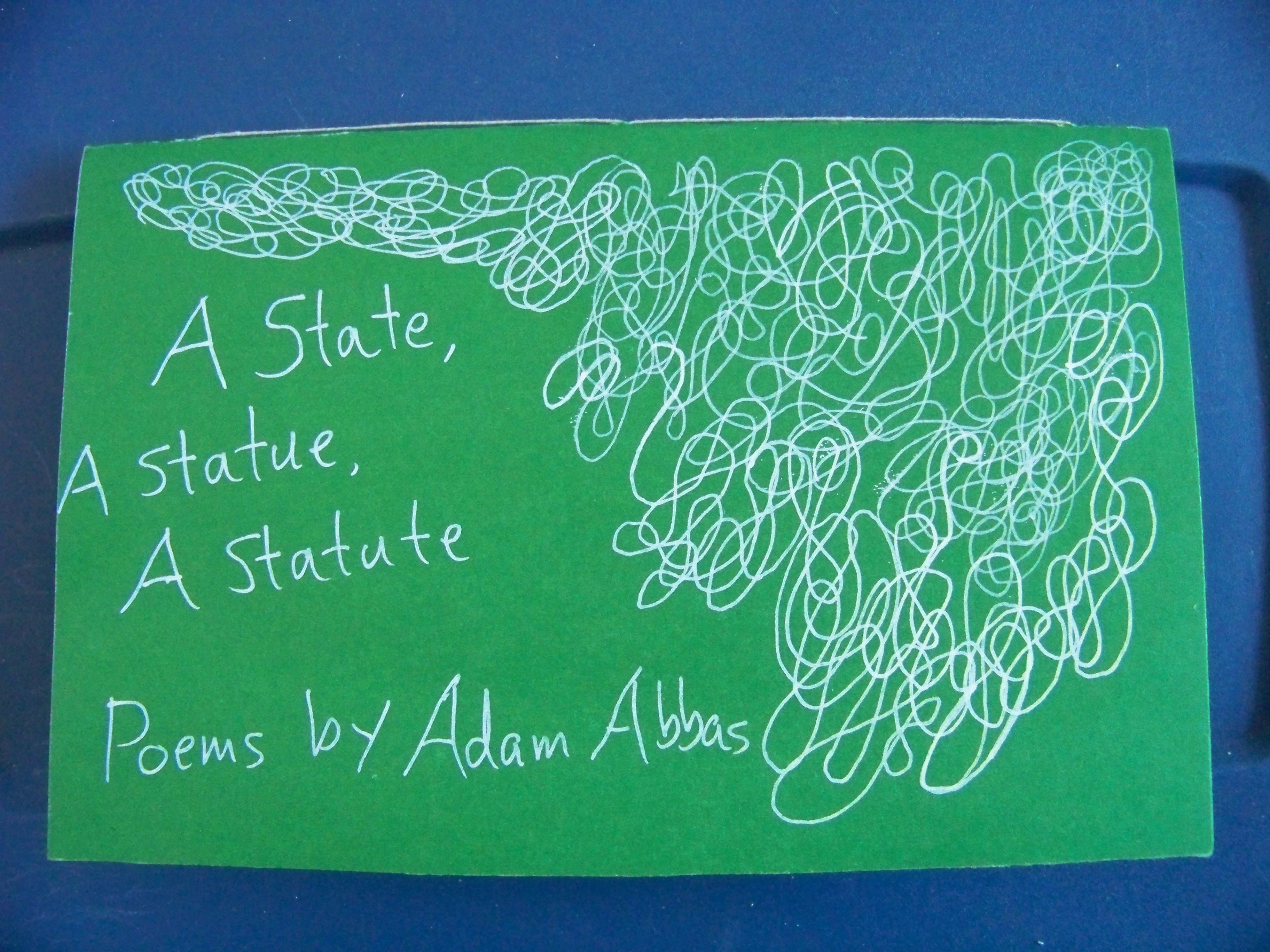
Adam Abbas is an author of literary fiction and the poetry chapbook A State, A Statue, A Statute.

Adam has been a featured poet at the Plasticine Poetry Series, the Underdog Poets Academy, the InkTank launch reading and the Secret Handshake Art Gallery. He’ll be featuring at the Art Bar Series on April 17th. He recently received his Honours BA in English from York.

He also acts, models, runs his website adamabbas.blogspot.com, and makes Super 8 films. 

Adam Abbas lives in Toronto.

BCP: Why did you choose to write poetry as opposed to other genres of writing?

AA: I write fiction as well.  I wrote a screenplay.  I’m writing a play.  I write.

But there’s no doubt that poetry is essential to my growth as an author.  I felt I needed to adopt a pretentious, narcissistic, confusing, exclusive form of art which people have no interest in just to pretend to myself that I have the upper hand on the masses.

And of course, I’m completely joking.  Poetry is integral to literature and in some ways more challenging to write, and to try and shape it into work that I’m satisfied with is what I enjoy.

BCP: How long have you been writing poetry?

AA: I’ve been writing poetry since I was five.  My first poem was called The Beach Poem.  But I was mainly reading and absorbing fiction, as I did since I was old enough to read.  From Roald Dahl to Douglas Coupland.  That was a golden age in my life, from 8 to 12.  I tried to read everything I could.  I liked giving speeches as well, I still love public speaking.

Then, when I was 19-20 and working as a dishwasher, I rediscovered poetry.  I still have my attempts at poetry during that time on my computer. No one will be seeing them. The only good ones are those which I performed onstage, but I have future plans for those.

BCP: Can you tell me something about the way you write a poem?

AA: It can be anywhere, at any time.  But the main thing is that I do it, or at least think about it. “Don’t talk about it, just do it.”

Patrick Lane once said that he writes early in the morning, standing up I believe…I couldn’t do that.  It must help him.  I like his work.

BCP: Who, or what, are your influences?

AA: I don’t have anyone directly influence my work.  It’s never been, “I want to write exactly like him or her.” I keep my own voice.  But I do like to read some of the work of Khalil Gibran, Charles Bukowski , Dylan Thomas, Elizabeth Gourlay.

For prose, I’ve always enjoyed The Diary of Anaїs Nin, Alex Garland, James Joyce, White Teeth by Zadie Smith, Harper Lee, Sherwood Anderson.

The artwork of Jeff Wall, David Plowden,  Nan Goldin, Jean-Michel Basquiat, the Dadaists, Bill Watterson, Gary Larson, etc.  Yet I still continue to wear clothes with logos on them.  But one quality in a person doesn’t rule out any other quality…

Some of my friends are good poets, Ian Hanna, Cathy Petch, David Bateman, Sonia Elizabeth de Placidio, Alanna Cook.  Quattro Books and Tightrope Books are Toronto-based publishing houses which always publish good authors.

BCP: Your poetry gives me the impression that you are very well read.  Can you provide a short recommended reading list for people?
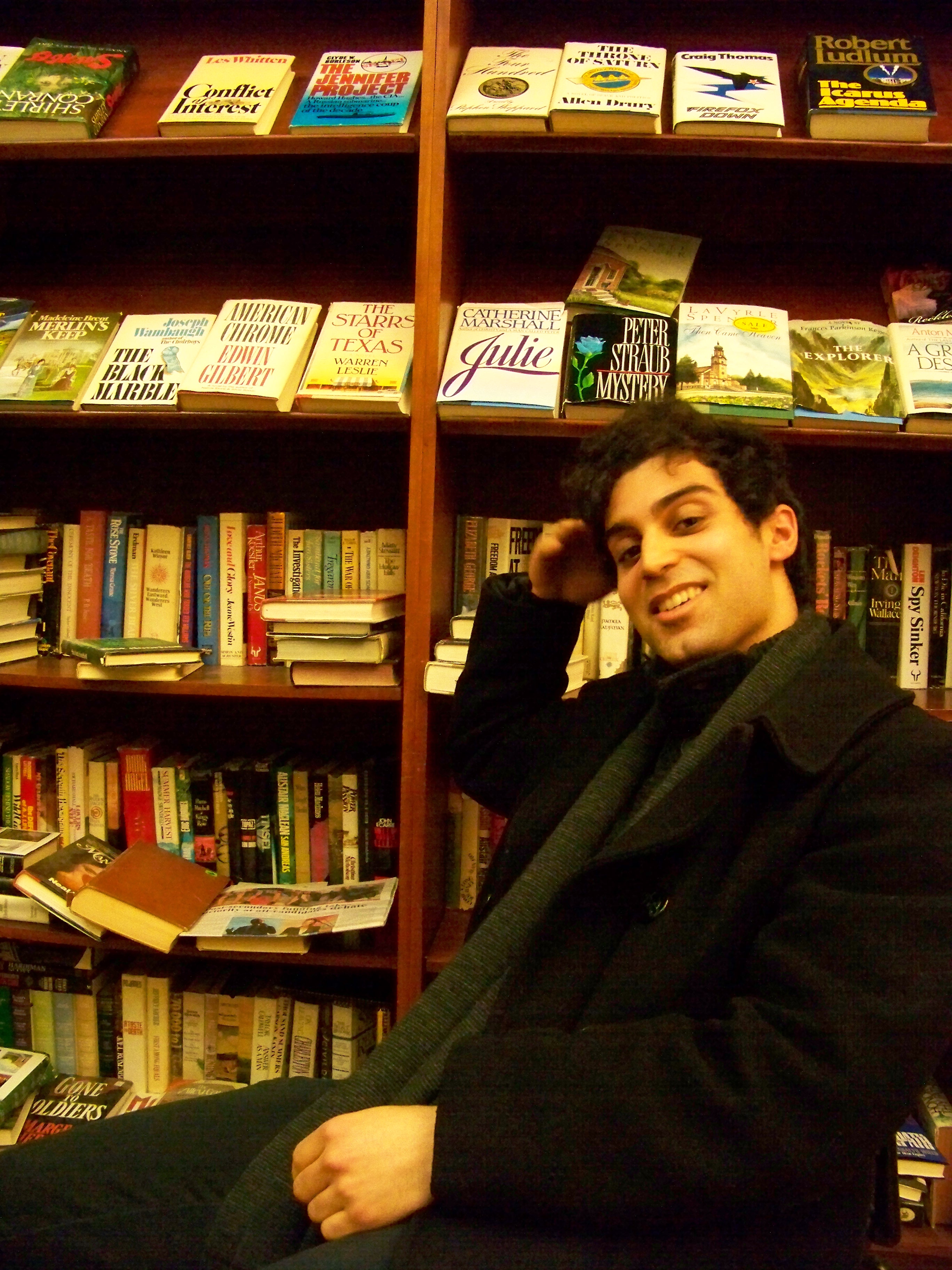
AA: I’ve read a lot but I wish I was more well-read…maybe everyone thinks that.  And maybe with the advent of the internet, it’ll be a continuing lament. I’ve seen graffiti which says, “Read more books”, but not one that says, “Look up more internet.”  Yet for some reason books are placed, in rows, on public streets and benches, for free? 

Anything by the authors and artists I mentioned previously is worth looking up.

BCP: What are you reading now?

AA: Currently I’m reading Your Money, Your Brain by Jason Zwieg, Story by Robert McKee, and The Official MTO Motorcycle Handbook.   I recently bought my first motorcycle, a 1985 250cc Honda CMX.  It’s the best bike to learn on, give me a break.

BCP: Your poetry touches on tough themes such as war and love. What do you try to convey to your readers?

AA: Keith Haring said of his work that he was just the middleman, that he gave the audience the freedom to create their own interpretation of his work. But then William Spenser said of The Fairie Queene that there’s a specific meaning which the reader has to understand.

I guess that’s the constant struggle.  How there’s a line between wanting (or needing) a reader to understand what your point is, and not wanting to deny them the freedom to take their own meaning away from it. Even the theme of war, I never thought that was a recurring theme in my poems.

I’ve heard people say they’ve found meaning in my work when I didn’t see it.  I’ve heard people see meaning in my work when it was completely subconscious and I didn’t even notice it until they pointed it out.  I’ve heard people explain things that had to have been in my subconscious but still don’t ring a bell even after they’ve laid it bare. That’s part of why I enjoy writing.

BCP: Your chapbook has different forms of poetry: haiku, villanelle, and prose poems.  Do you have a favorite form?

AA: No, I like all forms.  I’d like to write a double sestina, even though apparently it’ll drive you insane, like reading Finnegan’s Wake.  Although I sincerely doubt that’ll happen.  It’s just a long poem.  Anybody think otherwise?

BCP: When people find out that you are Arab and a poet do they immediately mention Khalil Gibran and Mahmoud Darwish?  If so, are you tired of that?

AA: It’s actually never been a topic of conversation, it never came up.  It’s more than likely people are trying to figure out which ethnicity I am.  I don’t seem like I came out of the movie Executive Decision, haha.  A lot of Arabic people I’ve come into contact have acted like assholes as well, sad but true. That’s definitely not a stereotype, but they should understand the ramifications of their behaviour.  I don’t act like an asshole.

I once asked a professor from UC Berkeley if Darwish was influenced by Gibran, and he said, “Not to my knowledge.”  Then he said, “That’s a good question, I’m going to look into that.”  Maybe he was?

BCP: Why did you name your chapbook A State, A Statue, A Statute?

AA: It just sounded good.  It bears a resemblance to bp Nichol’s phrase A Lane A Line A Lone.  Which some might think would contradict my statement of keeping my own voice, but I don’t write exactly like Nichol.

BCP: How long were you working on the poems featured in A State, A Statue, A Statute?

AA: Two of the poems were from two to three years ago.  But the majority of them were written in the last year.

BCP: You self published your chapbook and now have a small publisher interested in publishing it.  Would you self publish again?   

AA: No, no more vanity publishing. Because that’s all self-publishing is, vanity right? And the destruction of standards, there are too many books already!

I get worried that’s how people and publishers think.  Self-published = lack of talent.

I don’t know how to explain it.  I’ll just say that, if you develop a sharp sense of style and work hard on poetry or literature and learn about poetry and literature, and over time believe that you can honestly bring effective and compelling writing to people, then self-publish and take the initiative, then people will notice.  That’s what some of the most well-known authors have done.

If you’re writing for fame and money then give up. It bothers me to hear poets and writers talk constantly of how much money they’re projecting to make off their investment in literature, how many units they’ve moved.  It’s sad to hear people exclaim “I wanna be famous” when it comes to writing.  A lot of people do take the self-publishing route in order to do so. Just go.  Go do something else.

BCP: Some old school poets feel that young poets these days skip the right of passage of the chapbook and go straight for a publishing deal.  Do you see the chapbook as a right of passage?  Why did you choose to put a chapbook together as opposed to waiting for enough material to put a full-length collection together?
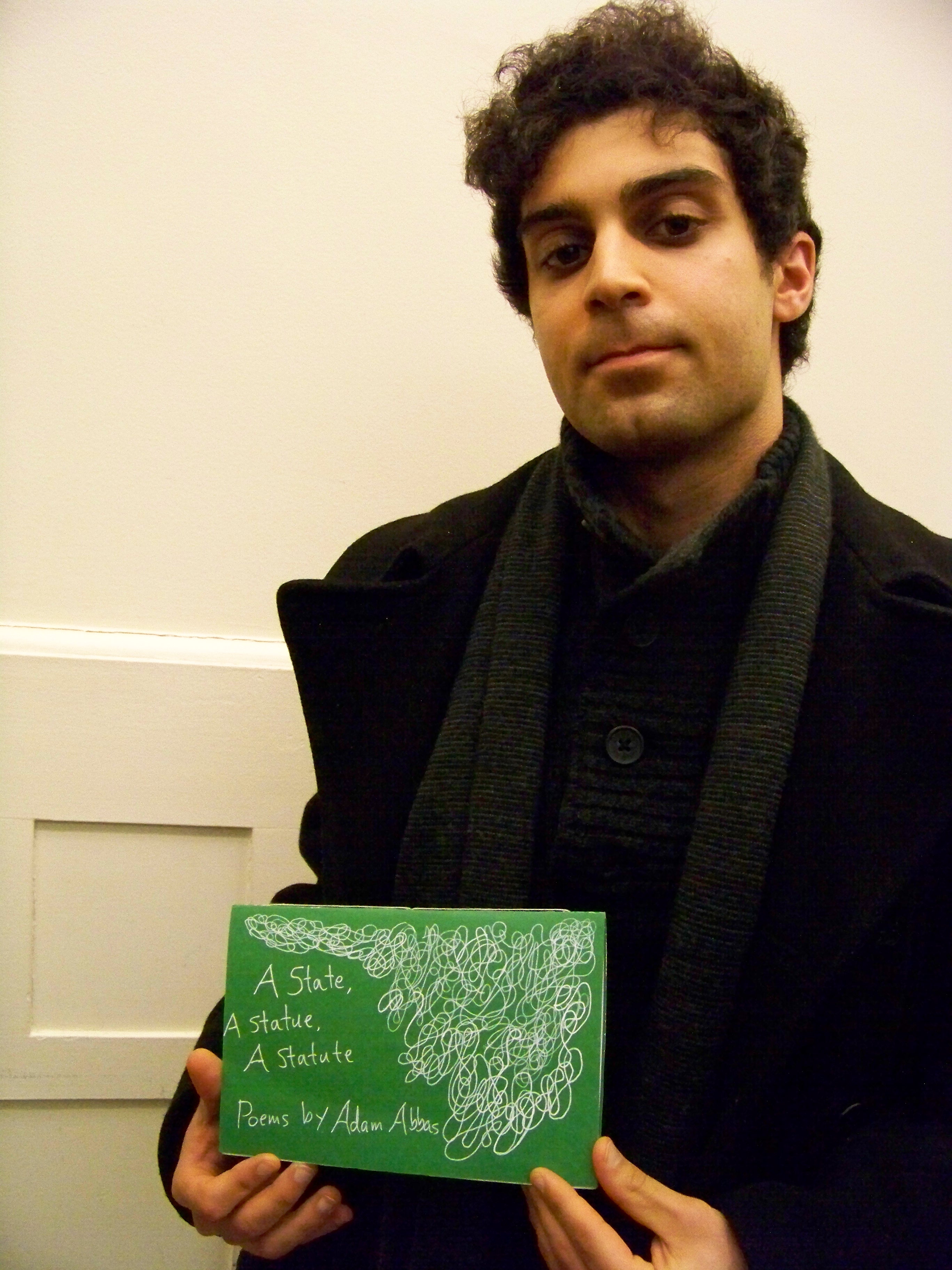
AA: I think it’s a rite of passage.  It’s all natural.  A person’s writing needs to grow and chapbooks definitely provide a goal to work towards.  I made my chapbook for a couple of people at first.  I eventually sent chapbooks to them and obviously kept producing chapbooks for everyone in Toronto as well.

A full length collection will happen soon, it’s just a matter of time. I’m always working.

BCP: We met at one of your first readings.  Have you been doing lots of readings?  How do you see readings helping a poet grow?

AA: I’ve been doing many readings. I’m always around Toronto, on April 17th I’m reading at the Art Bar Poetry Series.  I’ve been going onstage and reading for six years now.  I’ve met a lot of good people though it.  I’ll see my friends, I’ll bring my girlfriend, she’s a huge support.

It can be painful sometimes, there are some people whose work is hard for me to listen to. Some slam poets, some fixed form poets. Nobody I know, but it still happens. 

I think readings can, maybe this sounds corny, but give someone a stronger sense of self-awareness which could in turn help their writing.  Chekov said, “All I need to know about human behaviour I learned from me”, and reading onstage can help that, at least it has for me.  I would like to say though, that when you read onstage, pause before you read a poem and after you finish reading it.  Don’t finish reading it then immediately lapse into the second one.  Just give the audience time to digest your work.  I’m not a perfect reader, but I always notice that.

And there’ll always be some people sitting in the back who are acting supercilious, but pay them no mind.  It’s their problem, not yours.

BCP: What advice do you have for other poets out there thinking of putting together a chapbook?

AA: Save a bit of money for printing them.  I design and bind my own chapbooks but I go to a printer for the document.  And don’t press your work onto people too hard.  Don’t press yourself onto people too hard.

I think that less is more in terms of chapbooks. If you make the most luverly designed chapbook but the poetry is sub-par you won’t trick people into thinking your writing is great.  At least I don’t think so, but then there are always some people who fall prey to that.  There’s a saying, “If people want to be victims, let them.” But that shouldn’t translate into poetry; poetry and literature as a whole should always be synonymous with integrity.

Tune into Black Coffee Poet Friday March 9, 2012 for a video of Adam Abbas reading his poetry.
Posted in Poetry | Tagged , , , , , , , , , , | 2 Comments

A STATE, A STATUE, A STATUTE

A State,

A Statue,

A Statute

By Adam Abbas

Reviewed by Jorge Antonio Vallejos

Alabaster marbles carry blood inside.

Alabaster marbles carry blood inside.

Alabaster marbles carry blood inside.

I can still hear Adam Abbas’ deep voice as he read his poem 1995 at a bar in the Annex late last summer.  He was nervous before stepping on stage.  He didn’t need to be.  Adam was one of the best poets that night.  He read his carefully crafted poetry and received praise from the packed house. 

Deserved praise.  

Abbas’ deep voice matched his writing.  I sat at my table thinking this guy is good.  This guy will put a book out one day.  And here it is: A State, A Statue, A Statute.  A  chapbook held together by thread and reinforced by strong words making up different styles of poetry: prose, villanelles, haiku. 

You have to read and re-read Abbas’ poems so as to really understand what he’s saying to you.  And even then you still might not get it.  I didn’t understand everything Abbass was trying to tell me, and I’m OK admitting that.

Love Stories is one such poem that I enjoyed and did not fully understand.  Filled with “annals of history” and literature from Macbeth to the “New Age Neo-Nazi” movement, I’d have to Google lots of names and words to grasp the poem in it’s entirety.  Still, I was entertained, and into the poem, because Abbas was singing to me as I read it.  Each stanza has rhymes that are not cheesy and they end with an ellipsis that leaves you wanting more, hence you read the next stanza, and so on.

Love Stories is also an example of a poem that shows Abbas is well read.  In seven short paragraphs Abbas fills you with lessons that would take a long time to learn.  He pours out his knowledge on the page in a humble way and ends with “we are all misunderstood”.  

Again, I didn’t get it but I stuck it out because Abbas walked beside me as we traveled through time in stories some way related to love.

Pentimenti, another poem about love, this time about the loss of love, once again shows the depth of Abbas’ writing.  Pentimenti is defined as an underlying image in a painting, as an earlier painting, part of a painting, or original draft, that shows through, usually when the top layer of paint has become transparent with age.  

Abbas takes you to the good times of rooftop parties, laughter, a little erotic intimacy—“my desire to nibble on her earlobe”—and then the sad present:

Not able to forget the dreams of running into each other on the street

Dreams of glances from afar, and what they could mean.

Abbas does what a good writer does, he makes himself vulnerable on the page.  In Pentimenti, another well crafted poem, I felt Abbas.  How could you not?  He puts shame aside and reveals what all lovesick people do: dream of the possibility to get back with someone. 

You not only read Abbas’ pain, you feel it.  And you can see him in the “loneliness” he write of:

I only sit in the middle of a room, battling the obscene

Like the title of the poem, Abbas’ transparency is what makes the images he brings to us beautiful.

Although I did not understand all I read in A State, A Statue, A  Statute it was a welcome change from what I usually read and review.  And that’s what blackcoffeepoet.com is about: learning. 

Abbas, although a fellow young poet, challenged me, taught me, and entertained me; good writers do that.

And I’ll always remember Abbas’ voice:

Alabaster marbles carry blood inside.

Alabaster marbles carry blood inside.

Alabaster marbles carry blood inside.

Tune into Black Coffee Poet Wednesday March 7, 2012 for an inclusive interview with Adam Abbas.

Posted in Poetry | Tagged , , , , , , , , | 2 Comments

TALKING CANADA’S 800+ MISSING AND MURDERED ABORIGINAL WOMEN ON INDIGENOUS WAVES RADIO

Indigenous Waves Radio had a special show on the 800+ Missing and Murdered Aboriginal Women in Canada.  Native Women’s Association of Canada spoke with co-host Susan Blight and I.

Listen and learn about the growing epidemic that big media covers poorly, if ever.

This is the 100th video on BlackCoffeePoet.com!!!

Check out the Black Coffee Poet YOUTUBE Channel for more videos: poetry, interviews, roundtables, and workshops.

Posted in Uncategorized | Tagged , , , , , , , , , , , | 2 Comments

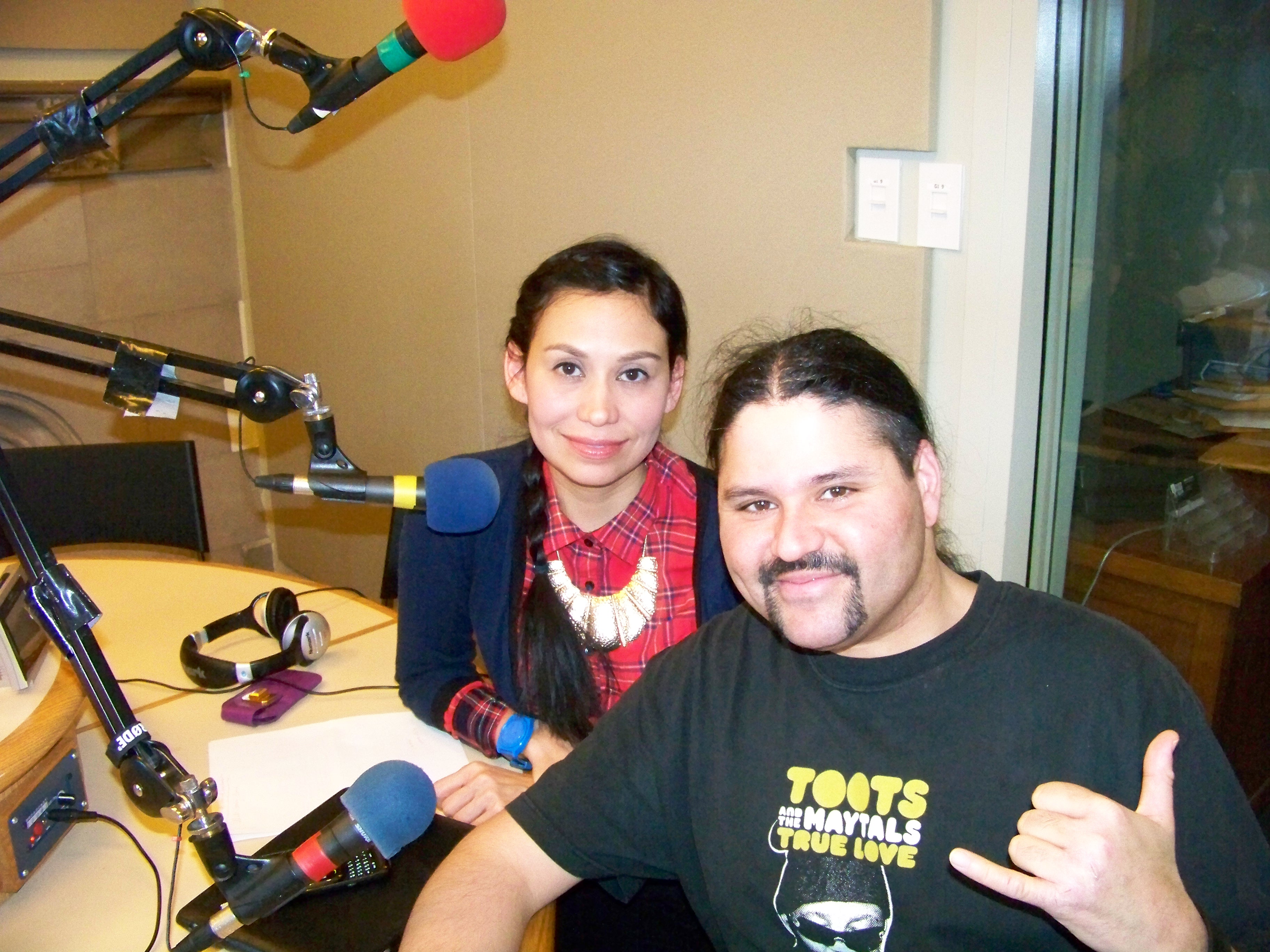
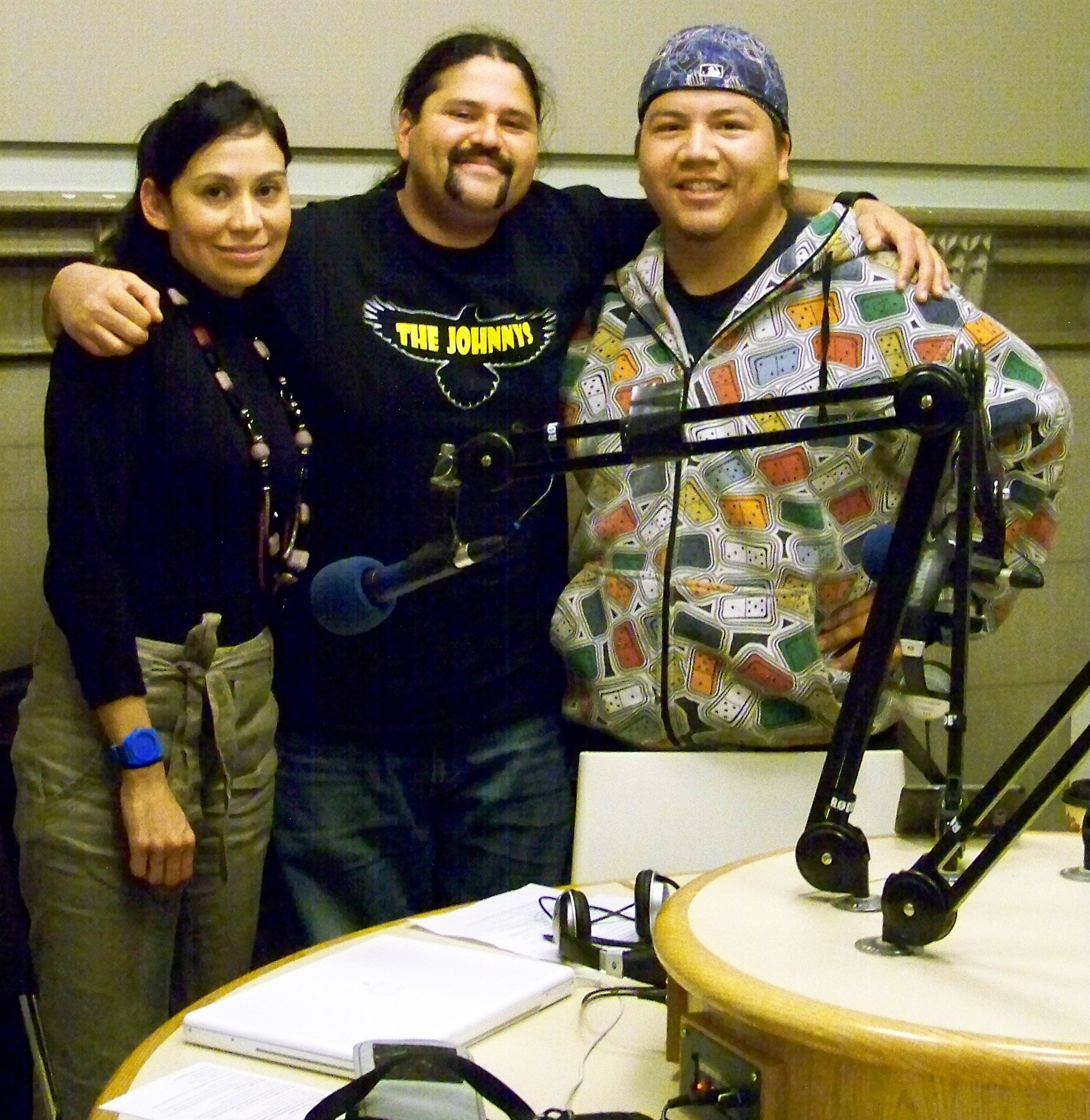
INTERVIEW WITH INDIGENOUS WAVES RADIO PRODUCER JAMAIAS DACOSTA AND CO-HOSTS LINDY KINOSHAMEG AND SUSAN BLIGHT

Jamaias DaCosta aka “Jams” is a musical artist, writer and activist journalist, and is mixed identified of Jamaican (Colombian, African, South Asian, Portuguese and Jewish), Kanienkehaka (Mohawk), Irish and Cree background.

Jamaias is Host and Producer of The Vibe Collective and Executive Producer of Indigenous Waves Radio, both on CIUT 89.5FM.

BCP: Why radio?

JD: Radio, in particular community radio, has an incredible history, and has often played a vital role as the voice of the people. It is an amazingly accessible medium, and many important sub cultures and movements have emerged from radio.

BCP: You are the behind the scenes person.  What do you do that listeners don’t see and hear? 

JD: Network, research – lots of research, plan shows, book and coordinate guests, edit interviews, direct interviews, mentor hosts and contributing producers, promote through various social media networks, other various administration.

BCP: You’ve worked at FLOW, and have your own radio show The Vibe Collective.  How different is Indigenous Waves?  What have you brought from your previous experience to Indigenous Waves?

JD: Flow is commercial radio, which is a completely different medium than community radio. Commercial radio is dictated and directed solely by ratings and sales, which leaves little room for creativity, and can affect the kind of stories that can be told. With community radio, rather than being accountable to clients, you are accountable to the community. You can tell important stories that don’t get told in the mainstream.

The Vibe Collective is a conversation meant to engage listeners, particularly youth and young adults from the Toronto community with issues of decolonization, cultural revitalization, social, education and environmental justice. Indigenous Waves does the same thing however our audience extends both beyond Toronto and youth and young adults because we are one of a few different media outlets specifically representing Indigenous voices from Turtle Island.

What I have learned is that, despite the naysayers of radio who call it a dying medium, listeners appreciate and support this type of dialogue. There are not nearly as many options for finding these types of stories and conversations within the mainstream, so we also have a responsibility to the community to deliver what they can’t get unless they go searching on the internet for great blogs like yours or some of the other daily news websites like Indian Country Today, Democracy Now and Rabble, that are doing good work. We fill a void in the airwaves.

BCP: What are you goals for Indigenous Waves in 2012?

JD: To continue to develop and expand the programming to include as many voices and stories that represent the hundreds of diverse Indigenous communities from Turtle Island. We want to include some more language content and we are looking for segment contributors as well.

BCP: Can you provide a recommended radio show listening list?

JD: CIUT has some great programs, like Democracy Now which airs out of Pacifica Radio in the states, Alternative Radio, also out of the states, but then locally there’s The More The Merrier, Higher Ground, Dos Mundos, Morning Ride, Reggae Riddims, Stylistik, Stolen Moments, Masterplan, Clave, Resistance on the Sound Dial. CKLN used to have some amazing programs, some are still going out of Regent like Saturday Morning Live, and then I listen to a lot of podcasts like Solid State Deluxe which is from a community station in Honolulu and Mumia Abu Jamal’s podcast series.

BCP: Is your writing of spoken word helpful to you in radio?

JD: I suppose you could say the fact that I am comfortable in front of a microphone comes from being a performer by nature, which my family will tell you I am. I like to work in many mediums, maybe it has to do with being mixed, it’s a theme in my life to mix things up. Radio, spoken word, singing, rapping, writing are all mediums I am interested in and work with to tell stories.

BCP: What advice do you have for other people wanting to get into radio?

JD: As cliché as this sounds, whatever you do in life, it should be something you love. So that when you put extra into it you don’t resent the work. Radio has funny hours, and because it’s 24 hours, 7 days a week it doesn’t stop for holidays or guests who don’t show up, so it takes a certain kind of adaptability. Radio people are some of the most eccentric people you can meet, so you also have to be open to other people’s eccentricities. The best door into radio is community radio, it’s accessible, there are always opportunities for volunteers and it’s a hands on, real world experience. 

Lindy Kinoshameg is an Ojibway from the Wikwemikong First Nation, currently in his 3rd year of Kinesiology and Physical Education at the University of Toronto. He is also a self taught artist, specializing in portrait sketches in pencil and arcylic paint, his work is heavily rooted in his culture and has been showcased several times. Lindy loves being involved with the Toronto Aboriginal community through volunteering with the Association for Native Development in the Performing and Visual Arts, mentoring aboriginal and non-aboriginal youth in the city, and co-hosting Indigenous Waves Radio.

BCP: How did you get into radio?

LK: I was apart of a small group from the First Nations House at the University of Toronto who were asked to take part in a meeting with the Station Manager at CIUT to find out the level of interest in starting a aboriginal radio program. This was an amazing opportunity, I am up for trying new things and helping out on a radio program was a very interesting idea. I have been listening to radio for most of my life, enjoying various programming and the thrill of being a radio personality, preparing music, information, and just having fun with guests.

BCP: What do you like about radio?

LK: I love listening to radio, good radio that is! My favorite radio programs have a host that can keep the listeners attention, provides relevant information on topics being discussed, objective, and just entertaining. I like knowing people I know are listening, both from Toronto and from as far as back home. Maybe most of all I like hearing from any of our listeners that they enjoyed the show, the music, and the content. A big part of radio is having relevant guests that people want to hear about, so far I’ve gotten to chat with Keith Secola, Ted Nolan, Ryan McMahon, a number of award winning artists, and local people that I’ve had fun interviewing.

BCP: Do you have any plans for Indigenous Waves Radio 2012? 

LK: I love reaching out to fans and providing more areas for dialogue, in my last few shows I had provided a Ustream into the studio during the show, I’m on facebook to chat with any fans online, I provide info on upcoming shows, and anytime I’m at a local event in Toronto I’m always promoting the show, looking for guests, new ideas, and music. What I’d like to see Indigenous Waves start is finding prizes for listeners to call in, getting listeners to call in with questions or comments on guests, and even having listeners watch the show from outside the studio!

BCP: What has been your most fun interview?  What has been your worst interview?

LK: I’ve had a couple really good interviews! And I have to give huge credit to my girlfriend Leslie McCue, the Partnership Facilitator at ANDPVA. She has helped me come in contact with a lot of really cool artists. One that stands out for myself is a prerecorded interview I had done with Stevie Salas, doing all the editing myself and just chatting and joking around with Stevie; this man is a total rock star. He plays stadium shows, has rock stars like Mick Jagger and T.I. on his speed dial! Most people have no idea who he is, but he is amazing and I’ve enjoyed playing his music on many of my shows.

I havn’t really had a ‘worst’ interview, they’ve all been pretty sweet. But if I had to choose, there was a point when I was feeling a little under the weather, wasn’t myself, and just felt like I did not give 100% of myself to the show. That was not a good feeling, and if I can’t do that, then I don’t want to let down anyone listening to the show because I believe Indigenous Waves could be a great show.

BCP: Your Producer, Jamais DaCosta, says you are a natural and wishes you’d study journalism.  Would you consider doing radio professionally?

LK: I love doing radio, I would continue to do it on a volunteer basis. However, I have put a lot of time and energy into my current program and goals, I do have a lot of people who believe in me, and don’t want to let anyone down. I would love to continue being in radio beyond my time at the University of Toronto if I could, perhaps down the road I can pursuit radio after I begin my other career. With that said, I wouldn’t mind if Jamais wanted to pay me for doing the show! I am a student after all.

BCP: You are a visual artist.  Has you being an artists helped you with radio?

LK: Indirectly, I think yes. I’ve had interviews with other visual artists, even musical artists I understand there is a process and craftsmanship to putting a product out there that has your heart and soul on it. I suppose we do it on Indigenous Waves every week, put all our efforts into putting a great show together for the world to listen to. As an artist, I believe I am trying to tell a story with my pencil or brush on a canvas, and as a radio show host we can be seen as storytellers through the airwaves.

BCP: What advice do you have for other people out there interested in getting into radio?

LK: I think the biggest thing is to just do it, volunteer on a show if you can, learn more about roles you can be involved in. There is a lot more spots for people to help out on a radio show than most people think, researchers, chase producers, technicians, social media promoters, producers, co-hosts, but you can’t have my job! You may be nervous at first but it passes, you may hate hearing your own voice (I did), but you get over it, or you may just be a natural at it. 

Susan Blight is a member of Couchiching First Nation, Anishinaabe, Turtle Clan.

She received an M.F.A. from the University of Windsor (2007) in Integrated Media, a Bachelor of Fine Arts in Photography (2004) and a Bachelor of Arts in Film Studies (1999) from the University of Manitoba.  

Susan is the co-host of Indigenous Waves Radio.

Susan has been a guest reviewer  and reader for blackcoffeepoet.com.

BCP: Why radio?

SB: Radio is one of the most democratic mediums in terms of its availability to the people.  It has proven itself to be a very durable medium and with the onset of digital media has become only more available to the public. I like that people can listen to radio in their car, at home, at work.  It is also relatively cheap to produce and to participate in.

I think when you use radio as a medium, you have to be directly accountable for your words; it doesn’t have the anonymity of the internet which, at times, seems to encourage the most aggressive and malicious speech. The immediacy of live radio means you have to very conscious of what you put out there.

BCP: You are the co-host for Indigenous Waves Radio.  What do you do that listeners don’t see and hear? 

SB: There is a lot of preparation beforehand in terms of research and being engaged with the interview subject.  We spend a good amount of time researching our guests, current issues, historical contexts, and many other things in order to give our listeners a dynamic story. Thankfully, as a team we are all pretty engaged culturally and intellectually with Indigenous perspectives and are passionate about disseminating that information.

BCP: What makes a good interview?  How do you handle difficult guests, if you have had any? 

SB: I think a good interview is one where you can connect with your guest either intellectually or spiritually; the connection is paramount because without that the interview will be too formal and you may not be able to tell a good story.  A good interview will have a conversational flow where the guest feels comfortable and engaged by your questions. 

Thankfully, we haven’t really had any difficult guests. We have covered subjects that are seen as controversial and in those instances, guests can be very reserved.  All you can do as a host is to remember the importance of being perceptive and empathic anytime you’re doing an interview.

BCP: What have you brought from your previous experiences as an artist, and teacher, to Indigenous Waves?

SB: I think one becomes an artist because you have an innate curiosity about the world around you and a desire to communicate your ideas to others. Artists are very connected to the ‘how?’ and ‘why?’ of life and I think I apply those things to the radio show.

As someone who taught visual art at the post-secondary level for three years, I think I am very comfortable in communicating with people, in critical thinking, and in being immersed in research.

BCP: What are you goals for Indigenous Waves Radio in 2012?

SB: To continue to bring stories to our listeners that educate, decolonize, and portray the diversity of the original peoples of this land now called North America.  Our goal is to tell stories from an Indigenous perspective and to tell the full range of those stories from the most positive successes to the most unjust. That, unfortunately, is our reality as Indigenous people living under a colonial system.

In more practical terms, I would like more listeners in 2012 and to continue to grow, connect, and network with our listeners.  Community radio is a bit of an uphill battle but we appreciate everyone who listens and offers their feedback!

BCP: You are an artist.  Has your art been helpful to you in radio?

SB: I think so. I also believe that many, perhaps the majority, of Indigenous artists work in an interdisciplinary way, moving easily between visual art, film, writing, music, etc.  It’s difficult for me to demarcate between radio and art other than in practical terms because both come from a desire to communicate stories.

BCP: What advice do you have for people interested in hosting a radio show?

SB: Just do it!  Radio is a unique medium, rich with potential in terms of its ability to reach people.  Connect with people at your campus or community radio station. If you have a voice, use it.

Tune into Black Coffee Poet on Friday March 2, 2012 for a video of BCP on Indigenous Waves talking about the 800+ Missing and Murdered Aboriginal Women in Canada. 

Posted in Uncategorized | Tagged , , , , , , , , , | 1 Comment

FEBRUARY 2012: THOUGHTS ON BLACK HISTORY MONTH AND THE FEBRUARY 14TH RALLY FOR THE 800+ MISSING AND MURDERED ABORIGINAL WOMEN IN CANADA

February 2012: Thoughts On Black History Month and the February 14th Rally For the 800+ Missing and Murdered Aboriginal Women in Canada

By Jorge Antonio Vallejos

We’re two days away from the end of February.  It’s been an interesting 27 days.  While approaching the shortest month of the year I thought and re-thought what I was going to do.  

  1. Was I going to dedicate the month to Black History Month like I did last year? 
  2. Was I going to continue my special week on Missing and Murdered Aboriginal Women the way I did in 2011? 
  3. Would I scrap all that and continue with a regular month?

The last question lasted a minute, maybe. 

Question # 1 came about via several conversations with Black folk I know.  As much as they thought Black History Month is important they are tired of Black folk only given attention during February.  They know, as do you, that with blackcoffeepoet.com that isn’t the case. 

An interview I saw with Morgan Freeman on 60 Minutes also had me re-thinking the month: 

“You’re going to regulate my history to a month!” said Freeman with a disgusted look on his face. 

Good point.

So, I decided to feature Black poets I respected without dedicating the entire month to Black History Month so as not to follow the mainstream.  In the interviews with Whitney French and Adrian Matejka, both Black poets, I asked one question about Black History Month to each of them.  My focus was on what they as Black poets wrote about and their life experiences.  Their poetry spoke it.  They interviews stated it. 

The cool thing is that French is a poet who is starting out, she just put out a chapbook, Three Cities, and she lives to write.

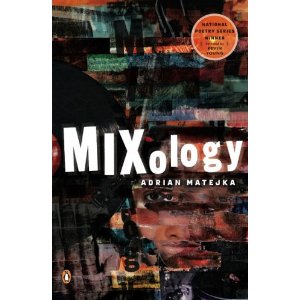
Matejka is an established poet who won the USA 2008 National Poetry Series for his book Mixology.  He teaches at big university in the U.S.

Both are in different places, one starting out while the other is recognized, and both are fine poets. 

And as is regular with my site, I gave space to a young writer who has no publications to their name but writes from the heart, and writes well.  Meshach Harvey read a memoir piece on video about being mixed-race and the first time he was racialized.  Many people commented on how powerful the piece is and shared it on Face Book.  I recommend you watch it but be warned that it is about racism and could trigger emotion.

Question # 2 was a no brainer.  One of the reasons I started my site was to continue writing political commentary.  The epidemic of Missing and Murdered Aboriginal Women is close to my heart.  I’ve been to every rally put on in Toronto over the last 7 years.  I’ve read my poetry there, stood in the cold (sometimes with 20 other people, sometimes 250), made and held signs with messages, prayed, and showed my support by showing up.

The question was really, “How will I do the week this year?” not “Will I do the week?”.

Last year I used a title that grabbed attention:

Breaking The Silence About Canada’s 800+ Missing and Murdered Aboriginal Women.

It was one of my most successful weeks in 2011.  Tons of hits.  The message got out there and that was the point!  Those pages are still viewed and read every month.

This year, I did not change the material or topic but I changed the name after consulting two Aboriginal women who I respect, who are older than me, who walk their talk: Jackie Hamlin-Esquimaux and Zainab Amadahy.

My idea was to remember those women who are gone but also remember the women who are here and fighting to stop the epidemic.  So, I ran the new name by Jackie and Zainab:

Honouring and Remembering Indigenous Women

They loved it and I went with it.

If you know anything about journalism then you know that people run to the negative or sensationalist headline.  The new title was neither. 

I got one-third of the hits this year even though it was the exact same topic and format to last year: book review, interview+ photo essay, videos of people reading poetry, and video interview–this time with a Grandmother in the Toronto Aboriginal community: Wanda Whitebird.

What happened?  Why such a low readership?

I have some thoughts on possible reasons to why this happened: 

  1. People, whether progressive minded or not, are still attracted to negativity.
  2. People I featured last year were hustlers.  They all tweeted and re-tweeted and SHARED the week on their Face Book pages.  People this year didn’t do that.
  3. People who GOOGLED Missing and Murdered Native Women were sent to my work last year as this year did not have those key words in the title.
  4. Racialicious.com, a big supporter of my site, re-posted my stuff last year and didn’t this year.  They are a huge American site that gets 10 000 viewers a day, or more, and getting on there spikes my hits.
  5. Some Native folk I know say that I’ve been silenced by certain activists who do the same work because I did not feature them.  Is this true?  I don’t know.  What I do know is that emails sent out (which I get) during the week had links to big media who covered the rally in Toronto; big media who don’t really care about the epidemic; big media who often stigmatize the Missing and Murdered Aboriginal Women.  My stuff was not shared even though I promoted their events leading up to the rally, the rally and feast itself, and I’ve always credited them for the work they have done.

Sad.

The positives are that I have had support! 

One of many supporters is Indigenous Waves Radio.  They had me on for the second time on Monday February 13, 2012.  I was interviewed alongside a member of the Native Women’s Association of Canada.  A lot of people don’t like, or support, NWAC but we were there for the Missing and Murdered Aboriginal Women, nothing more.

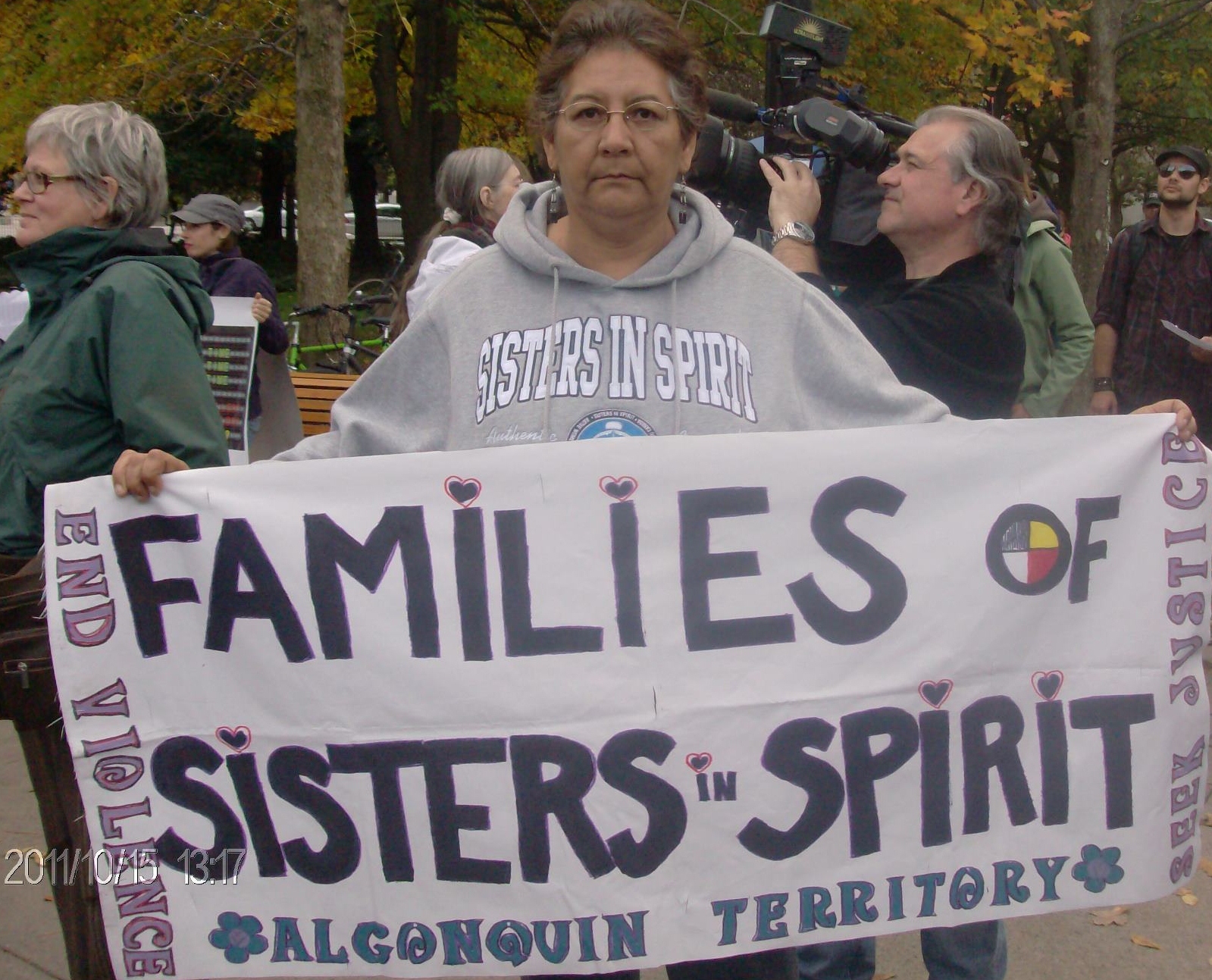
I was also able to talk about my interview with Bridget Tolley, founder of Families of Sisters In Spirit, the group that came out of NWAC when NWAC stopped funding Sisters In Spirit.  The NWAC representative heard my words, did not interrupt, and there was no drama.  We were there collectively: BCP, NWAC, and Indigenous Waves.  And we were there for the 800+ Missing and Murdered Aboriginal Women in Canada.

Bridget Tolley is an inspiration!  When I think of how she lost her mother, dealt with dirty cops, kept fighting without funding after a nasty breakup with NWAC, and has faced being silenced, it all just keeps me going.

Susan Blight, co-host of Indigenous Waves, asked great questions.  Half the show was dedicated to the epidemic.  Both Susan and I promoted the February 14th rally in Toronto happening the following day in front of police headquarters.  I ended the interview by reading A Poem For Mayor David Miller.

February has brought me a new awareness via thoughts and observations.

Big thanks to all my backers and to those who continue the circle of sharing and support that I do my best to partipate in. 

Peace, joy, justice, and reciprocation.

Tune into Black Coffee Poet February 29, 2012 for interviews with the Producer and Co-Hosts of Indigenous Waves Radio.

Posted in Uncategorized | Tagged , , , , , , , , , , , , , | 1 Comment

MESHACH HARVEY READS “A RUDE AWAKENING”: A MEMOIR PIECE ABOUT MIXED-RACE IDENTITY AND RACISM

Meshach Harvey Was Born in Toronto, Canada in 1988. He is of mixed race ancestry. His father is of Black Jamaican descent and his mother is of Finnish descent.

Meshach is currently a fourth year Honours History major at York University, and a member of the Golden Key International Honour Society. He also studies Mandarin Chinese.

Meshach’s passions are practicing and following the arts including Tai Mantis Kung Fu, playing the piano and African drum, and writing poetry.   
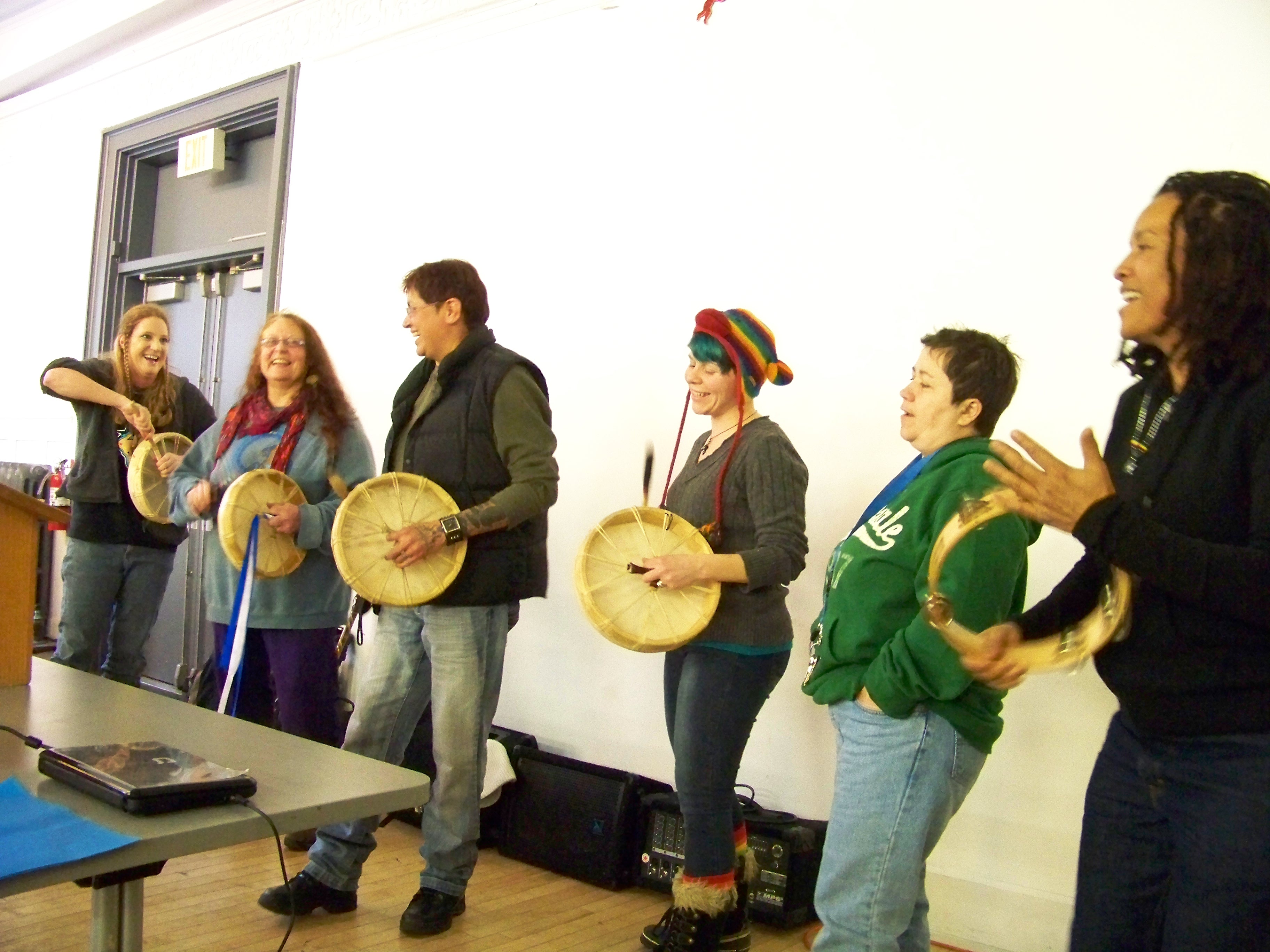
Meshach’s memoir piece accompanies this week’s feature on Black Coffee Poet: Mixology by Adrian Matejka.

WARNING: this piece is about mixed-race identity + racism.  It may trigger emotion.

Tune into the Black Coffee Poet YOUTUBE channel for more videos: poetry, interviews, roundtables, and workshops. 

Posted in Uncategorized | Tagged , , , , , , , | 1 Comment

INTERVIEW WITH 2008 USA NATIONAL POETRY SERIES WINNER ADRIAN MATEJKA

Adrian Matejka is the author of The Devil’s Garden (Alice James Books, 2003), Mixology (Penguin USA, 2009), and The Big Smoke(Penguin USA, forthcoming in 2013). 

His work has appeared or is forthcoming in American Poetry ReviewPloughshares, andPoetry among other journals and anthologies. You can find him at www.adrianmatejka.com or on Twitter: @adrian_matejka. 

Photo by Robby Campbell


BCP: Why poetry?

AM: I first tried to write poetry in a lame attempt to impress a girl, but my appreciation for language came before that. I wanted to be an emcee when I was younger. Fortunately, for everyone, I figured out pretty quickly that I couldn’t spit rhymes and moved on to the next thing.

A few years after I gave up the mic, I discovered some poets who value sound and percussiveness the same way emcees do. First, Langston Hughes and Etheridge Knight. Then later, Gil Scott-Heron and Yusef Komunyakaa. Through these incredible poets, it became clear that poetry is an art that allows both music and communication. Once I figured that out, I never wanted to do anything else.

BCP: What is your process?

AM: I don’t really have a process because the way I approach the page changes with the project I’m working. Many of the poems in Mixology began as individual images or moments that made me laugh that I went back and mixed together. Like a collage artist or maybe like a DJ.

My new book, The Big Smoke, is all historical persona about the boxer Jack Johnson. That imagistic approach to writing wouldn’t work, so I changed my process to fit the material. I spent a long time researching Johnson’s life and times before I sat down to write a poem. And when I did finally begin writing, the poems came out as continuous monologues.

BCP: Who, or what, are your influences? 

AM: My primary influences are my friends, many of whom are poets. Ruth Ellen Kocher, Allison Hedge Coke, Sean Singer, Sherwin Bitsui, Quraysh Ali Lansana, Major Jackson, Kevin Neireiter, Terrance Hayes, Gaby Calvocoressi, my wife Stacey Lynn Brown—my influence role call could go on for a very long time. I experience their work and am inspired to write harder, to think more aggressively about language.

Then, of course, there’s always music. I’m always listening to music. It saturates the poems through the cadences and word choice. In fact, I just finished up a series of poems that are simultaneously about astronomy and jazz. Even when I was thinking about outer space, Miles Davis’s trumpet was playing in the background.

BCP: How long were you working on the poems featured in Mixology?

AM: Most of the poems in Mixology were written between 2004-2006. I had just quit my job editing a literary journal in Texas and made the choice to step away from poetry for a while. When I did come back to poems, I stayed in the lab grinding without really thinking about what might come out of it. I just wanted to write the kind of poems I would want to read. Because of that, it took a while to get the work out into the world. In 2007, two literary journals—Crab Orchard Review and Pleiades—ran some of the poems and it was on after that.

BCP: Why the name Mixology?

AM: You know, I thought I was being slick. I tried to imagine what the science of being mixed would be called. In my mind, Mixology also evoked another nameless science—the science of being a DJ—and that tied into the overarching motifs of music in the poems. I was really proud of myself for a minute. Then I found out that “Mixology” is actually the science of mixing drinks. I kept the title anyway because I like mixing drinks.

BCP: Your poetry is very personal. Was it, or is it, hard to go to those personal places in your mind and heart?  For example, your poem “Do The Right Thing” is powerful and sad.  Being told, “you ain’t even Black” by Spike Lee, one of the most influential Black directors of our time, must have been horrible.  When reading it I felt its last line deeply: “the missed free throw feeling in my chest.”

AM: Thanks for your words about the poem. You’re absolutely right; some of the poems in Mixology are very personal. “Do The Right Thing,” in particular is open about its intention in a way that some of the other poems (“Language Mixology” or “This Be The Verse,” for example) are not.

Because the poem is so personal, I almost took it out of the book. I’m not comfortable sharing information in that way because I’m not really big on the “this really happened” aspect of poetry. It works for other poets, but it feels like a limitation to me.  

The thing is, I don’t think the truth (in the “this really happened” sense) should get in the way of a good poem. The poems should be emotionally honest and true to the poet’s intent, but there are different kinds of truth, if you see what I mean. I’m not adverse to embellishing a moment to write a better poem. But in the case of Do The Right Thing—meeting Spike Lee and having my authenticity questioned all at the same moment—no embellishment was needed. 

BCP: As a mixed race person I really appreciated references to skin politics throughout the collection.  Can you explain what you mean when writing in Colloquialism “Bad to be black, worse to be a mixed indetermination”? 

AM: I’m sure you have probably experienced a version of what inspired that line. Some mixed-race people have the rare ability to be whatever “other” is out of racial fashion at the time. When I was kid in Southern California, there was (and still is) tension between the Latinos and whites. Through the lens of that tension, everyone thought I was Mexican. When I moved to Indianapolis, issues of race revolved around black and white, so I was seen as being black. After 9/11 I was magically mistaken for Middle Eastern wherever I went. For a couple years after 9/11, I could count on being taken out of the security line at the airport for an enhanced search.

The thing is, I have identified as black my entire life. I don’t recall ever having conflict or confusion about it. In the last 10 years or so, I’ve given a different kind of consideration to what it means to be mixed race. It’s much more complicated than my original “I’m black” manifesto might have suggested.

In the part of Texas where Colloquialism is set, there is a whole different template for race. Latino Texans and white Texans live together uneasily but are acutely aware of each other. So the white Texans and the Latino Texans both knew I wasn’t Latino, but neither could tell what I am. There was something very dangerous in that ambiguity. Especially since everyone in Texas seems to have a gun.

BCP: It seems that Hip Hop, Public Enemy in Particular, has been a big part of your life.  Has Hip Hop or Public Enemy helped you with your poetry?  If so, how?

AM: Music has been a big influence on me. When I was a kid, my parents had an extensive jazz collection—2000+ records arranged alphabetically. Sundays were music days and my dad would spend most of the day listening one record after another.

My father was actually the one who introduced me to rap music in 1980. Rap was the first music I really understood and it seemed like it was made for me, if that makes sense. Once Whodini and Mantronix and Run DMC were available at the record store, I knew I wanted to be an emcee. Unfortunately, I had no skills, or more appropriately, “skillz.”

Public Enemy was a profound influence on me because they were dropping crazy science. Black power and Afrocentrism are always necessary, but in the 1980s—after Reagan, trickle down economics, government policies that overtly espoused racism and downplayed affirmative action—Chuck D growling “Never badder than bad / ‘cause the brother is madder than mad / at the fact that’s corrupt like a senator” was the truth. We were mad and Public Enemy both harnessed and directed that aggression. I tried to get into that some in my poem Tyndall Armory.

BCP: It’s Black History Month.  As a poet who writes so much about race what does this month mean to you?

AM: I like to call Black History Month “Christmas Money Month” because I get more invitations to read during February than any other month of the year. Everyone in the U.S. needs a black poet in February. In all seriousness, I love Black History Month because it was the way I learned about my culture.

I imagine the same thing applies for many young African Americans. So little of our cultural history is included in Social Studies books or American history class. In a small way, Black History Month helps fill in the gaps. But really, I look forward to a time where Black History Month serves a recap, rather than an introduction. Even if it means I have less money for Christmas.

BCP: You won one the biggest awards in poetry, The National Poetry Series, in 2008.  As a result you were published by a huge publisher: Penguin.  What does is it feel like to win such a big award?  How was it moving from a small publisher to a big publisher?  Do you feel pressure now that you have such a big award under your belt?

AM: Winning the National Poetry Series was humbling to say the least. I was stunned that Kevin Young picked the book and that Penguin agreed to publish it. When I was scribbling the Mixology poems in my basement office, it was hard to imagine that anyone outside of my poetry team would even want to read them. Something like the National Poetry Series was not part of the conversation, so the award was unexpected and wonderful.

As you can imagine, there is a big difference between a small press and one of the big houses. Alice James Books is a fantastic press and they have been so supportive of my first book, The Devil’s Garden. But because they are exclusively a poetry press, they don’t have the same sized pockets as Penguin. Penguin has all kinds of resources, connections, and outlets. When Mixology first came out, a friend in L.A. called and told me he’d seen the book at a bookstore in the Beverly Center. I attribute that kind of placement to Penguin.

The editorial care and consideration was the same in both places, though. My editor at Alice James Books, April Ossman, and my editor at Penguin, Paul Slovak, were both critical and considerate with the poems. Both of my books are better because of their insightful suggestions.

Honestly, I don’t feel much pressure because awards are out of my control. I do feel pressure to write readable, successful poetry, though. Finding a way to write a poem that is both surprising to me and that might be interesting to someone else is challenging, to say the least. That’s where the real pressure comes from.

BCP: You now teach creative writing.  How has teaching affected your art and craft?  What is the main thing you try to leave with your students?

AM: I love teaching creative writing. What could be better than spending time reading poetry and talking about it? I think teaching has influenced me as a writer because I’m always talking about the basics—line breaks, imagery, concrete language, the need for poetry to swing both on the page and in the air. Because I’m talking about craft in class, I’m thinking about craft outside of class, if that makes sense. So during the semester, I pay closer attention to line breaks, for example, than I might during the summer when I’m just reading and writing.

I always tell my students that poetry is a communicative act. We might write these verses alone with our headphones on, but once the poem leaves our hand or gets emailed or posted on Facebook, it becomes an effort at communicating. So the audience needs to factor into the creative process somewhere, preferably during revision.

BCP: Can you provide a recommended reading list for people?

AM: My reading list changes daily, but right now I’m rereading Terrance Hayes’s Wind in a Box, Gabrielle Calvocoressi’s Apocalyptic Swing, and a new book by Makalani Bandele, Hellfightin’. Then there are some of the classics: Belly Songs and Other Poems by Etheridge Knight, Lucille Clifton’s blessing the boats, and Neon Vernacular by Yusef Komunyakaa.

BCP: What advice do you have for other mixed-race artists out there?

AM: Being an artist begins with defining—or maybe trying to define—one’s self in the bigger conversation. Being mixed race complicates that process significantly. When I was coming up, we still used the “one drop” rule. You know, if you have one drop of African blood, you’re identified as black. Things are much more ambiguous now, but it up to the artist to figure out his or her own space. So I say this: honor your heritage, but don’t stop trying to figure out your unique part of the story.

Tune into Black Coffee Poet Friday February 22, 2012 for a video of mixed race writer Meshach Harvey reading “A Rude Awakening”. 

Posted in Poetry | Tagged , , , , , , , , , , , , , , , , , , , , , , , , , , , , | 1 Comment

MIXOLOGY

Mixology

By Adrian Matejka

Reviewed by Jorge Antonio Vallejos

I remember hearing the compliment of compliments in terms of writing a couple of years ago.  It was about Nobel Prize winner Orhan Pamuk.  A writer (whose name I can’t remember) at the International Festival of the Authors in Toronto said of Pamuk, “I don’t need to go to Turkey, Orhan Pamuk has already taken me there.” 

As a traveler I would dispute that statement. 

As a writer I was impressed, and I quickly looked into who this writer of writers, Orhan Pamuk, was.

Good writing takes you places.  Adrian Matejka, author of Mixology, winner of the National Poetry Series 2008 (USA), takes you into his life as a mixed-race man. 

As a mixed-race person myself, I felt at home.

Do The Right Thing, a poem about Matejka meeting famed Black director Spike Lee, is a punch in the gut.  If you know film the name attracts you.  If you know of Spike Lee, you know he’s intense. 

In Do The Right Thing (the poem) Lee does nothing but wrong!

After a dispute over merchandise at a Black Expo—Matejka challenging Lee over a “Free South Africa” t-shirt—the famed director barks:

Why you care?  You ain’t even black.

An expo goer follows by saying, Damn Spike, that ain’t right.

Matejka ends by describing his ill feelings at that moment as “the missed free throw feeling in my chest.”

You’re never enough as a mixed-race person.  One group says you look more like this, another group says you sound more like that, all groups bounce your identity around like a pinball in a never-ending game.

As a person who on many occasions has not been Arab enough, South American enough, Indigenous enough, Chinese enough, Matejka had me freeze like pressing pause on a Michael Jordan highlight.  Book in hand, lungs in my throat, eyes glued to Lee’s words, Matejka took me to the Black Expo and back to memories of being surrounded by ‘my peoples’ in different settings—those “you ain’t even” settings.

Matejka’s clever word-play in the choice of his title couldn’t have been done better.  The poet starts with Lee being surrounded by fans; he includes the title of the poem as the title of the film, “Fresh off seeing Do The Right Thing”; he shows his strength via challenging an icon; and he shows the weakness in Lee’s attempt to uphold status via tearing down Matejka’s identity. 

Do The Right Thing is a brave poem, and bravery is often needed when doing what’s right. Two lines too long of being a sonnet, Matejka’s song of pain is felt every time I read it.  The first time my eyes absorbed Matejka’s words I was KO’d by a punch I didn’t see.  Now, as I read Matejka’s poem over and over (countless times in the two years I’ve owned Mixology), every couplet is a jab leading to the final blow that lays me flat.

Race, as is mentioned above, is central to Mixology.  Powerful lines throughout the book leave you thinking about Matejka, race in America, and the life of a mixed race person:

1. marrying white, creating a child of stuttered pigmentation from disco and chalk

2. Being of color in Texas is to wake stressed from being.

3. Bad to be black, worse to be a mixed indetermination.

4. In Texas, cornrows are landscaping.

5. Mulatto Shakedown: your daddy was a black man and your momma was white 

Wow!

Each line can be the subject for an essay.

Each line represents past, present, and future.

Each line is a sad truth.

Matejka mixes music (Blues, Hip Hop, Rock and Roll), politics, race, and identity.  Mixology is a cocktail that is bitter sweet; a song you replay even though it brings tears to your eyes; a book you want to tear up but can’t put down.

Mixed-race or not, Matejka, like Pamuk, takes you into his world and shows you what it’s like; the first line of the book describes what you’ll experience when reading Mixology:

Today, I’m assimilating like margarine into hotcakes.

Tune into Black Coffee Poet Wednesday February 22, 2012 for an inclusive interview with Adrian Matejka.

Posted in Poetry | Tagged , , , , , , , , , , , | 2 Comments

HONOURING AND REMEMBERING INDIGENOUS WOMEN: POETRY BY JANET MARIE ROGERS, JAMAIAS DACOSTA, AND DALLAS GOLDTOOTH

Janet Marie Rogers is a Mohawk/Tuscarora writer from the Six Nations band in southern Ontario.

She was born in Vancouver, British Columbia, and has been living on the traditional lands of the Coast Salish people (Victoria, British Columbia) since 1994.

Dallas Goldtooth is a member of the 1491s.  

He is a language activist, actor, comedian, and he loves his mother.  From Dallas’ Face Book profile:

I be Dakota.

I be a father.

I be a partner to a lovely lady from Oglala country.

I be a brother and a decent son.

Jamaias DaCosta aka “Jams” is a musical artist, writer and activist journalist, and is mixed identified of Jamaican (Colombian, African, South Asian, Portuguese and Jewish), Kanienkehaka (Mohawk), Irish and Cree background.

Jamaias is Host and Producer of The Vibe Collective and Executive Producer of Indigenous Waves Radio, both on CIUT 89.5FM.

If you missed the first two days of Honouring and Remembering Indigenous Women Week click here: Day 1 + Day 2.

Check out the Black Coffee Poet YOUTUBE Channel for more videos of poetry, interviews, workshops, and roundtables.

Posted in Poetry | Tagged , , , , , , , , , , , , , , | 2 Comments

HONOURING AND REMEMBERING INDIGENOUS WOMEN: INTERVIEW WITH BRIDGET TOLLEY OF “FAMILIES OF SISTERS IN SPIRIT” + PHOTO ESSAY OF THE FEBRUARY 14TH 2012 RALLY AND FEAST (TORONTO) FOR MISSING AND MURDERED ABORIGINAL WOMEN IN CANADA

Bridget Tolley is Algonquin from the Kitigan Zibi Anishinabeg in Quebec, Canada. Her mother Gladys Tolley was struck and killed by a police car in October 2001. Bridget is a committed activist in the family-led movement to end violence and the disappearances and murders of Aboriginal women and girls. She is also active in social justice causes causes related to police violence, First Nations education, housing and child welfare.

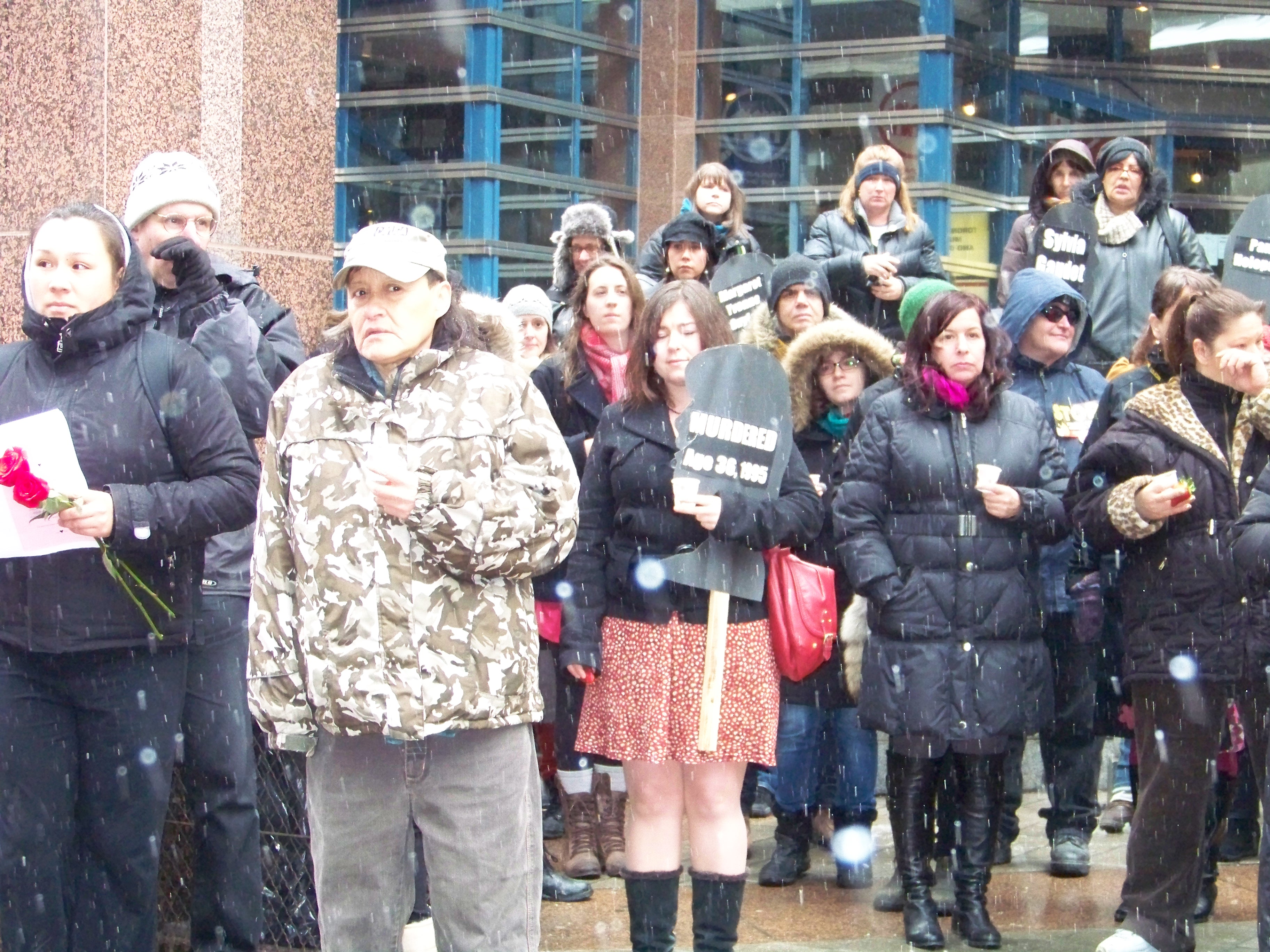
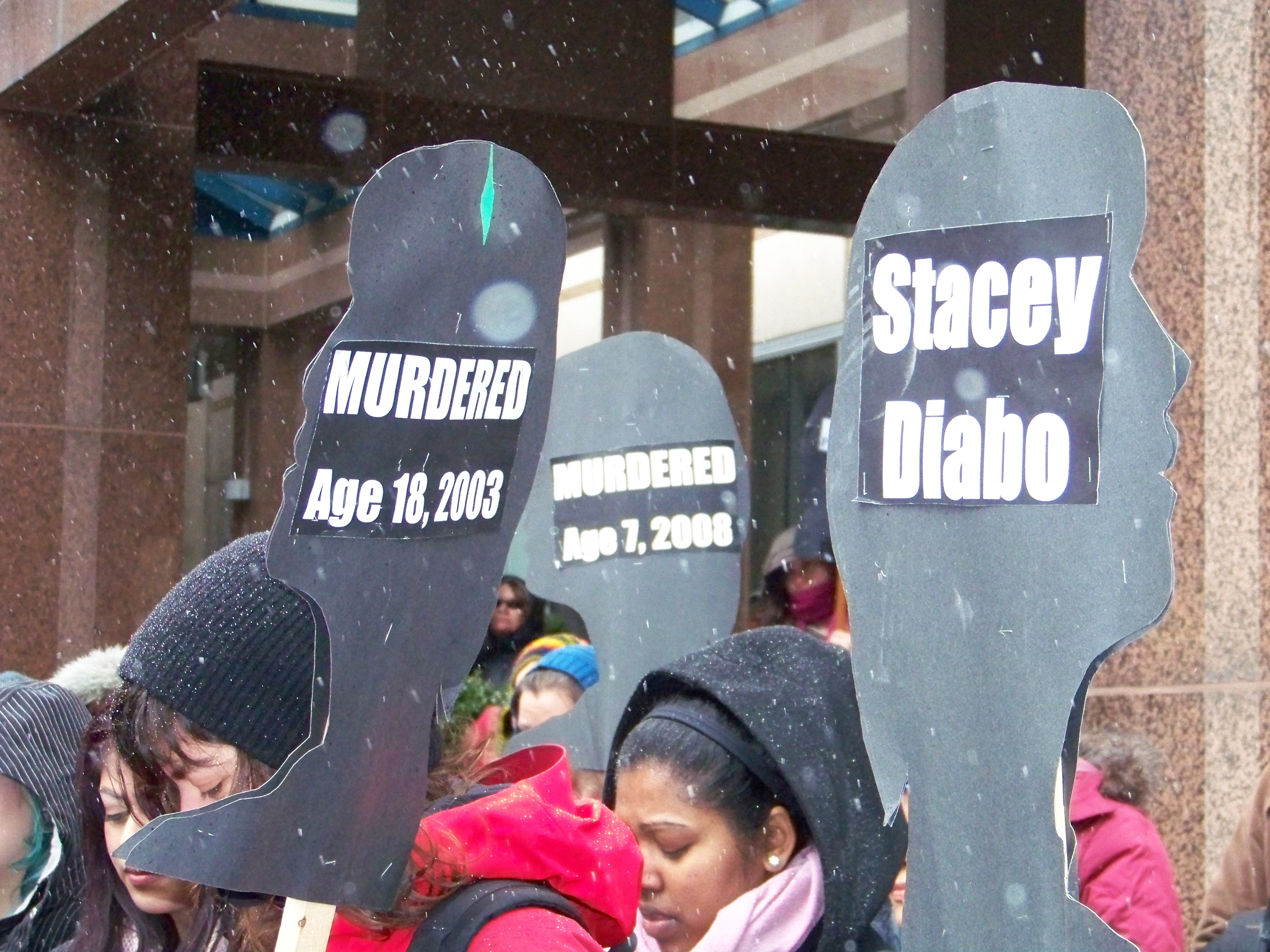
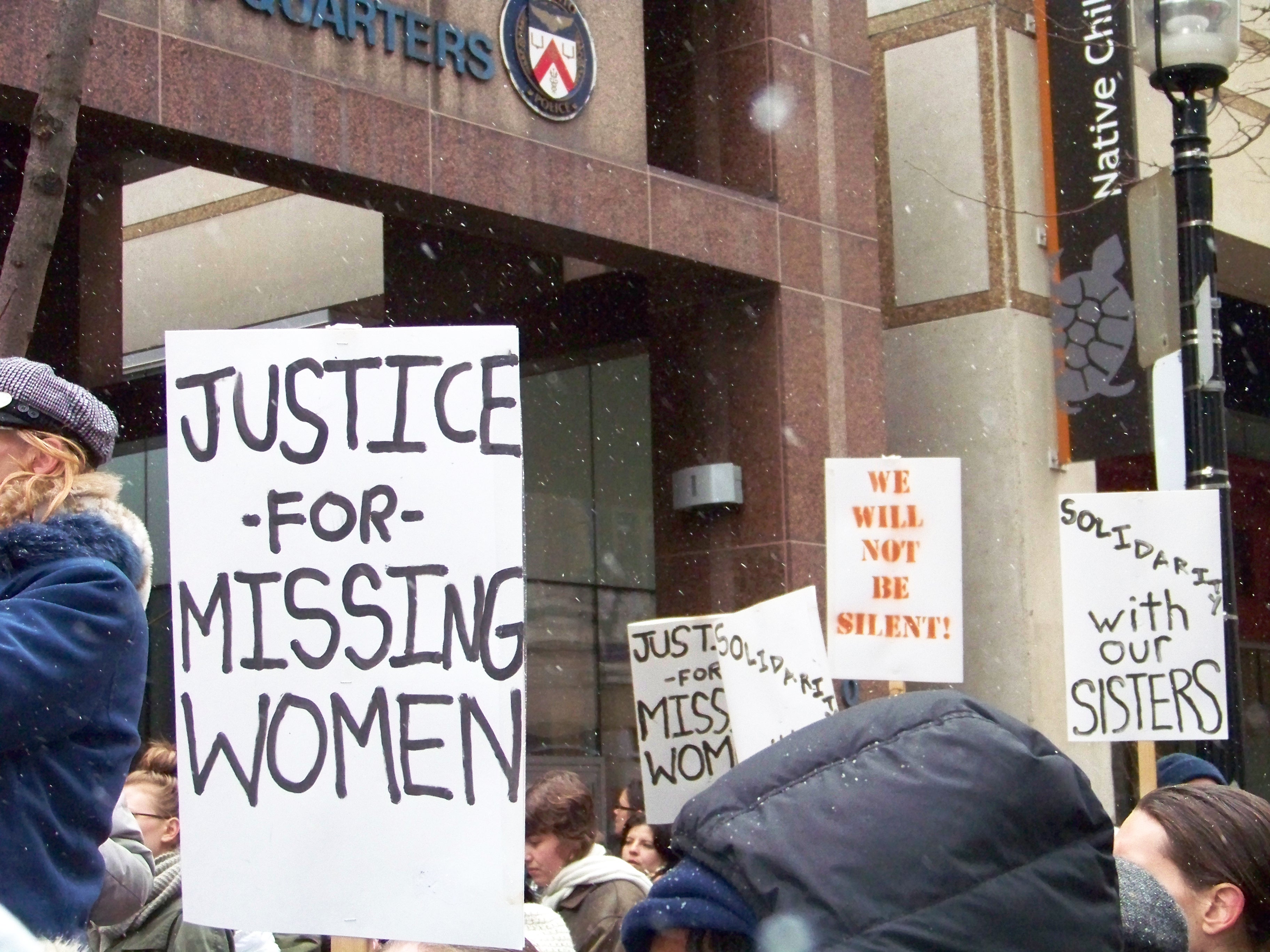
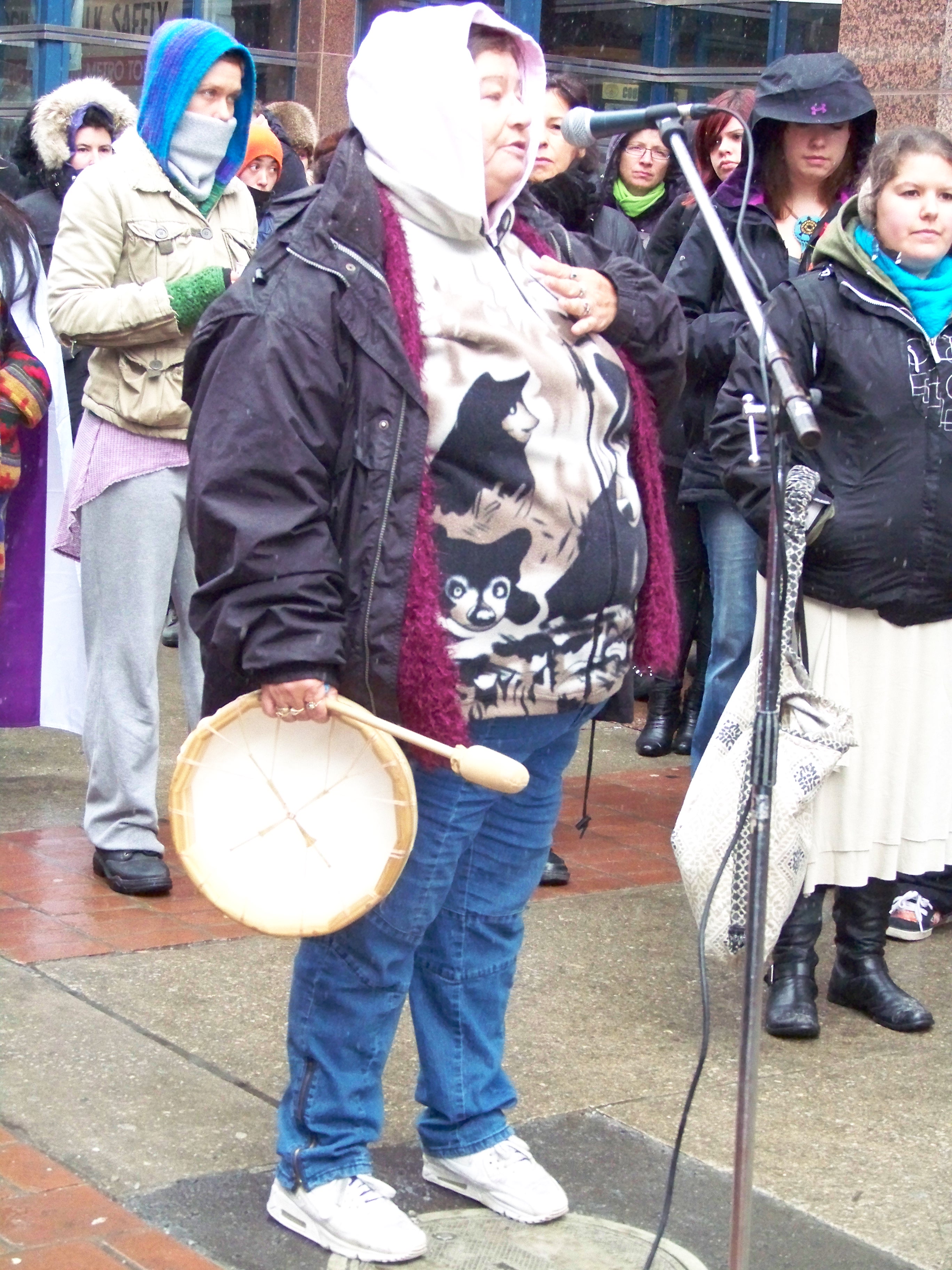
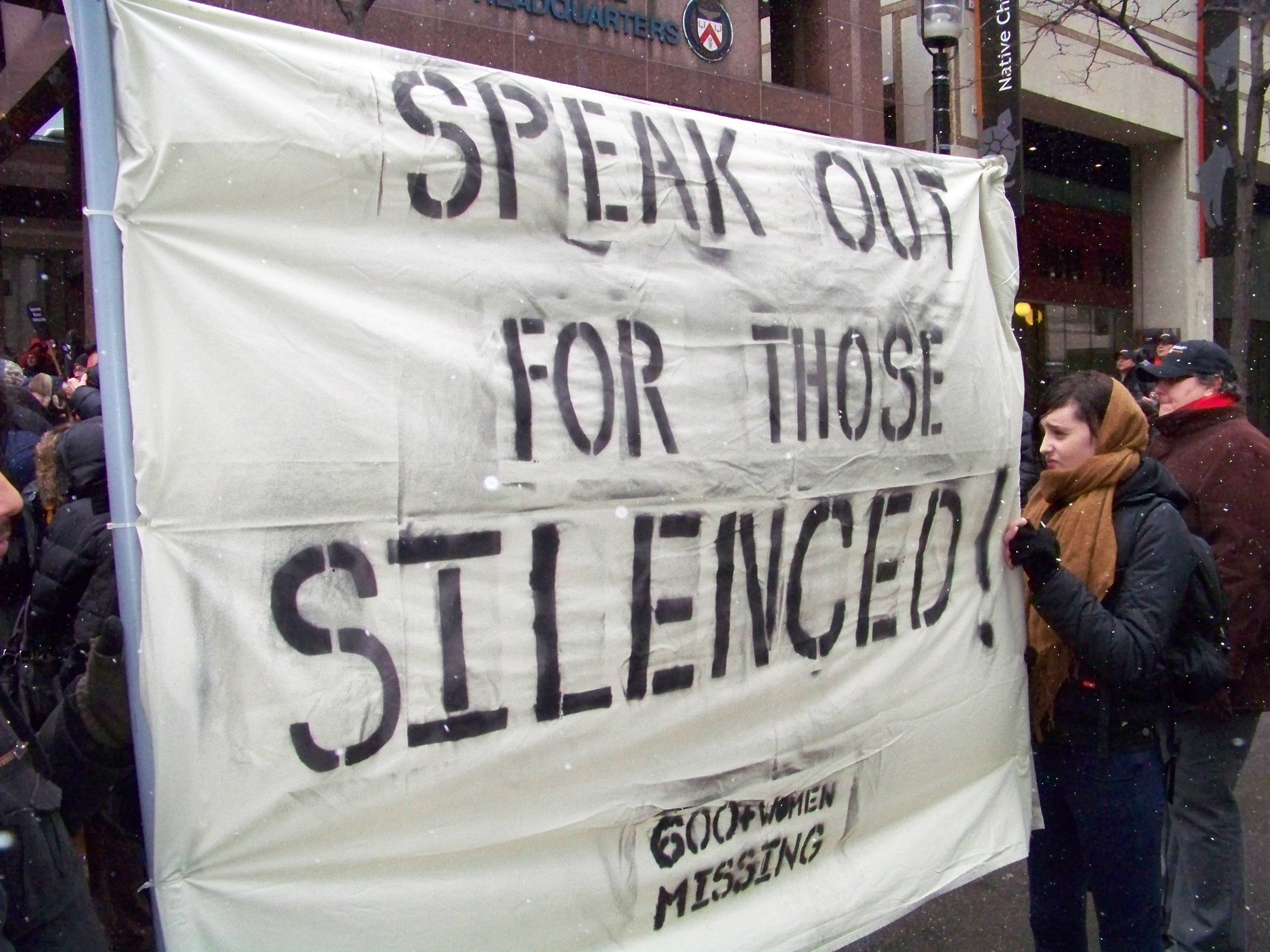
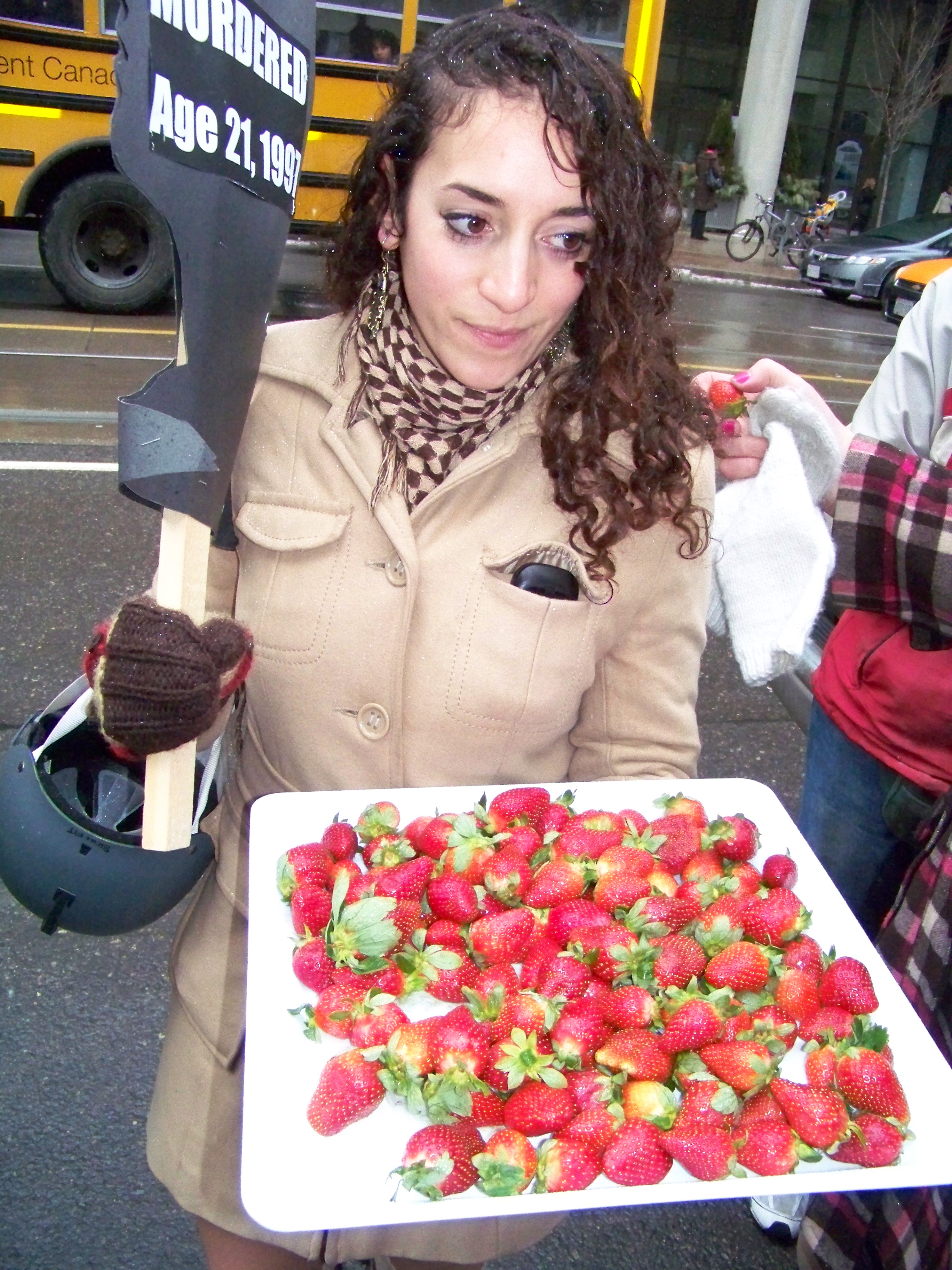
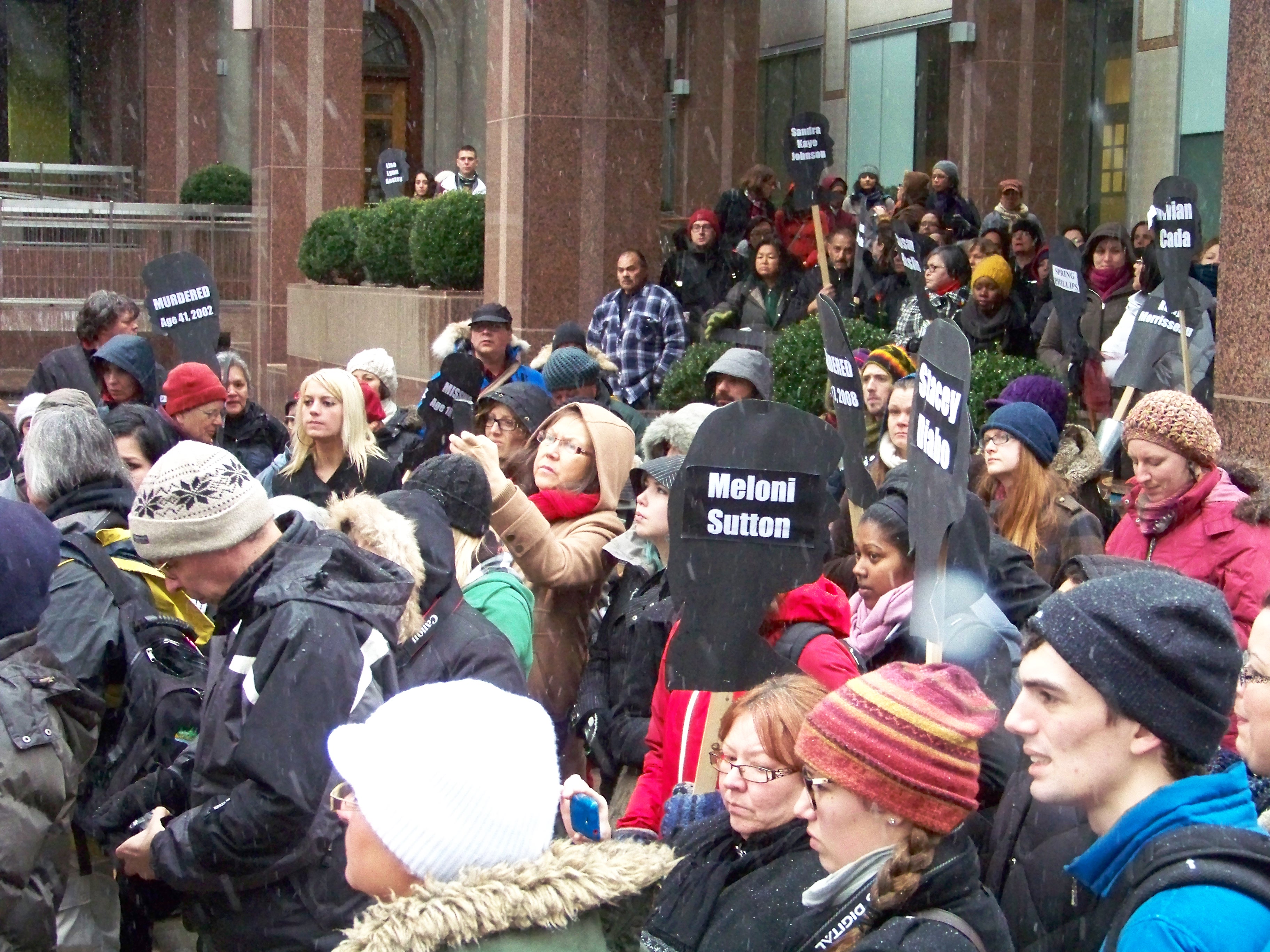
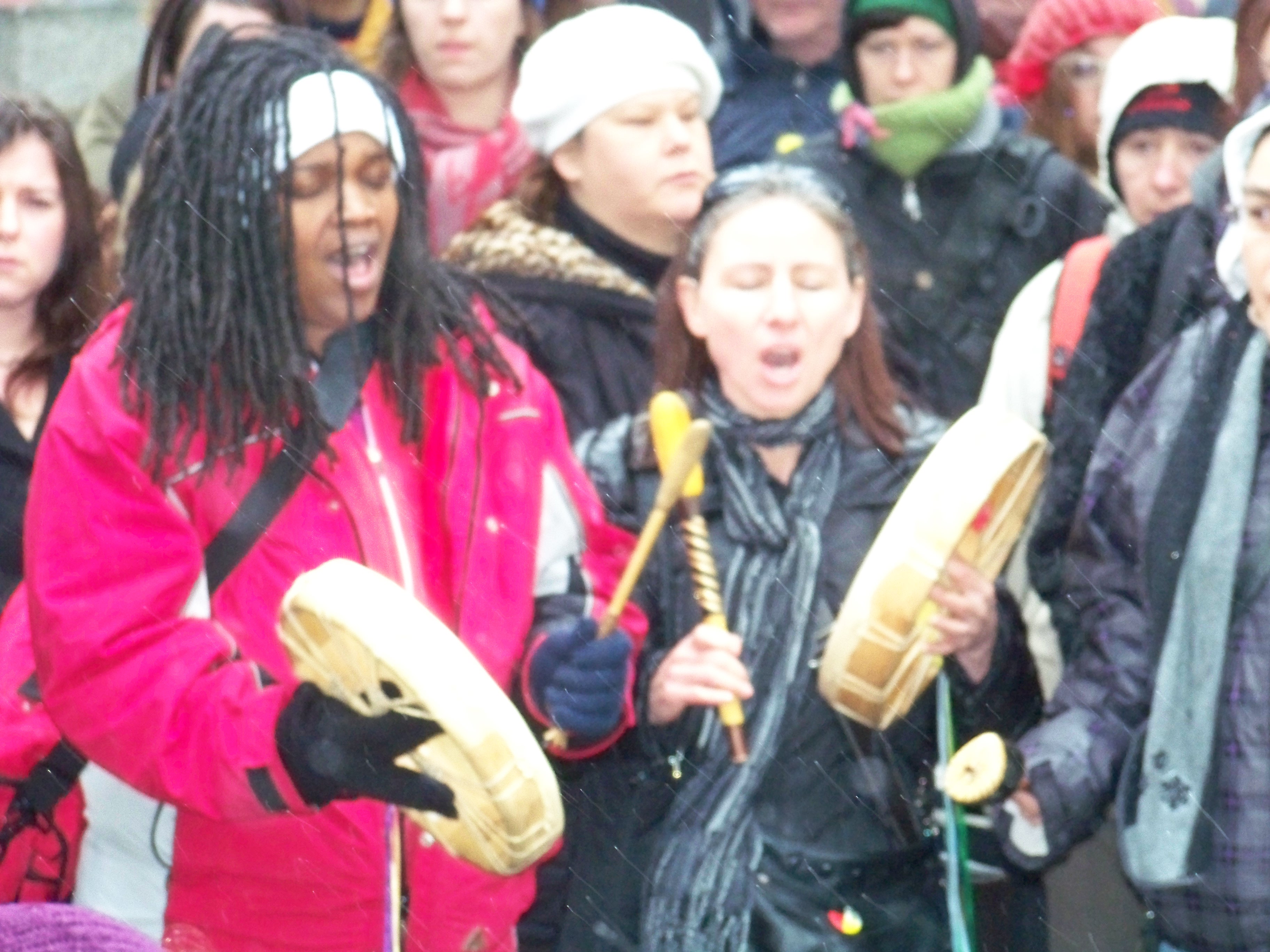
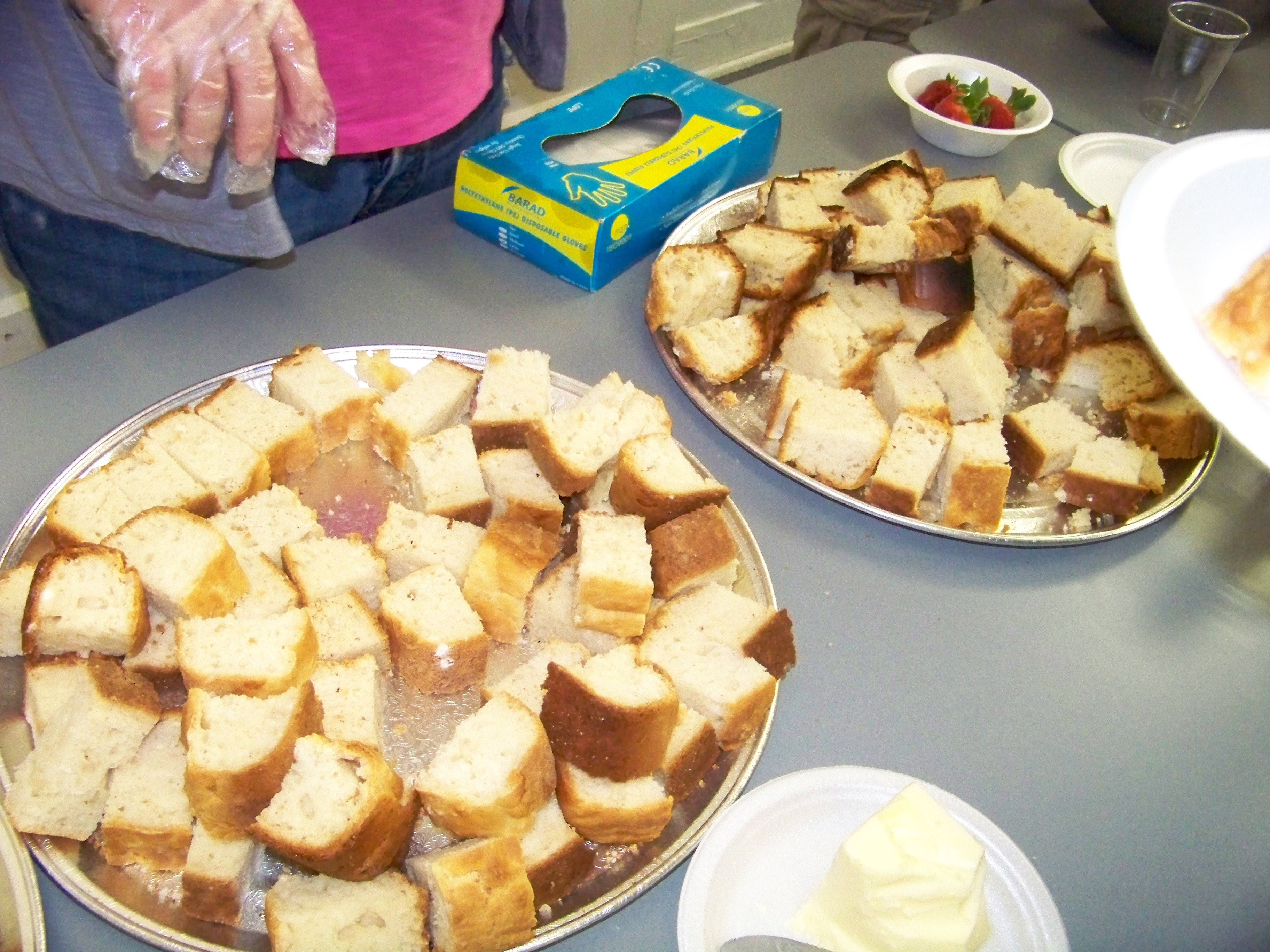
The photo essay below is of the rally and feast held February 14th, 2012 in Toronto organized by No More Silence and the Native Youth Sexual Health Network.  All photos taken  by Jorge Antonio Vallejos aka Black Coffee Poet.

BCP: Please explain the work you do.

BT: First of all, it’s not really work to me, it’s my life. It started with the death of my mother Gladys Tolley who was struck and killed while crossing the road in Kitigan Zibi First Nation by a Surete du Quebec (SQ) police car in October 2001. After my mother was killed, I didn’t go anywhere for three years. During those early years I spent all my time and energy gathering every piece of information and report that I could about my mother’s death.  I learned that one of the investigating officers in charge of the scene was the brother of the office who struck my mother. I also found contradictory reports from three police services (Montreal, SQ, Kitigan Zibi) that left me feeling deeply disturbed. 

It was then that I took my case to Beverley Jacobs, who at that time was President of the Native Women’s Association of Canada (NWAC) in 2004. The following year in 2005, NWAC launched the Sisters in Spirit (SIS) initiative funded by the Liberal government. SIS was a research, education, and policy initiative aimed at documenting the number of Missing and Murdered Aboriginal women and girls in Canada. I had an idea that I needed to bring the faces of the missing and murdered to the political center of Canada, to Parliament Hill in Ottawa, which is also the traditional territories of my People, the Algonquin. There were more than 500 Missing and Murdered Aboriginal women and girls who were documented by SIS (the number is now well over 600) and I wanted the federal government to see all the faces and hear the stories of families affected by violence and impunity and their struggles for justice and support. Every October 4th vigils are held across these lands and even internationally to remember and honour these women. My personal journey for justice, and answers, led me to connect with so many other families.

In December 2010, after several months of speculation, the Aboriginal People’s Television Network reported that the Native Women’s Association of Canada’s groundbreaking Sisters in Spirit (research, policy, and education since 2005) Initiative on behalf of more than 500 missing and murdered Aboriginal women, had been cut. The small staff of SIS was laid off and there was no contact with families for several months. 


When the announcement of fundamental cuts to SIS (they were no longer allowed to do any research; including their growing database; nor could they do public advocacy for families. They were also barred from using the name Sisters in Spirit and any future work; unclear what that could entail) would be conducted as “Evidence to Action” and without central support from family members.


I found this to be unacceptable and decided to continue the original work of SIS. I co-founded Families of Sisters in Spirit (FSIS), a grassroots organization by and for families of missing and murdered Aboriginal women, in particular those living east of Manitoba. In early January 2011 I co-founded FSIS along with non-Aboriginal ally and PhD candidate Kristen Gilchrist, and former President of the Native Women’s Association of Canada Beverley Jacobs. 

Without any government funding and sadly without support from the Native Women’s Association, FSIS has worked tirelessly to build mutual relationships with family members and are working in solidarity with many family members of missing and murdered Aboriginal women and girls.

Using our own money, community donations and in-kind support, during our first year, FSIS arranged face-to-face meetings between family members and members of the Federal Opposition, the Assembly of First Nations-Quebec and Labrador, and Mohawk leader Ellen Gabriel. FSIS also organized and/or participated in more than 60 events, including vigils, rallies, fundraisers, panel discussions, community forums, and public education/guest lecturing. 


Without the support of families and community organizations (listed below), FSIS could not have run such a successful campaign as they did with 30 Days of Justice 2011. This campaign ran from September 4th-October 4th and featuring events in Ottawa, Kitigan Zibi, Montreal, and Kahnawake Quebec. For more information about 30 Days of Justice 2011 visit the campaign’s blog: http://30daysofjustice.wordpress.com. 


FSIS has also forged relationships and partnerships with Aboriginal organizations such as Minwaashin Lodge-Aboriginal Women’s Support Centre, the Native Youth Sexual Health Network, and Walk 4 Justice. As well as local and national solidarity organizations such as Amnesty International, KAIROS- Ecumenical Initiatives, POWER (Prostitutes of Ottawa-Gatineau, Work, Educate and Resist), AIDS Committee of Ottawa, Project of Heart, IPSMO (Indigenous People’s Solidarity Movement Ottawa), Ontario Public Interest Research Group (OPIRG)/ Group de Recherce D’interet Publique D’Ontario (GRIPO), The Canadian Resource Centre for Victims of Crime, Carleton University Womyn’s Centre, U of O Women’s Resource Centre and Ottawa Coalition to End Violence Against Women (OCTEVAW). 

For information on what Families of Sisters In Ssprit does, please see our mission statement attached at the end of this interview.

BCP: Have the police admitted any wrongdoing in the death of your mother?

BT: No. There hasn’t even been any communication from any of the three police forces. I actually found out that the case was closed from a reporter.

BCP: At a rally in Ottawa (June 2011) you said you were “drawing attention to the lack of attention given to cases [of missing and murdered Aboriginal women].  How have you been doing this? Have things improved?

BT: Please see our mission statement and 30 Days of Justice blog.

BCP: You said something very powerful at a rally: “It is very difficult to ignore something that refuses to be ignored.” Where do you get the strength to get up and fight every day?

BT: This isn’t something you can do from 9-5 on weekdays and forget about it. The trauma of violence and loss just doesn’t go away during holidays and vacations; it’s actually worse lots of the time. This is about fighting 365 days a year for justice and action! It can get overwhelmed, and there are certainly days that I feel like giving up, but that is when you reach out to those who love and support you, including other families, to get you through the hardest days. Some days are better than others. 

BCP: Families of Sisters in Spirit is not funded by anybody.  This is a strength considering how Sisters In Spirit lost their funding. FSIS has recently been given a space by Ottawa Coalition to End Violence against Women. Where will you get money for day-to-day operations?  Are you accepting donations?  If so, where can people send money?

BT: We get money for day-to-day operations from community donations and we also use our own money. Yes, we are accepting donations. The best way to get in contact with FSIS is through our email, familiesofsistersinspirit@gmail.com . We also accept donations via mail (cheques) made out to Families of Sisters in Spirit and mailed to:

Families of Sisters in Spirit

250 City Centre Ave

Suite 500

Ottawa, Ontario

K1R 6K7

BCP: You’ve said, “I need honesty, transparency, and respect” from police and government agencies. Considering the way police and government have behaved, do you believe you’ll get honesty, transparency, and respect?

BT: No, but it doesn’t mean I am going to stop fighting. My friend Matt reminded me, “If it was easy, they wouldn’t call it struggle.”

BCP: How can non-Aboriginal allies help Families of Sisters in Spirit?

BT: Non-Aboriginal allies are very important in providing support and solidarity with FSIS. Our co-founder Kristen Gilchrist is a non-Aboriginal, non family member, ally of FSIS. Being an ally does not mean you feel guilty about racism, colonialism, sexism, classism etc. Being an ally means taking responsibility in your own lives and communities, and using your own voices and talents to support decolonization and self-determination, and provide a space for Aboriginal women to make decisions affecting their own lives and the lives of their families and communities.

BCP: What advice do you have for families who have a missing or murdered Aboriginal relative?  

BT: It is such a terrible shock and trauma to lose someone and it can be very difficult to know what do, how to feel, or what steps to take. It can be even worse when it feels like the police are not taking the case seriously and so families are left to do their own searches, hand out flyers, locate witnesses, talk to the media, and so on. There are definitely not proper or adequate supports in place, but I want families to know, “You are not alone.” There are other families and allies out there like FSIS who want to provide support and assistance to families dealing with disappearance or murder. Seek out support in any place that you can find it.  It is not something any one of us can do alone.

FSIS MISSING STATEMENT:

Families of Sisters in Spirit (FSIS) provides support for families of missing and murdered Aboriginal women to come together in solidarity, share their experiences and raise public awareness towards ending the high rates of violence facing Aboriginal women and girls in Canada, including by addressing the root causes of the violence and promoting Aboriginal and family-led strategies for change.

GOAL:

An end to violence against women and girls in Canada, in particular Aboriginal women and girls and access to justice, including a better response from communities, the police, the justice system and the media, when a woman goes missing or is murdered.

FSIS understands that to address violence against Aboriginal women actions must be directed by those most affected and solutions must counter the ongoing effects of colonization, including poverty, racism and misogyny (hatred of women). The root causes of violence, including the historical, colonial and socio-economic factors, are also fundamentally intertwined with the indifference to violence faced by Aboriginal women, evident through the inadequate police and justice system response and the poor media and public attention given to cases of Aboriginal women who have gone missing or been murdered.

OBJECTIVES:

1. All levels of government, including Aboriginal and non-Aboriginal government, identify and recognize the high rates of violence against Aboriginal women and the root causes of the violence, and take action to achieve their obligations towards address violence against women, its causes and consequences.

2. Where families of missing and murdered Aboriginal women believe the initial investigation into their case was inadequate or requires further review, the case is reopened for independent investigation, with the family’s consent and involvement.

3. Provide and ensure ongoing support for families, including legal support, support for travel to legal proceedings and public events, connection with other families and access to psycho-social and healing support of their choosing.

4. Advocating for standard police training towards improved monitoring and accountability for the handling of cases of missing and murdered Aboriginal women and girls, and stronger communication and support for families from police and justice officials, including the development and implementation of standard protocols for identifying, reporting and investigating cases. This should include the maintenance and sharing of data across jurisdictions and training for police working with Aboriginal communities.

ACTIVITIES:

To achieve the goal and objectives of FSIS:

1. Works alongside families to build a dialogue with parliamentarians, governments and policy leaders about the structural and root causes of violence and marginalization which put Aboriginal women at higher risks of violence and limits their access to justice. FSIS enables families to engage in policy dialogue towards ending violence against Aboriginal women and girls.

2. Connects individuals, families, communities and organizations through social media and growing networks to promote events and communications and publicize new and ongoing cases of missing and murdered Aboriginal women.

3. Engages in public education campaigns aimed at drawing attention to new and ongoing cases and the lack of adequate police, justice, media, and societal responses to violence against Aboriginal women.

Tune into Black Coffee Poet Friday February 17, 2012 for poetry Honouring and Remembering Indigenous Women by Janet Marie Rogers, Jamaias DaCosta, and Dallas Goldtooth.

Posted in Uncategorized | Tagged , , , , , , , , , , , , , , , , , , , , , , , , , , , , , , , , | 6 Comments