FIREWATER

Firewater

By Janet Rogers

Reviewed by Jorge Antonio Vallejos

Have you heard of the term “taking back”?  It often refers to words and phrases that were once used as weapons against different peoples and that have now been adopted by the very peoples who were subject to such verbal abuse.  By doing so, they take the negative power away form the word and the people who once used them.

LGBTQ peoples have taken back the word “queer” and use it as their own with pride.  Peoples with disabilities have taken back the word “cripple” and now call themselves “crips”.  It’s about rebellion, taking power away from the oppressor, adapting, and showing the oppressor that what they do won’t last, that the power they once had is gone. 

Mohawk spoken-word poet Janet Rogers has called her new CD Firewater.  A colonial term used by the colonizers of Turtle Island now known as Canada, firewater was, and is still used today, in reference to Native peoples and part of their history with the British; and not in a good way. 

A common stereotype of Native peoples is “the drunken Indian” and it’s usually associated with “firewater”—alcohol.  Rogers takes the word back.  What is always referred to as “the downfall of Native peoples”, Rogers uses to strike back at the oppressor with her poems.  

Comprised of twelve poems/songs, Firewater is fierce.  Living up to its name, Rogers burns your ears with truths and leaves you punch drunk with every poem.  Collaborating with various artists, Rogers puts together a collection that has you engaged, entertained, and eager for the next song.

One of the major rules of writing is “show don’t tell”.  Rogers does this well.  Although many of Rogers songs have Indigenous content, there is a subtlety throughout the twelve poems that reminds the listener that they are listening to an Indigenous artist—water. 

Many of the poems have some form of water in them.  Some poems end with rain, symbolizing the washing away of the bad that Rogers sings of.  At times you hear rivers flowing letting you know that life goes on; you hear canoe paddling, letting you know you are on a journey with Rogers while listening to her, and with Creator as you walk this earth, and with yourself as you contemplate life and make everyday decisions; you also hear the ocean crashing, letting you know that life can be hard as well as soft, and that you have to go with the flow.

Water is also used to remind us of the torture that this life can be.  In her powerful poem Addictions, you hear water drops at the poems start.  Reminiscent of the water drop torture technique used in various wars, Rogers’ uses the monotonous echo of water torture as she sings her chorus “Addictions come back!”  Addictions is a sad poem, a scary poem, a real poem, and a very well written poem. 

Addictions shows Rogers’ command of the English language and poetic technique.  Her use of repetition is symbolic of the vicious cycle that addiction is; her use of words that echo leaves you wanting to press “STOP” and wanting to finish hearing the song at the same time; and her turn around at the end is very cyclical, following her Mohawk tradition and spirituality: “Be your own power surge and kiss addictions goodbye one last time.”

Addictions starts with water as torture, incorporates a shaker like the many songs of Rogers’ Mohawk heritage, and ends with the sounds of the ocean cleansing the listener of the harsh realities shared in Rogers’ poem.          

“Where are you now?  Where are we now?” asks Rogers in her first poem Distractions.  She sings of history, the displacement of Native peoples that in turn leaves us all who have come to Canada also displaced as a result of the colonization of Turtle Island.  Starting with the confusion that is the sound of searching for a radio station—that fuzz and buzz and voices come and gone—and followed by a gorgeous violin played by Swil Kanim, Distractions lays down the reality of where we are:

“Cities get torn between progress and politics”.   

Rogers tells us to “embrace liberation inside, living on the outside of normal” and to “undo what we know not to be true.”  The poet sings the reality of anthropologists writing fictions about Indigenous peoples, the divisions in our society, how the minority are really the majority, and she encourages peoples to dance to their own drum. 

An amazing poem, Distractions is mostly truth with some flaws.  Although critiquing the racist, colonial, oppressive practice of anthropology, past and present, (this reviewer has a degree in anthropology), Rogers uses anthropological language when she sings “moving with ancient faith”.  Ancient?  Ancient is a word that is used by our society in the Euro colonial tradition of top looking down, is not to my knowledge used in a “taking back” fashion by activists, and is out of place in such a powerful call to action as Distractions.

Indigenous cultures such as Rogers’ Mohawk tradition of story sharing, worldview, use of shaker and water, are here today, now, not in the past or ancient times as linear thinking anthropologists would describe Rogers, her peoples, all Indigenous peoples.

With so much positivity and spirituality that makes up Distractions there is a contradiction sung that is part of the very problem for which she names her poem. 

“Love those we want an only those who love us back,” sings Rogers.

Amongst peoples who speak out against injustice there is a failure to see that the oppressor, although causing so much harm in the past and present, needs our empathy and love, as opposed to the destructive and distractive forces of hate and corrosive anger. 

Racists, sexists, homophobes, men who are violent against women, members of colonial political systems, and multi national corporations, are all hurt people living in fear who lash out in violence and compensate through greed and the forced acquisition of land and power.  A large lack amongst activists and progressive people striving for change is the spiritual support for those who make and run the oppressive systems that activists are trying to change for the better.

Firewater’s cover is full of colours, images, and symbolism: flames of fire, crows, dragons, drawings of The Virgin Mary in skeletal form, and a canoe flying over everything.  It’s attractive and has you wanting to rip the package open, grab the CD and shove it in your stereo.  Once doing so you’ll hear a powerful manifesto that calls for all of us to strive for change through the taking back of oppressive language, learning who we are and where we come from, and working together for a new world. 

It is no surprise that Janet Rogers has been nominated for a Native American Music Award in Spoken Word, 2010.  Listen to Firewater, learn from one of poetry’s most powerful voices, and take Rogers advice of living in a good and sacred manner. 

To order Firewater go to http://www.janetmarierogers.com

Tune in to Black Coffee Poet Wednesday October 20, 2010 for an inclusive interview with spoken word poet Janet Rogers.

 

Posted in Poetry | Tagged , , , , , , , , , , , , , | 3 Comments

“BROKEN ARROW” CONTRIBUTORS JAMES C. MILES AND ALBERT MOORE READ THEIR POETRY

James C. Miles is a poet of Mohawk, Chippewa and Finish descent.  A crossword puzzle  fanatic, Miles was born and raised in Toronto and is a “proud Broadlands Park boy”.  

Apart from writing poetry, Miles is a painter, leather craft worker, soapstone carver, and a multifaceted reno-worker specializing in hard wood flooring.

“Single and looking for work”, Miles’ poetry is truthful and hardhitting.

Enjoy James C. Miles read his work from “Broken Arrow: Native Men’s Writing, Art, and Culture”.

 Albert Moore is Oji-Cree from Constance Lake First Nation, Ontario, Canada.  A budding poet, Albert wrote a short play for “Broken Arrow: Native Men’s Writing, Art, and Culture.  

A multidisciplinary artist, Moore not only writes poems and plays, he makes dreamcatchers, chokers, and bracelets.  

Surviving a car accident that saw him break his neck, pelvis, and 9 ribs, as well as puncturing his lungs and colon, Moore says, “I got a rod, screws, pins, and wires in my body, it’s wild!” 

Becoming addicted to painkillers after his accident, Moore is in Toronto on a healing road to break free from his addiction.  He plans on attending college to become a recreation counsellor so he can go back to his community and help the kids “stop the cycle of violence.”

Enjoy Albert Moore’s honest and raw poetry.  

TODAY!!!: Come to the launch of Broken Arrow, a collection of writing by the Sagatay men’s writing group. Enjoy readings, music and art by the contributors! There will snacks and friendly faces. Hope to see you there.

Time: 4 to 8 pm

When: Friday, October 15, 2010

Where: Sagatay (Na-Me-Res), 26 Vaughan Rd, Toronto, ON, M6G 2C4

Here’s a map: http://tinyurl.com/39xlm4m

Tune in to Black Coffee Poet Monday October 18, 2010 for a review of “Firewater” by Mohawk spoken word artist Janet Rogers.


Posted in Poetry | Tagged , , , , | Leave a comment

INTERVIEW WITH BROKEN ARROW CONTRIBUTORS TIM RENOLLET AND JAMES C. MILES AND EDITOR EMILY POHL-WEARY

Interview With Broken Arrow Contributors James C. Miles and Tim Renollet

BCP: Why poetry?

JM: That’s a good question. It has been years since I have sat down and put my feelings to pen. However, since my enrollment in the Native Mens Residence/Sagatay Apaenmowineen program (Finding confidence in yourself), one of the teachers that comes in, Emily Pohl-Weary, has reopened something in me that has lain dormant for quite sometime. Every time she has come in to teach class I have found myself thinking, “What am I going to write today?”

TR: Different way to get my point across.

BCP: What is your process?

JM: There seems to be no real process that I can put my finger on. The closest I can figure is that I am a hopeless romantic and when I start writing it just seems to flow out of my mind, to my hand, to paper. When I was younger I was constantly writing love poems to the girls. Unfortunately, I never made copies of them. However, I did have a lot of girlfriends.

TR: I take things out of my life that have a deep impact.

BCP: How long have you been writing poetry?

JM: Let’s see, I’m 56 now. Not counting the time that my hand was idle, I’d have to say 43 years. Even though I had quiet time, the romantic has always been in there. Even the poem I wrote for the book is not directed to the ladies I feel it does have the romantic warrior feel to it.

TR: One year.

BCP: Who, or what, are your influences?

JM: Ever since I heard the Beatles, the Monkeys and the Doors, the list of musicians could go on and on, but I’ll leave it with that. I’m a dyed in the wool Hippie and “make love not war” is hard pressed in my soul.

TR: Life experiences.

BCP: Your poetry is raw, honest, and stimulating. What do you try to convey to your readers?

JM: For my poem, I was merely pointing out the futility that we face when facing off with the government and that in the end what the government has is being eroded with time.

TR: Life looks good at times but you can turn it around and make it a good experince.

BCP: How long were you working on the poems that are featured in Broken Arrow?

JM: For the most part the book has has been worked on for about a year by the various people that have gone though the program at Sagatay. For me, my involvement has been about 3 months. My poem, about 4 minutes, the rest of my time was in layout and art.

TR: 45 minutes to live it and an hour to write it.

BCP: Was writing in a group helpful to you?

JM: Absolutely! While I was working with the group, I found that the talking had opened up the tap that had been closed for a long time. I seen things in different ways. And I felt some of the feelings that the other guys had expressed. The sharing of ideas opened the flood gates.

TR: Yes, I got helpful tips on how to write and what to write.

BCP: How was it working with Emily Pohl-Weary who is a young writer making a name for herself in Canada?

JM: Amazing! Her energy is way up there. The way she asks questions to get us thinking was a definite eye opener. She got us all working together as a team. We all looked forward to the end result. And now that we have had the book printed she still exudes that energy.

TR: She was very helpful on helping what to write and how to write it. 

BCP: Broken Arrow is comprised of writing by Aboriginal men trying to get back on the Red Road. The writing is heart-wrenching, challenging, and keeps the reader flipping pages. Do you think more publications like Broken Arrow need to be published? Is there a Broken Arrow # 2 in the making?

JM: After consulting with Kerry Lambie the Training Co-ordinator, I have discovered that because of the success of the first edition, a second is definitely on par for the course. By success, I mean the way it has brought people together to share and create something meaningful and worthy of being proud of.

TR: If the same care and thought goes into it, it will keep going on.

BCP: What do you want the Aboriginal and non-Aboriginal communities to get from reading Broken Arrow?

JM: Me personally, I would like for people to see that Indians are people too. We have all the same ups and downs in life, plus some. The only difference is that we are red.

BCP: What advice do you have for other Native writers out there who are having difficulties with their writing, or who have yet to see their work in print?

JM: Simply put, find Emily!!!! And, if need be, find and use the great opportunities offered by Sagatay’s Apaenmowineen.

TR: To be honest with yourself and to have patience in what you’re writing, as well using your own expierences in life.

Interview With Broken Arrow Editor Emily Pohl-Weary

BCP: Why the zine and the writing group? How did it all come together?

EPW: It’s a bit of a long story. Three years ago, a young family friend was shot to death a few blocks from the home where we grew up. I couldn’t make sense of all the violence going on in the neighbourhood, so I decided to start a writing group called Parkdale Street Writers for local youth (16-25 years). Writing is one of the things that’s really helped me throughout my life. Meeting other people with similar creative interests, and getting the opportunity to tell stories without shame in a safe space can help people deal with a range of painful and beautiful experiences. It also helps ease the sense that no one cares some adolescents are literally coming of age in war zones.

One of the staff at Sagatay (Kerry Lambie) heard what I was doing in Parkdale and asked me to come in and run a series of four workshops for the guys in their Apaenmowinneen (new beginning) program. Those initial workshops went well, so they invited me back for four more, and then extended my writing group indefinitely. I’m constantly on the look-out for new work by Aboriginal and non-Aboriginal writers that will speak to the men’s lives and experiences. I bring in guest writers to work directly with the group – so far we’ve had visits from Marie Gaudet, Robert Priest, Lee Maracle, Tamara Berger, Dale Gilbert Jarvis, Ziadh Rabbani, Susan Musgrave and Willow Dawson.

Although I’ve had five books published, my first “publications” were my own zines, which had titles like “We Have Lives” and “They’re Just Words.” That’s how I learned to let go of my writing and get feedback from strangers. I kind of used those zines as business cards for many years. Because of this, I keep my workshops focused on a tangible end result as we go along – a unique publication developed entirely by the participants.

BCP: Was it your first time working with Aboriginal people and writers?

EPW: Kind of, yes. There was and continues to be a steep learning curve for me. I did have a little experience through Parkdale Street Writers (a couple of the regular participants are Native) and because I was a visiting author at the Labrador Creative Arts Festival, which brought me to remote Innu and Inuit communities in northern Labrador and around Happy Valley-Goose Bay to run writing workshops.

BCP: What was the process and structure of the writing group?

EPW: We meet once a week for a morning, talk and joke and argue a lot, read inspiring stories or poems or movie scripts (whatever the subject is that week), and do a couple of writing exercises. The process of deciding what to write is largely inspired by the participants and what they show an interest in doing. Sometimes people get so inspired by what we start that they continue to work on larger pieces throughout the week. I love that.

BCP: The poetry in Broken Arrow is raw, honest, and stimulating. How was it working with a group who explored such important and sensitive subjects?

EPW: Very inspiring. At times it was also heart-breaking.

BCP: How long were you working on putting together Broken Arrow?

EPW: A year.

BCP: What did you learn from this experience?

EPW: So much. I learn every single day from the guys at Sagatay about honesty and bravery, respecting and caring for Mother Earth, and how everything and everyone is connected. I also learn how to reach out for support, about picking myself up when I fall, the power of humour and great storytelling… I could go on and on here!

BCP: Broken Arrow is comprised of writing by Aboriginal men trying to get back on the Red Road. The writing is heart-wrenching, challenging, and keeps the reader flipping pages. Do you think more publications like Broken Arrow need to be published? Is there a Broken Arrow # 2 in the making?

EPW: Many, many publications like Broken Arrow need to be published. I feel very strongly about this. But they have to be shaped by the writers themselves and develop organically. I have so much respect for the men in this publication and the path they are each on.

Success, in my opinion, is not about attaining specific goals, it’s about how we hold ourselves as people, the choices we make, and the interactions we have with others. Honestly, the important thing about this writing group is not the publication itself, but the process. I hope that Sagatay remains a safe space for men to accept help and open up to positive change, little by little. Writing is just a part of that.

BCP: What are you working on now?

EPW: I’m working on a screenplay, a novel, and a book of poetry. I’m also editing a classroom resource for “at-risk” high school students for an educational publisher and starting the long journey of a PhD in adult education. Can you tell I’m a workaholic? If you asked this same question tomorrow, I’d have something new to add to the list…

BCP: Will the writing group at Sagatay continue for another cycle?

EPW: Yes, I certainly hope so. I look forward to each and every week. That said, I only want to be there as long as the guys themselves feel like my workshops are a valuable part of their experience. I never want to feel like I’m forcing my ideas or workshops on anyone.

BCP: What do you want the Aboriginal and non-Aboriginal communities to get from reading Broken Arrow?

EPW: That we can rewrite the so-called official history, one story or poem at a time. The generational effects of colonization, residential school syndrome, homelessness, mental health and addiction issues have had devastating effects on Aboriginal communities. This has to change, and it has to change immediately, one mind at a time. Each of us has the power to shape the future, though it may sometimes feel painful and slow and frustrating. By speaking our truths and demanding rights and respect, we can change the world and the paths of our own lives. All we really have as individuals are our stories and no one else can, or should, tell them for us.

BCP: What advice do you have for other Native writers out there who are having difficulties with their writing, or who have yet to see their work in print?

EPW: My advice is to keep writing and reading and thinking about how other people you admire tell stories. If you can’t seem to break into the publishing world, create your own forum: something like Broken Arrow or BlackCoffeePoet.com or Kiss Machine (the little magazine I published for eight years). Honestly, just don’t give up! Keep struggling and perfecting your craft and eventually you will get opportunities.

Come to the launch of Broken Arrow, a collection of writing by the Sagatay men’s writing group. Enjoy readings, music and art by the contributors! There will snacks and friendly faces. Hope to see you there.

Time: 4 to 8 pm

When: Friday, October 15, 2010

Where: Sagatay (Na-Me-Res), 26 Vaughan Rd, Toronto, ON, M6G 2C4

Here’s a map: http://tinyurl.com/39xlm4m

Tune in to Black Coffee Poet Friday October 15, 2010 for video of Broken Arrow contributors reading their poetry.


Posted in Poetry | Tagged , , , , , , , , , , , , | Leave a comment

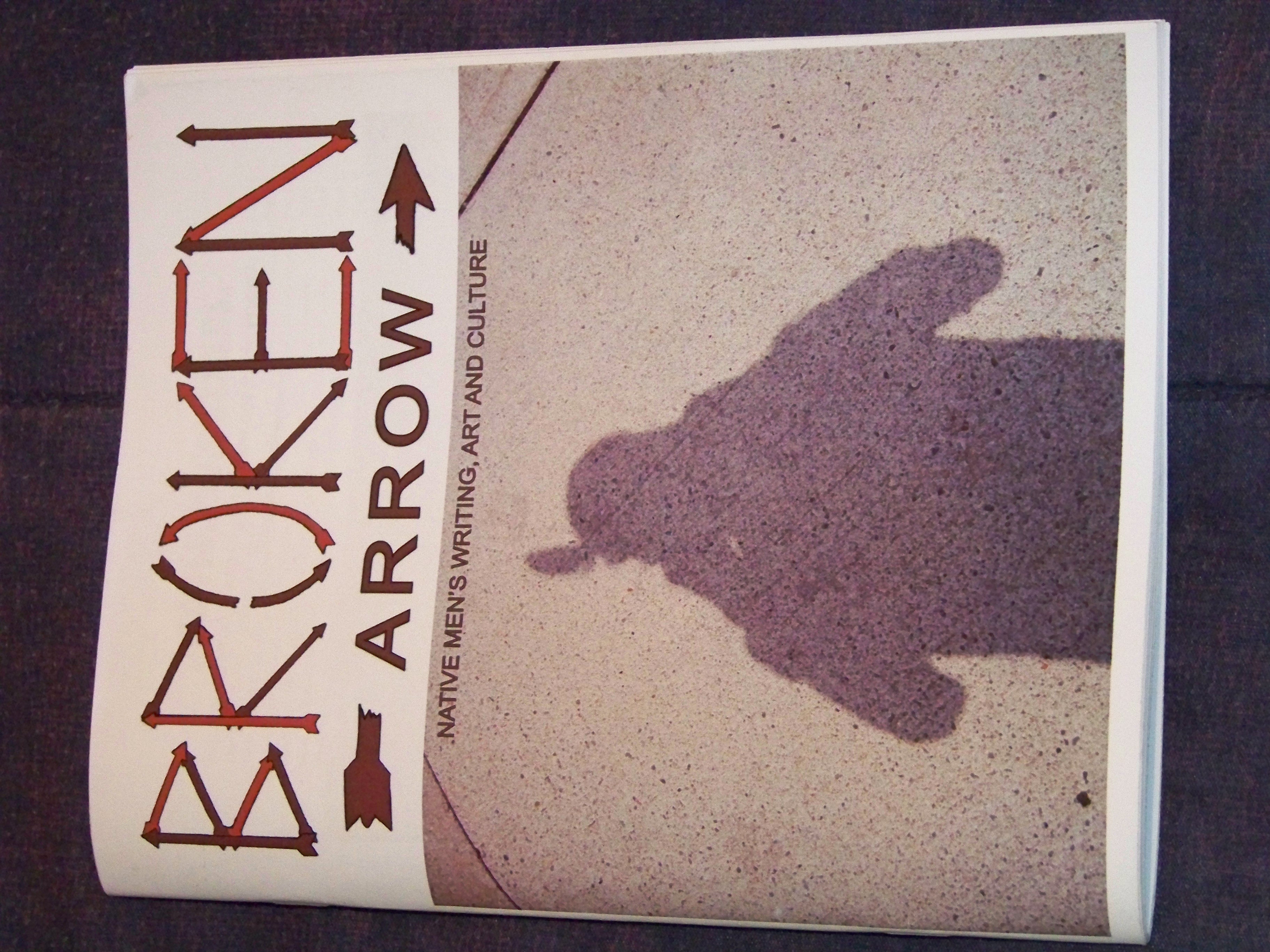
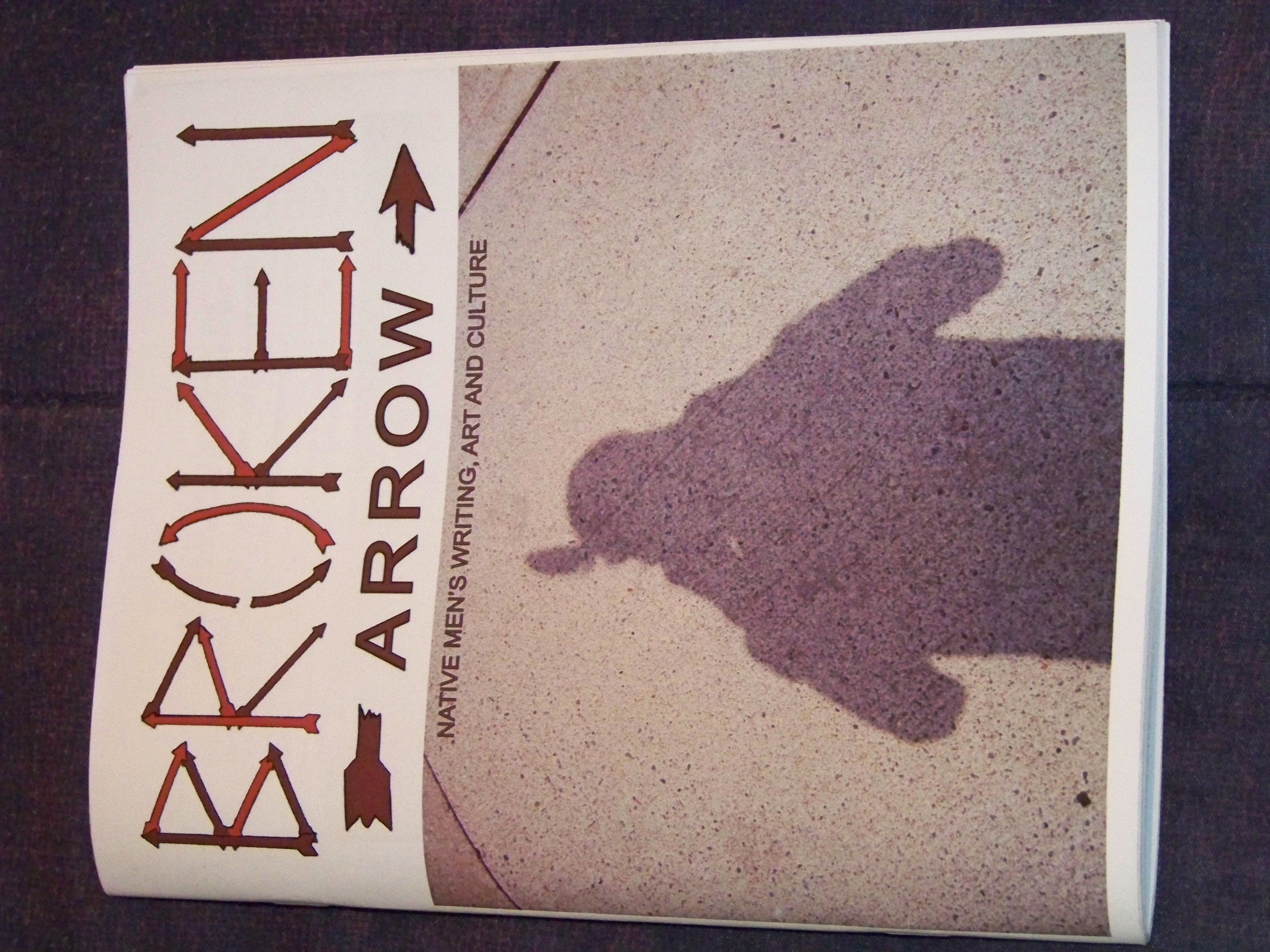
BROKEN ARROW: NATIVE MEN’S WRITING, ART, AND CULTURE

Broken Arrow: Native Men’s Writing, Art and Culture

Edited by Emily Pohl-Weary

Reviewed by Jorge Antonio Vallejos

There’s a new zine out that’s kick ass: Broken Arrow.  Its fifty-two pages are comprised of poems, plays, short stories, photos, and artwork; all of which bring the reader to the many different lives of its twenty-eight contributors.

For the last year, Toronto writer Emily Pohl-Weary has given a weekly workshop to the men at the Sagatay Native Mens Residence in Toronto’s west-end with the final result being Broken Arrow.

In her introduction to Broken Arrow Weary writes, “Working with the writers at Sagatay for the past year has been the highlight of my life.  Each Thursday, my mind came alive with new ideas and stories.  I could be having the most difficult, busy week, but after spending a morning with them, suddenly life felt manageable again.  I only needed to take time to slow down and appreciate the power of sharing our stories.” 

Everyone has a story but not everyone is willing to share his or her story.  The men at Sagatay don’t hold back.  Honesty, bravery, and humility are displayed throughout the pages of Broken Arrow.  Whether writing of street life, different forms of abuse, loves lost, and the ever present colonization of Turtle Island now known as Canada, these men shoot arrows at their targets with perfect aim.

Since blackcoffeepoet.com is dedicated to poetry, the focus of this review will be on the raw, self-revealing, and healing verse displayed in the zine. 

Tim Renollet’s poems show readers who he is while having them think about how we all have vulnerabilities and similarities.  Little Raccoon is a short prose poem about Renollet’s encounter with a drunk raccoon.  He watches as the raccoon stumbles and rolls around for forty-five minutes.  Really, he is watching himself, as will many a reader who have put too much back during a party or two.  Renollet ends the poem with “I was there to watch over it, to see that it didn’t get run over.  I did this because I would have wanted someone to do that for me when I was like that in the past.” 

How The World See Me vs. How I See Myself, another of Renollet’s short and powerful poems, will see many readers identifying with his words.  Many of us know who we are, what we are made of, and what we think while the rest of society sees us in a different light.  Describing society’s view of him, Renollet writes:

“I see kindness, they see rudeness.

I see understanding, they miss that.

I see a helpful person, they couldn’t give a damn.”

How one sees him self as opposed to how he is seen is a theme throughout the collection.  Explorations of the attempted colonial assimilation by the Canadian government, white on red racism, hyper-masculinity and violence, and poems about Native identity are written about by various Broken Arrow contributors.

Many of the poets use repetition and rhyme, others use prose, and some write extremely short poems that are entertaining and leave you thinking and hoping for more.

Derek McColgan’s poem Downtown is seven lines and had me reading it seven times over.  It takes place at the welfare office and sees a couple addicted to heroine waiting to see their intake officer.  McColgan’s sentences are short and crisp, and his images have you sitting in the office alongside the couple.  Reading McColgan’s pomes you can see why many believe that poetry and short fiction are cousins.  McColgan takes you to a place, has you turn your head from side to side, and takes you out fast.  “With her under his arm they scamper off,” writes McColgan at the poems end.

The main constant throughout Broken Arrow is truth; not only through its writers making themselves vulnerable on the page, the truth seen in the zine is how the poems are time sensitive and call it like it is.  Broken Arrow has come out in a recession.  People are being laid off everyday, companies are shutting down and leaving the country, and assistance is being sought by thousands daily.  In his untitled poem, Rain Keeper writes of a scary reality that most don’t believe, or realize, can happen to them: “You are just one pay cheque away from being homeless.” 

Kevin D. writes of the many prisons that exist in ones life.  He explores how many of society’s condemned are not behind bars, him being one of these people in the past.  “Self-destruction” and “inner scars” can keep someone captive just as easily as the colonial prison system.  Through bravery, honesty, and his refusal to be a victim, Kevin D. shares the cause of his past pain:

“Prisoned not by a fallen soap bar

But prisoned by a pedophile, down the hall”

Kevin D. cleverly plays with the crude, cruel, and common joke of dropping the soap in the prison shower and shows the reader the reality of child rape.  He educates readers by telling them that it’s not the guys you don’t know in prison, or the street, that most people have to worry about, it’s the friend, relative, or neighbour that is the cause of most rape in our society.

Emily Pohl-Weary ends her intro by saying, “Many times it felt as if I was the student and they the teachers.”  There is much to learn in the pages of Broken Arrow: stories from the street, poetic technique, and the courage to write about oneself.  I hope Broken Arrow # 2 is on the way, and I hope a similar zine comprised of Native women’s voices gets published soon too.

To get your copy of Broken Arrow call 416-651-6750 or email sagatayprogram@nameres.org.


Posted in Poetry | Tagged , , , , , , , , , , , , , | Leave a comment

WAEL QATTAN READS HIS POETRY

I met Wael earlier this year at a poetry reading at the Centre for Women and Trans People at University of Toronto.  His poetry was striking!  Images of the hell that Iraq was in the 90s came from Wael’s lips. 

 A very passionate reader, Wael’s tone changes when images get gruesome, sad, and challenge our North American war-zone free privilege.

Of Palestinian heritage, Wael is finishing a PhD in Literary History with a focus on the U.S-Mexico border in the 1840s-1870s. Wael writes poetry and prose when he is not writing his thesis. 

Influenced by Maya Angelou, Abu Nuwwas, Mahmoud Dharwish, and many other poets, Wael writes in both English and Arabic.  And he writes about real issues that many people ignore.

Enjoy Wael’s awesome words.


Posted in Poetry | Tagged , , , , , , | Leave a comment

INTERVIEW WITH EHAB LOTAYEF

Ehab Lotayef was born in Cairo and moved to Montreal in 1989. He writes in English, classical Arabic and colloquial Egyptian Arabic. Besides writing poetry, he is also a photographer, Juno Award-nominated songwriter, and playwright. His play Crossing Gibraltar was produced in 2005 by CBC Radio. A fervent activist for the end of conflict in Gaza and the Middle East, Ehab makes frequent trips to Palestine, and recently organized the Gaza Freedom March in Montreal. Ehab works as an Information Engineer at McGill University.

BCP: Why poetry?

EL: The true answer is I do not know.  The philosophical answer is that it is concise, comes from the heart and can reach the heart.

BCP: What is your process?

EL: The idea of a poem with some key phrases knocks on the door of my brain.  I write down what comes.  Then I keep writing, never refusing a word.  I would probably let the first draft sit for hours or days then work on it more, shortening it and cleaning it.  Sometimes there are more “sessions”, sometimes two is it.

BCP: Does your poetry inform your photography or vice versa?

EL: Photography informs poetry more often than the other way around.  In most cases though, an “issue” drives both the photographer and the poet in me but the photographer is consciously driven where as the poet is subconsciously driven.

BCP: Many of your poems use repetition.  Why do you like to use this poetic device?

EL: I imagine how the poem would be read, and how it should sound, and write it as such.

BCP: Today I Shall Write was inspired by Pablo Neruda’s Tonight I Can Write. Which Arab poets have influenced you?

EL: Nizaar Quabani in classical Arabic poetry and Ahmed Fouad Negm in colloquial Egyptian poetry had the most profound influence on me, not only in poetry but also in ideas they advocated.

BCP: How and why did you choose the title of the book?

EL: The title is the title of one of the poems in the book.  My publisher suggested it for the book title and I agreed.

BCP: How did you gain the trust of the people in the photos in your collection?  For example, the man holding the gun in Baghdad, Iraq.

EL: Unfortunately, people in occupied countries (Iraq, Palestine, etc.) accept to become photographed as a part of their life.  I believe they understand that someone like me is taking these photos to use them to get the world to understand their plight.  By the way, the man with the gun in Baghdad was not a “militia” member or anything of the sort.   If he was it would have been a more tricky issue and I do not know if he would have let me photograph him.  He was a guard at a road block leading to the French embassy.  I am not sure if he worked for the embassy or the Iraqi government.

BCP: Many poets play with language and change the names of peoples and places to make a point.  Maya Angelou calls the White House the “White Out-House”.  You spell America with a “K”.  Why?

EL: I do not do that often.  In this case I had seen America spelled with a “K” on an Anarchist banner in an anti-war protest at the American consulate in Montreal in 2003, and it stuck in my head.  For some reason I decided that the “America” depicted in that poem is the same Amerika protested against in 2003.

BCP: You are not Palestinian.  Why the focus on the Palestinian struggle?

EL: The Palestinian cause was every Egyptian’s cause in the 60s as I grew up.  On another level I now see fighting for the Palestinian cause as fighting for the conscience of humanity itself.  It belongs to all of us, not belittling any of the many other just causes worth fighting for in today’s world.

BCP: Your introduction states that your activism has influenced your poetry.  How do you see poetry influencing activism?

EL: I became an activist due to poems I read as much as due to principles I learned through my religion and my parents. Poetry moves me from static objection to dynamic objection.  I can only assume that I am not unique in that way.

BCP: You have a powerful poem about Rachel Corrie, a white activist killed by the Israeli army in 2003.  Why is there no poem dedicated to the many Arab women who have also been murdered by the Israeli army in Palestine before and since Corrie’s murder?

EL: This is a poem not an essay.  I do not decide what moves me and what makes me write a poem.  This does not diminish my great respect to the sacrifice of the Arab women, and men, and children, either.  There is one important point I have to say though, Rachel decided to leave the comfort of her home and go to face the Israeli occupation in Palestine, which is different than being born in Palestine and having no choice in the matter.

BCP: Most of your poems are about the horrors in Palestine and the Arab world.  Why are there no poems about the many resilient people who rise to the adversity of occupation via different means?

EL: To each their experience and their exposure.  I was exposed to the Palestinian struggle more than other peoples’ struggles.  Also the Palestinians continue to resist in so many ways and against many odds but I am sure if I had a Tibetan background, or if my life would have brought me close to the Tibetan cause in any way, I would have been writing more about Tibet than about Palestine.

BCP: The Ocean Of Wisdom is about the Dalai Lama’s trip to Israel.  You ask:

 can a liberated celebrity

bring freedom to a people?

You then write to the Dalai Lama:

They’ll hide the sun under your crimson robe

drown the truth in your words of hope

BCP: Many peace activists and sympathizers with Palestine are Buddhist and followers of the Dalai Lama. Please comment on your statements.

EL: This is not about the Dalai Lama as much it is about how his action will be spanned.  I do not know if he identifies with the plight of the Jewish people more than with the plight of the Palestinians.  What I know is that his participation in commemorating the Jewish “return” to Palestine disregards what that “return” did to the Palestinian people; it’s flawed.  The media reported that he went to commemorate David Ben-Gurion’s return.  He may have spoken in support of Palestinian rights during, before, or after that visit but I did not hear about it.  Which is exactly my point: the “spin” is what counts and when you are the Dalai Lama you should take that into consideration.  What the world took home is that the Dalai Lama supports Israel’s takeover of Palestine.

BCP: Uranium is written for Bob Lovelace of Ardoch Algonquin First Nation.  You wrote the poem at the open pit uranium site in Robertsville, Ontario, Canada, January 2008.  You support Palestinian and First Nations struggles; do you see a connection?  As a non-white settler what role do you see in supporting First Nations peoples? 

EL: I see a very strong parallel.  The main difference is that we now live in a much smaller world.  If the Europeans settlement in Turtle Island had been covered by near real time media as much as Palestine is today history would have not been the same.  This said, there still are great similarities between the two cases. Palestine today resembles the Americas 200 years after Columbus (my assumption, and I am no historian, is that the takeover is progressing at half the speed).  Letting the Zionist project conclude is a double blow to the Natives of the Americas and stopping it, and hopefully reversing the injustices it caused, gives me hope that we can fix the damage here on Turtle Island as well.

As for the 2nd part of the question, I do not see a relevance of being white of brown.  As a post-state, or recent, first generation settler I still have a responsibility towards First Nations Peoples. As long as I stay in Canada I have a responsibility to support them in every way I can.

BCP: My observations and consequent critique of the Palestinian movement, and many other movements, is that white and non-Indigenous activists tokenize First Nations peoples and their fight(s) so as to further their own causes.  Can you comment on this common and horrible practice? 

EL: I do not know what you mean by “own causes”.  If you mean getting involved with the goal to gain notoriety or advance our own artistic, political or academic careers (most probably the later two) through affiliating ourselves with these causes then it is deplorable.   If you mean otherwise then please clarify.

BCP: You describe a verse in The Poets, the 26th chapter of the Qur’an, (“And they say what they do not do”), as helping you to hold yourself accountable in your activism.  What advice do you have to activists for them to hold themselves accountable in their activism?

EL: Activism is very tricky.  There are a few pitfalls I am aware of and probably many others I am not.  Here are a things try to tell myself, before any one else: 1) the organization you work through is the means not the goal 2) do not make it more important than the cause 3)  you cannot defend a principle through unprincipled ways 4) you should not accept crooked personal behavior to avoid internal conflicts, it will come back to bite you.

BCP: What advice do you have for other poet-activists like yourself?   

EL: This is easier, in addition to the above, same thing I always remind myself of: “Do not say what you do not do.”

Tune in to Black Coffee Poet Friday October 8, 2010 for a recording of Toronto-Arab poet Wael Qattan reading his poetry.

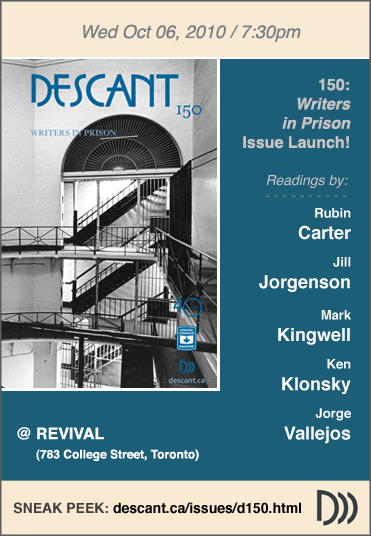
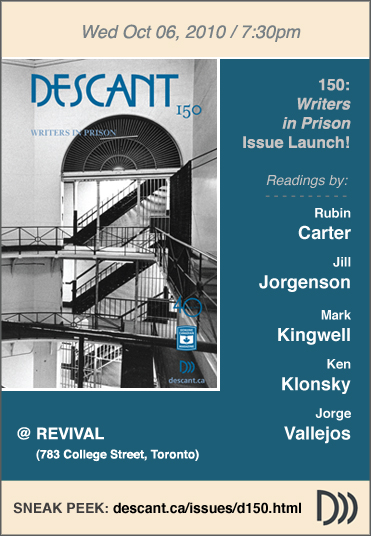
Come see Black Coffee Poet read his poetry tonight at the launch of Descant 150: Writers in Prison.


Posted in Poetry, Uncategorized | Tagged , , , , , , , , , , , | 1 Comment

TO LOVE A PALESTINIAN WOMAN

To Love  A Palestinian Woman

By Ehab Lotayef

Reviewed By Jorge Antonio Vallejos

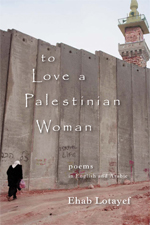
The looming wall separating freedom from captivity is the cover of Ehab Lotayef’s collection of poetry To Love a Palestinian Woman.  Many talk of “the wall”, many deny it’s existence, and many live behind it.  It’s not the focus of Lotayef’s book but a cover is what attracts a reader’s attention.  Seeing a small Palestinian woman walk beside the now famous wall, it being five times her height, and a watchtower standing even taller, you understand why the author chose this as the first image you see.

Not enough is written about book covers; you often hear the old saying advising people to look past them to really see the meat of a book’s pages.  Lotayef not only uses a photo to attract his readers, unlike most poets he keeps his readers engaged with gorgeous photos taken by him, a multidisciplinary artist, throughout his collection.

Lotayef’s poem Rachel, about deceased peace activist Rachel Corrie, is placed beside a photo of two tall slabs of “the wall” sticking out of dirt.  As they stand tall you are reminded of the person Lotayef writes about; how Rachel stood in front of a bulldozer in 2003, on earth, like the concrete Lotayef chose to photograph, before being crushed by the Israeli army in front of a home in Gaza.

The poet’s homage to his fellow activist is more the asking for guidance, and him giving thanks, than anything else:

Stretch out your hand

and pull us out of this despair

Show us the path

How can we find the will to dare?

Rachel, written March 17, 2003, shortly after Corrie’s death ends respectfully:

You gave us hope—Thank you, Rachel.

The poem Streets describes the sad life of many in this unjust world: child prostitutes, homeless people, cold nights, fear and murder.  It is paired alongside the photo of man with a hard stare, a gun in his left hand, and a view of Iraqi streets behind him.  Lotayef writes:

A child who died and left a wish

A foreign hand on a maidens flesh

A sign that sweeps

Fear that slays

A man, the gun to which he prays

Uranium shifts the focus back home where many injustices happen, in this case, on First Nations Land.  It’s a tribute to activist Bob Lovelace, his wrongful incarceration, hunger strike, and continuous fight to keep Indigenous land safe from destruction. 

Lotayef uses lots of repetition and rhyming.  He is strongest when using neither. The last portion of the book is written in Arabic with translation provided.  As the title suggests, there are love poems in Lotayef’s collection: Today I Shall Write, inspired by Pablo Neruda’s Tonight I Can Write, being the most beautiful. Lotayef also asks important questions while providing common sense answers:

How can you kill the suicide bomber?

Give her justice

She’ll defuse

Many of the poems are powerful as are the photos Lotayef has included in the book.  What lacks are descriptions of people rising to adversity, surviving, and finding the positive within the darkness that surrounds them.  Such stories, images, and people do exist.

The wall, guns, death, and despair are one part (a very large part) of the occupied Arab world.  Lotayef is sincere, and writes well, but he could write about much more and take many more photos. 

Tune in to Black Coffee Poet Wednesday October 6, 2010 for an inclusive interview with Ehab Lotayef, author of To Love A Palestinian Woman.

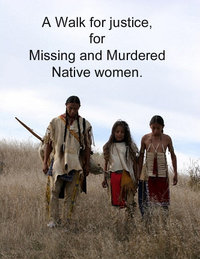
Join the march to STOP VIOLENCE AGAINST ABORIGINAL WOMEN Monday October 4, 2010 at Queen Park, Toronto, Ontario 4:30 PM.

Join the vigil to honour and remember Canada’s MISSING AND MURDERED ABORIGINAL WOMEN on Monday October 4, 2010 at Allen Garden, Toronto, Ontario 7pm:


Posted in Poetry | Tagged , , , , , , , , , , , , , | Leave a comment

ZAINAB AMADAHY READS HER POETRY

I met Zainab in 2005 at an Indigenous solidarity meeting.  We immediately connected. The past five years has seen us attend many political events together, engage in long conversations on the phone and over coffees while discussing mixed race identity, Indigenous issues, the activist scene, and of course, writing.

Last March (2010) Zainab showed me her true friendship as she was one of the few people who stood by me after I wrote a controversial article critiquing problematic practices in Toronto’s activist community: http://canadiandimension.com/articles/2841/  

Many people, (‘friends’, lovers, acquaintances, and fellow ‘activists’), stopped talking to me after the article was published.

Zainab is a strong friend, writer, activist, and woman of colour.  Please enjoy her poetry.  

Tune in to Black Coffee Poet next Monday October 4, 2010 for a review of “To Love A Palestinian Woman” by Ehab Lotayef.

Join the Sisters and Brothers in Solidarity – A Walk for Justice for Missing and Murdered Native Women to STOP VIOLENCE AGAINST ABORIGINAL WOMEN IN CANADA next Monday October 4, 2010 4:30 pm, Queens Park Toronto. 


After the march join the Sisters in Spirit Vigil Toronto to honour the lives of missing Aboriginal women in Canada at Allan Gardens (the corner of Carlton St. and Jarvis St.), Toronto, ON, 7 – 9 pm.


Posted in Poetry | Tagged , , , , , , , , , , | 1 Comment

INTERVIEW WITH ZAINAB AMADAHY

Zainab Amadahy is a writer and activist of African American, Cherokee and European heritage.  Her publications include the novel Moons of Palmares (1998, Sister Vision Press) as well as an essay in the anthology Strong Women’s Stories: Native Vision & Community Activism, (Lawrence & Anderson, 2004, Sumach Press).  

Most recently Zainab contributed to In Breach of the Colonial Contract (Arlo Kemp, ED) by co-authoring “Indigenous Peoples and Black People in Canada: Settlers or Allies”.  Many of her recent articles can be found on rabble.ca.  

As an artist and activist based in Toronto Zainab has worked with a variety of organizations to support decolonization, social justice and First Nations struggles. 

BCP: Why did you start writing poetry?

ZA: I actually started with lyric-writing for my own songs as an artistic experiment.  It was great because I had no expectations of becoming very good at it.  I just had something to say and thought that, because I listened better when the message was musical, others might feel the same.  This lack of expectation freed me up.  It was at a time in my life when I was exploring and growing and evolving and I wanted to share some of what I was experiencing.  So I wrote half the songs on Spirit Wind’s debut CD Breathing the Wind.  The response was encouraging.  I learned I was more of a lyricist than a musician, though.

BCP: What is your writing process?

ZA: It has changed over the years.  Used to be, I’d come at it from my head, wanting to communicate ideas, influence people’s thinking, educate and so on.  I was communicating head to head.  It wasn’t very heartfelt, although I felt strongly about what I wrote and am proud of my non-fiction, issue-based publications.

Nowadays my writing starts from a feeling place, whatever the genre.  I generally experience a strong emotional response to something and feel the urge to share it — AND in the process, I usually transform that feeling into something hopeful, positive and wondrous.  Or at least I try. 

In terms of the mechanics, I like to plan.  That’s where the meat of the work is for me: outlines, character profiles, charting the journey.  Even with poetry, I’ll ask myself questions like: “Okay, this is what you’re feeling now, what do you want to say about that and where do you want to take it?  Why do you care?  Why should other people care?  What feelings do you want to have by the end of this poem?”  It makes the actual writing easier.  I don’t always stick to my skeletal framework but it helps the flow. 

BCP: Has writing poetry informed your other writing?

ZA: Absolutely!  Non-fiction, songwriting and poetry have better enabled me to write from the heart, expose my vulnerabilities and share myself in a way that hopefully touches others.  This has influenced my non-fic for the better.

BCP: Is it hard to juggle writing in different genres?

ZA: Not for me because I LOVE to write and I LOVE stories.  In fact, I think juggling is easier than not.  In one day I’ll write 5 pages of my novel and have no more to give to it.  But two hours later I’ll be able to focus on another writing project, seeing it through fresh eyes because I haven’t worked at it for a while.  If I have to put a project down for a month I don’t stop writing, I just focus on another project for a time. 

I enjoy learning more about how to write in different genres and experimenting.  I’m always excited about what can happen.  For example, in working on a non-fic article I might find an inspiring idea for my novel, and then a character in my novel might have a song to sing …  on and on it goes.  The trick is to make sure I finish my projects, which I seem to manage once in a while. 

I remind myself every day how privileged I am to have the time and resources to write as much as I do.  My life hasn’t always allowed that and certainly, when I think about writers in other situations, I realize how blessed I am to have this opportunity.

BCP: You are a fan of Maya Angelou.  What do you like about her poetry? How has she influenced your writing?

ZA: First and foremost for me, Maya Angelou is a woman who came out of some seriously difficult challenges and not only wrote about them in honest, heartfelt and inspiring ways but used those experiences to grow wise and more loving.  She influenced me as a role model, as a woman who wasn’t afraid to write about both racism and sexual violence.  She wasn’t afraid to challenge white AND Black men on their sh*t at a time when there could be serious consequences for Black women who spoke out.  In doing so, she broke ground for a lot of us who came up after her.  I identify with her writings and with her journey as a writer/Elder.

BCP: Much of your writing is political.  Do you also write about the fun stuff of life?  Why or why not?

ZA: Actually, most of my PUBLISHED writing is political but only a few of my songs and poetry could be considered as such.  I’ve written love songs, poems dedicated to my children (who are my greatest teachers), songs about spiritual transformation, humorous poems  …  None of my songs on the Breathing the Wind CD are political.  And my speculative fiction novel Moons of Palmares may have political undertones but it’s really just a story about characters being transformed by their relationships with each other and their planet. 

As for the fun stuff, everything I write tends to have positive, happy or uplifting endings (even non-fic) because I care about leaving people hopeful.  Words, whether spoken or written, have conjuring power.  Why conjure up more negativity?  What purpose does that serve?

At the same time I don’t believe that being in denial about some scary stuff going on in the world is useful.  I think our hope and positivity actually have greater impact when we hold on to them in the context of some tough realizations and difficult history.  If life was la-di-da easy and happy all the time what would our hope and positivity count for?  It’s in coming out of challenge, trauma and tragedy that we truly appreciate love, peace and laughter.

BCP: Non-accessible academic writing, long and boring speeches, and yelling slogans on a megaphone are given precedence over poetry in the activist world. What role do you see poetry having in activism?  How can poetry get more than a quarter of a page in a magazine (if at all) and be used as more than an opener at events?

ZA: I think what activists increasingly understand is that all our thinking actually comes from the heart.  The Elders are very clear about that.  Even scientists will now tell you that the emotional centres of the brain are always engaged in decision-making and so-called rational thinking processes.  Feelings play a role in activist discourse as well.  You can see this very readily in the Tea Party movement but that’s an example of angry/fear-based activism.  Unfortunately a lot of anti-colonial, lefty activists are also pretty angry/fear based, whether they use arts processes in their activism or not.

That, for me, is the crucial issue.  I think that what can make poetry and other artistic disciplines powerful in terms of articulating visions, encouraging actions, educating, etc. is that they can inspire us to allow love to motivate what we think, say and do.  I’ve heard activists say they do what they do because they hate and are angry about something.  My response to them is that there’s enough of that in the world and look where it’s gotten us.  It doesn’t take a particularly creative or talented person to spread more hatred, anger and fear.  I ask what’s behind those feelings.  Fear is the source emotion for hatred and anger.  Fear is based in a realistic concern that our basic needs aren’t going to be met.  And love is a basic human need, as essential as food and water to our survival. 

Offer love as a motivation for forming community or challenging injustice or writing and see what happens.  Act like you care for life – all life – and see how many people start to listen to the message.  I think the activists and academics that role model caring concern have the most sustainable successes AND derive the most joy from their work. 

So, poetry and other forms of artistic expression can be very helpful in terms of movement building and inspiring social change. 

BCP: Have any Aboriginal poets helped your activism as an Aboriginal person fighting for Aboriginal rights?

ZA: Just to clarify, these days I identify as an African American woman with Tsalagi (Cherokee) ancestry.  I could go on as to why but that’s an issue for another interview.  As for my influences, two stand out. 

1)  Buffy Sainte-Marie.  Her lyrics are truthful, powerful, insightful and, fundamentally, loving.  The first time I heard Universal Soldier a veil before my eyes was lifted and I felt my personal responsibility in matters of war and peace.  Her songs Anna Mae Aquash and Bury My Heart at Wounded Knee shook me to my core.  These lyrics challenge not only those in power but the rest of us to care and act.

2)  Lee Maracle, whom I hope you will someday profile on the blog.  Again, her work is honest and challenging and raw and loving all at the same time.  It’s so layered that every time I re-read it I come to a deeper level of understanding and feeling.  With Lee I never fail to learn something or see things in a new way.  She’s one of the few people in this world who blow me away. With many writers I can appreciate the way they say what they say, the unique perspective they offer, but I’m not always surprised by the content; I don’t experience it as anything new.  But Lee will write, say and do things I never expect, never see coming.  I love that.

In both cases these women blazed trails for the rest of us.  To this day they remain humble, nurturing women who continue to help up-and-coming writers, offer their time to worthwhile causes and care deeply for community. 

BCP: Palestinian rights are very important to you.  Has reading the poetry of Mahmoud Dharwish helped you in understanding the Palestinian struggle?

ZA: What I have read of Dharwish’s work truly moves me.  The depth of his understanding of life and struggle leaves me awestruck.  Though he wrote about Palestinians, he, like many poets, wrote and spoke universal truths.  At the same time, he reminds me of the unique aspects of the Palestinian struggle.

I think there are many people who want to draw parallels between the struggles of Palestine and those of Indigenous peoples on Turtle Island, and there are many, but I celebrate the differences as well.  Not to be divisive, but to be clear and honest and honourable.  I can’t support struggles if I’m unclear about them.

Palestinians among other Arab peoples have a long and glorious history of using both the written and spoken word as a tool of spiritual and social liberation.  Poetry holds a revered place in Arab culture and reminds us what has been lost in the English-speaking world.  Dharwish motivates me to grow and evolve and use any tool at my disposal to make that happen.

I read a quote of Dharwish’s where he said that he believed that poetry only changes the poet.  This might sound like cynicism or disillusionment but I believe he understood that each of us has to take responsibility for our own spiritual evolution.  There are roles that poets can play but in the end our lives are for us to create.  That’s a powerful realization.

BCP: As someone who sings and writes, do you see poetry and song related?  Has one helped the other?

ZA: I’ve turned some of my songs into spoken word poetry and one would think it’s only a matter of speaking lyrics but it’s not that simple at all.  They differ in structure a bit.  Lyric-writing has to fit musical rules and rhythms; has to follow the energy of the particular music, for example.  Plus, these days our ears are trained to expect rhyming (or approximate rhyming) in song.  So creating within that structure can be either challenging or liberating, depending on my mood. 

On the other hand, poetry is much less structured, though it certainly needs rhythm.  At the same time that’s not as easy as one might think because then you have the challenge of not having structure or rules or templates to rely on.  It’s like free fall.  Scary and exhilarating all at the same time.

Both are challenging and fun to write, though.  Either way, I think the key to enjoying the writing process is to feel passionately about something you want to say.

BCP: What advice do you have for young writers?

ZA: One of my sons is an aspiring writer and I urge him to live life to its fullest.  Take emotional and physical risks.  Travel or explore while standing still.  Find people and things to care passionately about.  Get your heart broken.  Experience as much as you possibly can.  It will feed your writing and enhance your enjoyment of life.

Tune in to Black Coffee Poet Friday October 1, 2010 for a video of Zainab reading her poetry.

Come see Black Coffee Poet read at the launch of Descant 150:


Posted in Poetry | Tagged , , , , , , , , , , , , , , , , | 1 Comment

JUST GIVE ME A COOL DRINK OF WATER ‘FORE I DIIIE

Just Give Me a Cool Drink of Water ‘fore I Diiie

By Maya Angelou

Reviewed By Jorge Antonio Vallejos

Titles usually give a sense of what a book is about.  One of my mentor’s, Lee Maracle, has taught me to think about the title of a book before opening it.  Together, Lee and I thought about the classic Go Tell It To The Mountain by James Baldwin. 

“What does the title say to you?” said Lee.  Sitting in her office I immediately said, “Slavery.”  Running from captivity, praying to Creator, sending messages through secret networks, all came to mind.  I could have been wrong but that’s what came to me.

With Maya Angelou’s collection of poems Just Give Me A Cool Drink Of Water ‘Fore I Diiie I thought about similar things: people kidnapped and forced to cross an ocean while barely fed; working the field with little or no water; the thirst for freedom; the thirst for change after supposed freedom was achieved. I am also reminded of some of the original people of the stolen land called Canada who live on reserves with no clean drinking water available in what is supposed to be a first world country.

The title also has a hint of how Angelou’s people talked in her time: “’Fore”.  Reading the title without knowing who wrote it, some readers could guess what region of Amerika the author is from.  They could guess that it was a person of colour.  They could guess what types of stories are enclosed in the cover.

Angelou’s emphasis on the last word “Diiie”, the tripling of the letter “I”, the prolonging of the word’s end, taking three times the time to say the word let’s the reader know there is serious material soon to be read.

Split in two sections, When Love Is A Scream of Anguish and Just Before the World Ends, Angelou’s collection is very short, 46 pages in all, and hard hitting.  It reminds me of the saying, “Dynamite comes in small packages”. 

The thirty-eight poems that make up the collection explore race, relationships, skin politics, poverty, addiction, and class.  Angelou uses slang, repetition, striking titles, and clever lines to keep the reader flipping pages. 

They Went Home, the first poem in the collection, is autobiographical (like many of Angelou’s poems).  The poet tells of the many men she has dated, the failed relations with them, and racism, body image. 

A short poem, the title says it all: they (men) went home.  Sad, true, short and bitter, the poem could and should be used in Women’s Studies and Equity Studies classes. 

The men went home for various reasons.  Maya’s skin, culture, and size were good enough to be enjoyed indoors, in secret, in top-down form, not uncommon in those times, and sadly, not uncommon now.

“Never once in all their lives,

had they known a girl like me,

But…they went home.

I had an air of mystery,

But…they went home.”

“But”, a word used as objection and opposition, is used well in They Went Home.  Angelou was intelligent, fun, sexy, but…not good enough.

Today mixed-race relationships are still frowned upon in many places.  Toronto, a place referred to as a melting pot and multicultural and talked of as a Utopia, still sees much of what Angelou writes, as does mainstream culture.

Recently, Elle Magazine was discovered to have digitally lightened the skin tone of black actress Gabourey Sidibe for their front cover.  Have things really changed?  Is black really considered beautiful?  What type of black person is considered beautiful?  What bodies are seen as beautiful?

Most men in our society look to the super model as a woman who is attractive: thin, tall, white or fair skinned. Bigger women and women of colour are put to the side, and when many men do date them it’s for fun, a short time, and often in secret such as in Angelou’s poem.  The poet ends with:

“My praises were on all men’s lips,

            they liked my smile, my wit, my hips.

            they’d spend one night, or two or three, 

But…”   

Angelou explores the romaticism of something few talk about in the way she does: addiction.  Music, movies, and books romanticize the life of gangsters, few explore the life of a junkie the way Angelou does.  Her poem Letter To An Aspiring Junkie reminded me of a high school class I was in where a young and confused boy shared with the class that being a junkie would be a fun life.  He needed Angelou’s poem.  Many high-school students still do.

“Let me hip you to the streets,” says Angelou in her opening line.  She tells her reader that she is informed on the topic she is writing about.  It’s not arrogant; it’s real, it’s experience on the page.

“Nothing” is repeated throughout the poem.  Both correct English and slang are used: “happening” and “haps”.

“Nothing happening,

Nothing shakin’…

No haps man,

No haps.”

There is nothing glorious in the life of addiction.  Whether you are a street walking sex worker, panhandler, thief, or high-class business executive, addiction isn’t fun.  There is nothing happening that is good.

Angelou writes of “tomorrows gone up in smoke”; “riding that cold, white horse”—heroine; “a worn out pimp”; “African dreams on a buck-and-a-wing and a prayer”; all scary realities used to scare an aspiring junkie like the boy in my high school class.

Angelou mixes slang, poetic device, real life, and the verbal/written slap of a mother (this I know very well) disciplining a child, her child, everybody’s child:

“That’s the streets man,

nothing happening.”     

In No No No No Angelou uses metaphor to explore the Vietnam War, slavery, and segregation. 

The images left after reading the poem has you saying its title.

The “crackling babies in napalm coats” Angelou writes of live today in Iraq, Afghanistan, and the other 31 wars happening across the globe today.  She accurately holds “America’s White Out-House” responsible and has the book’s title embedded in the poem: “JUST GIVE ME A COOL DRINK OF WATER ‘FORE I DIIIE”.

The entire collection is almost without flaw.  Angelou’s reputation is deserved and earned.  So is my critique of her homophobia.  While pointing out the difference between Black and white families in her ajoined poem The Thirteens (Black) and (White) Angelou compares the draft, addiction, and poverty in a Black family with a white rich family having queer kids.

“Your cousins taking smack, Your Uncle’s in the joint” is juxtaposed with “Your daughter wears a jock strap, Your son he wears a bra.”  These have no relation to each other in the way Angelou uses them.  Queer life is vilified and used as a weapon to point out the problems a family might have.  Aspects of queer culture are made the problem in Angelou’s poem when compared with the problems of addiction and incareration in the Black community.  To use her own words: big No No No No.

Many of Angelou’s poems hit hard and should be taught in high school and university English classes: Riot: 60s, My Guilt, The Calling of Names, On Working White Liberals, Sepia Fashion Show, and Harlem Hopscotch.

Some of Angelou’s poems are fun to read.  Many are not.  Anger arises when you see her critique of the problems she wrote about thirty and forty years ago still apply today.  You might just need a cool drink of water at your side while ingesting Angelou’s words.   

Tune in to Black Coffee Poet next Wednesday September 29, 2010 for an inclusive interview with activist, poet, song writer, and Sci-Fi novelist Zainab Amadahy. 


Posted in Poetry | Tagged , , , , , , , , , , , , , , , , , , , , , , , , , , , , , , , | Leave a comment