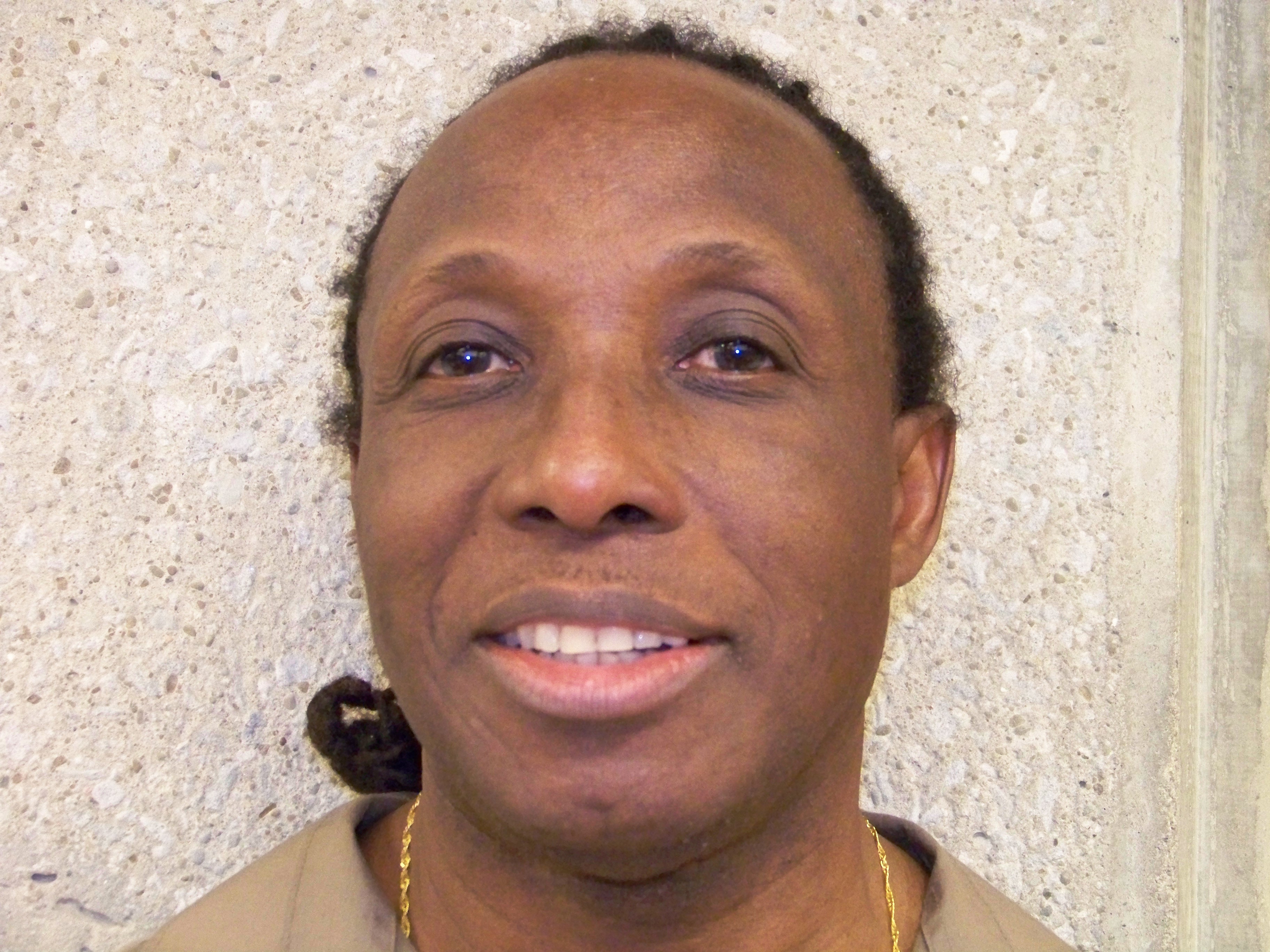
INTERVIEW WITH WITH JAMAICAN POET RUDYARD FEARON

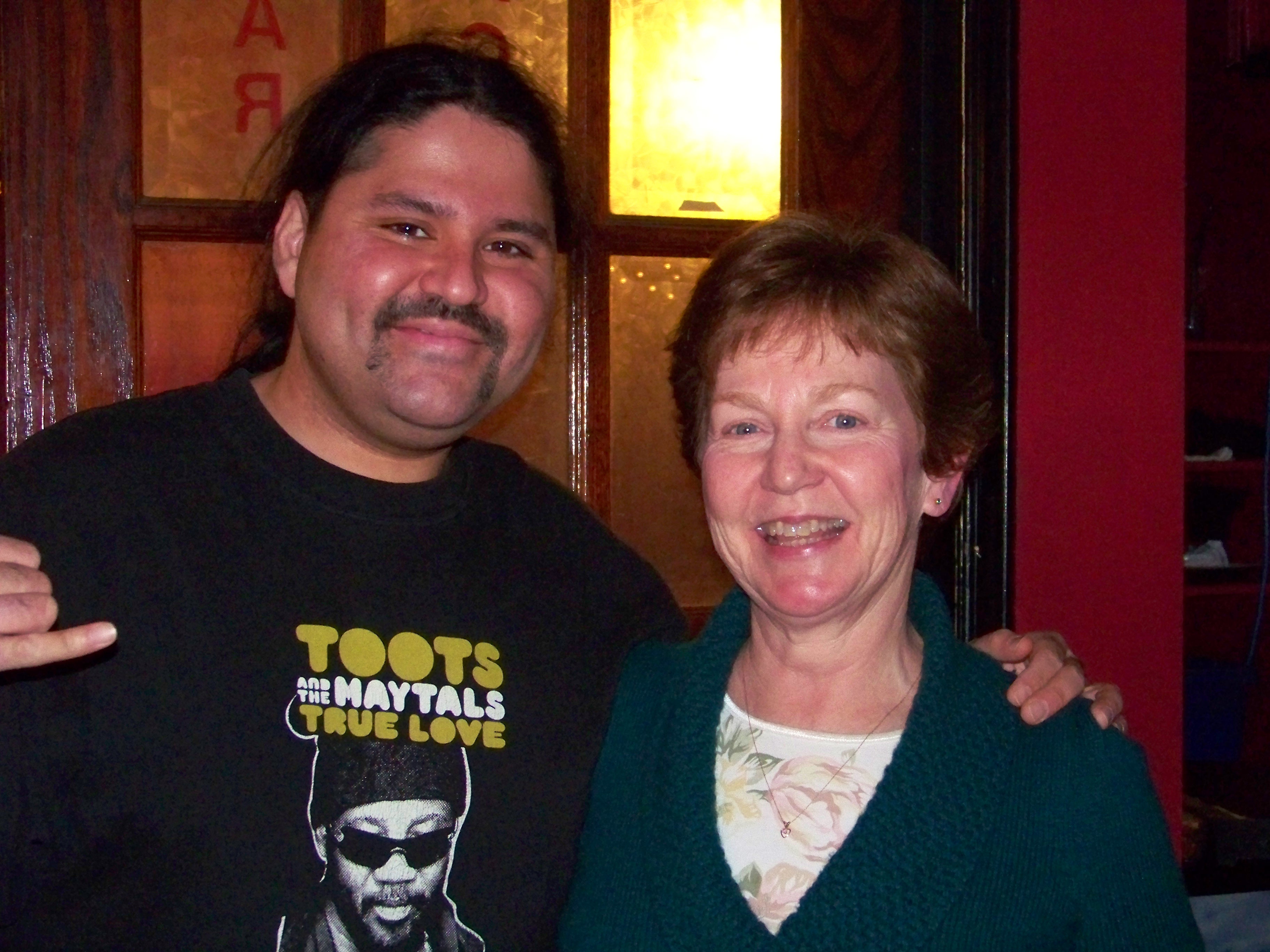
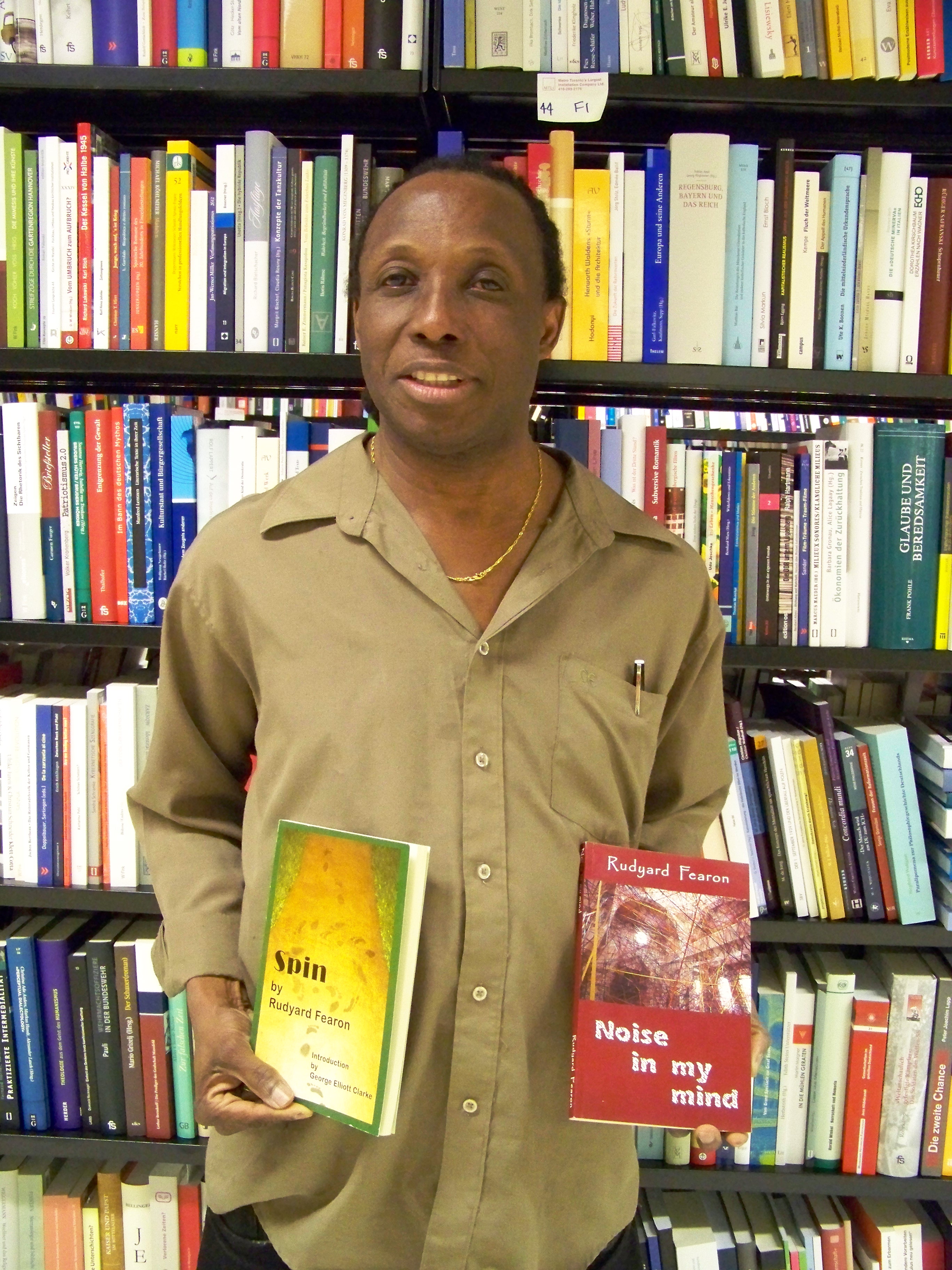
Working at the University of Toronto’s Robarts Library, Rudyard Fearon is a long way from where he was born in Clarendon, Jamaica. Fearon came to Canada in 1974 and began working at the library in 1982. That is where he found fertile ground to develop as a writer.

Author of two books of poems: Noise in my Mind and Spin.  Fearon is working on a third collection of poems at the moment.

Writing in a minimalist style, the Jamaican poet says a whole lot about our society.

BCP: Why poetry?

RF: Poetry is a form of reflection for me; therefore, poetry is only pure form of dialogue that can express my thoughts.

BCP: What is your process?

RF: I write when I get inspired. I find writing without inspiration to be phony… for me; such as when someone asks me to write on an event in one’s life; birthdays is a good example.

BCP: How long have you been writing poetry?

RF: I have been writing poetry since I was nineteen. I got my first job after high school, ironically, enough in a library. That’s where I started reading a lot of poetry. That was in Jamaica.

BCP: Who are your influences?

RF: In Jamaica, at the time, the poets that caught my interest were Langston Hughes, Claude MaCkay; Robert Frost the most. Now I tend to love the poetry than the poet except for a few exceptions such as Shakespeare, and John Donne.

BCP: Your poetry is emotional, honest, and stimulating. What do you try to convey to your readers?

RF: I suppose those attributes come from the strong emotional, philosophical currents that run through me when I sit down to write. I can not write about anything unless I truly have something to say.

BCP: There are lots of Christian references in your poetry. Does your spirituality play a part in your writing?

RF: Spirituality is akin to poetry. They are both search for truths.

BCP: Do you see poetry as a form of prayer?

RF: One of the greatest forms of poetry is the bible. It is written in verse, in songs. I first learn to read, actually, by reading the Psalms for my grandmother.

BCP: Lots of your poems are about colonialism and racism. Do you see poetry as a form of activism?

RF: Coming from an oppressed race it is inevitable that activism would surface in my poetry. How could it not? We are not a happy people; I leave romanticism to happy poets.

BCP: Much of your poetry is minimalist. Is it harder to write short poems as opposed to long poems?

RF: It is the result of keen intense thinking. I want only the pure essence of philosophical thought; not the rhetoric.

BCP: You piece Shame is hard to define in terms of genres. Is it a poem? Is it a short story? They say poetry and short story are cousins. Do you agree?  Shame seems to back that statement.

RF: When I set out to write I never know what route a poem is going to take; in this particular case, it mimics the short story genre mainly because it isn’t written in verse, but it also maintain its literary content to be still called a poem, because it prompts thinking such as who are those three men? What are their connection to the character Steve?  Are they responsible for his downfall?  Just as a literary (poetic) prose would do.

BCP: You help run the Art Bar Poetry Series. How did you get involved? Why did you get involved?

RF: Actually, I was shocked to be asked join such an esteemed group. I joined because it was a way to contribute to the development of Canadian literature by helping provide a stage and also keep close contact with the literary community.

BCP: You work in the biggest library in North America. What’s it like to be surrounded by hundreds of thousands of books? Do you buy books even though you have so many are your disposal? Do you see a sad ending to real books with all the electronic books coming out?

RF: It is very inspirational and educational at the same time. To be honest, I don’t buy books much…what’s the point when any book I want to read is at my finger tips.

BCP: What are you working on now?

RF: I have written some great children stories but have not able to publish them because of a lack of funds. I have not won a grant. It is like I am blacklisted. LOL.

BCP: When do you expect to have a new collection of poetry published?

RF: I just completed a new manuscript of poetry, A Different Way, and would love to have it out as soon I can find some funding for it.

BCP: You self publish your work. Why? What are the advantages and disadvantages of self publishing? Where do you see the publishing industry going in terms of poetry?

RF: At first it was the only means to get my work out, but I soon I realized it gives me the room to be more creative in expressing my style of art. The downside to all this is the lack of adequate distribution. If it wasn’t for government grants to publishers, I think the industry would collapse because sales revenue is minimal.
BCP: Do you see a sad ending to real books with all the electronic books coming out?

RF: I think some books will still be published in their classic form; but magazines, most journals, newspapers, and easy read novels will not.

BCP: It’s National Poetry Month. What does that mean to you as a poet?

RF: It is awareness of poetry to the public; but I frankly I don’t think the public cares very much. Sad to say…poetry tends to supported by poets.

BCP: What advice do you have for other writers out there who are having difficulties with their writing, or who have yet to see their work in print, or who are afraid to perform their poetry?

RF: Learning the craft of writing is a start…then reading a lot of good poetry. We are living in an age of performance art so attending readings is beneficial too in that sense.

To buy Rudyard Fearon’s books see rudyardfearon.com.

Tune in to Black Coffee Poet Friday April 15, 2011 for a video of Rudyard Fearon reading his peotry.
Posted in Poetry | Tagged , , , , , , , , , , , , , , | 2 Comments

NOISE IN MY MIND

Noise in my Mind

By Rudyard Fearon

Reviewed by Jorge Antonio Vallejos

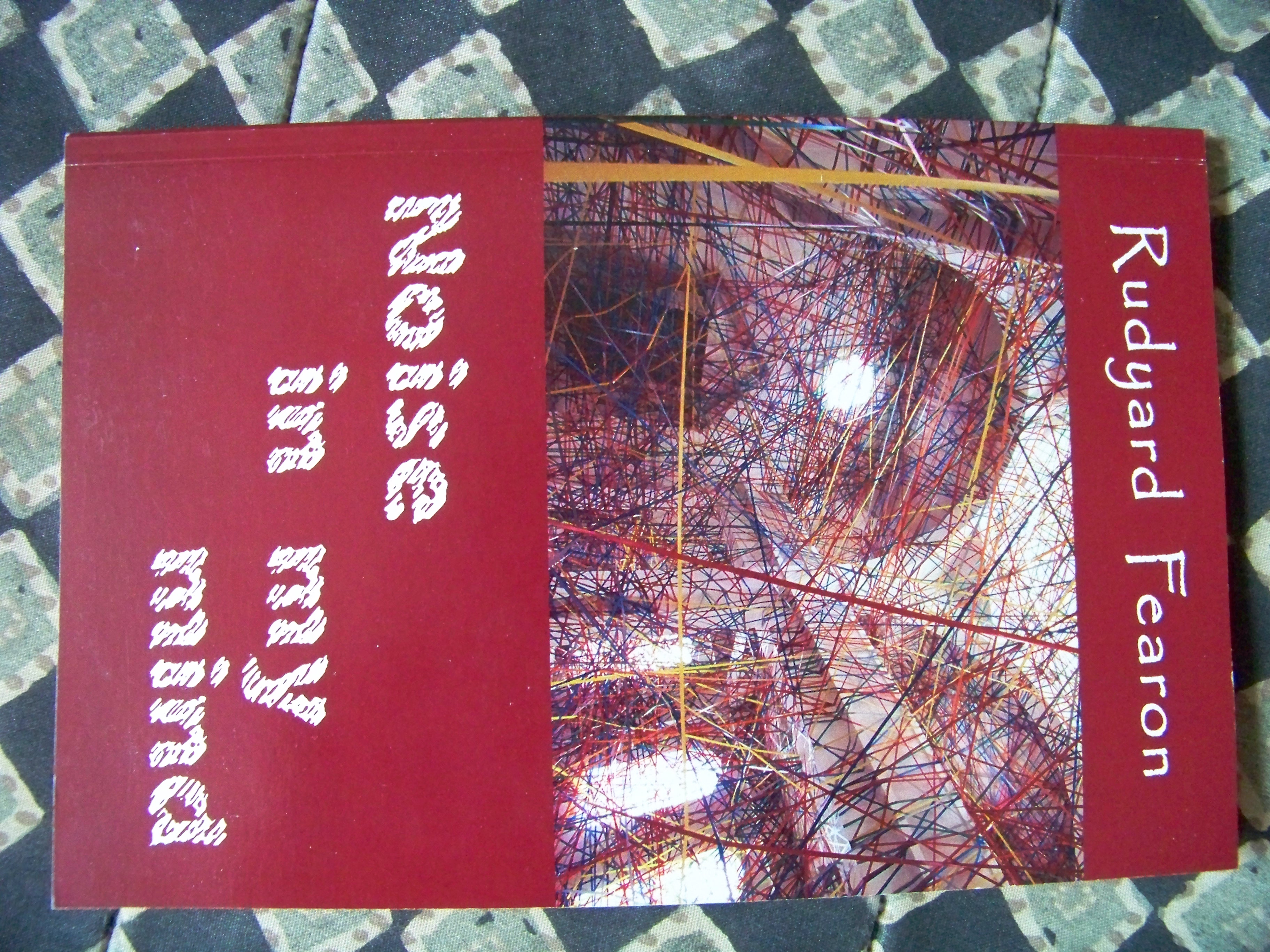
We all have a noise in our mind at some point.  That thing we are thinking about, contemplating, frustrated over.  It buzzes in your ear and on your brain.  Rudyard Fearon’s Noise in my Mind is a collection of the thoughts that have the Jamaican poet up at night writing after a lot of thinking.  In his minimalist style the talented scribe says a lot with very few words.

Working at a library by day Fearon puts pen to pad at night.  He stays at work after his shift ends to read, write, re-write, and better himself at his chosen craft.  And you can see it in his short poems made up of five or so lines that leave you thinking for five hours.

In The Better Way Fearon explores a reality that many hope never to witness: suicide on the subway.  You always hear rumors about daily jumpers; the codes spoken over the loud speaker get people thinking that every “emergency” at another station means death; and a couple of times a year the cover of the newspaper has a story about someone deciding their end, or worse, the end of another.

Fearon writes

“so little is said

of the man who LIFE

ends in a subway.” 

Fearon spells life in capitals and points to life ending the person as opposed to the person ending their life.  Which is it?  Is it both?  Can it be both?  Is it one or the other?  Is Fearon exploring a spiritual idea?  Is Fearon slashing the possibility of spirituality taking play in such sad situations?

Fearon ends The Better Way with

“so little is said…

except in an alleyway.”     

Alleyways are empty, dark, and hold large trash bins.  Those that live in alleyways are society’s discarded and forgotten ones.  Forgotten like those who LIFE ends on the subway.  If the numbers are as high as people suggest how can you remember all those people?  Still, there’s a poet who writes into the night and has such peoples on his mind.

Most people have heard of, and know, the acronym DUI—Driving Under the Influence.  Have you heard of driving while Black?  Better yet, have you heard of what I like to call WOC—walking while of colour?  Certain peoples not of the dominant class get harassed by those who are supposed to serve and protect because of the way they look and dress.  Fearon has experienced this and shares one of these instances in Black Bud.  Writing in patua, his mother tongue (providing a glossary at the book’s end), Fearon shares what it’s like to walk while of colour:

“ah fraid fe walk pon street,

De way de cops dem a shoot,

Ah feel like black bud pon tree.” 

Fearon writes of being surrounded by six cruisers and questioned for no reason.  A woman from a window yells that she is watching what the cops are doing.  Fearon is let go.  Later that night a young Black man is not so lucky.

“me never did realize me luck,

‘Til me read de next day bout de Barnett bwoy dat dem kill…”

Many poets question society.  They explore their surroundings.  And they speak out against injustice.  Fearon is one such poet.  It could have been Fearon that the papers wrote about the following day.  Knowing this, the poet writes of how fragile life is and how certain powers prey on certain peoples.

Fearon ends Black Bud by giving thanks for not following the instinctual urge to run.

“Fah if me foot did obey me brain dat night…

Me wouldn’t live to tell yu me story!”

There is a certain responsibility that comes with being a poet.  More than being disciplined to write, there is the responsibility to share story and write them well and in a way that people understand.  Fearon knows to whom much is given much is required.  This is why we get to read his story of walking while of colour.

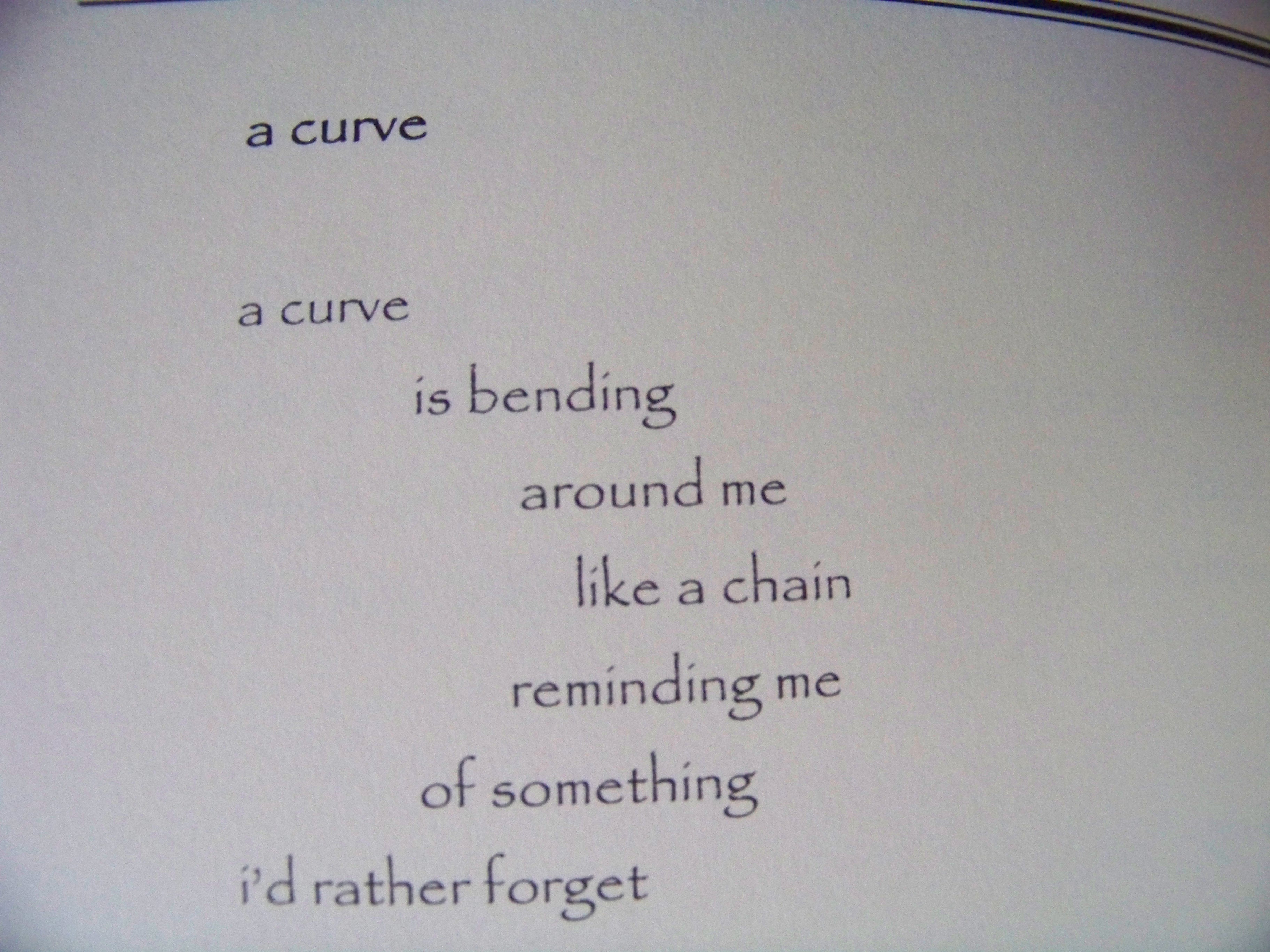
Good writers are good readers.  Fearon is a reader who displays his vast knowledge on the page.  In the spirit of those who came before him, Fearon’s poem A Curve follows E.E Cummings’ 1a) (a leaf falls on loneliness):

Noise in my Mind has much to share with all readers and lovers of the written word.  Fearon uses traditional styles as well as experimenting with language, sound and form.  More important, he leaves you thinking.  His hard-hitting poems resound in your psyche.  His soft lullabies have you re- reading.  Whatever he writes leaves some sort of noise in your mind.

Tune in to Black Coffee Poet Wednesday April 13, 2011 for an inclusive interview with Rudyard Fearon. 


Posted in Poetry | Tagged , , , , , , , , , , | Leave a comment

GOVERNOR GENERAL AWARD WINNER PAMELA PORTER READS “LAMENTO”

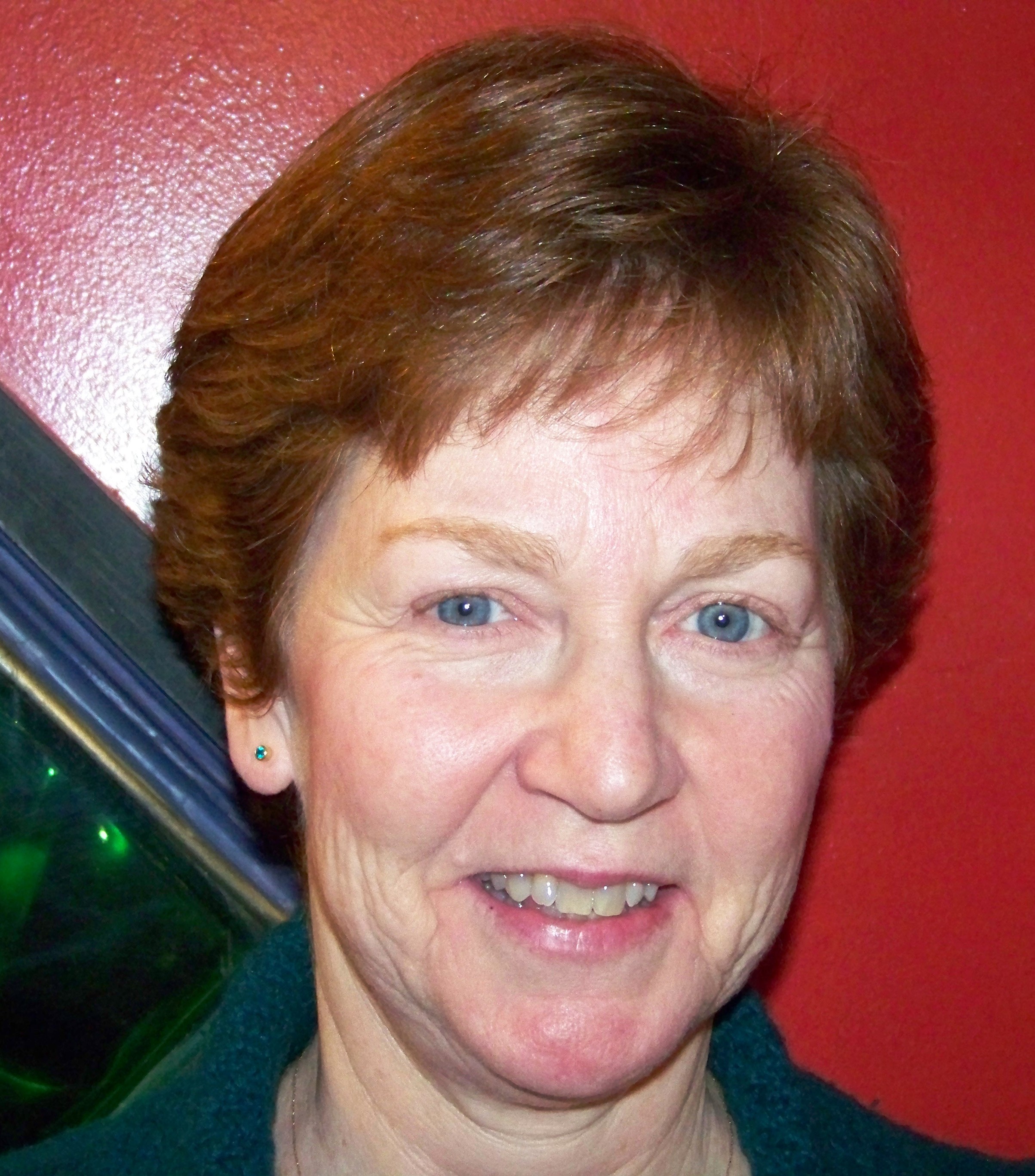
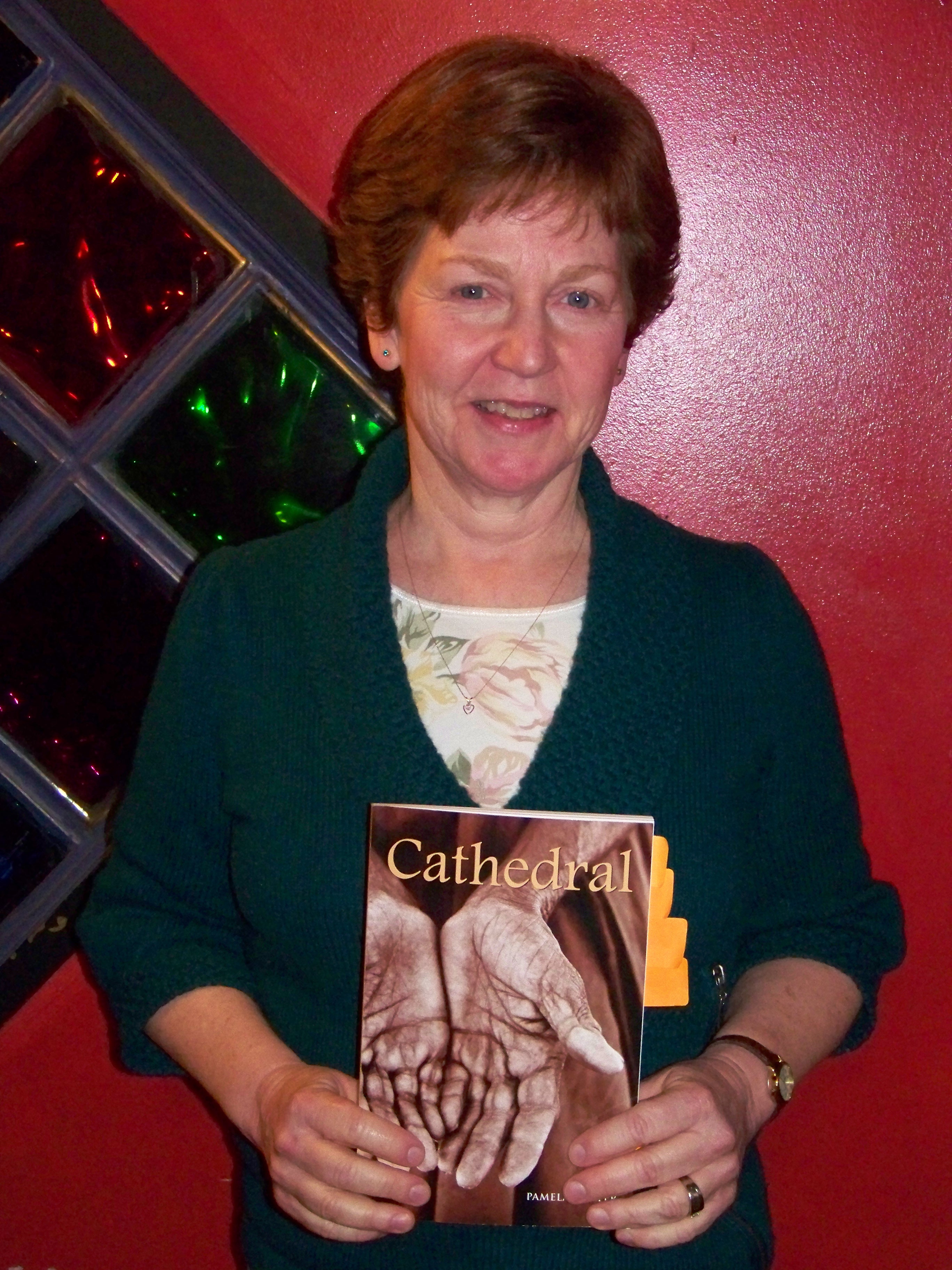
Winner of one of the biggest awards in Canadian literature (Governor General Award), Pamela Porter is a humble person.  Not letting her past achievements get to her head, Porter continues to work hard and soar as a poet.  

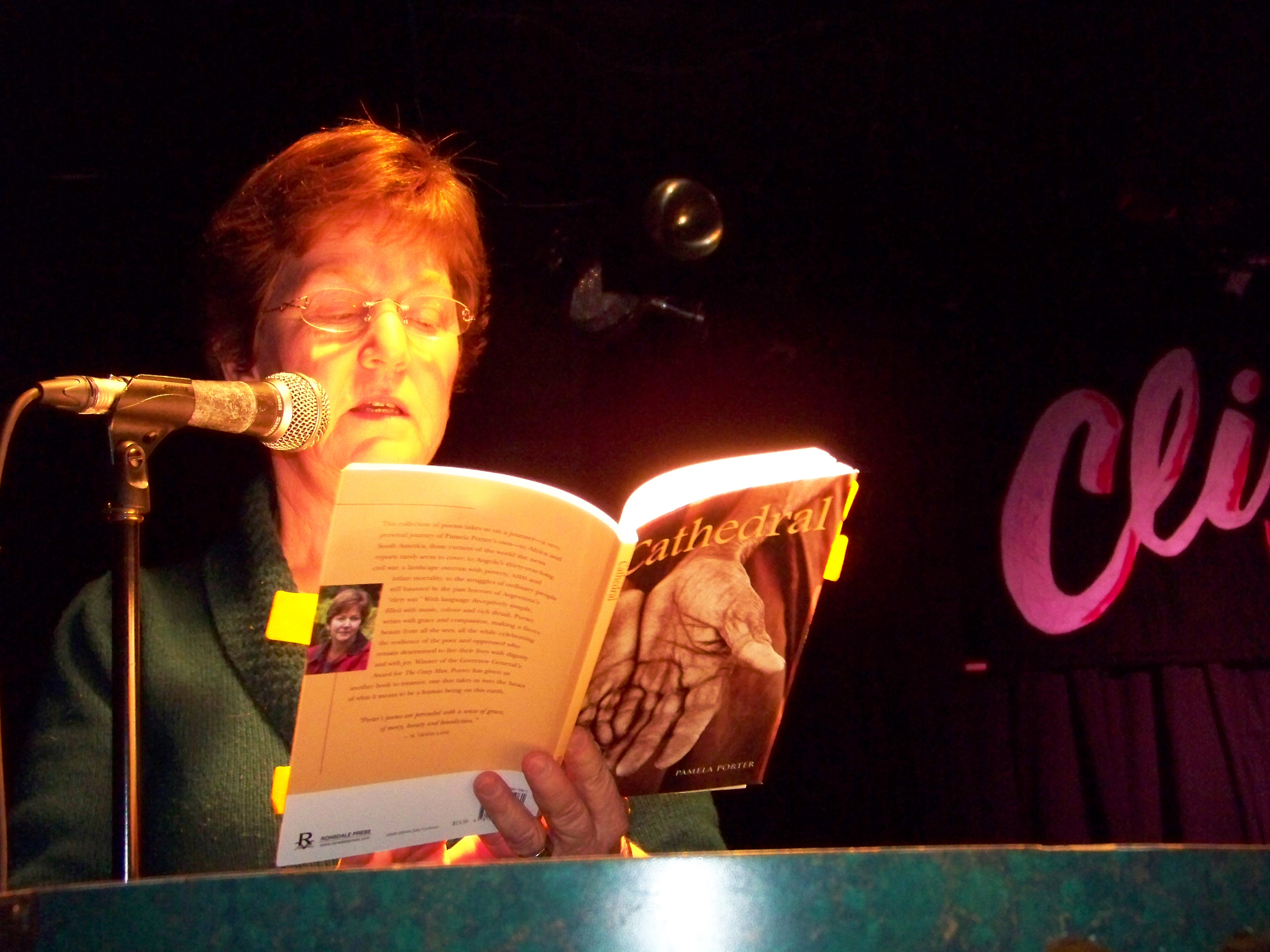
Meeting Porter was a pleasure.  Practicing patience, Porter walked to Christie Pits with me for a taping of her reading my favorite poem in her collection Cathedral: Lamento.

Enjoy Pamela Porter read Lamento.


Tune in to Black Coffee Poet Monday April 11, 2011 for a review of “Noise in my Mind” by Jamaican poet Rudyard Fearon.

Posted in Poetry | Tagged , , , , , | Leave a comment

INTERVIEW WITH GOVERNOR GENERAL AWARD WINNER PAMELA PORTER

Pamela Porter is the author of the multiple award-winning novel The Crazy Man, and two previous volumes of poetry: Stones Call Out, and The Intelligence of Animals.

Pamela Porter is now a sessional instructor at the University of Victoria and lives on Vancouver Island with her husband, children and a menagerie of rescued animals.

BCP: Why poetry?

PP: As an amateur musician as well as a writer, I find poetry is the sublime mix of language and music, of the music inherent in language.

BCP: What is your process?

PP: Often I first feel a restlessness, a dis-ease inside me.  I begin to wonder, what is the poem that wants to be born, and where will I find it?  If it’s morning, I go out and feed the horses and take the dog for a run, and sometimes the poem will well up at those times.  If it’s evening, I clean up the kitchen, then sneak off to my desk, and hope the rest of my family will forget about me.  I read other poets’ poems until my poem begins to show itself.  Then I begin to write by hand in a little book.  When the draft in the book becomes too messy to read from additions and crossed-out lines, I go to the computer. From that point on, the poem stays up on my computer screen until it’s finished.  Sometimes the poem lives on my screen for weeks.  By that time, other poems will have joined it.  It’s a continuous process.

BCP: How long have you been writing poetry? 

PP: I started writing poetry when I was fifteen.  You can imagine how awful my poems were at that age.

BCP: Who are your influences? 

PP: My first influence was really the Bible.  My family were stalwart  Presbyterians who considered it their duty to be in church, and to be seen in church.  My earliest memories are of hearing the King James Bible read aloud.  I learned to read at age five when my father held the hymn book down to my level and ran his finger under each word of the hymns which must have produced in me a rather odd vocabulary for my young age.  My second influence was Robert Frost. The Complete Poems of Robert Frost was the only book of poetry in our house.  My mother had received it as a gift.  It sat on a high shelf, and no one touched it.  One day, when no one else was home, I stood on a chair and pulled the book down, took it into my room and began to read it.  Now my influences are many and varied, but I lean toward those poets who make effortless music with language while still holding their humanity close.  Two who immediately come to mind are Li-young Lee and Lorna Crozier.

BCP: Your poetry digs deep and literally takes readers to places they have probably not been to: Angola, Guatemala, Argentina and many others.  What do you try to convey to your readers?

PP: I think the poet’s vision is to see the world again for the first time, and I try to help the reader see something, no matter small or large, as utterly new, as though we have all reverted back to childhood where everything holds the shock of the new.

BCP: There are several hints to Christianity in your poems.  Does your spirituality play a part in your writing? 

PP: Yes.  The mysterious, the “evidence of things unseen,” fascinates me.

BCP: Do you see poetry as a form of prayer? 

PP: Absolutely.  Call it what you like – prayer, meditation, focused attention—poetry is the close study and contemplation of the animate and inanimate that lives around us, and through poetry we examine our place in this world.  Poetry, like prayer, meditation, attention, changes us.

BCP: You received rejections for many years.  What kept you going?

PP: I realized I couldn’t imagine trying to live the rest of my life without poetry, and somewhere deep down, I think I believed fundamentally in my ability to be a poet.  I now understand how critical it is to believe in yourself at some level, however hidden, whether or not anyone else believes in you.

BCP: After 31 years of putting pen to pad you won the Governor Generals Award.  Was that the ultimate reward to years of reading, writing, submitting, and being rejected?  Did you have the feeling of “I finally made it”?  Or was having your first book published the most important time in your writing career?  Is there a most important time? 

PP: Winning a GG did feel like the ultimate reward, especially since the other laureates were people who had received other awards which were stepping stones for them on the way to the GG.  My stepping stones to the GG were the days spent in a library, writing alone on my one writing day a week because I had children to raise and horses to feed and dinner to cook, except for that one day when my family excused me to go chip away at this impossible dream of mine.  For that they should take some credit for my winning a GG.

BCP: As a Governor General Award Winner do you feel lots of pressure to live up to that title? 

PP: Actually I often get the kind of awed attention warranted to persons of some importance, and I rarely know what to do with that.

BCP: You earned an MFA in poetry and you have taught writing at different institutions.  MFA programs are hot at the moment.  Eight-hundred and sixty-three MFA in Creative Writing programs exist in the U.S which has led to much criticism in magazines such as Harper’s and The New Yorker.  Why did you pursue an MFA?  Why have you chosen to teach creative writing?

PP: I pursued an MFA because I wanted to get away from my suffocating parents, go as far away as possible and have some structured, instructive time to hone my writing skills.  It was a positive experience for me.  I think it’s odd that writing programs tend to be the butt of criticism when art and music programs are not.  It is widely accepted that if a young person has talent in visual art, or in piano or violin or voice, she or he should get to a good school to nourish that talent.  In my view, writing programs are no different.  Even if every writing student doesn’t become an award-winning writer, the programs nurture an appreciation for the art and the development of sophisticated readers.  It’s not considered a waste if one’s child studies piano for five years and becomes a moderately competent musician who then holds a deeper appreciation for classical music.  We would do better for ourselves if we conceded that writing programs also produce astute readers for those who do succeed in the art.

BCP: The poetry in Cathedral has lots on death and despair.  Is a lot of your poetry like that?

PP: Yep.  My husband tells someone I have a new book out.  S/he asks, “How dark is it?”  “Really dark,” he says. It’s a running joke between us, but I do believe that for anyone who is a serious student of living, there is a deep joy we feel when someone has articulated for us a nugget of the truth of our being, of our experience as humans on this earth.  There is darkness and despair in all our lives, but in looking straight at it, unflinching, one experiences a kind of freedom.

BCP: Do you see poetry as a form of activism?

PP: Yes, speaking the truth is always political in some sense. That’s why poets are jailed in some places.  Here they are just ignored.

BCP: You attend weekly readings at your local coffee shop.  Why do you attend so faithfully?  What do you get out of attending readings on a weekly basis?

PP: For many years we lived in remote places – on the top of a mountain at an observatory, on a ranch miles from town, and I continued to work at my poetry in those places, though I had no one to talk with, no one who was interested at all in my poems.  I go to the readings to remind myself I’m no longer alone in this pursuit of my art, and to be with others who are also, like me, mysteriously tethered to this holy, solitary practice.

BCP: What are you working on now?

PP: I am writing poems about Father – the fathers in my life, absent, present, surrogate.  I seem to have a lot to say about them, as the poems are still coming.

BCP: When do you expect to have your third collection of poetry published?

PP: My next collection, No Ordinary Place, will be released in Spring 2012 by Ronsdale Press.

BCP: What advice do you have for other writers out there who are having difficulties with their writing, or who have yet to see their work in print, or who are afraid to perform their poetry?

PP: My advice is never, never give up.  The novelist Harriet Doerr first published her wonderful work when she was in her seventies.  Believe in yourself whether or not everyone thinks you’re crazy.  If you’re nervous about reading in front of a group, go for walks and recite your poems to yourself.  Then go read a poem to a gathering, constantly reminding yourself that you have just as much business taking up time at the microphone as anyone else.  Poetry is free as the fresh air, and like the air, it belongs to everyone.

Tune in to Black Coffee Poet Friday April 8, 2011 for a video of Pamela Porter reading her poetry.

Posted in Poetry | Tagged , , , , | Leave a comment

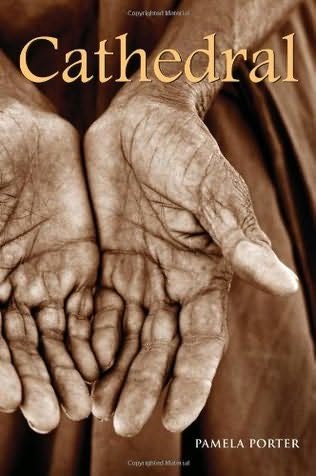
CATHEDRAL

Cathedral

By Pamela Porter

Reviewed by Jorge Antonio Vallejos

Most writers who log their travels on paper describe scenery, sexual escapades, and local foods.  The majority write non-fiction pieces that get picked up by magazines or included in collections of essays.  American writer Bruce Chatwin is famed for his travel writing, exploring ‘exotic’ (gotta love that word) places such as The Great Wall of China and Machu Piccu.  Polish reporter Ryszard Kapuscinski wrote about political wars all over the world in a style that many can learn from.  But these writers were on paid assignments.  Pamela Porter, Governor General Award Winning children’s writer and poet, visited places so as to give, learn, and love. 

For twenty-nine years Porter received rejection after rejection from publishers all over North America.  In that time she and her family lived in different countries doing humanitarian work.  Real work.  Not the paid vacations that last a week and have North Americans come back feeling like they’ve changed the world—writing as such on their resumes.   

Porter traveled to Nicaragua during the Contra Wars.  She visited Guatemala during their assassination period of teachers and aid workers.  And she lived in Angola and Ghana working with street children.  All these initiatives were done in non-missionary settings with her beautiful poetry coming out of such experiences. 

Split in to three sections, Cathedral, Porter’s third collection of poems, starts out with a bang!  Photograph of Earth from Space brings the reader to Luanda, Angola, where Gerald Nduma, a young boy, goes to school—“a tree”—and sits on a coffee can—“his chair”—during class.  A mango is his lunch and his dreams are just a sweet. 

They say books take you places.  So can pictures.  A photo of earth taken from the clouds brings Gerald to a new place:

“Soon he does not hear

his teachers instructions.  He does not hear

the students’ chatter.  He is looking

at the photograph of Earth

floating in a dark sea

which Gerald imagines

is plenteous with fish.”

Porter’s poetry is not just observatory, much of it is confessional.  As North Americans, many of us are used to having more than we need.  If we get to travel to such places as Porter has we begin to see how much we really have and how we over-consume in many different ways.  Porter explores our privilege and over-consumption throughout Cathedral

Message is a reflection of a lunch in Atitlan, Guatemala.  Porter beautifully describes her plate filled with rice, beans, cheese, enchiladas, and tortillas.  The reader can taste the food and see Porter’s surroundings.  When finished, her Guatemalan lunch mate leaves half her plate filled and motions for someone else to come sit and finish it.  Porter writes:

“I looked down at my plate

realizing I had thought myself hungry

and the food delicious

and had eaten everything

because in my country

I had not learned how to take

just enough.”  

Having much, too much, is something Porter is aware of and meditates on in different poems.  In To Will One Thing, the last poem in the collection, Porter ends with “That I may want less and less…”

Lamento is this writer’s favorite poem in the collection.  Taking place in Argentina, Porter recounts the disappeared of the 1970s.  Thousands of anti-government activists were murdered and went missing in an often overlooked tragedy.  To this day, the mothers of the disappeared march for government accountability, justice, awareness and an apology. 

In the style of Edgar Allan Poe, Porter’s lament sees thousands of ravens who “are the spirits of the dead” flying around parking lots, plazas, and

“dark little streets

where, years ago, some guys with guns

dragged their human forms into cars, one by one

and dropped them down the dark throat of the world.

The world, because Argentina was not alone in this.”

Lamentos could be a short story, or the base for a film.  Usually portrayed as messengers of darkness, Porter’s ravens are the mediums that bring healing to many mothers and relatives:

“The ravens are bringing letters written invisibly

on their inky feathers, in the globe

of one juridical eye, letters no one wants to read

but that the grieving cannot keep from reading.

Plaza de Pilar goes deathly quiet as the grieving read,

they who remember the delicate nature of living,

they who hold up the world.”

Cathedral is like a collection of letters written over a period of several years and from different places.  Although Porter writes her thoughts, dreams, and experiences in poetry form you feel like you are listening to a friend; that’s the mark of a good writer.  And the ravens don’t hurt either.

Tune in to Black Coffee Poet Wednesday April 6, 2011 for an inclusive interview with Pamela Porter.

********************************************************************************

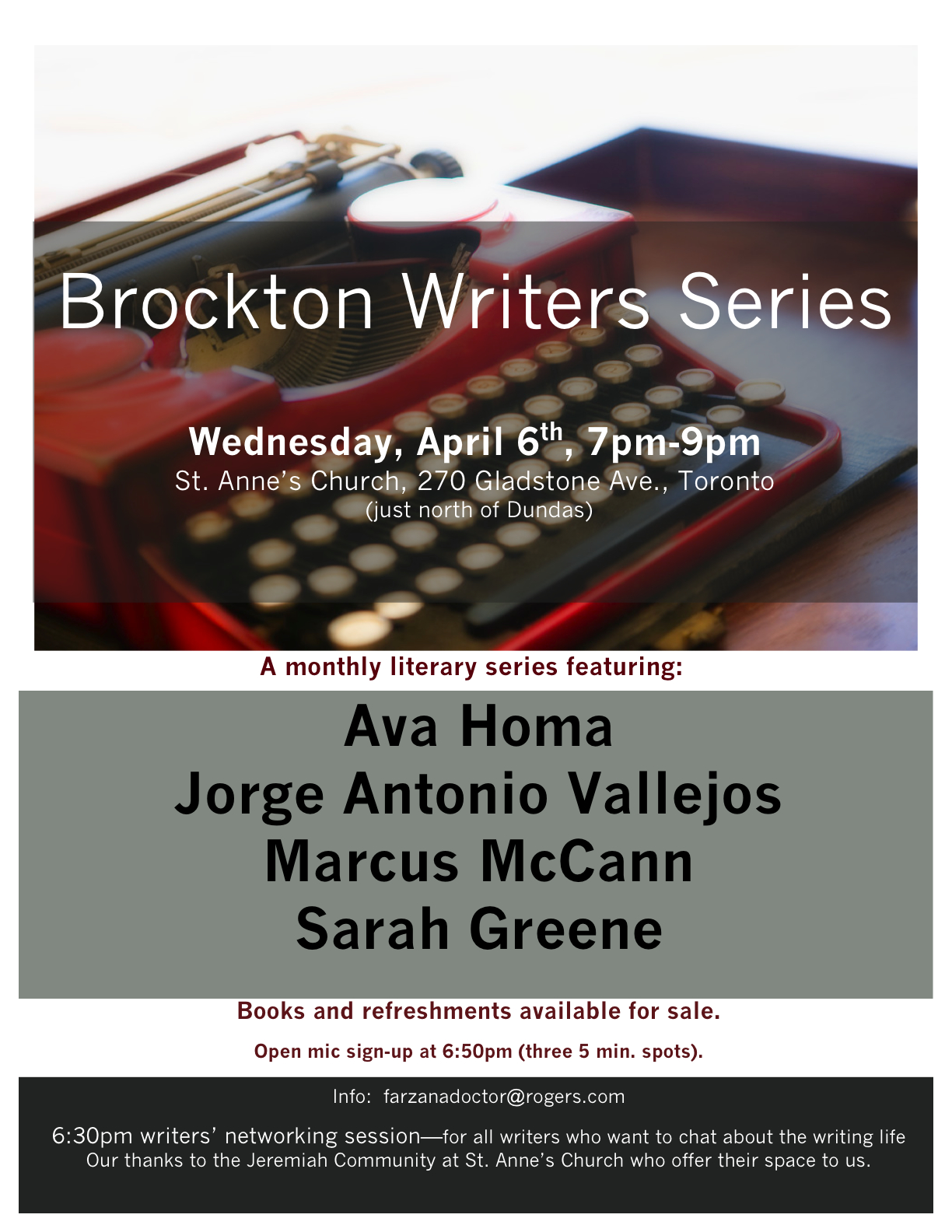
Come out and hear Black Coffee Poet read at Brockton Writers 17:


Posted in Poetry | Tagged , , , , , , , , , , , , , , | Leave a comment

ALLY? RACIST? ACTIVIST WHO NEEDS TO DO MORE RESEARCH?: A LETTER IN RESPONSE TO “A POEM FOR MAYOR DAVID MILLER” AND A COMMENT BY ALLY AMAN SIUM

The following are responses to the poem “A Poem to Mayor David Miller” published in the Toronto Star August 13, 2008 and later posted on BlackCoffeePoet.com September 17, 2010.  The first response is from ally and activist of colour Aman Sium, posted September 20, 2010.  The second, sent in March 29 , 2011, is from  Scott Temple.


September 20, 2010

Excellent poem!!! I remember reading it but I never heard it performed.
As for Miller, when he’s not pandering for white votes he’s in giddy support of the Toronto police and the racialzed violence (i.e. G20 protests) they unleash against Indigenous, black and other people of colour. It always cracks me up when white liberals put on some orange and think that – by default – they’re down with our struggle.

Keep writing brother,

Aman Sium

March 29, 2011

Touching poem, it really is a tragedy when anyone, male, female, white or not are murdered. Especially when it’s someone as young as Katelynn Sampson. But I just want to raise an issue here. Yes, while it’s horrible that neither the Mayor nor the police took much action when these two were murdered, anyone must realize that you can’t judge all of us because of other individuals. I’m white, yes, but am I o.k. with an aboriginal person being murdered, no. An issue I’ve been having while conducting some research for an argument is that every comment made by random people (those not coming from an academic standpoint) is that everyone who is from an ethnic background attack us simply for us being white, meaning, if I’m white, I’m racist, and I only care about whites….but the truth is, I care about everyone equally, white or black, Asian or Latino, which brings me to the comment above. “when he’s not pandering for white votes”. One must step back for a second when attempting to make a comment like this. Who is Miller as a person, what is he o.k. with, what isn’t he o.k. with. What do his advisors tell him to do and what not to do. When Mr. Sium says that Mr. Miller was “pandering for white votes”, he assumes that Mr. Miller is just another soulless political figure out to get more power. But in reality, they deal with numbers. They look at what ethnic group has a majority in a particular area and for the most part tweak their campaigns to that group. Yes, this is insensitive, but it gets the votes to win a campaign. So I’m sure he is advised to do this (that’s what he pays them for…to advise him how to win). Outside of this numbers based lifestyle, he is another person, with the same emotions and compassion as you and me. I’m sure if he were to be fully informed of Katelynn Sampson, he’s feel the same was as he did when Jane Creba was killed. I just don’t like it when people jump to the conclusion that we as white’s are all just racist bastards out to hurt both physically and emotionally every other race. I would never be o.k. with any form of racism in my household, and when I have children, I WILL NOT tolerate any form of it.

As for the comment Mr. Sium made, “It always cracks me up when white liberals put on some orange and think that – by default – they’re down with our struggle.”…. now, I don’t know if I can consider myself a liberal, I’m not a very political person, but as for white…I am that. But to respond, don’t you dare assume you can tell me that I don’t care. I have friends who have been victims of racism, both from whites AND other ethnic groups (Asians, Indians, Blacks, Mexicans, you name it…), and no matter who it’s from, it’s never o.k. I’m discriminated against every time I’m in a group of people where the majority isn’t white, and it sucks. I’m just that “white guy” who’s lived the privileged life and had everything given to me. And you know what, I have lived a pretty privileged life, that is true, but a lot of people who I know through school don’t live that life. They’re white, and their parents have trouble making rent. They’re white, and they don’t have money for new clothes. They’re white and they’re going to be stuck at the same dead end job for the rest of their lives because they couldn’t make it through school… white people can be poor too. But even when they’re with me and hanging around those groups that are majority other ethnicities, they’re tossed in the same pot as me, that “richy rich white kid who’s never had it hard” And hell, I wasn’t rich, I grew up middle class like the majority of the Canadian population, right smack dab in the middle, so I definitely wasn’t the “richy rich” kid they though I was.

So yea, this is more or less my rant on racism against aboriginal people… except it’s more to the short sightedness of the comment made above. I want to make it clear that in no way do I want to take away from the original article itself, because it does sadly have a ring of truth to it. While I might be arguing for people to lay off on the generalization of whites being pricks, I also don’t want people to forget that in a lot of cases….we are…. I just hope that with the new generations, understanding and acceptance of equality will be obtained. I have a feeling it will due to the stance myself and friends share on this particular issue, but for the time being, we live in an age ruled by those from an earlier time, where racism was common place in almost every setting, so we’ll have to deal with it for a while longer, but hopefully not for too long.

Scott Temple

Posted in Uncategorized | Leave a comment

OJIBWAY POET RAIN KEEPER READS HIS POETRY

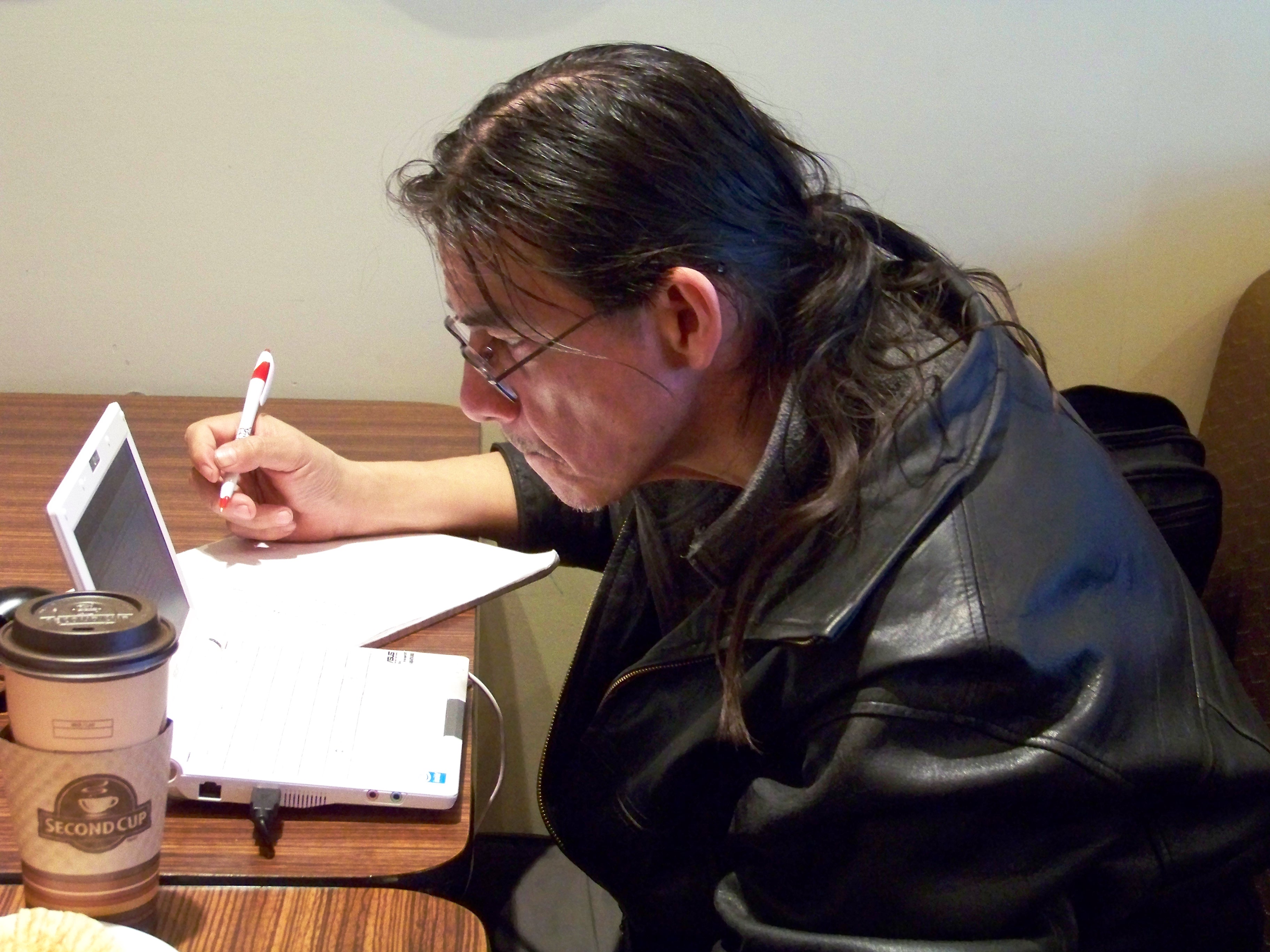
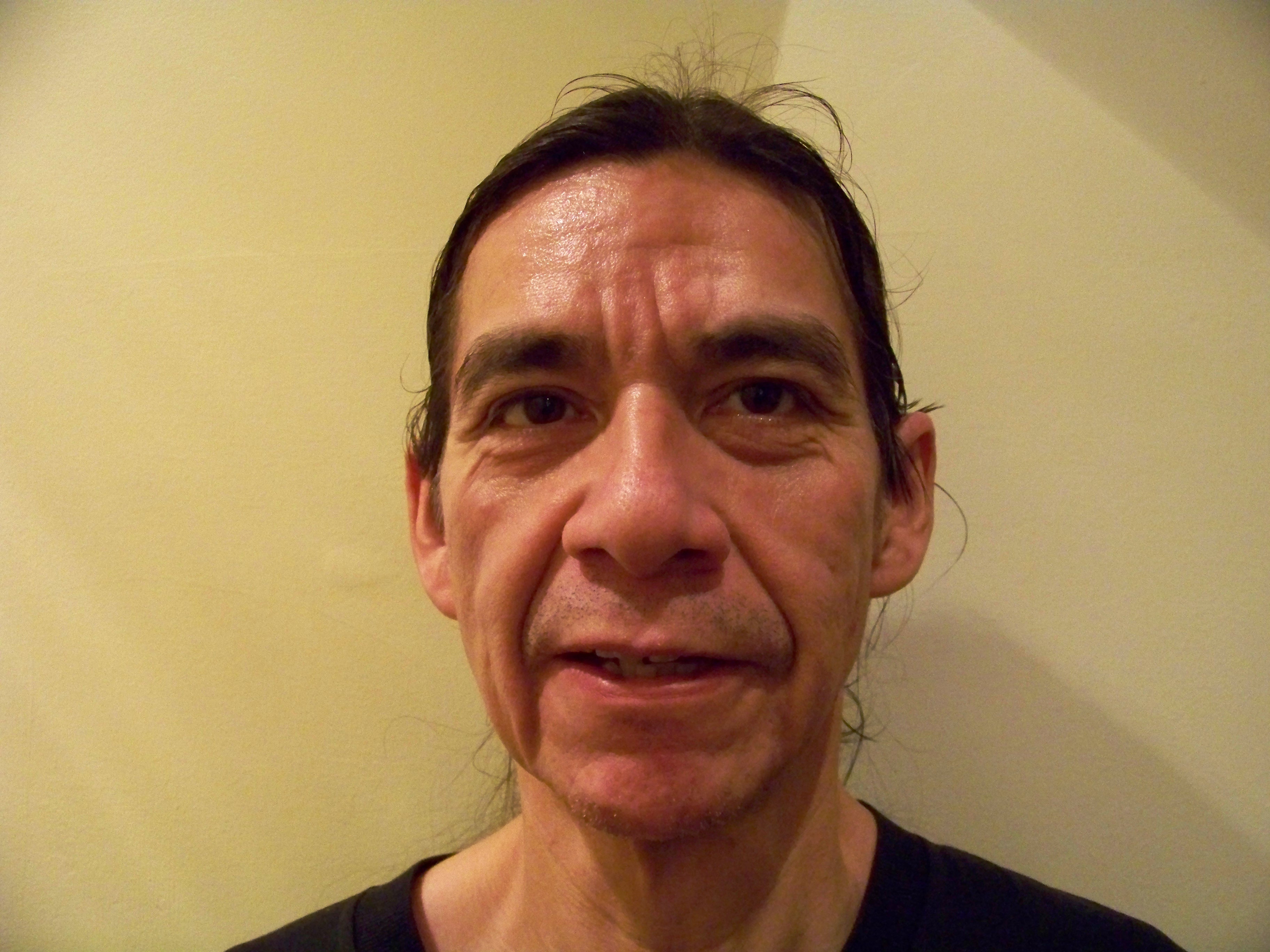
Rain Keeper is an Ojibway writer who has worked with Toronto’s Aboriginal community for many years.  A student of Emily Pohl Weary, Rain Keeper has blossomed as a poet and book reviewer. He was also a contributor to the famed zine Broken Arrow.  Now working on his first novel, Rain Keeper takes breaks by writing poems.  Read his review of Whiskey Bullets.

Tune in to Black Coffee Poet Monday April 4, 2011 for a review of Cathedral by Governor General Award winner Pamela Porter.

Posted in Poetry | Tagged , , , , | 1 Comment

INTERVIEW WITH OJIBWAY POET RAIN KEEPER

Rain Keeper resides in Toronto.  He has worked for a variety of organizations for the past 10 years such as NaMeRes (Native American Mens Residence), Evangel Hall Mission and the Parkdale Activity – Recreation Centre. Rain Keeper has also served as a Forensic Support Security Officer patrolling the rough areas of Toronto’s high risk neighborhoods. Rain Keeper is now working on his first novel and is pursuing a writing career.

BCP: Why poetry?

RK: Because poetry doesn’t matter, it’s reluctant to be written down and the poet is in crazy pursuit for it. Poetry doesn’t like being loved or crested but the poet is brain-sick for his/her own words.

BCP: What is your process?

RK: I don’t think I’m that good of a poet or writer for that matter and that’s the process. You don’t have to be good, you don’t need to be an Emily Dickinson or a Robert Frost be a poet. Anyone can become a poet it’s easy as long as you know how to spell.

BCP: How long have you been writing poetry?

RK: On and off since I could write but it was never that big a passion until I reached my mid-forties.

BCP: Who are your influences?

RK: My greatest influences are Sea Fever’s John Masefield, The Turning of Elenor Rumming’s John Skeleton and/or the poetic ballads of Rosamund Marriott Watson.

BCP: Your poetry is emotional, honest, and stimulating. What do you try to convey to your readers?

RK: That poems aren’t just from the heart or mind, but from the emotions the pen in your hand is writing, or in my case a laptop.

BCP: Does your Native identity play a part in your writing?

RK: No, at least I don’t think so, I think writing from my native identity is just an illusion. I’d be defeating my own purpose as to who I am and how I write.

BCP: You found Whiskey Bullets by Gary Gottfriedson to be a strange collection. Why?

RK: First off, I’ve never read cowboy Indian poetry until now. Yes, I’ve read cowboy poems but I’ve never tread where the deer and the antelope play. I usually stick to sidewalks and streetcars.

BCP: You have written in workshop settings and you write alone at coffee shops a lot. Which do you prefer? What do you feel are the benefits of each?

RK: Workshops, are much easier for a controlled surrounding, and you can or most of the time accomplish something. Where as in a cafe you have chaos, lots and lots of chaos. With nine or ten different conversations going on all around you. I may not get much done but I’m comfortable with all the busyness of the environment. Where as in a workshop everyone is trying to be cutesy with the facilitator, I don’t want to be cutesy I want to be a class act then I’ll be cutesy with the facilitator, why should I be satisfied with only one when I can have both.

BCP: The poetry you have shared with me is funny and touches on subjects that many people would not go near. Is a lot of your poetry like that?

RK: Some of it is, not all, most is personal feely—I hurt myself so to speak. But poetry for me also has to be daring, to be a fool and rush in where angels fear to tread, to be all, to conquer all. And if I don’t have that feeling of conquest in my veins then that day I am neither poet nor writer.

BCP: You were featured in the famed zine Broken Arrow that has been read all over Turtle Island. What was that like? Did you expect such a large response? Does it put pressure on you to maintain that status?

RK: It was scary, I didn’t expect much, I was more interested in getting responses for Broken Arrow. I wanted the zine to be a success that’s all I was concerned about. It was the facilitators who encouraged me to get some writings published. So I did, it was a blast now I want more.

BCP: You are currently working on a novel. Has that helped with your poetry?

RK: Oh yeah, my novel, I’ve been writing that thing since the arrival of Columbus. Yeah, I would say it has, between a brain hemorrhage and a blood clot I’d write some poetry which help stop the hemorrhaging or stop the blood from clotting to much.

BCP: When do you expect to have your own collection of poetry published?

RK: I never thought to much about having poetry published. But it’s something to really think about. My daughter is collecting all my works of art maybe one day I’ll be worth something.

BCP: What advice do you have for other writers out there who are having difficulties with their writing, or who have yet to see their work in print?

RK: Advice? That’s a lot of power to just throw around like that. If you want to be inspired, first read, then read some more. Because somewhere in those books is a word that will inspire you but you have to find it first.

Tune in to Black Coffee Poet Friday April 1, 2011 for a video of Rain Keeper reading his poetry.

Posted in Poetry | Tagged , , , , , | 1 Comment

WHISKEY BULLETS: COWBOY AND INDIAN HERITAGE POEMS

Whiskey Bullets: Cowboy and Indian Heritage Poems

By Garry Gottfriedson

Reviewed by Rain Keeper

Whiskey Bullets is not your average poetry session. It is quite aways down range from mother earth, has a venomous bite, and is a collection of soul searching passion absolutely off the beaten warpath. Gottfriedson puts a lot of umption in his gumption and holds nothing back. The two best poems in Whiskey Bullets are Saturday Night in Church and Political Questions.

Saturday Night in Church perpetuates the religious side of cowboyism if there were a cowboy heaven. And a balding Jesus himself impersonating a Marshall Dillon as they elegantly sing “How Great Thou Art” to the cowboy who is impersonating Jesus. What makes this poem interesting is the gay formated colours, notwithstanding its style and narrative. Its elevation is tight, leaning slightly towards propaganda, but it does have its effect to the desired response for its audience. The articulation is emancipating, down right liberal for an *Aboriginal from the Tk’emlups Reserve. It is a barbarous domain and Gottfriedson displays a teasing relationship with colourful secrets. Saturday Night in Church has race issues, sexual under meanings with a mix of counter intrigue. The strangeness to this poem has an interesting insight that is down right ironic.

Now for Political Questions. If you guessed it, you are right, it is about ‘Cowboys and Indians’, again. And if a cowboy was intimate with an Indian they would have produced offspring together. Religiously and politically they would be half-breeds called ‘cowdian’; this is not to be confused with *Metis peoples. And it was the cowboy who picked the forbidden fruit in the first place in the Garden of Eden. Believe it or not, Columbus was a real cowboy, and besides we didn’t partake of that fruit until his arrival. But it is that satirical question that bugs me about Cowboys and Indians intimately, be it a political or religious questions, or both.

Political Questions is a poem that can be confusing if you are not an *Indian and if you do not understand Indian politics. Although it is extraordinary that a basic cognitive process has not been given to it, save for the Americans. All those who fear politics or religion are forever damned. And at the end of the climax of this poem it says “and remember God was a virgin.” Whether it is blasphemy or poetry its only a question God can answer; Gottfriedson keeps alive the relationship between cowboys and Indians, its politicking endeavors, its religious enterprise, and last but not least peril and symbolization.

The outside world may think Garry Gottfriedson’s poems to be prophetic or mystical or down right absurd. But Whiskey Bullets: Cowboy and Indian Heritage Poems is the outside world to the other side of the coin. Gottfriedson writes rough and tough rodeo poetry that will buck you off the page. It reads like a Shakespearian wild, wild west Injun style; the poems have the *Secwepemc drawl shape shifting Gottfriedson’s collective wittiness.

Gottfriedson thinks out his words carefully, maybe on an old Thinkpad, or a brand new Notebook, playing the keyboard like a laptop junkie. His poetry spurs true grit, he rides it like a stockbroker rustling cattle on the open stock exchange, and for that readers will like him. Paleontologists pose no threat to Gottfriedson’s diligently digging up the old west. And discovering the good, the bad, and the ugly buried deep beneath the past and displaying it like a fist full of dollars for the world to see. He’s a fearless warrior-writer rustling up that grub feeding his decomposing blood brothers into legendary ranch hands, and that maybe is the realism with which he sculpts his collection.

Besides all these cowboy junkies, who knew Indians could be so poetic? Gottfriedson is like Billy the Kid, the lone gunman on the grassy knoll. His back is to the sun, his fingers itching for a six shooter, blazing brute honesty that would make John Wayne roll over in his grave from blunt force trauma.

Whiskey Bullets engages the dark side with waging individualism.  Gottfriedson himself, as a *First Nations person, has the mental aptitude to leap beyond boundaries. His poems are intriguing, stranger than mythical totem carvings that are truer than the honest Injun himself. A rare collection of poetic witticism that is not too witty that it keeps back all expression, it reminisces about the old west, about bronco busting. But nowadays we all know that the Wild West has fallen deep in to slumber. Sure, you can still take in a rodeo or two. Or do as their counterparts do and take in a Pow Wow just to gawk at one another. And like Indians, cowboys can easily adjust to hard-times just like the local ford dealer busting his bronco to sell, sell, sell making ends meet.

Gottfriedson rewrites native realism in Whiskey Bullets, guiled in both its feminine and masculine quality. Readers can investigate the dark pragmatism in this sexagenarian cowboy culture. It likes to establish substance to the meaning at hand, here we have more issues than victims and more victims than issues that it reads like the Holy Grail from a Brothers Grimm fable. It was not all that dark or dreary either. Gottfriedson is cunning and he captures the reader, and most poets are not a conga line of love poems anyways. Whiskey Bullets is an enjoyable read with poems like Shadow walk, Koyoti Indian and Guitar Player. Whiskey Bullets is quite an accomplished piece of art.

* Aborginal: First Nations, Inuit, and Metis peoples.

* First Nations: a term of ethnicity that refers to Aboriginal peoples in Canada who are neither Inuit or Metis.

* Indian: the term/name Christopher Columbus gave to the original peoples of the Turtle Island now known as “The Americas”.  Columbus was a lost fool at sea who thought he found India!

* Metis: one of the groups of Aboriginal peoples in Canada who trace their mixed ancestry back to mixed European and First Nations peoples.

* Secwepemc: First Nations peoples from British Columbia known to most Canadians as Shuswap.

Rain Keeper is an accomplished Technical Administrator and Clerk of Statistics Canada in Ottawa. Upon leaving the Federal Government in 2000 after twenty years of service, Rain Keeper moved to Toronto to pursue his interests at the not-for-profit level. Rain Keeper has worked for a variety of organizations for the past 10 years such as NaMeRes (Native American Mens Residence), Evangel Hall Mission and the Parkdale Activity – Recreation Centre. Rain Keeper has also served as a Forensic Support Security Officer patrolling the rough areas of Toronto’s high risk neighborhoods. Rain Keeper is now working on his first novel and is pursuing a writing career; this is his second published book review.

Posted in Poetry | Tagged , , , , , , , , | 3 Comments

FEMINIST POET SONIA DI PLACIDO READS HER POEMS

Sonia Di Placido is a Toronto based poet currently doing an MFA in Creative Writing.  Di Placido has two chapbooks and is working on her first full collection of poems with a small publisher.  Listen to her read from her chapbooks VULVA MAGIC and FOREST PRIMITIVE

Tune in to Black Coffee Poet Monday March 28, 2011 for a review of Whiskey Bullets by Gary Gottfriedson.  

Posted in Poetry | Tagged , , , , , , , | Leave a comment