A LETTER FROM TIFFANY WALFORD (GEORGE WASS’ NIECE) AND BLACK COFFEE POET’S RESPSONSE

Saturday July 9, 2011

Dear Black Coffee Poet,

I stumbled on your website and I was so impressed about what you represent and your voice for the people who feel that they do not have one.

I went to PARC the other day with my daughter and one of the first things I noticed was the beautiful artwork hanging on the wall. I was told that all of the artwork was done by Parkdale residents. I can only imagine what Underground Inspirations would entail.

I am George Wass’ niece and all of the people that knew him loved him. He had a very difficult life but he was able to finally find true happiness in his life. Although his death was tragic, I hope that it continues to make people notice the discrimination that people with mental disabilities face on a daily basis.

Thank you for the great work that you do.

Tiffany Walford

Saturday June 9, 2011

Dear Tiffany Walford,

Thank you for taking the time to read blackcoffeepoet.com.  And thanks for your letter.

It’s an hounour to receive a letter from a reader that was so impacted by my work.  And a letter that reminded me of why I started blackcoffeepoet.com is more than I could ask for.

The Parkdale Street Writers are a talented bunch who do not forget where they came from; in turn, that knowledge has them heading in the right direction.

Your uncle’s death (George Wass) was sad and unjust.  People have not forgotten.  The word warriors in Parkdale will make sure of that.

Peace to you and your family.

Sincerely,

Black Coffee Poet

blackcoffeepoet@gmail.com

Posted in Uncategorized | Tagged , , , , , , , , | Leave a comment

PARKDALE STREET WRITERS DANI MAS AND IRFAN ALI SING AND READ POETRY

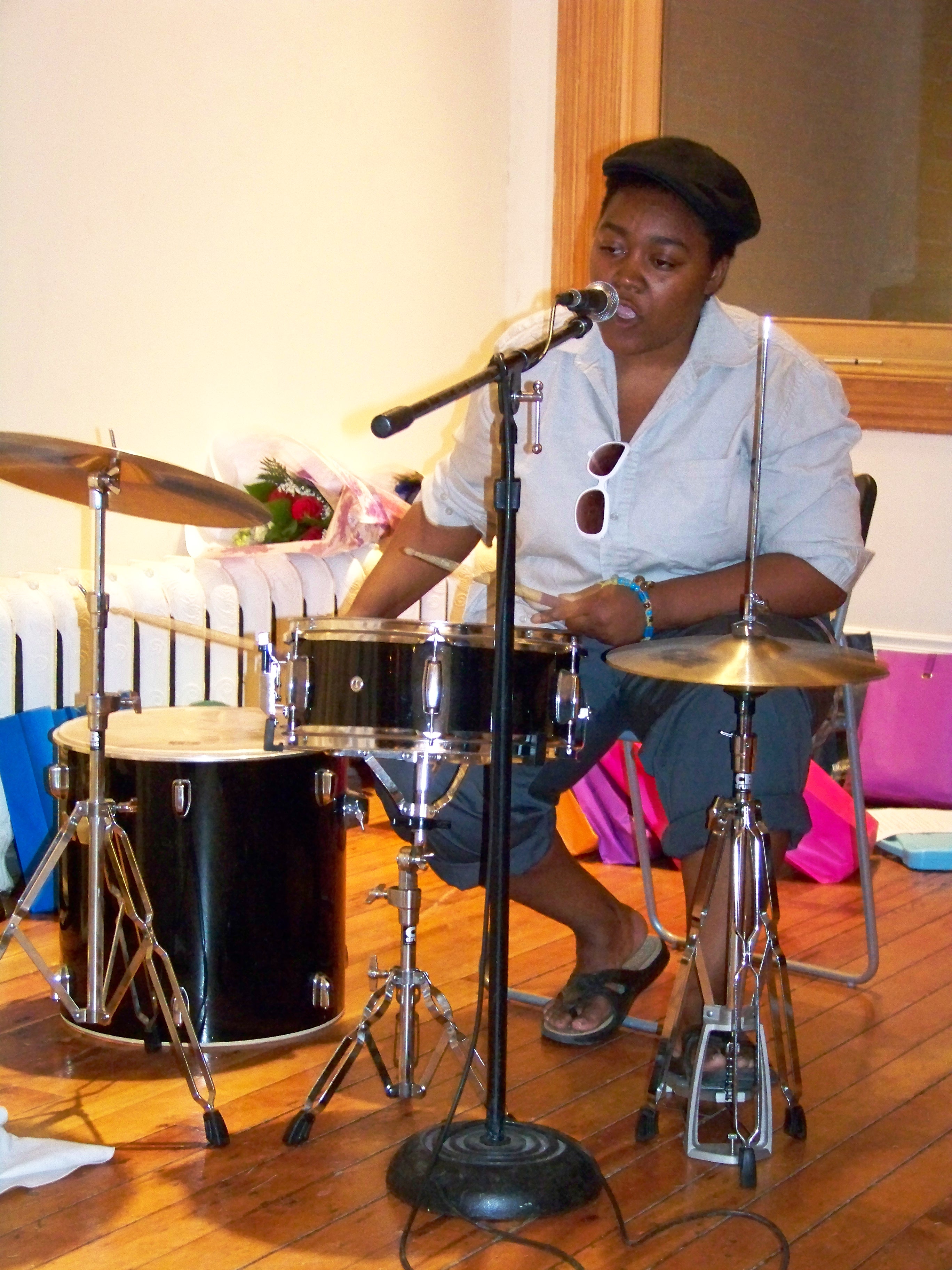
Dani Mas is so talented she can chew gum and sing at the same time!

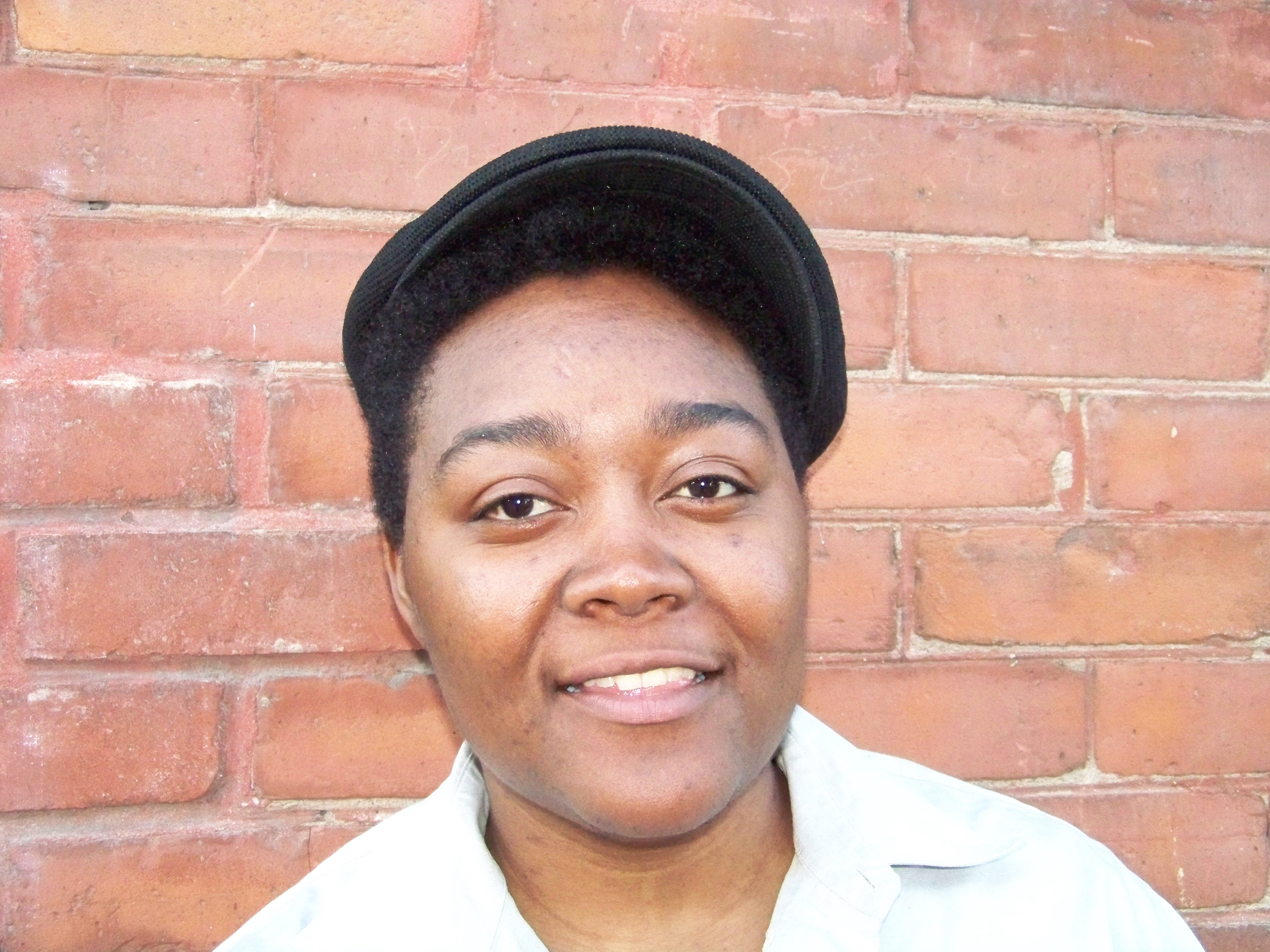
Thinking, singing, and living positivity, Dani Mas uses art to spread good vibes.

Enjoy.

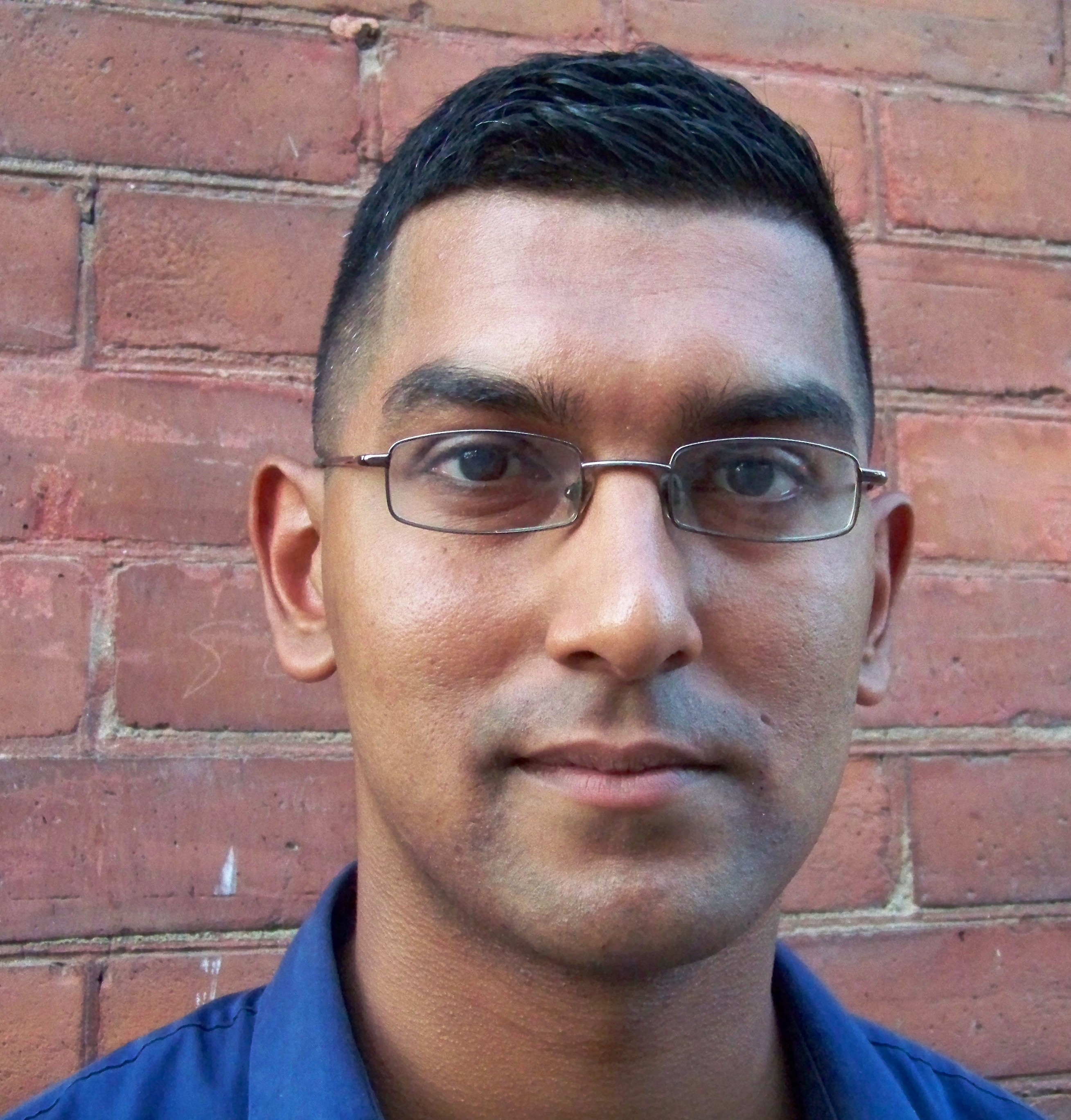
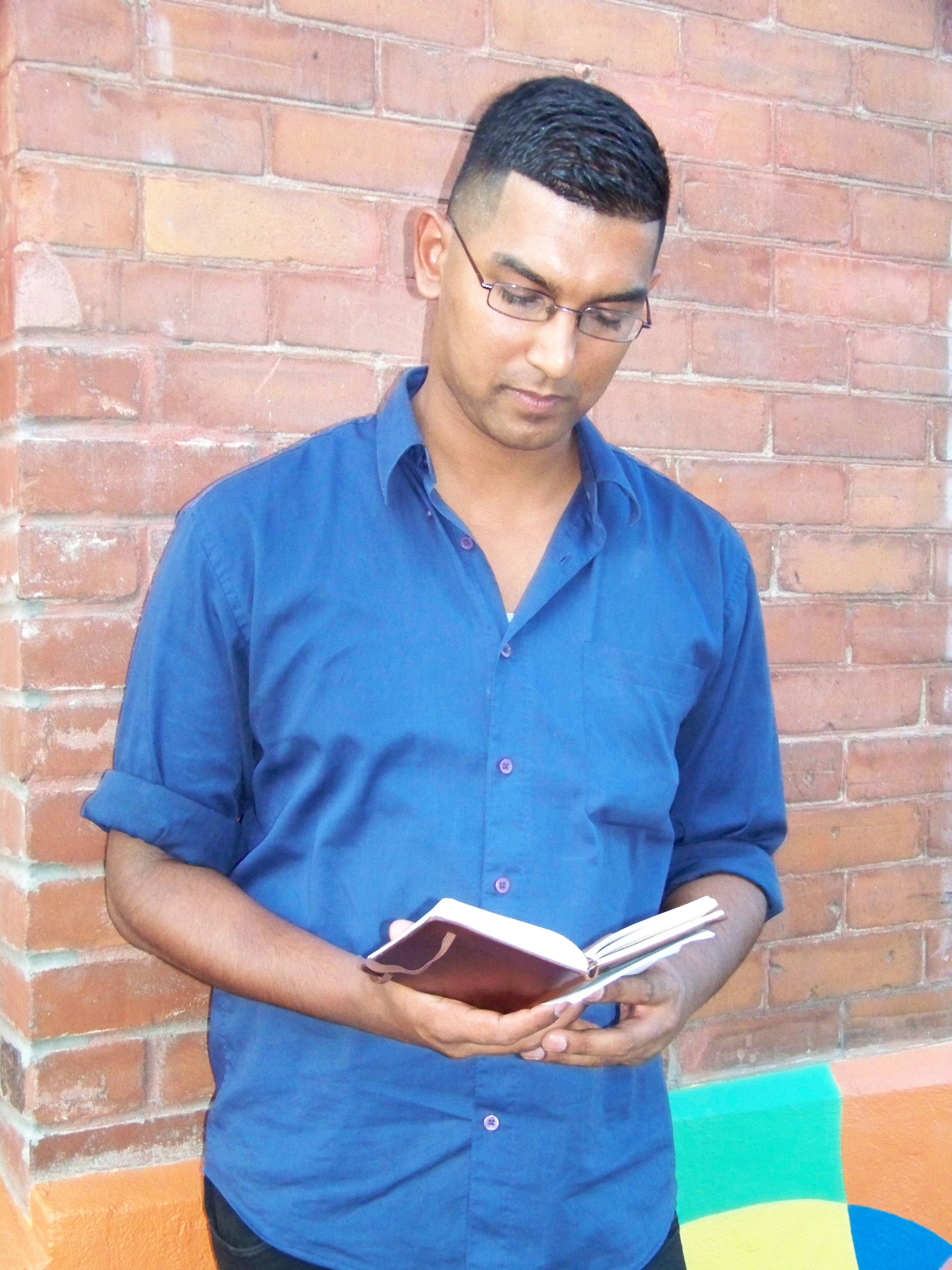
A very chill guy, Irfan Ali reads widely and writes about things people can relate to.

His poem Concord and Bloor is sad and important. 

Enjoy.


Posted in Poetry | Tagged , , , , | 1 Comment

INTERVIEW WITH PARKDALE STREET WRITERS DANI MAS AND IRFAN ALI

Dani Mas lives her life like it’s golden.  She believes love is what makes us human: to love is to be human.  She approaches everything with love.  

Dani’s thirst for life means she enjoys all facets of it.  She enters many worlds and they all influence her heart (music, drawing, and dancing).

BCP: Why song?

DM: I find it to be a deeper connection to he emotions being conveyed. Reaching out sound song and music it just seem to communicate the poetry in a holistic way.

BCP: What is your process?

DM: The process is a messy chaotic thing: guided by will , inspired by life, altered by emotion and tempered by rational (at times).

BCP: How long have you been writing songs?

DM: Don’t really recall.  Before I had the intent to write it was just a natural reaction to life: singing, story telling, rhythm came naturally just a part of being.

BCP: Who are your influences?

DM: I’m sure I’ve have many, some famous I’m sure, most you’ll never know.  Still, on a whole, I’d have to say life itself for sure.

BCP: Your song Grab Life and Run With It (featured in underground inspirations) is very positive.  What do you try to convey to your audience?

DM: Well I  know how dark it can be, there are many valid reasons: people, situations that can pull a person down into that to a point where you give up on life itself;  when you give up on life you begin to walk the path of death, be it a slow decay of self, suicide or a more violent end; in the end it’s death that you cling to.  This song is about the about not walking that path, about not giving up on your dreams, about holding on to life for as ling as you live, run with life not sinking into death.  

BCP: Does your spirituality play a part in your writing?

DM: It’s a good part of who I am and my approach to life; so, yes it does play a part in my writing.

BCP: Do you see song as a form of prayer?

DM: It’s a kin to prayer but no it’s not a prayer.

BCP: How has working with the Parkdale Street Writers workshop helped your song writing?

DM: The Parkdale Street Writers community is a wealth of inspiration, a mode for exploration, so many brilliant prospectives bring about in oneself new growth.  I’ve grown as a writer and a person in wonderful company and each year I encounter interesting minds; some stay, some come and go, some stick around as I have.  It all influences my writing .

BCP: Do you perform regularly?

DM: Not at all in fact the other aspects of my life keep me rather occupied.

BCP: What are you working on now?

DM: I have a few things on the fire: I’m looking for some serious musician multi-talented, flexible range for a project.

BCP: Are you aiming to put out an EP or an album?

DM: Aiming for so much more but an album is a goal, yes.

BCP: What advice do you have for other musicians out there who are having difficulties with their song writing or who are afraid to perform their music?

DM: First of all fear, is your friend use it; and last, live your life, have fun, try new things. If the songs not happening switch it up, write some straight poetry, spoken word; if fun, just you know go with it, stay positive, run with it, and you can always drop into Parkdale Street Writers next year. 🙂

Irfan Ali is a silent comedian, funnier than his one and only partner in crime, Zi Rex.  Do not mistake his laissez-faire attitude for laziness; that’s his pondering-a-quick comeback-face that will top what you thought was funny.  In his spare time, he works at the LOFT Community Centre and dreams of being a (cartographer) destitute poet.

BCP: Why poetry?

IA: While I read a lot of prose and non-fiction, I find that poetry is much better able to evoke and capture the visceral emotional response that is really important to my writing style.

Also, don’t tell anyone, but I don’t have the attention span to write anything longer than a page.

BCP: What is your process?

IA: I get ideas for new pieces pretty randomly, so I have a lot of little notes scribbled on napkins and on the margins of whatever paper I had on hand at the time. I’ve been getting better at keeping a notebook with me to aggregate those little thoughts in one place. I do most of my writing on my computer because I find it easier to re-arrange lines and adjust the flow, though I’ve been trying to do more writing by hand as per a friend’s suggestion. My creative window tends to be pretty late at night and supplemented by a lot of cigarettes. I recently quit smoking though, so I might need to adjust my writing habits.

BCP: How long have you been writing poetry?

IA: Since early on in high school. However, I’d say I didn’t take it seriously until last year around the time I joined the Parkdale Street Writers; before that I’d never shared my work or tried to get serious feedback. More importantly, I felt like I was writing in someone else’s voice – trying too hard to be ‘poetic’ – and that’s something that only changed when I opened myself up to criticism and started seeking out advice to improve.

BCP: Who are your influences?

IA: A lot of people. Leonard Cohen, Robert Priest, Anne Wilkinson, Frank O’Hara, and Charles Bukowski are people that heavily inspire me, or more accurately, are people that I consistently try to emulate and steal from. I’d also say a lot of the tenderness of poetry, literature, and the holy scriptures of the Islamic world has also inadvertently slipped into my writing by virtue of me being surrounded by it throughout my upbringing.

BCP: Your poetry is unconventional. You describe it as “weird”. What do you try to convey to your readers?

IA: I don’t think I actively try to convey anything to my readers. Writing helps me sort out a lot of the issues I grapple with internally; whether about my family, sexuality, love, hate, memories, or the hundred other things I’m always thinking about. I just hope that readers are able to see some common truths between my observations and their lives. From the feedback I’ve received so far, I’ve been at least somewhat successful in that. Did I even answer the question?

BCP: Your bio in the Underground Inspirations zine by Parkdale Street Writers says you “dream of being a (cartographer) destitute poet.” Explain.

IA: Bahahahahaha! Actually, my fellow Parkdale Street Writer, Nadia Alam, wrote that. I’ve always thought being a cartographer would be a really interesting profession, especially back in the days of Columbus and all his colonizing buddies. The destitute poet part came from Parkdale Street Writer guest Jean Yoon, who only half-jokingly said that being a full-time poet is the quickest path to poverty.

BCP: The poetry you have shared with blackcoffeepoet.com involved the death of a homeless person. You brought to light how homeless people are some of the forgotten in society. Is a lot of your poetry like that?

IA: Actually, the incident involved the death of an older guy in the Eritrean-Ethiopian community. I live and work in the area and can say that the community is very tight knit and he wasn’t forgotten by any means. I changed the incident for poetic purposes, so to speak. While a lot of my work deals with love and sex, I try to make an effort not to neglect the more difficult things in life that affect and inform my worldview like global politics, police brutality, violence, discrimination, and poverty.

BCP: Do you see poetry as activism?

IA: Absolutely. As I mentioned earlier, I was raised in an Islamic household and a lot of the poetry that I was surrounded with was either overtly or indirectly activist in nature. I’ve found this to be as true of relatively recent writers like Syrian poet Nizar Qabbani as it was of much older writers like Rumi. I hope I could say the same about my writing at some point in the future, but I don’t have the skill, ability, or understanding to be able to legitimately do so yet.

BCP: Your poem Concord and Bloor is set in Toronto, the city you live in. Is a lot of your poetry set in Toronto?

IA: Yes. A lot of my writing comes directly from my memories or day-to-day observations, both of which have been mostly situated here. Toronto’s a really interesting character in its own right. It seems at once very distant and intimate, alive and dead, genuine and fake. It’s like the city’s perpetually trying to figure out its own identity similar to what I’m attempting to do through my poetry, so it complements my work really well.

BCP: You’ve been attending the Parkdale Street Writers workshop for a while. Do you recommend writing groups?

IA: 100%! To be honest, I don’t get much of anything done at Parkdale, but I’m surrounded by a lot of really talented writers there who heavily inspire me. Even if it’s a couple of days later, I always have new material or ideas thanks to that group. It’s also a great place to get feedback and build confidence, so I highly recommend it.

BCP: What are you reading now?

IA: I’ve been slowly getting through Anais Nin’s collection of erotica, Little Birds. The problem is I always end up reading it in public places like walk-in clinc waiting rooms and inevitably become too uncomfortable reading that kind of stuff with other people around… My mom and older brother have also been suggesting that I read more Pakistani writers so they’ve been trying to get me some translated Faiz Ahmed Faiz.

BCP: What are you working on now?

IA: More poetry. A friend rightly accused me recently of skirting around really difficult personal issues in my writing, so I’ve been trying to approach them more honestly. The process has been making me cringe with discomfort, but I’m liking the results so far.

BCP: When do you expect to have your own collection of poetry published?

IA: Hopefully I’ll have enough material (that I’m satisfied with) by sometime next year. I’ve never had anything published before so it depends on how quickly I’m able to navigate the publishing process after that.

BCP: What advice do you have for other writers out there who are having difficulties with their writing, or who have yet to see their work in print, or who are afraid to perform their poetry?

IA: Embrace your fear. I’m always afraid that my writing is horrible and the constant attempts to address that has really improved the quality of my writing. If you’re really paralyzed with fear, try counting to three and jumping one little step forward and keep doing that every time you feel like chickening out until you’re finally standing in front of a group of people and it’s too late to run away. As long as you don’t faint, it’ll be a lot better than you think.

Tune in to Black Coffee Poet July 8, 2011 for videos of Dani Mas and Irfan Ali singing and reading poetry.

Posted in Poetry | Tagged , , , , , , , | 3 Comments

UNDERGROUND INSPIRATIONS

Underground Inspirations

By Parkdale Street Writers

Reviewed by Jorge Antonio Vallejos

underground inspirations by Parkdale Street Writers is exactly what the title says:  inspirations from those who live in the Parkdale neighbourhood and know it’s every corner, stairwell, and alley.  The youth featured in the zine aren’t the folk that are gentrifying Parkdale, or those who now see it as a trendy spot to party that was considered a shitty part of town just ten years ago. The 30 writers that fill the pages of underground inspirations are mostly from Parkdale or areas similar to it.  They are the people that developers are trying to push out, erase, and have potential buyers forget they live there. 

They are the underground.

A diverse group made up of different races, religions, genders, and sexualities, the 52 page zine is evidence that everyone can get along in this world if they want to. 

The intro, written by 5 members (Cooper, Mas, Noura, Ferreira, Stewart), Parkdale Street Writers Year In Review, shows unity, love, dreams, positivity, and the possibility of a better future one group at a time.  It celebrates growth (20 writers last year, 30 writers this year), less members taking smoke breaks, performing at the Art Bar Poetry Series, and learning the craft of writing via different facilitators and through the person who started it all, Emily Pohl-Weary.

Redefinitions, a collaborative piece written like a mini dictionary across three pages, shows the diversity of the group and how they come together with different opinions while still respecting each other. For example:

God— Don’t get me started. (Dani)

God— The sustainer, the giver of life, the Merciful, the Most Gracious, the Beginning and the End, the One.  (Tendisai)

Ode to George Wass by Rabin Ramah shows the compassion found within the zine.  Wass was a resident of Parkdale who was murdered in March, 2011 by a man wearing a balaclava targeting peoples with disabilities.  The sixth person attacked in the span of a few months, Wass’ face was all over the news: sad, bruised, bloody.  Those who don’t care about Toronto’s forgotten peoples could ignore the picture in the paper and segments on the news.  Ramah did neither; he put pen to pad.

Ramah’s ode is short but says a lot; it humanizes someone deemed worthless by many in our society:

The paper said his name was George Wass, 62.  He was someone’s father, grandfather, son, and neighbour.

Ramah’s ode is also a critique of the neighbourhood he’s lived in for thirty years and loves dearly.  It’s honest, brave, and important. 

Parkdale always has fear in it, ever since I arrived in the seventies.  Fear of too many immigrants from foreign countries with curries, that wear their clothes.  Homeless running across the street into incoming traffic.  This is the neighbourhood George called home.

Ramah writes of the real Parkdale with insider consent.

With true love for his neighbourhood and its different peoples, Ramah, unlike our country’s politicians, isn’t afraid to show the ugly side of his home.  Too bad everyone isn’t as honest as Ramah.

Around the time of the murders, Cheri DiNovo (NDP, MPP for Parkdale-High Park), made a very problematic statement on live TV: “We’re not the haves and have nots. We consider ourselves one and the same here in Parkdale.” (LIVE CP 24, 10:35 am April 6, 2011)


Who are the ”we”?

I doubt all the people gentrifying Parkdale agree with DiNovo.  From reading the pages of underground inspirations I doubt the Parkdale Street Writers agree with DiNovo either. 


The “we” and “one and the same”  DiNovo imagines are cut to pieces in the truthful descriptions written by Ramah and many others.        

Everyone Needs Help In Parkdale, a prose piece by Dizia Raposo-Ferreira, debunks DiNovo’s mythical Parkdale:

Parkdale has a heart and it beats heavy with suffering, but the passersby would never take the time to notice.  When the sun goes down, it’s like being behind curtains: the rich aren’t supposed to see the chaos.  Every woman and man, even people with no hands, needs help in Parkdale. 

Filled with original art work, photography, songs, sonnets, haikus, and short stories, underground inspirations not only shows that everyone can write if they want to, it shows that community matters and that community is how we can navigate this world in a positive way.  

Anger by Nyasha Muntasi sums up underground inspirations nicely:

To be held hostage by one’s own mind.

Mind: imprisoned by walls of thoughts.

Thoughts: blackmailed by perceptions.

Perceptions: reinforcing one’s identity.

Identity: collected from experiences.

Experiences: esteemed by egos of self.

Self: assured by a collection of ego minds.

But you forget all the above are CHOSEN.

Change but one and the cycle breaks.

Tune in to Black Coffee Poet Wednesday July 6, 2011 for interviews with Dani Mas and Irfan Ali of Parkdale Street Writers.

Posted in Poetry | Tagged , , , , , , , , | 5 Comments

CELEBRATING QUEER INDIGENOUS VOICES WEEK 2011: POETRY AND SONG BY NICOLE TANGUAY AND ROBBIE MADSEN + A CLOSING SONG BY DAWNIS KENNEDY

Nicole Tanguay is a word warrior.  She takes seriously the struggles of all women, in particular Aboriginal women and women of colour, in this patriarchal, racist, colonial society.  

Her pen is her sword and she doesn’t hold back!

Listen to, and enjoy, Nicole Tanguay read her poem Picture This from Yellow Medicine Review Fall 2010: International Queer Indigenous Voices. 

Robbie Madsen is a sweetheart!  A soft-spoken, kind and gentle soul, Robbie sings against injustice and celebrates life through song.

Meeting with Robbie to record him singing was one of the most pleasurable moments in my history of running blackcoffeepoet.com.  We shot take after take; took photos; laughed a lot; and sat for a good while sharing stories.

Enjoy Robbie sing his brave song Liquid Courage about partner abuse in the queer community. 

This last week, Celebrating Queer Indigenous Voices, was the closing to Aboriginal History Month 2011 on blackcoffeepoet.com.  It’s an honour to have a closing song from Anishinaabe Kwe Dawnis Kennedy.

Tune in to Black Coffee Poet Monday July 4, 2011 for a review of “Underground Inspirations: Parkdale Writers Zine”.  

Posted in Poetry | Tagged , , , , , , , , , , , | 2 Comments

CELEBRATING QUEER INDIGENOUS VOICES WEEK 2011: INTERVIEWS WITH NICOLE TANGUAY AND ROBBIE MADSEN

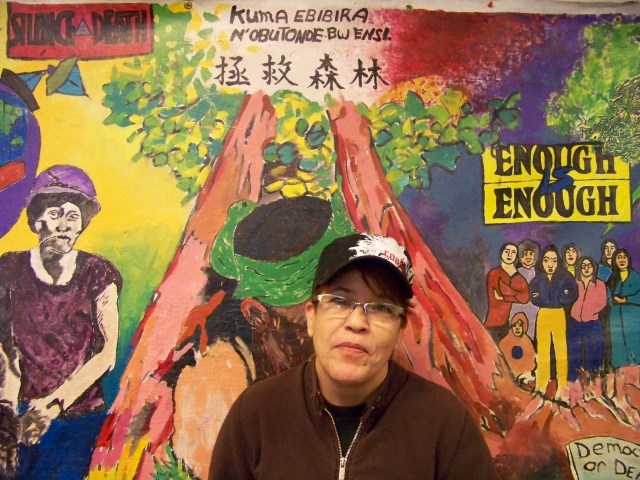
Nicole Tanguay is a Two-Spirit woman of Cree and French descent.  She has been writing poetry for over twenty years and has been published in many anthologies from Connie Fife’s Colour of Resistance to Miscegenation Blues.  Nicole’s work speaks of racism and the destruction of the earth.  Nicole is also a musician, playwright, and political activist.  Nicole works at Native Women’s Resource Center as the interim advocacy co-ordinator.

BCP: What nation are you?

NT: I am of Cree and French descent.  Both sides of my family are originally from Quebec.  I don’t know much history about my dad’s side so I am not sure if there are other nations as well.

BCP: Why poetry?

NT: Why not poetry?  I didn’t choose it, poetry chose me.  I do like the genre as it is a great form of communication.  A few words can bring about the same image as, say, a chapter in a book.  I used to wish that I could have written poetry instead of the 20 page essays I was forced to write at University of Toronto’s English program. 

BCP: What is your writing process?

NT: I write when I need to write, and I tend not to have a choice when I am to write.  I sometimes wake up in the middle of the night and write a piece, or I will be walking down the street and  end up composing a piece in my head.  I tend to see the words in my head way before I write them down.  Sometimes it can take weeks or months before I can get on to paper. 

BCP: How long have you been writing poetry?

NT: I wrote my first poem when I was 22 years old.  I had never written poetry when I was a child, mostly because I had problems reading, but also because I was told I could not write by my English teachers.  Poetry and reading were seen as luxuries as there was always chores to be done, or something more important.  Reading was seen as something you did when everything else that needed to be done was done. 

BCP: Who are your influences?

NT: Chrystos, Beth Brant Lillian Allen, Clifton Joseph, Jeannette Armstong.  Mostly stuff that has soul, speaks to the heart and to the people.  Mostly I would have to say that every day people are my influence, their conversations, and their insights into how we live in the world.

BCP: Your poetry is raw, challenging, and in your face.  What do you try to convey to your readers?

NT: I always have in mind to educate others.  To educate on issues that maybe people need to be reminded about, like racism, or even the Catholic church and how there are aspects of corruption within its leadership.

BCP: Does your spirituality play a part in your writing?

NT: I have never thought about that, but if I was to think about it, I would say probably because like I said earlier, I don’t choose to write.  I am almost forced to write.  I have always believed that it is a spirit that takes over me and writes some of the pieces I have written.  Some of the pieces that I write are complete when they are transformed on to the page.  In those moments I do believe that it was a spirit that was writing through me.

BCP: Do you see poetry as a form of resistance?

NT: Absolutely, in fact I think of political poets as being ink warriors.  My weapon is my pen and it can be more productive for me to write a piece that speaks to the issue than to take to the streets at times.  Though there are times when one needs to put down the pen and take it to the streets. 

BCP: Lots of your poems deal with violence against women and colonization.  Why do you write about these issues?
NT: If I didn’t write about these issues then I would not be true to my spirit.  I cannot as a writer not write about the issue of violence, it is all around us.  It affects us every day in different ways.  My writing is about life and what I see happen around me.  I would be just another mainstream writer, writing about flowers, the blueness of the sky, or what I ate for breakfast. For some that is what they need to write about.  I need to write about issues that rip out my heart, issues that have made my soul bleed, issues that are real.

BCP: Artists identify in different ways.  Do you identify as an Indigenous writer?  Two-Spirit writer?  Writer?  Or, in some other way?  Why do you identify the way you do?

NT: I have always identified as a mixed race Aboriginal Two-Spirit writer.  Why?  Because I don’t think that you can take away your identity when you write or even separate it.  Your life experience no matter how hard we try tends to come out, even if it is unconscious.  I don’t believe though that because you come from a certain cultural background that you have to write about things from that culture.  I tend not to write about what others would think is Aboriginal writing, like about how majestic trees are, though I may include their magnificence in a poem, I tend not to focus just on the tree, but generally what is happening to that tree; like being clear-cut.  Or who is cutting the tree down and its social/ecological ramifications of cutting down that tree.  
BCP: It is Aboriginal History Month now.  What does that mean to you? 

NT: Wahoo, a whole month of celebrations of culture that gets ignored 11 other months of the year.

BCP: What are you working on now? 

NT: I am working on more poetry as well as a couple of plays.  One of the plays is about George Bush and what happens when he falls into a river. 

BCP: When do you expect to have your own collection of poetry published?

NT: I hope to have a collection of my own work ready for publication in the next year.

BCP: What do you want the Aboriginal and non-Aboriginal communities to get from hearing you read your poems?

NT: I want people to be able to hear the voice of the person or issue I am writing about.  They  are able to see what I see.

BCP: What advice do you have for other writers out there who are having difficulties with their writing, or who have yet to see their work in print, or who are afraid to perform their poetry?

NT: Don’t worry who your audience is, just keep writing.  I have a tee-shirt that says the secret of writing is writing.  Keep writing, and when you think you can’t write any more…write some more. 
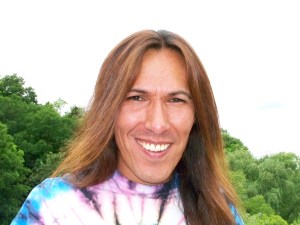
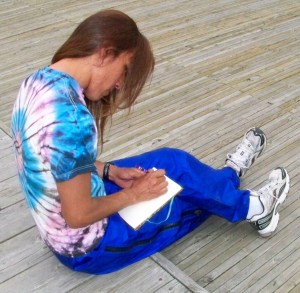
Robbie Madsen is a Two-Spirit Cree living in Toronto.  

A spiritual person, Robbie is a singer and songwriter who was recently featured in a Hip-Hop song, “Come Home”, which received airplay.  His involvement in the project also got him a bit of media attention in other forms, such as two 30 minute long radio features.

BCP: What nation are you?

RM: I’m Cree and originally from northern Alberta.

BCP: Why music?

RM: Singing just came out of me very naturally.  I’ve always done it; ever since I was first able to speak. If you asked my parents, or any of my siblings, they’d tell you I was singing and performing for them at 2 years old. Not a day has passed since where I haven’t sung. It’s always been very therapeutic and healing for me.  I can’t thank Creator enough for having given me this talent.

BCP: What is your song writing process?

RM: Well, up until recently, my songs always started out as words on paper, starting with the chorus, and then I would write the verses. So basically, it’s a poem before I find a way to sing it, or before there’s any instrumentation involved.  And since I’ve never played an instrument, I come up with the melody in my head and then get a musician to translate the pattern to an instrument, usually the guitar. But lately I’m experimenting with writing lyrics to tracks that already exist, and that were written by other composers.
 

BCP: How long have you been writing songs?

RM: The very first ones were at age 16.

BCP: Who are your influences?

RM: Marie Osmond was the first star I noticed when I was 3. The Donny & Marie Show would come on television and I would freak right out, running, screaming, and spinning around with joy. I was hysterical for her. But at age 7 or 8, one of my older sisters put me on to Belinda Carlisle and she’s been my favorite singer ever since. I’m also a big fan of Stevie Nicks.

BCP: Your songs are emotional, honest, and challenging. Liquid Courage is about partner abuse in the gay community. Why did you write Liquid Courage? What do you try to convey to your audience?

RM: Liquid Courage is a song I wrote about my experience with a guy who was in serious pursuit of me, and with whom I would have absolutely loved to be with, but couldn’t because of his alcoholism. He was drunk one night and punched me hard in the face while we were arguing, and the gesture ruined everything. We didn’t recover from it, and I walked away. I did talk to some friends about it but noticed I was too bereft of any emotion for it to be healthy for me.  So, I wrote a song about it, and in doing so, was able to connect with those inner feelings I had to connect with so the healing process could start for me. To be honest, I’m not exactly passed it yet. I still think of him often, and I feel we both lost out on something that could have been great.

BCP: You are very proud of Two-Spirit history and being Two-Spirit. Does your spirituality play a part in your writing?

RM: It absolutely does, in the sense I’m always writing about relationships, and about my feelings therein, and of course, feelings are a matter of the spirit. I could tell anyone right now I have such and such a feeling, and they would take me at my word and wouldn’t doubt it, even though we don’t see feelings. Therefore, feelings are spiritual, and in turn, so is my songwriting.

BCP: Do you see song as a form of prayer?

RM: Of course I do. I often isolate myself in wooded areas for prayer and meditation, and as part of the process, I end by singing for half an hour. When I do this, I do it as though it will be the last chance I’ll ever have to connect with Creator again. Like I mentioned earlier, I’m very grateful for this gift of singing I have, and the last thing I want to do is offer something crappy to Creator in return for it.

BCP: You are currently working on a memoir about being Two-Spirit. Has your song writing helped with your memoir writing, or vice versa?

RM: Yes it has helped. Songwriting has made me a better writer all the way around. I also think the memoir will be a better book because the idea is to be as candid as possible; and I first learned to be comfortable writing about my experiences and emotions, and with sharing them, through songwriting.

BCP: When do you expect your memoir to be finished?

RM: At this point, I expect to be working at it for at least another 6 months. But it’ll probably stretch longer than this. My focus in the memoir is on the incredible spiritual life I’ve had, and the interesting things along those lines keep happening to me as I go along. I guess another 12 to 18 months wouldn’t surprise me.


BCP: When do you expect to have your own collection of songs out?

RM: I can’t say for sure when I might be able to put out a collection of songs since it depends on a few things that are out of my hands; and if I did, I don’t know that it would be a full-length album. But I can say that I’ve recently started recording a new song, and that it’s going well enough that I’ll probably release it as a single in the near future, possibly within the next several weeks.

BCP: Do you identify as a Two-Spirit artist? Aboriginal artist? Artist? Or some other way?

RM: Well, I’m really all of the above, but when I write songs, I try to stick to lyrics that are ambiguous enough so that anybody could relate to them, no matter what race they belong to, and whether they’re heterosexual, gay, or Two-Spirited. I write songs with everyone in mind.

BCP: It’s Aboriginal History Month. What does that mean to you?

RM: I think it’s really the period of time in our calendar year where all related communities need to get together and really lay it down to them, and show them what we’re really all about. I feel we have an unbelievably colorful, honest, humble, and forgiving culture to offer. And I’m so grateful being a part of it all that I could cry right now.

BCP: What do you want the Aboriginal and non-Aboriginal communities to get from hearing your music?

RM: Well, as far as I’m concerned, when I’m singing, it’s reallyCreator expressing some of its beauty through me, or at least that’s how it feels to me. Having said this, I’d like listeners to experience healing and something beautiful when they listen to me.

BCP: What advice do you have for other writers and musicians out there who are having difficulties with their writing, or who have yet to see their work in print, or who are afraid to perform their music?

RM: Lift every stone and leave no leaf unturned. You have to experiment. In my own case, it was recording the hook for a song, from a genre I had never considered before, that finally got my voice on the radio. And never forget the real source of your artistic gift or talent. I have a hard time believing Creator would give anyone such gifts without wanting them to be witnessed by others. Actually, I’d go as far to say Creator makes some of us into artists because it’s a great way for It to promote Itself.

Tune in to Black Coffee Poet Friday July 1, 2011 for videos of Nicole Tanguay reading her poetry and Robbie Madsen singing one of his songs.

Posted in Poetry | Tagged , , , , , , , , , , , , , , , , , , , , , | 5 Comments

CELEBRATING QUEER INDIGENOUS VOICES WEEK: INTERVIEW WITH DANIEL HEATH JUSTICE + YELLOW MEDICINE REVIEW FALL 2010

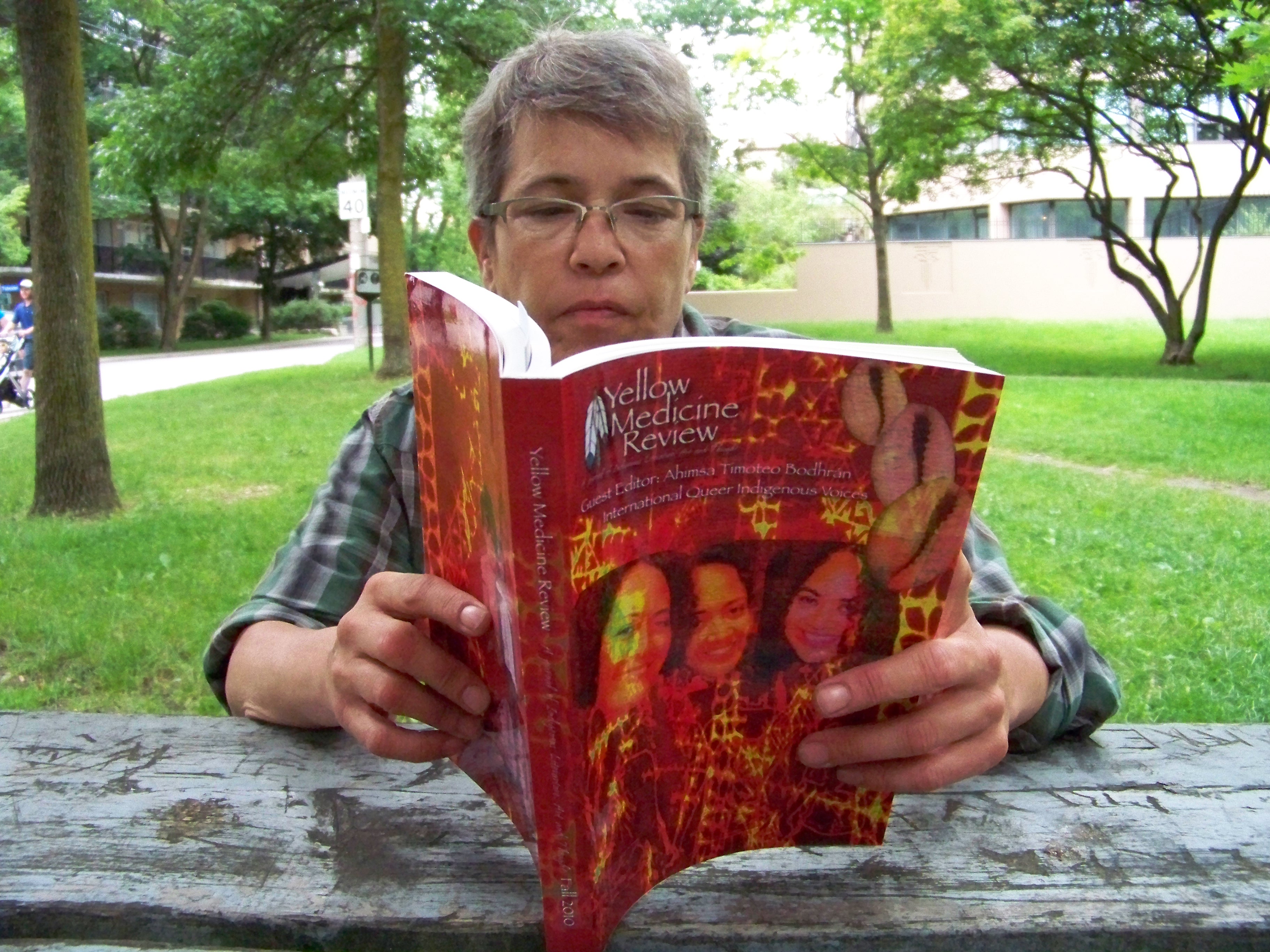
Yellow Medicine Review Fall 2010

The Ancestors We Are Looking For We Have Become:

International Queer Indigenous Voices

Edited By Ahimsa Timoteo Bodhran

Reviewed By Jorge Antonio Vallejos

Near the end of my video interview with Daniel Heath Justice for this special week Celebrating Queer Indigenous Voices I asked, “…anything we’ve left out?” 

“There’s a lot we’ve left out,” said Justice.

True!

Although we had a table full of books we failed to mention Queer Indigenous writers from around the world.  And I’m embarrassed to say that I did not mention an Indigenous, brown, queer woman who helped pave the way for a brown boy like me: Gloria Anzaldua.  She was a Mestiza, Xicana who made an impact on the literature world and changed the way Indigeneity is seen, thought, read, written, and lived. 

R.I.P Gloria.

Justice and I focused on Indigenous writers such as Chrystos, Paula Gunn Allen, Gregory Scofield, Beth Brant, amazing writers who are Indigenous to Canada and the United States.  A great interview (it’s always a pleasure chatting with Daniel) and resource for people, Justice was absolutely right: we left a lot out.

In comes Yellow Medicine Review: International Queer Voices to expose readers to a more broad canon of queer Indigenous writing.         

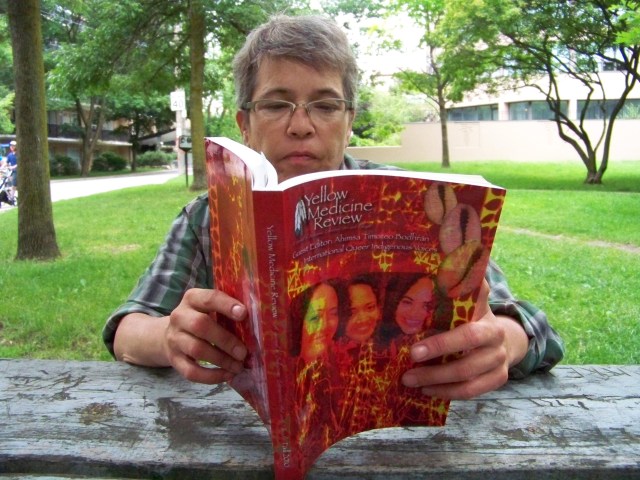
Edited by Ahimsa Timoteo Bodhran the cover alone lets you know that you will be reading writers from Turtle Island (the Americas) and abroad.  Three beautiful Polynesian women grace the cover, smiling, welcoming you to open the pages of one of the few literature journals celebrating Indigenous queerness on the page.  Three shells float above their heads.  I can hear the ocean just by looking at them. I feel calm, and a reassurance that this journal will teach me many things in a loving way.

The introduction is one unlike many: poetic, warm, welcoming, leaving you wanting more.  Bodhran writes in English and Spanish (the two biggest colonial languages on Mother Earth) and he acknowledges his ancestors and relations and new family in the text.  Included in the intro is the actual call for submissions followed by his response:

“Our kinfolk from around the world respond, offer me fabric, offer me fiber.  Say: Weave with this.  Weave with me.  And we weave.” 

The basket woven for the special issue holds stories from Canada, United States, Hawaii, Guam, Tonga, Australia, Palestine, New Zealand, Samoa, and the continent of Africa. (Yes, Africa is a continent, made up of 53 countries, inhabited by different peoples who live different cultures and speak different languages. It’s not a country with one group of people the way everyone describes it). 

There are poems, short stories, plays, essays, letters, songs, and blog entries.  It’s a mix that keeps you engaged through variety and good writing.

The art of letter writing is one that is dying and one that I appreciated being featured in the journal.  Sadly, emails, texts and tweets have become the preferred way of communication.  A snail-mail letter writer myself (I’m looking for new pen pals!  Don’t be shy.), I feel there is still nothing like holding paper in your hand and reading someone’s carefully thought out words.

Aborigine Elder Noel Tovey of the land now known as Australia writes a letter to the Prime Minister: An open letter to the PM, (p. 202).  Written January 14 2009, Tovey was born in 1933 and is one of the Stolen Generations in Australia.  Wrongfully incarcerated for “The Abominable Crime of Buggery”, essentially being queer and having relations with folks, Tovey survived many hardships and wants to see those hardships end for others:

As an older Indigenous man is who is also gay, I am deeply concerned at the suffering of gay elderly people, who, like me, have experienced severe trauma in the past due to the ignorance of those around us. 

I have grave concerns about the “same sex equal treatment” reforms and the way in which these compound the suffering of elderly gay, Including Indigenous people. Elderly gay people are from a generation that preceded civil rights and they were subjected to shock treatment, lobotomy, and other horrors.  They hid from view and remain mostly hidden today.  Nevertheless, they are elders of our gay community who deserve protection.   

While reading the letter I was again reminded why our Elders are so important to us.  The bravery, humility, and love in Tovey’s words come through with every paragraph.  A short letter, you learn something with every sentence.  Tovey shares who he is, where he is from, what he has lived, and his desires for a better future for his people.  And he is not barking like so many activists tend to do.  Tovey writes clear, calm, and with confidence.  His letter is one to be referenced, studied, and used as a spark for future letters to many so called leaders around the globe.

Tonga writer Lao Niumeitolu’s Prison Notes, an essay followed a letter to a friend in prison, gets you thinking about incarceration and those who are incarcerated.  With so many peoples who have colonial histories behind bars it’s an important piece.  For example, in Canada 25% of the prison population is made up of First Nations Peoples who are 2% of the overall population.  Some Canadian provinces see 70% of the prison population made up of First Nations, Aboriginal, and Metis peoples.

Do you see a problem here?

In My First Visit to San Quentin Prison (p. 204) Niumeitolu writes of Samoans, Tongans, and Cambodians doing time in the famous prison often written about and featured in films.  She lets the reader know that it’s not only Latinos and African Americans who are incarcerated.  There are many different faces of colour with colonial histories living in these neo-colonial extensions of slavery.

It’s Niumeitolu’s questions and insights that really make an impact:

The issue of incarceration does not begin only when you’re in lockdown or, as the brothers at San Quentin know so well, it doesn’t end after you’re let out.

Where do our prisons begin?  What leads to the making of a prison?  How am I contributing to the creation of a prison and the criminalization of people—women, men, and children?

We each have to stop contributing to the building of prisons, the making of something to be so different and separate from something else, that one can be said to be good and the other bad.      

Niumeitolu offers a different way of thinking.  She is out of the black and white box, no wehere near it, actually.  Her questions are important.  What is missing are suggestions for alternatives.

In many cultures names are important.  Whether it’s the name of a person, place, story, there is meaning behind a name.  Jennifer Lisa Vest (Seminole, African American, and German) takes you back in history through many names and leaves you knowing why she has the name she does.  A four page poem is all Vest needs to take you on a ride spanning hundreds of years.  Her poem Names (p. 28) is a call to action, a lesson in history, and reason for recognition.  Vest sings to you.  From start to finish you are with her; eyes opening, breath pattern changing, smiles formed, mouth open leaving you in awe.

Reading Names reminds me of why I am a poet and why poetry matters.

Although there is much more to be written of in this 300 page journal I feel it fitting to sign off with some of Vests words.  She writes of a North American experience but it is one that Indigenous peoples around the globe can identify with.  Read the knowledge in Vest’s verse, hear the power in Vest’s voice, and remember that International Queer Voices are here to stay and be read as well as heard:

But they could not defeat us

so they called us savages

Could not baptize us

so they called us heathens

Could not find us

so they called us wiped out

Could not understand us

so they called us mysterious

Could not educate us

so they called us backwards

Could not convince us

to learn their language

so they called us

hostile, shy, afraid

Vest continues her history lesson:

When they got tired of fighting us

we became a legend

They spent hundreds of years

Trying to find the

Last Unconquered Indians

Sent in the army

Government surveyors

Sports fisherman

Anthropologists

Missionaries

But we were untrackable

And intractable

When found

We cost the government

and embarrassment of riches 

and white men

Vest ends her verbal punch to the colonial throat:

 We say

Before you left Spain in Search

of your splintered self

We were here

Before you realized England

Was cramped and dirty

We were here

Before you left France

For your piece of the pie

We were here

Before you tried to carve a nation

out of your expatriation 

Before you defined your red-blooded

American selves

In terms of our absence

We were here

Tune in to Black Coffee Poet June 29, 2011 for interviews with 2-Spirit Queer Indigenous writers Nicole Tanguay and Robbie Madsen.

Posted in Poetry | Tagged , , , , , , , , , , , , , , , , , | 7 Comments

CELEBRATING ABORIGINAL HISTORY MONTH 2011: A SONG BY THE JOHNNYS

The Johnnys are loud, fast, and fun!  

I met The Johnnys last month at the Hard Rock Cafe in Toronto.  A fun bunch, they are kind, charismatic, and very chill.

Interviewing Veronica Johnny and Oriana Barbato for XTRA!, The Johnnys let me hang in their studio during their practice session for West Fest Ottawa 2011.  They were also gracious enough to sing a song for blackcoffeepoet.com.  

Enjoy!

Tune in to Black Coffee Poet Monday June 27, 2011 for a review of “Yellow Medicine Review”: International Queer Indigenous Voices.

Posted in Poetry | Tagged , , , , | 1 Comment

CELEBRATING ABORIGINAL HISTORY MONTH 2011: INTERVIEW WITH VERONICA JOHNNY

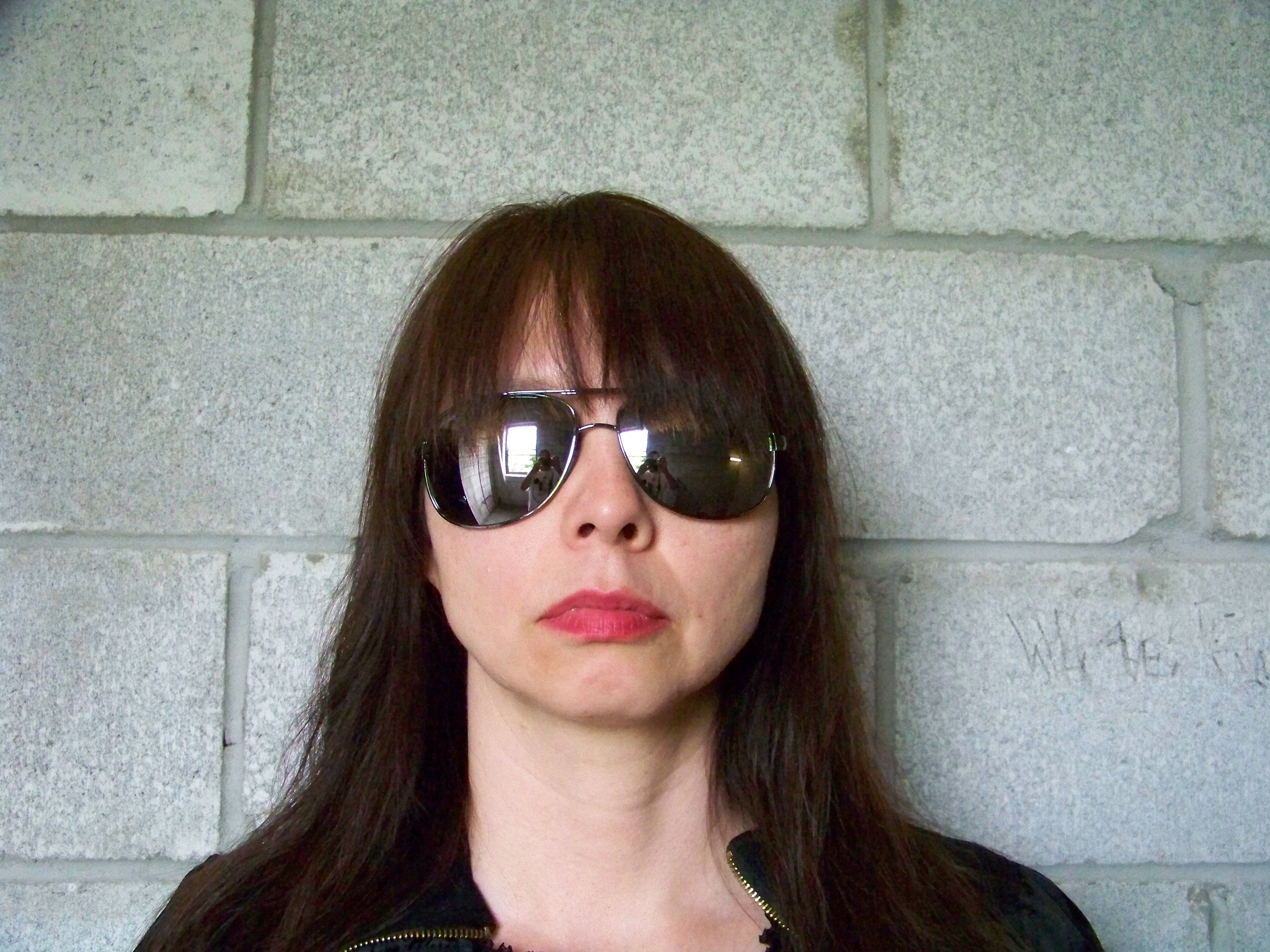
Fronted by the charismatic presence of six-foot, leather-clad Cree Veronica Johnny, The Johnnys sound is an eclectic mix of punk, garage, ’70s hard rock and ’50s rock’n’roll. Originally from the Northwest Territories, the band has built a reputation as an incendiary live act, blasting rapid-fire barrages of lightning-quick anthems featuring catchy hooks and tongue-in-cheek lyrics.

BCP: What nation are you?

VJ: I am Cree and Chipewyan mostly.

BCP: Where are you from?

VJ: I’m from the sub-arctic, near the largest national park in Canada. It’s full of wild bison (wood buffalo) that are the size of a small van.

BCP: Explain the name The Johnnys.

VJ: It’s our last name plus it’s memorable. Everybody knows a John or a Johnny. For most, I think the name “Johnny” conjures a character not unlike the attitudes in our music. He’s rough, tough and probably wears a leather jacket.

BCP: Why song writing?

VJ: It’s a good way to convey positive fun messages. It’s fun to sing and our lyrics make me feel like dancing and shakin’ something.

BCP: What is your process?

VJ: We write about personal experience or a fantasy character/life. We always start with a memorable idea or phrase and then think about what people might want to shout out during a rock show.

BCP: How long have you been writing songs?

VJ: I always wrote poetry and after I learned how to play guitar they gradually turned into songs.

BCP: Who are your influences?

VJ: Other fellow musicians I admire and know who are out there in the music scene, as well as Joan Jett, Madonna and others.

BCP: Your music is loud, fast, and fun.  What do you try to convey to your listeners?

VJ: Positivity. Self confidence. Euphoric release. Movement.

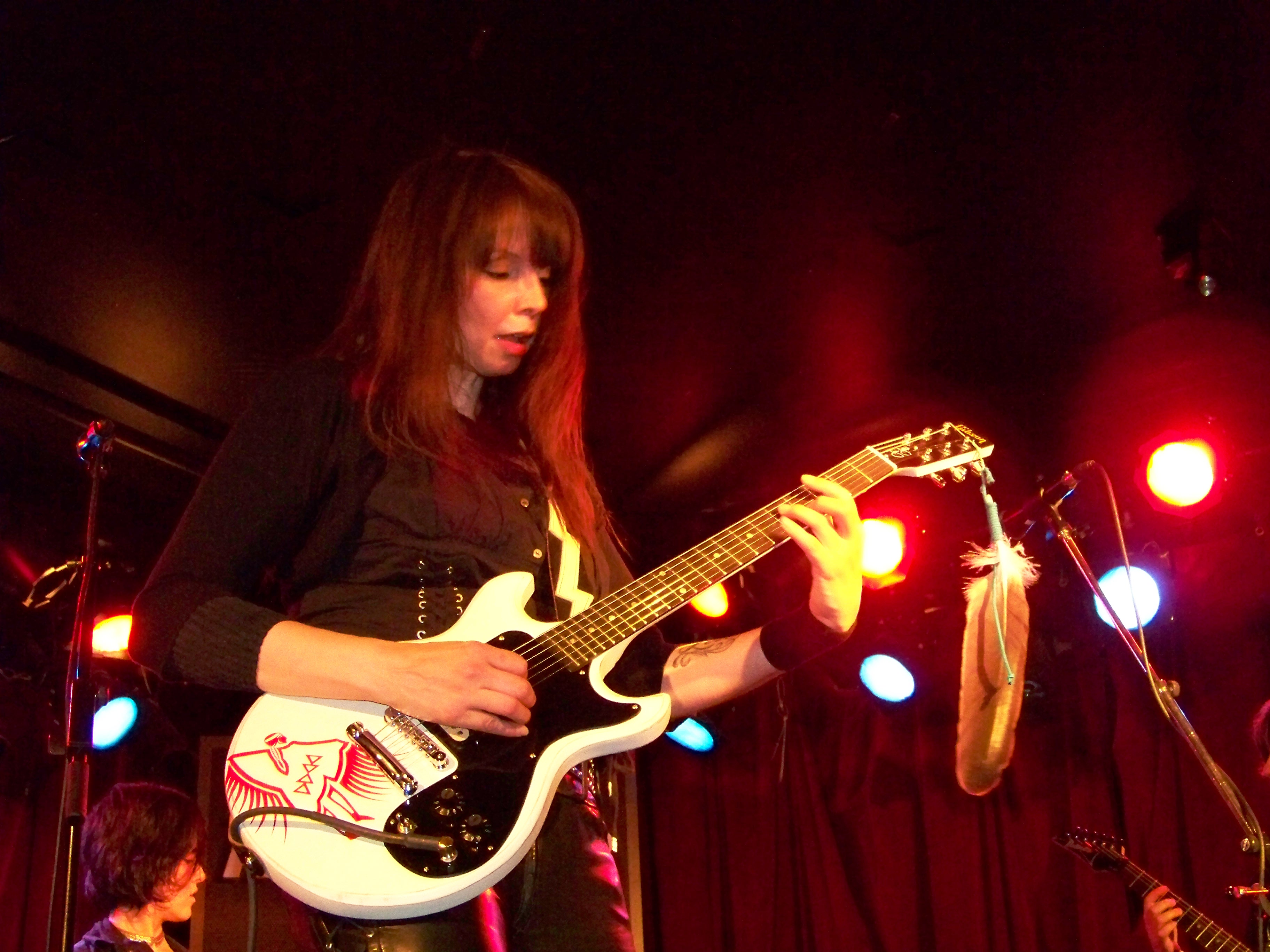
BCP: You have a feather hanging off your guitar neck.  Does your spirituality play a part in your writing?

VJ: In my solo acoustic music mostly. I wear a feather on my electric guitar to celebrate my Aboriginal ancestry.

BCP: Do you see your music as part of your spirituality?

VJ: As well as being the lead singer of The Johnnys, I play the traditional Aboriginal hand drum and sing traditional style songs as well. This music is definitely a big part of my spirituality.

BCP: Many artists identify in different ways. Do you identify as a musician? An Aboriginal musician? Or some other way?

VJ: I identify as an entertainer. I play the guitar and sing and what most people comment on after a show is my energy and stage presence. I love performing.  I love to dress up. I hope to start acting classes at some point.

BCP: You recently performed in front of a large crowd in Ottawa as the opener for Bif Naked.  How was that?

VJ: Amazing! Westfest treated us like gold. The highlight for me was when Thomas Star Walker Clair from Ottawa joined us on stage, in full Pow-Wow regalia. It was a surreal and he was breath taking while he danced.

Tune in to Black Coffee Poet Friday June 24, 2011 for a video of “The Johnnys” performing a song.

Posted in Poetry | Tagged , , , , , | 2 Comments

CELEBRATING ABORIGINAL HISTORY MONTH 2011: LOUDER FASTER MORE FUN

Louder Faster More Fun

By The Johnnys

Reviewed by Jorge Antonio Vallejos

After you hit a Johnnys concert you’re left singing to yourself, shaking your head up and down, throwing your fists in the air, and repeating, “Louder!  Faster!  More fun!” 

And you could care less what the people on the street and subway think.

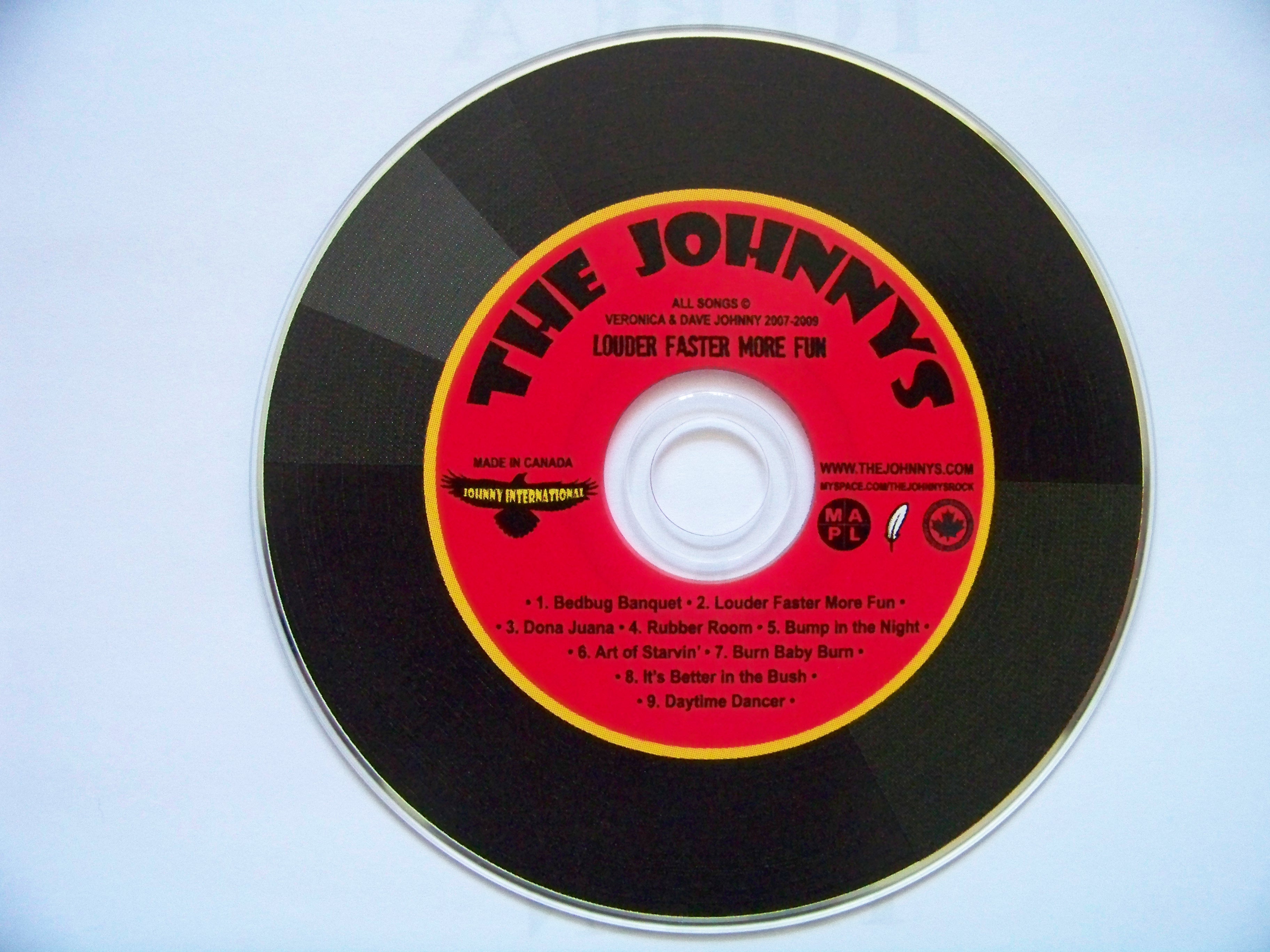
The Johnnys live up to their name.  What you see on the cover of their latest album is what you get: flames (hot lyrics), a soaring raven (songs that uplift you), music played and sung at high volume with fast beats, and it’s all very entertaining.

The nine tracks on Louder Faster More Fun are played at maximum velocity. Veronica Johnny sings the lyrics that stay in your head.  Dave Johnnys forearms and biceps flex and move a hundred miles per second bringing you the beats that move your feet in different patterns, and your arms up and down at a ninety-degree angle (the wannabe drummer pose).  Oriana Barbato and Tim Bones play the bass and guitar that have you doing really bad imitations of them: left hand out straight at your side, right hand stroking up and down your middle, face down with your hair (if you have long hair) over your face.

Is that just me?

Bedbug Banquet starts off the album.  A high-pitched guitar draws you in followed by hard ass drums that leave you punch drunk and wanting more.  The song is about a problem lots of folk are facing now: bedbugs.  Although I find myself pressing repeat on my CD player, the story of the song is something I don’t want to experience once, never mind the fifty times I’ve listened to Veronica Johnny sing about it: 

Bedbug banquet,

I’m afraid of my blanket,

Bedbug banquet,

Can’t hardly stand it.

Most artists express what they know.  If The Johnnys have had bedbugs it brings a whole new meaning to Dave Johnny banging the drums: therapy, letting out frustration, releasing the hate.  And he does it well. 

It’s hard writing this review because I don’t want to move on to the next song.  Bedbug Banquet is essentially about a living nightmare (no pun intended) yet I find myself listening to the track over and over.  How we humans enjoy misery from a distance is funny and disturbing.

Track 2, Louder Faster More Fun, the title song, continues the flow of music that is the equivalent of racing on the autbahn in Germany.  There is no buildup, no lead in, no jab, just all three instruments hitting you like Mike Tyson: hard and fast.  Except, if you’re knocked down by The Johnnys music it’s fun.

Louder Faster More Fun is about a band that thinks they’re all that who get substituted because the crowd wants louder, faster, more fun music.  Who better to provide that than The Johnnys

I can’t get enough,

Feel the rhythm, I feel the rush,

Thunder, lightning,

Give me more of that stuff.

After yelling “louder, faster, more fun” (the crowd at live shows usually sing along) for the last quarter of the track (half a minute or so), the song ends as fast as it started, leaving you wanting more. For that you’ll have to buy their CDs or attend their next concert.

Better yet, do both.

Louder Faster More Fun has songs about living as a starving artist (Art of Starvin’); doing it in the bush (It’s Better In The Bush); an old stripper (Daytime Dancer); and so much more.

If you like loud, fast music, dancing, and having fun, then check out The Johnnys!

Posted in Poetry | Tagged , , , , , , , , | 1 Comment