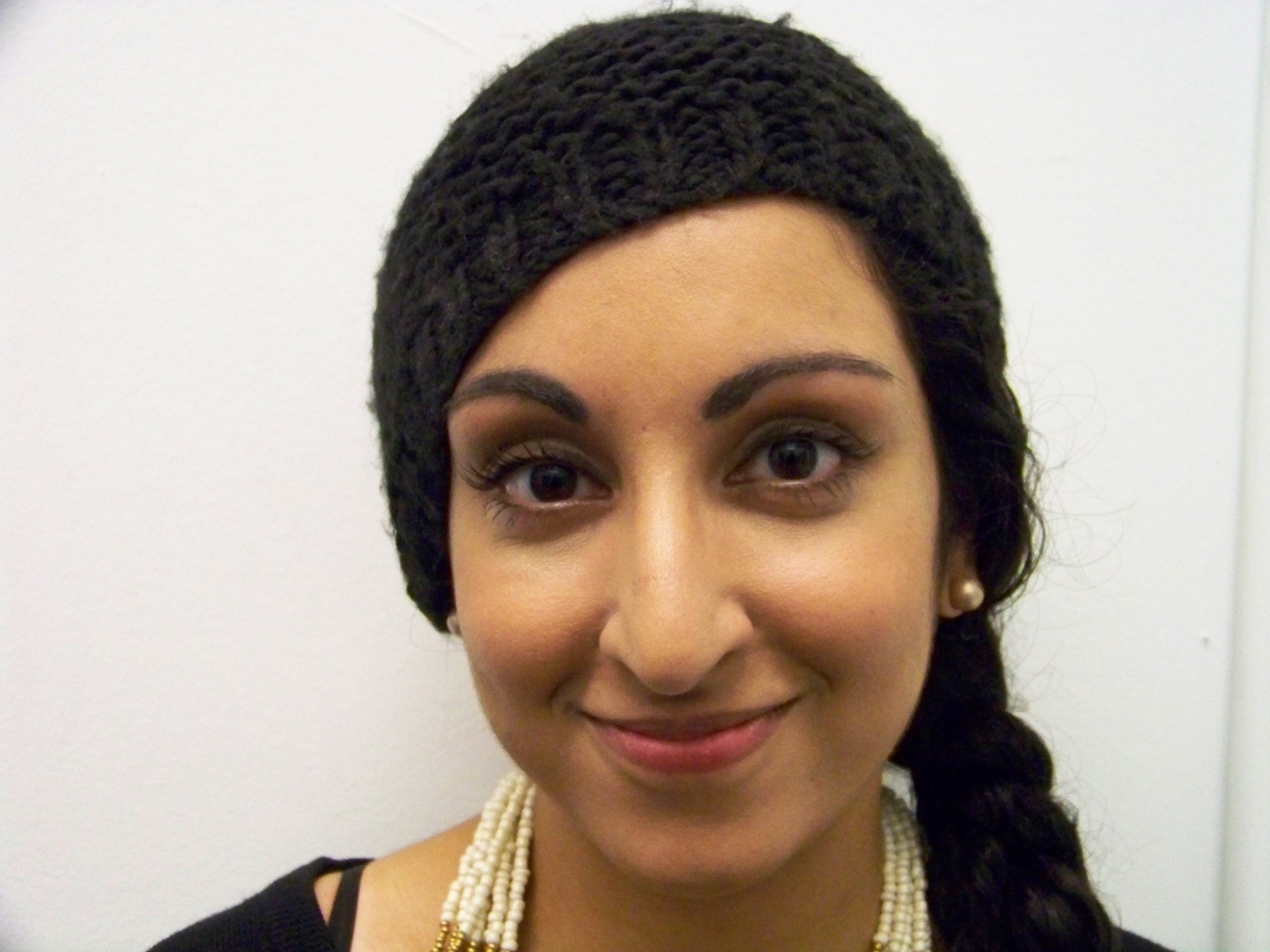
INTERVIEW WITH SHENIZ JANMOHAMED

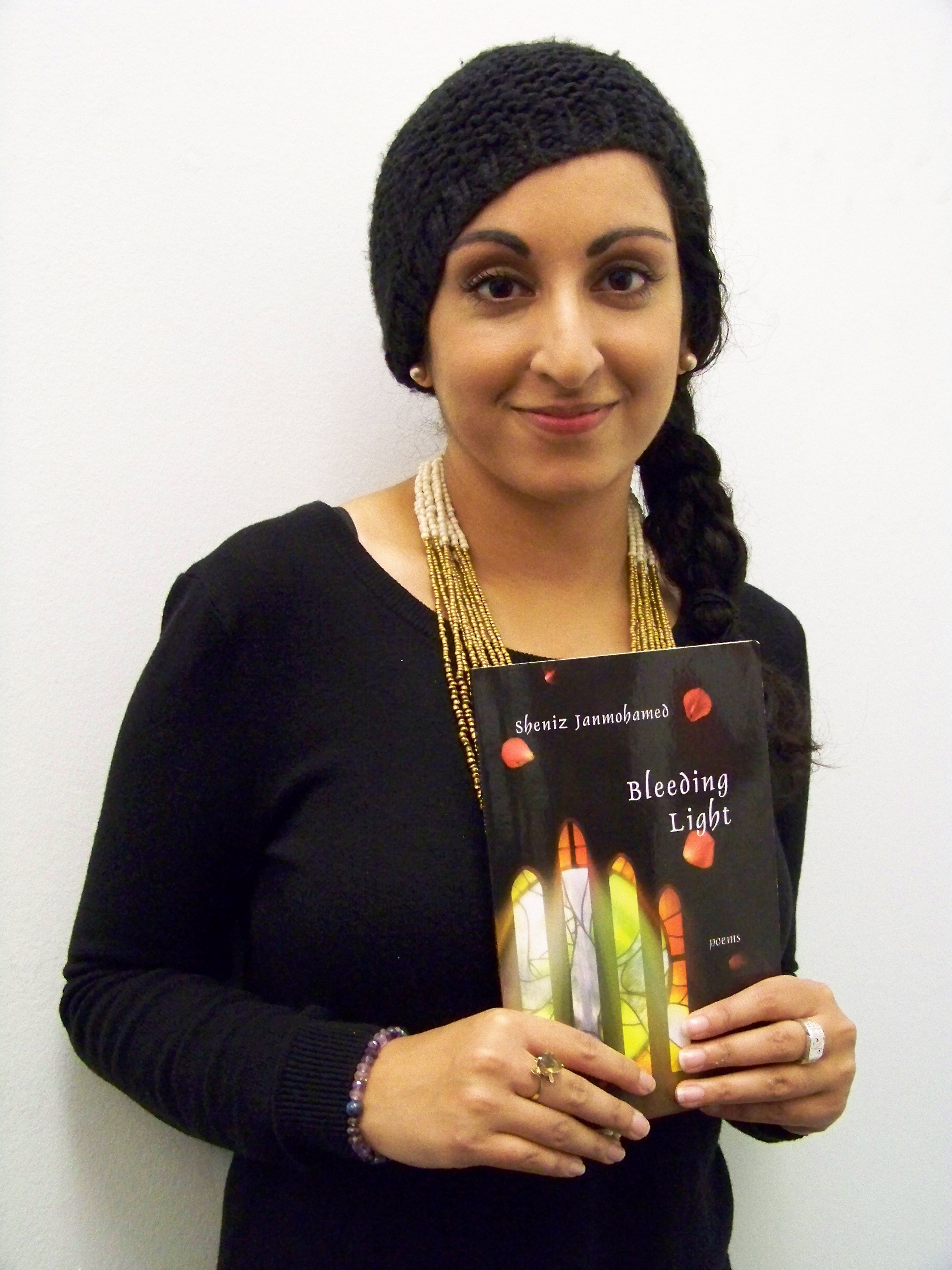
Sheniz Janmohamed is a freelance writer, poet and spoken word artist.  She is the founder and president of Ignite Poets, a spoken word youth initiative that promotes peace and social awareness through poetry.

Her first book, Bleeding Light (TSAR), released in September 2010, is a collection of Sufi-inspired ghazals that explore the complex, nuanced and ever-changing relationship between the lover and the Beloved. It will be taught on the syllabi at the University of Toronto and York University in 2011-2012.

Sheniz conducted blackcoffeepoet.com’s first video poetry workshop.

BCP: Why did you start writing poetry?

SJ: Because it felt natural to me, whether I was painting, dancing or writing, art was the best way for me to express myself.

BCP: What is your writing process?

SJ: It depends on what I’m writing. If I’m writing a spoken word piece, it may come out all at once. If I’m writing a ghazal, I’ll probably write it a couplet or a few couplets at a time. If it is a novel or a short story, I write it in fragments. Re-writing is a huge part of my writing process, except for spoken word. Spoken word is rarely re-written.

BCP: Who are your favourite writers?

SJ: There are too many to name! A few favourites at the moment: Bulleh Shah, Ralph Waldo Emerson, Carl Sandburg, Jorge Luis Borges…the list goes on!

BCP: Explain the title of your book: Bleeding Light.

SJ: Bleeding Light is an oxymoron. How can a person “bleed” light? The title harkens to the idea of becoming so infused with light that we no longer bleed blood, we bleed light.

BCP: Much of your poetry infuses your spirituality. Did you fear that this would turn some readers away?

SJ: No. There are many reasons for a reader to be turned off, but that’s the beauty of poetry.  You read what speaks to you.

BCP: In the final poem of your book you write, “The page is a prayer mat.” Has it always been this way for you?
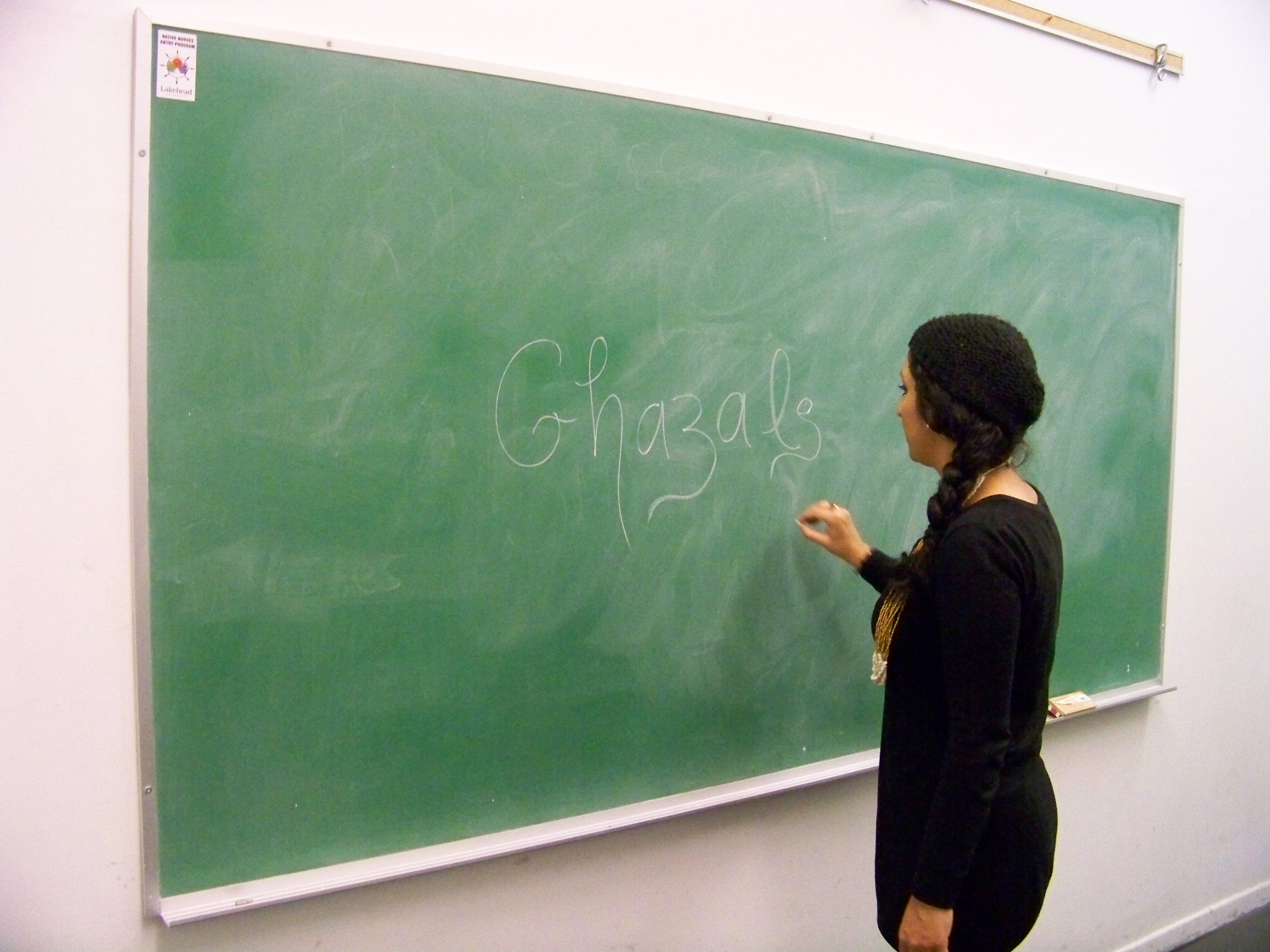
SJ: Yes, but more so in the writing of Bleeding Light. It was an act of prayer in its entirety, a healing process in itself. The page became my only refuge and savior during that time.

BCP: Why did you choose to write in the ghazal form?

SJ: Dionne Brand introduced me to the form in English, and suggested that I use it often to help develop and refine my writing style. The ghazal form is a portal to my ancestral heritage, and allows me to connect to that part of my history while writing in my mother tongue of English.

BCP: You were involved in the spoken word world for a while. Why did you transition to the written word?

SJ: I don’t see it as a transition. Both the written word and the spoken word are active components of my literary life. I started writing poetry long before I even knew what spoken word was! I still perform spoken word in schools across the GTA, and have had many spoken word gigs in the last few weeks, so spoken word is still a very strong aspect of who I am. I occupy both worlds simultaneously.

BCP: You are working on your second collection now. What have you learned since your first collection? How do you think you have grown as a poet?

SJ: The second book I’m writing is a short story collection, so it is a very new space for me to be in. I think that each book has its own learning curve. I’ve grown more comfortable with the idea of being an “author”, and have learned how to promote my book without being too aggressive. As for growing as a poet, I haven’t written a poem (and by that, I mean, a good one) since the book was published. My focus right now is narrative writing.

BCP: You are a graduate of an MFA in Creative Writing program. What were the benefits and hindrances of the program in terms of your writing? Do you recommend such programs?

SJ: There are certain professors/authors/peers who may have a completely different aesthetic than you. This can be beneficial because it forces you to think outside of your own literary aesthetic. However, you have to choose which advice to listen to and which advice to disregard.

I was lucky with the program because I had mentors who encouraged my writing and made it stronger. I also had access to some of the best literary minds in Canada. Choosing a good program that encourages a variety of creative approaches is important. The last thing you want is to come out of the program with a voice that isn’t your own.

BCP: You work for your local arts council. Has being surrounded by art brought you closer to your art form?

SJ: Yes and no. It helps me to understand what goes into promoting, nurturing and fostering the arts, and has given me opportunities to showcase my skills, but at the same time, I have less time to write my book- I’m slowly learning how to balance my own writing time with the time I give to promoting and nurturing the arts– both of which are crucial.

BCP: You were published by a small publisher. Small publishers and independent bookstores are dying every month. How do you see this affecting poetry?
SJ: The bigger presses have more clout, resources and money, so it’s incredibly difficult to get a smaller press in the limelight, unless you’ve been given the title of the “underdog”.

There’s also a certain kind of literary aesthetic that is being promoted and pushed into the mainstream, one which I don’t easily fit into. Poetry is already a niche market, so being published by a small press and being a poet is twice as challenging.

However, I think that the great thing about small presses is that they have faith in their writers. They choose to take a risk based on the literary merit of the book, rather than its ability to generate revenue. I think that’s incredibly vital. It also forces authors to promote their own books and become more active participants in their book campaigns- which is heartening to readers.

BCP: With people having much shorter attention spans these days do you see poetry having a comeback?

SJ: It depends. If poetry becomes more self indulgent, navel-gazing, academic and unreflective of the diversity of this country, then I doubt that the average Canadian will care about poetry. But if the book industry supports dynamic new voices from a wide spectrum of communities, cultures and backgrounds, then perhaps it has a fighting chance.

I read an article in the New York Observer that began with this powerful line: “If you really want to understand Occupy Wall Street, you have to talk to the poets.”

It seems that we are reclaiming our place in the public sphere, particularly when it comes to creating awareness and change in our communities and society at large. In the words of Shelley, “Poets are the unacknowledged legislators of the world.”

BCP: During our interview you had an old Robert Frost book with you. Do you prefer the real book to the E-Book? Do you see the E-Book benefiting or hindering poetry?

SJ: I personally like touching, feeling and reading real books. Something is lost in the E-Book. There is no marginalia.

Reading an E-book has no history. It’s generic. I don’t like that element to the E- Book, and while I understand that it might be more convenient, it’s just not my cup of tea. However, I see the benefit if books are not available to purchase in print in other countries, or if we are actively trying to reduce our use of paper products.

BCP: What advice do you have for young writers?

SJ: Do your research. Read a lot. Trust your voice. Find a mentor. Don’t give up.

Submit, submit, submit!

Tune into BlackCoffeePoet.com Friday October 28, 2011 for a video of Sheniz Janmohamed reading from her book “Bleeding Light”.  

Posted in Poetry | Tagged , , , , , | 1 Comment

BLEEDING LIGHT

Bleeding Light

By Sheniz Janmohamed

Reviewed by Jorge Antonio Vallejos

Bleeding Light starts off with a cry.  A beautiful cry.  One that I welcomed.  One that I felt.  One that set the tone for the entire collection.  One that I will re-read many times.  One that I will remember forever. 

The Last Cry is the moment before the arrow penetrates the heart.  It’s “the essence of a ghazal” writes Janmohemed.  And she’s not exaggerating.  Every poem in her collection comes at you like an arrow.  Sometimes you can move out of the way, other times you are stunned by Janmohamed’s words and are left frozen to be pierced.

As Janmohamed’s words fill your mind she is not preaching but sharing, and many times she is asking questions, many questions. 

In Abyss of Forgetting Janmohamed asks:

When light is a myth and the attic of his mind becomes her solace, what use is prayer? 

Janmohamed shows that she is not a blind believer.  Her sufi influenced book is not one that states her way of reverence for Creator is the right way.  She herself questions a fundamental practice to her spirituality.

In Allah-Hu Janmohamed starts with, “He is closer to me than my jugular vein,” which is a direct reference to the Quranic verse 50:16: “He is closer to you than your jugular vein.”  The poet immediately shows the reader she is a believer and that her union with her creator is real.  But Janmohamed shows she is much different than most followers of Allah-Hu (Allah is.  A declaration.  A celebration.  A recitation).  Not only are her words one of humility and reverence they show a different side to a believer that not many expose:

He paints his creation but knows his canvas still remains imperfect. 

How many spiritual people do you know who say creation is imperfect?

Janmohamed follows up questions with a critique of colonialism.  In Ladders Without Rungs she writes:

They drill oil from oceans, drag seals to slaughter, unsalt seas. 

Janmohamed is showing the reader that we are going nowhere.  She chops down the ladder of upward mobility.  There are no rungs to this colonial way of living.  We are momentarily climbing up two sticks that are being played off as a stable ladder.  Sooner than later, we are going to fall.  Then what? 

Great thinkers are full of questions.  As stated earlier, Janmohamed asks many:

Will I love someone enough to burn for them?

She answers this question in Noble Soul.  While reading this poem I wrote “AMAZING!” in my notes.  I’m a bit of a romantic.  You can stereotypically attribute that to my South American side if you like (yes, I’m mixed and proud!).  Regardless, I’m a sucker for such poems when written well.  And Janmohamed writes well!

Janmohamed deconstructs regular notions of love:

Common lovers call their beloved my other half.

But I am you, how can there be a half in a whole?

 A marriage of souls cannot be made a union.

A union was once separation.  But a diamond is coal.

 In my veins run your blood.  When you hurt, I bruise.     

Beautiful!

Throughout the collection Janmohamed shows she is a well read writer.  There are references to great poets such as T.S Elliot, Carl Sandburgh, and a local writers, Rishma Dunlop.

There are also lines that have you stop reading to take them in, re-read them, think, and wish you had written them.  For example:

Only the pen knows how to draw blood without bleeding.

Janmohamed has you constantly appreciating her words as well as contemplating them:

When everything we create has already been created, what is innovation?

Innovation is the collection that Janmohamed has put together.  She prefaces sections with Arabic words, prays on paper in a poetic way, states her love for her beloved without grossing you out, and opens herself to her reader extending an invitation that they gladly accept.

I remember my friend Daniel Heath Justice tell met that a good book is like spending time with a friend.  After a week of heartbreak I felt that I found a new friend in Janmohamed.  She snuggled in bed with me as I read, spoke to me as I hung my head low, embraced me as I cried my last cry. 

In her final poem, The Last Ghazal, Janmohamed writes, “This page is a prayer mat.” 

There’s no better way to describe Bleeding Light.

Tune into Black Coffee Poet Wednesday October 26, 2011 for an inclusive interview with Sheniz Janmohamed.

Posted in Poetry | Tagged , , , , , , , , , , , , , , , , , , | 2 Comments

SOUVANKHAM THAMMAVONGSA READS HER POETRY

Laotian poet Souvankham Thammavongsa is not only a great poet she is a great person. Meeting her for the taping of the video below was a pleasure.  We chatted for two hours. Lots of laughs, book talk, and idea sharing.

Souvankham reads at the International Festival of the Authors, Toronto, Sunday October 23, 2011 at 2 pm, and Saturday October 29, 2011 at 4pm. Don’t miss it!

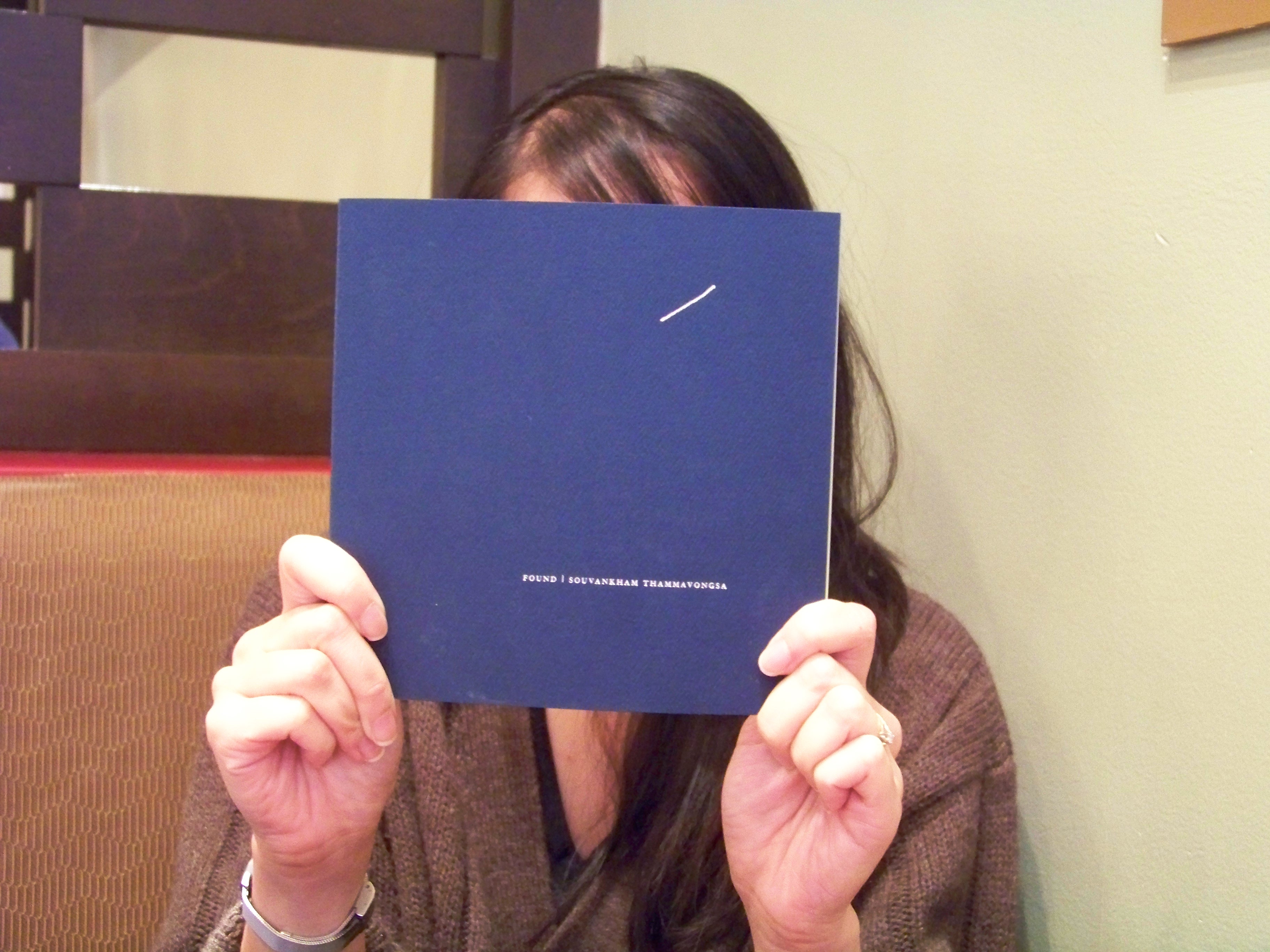
Enjoy Souvankham Thammavongsa read from her book Found.

Posted in Poetry | Tagged , , , , , , , , | Leave a comment

INTERVIEW WITH LAOTIAN POET SOUVANKHAM THAMMAVONGSA

Souvankham Thammavongsa is a Laotian Canadian poet, author of the ReLit-winning Small Arguments and Found, also a short film by Paramita Nath screened at film festivals worldwide including Dok Leipzig and Toronto International Film Festival.

Souvnkham has been published in many literary magazines and journals and has been invited to read at Harbourfront’s International Festival of Authors and International Festival of the Authors 2011. Born in Thailand in 1978, she was raised in Toronto.

May Lui for Black Coffee Poet: Why poetry?

ST: It’s sort of like swimming in the deep end of a pool. You better know what you are doing there because it’s going to become very clear if you don’t. Looking good in a swimsuit isn’t going to help you out.

ML: Tell us about your writing process.

ST: I don’t write everyday. Sometimes I try to do anything but write. I work for a financial newspaper full-time and have been there for ten years. I work with numbers all day and this allows me to think in a language that doesn’t have anything to do with words, to remember that sometimes words aren’t everything. No one at work knows I write poetry and I prefer it that way. I like that there’s a place for me there no matter what happens to my writing, whether it fails or if it’s successful. It doesn’t matter. I also owned a used bookstore with my husband and wrote short stories all day when it snowed and we had no customers, except for the ones who told us we weren’t going to make it or asked us what we were doing there or if the knapsack in our window display was for sale. I learned that there are people in the world who want nothing to do with books, that there are those who at the sight of a bookshelf start to slowly back up towards the exit, that there are those who would buy themselves a three-dollar book and tell their curious and bright son they don’t want to buy him a book of his choosing because they’ve already spent more than they’ve wanted. That was a learning experience for writing I don’t think I would have gotten by writing. I always let my writing sit around for a very long time and I never show my work to anyone until it’s done. If I give a reading at a festival or at a reading series, I’ll write something new to surprise myself or someone else who has seen me read before. I read whatever interests me like articles about boxing in Sports Illustrated or about the latest fashions in American Vogue. I try to keep up with the Leafs or catch a baseball game. I take sewing classes and learn how to make skirts and quilts, go to the museum or art gallery, get my hair cut or get my nails done to see how other people outside of writing create. I read old diary entries from when I was twelve-years-old to remind myself where I come from and to just have a giggle at myself because I know exactly how things will turn out or I read books written by writers I want very much to be. I try to learn new things like new recipes or garden or swim or drive—so I have new skills or something to talk about that doesn’t have to do with writing but can have something to do with writing. I watch a lot of silly movies and listen to music. I watch Pawn Stars and American Pickers on television. I like to meet with good friends for dinner at Guu and talk for hours and hours. When I do sit down to write, I can do it anywhere: on my lap, in a noisy bar, in the kitchen on the stove (off, of course), on the wall, and only when I must, on the computer.

ML: Found is a remarkable book of poetry. Tell us about what it means to find poetry in everyday items.

ST: For me, to find poetry in everyday items is remarkable. What precisely makes a thing remarkable? I like how the remarkable can come from and is held by what is unremarkable.

ML: How many poetry books have you had published?

ST: I have had two books published by Pedlar Press.

ML: How do you select the poems for each book?

ST: I try to choose the ones that make the prettiest dots.

ML: How long have you been writing poetry?

ST: If I count from the time I was first published in a little magazine, then it’s eleven years—but that isn’t considered to be very much time at all.

ML: Who are your influences?

ST: I like Agnes Martin, Richard Pryor, Alice Munro, Flannery O’Connor, Carson McCullers, Elizabeth Bishop.

ML: What inspires your writing?

ST: Other writing. And people, how they behave. Or things. I like to look at things especially.

ML: What are you working on right now?

ST: I am working on a collection of poems about light. It’s about what’s in the world, how it’s been given to us, and what we take from it.

And a quilt.

ML: Is there anything you’d like to say to emerging poets and writers?

ST: I think emerging poets and writers don’t want anything said to them. Especially since they’ve already emerged.

May Lui is a Toronto-based writer who is mixed-race, anti-racist, feminist and an all-around troublemaker. She blogs at maysie.ca, ranting and raving at any and all injustices and uses the f-bomb regularly. She’s been published in the Toronto StarFireweed MagazineSiren Magazine, in the anthology With a Rough Tongue: Femmes Write Porn, at section15.ca and rabble.ca. Contact her atmaysie@rogers.com

Tune into BlackCoffeePoet.com  Friday October 21, 2011 for a video of Souvankham Thammavongsa reading from her book “Found”.

Posted in Poetry | Tagged , , , , , | 1 Comment

FOUND

Found by Souvankham Thammavongsa 

Reviewed by May Lui

Found is Souvankham Thammavongsa’s second published book of poetry, her first is Small Arguments.

The poems are pieces, fragments and notes, inspired by a scrapbook kept by Thammavongsa’s father in 1978, the year she was born.

Found poetry, as readers may already know, is finding, creating and discovering poetic meaning and expression in words, phrases, objects, anything really, that wasn’t intended as poetry. I’ve written a few found poems, and there’s often humour and hidden meanings that wouldn’t have been noticed in the original form. Dionne Brand once wrote a found poem of the names of old stores and businesses along Dundas Street West in Little Portugal. I like to think of found poems as gifts that the poet finds and passes on. Changed, but not completely changed, and then presents to the reader.

I struggled with this review for a few reasons. First, I have a hard time reading and understanding poetry sometimes. My mind is too linear, my brain too rational and grounded in the everyday. I often feel blocked and intimidated. And secondly, there’s hardly any words in this collection! The book is short, the poems, as I’ll describe in a moment, are very spare with words. Words, the very thing I need, as a reviewer.

Each poem is a mystery; sparse and deliberate. I read each poem several times, becoming greedy for more layers, more meaning, more of everything.

The first poem, which is untitled, sets the tone of the collection. It’s about someone, but we don’t know who. This is a bit annoying, as the reader can only imagine who the poem is about, and we aren’t given enough clues to figure it out. Yet through my annoyance I wonder if that’s the intent. To force the reader to notice how little “truth” we know, or have access to. Throughout most of our lives, especially those of us who come from elsewhere or whose families came from elsewhere, or who come from here and have had histories erased and obliterated; parts of our lives and our heritages not valued, destroyed, lost.

The collection reads like the scraps of information Thammavongsa has gleaned for her poems. Many times I feel as if I almost understand, I have a moment of insight, then the meaning slips away from me. I find myself needing and wanting more information, more words. I’m unsure if they are being purposely withheld or simply lost, the way words, lives and memories are lost in transit, in migration, in the face of survival and priorities.

Found itself seems disoriented, directionless and random. It’s an unsolved puzzle with no resolution and no finite ending. In a linear and rational world, and with my rational brain always turned on, it’s challenging for me to see these qualities as positive, yet they are.

There’s more absence than presence in the poems. This makes the words that we are given all the more precious. These wisps are all we have to cling to.

Two poems about postage stamps infer time, space, distance and the unknown contents of the letters/packages. What the contents were, and what happened to them are questions that are both unasked and unanswerable.

My favourite poems are the ones that are more personal, and less about the found materials themselves. Poems like My Father’s Handwriting, My Mother, A Portrait of, What I Can’t Read and Laos.

On the cover is a silver mark, a reproduced hand-drawn slash mark. In the latter part of the collection the reader learns where the slash mark was found. Its meaning can only be guessed and is another mystery to ponder.

Highly recommended!

May Lui is a Toronto-based writer who is mixed-race, anti-racist, feminist and an all-around troublemaker. She blogs at maysie.ca, ranting and raving at any and all injustices and uses the f-bomb regularly. She’s been published in the Toronto StarFireweed MagazineSiren Magazine, in the anthology With a Rough Tongue: Femmes Write Porn, at section15.ca and rabble.ca. Contact her atmaysie@rogers.com

Tune into BlackCoffeePoet.com  Wednesday October 19, 2011 for an interview with Souvankham Thammavongsa.

Posted in Poetry | Tagged , , , , , , , , , , , , | 2 Comments

BROCKTON WRITERS SERIES TURNS 2: BCP READS AT BWS

It was an awesome experience to read at Brockton Writers Series!

It was also an honour.

Big up to Farzana Doctor for putting together the most inclusive and diverse reading series in Toronto, Canada, and possibly the whole country.  I hope other reading series follow in her footsteps!

Below is the painting that inspired my essay “Embracing My Identity: Reflections on Jorge Gonzalez Camarena’s painting El Abrazo” published in “The Kenyon Review” winter 2010.  I read this essay at Brockton Writers Series 17 (April 2011).


Posted in Poetry | Tagged , , , , , , , , , , | 1 Comment

BROCKTON WRITERS SERIES TURNS 2: INTERVIEW WITH FARZANA DOCTOR

Farzana Doctor’s first novel, Stealing Nasreen, received critical acclaim and was nominated for Masala!Mehndi!Masti! People’s Choice Award.

In June 2011, Doctor published her second novel Six Metres of Pavement to national acclaim and she received the Dayne Ogilvie Grant for emerging gay or lesbian writers.

Doctor has also written on social work and diversity-related topics, and in her spare time she provides private practice consulting and psychotherapy services.

She lives in Toronto.

BCP: It’s been two years since you started the Brockton Writers Series!  Congrats!  How does it feel?

FA: It feels amazing! I love how it’s evolved over time. I didn’t really expect it to last this long. When we first started, we thought it was going to be a one-time event, not a series.

BCP: BWS started in a café and now runs out of a church.  Is it a hard sell for writers to come and read there?

FA: Not at all. I do a little outreach, but writers mostly contact me for a spot. We’re booked up until July 2012. Some writers feel tentative at first about swearing or reading sexually explicit work in the church (we all carry baggage about what is and isn’t allowed within religious spaces). But we reassure them that the church is a progressive space that welcomes us with open arms. The fantastic thing about doing a literary series in a church is that the acoustics are fabulous. The audience listens very carefully. There’s no espresso machine or streetcar noise interrupting the readings.

BCP: You’re a queer Muslim woman who runs a reading series out of a Christian church. BWS could possibly be the most spiritual reading series in North America!  Muslims and Christians working together via literature.  Amazing!  What are your thoughts?

FA: Except for the setting, spirituality and religion doesn’t really come into play. The Jeremiah Community at St. Anne’s is really interested in having community members share their space. When I chat with them about the series, it’s a secular conversation.

BCP: Explain the name Brockton Writers Series.

FA: The neighbourhood is called Brockton Village. When we first started, Melanie Janisse (the first co-curator, and the owner of Zoots, the café we used to work out of) and I wanted to organize something for and with the local community.

BCP: Why a reading series?

FA: Melanie and I are both writers. Although there are many reading series in the city, we felt like we needed something local, to showcase local writers. We also wanted a friendly space where neighbours could come and congregate.

BCP: How has the first year differed from the second?

FA: We shifted the focus from local writers to all writers who wanted to participate. We focus on getting a diverse range in terms of experience, genre, and identities. In Year 2, we’ve also added the writers’ networking session, a half-hour pre-reading discussion where writers can chat with one another. Sometimes we bring in guest speakers.

BCP: What are your plans for year 3?

FA: I’m hoping to apply for some funding in March so that we can pay the writers better. Right now, we collect a PWYC entrance fee (suggested $3-5) and we give the proceeds to the writers. We’re also thinking about whether the series should be monthly or six times a year—we haven’t come to a consensus on that one. We’d like to boost the audience size as well.

BCP: You have three volunteers helping out with BWS.  How crucial are volunteers?  Are you looking for more volunteers?

Farzana Doctor and Brockton Writers Series volunteers Suzanne Sutherland, Sharanpal Ruprai, May Lui at BWS 2 Year Anniversary!

FA: I think we can offer a better event when more people are involved its creation. It also helps to share the workload. We’re always looking for more people to help out! Sharanpal Ruprai is a poet who helps to curate and host. May Lui writes poetry, prose and non-fiction and facilitates the writers’ networking time. Suzanne Sutherland is a prose-writer helps with set-up and selling books.

BCP: How is BWS different from other reading series in Toronto?

FA: You know, I’m not completely sure, because there are many good literary events in the city. I think we’re probably more diverse, because we’re intentional about that–people have definitely commented on that. We also attract neighbours who don’t attend other literary events but like coming to a community event.

BCP: What do you try to bring to the audience?

FA: Excellent and inspiring writing from established and emerging writers.

BCP: You’ve had some queer specific events.  Will there be other themed nights at BWS?

FA: Yes, we’re planning a special showcase of writers from The Writers Union of Canada in April (I’m a TWUC member) and we’ll do another queer-specific event in June.

BCP: You are a writer with two novels to your name.  Has being a writer helped with running BWS?  Has running BWS helped with your writing?

FA: As a writer, I have a wide writer network, which helps with attracting writers. After each BWS, I feel more inspired to write, which is a great gift. I think organizing BWS has also helped me to be better known as a writer.

BCP: Do you get any funding?  If not, will you start applying for funding?

FA: Yes, as I mentioned above, my plan for Year 3 is to get us some funding so that we can pay the writers what they deserve.

BCP: Why should Toronto’s lit community come out to BWS?

Writers Ann Shin, Farzana Doctor, Patrick Connors, Aisha Sasha John at Brockton Writers Series 2 Year bash! 

FA: Firstly, they’ll hear talented writers! Besides that, BWS offers a warm, inclusive space for mingling.  The Q&A offers an opportunity to better understand the writers’ work and process. We bring in guest speakers to talk about grant writing, professional organizations, writing programs, and publishing during the networking time. There have been a number of supportive alliances that have been built, including this one!

BCP: What advice for other people wanting to start their own reading series?

FA: I’m not sure that I have much good advice. I sort of  “slid into” the role of organizer and BWS has continued ever since. We’re constantly looking at ways to improve BWS in terms of increasing audience size, figuring out scheduling and finding more ways to support the featured writers. I guess we’ll continue doing it until it no longer feels like a good thing to do.

Tune into BlackCoffeePoet.com Friday October 14, 2011 for a video of Black Coffee Poet reading at the  Brockton Writers Series.

Posted in Uncategorized | Tagged , , , , , , , , , , , | 1 Comment

BROCKTON WRITERS SERIES TURNS 2!!!

The Brockton writers series turned 2 this month!  We’re celebrating all week with the article below, an interview with Farzana Doctor, and a video on Friday.
 
Farzana Doctor sees hyper-local reading series grow:

Brockton Writers Series brings diversity to Toronto’s lit community

By Jorge Antonio Vallejos

This article originally appeared in XTRA! in February 2011. 

What do you get when you put together a two-spirit poet who slams the church, a senior citizen reading bloody stories about nuns and a playwright of colour cussing like a sailor? A night at the Brockton Writers Series.

Curated by Toronto novelist Farzana Doctor, a gay woman who is a secular Muslim, the Brockton Writers Series is held in an unlikely place: St Anne’s Church.

With its domed ceiling, glittery paintings of Jesus, wall-to-wall carpet, hardwood pews and slogans reading “He suffered for you,” St Anne’s Church is the new home for a writers’ night that breaks many commandments.

“My interest from the beginning has been to make a real kind of diversity of writers: established people, emerging people, people of colour, queer people, older people, younger people and so on. Just a real good diversity,” says Doctor.

During a conversation they had while walking their dogs, Doctor and Brockton-area coffee-shop owner Melanie Janisse realized how many writers lived in their neighbourhood.  

“We talked about how literary events don’t feel accessible if you don’t know all the right people,” says Doctor.

“We should have a night,” Janisse said.

After running for a year and a half at Janisse’s Zoots Café, a miscommunication last summer saw the series left with no location an hour before the event. Quick thinking and community spirit led to the impromptu venue.

Farzana Doctor at home.

Rob Crosby-Shearer, a regular at the series and director of community formation at the Jeremiah Project, located in St Anne’s, opened the church for Doctor and provided a microphone and refreshments. He asked for nothing in return.

Doctor remembers Crosby-Shearer’s words well: “Welcome. You have a lovely community event. Use our space. We want to be open to the community.”  

“Once we were in the space, a number of writers, including Muslim and Jewish writers, said, ‘What a beautiful space. The acoustics are so cool,’” says Doctor.

Realizing that many of the writers might have a problem with the venue being a church, Doctor had some concerns.  

“I thought, ‘Is that really a good space?’ Because not everybody is comfortable in a church for lots of reasons,” she says.  

So far, all who have attended have embraced the event and the space because of its inclusivity and their trust in Doctor.

“I’ve known Farzana through a few social connections for many years, and I like and trust her politics. Since she’s a queer, Muslim feminist, I know she brings a radical and knowledgeable analysis to this series,” says local writer May Lui.

Happening the first Wednesday of every month, each night starts with a half hour networking session followed by the readings. Scheduled writers read for 15 minutes each, and three “open mic” readers are each given five minutes.   

Refreshments are provided by the Jeremiah Project at pay-what-you-can prices. Upcoming themed nights will include an all-queer writers night and a Canadian voices night. 

Anywhere from 15 to 40 people attend the event each month, approximately 50 percent of them gay.  

“Queerness gets integrated into the event because I look for diversity in voices,” says Doctor. “If  we’re not doing that kind of outreach, we don’t get diversity; we get monoculture.”

“The Brockton Series allowed me to be able to showcase my work with seasoned writers and feel that my work has some relevance in the writing world,” says two-spirit poet Nicole Tanguay.

Tune into BlackCoffeePoet.com Wednesday October 12, 2011 for an interview with Farzana Doctor.

Posted in Uncategorized | Tagged , , , , , , | 1 Comment

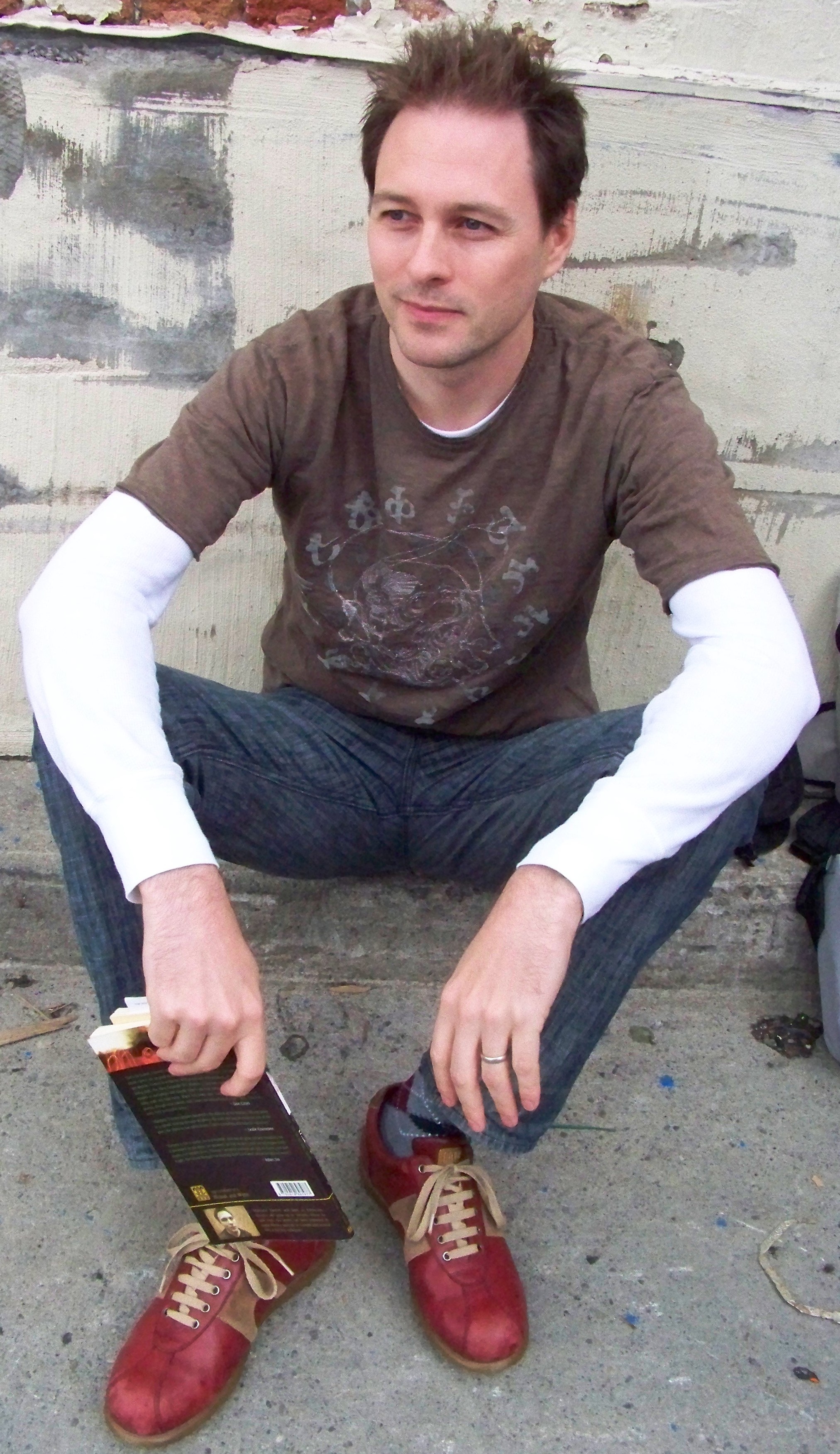
MATTHEW TIERNEY READS HIS POETRY

It was a a pleasure reading and reviewing Matthew Tierney’s Full Speed Through The Morning Dark.

My interview with Matthew Tierney was also a great experience.

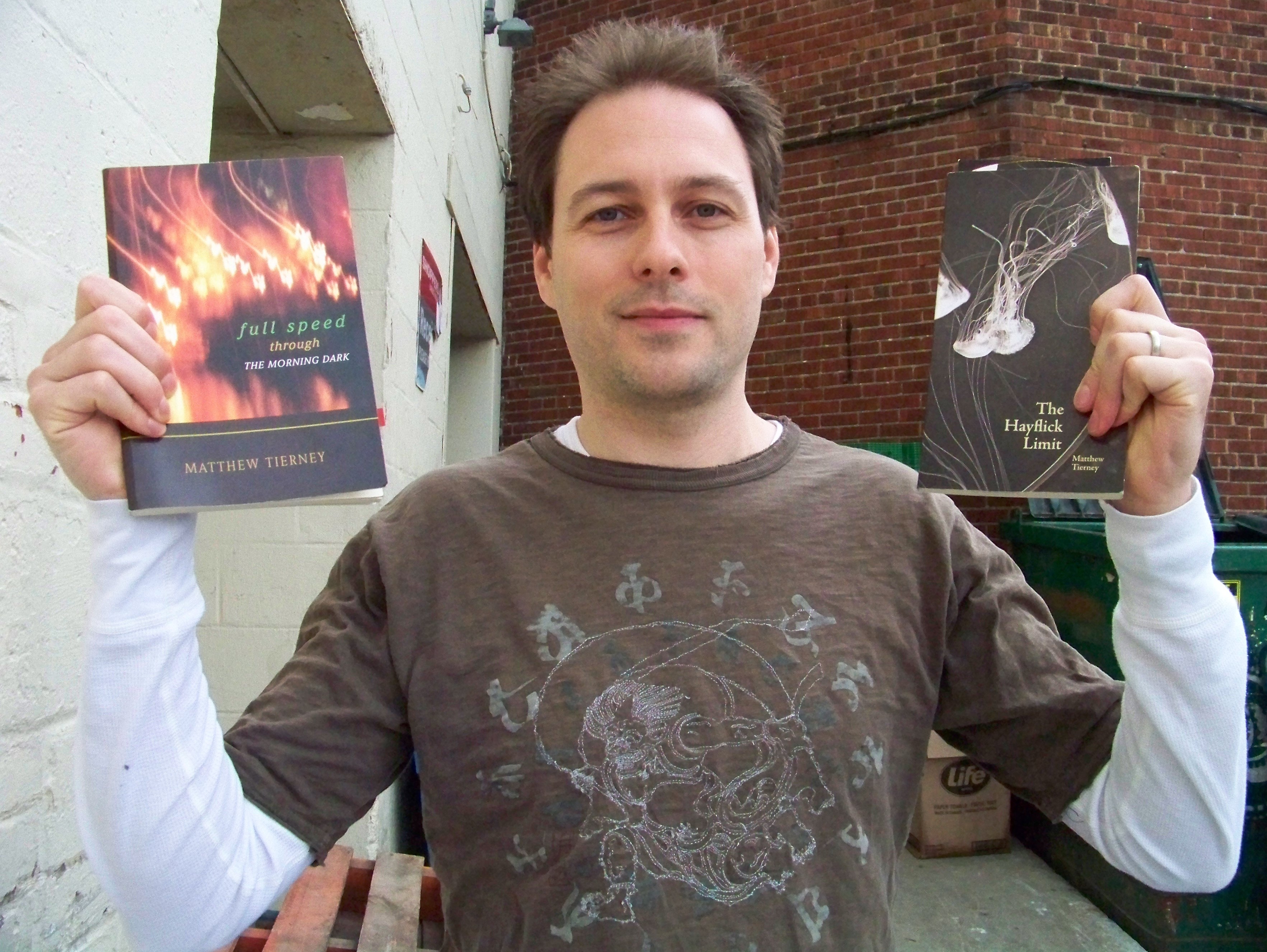
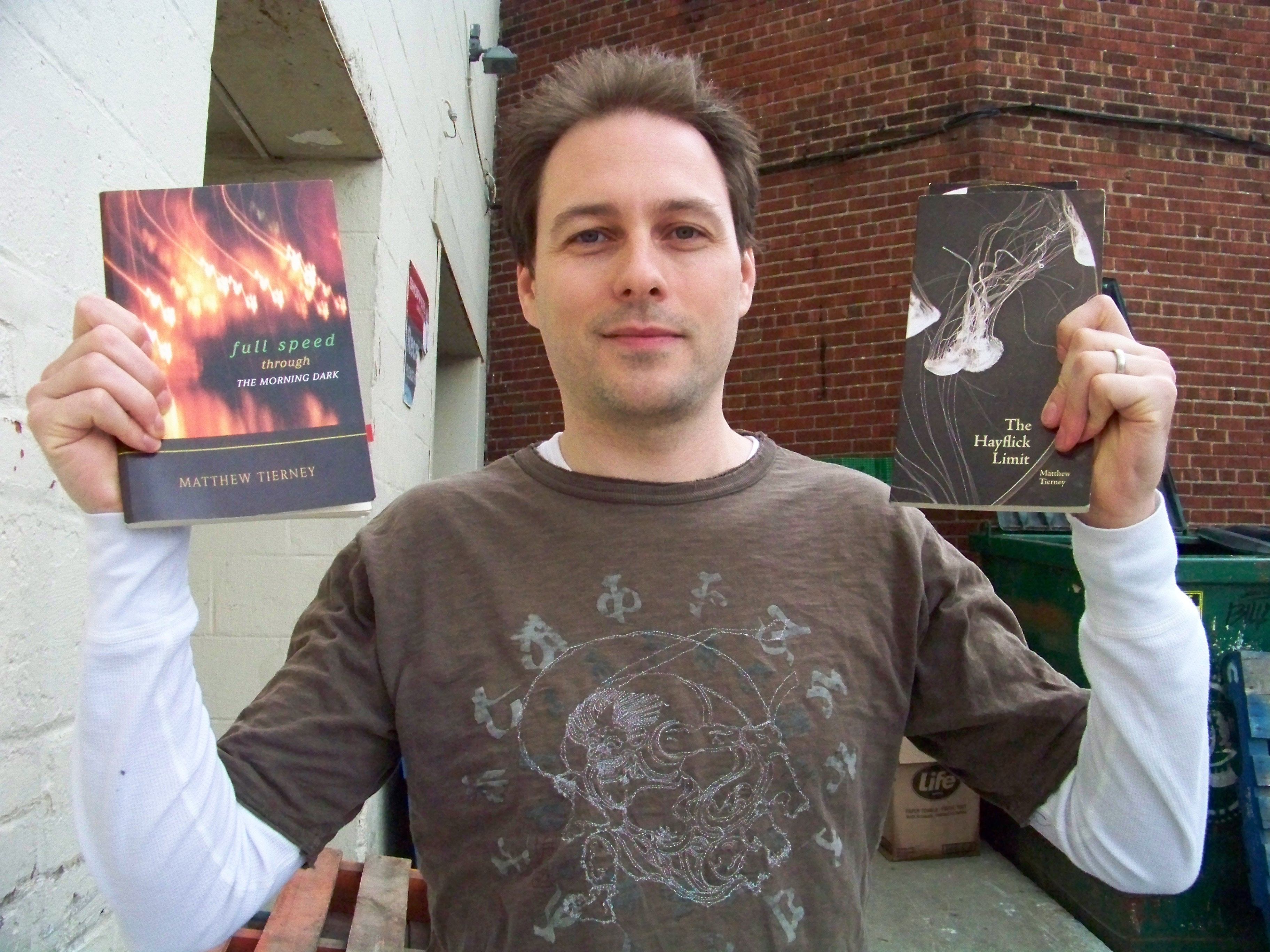
Enjoy Matthew Tierney read from his two books of poetry: Full Speed Through The Morning Dark and The Hayflick Limit.

Posted in Poetry | Tagged , , , , , , , | Leave a comment

INTERVIEW WITH MATTHEW TIERNEY

Matthew Tierney is the author of two collections of poetry: Full speed through the morning dark and The Hayflick Limit.

Tierney has been published in journals and magazines across Canada.

In 2005, Tierney won first and second place in This Magazine’sGreat Canadian Literary Hunt.

In 2006, Tierney was a recipient of a K. M. Hunter Award.

He lives in Toronto.

BCP: Why did you start writing poetry?

MT: Probably for all the wrong reasons. My friends were doing it, or I thought it’d be cool to publish a book someday, or of the novel or short story it seemed the quickest way to a finished product so I could moon about and, you know, wear my volatile, artistic temperment like an ascot. This’d be on top of my actual ascot.

BCP: What is your writing process?

MT: Double-shot Americano. Either laptop or desktop but no PCs please and internet a must. Headphones with something loud and familiar on. Another double-shot Americano. Some staring. Some Tetris. Likely a bathroom break. What time is it? I’m getting hungry…The clatter of keys. Delete. Then a burst, maybe 15-30 minutes of actual keepable work. Hey, look at me! Repeat staring, etc.

Read it over.

Cappucino.

BCP: Your first book is about your travels in Japan, China, Russia, and Ireland. Why did you choose your first book to be about your travel experiences?

MT: They align well, don’t they? Travel is a source of the new, or the everyday askance, and this is what poetry is too.

I did most of my travelling in my mid to late twenties and whether a consequence of youth or cultural frisson it felt as though everything I did was important.

Grocery shopping, flirting, laundry, chatting with newfound friends. Because it was all happening on the other side of the world it was imbued with a poignancy that was uncontainable. Or so I felt.

The poem is the only thing that could match this emotional charge. I still believe that.

BCP: Who are your favourite writers?

MT: Sometimes too many to name, sometimes just one or two. Right now I can’t stop rereading Dean Young.

BCP: You have said that Russian poet Joseph Brodsky was a big influence on you. How? Is there a particular collection or poem of his that you feel influenced you the most?

MT: He’s an influence the way that reading someone whose poems you love can inspire you to do your own best work. I haven’t worked out exactly how but he brings a devil-may-care attitude to what he believes and explicitly endorses to be humanity’s highest endeavour. An electric combination. I love the absolute faith he has in his worth, borne out in reverberating, capacious verse. His verse is the arena rock of poetry.

I reread The Winter Eclogue several times a year. I’m shaking my head right now trying to come up with a suitable paraphrase…ah, not tonight. But go read it.

BCP: Your poem Trans-Mongolian Express is amazing! Can you talk about this poem a little bit?

MT: Thanks BCP. It’s been awhile.

The seven-day train trip that I took with my friend is in my memory an episodic, other worldy haze through a white sun-bright Russian interior. There’s so much time to think that you wonder at the end of each day where the time went. That doesn’t make much sense. Somehow the rhythm of the train intimates that the journey will never end, but of course it does.

The poem itself shuffles along in quiet lines with gentle enjambments, each section like the flash of a bulb; I forget how many sections now but flash-flash-flash, each as generous to the reader as the landscape is generous to the poet, but somehow as inevitable as Moscow. The end.

BCP: Trans-Mongolian Express was originally a chapbook.  Some old-schoolers believe that young poets these days are skipping the chapbook as a first step toward a book deal. Do you believe the chapbook is a necessary step?

MT: No. There’s no necessary step to a book deal—but a book deal is not what young-poets-these-days should have their eye on. By which I mean publishing a book of poems isn’t the last wall in the obstacle course.

Chapbooks have their own place in the publishing circle of life. I’m soon to publish a new chapbook with the fine young poets who run The Emergency Response Unit. The work simply fits more comfortably in a chapbook.

BCP: You are working on your third collection now. What have you learned since your first collection? How do you think you have grown as a poet?

MT: I’m better. It’s not even important I’m right but if I don’t believe I’m better then all is lost. Though that happens sometimes too. Lost is ugly.

There are specific ways I’ve grown. The only ones I feel safe articulating, the ones that’ll hold till my next anxiety attack, are these: I’m a keener reader than I once was, I work harder and award myself fewer flights of self-congratulation, and I know when to abandon a poem.

BCP: Small publishers and independent bookstores are dying every month. How do you see this affecting poetry?

MT: It affects the publishing of poetry—not sure how it affects poetry itself. 

My experience is much like any reader’s. Independent bookstores treat you well.  They are curated, and if they’re curated by the right people you can discover books you otherwise wouldn’t have discovered. I’d love there to be more of them and can only hope that for every bookstore that goes supernova it seeds another of its kind. Maybe that’s naïve.

As for small publishers, well, it breaks your heart but there’s a whack of poetry being published in this country so someone must be stepping up. I know that’s naïve. Willfully so.

As for poetry, it’ll survive simply because there’s nothing else like it.

BCP: With people having much shorter attention spans these days do you see poetry having a comeback?

MT: Poetry is in its happy place, as far as I can tell. I’m told the eighties (for e.g.) were horrible for poets. So first we should consider how good we have it. Poetry’s already come back and it’s wearing a tuxedo T-shirt.

Reading poetry takes more attention than populist forms of entertainment. If people in increasing numbers are reading and writing poetry (I’ve no hard data but it sounds like a “fun fact”), then it’s likely because it has an intellectual and emotional pull not found in the Cineplex or on your PVR. Poetry’s gravitational constant is just higher.

I’d be much more concerned if I were a literary novelist. Those long-running HBO shows are damn good. But as I said there’s nothing out there like poetry. For the individual drawn to it there are no substitutes and hence no competition.

BCP: Do you see the E Reader benefiting or hindering poetry?

MT: The e-Reader as delivery device will really only impact those books bought in large numbers. Sure, we’ll nose in behind the industry, sniff around, but I can’t see e-Readers having too much impact on the publication of poetry.

Indeed I can see poetry readers keeping the book in its traditional form alive.  Holding it aloft like a torch.

That’s likely an ill-chosen metaphor.

BCP: What advice do you have for young writers?

MT: This is the first time I’ve ever had this question, and I expect it’ll only become more frequent as I grow older. I’m having a moment, BCP…but hey, it’s not all bad, I get to dispense advice!

There’s poetry and then there’s publishing a book of poetry. (Insert Venn diagram here.) Don’t be too worried about publishing because there’s plenty of time for that; I know you don’t believe this but in ten years you’ll still be young, nothing will have passed you by. No one says their one regret was not publishing a first book earlier. Just doesn’t happen, so don’t sweat it.

Also, respect your elders.

Also, poetry is not a hobby. Take your art seriously.  Take yourself seriously.

Tune into BlackCoffeePoet.com Friday October 7, 2011 for a video of Mattew Tierney reading poems from his two books.

Posted in Poetry | Tagged , , , , , , , , | 1 Comment