OJIBWE POET DAVID GROULX READS HIS POETRY

Meeting David Groulx at the International Festival of the Authors 2011 was one of the best moments of my writing career.  I was inspired.  I saw someone who looked like me, had a Brown face, who wrote and read well, and didn’t hold back, or care what people thought.

Reading David’s book A Difficult Beauty was a pleasure and a learning experience.  Memories, ideas for future weeks on BCP, and new poems came to me, as well as the glee that someone wrote poems because they had to be written, not because he wanted acclaim and fame.  And I learned more through our interview.

I hope you enjoy David Groulx’s poetry as much as I do.

Check out the BLACKCOFFEEPOET YOUTUBE channel for more videos: poetry, interviews, workshops, roundtables, and more!!!

Posted in Poetry | Tagged , , , , | 2 Comments

INTERVIEW WITH OJIBWE POET DAVID GROULX

David Groulx was raised in the Northern Ontario mining community of Elliot Lake. He is Ojibwe Indian and French Canadian. David studied creative writing at the En’owkin Centre in Penticton, BC, in 1998–1999, where he won the Simon J. Lucas Jr. Memorial Award for poetry. He has written three previous poetry collections: Night in the Exude; The Long Dance; and Under God’s Pale Bones; A Difficult Beauty. David’s poetry has appeared in over 100 periodicals in England, Australia, Germany, Austria and the US. 

BCP: Why poetry?

DG: Poetry has always appealed to me, there is less constraint, more freedom, freedom to listen to sound, instead of concentration on form, although there is that too, if you want. I remember the stories that were read to me as a young child, they were always sing-songy, you know like the Gingerbread Man, or Cat In The Hat . Rhyming, there was sound, in the beginning there was only sound, you didn’t see the words, it wouldn’t matter if you did. In the beginning was the word and the world was without form. Poetry is preliterate, prehistory I feel I can reach the universe, sound can reach across time, move around it. I want to take poetry away from the academics, where its dies and give it back to the medicine men and women where it is actually useful and beautiful.

BCP: What is your process?

DG: My process always starts with a desire of an expression, usually just before I’m about the land in the land of nod, it’s really a struggle to get out of bed and find a paper and pen, the poem begins to write itself, maybe the first two or three lines, then I begin from there. I believe there is a brief moment where the conscious and subconscious actually meet and if you miss it, well for me that poem disappears. I remember as a kid, dreaming about a poem. There was a huge hand comingout of the clouds writing on a scroll, a poem about an aboriginal man, man it was the most beautiful poem I’ve ever read, I was reading it as this hand from the clouds was writing it and a voice from behind me told me to get up and write it down, I said I would do it later as I wanted to finish reading it and I couldn’t remember a word of it by morning, maybe I’ve been looking in my mind for that poem ever since.  Otherwise I begin writing at about four or five in the morning, this is my best time, it’s still quiet, the earth is still. This is where I have to work for it, rewrite, rewrite; put things aside that aren’t working and try new ones and make decisions about the delete button. Before Under God’s Pale Bones, A Difficult Beauty, A Distant Dawn Rising came out I think I threw out over a hundred pages. The muse had to be purged. Some pieces I’ll hold on to, look at them months later and then decide where to go with it.

BCP: How long have you been writing poetry?

DG: I think I wrote my first poem in grade seven? So around thirty years ago, Holy Fuck Billy! Yeah I think it was the first and only time I received an A, I was somewhat of an underachiever, and school never really interested me, as it was supposed to be, boring. I actually began writing in grade three, I think, stories, funny as hell as I recall. The teacher would get me to read them to the class, it was fun, I liked the attention. But I seemed to like the attention of the strap a lot more and there wasn’t much for the study of poetry beside Robert Service. I began reading on my own, stuff like Yeats, Wordsworth, Coleridge, Byron, I think Coleridge was my favorite mostly because his poems were used by metal bands like Rush and Iron Maiden. I dropped out just after grade nine, as soon as I could, school is about learning, learning rules. Anyway, a short time later I had heard about this poet, Libby Scheier, I miss her she was at the school looking at students poetry and although I wasn’t a student anymore I went to see her anyway, there were a couple other kids there. We all read our shit and left so a couple of days later she called me back and told me about a couple of Native writers in Toronto, Daniel David Moses and Tompson Highway were putting together a magazine, Magazine To Re-Establish The Trickster, that’s where I published my first poem. Libby really encouraged me, I think she recognized something I couldn’t see. What a beautiful soul.

BCP: Who, or what, are your influences?

DG: I really don’t think I have any influences, there are poems I like and some I don’t. I really don’t read much poetry. I don’t have any in my library of books. If I had to mention names, I think  Mahmoud Darwish and Czesław Miłosz come time mind, and someone I want to read would be the Somali poet Mohamed Ibrahim Warsame ‘Hadrawi’. I mostly read non-fiction, politics and history. One of my favorite books is Erasmus’ In Praise Of Folly, I think it’s as funny as hell. I don’t read fiction.

BCP: Your poetry is raw and challenging. What do you try to convey to your readers?

DG: I want to be a witness, a witness to the living. A witness the lives around me. That part of this country that breathes, sweats, bleeds and dies. I want to speak for the people who wear hard hats and cowboy boots not scarves and berets. Life is wild, there is no order to it, it has its own way, we don’t understand. Poetry must have meaning, purpose within this wildness of life.  I remember going to the University of Victoria and the kids there were mimicking guys like Bukowski in the fashion of Purdy, I thought this is ridiculous, what could some upper-middle class kids know about that kind of life, about anything. It was just blowing sunshine up each other’s asses and I dropped out, you wanna kill poetry, take a creative writing class. Some of the best poetry in the bars and hotels (and the best fiction). Wherever life takes place, definitely not in university.

BCP: How long were you working on the poems that are featured in A Difficult Beauty?  Can you explain the name of the book? 

DG: A Difficult Beauty is really a selection rather than a collection, that’s part of my writing process, I don’t set out with a theme, some sort of narrative, but it comes out that way, just naturally, so nothing is forced, moving against nature is not natural. The real story about A Difficult Beauty is quite long I had a box of about five or six hundred poems and they were taken from there. The box was thrown out about ten years ago by someone who hates me ( a poet ain’t worth shit if he doesn’t have enemies.) Anyways I have this friend who I had given a copy to and she found me and sent me copies I had given her, poems I thought were lost forever. They sat with me for about a year as we became more acquainted I began editing them and that’s about it. So the name carries some of that story in it. The other part of the name, A Difficult Beauty has to do with some of the subject matter, life, sometimes it is difficult, sometimes it is beautiful.

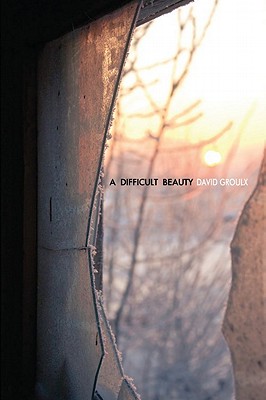
BCP: The cover of the book is beautiful: a sun setting, trees illuminated, and snow.  Giving it a second glance you notice that you’re looking through a broken window.  How did you come up with that?  Did you have the title in mind first, or the cover?

DG: The cover of the book was Noelle Allen’s idea publisher at Wolsak & Wynn, I liked it and we went with that. The name, A Difficult Beauty came first. The book was originally going to be called…While I Sat On The Hood Of A Chevrolet, one of the poems, the book had probably had about three or four titles, before I settled on one.

BCP: Many of your poems are tough to read. They talk of pain in the Native community. Have you gotten a backlash from the Native community?

DG: I haven’t gotten any backlash from the Aboriginal community about the book, most of what I have heard is positive in that these things need to be said, expressed. Some White people might think that this is about guilt, White guilt that they don’t feel they have to deal with. What I want to express is shame, the shame you feel about being Aboriginal in this colonial country. White people think everything is about them, this is about us, do you want to participate? Let’s talk about us, there are two realities in this country, this is mine. This book is about relationships.

BCP: Several of your poems talk of the Starlight Tours (Native men killed by the police) and the murders of Neil Stonechild and Lawrence Wegner.  Why are the Starlight Tours so important to you?

DG: Yes, some of the poems speak to the Starlight Tours that took place in Saskatchewan in the mid 90’s and are still taking place, I just heard of a aboriginal guy that was dropped off in the middle of nowhere up in Kenora. The Starlight Tours story really affected me, there are two realities in this country White people refuse to understand. I remember when the story broke my father was still alive then and I was driving back from Victoria to Elliot Lake I called him on the phone to tell him I was coming home and he said to me, “Whatever you do don’t stop in Saskatchewan.” He was serious, he loved me and I loved him. The story stuck with me because I remember being picked up by the cops, I was let in the drunk tank and let out in the morning, but it’s a situation that is not unknown to many young aboriginal men in this country. I was trying to explain this to a White friend of mine recently I told him the difference between you getting picked up and me is you might get a ticket, I might get killed. This is a reality for young Native men in this country.

BCP: After you read at the International Festival of the Authors 2011 in Toronto a white woman approached you and asked if she should beware of visiting a reservation.  Do you get that a lot?


DG: The White women’s question was should she be afraid of visiting a reserve she had planned to go to. The poem was called, White Girl On The Reservation At Night, the poems was more about women elders on the reservation how they hold the traditions of family and community whist in the midst of the remnants of colonial violence of the reservation. White people make everything about themselves. As an Aboriginal person I get lots of stupid comments and questions, Canadians are always teasing Americans for their ignorance about Canada when really its just that Americans could care less about Canada. I’ve got countless examples as most Aboriginal people do, the one I get the most is, “Can I touch you hair?” or “What’s you breed?” Thankfully though not everyone is so rude or ignorant.

BCP: You have worked with both Aboriginal and non-Aboriginal publishers.  Do you have a preference?  Do you have problems getting published because of your constant challenging of colonialism?

DG: All of my publishers have been great to work with. Most of my experiences have been positive. I’ve found it is easier to publish my poems in other countries then Canada, perhaps that has to do about how little Canadians actually understand about Native literature, Native people and their experiences. “Native literature! Oh yeah Pauline Johnson” is what you get about Aboriginal literature here in Canada. Something that was written a hundred years ago which is where Canadians have relegated anything Aboriginal. I heard there are most courses on North American Aboriginal people in Europe than there are in Canada which wouldn’t surprise me. I feel more comfortable publishing in the third and fourth world, which George Manuel wrote of. I’ve never considered myself a part of the literary community, I’ve done readings and most of whatever else is presented there speaks so little to me, it almost alien to me. Listening to Canadian writers you know as an Aboriginal person, it wasn’t written for you. My writing was recently quoted as “protest poetry” What the fuck is that? I only write what I know. It becomes frustrating , exhausting to be a Indigenous person living in this country called Canada. Fighting against racism and stereotypes is taxing and tiring on the mind.

BCP: You put out 3 collections of poems in 2011.  What’s next for 2012?

DG: 2012? Haven’t read my horoscope yet, Isn’t the world supposed to end on the 21st of January?

Hey what’s that is the sky? What the…….

BCP: What advice do you have for other poets out there trying to get a collection published?

DG: Any advice for younger writers?

1) Don’t drink before your reading, do it after it works much better this way.

2) Stay out of creative writing classes, they can really fuck up great poetry.

3) If you can’t borrow it, steal it.

4) Don’t get caught.

Tune into BlackCoffeePoet January 19, 2012 for a video of David Groulx reading his poems.

Posted in Poetry | Tagged , , , , , , , , , , , , , , , , , , , , | 3 Comments

A DIFFICULT BEAUTY

A Difficult Beauty

By David Groulx

Reviewed by Jorge Antonio Vallejos

I met David Groulx last year at the International Festival of the Authors in Toronto.  We chatted about poetry and writing programs and politics.  Two days later I heard Groulx read and I was floored. 

Groulx walked to the stage in cowboy boots, jeans, a grey suit jacket, and a big black hat. His slow walk didn’t prepare the mostly white crowd for his words that felt like body shots and uppercuts.  It was an all-Native lineup: Lee Maracle, Drew Hayden Taylor, Joseph Boyden, and David Groulx.

Was the IFOA ready for an Ojibwe man who didn’t hold back? 

Silence can mean many things: attentiveness, engagement, disgust.  Groulx’s poems were beautiful, well crafted, they captured everyone’s attention, and they were also hard to listen to.  Poems about the assault on Mother Earth, white on red racism, cops killing Native men and getting away with it, Groulx laid it all out. 

Still, Groulx stole the show.

It is no surprise that his new collection is called A Difficult Beauty.  At the same time that I enjoyed every poem, some poems had me stop to think of all the wrong that is happening to Native peoples in the land now known as Canada, a place thought of as a safe haven to the rest of the world.  As I read the entire collection in one sitting, sometimes smiling and other times putting the book down because of the hard topics.  I felt that I had connected again with Groulx; connected in the same way that I had connected with him in person and when he was on stage. 

A Roofers Boots (Archaeology) is the mocking of a discipline that was founded by 4 racist white men and has not changed much since (I have a degree in anthropology, trust me, I know!).  A roofer by trade, poet by purpose and passion, Groulx starts with “When they find my boots what will they say?”.

Then comes the fun:

…he must have been a mountain climber

the steel toes worn from kneeling

that he was a priest

praying to the sun God


…he must have been a medicine man warning of the rain

his incantations worn on his heels

He must have been!  She must have been!  They must have been!

How many times have I read that in anthropology texts?  The diaries of anthropologists then and now filled with similar notes; the guesses, hypothesis, ‘facts’, books of half-truths sold as the real story. 

Groulx doesn’t have to stand outside of a museum to protest, he challenges with his words and uses himself, his experience, his people, as the flame for his burning fire of bringing truth.  And boy does he bring it.

Defiant Bruial is an honour song to the warriors who have fought for their rights, some winning, some dying, all in alliance with Native peoples across Turtle Island.  Groulx writes:

I want my head buried in Gustafusen Lake

and my legs buried in OKA

and my feet buried in Burnt Church

my torso buried in Ipperwash

What a start!

Groulx’s homage could be, should be, taught in Canadian Studies classes as Native poetry, rebel poetry, challenging poetry, and educational and honest poetry, giving students and teachers much to work with.  Each place named in the above stanza has a history of defiance that not many Canadians know of, or at least knowledge of the non-white narrative—truth.

Groulx’s Instruments From Oz Or A Paranoid Indian is one of the poems that rocked the crowd at the IFOA.  Each stanza is set up with a powerful first line equal to a crisp jab to be follwed by a right hand:

1)    John Wayne is trying to kill me

2)    Jesus is coming to civilize me

3)    the Sorte du Quebec are hiding in my closet

4)    The Hudson Bay Company has been raiding my fridge

Groulx touches on the racism in Holllywood, the real history of what is now known as The Americas, companies that make billions without having their past questioned, and he ends with one of Canada’s dirty little secrets: Starlight Tours.

If you don’t know what Starlight Tours are then you would think Groulx is a paranoid Indian.  Have you heard of the murders of Neil Stonechild and Lawrence Wegner?  Did you know that cops in the prairies can kill Native men and be ‘punished’ via suspension with pay?  Aboriginal peoples in Alberta, Saskatchewan, and Manitoba know this all too well.  And so does Groulx:

The police take shots at me when no one

is looking

they point their pistols and wink

they are conspiring to kill me

drag me out to the outskirts of town

and leave me there to freeze to death 

A Difficult Beauty is exactly that.  No other title would suit Groulx’s collection.  They are poems that tackle difficult subjects and keep you reading because they are so well written: kids taken away from families (My Neighbour); towns destroyed by development (Uranium Mine Town Boom); violence against Native women (One Swollen Afternoon); colonial violence (They Wasted Nothing Either); poisoned rivers (Serpent); mixed race identity (Rising Antagonism).

If you are looking for beautiful poems that aren’t about flowers and the fun things in life, but, rather, tell you the truth about the land now known as Canada, pick up A Difficult Beauty by David Groulx.

 Tune in to BlackCoffeePoet Wednesday January 18, 2011 for an inclusive interview with David Groulx.

Posted in Poetry | Tagged , , , , , , , , , , , , , , , , , , , , , , | 1 Comment

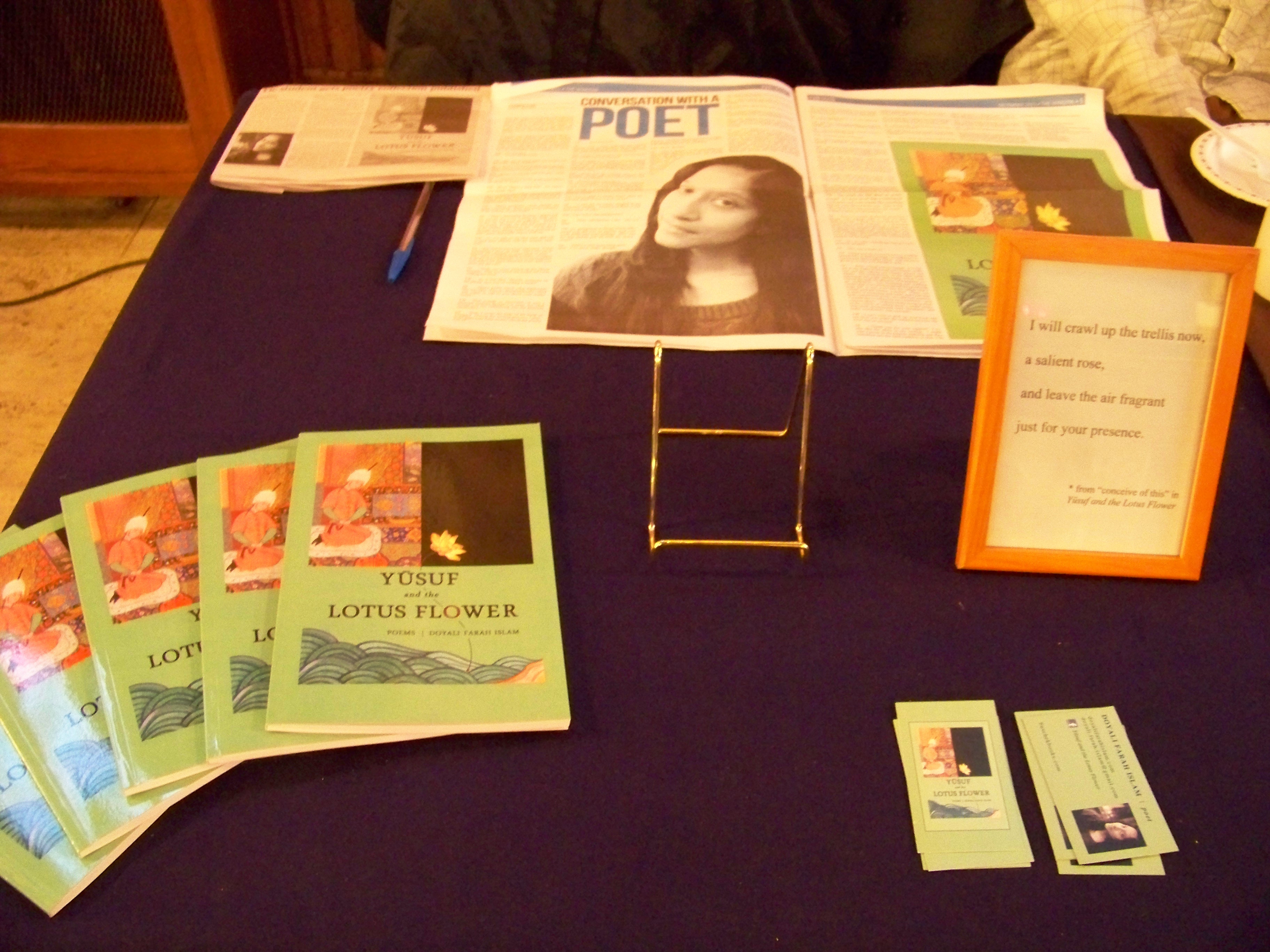
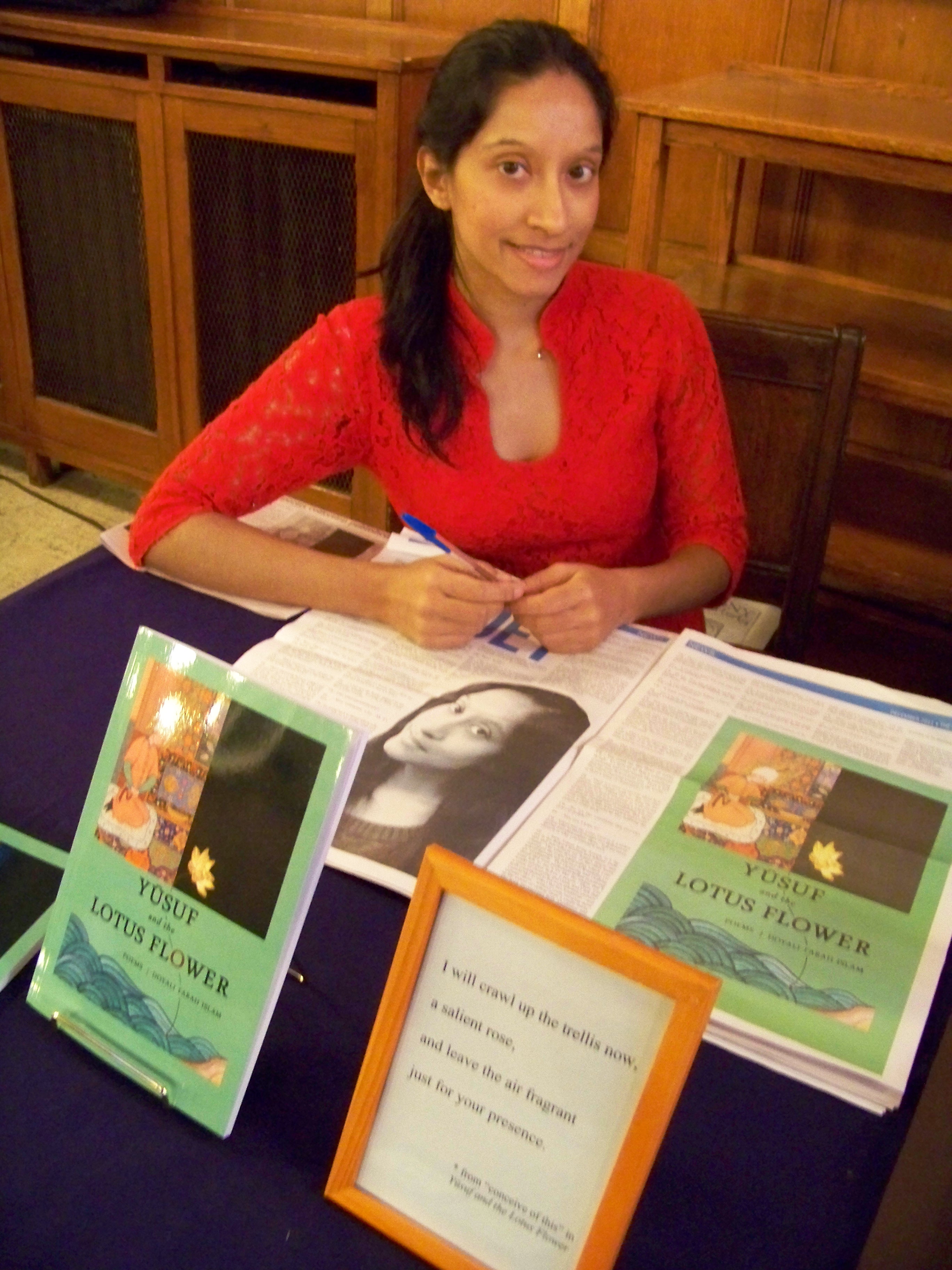
DOYALI FARAH ISLAM READS HER POETRY


Every encounter I have with Doyali Farah Islam is a positive one.  

Doyali and I chat, laugh, and share ideas and info on poetry.

The positivity in Doyali’s poems are a reflection of her ways of interacting with people.

Enjoy Doyali Farah Islam read from her book Yusuf and the Lotus Flower.

Check out the BlackCoffeePoet YOUTUBE Channel for more great videos!!!

Posted in Poetry | Tagged , , , , , | Leave a comment

INTERVIEW WITH DOYALI FARAH ISLAM

Doyali Farah Islam offers Yusuf and the Lotus Flower as her first collection of poetry. 

She is the first-place winner of Contemporary Verse 2‘s 35th Anniversary Contest, and her poems appear in Grain Magazine (38.2), amongst other places. 

Born to Bangladeshi parents, Islam grew up in Toronto, Canada, and spent four years abroad in London, England.  Currently, she is completing her undergraduate degree at the University of Toronto (Victoria College), where she pursues a double major in English and Equity Studies.

BCP: Why poetry?

DFI: It was never a rational decision to choose poetry – more of an impulse that I first felt at the age of seven or eight. However, the intensity of the form is highly attractive. Poetry also gives me a meaningful way to serve.

BCP: What is your process?

DFI: Unless I’m working to a deadline, I write and edit when I feel like it – usually in long stretches during which I forget or forgo food and/or sleep. Once I start working on a piece, the creative process feels like a focussed frenzy or a fervour (enjoy my alliteration). I feel compelled to sit and edit until the piece is exactly the way I want it, or until it is the best that I can make it before exhaustion hits. I keep all of my drafts.

BCP: How long have you been writing poetry?

DFI: Nineteen years. The first poem I wrote was in Grade Three, and it was called A Poem About Birds. I still have it, and it makes me laugh – the huge typeface, the computer paper with the tear-off strips running down the sides. I remember feeling inspired, sitting down in the classroom at one of those early-nineties word processors, and writing the poem in one go. Given my response to the question above, I guess the essence of my process hasn’t changed!

BCP: Who, or what, are your influences?

DFI: Concerning the poems in, and poetics of, Yusuf and the Lotus Flower, but not in any significant order:

1) Rumi’s poetry, especially as interpreted by Coleman Barks

2) Derek Walcott’s poetry

3) the stories of the messengers of Islam, first told to me by my father, while growing up

4) awareness and appreciation of other spiritual traditions

5) a daily practice of Islamic prayer

6) a daily practice of Kundalini yogic meditation

7) Dr. Rod Michalko: I took a course of his (NEW241Y1: Introduction to Disability Studies) at the University of Toronto, and his lectures and assignments made me become, for the first time, attentive to the language/discourse of normalcy that operates in, is produced in, and is reproduced by our society. I did the best I could to edit the manuscript of Yusuf and the Lotus Flower so that it did not reify such language/discourse. Both my editing process and my book of poetry show that even if writers do not call openly for social justice, their writing can be informed by a desire to transform society. Furthermore, even if artists do not want to or cannot call openly for socio-political change, they can wield language to rupture, in a non-violent way, dominant discourses and to (re-)imagine or even (re)create society. What is present in one’s poetry/writing/art is as important as what is absent. It’s up to the reader and/or listener to notice or puzzle out the absences; and all absence is presence.

BCP: Your poetry is spiritual. What do you try to convey to your readers?

DFI: The poems were, at first, never intended for other readers or listeners. I wrote them because I felt compelled to write them, and because both the process of writing and the final products helped to carry me through difficult life experiences and emotions and to record my own moments of clarity, joy, and peace. I wanted to be able to call myself back to these moments – and to call myself back to what I believed and still believe to be the best capacities of humanity and the best qualities of our temporary world: capacities for trust, loyalty, beauty, sincerity, courage, resilience, compassion, understanding, open-mindedness, and love. I realized eventually that the poems might benefit other human beings or at least give them something to (re)consider, and that this benefit could never be a possibility unless I shared my work. Thus, I decided to offer up my verses formally by pursuing publication.

It might not even matter what exactly I was trying to convey. Hopefully, the general sentiment of the poetry comes across as a sense impression. Furthermore – and undoubtedly – every individual will bring a unique set of experiences, thoughts, emotions, and insights to bear on the work.

I do recognize and hope that I conveyed that my understanding and practice of Islam is just one of many. Surely, there are basic beliefs that all Muslims should hopefully agree to – namely, that the Divine is One, that there are angels; that there are sacred books; that there are messengers; that there is a Day of Judgement; that there is “supremacy of Divine Will” (Sarwar 18); and that there is “life after death” (18). However, the religion of Islam as it is practiced by over 1.6 billion Muslims worldwide is undoubtedly not a static or monolithic thing. It encompasses variegated and ever-changing beliefs and practices.

BCP: How long were you working on the poems that are featured in Yusuf and the Lotus Flower?
DFI: One full year to write, and another full year to edit. However, the personal experiences, observations, and small insights that manifested themselves in the poetry came out of several years (approximately five or six) of another kind of work – that necessary spirit work of listening to my inner consciousness and, subsequently, taking the necessary actions – that is, making the necessary changes in daily life. This kind of spirit work (my own term) entailed feeling acutely such emotions as grief, longing, despair, rage, and anxiety. I allowed these emotions to lead me to greater understanding and compassion. If one is not active outside of one’s writing, one cannot writing anything interesting or of meaning. The beauty is that everybody is doing something – even if just imagining.

It is equally truthful to say that it took the whole of my lifetime up to this point to produce Yusuf and the Lotus Flower. Then again, for me, it is also as truthful to say that, while I did the work of writing and editing, the Divine who has infinite names was the ultimate Worker.

BCP: In your “Final Thoughts” section your first sentence starts off with, “In a post-9/ 11 world…” Was it difficult finding a publisher as a Muslim poet who also writes from a Yogic influence?

DFI: It was difficult to find a publisher period, given that I was an unestablished poet with virtually no publishing history.

BCP: Many writers choose publishers that they feel might understand and support their work more than other publishers. For example, many Aboriginal publishers I know choose Aboriginal publishers. Your publisher is not one that specializes in Islamic or Yogic writing. Did you approach Islamic or Yogic publishers? What that important to you? How was it working with a non-Islamic and non-Yogic publisher?

DFI: My first priority was to find a publisher in Canada, since I figured that if presses in my own country weren’t interested in my work, presses abroad had no reason to be. While I did search for Islamic publishers, I couldn’t find any in Canada, and I was doubtful that, even if there were any, they would be interested in contemporary poetry from a new voice. I also wasn’t sure how my interfaith – or, more accurately, interspiritual (my own term) – approach would come across. When I was travelling in Turkey, I met a painter in Istanbul who told me that Muslims have no need for practicing yoga because they have their Islamic prayers. I respect his opinion and recognize that many Muslims probably feel the same way as he does, and I realize that even if he doesn’t practice yoga/yogic meditation himself, he probably respects those of other faith traditions who do. However, I was a little taken aback by his position. For me, artists, of all people, are in the best position to cross boundaries, to notice similarities, to make fluid things that are rigid, and to set in motion things that are static. In the end, I was fortunate to find a Canadian publisher who did not want to mess around with my spiritual and inclusive vision. My publisher was, however, surprised that the poetry came from someone so young! Now that I think about it, it was probably easier to work with a press that had no spiritual/faith mandate than with an expressly-Islamic or yogic (if such a thing exists) publisher that had its own particular beliefs about what Islam and/or yoga is.

BCP: Has writing helped your spirituality or vice versa?

DFI: Interesting question! Writing has helped my spirituality. To my surprise, I find that verses in Yusuf and the Lotus Flower come back to me in times of great distress. For example, lines from the poem “I’ve felt progress” (10-12): “doubt, anger, fear, despair– I know. / don’t think any soul submits without going / through this labour. payment is here already, not later”. Or, for instance, lines from the poem I have been (35-39):

when you look into the eyes / of the drunkard you once were, remember / when you

did not cup superior drunkenness. // love, agapé, will laugh your heart agape / instead

of circling the realm. 

I recite my verses, as well as the verses of other writers, aloud to myself as I walk home. It’s not arrogance. The fact that I still need to hear and heed my own verses is very humbling.

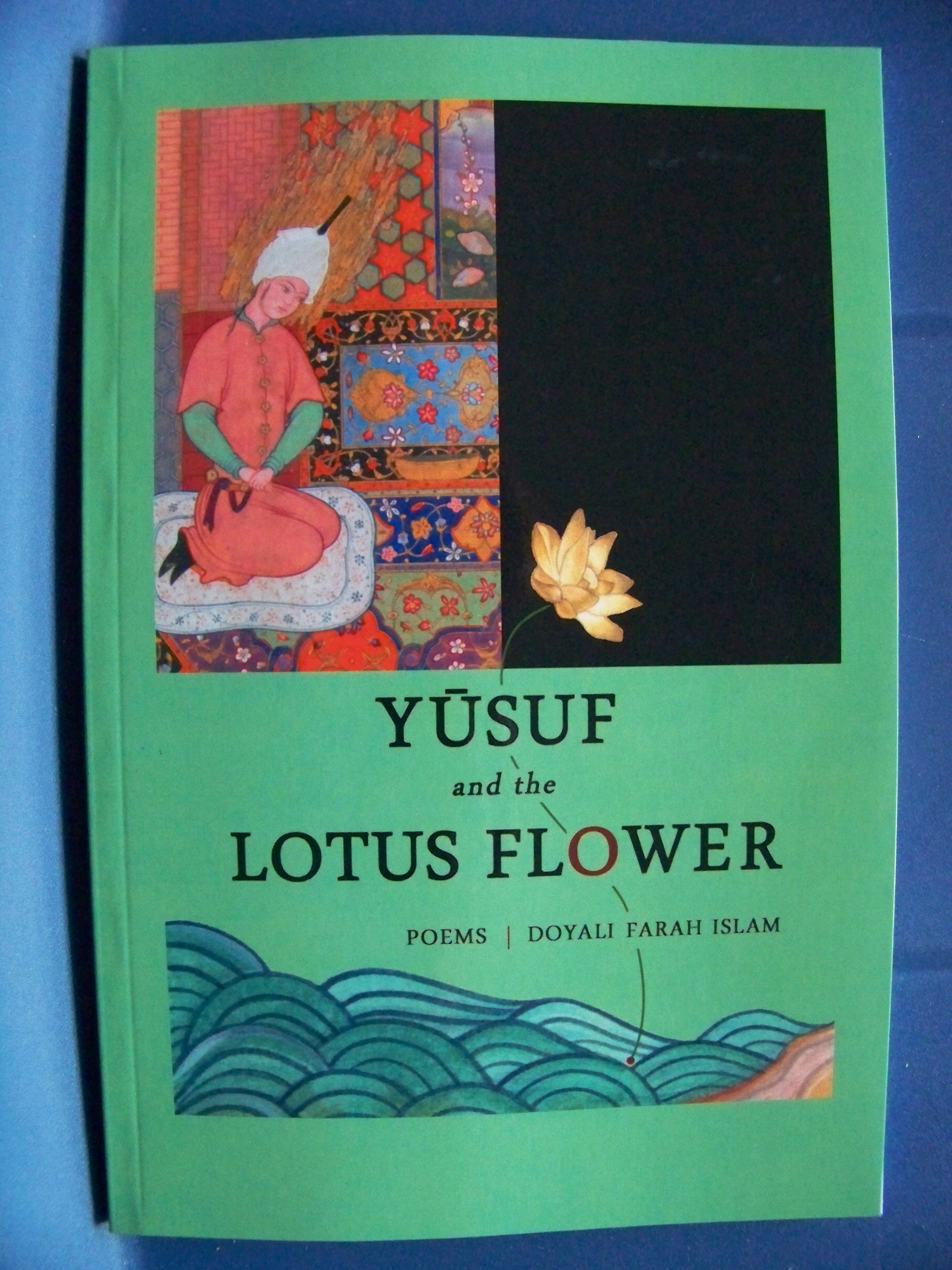
BCP: The cover of the book is beautiful. Can you talk about it a bit?

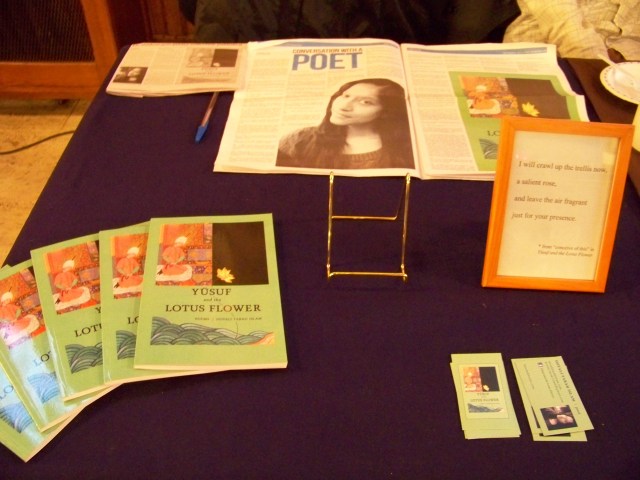
DFI: I designed the cover myself, but it took several people working together to execute the vision – namely, my sister, the Smithsonian Institution, and an old friend. My sister, Laboni, drew the golden lotus flower in pencil crayon, and she also depicted the water and shore in a watercolour medium called gouache.

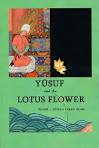
The image in the top-left corner is cropped from a painting called Yusuf Entertains at Court Before His Marriage by a fifteenth-century Persian mystic, artist, and poet named Jami. The Freer Gallery of Art at the Smithsonian Institution gave me permission to use the painting, which is part of Jami’s Haft Awrang (Seven Thrones), a work with seven sub-books. (Interestingly, I also divided my poetry book into seven parts, but the choice was based on Yogi Bhajan’s Seven Steps to Happiness. Also interestingly, Jami writes in his work a poem about Yusuf and Zulaykha, but I have yet to read a translation of the poem. I might do so, now that I don’t need to be fearful of inadvertently plagiarizing his work.) When it was time to design my book cover, I searched the internet and looked through three books on Persian painting until I came across a depiction of the Islamic messenger and Judeo-Christian figure Yusuf (Joseph) that felt like the right one. I loved the description of the painting by the editor of that book. I also noticed and loved the details of Jami’s particular depiction of Yusuf. The white turban with the stick-like thing coming out of the top represents, for me, Yusuf’s consciousness of the vertical axis/dimension within human life. That is, it represents, for me, Yusuf’s connection to the Divine. Furthermore, the white turban reminds me of other spiritual traditions in which humans cover their heads – for example, Sikhism and Kundalini yoga. If you look carefully at my cover, you might also notice a black or brown dot on Yusuf’s cheek, as well as a lock of stray hair that falls on his shoulder. Both details suggest to me that Jami was definitely working within a framework of Sufi symbolism – the dot representing what John Baldock calls “the Unity of Knowledge” (79). It’s also interesting to me that the word kundal, in which the name Kundalini Yoga originates, means “the curl of the hair of the beloved” (Bhajan 21). !!! Is that not absolutely amazing?

In the top-right corner of the cover, the golden lotus flower that rises out of shallow waters and that is set against a black backdrop symbolizes courage, hope, beauty, enlightenment, and peace within or despite despair.

Jami’s painting on my cover further encapsulates perfectly for me some other aspects of Islamic and yogic practice: the meditation/prayer on a mat that is placed on flat and clean ground; and the tranquil and focussed disposition of the human who is engaged in that act of meditation/prayer. Prior to the selection of this image, however, I actually went through a huge inward dilemma about whether or not I should include a visual representation of a messenger of Islam on my book cover. I wanted to be respectful of the fact that Islam does not support iconography, but at the same time I felt that the cover would look imbalanced if I had a visual representation of the lotus but no visual representation of the figure of Joseph. I don’t know if I made the right decision, but the response to the cover has been so positive that I am content with it.

The cover of Yusuf and the Lotus Flower is a composite, both in terms of artistic endeavours and artistic media. The composite nature of the cover matches my appreciation of and hope for unity and harmony amidst diverse spiritual traditions and ways of living. My friend, Patrick Soo, assembled all of the elements for me in the way that I wanted them. I didn’t have the technological skills for that!

BCP: What advice do you have for young poets shopping around their manuscript?

DFI: 

1) My first piece of advice relates, curiously enough, to the story of Yusuf (Joseph): Have patience. Have patience while editing your manuscript before you send it out, and have patience when waiting for a response once you’ve sent it out.

2) Believe in your work, your own inner knowledge, and your own way of conveying that knowledge. Poets are highly sensitive beings but they (must learn to) have tough skins. This sensitivity helps us to write fiercely, but it can also overwhelm us in the form of despair and stop us from progressing and taking risks. No matter how experienced or confident a writer is, rejection isn’t easy. In such times of dejection or – let’s be honest, despair – sit with your self and (re)call to mind the reason(s) for which you initially wrote your manuscript. Perhaps the only reason you had was love. That is enough.

3) Third, be selective in sending out your manuscript. Don’t just send it out to every random publisher you come across and hope for an offer. Browse websites of small presses and see if your manuscript fits into their collection, and be respectful of their submission guidelines.

4) Ask yourself why you want to make your manuscript public. Reflect on your goals. What do you want to accomplish? There are benefits and drawbacks to both self- publishing and publishing with a press. Pursue what suits you best. 

5) Realize also that publishing is most likely a labour of love for small presses. Ultimately, however, it is usually also a business. Once you sign a contract, there’s no going back. This fact holds both parties legally accountable to the terms of the contract.

Tune into Black Coffee Poet Friday January 13, 2012 for a video of Doyali Farah Islam reading her poetry.

Posted in Poetry | Tagged , , , , , , , , , , , , , , , , , , , , , , , | 3 Comments

YUSUF AND THE LOTUS FLOWER

Yusuf and the Lotus Flower  

By Doyali Farah Islam

Reviewed by Jorge Antonio Vallejos

The cover of Doyali Farah Islam’s debut poetry collection sees a man kneeling on a prayer mat.  He is relaxed, in contemplation, and at peace.  A lotus flower springs out from the ocean beneath the image of the man who is Yusuf.  It’s a reflection of things to come once opening Yusuf and the Lotus Flower: growth, meditation, and closeness to Creator.

The beauty of good writing is that it takes you places.  Sometimes you are led to scenes and locations that are familiar, other times you are brought to completely new destinations.  In I Stand In Earthiness Recollecting Islam takes you into her memory of a forest in Canada.  She writes of wood burning, the smell of sap, the necks of tall pines, and then she takes you out of the forest and into her spirituality via mention of the lotus flower. 

Islam springs back and forth between her spirituality and the woods she remembers.  She writes of her experience without forcing her beliefs on the reader.  As I read I Stand In Earthiness Recollecting I was taken back to the woods where I collected cedar for ceremony.  My eyes were on the page ingesting Islam’s words while I remembered good times up north year’s back.  I saw Islam’s reverence for nature in the same way I’ve seen it in myself and in my sweatlodge brothers.  Although Islam and I practice different forms of spirituality she brings out similarities in her poems as opposed to differences via a dictatorial stance.  

Islam ends the poem beautifully taking me back to the sacred fire and smelling burning cedar:

imagine the fragrant beauty

of the one who is

perfectly able to give all this.

Islam’s faith is strong and made clear in verses such as the one written above.  Such belief has not come without struggle.  Many of Islams poem’s deal with pain, overcoming obstacles, strength and renewal.  Some poems may be about the author herself, others about people in her life, and many about the problems in our world.

In Go As Islam starts by encouraging the reader to “go as a pilgrim though life: be unencumbered”.  She warns of the snares in life, the unnecessary urge to follow society and the pain that comes with doing so:

burdening traps,

booby traps, body wraps—burgeoning

insecurity when you pinch the fat,

rouge your lips and cheeks

like this, like that

leave that thinness, that emptiness, that put on rosiness.

Many may think this is directed toward women and body issues but it’s a metaphor for many issues people face. 

Islam is urging the reader to be free!

The poet is coming from a place of knowledge and not the pulpit.  In I Have Been Islam continues with the message of freedom:

I have been where you are.

Inside your sadness thousands of times.

Islam writes of shame and feeling low and how we are a seed ready to sprout into the beauty we are meant to be whether we fit society’s standards of beauty or not.  Islam admits to her painful past, “peering into your eyes, I see myself, you are who I am too.”  She comes from a place of understanding and encouragement and healing. 

Islam has beautiful section titles such as The Power of Sacrifice and beautiful lines that are now embedded in my psyche:

in my tears, the salt of longing,

dissolved into the vast ocean of love.

The poems that fill Yusuf and the Lotus Flower are more beautiful than the book’s cover, and that’s a hard feat to achieve.  Like Yusuf, you are at peace when reading Doyali’s words, once finishing the collection you feel like you’ve grown just as the lotus flower springs up on the book’s cover.

Doyali takes you on a journey while holding your hand, sometimes she carries you, other times she has you running after her on a path of love, or swimming beside her in the sea of compassion.  Her short poem Borrowed Breath encapsulates the entire collection:

I am borrowed breath,

if you too are borrowed,

we meet in the home of our breather.

Posted in Poetry | Tagged , , , , , , , , | 2 Comments

HAPPY NEW YEAR

Monday January 2, 2012

Dear Readers,

Thank you for all your support in 2011.

You many comments, views, and sharing of posts helped keep me going.

May 2012 bring you much

Love

Joy

Peace

Patience

Kindness

Goodness

Focus

Gentleness

Discipline

and

Prosperity

in your lives.

We are in this fight together!

In solidarity,

Jorge Antonio Vallejos

BlackCoffeePoet.com will be back on regular schedule (Mon, Wed, Fri) starting Monday January 9, 2012. 

Posted in Uncategorized | Tagged , , , | 3 Comments

HOLIDAYS ON ICE

Holidays On Ice

By David Sedaris

Reviewed by Jorge Antonio Vallejos

Two hours ago I saw a BBC interview with British writer Susan Hill.  When asked about the importance of reading in a writer’s life Hill said, “It’s the only way to learn our trade!” 

I’d use “craft” as opposed to “trade” but Hill is bang on.

“Read anything and everything” is what Chicano writer Jimmy Santiago Bacca said to me a while back.  Simon Ortiz said the same thing to me when I studied with him at University of Toronto.

As a writer I don’t only read writers I agree with.  Lee Maracle, another mentor of mine, has talked with me about reading people you completely disagree with if they are good writers. 

Why?  To learn the craft of writing. 

Hence, David Sedaris’ Holidays On Ice

I’ve read Sedaris’ essays in The New Yorker over the years.  His memoir essay Journey Into The Night had me laughing out loud.  I read it ten times when taking a memoir course in February. 

Sedaris writes well.  He’s funny.  He’s someone I can learn craft from.  And sadly, he writes racist things in his essays.

Before you protest my last line get out of your head the image of a skinhead wearing Doc Marten’s or a torch bearing Klansman.  I said, “Sedaris writes racist things in his essays.”  I didn’t say he’s a racist.  I don’t know him well enough to say that.  But I do know what I’ve read of Sedaris and he is problematic with a capital “P”.  Also, racism comes in different forms: physical and verbal and emotional violence, policy, and law.  In this case racism comes in the form of the written word. 

Holidays on Ice is a collection of essays about the holidays.  Many essays take a stab at Sedaris’ family.  It’s his style.  His New Yorker essay Journey Into the Night sees Sedaris make fun of his grandmother passing gas.  Often Sedaris makes fun of peoples using racist language.

In Let It Snow Sedaris writes of his childhood and how he and his friends called mud left on their gloves “Snow Negroes”.  I used many racist slurs as a kid.  When I write about such things now I follow up with how they were racist, wrong, and how I don’t use such language today. 

Sedaris doesn’t question, or correct, himself. 

I wonder if he still uses his childhood racist term.

Let It Snow is actually a good story, most of Sedaris’ stories are.  Sedaris explores the cruelty of children, he brings the reader into his family life, he talks honestly about his family’s problems, and he cleverly adds humour to it all.  But you still have that image of mud and his racist description of it in your head as you continue reading; that’s if you have good politics and care about such things.

Sedaris not only writes good essays he comes up with great titles!  Jesus Shaves is one example.  You can read into that one real deep.  In this essay Sedaris take you into the world of language learning—a French class he was part of years back.  It’s fun to be taken back in time into people’s lives.  Sedaris uses great description, tone, and dialogue.  

Now to the problems: Sedaris gains popularity by making fun of people in mean ways.  You’re not laughing with Sedaris as much as you are laughing at people he ridicules.  As a mixed race person (Indigenous/Spanish/Chinese/Arab) who is the son of immigrants from Peru and Lebanon, I don’t appreciate Sedaris making fun of people’s accents.  Sedaris feels that since he’s also the son of immigrants he can make fun of all immigrants.  Other than critique his disrespect for his elders you really can’t say much when he makes fun of his grandmother because she’s his blood and it’s his life experience.  But when he takes on other peoples I wouldn’t have a problem with someone from one of those communities socking him cold.

Sedaris’ classroom essay is as funny as much of his writing tends to be.  He brings familiarity to the reader, hooking them in, and then hits them with a joke.  When describing a student who hogged the floor readers remember such people whether from grade school, high school, or university:

“A question would be asked, and she’d race to give the answer, behaving as though this were a game show and, if quick enough, she might go home with a tropical vacation or a side-by-side refrigerator/freezer.  A transfer student, by the end of her first day she’d raised her hand so many times that her shoulder had given out.”  

I laughed out loud, again.

Sedaris follows by describing the annoying woman’s “bronze arms” and then imitating her accent as well as those accents of Italian’s and Pole’s in the class.  He ends the essay with: “that’s fucked up.”  Too bad he’s not referring to himself.

The problems continue, and get worse, in Front Row Center With Thaddeus Bristol: Trite Christmas: Scottsfield’s Young Hams Offer the Blandest of Holiday Fare.  

I know that Christmas shows put on my kids can be boring, bad, and have you wanting to leave fast.  When dating someone a few years back I watched a Christmas show at a local elementary school.  Why?  Because I was dating someone I liked who worked at the school; it’s called compromise.  (Don’t ask how the show was.)  Again, I could relate to Sedaris.  Agreeing with his choice of descriptions is totally different.  And I don’t.

Again, Sedaris starts by being funny in a good way: “Thrown into the mix were handful of inattentive shepherds and a trio of gift-bearing seven-year olds who could probably give the Three Stooges a run for their money.” 

Further down the paragraph Sedaris writes:

“Pointing to the oversized crate that served as a manger, one particularly insufficient wise man proclaimed, “A child is bored.”  Yes, well, so was this adult.” 

I laughed again.

Then came the problematic Sedaris. 

Sedaris stomps on Tiny Tim.  Rather, the person who plays Tin Tim: a young Black boy named Lamar Williams.  Sedaris critiques the role played by a Black kid calling the play “trendy, racially mixed casting” and later questions it by assuming thoughts of the crowd:

“…a Black Tiny Tim, leaving the audience to wonder, “What, is this kid supposed to be adopted?””

This time there was no laughing on my part. 

It gets worse.

Williams is an amputee as a result of diabetes.  If you know anything about the colonial land called the United States of America then you know that Native Americans, Latinos, and Blacks have the highest rates of diabetes.  And illiteracy.  And incarceration.  And…

Why?

Poverty!

Sedaris says Williams manged to “sustain a decent limp” followed by “The program notes that he recently lost his right foot to diabetes, but was that enough reason to cast him?”

Sedaris’ racism transmutes into ableism.  (They’re all connected in the wheel of oppression.)

David Sedaris is a good writer.  He is also cruel.  Some call him an asshole.  I believe he’s an able-bodied white guy who doesn’t check his privileges, and doesn’t care too.  He’s smart, funny, and writes great memoirs but the man needs to attend anti-oppression workshops instead of French class.  

I don’t see that happening.

“Skating On Thin Ice and Falling In” is a more appropriate name for his collection of essays that make a farce of the holidays.  I’ll be re-reading his essays because I can learn craft and how to write humour from Sedaris.  I recommend other writers to read his work to not only learn craft but to also learn how not to write like a jerk.  If you’re a casual reader who likes humour and who doesn’t care about racism, ableism, and insensitivity check out Holidays On Ice.

Black Coffee Poet is on HOLIDAYS until Monday January 2, 2011.

Posted in Uncategorized | Tagged , , , , , , , , , , , , , , , , , , , , , | 2 Comments

BROKEN ARROW 2 POETS TRISTAN MARTELL AND RYAN RAINVILLE READ THEIR POEMS “TOMAHAWK TIME ACTION” + “DOUBLE STANDARD”

Meeting with Tristan Martell to tape him read his poem Tomahawk Time Action was fun.  

Tristan immediately got into performance mode and started his intro followed by his work.  Pure positivity all around.

Enjoy Martell’s experimental poetry.  And check out his interview.

Talking with Ryan Rainville is always a pleasure.  We’ve shared many a coffee and seen hours pass by.

Our chats cover politics, books, and history.  See his interview for a glimpse of what he believes and lives.

Enjoy Ryan’s poem of dissent, Double Standard.

Read a review of “Broken Arrow 2: Our Footprints: Journeys on the Red Road” for more Aboriginal art and poetry.

Posted in Poetry | Tagged , , , , , , , , , , , , , , | 1 Comment

INTERVIEWS WITH BROKEN ARROW 2 CONTRIBUTORS TRISTAN MARTELL AND RYAN RAINVILLE + ARTWORK FROM BROKEN ARROW 2: OUR FOOTPRINTS: JOURNEYS ON THE RED ROAD

Tristan Martell is from Waterhen Lake First Nations Saskatchewan. He is Cree and Cambodian mix and identifies himself as Cree heritage. He is a B-boy (breakdancer), Powow Grassdancer, youth worker , and is a spiritual student of indigenous knowledge. He plans to continue his studies in theology, indigenous based healing and addictions counselor specifically for Native, Inuit, Metis youth.

Martell’s poems and artwork appear in Broken Arrow 2: Our Footprints: Journeys On The Red Road.

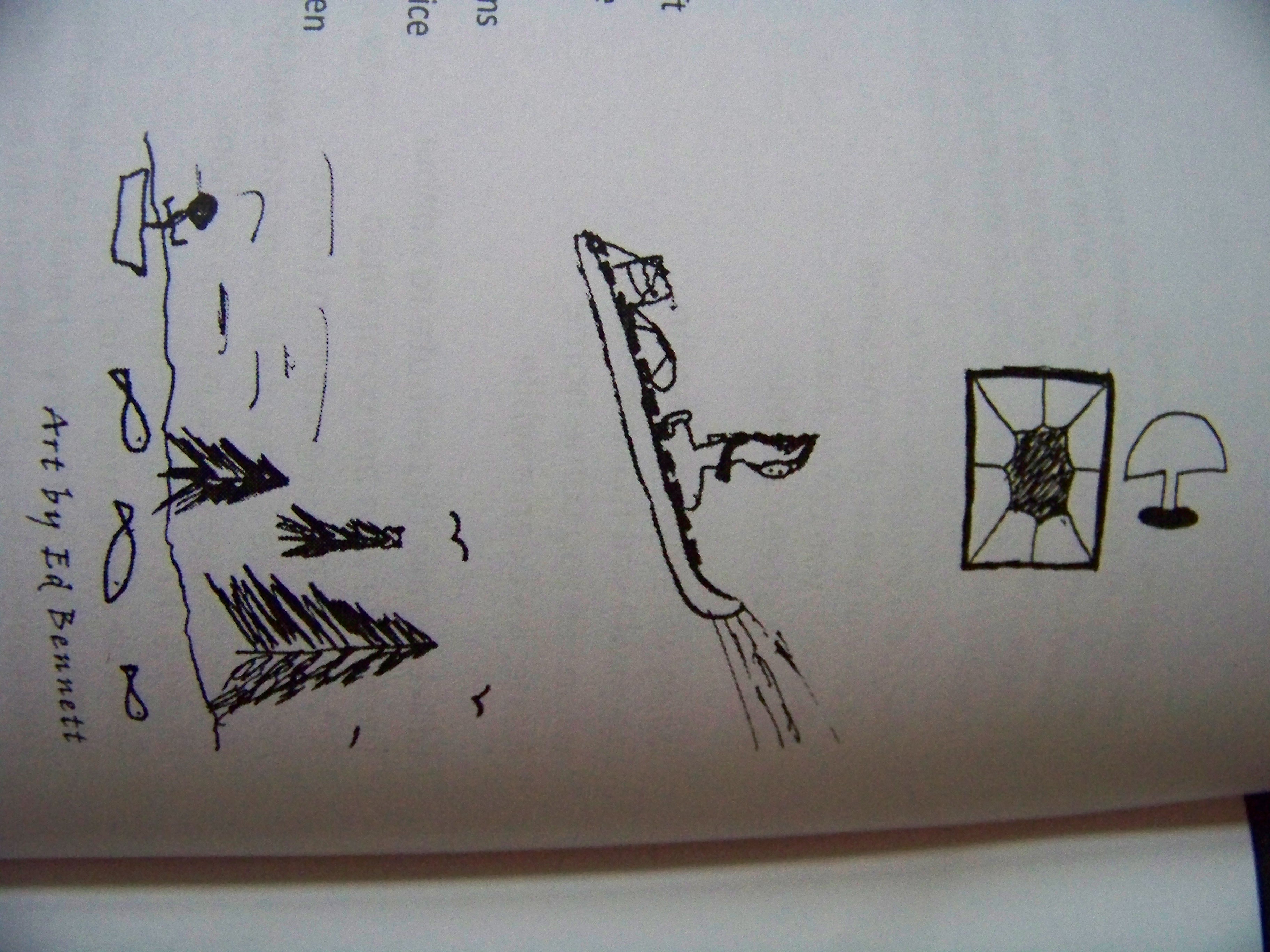
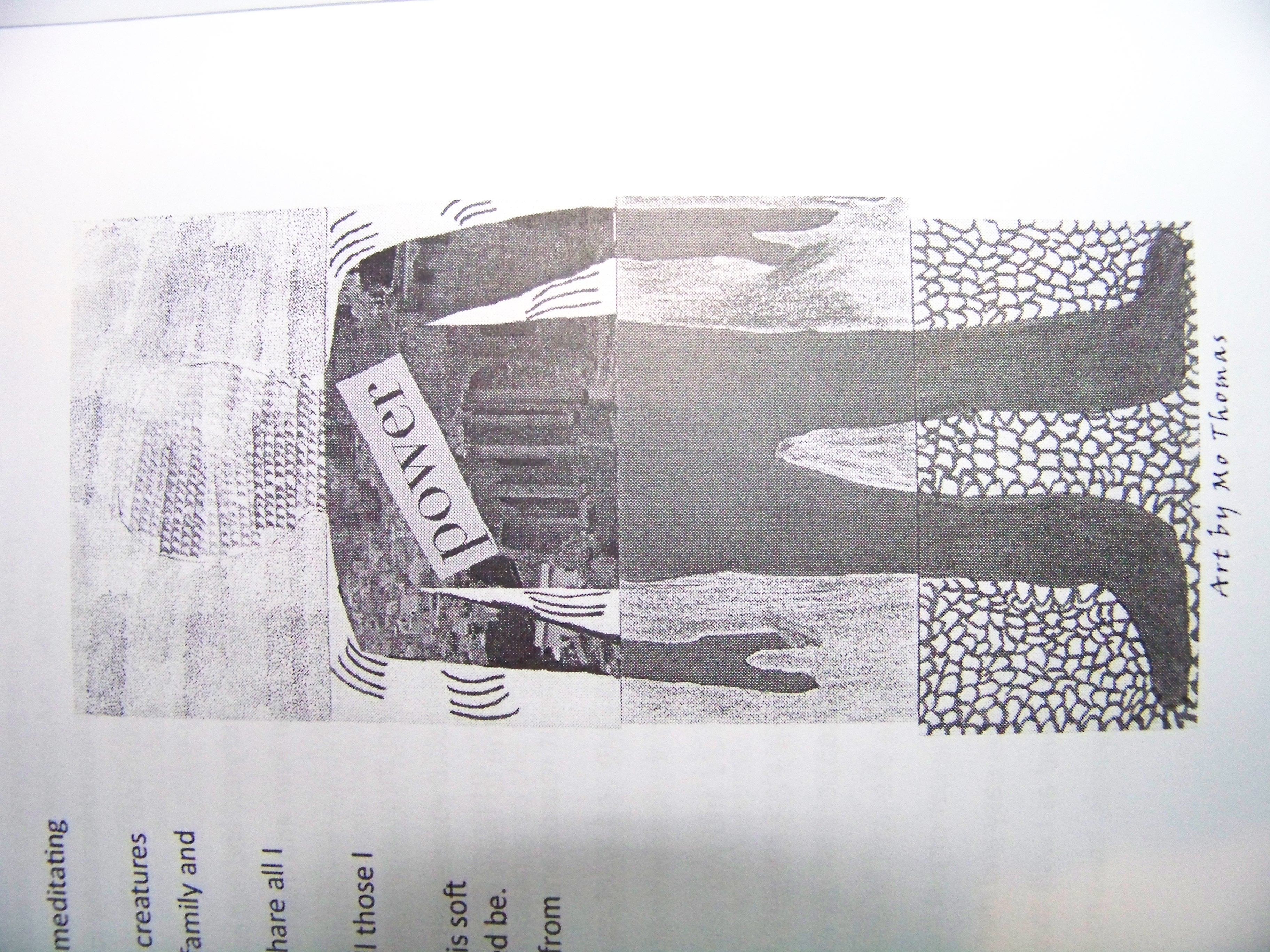
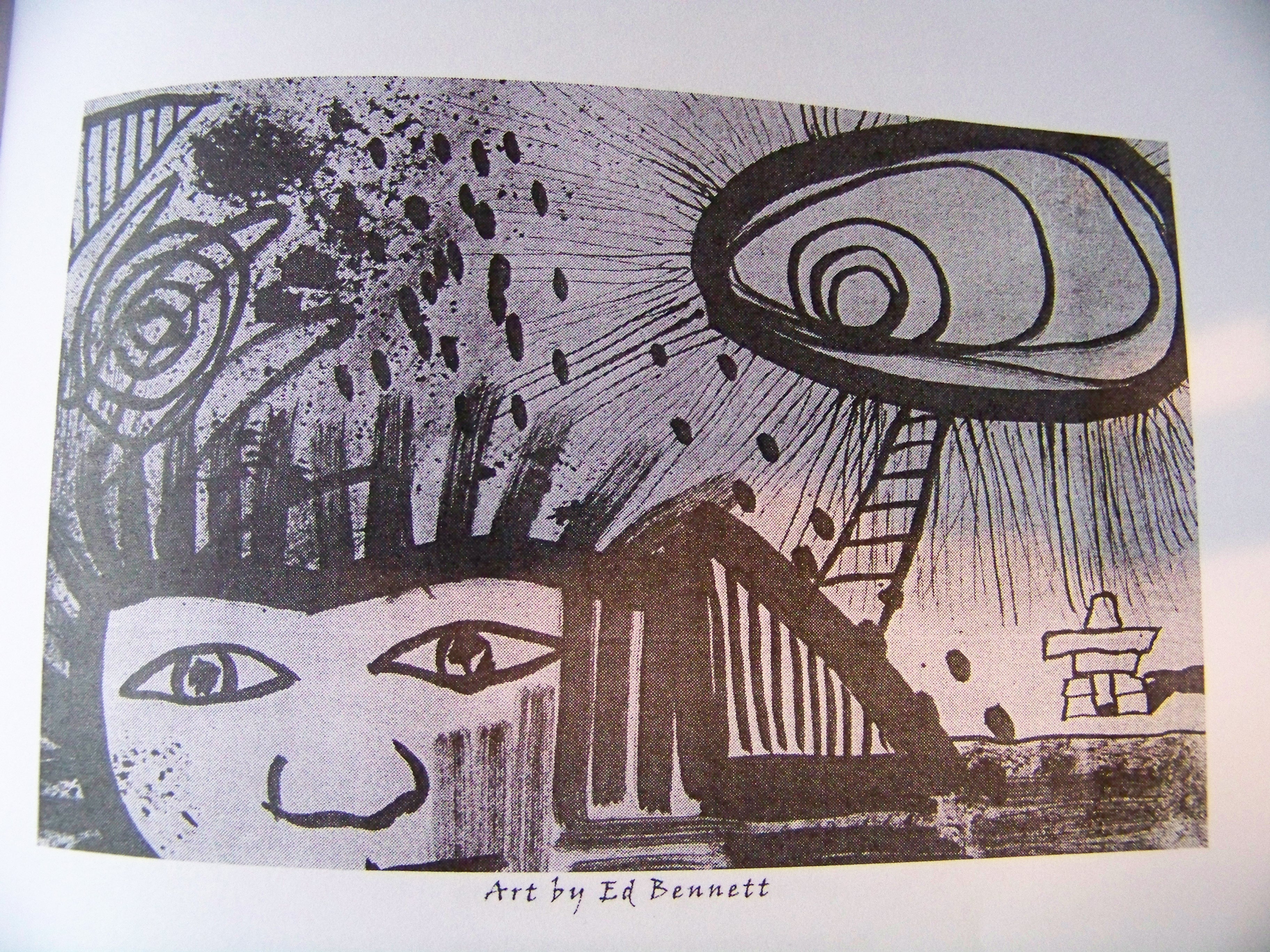
Artwork featured throughout the interviews originally appears in Broken Arrow 2: Our Footprints: Journeys On The Red Road

BCP: Why poetry?

TM: I grew up in Edmonton Alberta and Hiphop was the outlet for many friends that were struggling with various scenarios like identity , racism, classism, addiction. I was inspired on how they coped and had a great sense of humor on some of there tracks. Slam poetry is the cousin of rapping.

BCP: What is your process?

TM: I inspire on spiritual teachings that I’ve learned from elders, sages, indigenous healers, whatever the medicine needs to be said I clarify in a modern way.

BCP: How long have you been writing poetry?

TM: Writing poetry is a recent outlet within this year. You can say iam new reciting but not new to the experience of the culture. I have studied indigenous medicine teachings for 5 years now.

BCP: Who, or what, are your influences?

TM: Mahlikah Aweri from RedSlam collective (slam poetry) , Hawaiian elder Kahuna Sachitanada for teachings me how to be a great  Native Indian, Christian , Hindu, Buddhist, a true warrior of soul.  Indigenous art activist Tannis Nielsen for her passion to apply native sovereignty in her artwork. HIPHOP and the 4 elements (Bboying, Graffitti, Djing, Mcing) is the mother ship of influence for sure.

BCP: Your poetry is experimental. What do you try to convey to your readers?

TM: Pipe ceremonies was the recent one- I have had amazing teachings within the pipe ceremony. A lot has to do with teachings from my Cree culture about Spirit world and how it connects to the science of nature.

BCP: How long were you working on the poems that are featured in Broken Arrow?

TM: There is 2 of them so it took took 2 days to pick and choose the heart of the message. One was very much so about ceremonies, other one was very cartoony and inspired by the choose your own adventure books.

BCP: Was writing in a group helpful to you?

TM: It was a very fresh experience, it helped me connect to the ones that were studying around me.

BCP: You have visual art and poetry in Broken Arrow 2.  Does one art help with the other?

TM: The art that submitted was experimental. It shows a fragment of what I feel and the medicine I wanna share.

BCP: What advice do you have for other artists out there?

TM: Be real nows your time to share your medicine. I was told by my elder teacher everything you say impregnates the Universe. So mind how you go.  

Ryan Rainville is a vegan anarchist who was recently sentenced in relation to resisting the imperialist ambitions of the leaders of the G20 states.  

Rainville’s poem appears in Broken Arrow 2: Our Footprints: Journeys On The Red Road.

BCP: Why poetry?

RR: I’m not actually a poet. In class I had been asked to write a poem and had decided to give it a shot. It turns out it’d garnered more positive rapport then I’d anticipated.

BCP: What was your process?

RR: I felt that, given my anarchist convictions, precluding something intellectually stimulating which I had not previously participated in would be counter productive and so therefore felt that it couldn’t hurt to attempt to flex my creative capacities.

BCP: Who, or what, are your influences?

RR: Not specific to the realm of poetry, I am heavily influenced by the radical spirit of my mother, as well as my step-father who was a revolutionary guerrilla fighter opposing the imperialist imposed war that afflicted the state of El Salvador, at the behest of the U.S. and to a lesser extent Canada (read Yves Engler’s ‘black book of Canadian foreign policy’, for insight on how the Canadian navy had helped assist in a destabilization campaign directed against well known and well supported revolutionary Farabundo Marti). I am also influenced by my close comrade Trevor Sutherland, who is currently doing a bid held up at the West (in Toronto), for he helped me articulate my thoughts on my own experience within the walls of the KKKanadian gulags (referred to as prison).

In terms of more ubiquitous authors and figures within the global revolutionary (anti-capitlist/statist) movement, I really admire cats like Malcolm X, George Jackson, Nestor Makhno, Alexander Berkman, Ed Mead, Mumia Abu Jamal, Leonard Peltier, Assata Shakur, Sundiata Acoli, Kuwasi Balagoon, Alprentice ‘Bunchy’ Carter, Fred Hampton, Mark Clark, David Gilbert, Roger Clement, Leah Henderson, Alex Hundert, Mandy Hiscocks, Eric Mcdavid, Marie Mason, Daniel Mcgowan, John Africa, and Oso Blanco (Byron Chubbuck). In terms of authors I have spent alot of time readin Noam Chomsky, Ward Churchill, Nestor Makhno, Andrea Smith, Edward Said, Norman Finkelstein, Kristian Williams, Mumia Abu Jamal, Ed Herman, and David Harvey.

BCP: You read more non-fiction than anything else. What are you reading now?

RR: Currently I am reading Agents of repression (Churchill), Outlaws of America (on the history of the Weather Underground) and Creating A Movement With Teeth (a historiography of the George Jackson Brigade).

BCP: Can you provide a recommended anarchist reading list for people? Anarchist poetry, perhaps?

RR: Certainly:

What is Anarchism (Berkman)

Mutual Aid (Kropotkin)

Accumulation of freedom (Nocella)

Anarchy’s Cossack (Skirda)

Nestor Makhno’s memoirs

No gods no masters (Guerin)

History of Anarchism volumes 1 and 2 (Graham)

BCP: Your poetry is very political. What do you try to convey to your readers?

RR: In this poem specifically my messaging is fairly clear. I want to demonstrate that the capitalist interests that propagate media coverage in Canada portray freedom fighting in another territory as being liberatory or justified, meanwhile portraying a comparable response to repression at ‘home’ as being mindless vandalism and an assault on ‘freedom’; a freedom which does not exist as is fed to the vast majority of the canadian states population. Living under the constraints of a representational democracy I have learned that the purpose of democracy is not to assign equal rights to every being (humyn or non-humyn animal), but rather to convince the population to consent to participation within our own subjugation and oppression within the system. That is what democracy looks like; we live in it.

BCP: Poetry is not seen in political spaces as much as it should. Why do you think that is? Would you consider reading your poem at a rally in future?

RR: I would say that radical poetry is fairly ubiquitous to those who seek it and that, although I feel it’d be great to have it ‘better’ represented, at least there is a solid base (from where I stand) preventing that which is radicalized from becoming co-opted and liberalized. And if I were asked to I surely would, however I am not one who enjoys the spotlight. So therefore I wouldn’t go out of my way to make myself heard at a rally.

BCP: How long were you working on the poem featured in Broken Arrow 2?

RR: I wrote it on the spot.

BCP: Was writing in a group helpful to you?

RR: It did offer a sense of inclusion and community, which is great, and also offered a substantiative motivation to participate. So I would say yes.

BCP: What advice do you have for other political artists out there?

RR: To say ‘political’ in a general and abstract sense would be to incorporate opposing view points into one amorphous sphere. So what I would say is that any one who seeks to total liberation of humyn and non-humyn anaimal life, and the planet, the abolition of the patriarchal state structure, the abolition of institutionalized white supremacy, and who believes another world is possible should get involved in local struggles relevant to, not only where they live, but  the struggle against state-capitalist oppression as a whole. Anti-poverty work is fairly common and the Ontario Coalition Against Poverty (OCAP) does a wonderful job of bringing this to the light. Furthermore, engaging in anti-white supremacy resistance, such as that exemplified by the Anti Racist Action (ARA) and the Anti-Fascist Action (AFA) networks, I would also recommend. Labor intensive reading helped, however if you prefer, there exist a plethora of audio books on the net in which one could find themselves wrapped. Anything from Co-opertaive organic food shares, to opposing police and military violence through various awareness campaigns, I believe, are necessary. Also supporting local war resisters, who have chosen to defect from the physical manifestations of white supremacist colonial imperialism, is necessary and definitely commendable. Supporting struggles from Palestine, to Chiapas (the EZLN), and resistance movements across Latin America, Africa, the Middle East, and Asia (to white supremacist colonial subjugation), are also fundamentally important. I would like to finish up by saying that No one is illegal and fuck prisons, borders and law and order!!!!

Existence is resistance!

Tune into BlackCoffeePoet.com Friday December 16, 2011 for videos of Tristan Martell and Ryan Rainville reading their poems.

Posted in Poetry | Tagged , , , , , , , , , , , , | 1 Comment