TOBACCO WARS

Tobacco Wars

By Paul Seesequasis

Reviewed by May Lui

Tobacco Wars by Paul Seesequasis is a smart, fun, bawdy, sometimes gross, and thoroughly anti-colonial novella. In the opening scene, readers are greeted with a somewhat shocking image of Bear Woman doing lots of impolite bodily functions.  This continues in intertwined snippets distributed throughout the main linear narrative, and serves to ground the reader in a both body/earth connection as well as the context of colonialism.

The story begins with Pocahontas and her interactions with John Rolfe, but the main story is her connection to Ben Jonson, her travels to England and her role in the tobacco trade between the “old” and “new” worlds. I put those terms in quotes since Aboriginal people lived on Turtle Island (North America) since long before first contact, and in real terms what is called European “civilization” is relatively new.

Which brings me to one of the main themes in the book, the classic binary (constructed) tension between mind (“civilization”) and body (“nature”). White European masculinity is associated with the first, through all the contradictions this entails. The second, body, associated in a pejorative way with Aboriginal people, and what’s known in these dual ways as the female, is also fraught with contradictions.

The naming, by the white characters, of the “savage” ones, is written by Seesequasis, with a full knowledgeable wink at the reader, both in jest but also with the recognition of the violence and devastation of first-hand colonialism. This is seamlessly juxtaposed with the reality of how helpless, sick and child-like the white settlers/invaders were to the Aboriginal folks who cared for them for the first few winters. This is a bittersweet anti-colonial reversal of the myths and lies that Canadians are taught in elementary and high school history about Aboriginal peoples.

Nature, often fetishized by settlers as pristine, lovely, beautiful, etc. without ugliness, is presented to the reader mostly through the character of Bear Woman.  She is without artifice, without pretense, and as all-knowing as any god or spirit can be. While powerful, what with creating worlds and all, she has limits to her power, and derives both pain and humour from her various entries into the modern colonized world. I read her as a creator, beautiful in her strength and wisdom. Farts and all.

The eyes deceive whereas money moves, and is fixed.

The story of the Europeans’ arrival is told in a linear way and proceeds with the men dominating the story line for the most part. The reader gets into their heads, seeing the various racist and sexist and sex-obsessed thoughts that motivate their lives, as well as how highly they think of themselves. But there is always the knowing wink or nudge to let the reader know that the author is slanting the story in his direction to suit his agenda, which is fine by me.

The “discovery” of tobacco is mixed in with the story of Bear Woman and Wolverine having known about its effects on humans and other creatures, and having started a trade system of their own that was eventually usurped by the interlopers. The idea that newcomers could discover anything is made laughable. However, what is historically new is the trade with the royalty of England, and the immediate and eventual devastating effects on Aboriginal people.

In the mainstream North American context, the character of Pocahontas is fairly well-known. Certainly the Disney version is spread far and wide, ensuring that only one (heterocentric, sexist and racist) narrative is deemed the true story. Seesequasis’ portrayal of her is that she’s wiser, more astute and more prescient than white mainstream culture would ever give her credit for.

As the tobacco trade grows, we have access to her thoughts and fears about what this will mean for her and her people. I found the description of her time in London, starting with her facing the desperately poor while riding in the grand carriage befitting her station as the widow of a rich white man, very powerful. Civilization indeed.

Between the seams of colonial boundaries she roams.

The non-linear storyline is that of Bear Woman, who we witness creating the world, without a particular design in mind, but simply as a function of who she is and her various bodily urges and feelings. Sex for her is raw, selfish, single-minded and earthy. She exists both in a “time before” and also travels forward to more contemporary settings as a poor, likely homeless person/bear, who variously crashes the party district in Toronto, watches a strip show and is harassed by the police. Seesequasis brings all the realities of what it means to be Aboriginal in Canada, not just the prettied-up and romanticized imaginings that Canada presents to itself and others as the acceptable stories.

The final theme I’d like to share is that of art, culture and abstraction. Throughout the story, Jonson is portrayed as a bit of a pompous ass, a man too interested in his own ego and desires, and a bit puffed up with his own sense of self-importance. He was a playwright, and enjoyed writing in the current style of the day, plays performed with masks (masques), and themes of deception, innocence and simplicity. I read his obsession with his own art as pathological, an extension of ego rather than a way to portray or share his artistic vision.  We are witness to the performance of one of his plays, in the presence of the king, The characters Bear and Love, demonstrate Jonson’s views very clearly, with parallels to the tobacco trade and colonialism, but with the “civilizing” role of the English, as well as the role of capital trade and profit being the driving force behind it all.

Highly recommended.

Stars clashed and the moon exploded into a thousand shards of white that fluttered down over the land. 


May Lui is a Toronto-based writer who is mixed-race, anti-racist, feminist and an all around troublemaker.

May blogs at maysie.ca, ranting and raving at any and all injusticesand uses the f-bomb regularly.

She’s been published in the Toronto StarFireweed MagazineSiren Magazine, in the anthology With a Rough Tongue: Femmes Write Porn, at section15.ca and rabble.ca. Contact her atmaysie@rogers.com

Tune into Black Coffee Poet Wednesday June 13, 2012 for an inclusive interview with Paul Seesequaisis.
Posted in Uncategorized | Tagged , , , , , , , , , , | 3 Comments

LEANNE SIMPSON READS FROM “DANCING ON OUR TURTLE’S BACK”

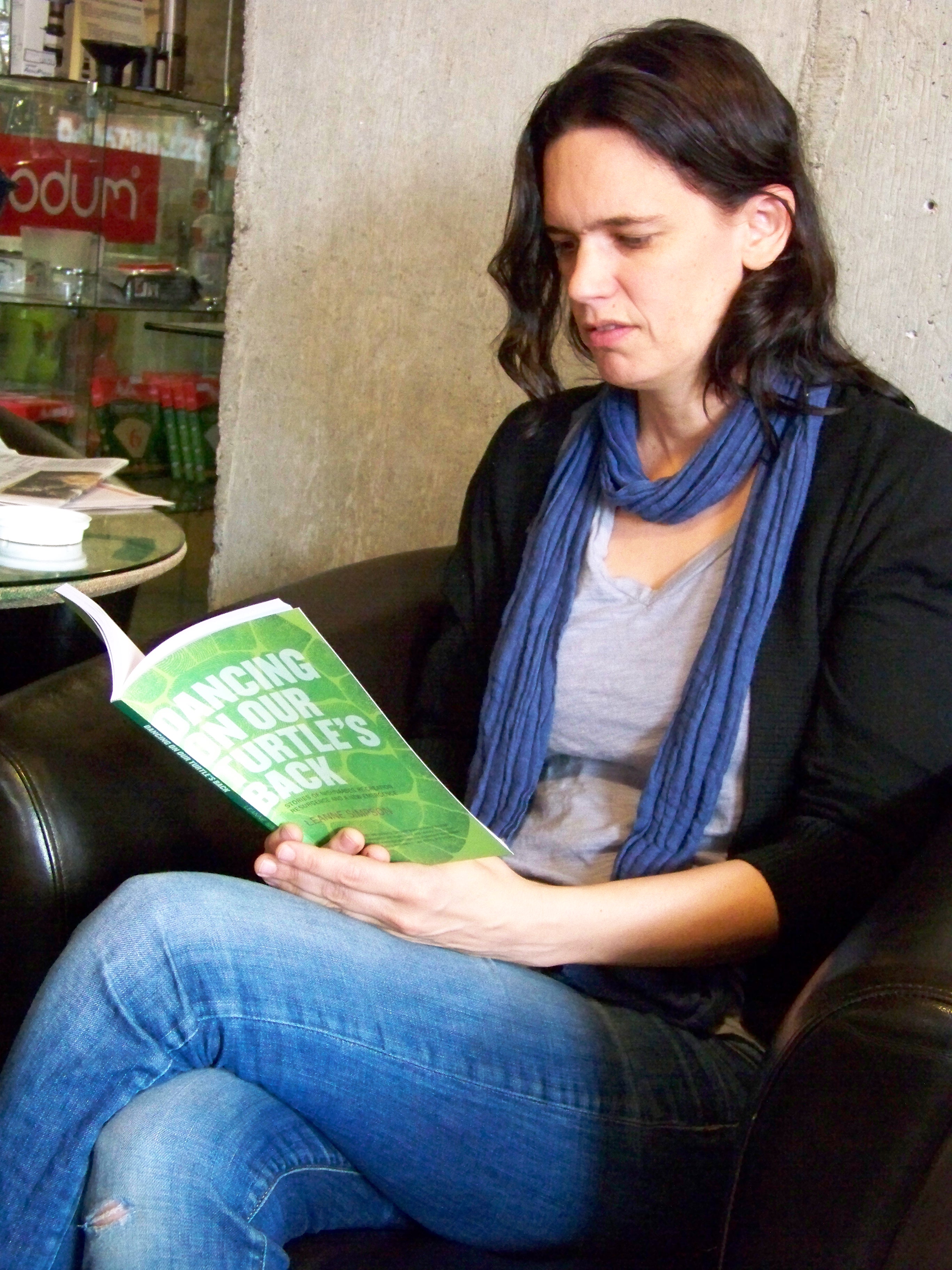
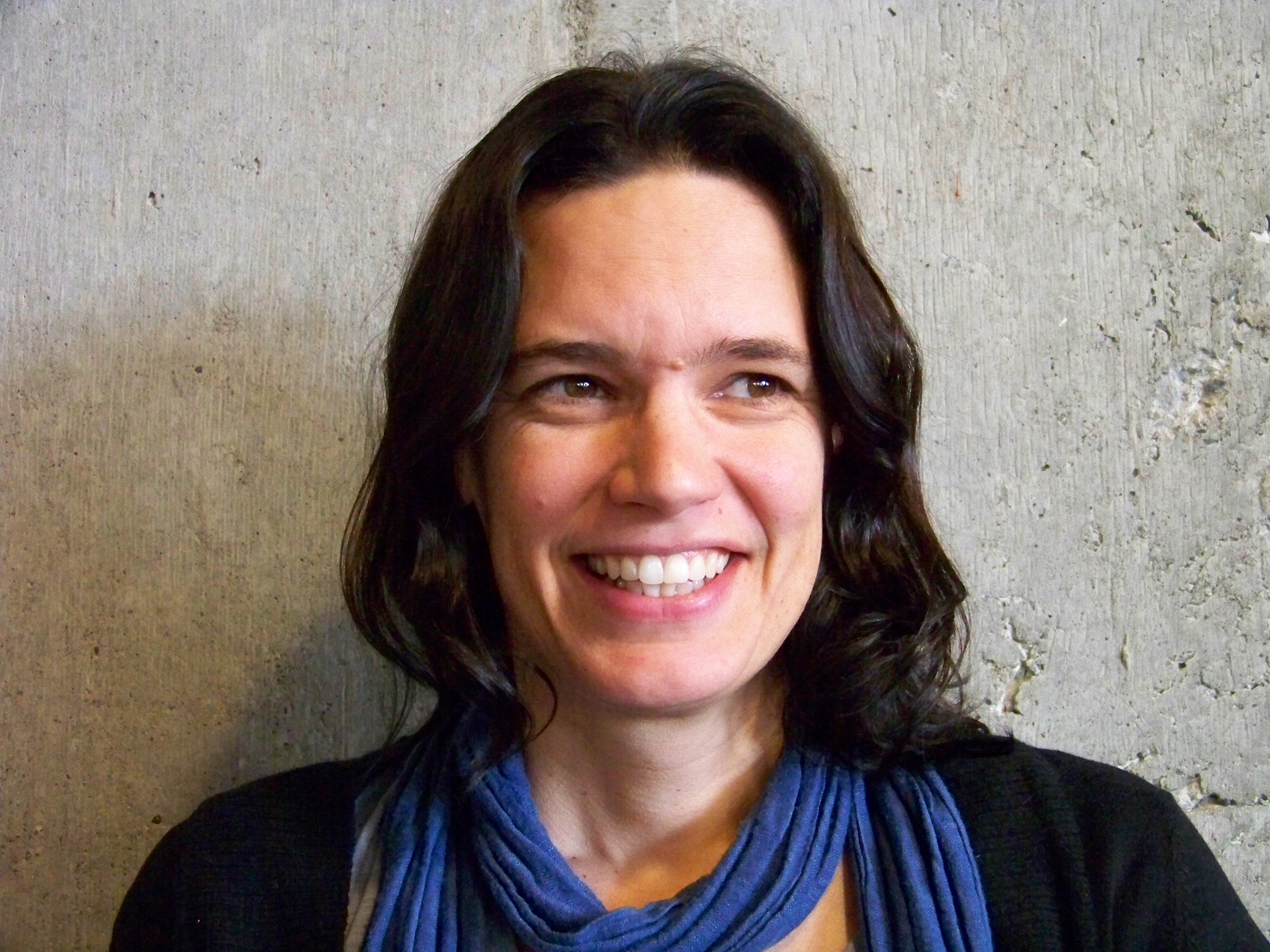
After months of back and forth emails I finally got to meet Leanne Simpson and video tape her for blackcoffeepoet.com.

We met at a Toronto coffee shop.  Our meet and greet was short, we got to work, and it was all gravy!

Hearing Simpson read confirmed all the great things I heard about her writing.  (Read a review of her book.)

Read and an interview with Leanne Simpson too.

Watch, enjoy, SHARE, Tweet, and comment.

Subscribe to the Black Coffee Poet YOUTUBE Channel: 115 videos:

Poetry, music, interviews, VLOGS, workshops, and roundtables. 

Posted in Uncategorized | Tagged , , , , , , , , , , , , , , , , , , , | 3 Comments

INTERVIEW WITH NISHNAABEG ACADEMIC LEANNE SIMPSON

Leanne Betasamosake Simpson is a writer and scholar of Michi Saagiik Nishnaabeg ancestry and is a member of Alderville First Nation. She holds a Ph.D. from the University of Manitoba, is an Adjunct Professor in Indigenous Studies at Trent University and an instructor at the Centre for World Indigenous Knowledge, Athabasca University.  

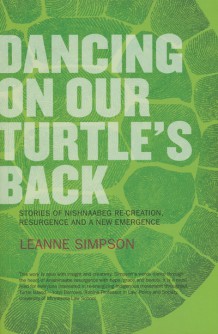
Simpson’s third and latest book is Dancing on Our Turtle’s Back: Stories of Nishnaabeg Re-Creation, Resurgence and a New Emergence.

ZA: What made you decide to write this book?  Who did you write it for?

LS: I wrote this book for an Indigenous audience – for Nishnaabeg people specifically, but for Indigenous Peoples in general.  I imagined having the conversation with Nishnaabeg people.  I wanted very much to write something for an Indigenous audience instead of a white one – because as Indigenous writers we are so often asked to write something for Canadians. I wrote this book because I was and I am very much interesting in the philosophies and intellect of Indigenous Peoples. 

ZA: What challenges arise for you working as an academic in a colonial institution while reclaiming, sharing and living Nishnaabeg culture?

LS: The biggest challenge for me working in a colonial institution is that our knowledge and our people are not there – our intellectuals, fluent language speakers and our Elders are doing the hard work in our communities.  The vast majority of students I teach are non-Indigenous and I still see most of the university as a very colonizing force in my community.  I know there are decolonizing pockets in particular programs at particular universities and there are some very good people doing very good things, but after twenty years, I don’t for the most part see the university engaged in decolonizing education projects.  Because of that, I really limit the amount of time and energy I put into those kinds of institutions.

ZA: How does writing our stories and/or writing ABOUT stories change them? 

LS: Well, I am both a writer and an oral storyteller.  I think orality is a very important process that is very marginalized and erased because there is so much focus on the written in western thought.  Our stories are living and breathing and some of that life gets sucked out of them when they get stuck on the page.

ZA: In the book you state: “I am not so concerned with how we dismantle the master’s house… but I am very concerned with how we (re)build our own house. I have spent enough time taking down the master’s house and now I want most of my energy to go into visioning and building our new home.”  What brought you to this conclusion?

LS: I do think analyzing the logistics of colonialism and heteropatriarchy are important, there is no question, but I also think it is very important for us to base our resurgence work within Indigenous thought…and this doesn’t seem to be going on to any great extent in colonial institutions.  I’ve always been very interesting in how my Elders think and how my Ancestors thought – and to find that you have to spend a lot of time on the land with Elders.

ZA: You write compellingly about the need for people to “pick up the pieces of our lifeways, collectivize them and build a cultural renaissance and resurgence”.  You argue that this has the power to transform settler society as well.  Can you explain? 

LS: I think it is important for Indigenous Peoples to come from a place of authentic power.  I think that in and of itself disrupts the colonial narrative and colonial expectations.

ZA: “Sustainability” is a buzzword we hear a lot these days.  What is Nishnaabeg thinking on this concept?

LS: Well, Robin Greene, who has now passed away, but was from Shoal Lake explained to me that sustainability is about figuring out how much you can give up in order to promote the continuous rebirth of life.   It is not about resources or exploitation.  It is about living as gently as possible.

ZA: Can you briefly outline some of the differences between Nishnaabeg approaches to parenting and those of the dominant society? How do parenting styles relate to domestic violence?

LS: I understand Nishnaabeg parenting to be a very gentle, loving endeavor that was aimed at creating healthy, balanced, grounded individuals with a high degree of respect for diversity and the individual self-determination of others.  Childhood should not be something we have to recover from.  The Nishnaabeg recognize that children are gifts, that they are constantly learning by doing and from examples.  They recognized the fragility of children and the different stages of development.  Gentle parenting creates gentle adults.

ZA: You write so eloquently about the beauty and power of Nishnaabeg spiritual beliefs; the role of ceremony, stories and Spirit in resurgence. We all know the history of Christianity’s role in colonization. How does our relationship to Christianity have to change in order for us to pick up our lifeways?

LS: We can’t have a relationship with Christianity that is based on domination, assimilation, conversion, paternalism, charity, oppression, hate or exploitation.  

ZA: There are many Nishnaabeg people who may not know their families because they were adopted out, or were cast out by the Indian Act generations ago, or whose families and communities are so dysfunctional that establishing healthy relationships is excruciatingly difficult – even dangerous.  There are Nishnaabeg who, for so many reasons, live far from their lands and communities.  What advice do you have for those who want to pick up their lifeways and work towards “resurgence”?

LS: Do whatever you can do with what you have.  Start.  Create communities of healthy like-minded people interested in resurgence.  You can find pockets of this kind of work in communities, urban and rural all across Turtle Island.

ZA: In the last chapter you write: “Our social movements, organizing and mobilizations are stuck in the cognitive box of imperialism …” What do you mean by this and what do you advocate instead?

LS: Living our political traditions is important, so I wanted to start the discussion, or perhaps continue the discussion some other Indigenous academics have started, about what our own philosophies of organizing and mobilizing look like.  I think we need to stop looking for recognition, stop responding to the agenda of the colonizer and place resurgence at the centre of our lives and our work.  

Zainab Amadahy is a writer and activist of African American, Cherokee and European heritage.  

Her publications include the novel Moons of Palmares (1998, Sister Vision Press) as well as an essay in the anthology Strong Women’s Stories: Native Vision & Community Activism, (Lawrence & Anderson, 2004, Sumach Press).  

Most recently Zainab contributed to In Breach of the Colonial Contract (Arlo Kemp, ED) by co-authoring “Indigenous Peoples and Black People in Canada: Settlers or Allies”.  Many of her recent articles can be found on rabble.ca.  

As an artist and activist based in Toronto Zainab has worked with a variety of organizations to support decolonization, social justice and First Nations struggles.

Tune into Black Coffee Poet June 8, 2012 for a video of Leanne Simpson reading from her book “Dancing On Our Turtle’s Back”.

Posted in Uncategorized | Tagged , , , , , , , , , , , | 4 Comments

HONOURING ABORIGINAL HISTORY MONTH 2012: DANCING ON OUR TURTLE’S BACK: STORIES OF NISHNAABEG RE-CREATION, RESURGENCE, AND A NEW EMERGENCE

DANCING ON OUR TURTLE’S BACK:

STORIES OF NISHNAABEG RE-CREATION RESURGENCE AND A NEW EMERGENCE

By Leanne Simpson

Review by Zainab Amadahy

Telling a writer “I couldn’t put your book down,” is normally a compliment.  Telling an author that “I had to put your book down several times,” would not generally be understood as praise but in this case that’s what it is.  It took me quite a while to get through Dancing…  Whipping through it would have been like gobbling down a gourmet feast.  Instead, I savoured the experience, allowing feelings generated by the words to infuse my being, challenge or validate my thoughts and inspire me to new heights.

The first time I met Leanne Simpson she was speaking at an anti-racism conference in Toronto. Her talk was, for me, a refreshing change from panel discussions and presentations that were full of left-wing jargon, academic language (that even some academics didn’t understand) and left-brained theories that did little to get the gerbil on the wheel of my brain galloping with excitement. She was among a handful of people who were able to, from my perspective, share anything novel and transformational at that conference.

Leanne simply talked about how the experience of breastfeeding her two children taught her about treaty-making and treaty-maintenance.  I was delighted to read a repeat of that simple but profound teaching in Dancing…, and to feel affirmed that storytelling can be more than entertainment, passing on knowledge and laying the groundwork for theory.  It can invite the recipients of story to craft their own wisdom, both collectively and individually.

My screenwriting teacher used to tell me that the worst scripts she’d ever read, the worst films she’d ever seen, were stories about making stories.  Yet Leanne’s time-honoured approach of using multi-layered storytelling and framing story with story, allows readers to absorb information according to their needs and inclinations; take sustenance into whatever parts of their spirit need nourishment. 

And make no mistake about the gentleness, kindness and nurturing that Leanne weaves into, around and through story.  She possesses an understanding of the brutality of colonialism that is as clear as the pre-colonial waters of Chi’Nbish (Lake Ontario).  She further offers a critique of settler society that is as sharp as arrowheads that once pierced the hearts of game that fed the Nishnaabeg people.  Her keen analysis and thorough knowledge of pre-colonial lifeways contextualizes old stories and the cast of characters they contain.  Leanne then frames her interpretation of these wisdom teachings with her own stories from her life as a Nishnaabekwe (Nishnaabeg woman) in the 21st century.  From breast-feeding to having her work attacked by colleagues to viewing performance art to marching through Peterborough to assert an Indigenous presence, Leanne uses her experience to derive deeper meaning and share increasingly more nuanced understandings of concepts like governance, sustainability, community, collectivity, parenting, decolonization, gender relationships, ceremony, language retention, cultural reclamation and so much more.

In exploring the language that communicates the old stories, Leanne carefully includes various translations and interpretations from different Elders and dialects.  In doing so, she presents a language that defies static English interpretations and demonstrates the flexibility, tolerance and fluidity that underlie Nishnaabeg culture.

This book was written for Nishnaabeg people but can also inform those who cannot get past a superficial understanding of what has become cliché about Indigenous cultural revival (land informs culture, culture is infused with spirituality, language shapes worldview and vice versa, etc.).  Leanne skilfully demonstrates how reclaiming, sharing and living Nishnaabeg culture can be an act that transcends resistance and serves to lay the groundwork for visioning and (re)creating sustainable, life-affirming ways of being on Turtle’s Back.

In sum, Leanne makes a strong argument for allowing the values and mindset of pre-colonial societies to inform our collective lifeways because it will ensure the ongoing regeneration of life.  This book should be required reading for all those living on Nishnaabeg land.

Zainab Amadahy is a writer and activist of African American, Cherokee and European heritage.  

Her publications include the novel Moons of Palmares (1998, Sister Vision Press) as well as an essay in the anthology Strong Women’s Stories: Native Vision & Community Activism, (Lawrence & Anderson, 2004, Sumach Press).  

Most recently Zainab contributed to In Breach of the Colonial Contract (Arlo Kemp, ED) by co-authoring “Indigenous Peoples and Black People in Canada: Settlers or Allies”.  Many of her recent articles can be found on rabble.ca.  

As an artist and activist based in Toronto Zainab has worked with a variety of organizations to support decolonization, social justice and First Nations struggles.

Tune into BlackCoffeePoet Wednesday June 6, 2012 for an interview with Leanne Simpson.

Posted in Uncategorized | Tagged , , , , , , , , , , , , | 5 Comments

TAKING THE WEEK OFF

Monday May 28, 2012

Dear Readers,

I’m taking my first week off of 2012 to

1. Plan for future months on blackcoffeepoet.com 

2. Apply to a writing program

3. Write a real handwritten letter to my pen-pal/mentee in prison

4. Network

5. Add new features to my website and the Black Coffee Poet YOUTUBE Channel

6. Work on some poems and my personal journal 

7. Read

In the meantime please read and watch past posts here on blackcoffeepoet.com via the archive to your right, and check the the 114 videos (poems, music, interviews, vlogs, workshops, and roundtables) on the Black Coffee Poet YOUTUBE Channel.

Thanks for you continual support!

See you next week.

Peace,

Jorge Antonio Vallejos

Black Coffee Poet

Posted in Uncategorized | Leave a comment

ASSUMPTION IS THE MOTHER OF ALL FUCKUPS!!!

I recently had a beef with someone that was mainly based on an assumption.  

After tense emails we agreed to meet and talk.  

I found out that my main problem with them was based on me not doing my research, me being wrong!

Luckily, we talked it out and resolved our issues with each other.  Read about it in the article that preceded this video: Talking Things Out: A Lesson In Conflict Resolution.

Watch this Vlog, SHARE it, Tweet it, comment, learn from my FUCKUP and enjoy!

Tune into the Black Coffee Poet YOUTUBE Channel: 114 videos:

Poetry, music, interviews, vlogs, workshops, and roundtables.

Posted in Uncategorized | Tagged , , , , , , , , , , , , , , | Leave a comment

TALKING THINGS OUT: A LESSON IN CONFLICT RESOLUTION

Talking Things Out: A Lesson In Conflict Resolution

By Jorge Antonio Vallejos

Conflict resolution has not been my strong point over the years.  I know how to resolve other people’s conflicts, and I have, but doing it in my own life has been rocky.  In the past I have mostly cut people off (without warning) or told them to “Fuck off!” 

I don’t want to do either anymore.

Recently, I had a meeting with someone that went really well.  Going into it I thought the complete opposite was going to happen.  Actually, I planned for the complete opposite. 

It was cut off time! 

Things had been building up over the last few months.  I had run-ins with this person that I did not appreciate, and then came a biggy that was it for me: idea theft. 

Or so I thought.   

After months of not seeing or communicating with the person they sent me an email asking me to participate in a project of theirs.  I had already decided that I was not going to work with them and was taking my time to respond to their email in a good way. 

The following day I got a large, passive aggressive, insulting email.   My fingers wanted to type furiously but my mind knew better.  I’ve been involved in email wars over the years; they are taxing and a waste of energy and time.  And I’ve really been aware of my time lately: you don’t get time back. 

So, I waited to respond.

I calmed myself down, prayed, said affirmations, and mediated on the whole thing.

My response was short.  I cleared the air of accusations they had made and I told them I would not respond to the rest of their email.  And I suggested a meet in person.

After a few emails we decided to meet in a park and talk things out. 

Because of our schedules we had to wait a week and a half to meet. 

We had a day, time, and place.  But it wasn’t gonna be a fun walk in the park.

Over the week and a half that preceded our talk I read articles on dealing with conflict, thought about teachings I have received up north and from different Indigenous Elders, talked with good friends, and prayed.

I decided that I was going to tell them about 4 issues I had with them, the biggest being the idea theft, and then end it with, “I don’t feel comfortable sharing my ideas with you or working with you or talking to you.” 

Sounds like drama but it’s way better than an outright cut off with no explanation or a “Fuck off!”

Before we would talk I planned on suggesting a couple of things:

  1. Listening and talking respectfully
  2. No profanity
  3. Talk all my points and then have them to respond
  4. Honesty without cruelty
  5. Inform them that I had talked to people about it without mentioning their name or signifying details
  6. Confidentiality

 Then came the day. 

 I was a little nervous.

 Not nervous about violence but nervous.

I walked to the park 20 minutes before our meeting time so as to get there early and be comfortable and pray.  On my way there I said affirmations to myself with the hopes of practicing them as best as possible:

Love

Joy

Peace

Patience

Kindness

Goodness

Faithfullness

Gentleness

Self Control

I said these over and over.

Ten minutes after I got to the park the person came.  We greeted one another, engaged in small talk, and collectively decided where to sit. 

It was on.

The day was gorgeous and the sun was shining on us.  People were jogging, doing yoga, pulling on rubber exercise bands, and playing tennis.  The atmosphere was nice but our small part of the park was tense.

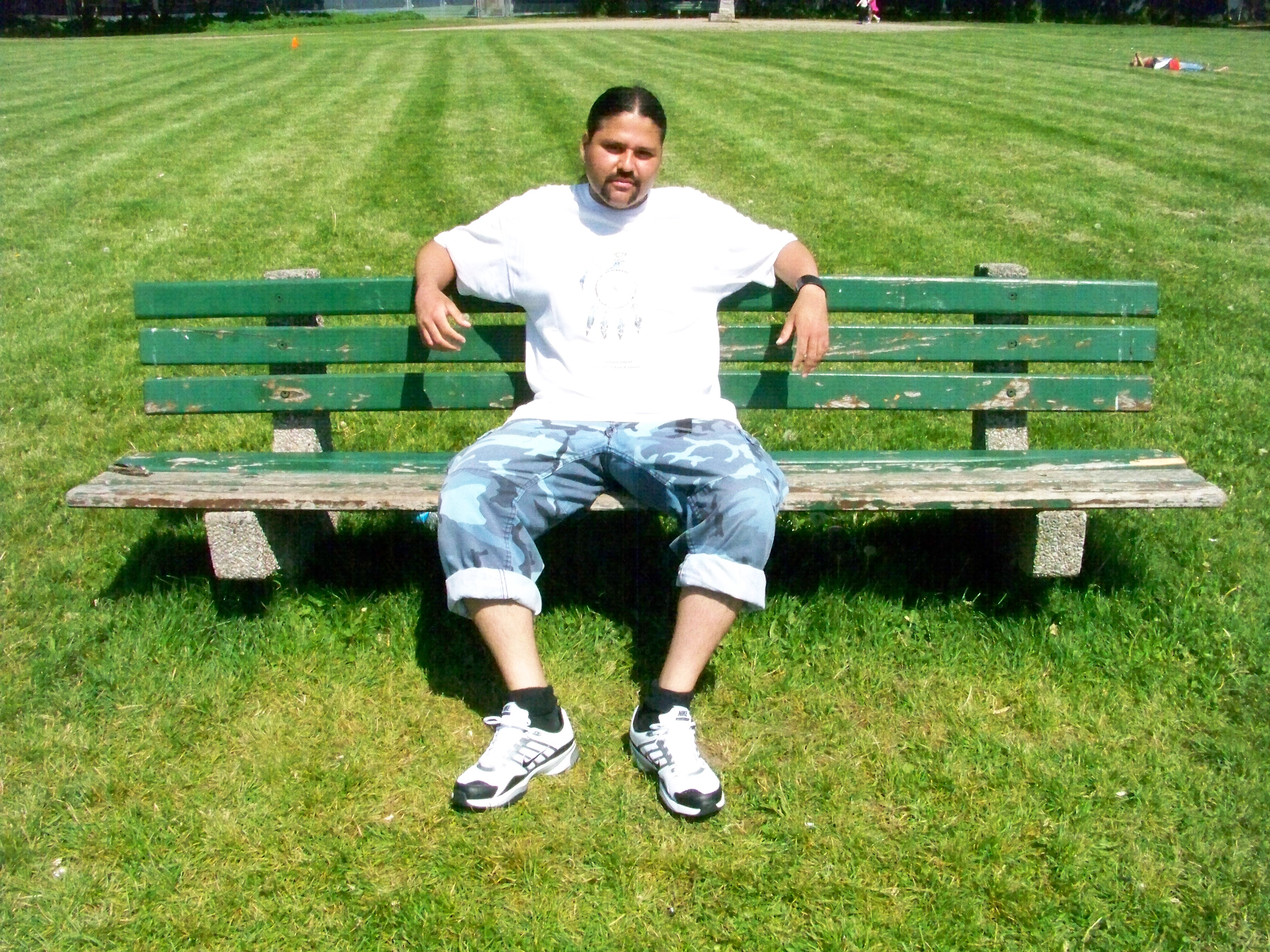
Our choice of seating was a 30 year-old green wooden bench with concrete siding.  Not many parks have these anymore.  It held us up and was comfortable.  It also brought a sense of familiarity for both of us as we are around the same age as the bench and have seen such benches for most of our lives.  It was like a place of comfort in this tough time.    

I proposed my suggestions and they agreed. 

Then I apologized for something I had done wrong to them.

Things were off to a good start.

My right leg was tucked under my left as I sat twisted to the right while talking with them.  They listened, nodded, stared, and only interrupted once for clarification.

My speech was slow, smooth, and clear.  I used “I” statements and spoke honestly without verbally lashing them.  After about 10 minutes my part was done. 

Then came the smackdown.

“I’m sorry you think I stole your idea but I’ve always done [that type of project] over the years.  I can’t tell you how many times I’ve touched upon [that subject],” they said.

Smack!

I had not done my research and I got told in a good way.

Damn, I fucked up! I thought. 

Wow.  I had been angry for a while with them and I was the one who was wrong.

My other beefs were legit and they apologized.  They were sincerely apologetic for the negative email they sent. 

They also shared concerns about reaching out to me over the years in different ways and me not reciprocating; one example was SHARING my writing and videos on social networking sites.  I explained that to me that isn’t reaching out.  Reaching out is done directly via email or phone or in person.  They acknowledged that what they viewed as reaching out was their view.  We all have different views and ways of communicating.  I like the direct form.

I also explained why I was not interested in certain projects offered to me in the past and they understood.

The tension dissipated as we talked more.  We flowed into regular chat for a bit and then came back to business.

Honesty was present throughout and not one of us raised our voices or swore.  We also shared that we were both nervous.  I told them about how this was a first for me in a long time in terms of resolving conflict.  They were nice in saying that they didn’t, or wouldn’t, do this with everyone and that they felt I was worth it.  

Talks like this are difficult but in this case it was worth it.  Like them I won’t do this with everyone.  I also feel this is something that should not happen often with the same person; there’s only so many talks you can have; and some people feel they can be abusive and talk it all out only to be abusive again to be followed by another talk and the vicious cycle goes on.  No thanks!  That’s a justified cut off.

Our talk was such a change from previous encounters I’ve had with people. 

“This was healthy,” I said.

“Yeah!” they said.

They asked for a hug and we embraced tightly and amicably.

As they rode off on their bike I felt the sun on me; I felt weightless; I felt close to Creator; I felt I grew.

Tune into Black Coffee Poet for my new VLOG about conflict resolution.

Posted in Uncategorized | Tagged , , , , , , , , , , , , , | 13 Comments

TAKING THE DAY OFF

May 21, 2012

Dear Readers,

It’s a holiday in the land now known as Canada (where I live).

I’m taking the day off to read, rest, and write.

Peace,

Black Coffee Poet

Posted in Uncategorized | Leave a comment

THE HOMECOMING: A POEM ABOUT PRISON

It has been an interesting week.  On Monday I wrote about my criminal past while thinking of the future of an acquaintance who has been charged with first degree murder; and I explored the prison industrial complex.  A few people commented and shared personal stories of relatives who are incarcerated.

I do not share my poems often on my website.  This week seemed appropriate.  I not only shared a poem, I wrote about the story behind the poem, and today I share a video of me reading the poem on location of where it happened: The Homecoming.

Enjoy, SHARE, Tweet, and comment.

Subscribe to the Black Coffee Poet YOUTUBE Channel: 113 videos:

Poetry, music, interviews, vlogs, workshops, and roundtables.

Posted in Poetry | Tagged , , , , , , , , , , , , , , | 2 Comments

THE STORY BEHIND “THE HOMECOMING”, MY POEM ABOUT PRISON

The Story Behind The Homecoming, My Poem About Prison 

By Jorge Antonio Vallejos

I saw Butch about a month ago on Bloor Street.  He rode by on a bike as I was talking on a pay-phone. (Yes, pay-phones still exist and some people still use them.)  Our eyes locked briefly, I turned my head and he kept riding. 

I’ve known Butch since I was a kid.  He was the guy everyone’s parents warned their kids about:

“Don’t hangout with that guy!”

It’s kind of the wrong thing to say to a kid.  They end up doing the complete opposite.

Butch had been incarcerated several times as a youth and as a young adult.  He was the building drug dealer who no one wanted to fuck with.  That led to a lot of us young boys looking up to him.  Even guys his age saw him as the cool guy. 

When I was 12 Butch paid me $5 to break someone’s car windows.  The guy owed him money.  I didn’t like the guy anyway and I was already used to throwing rocks at cars.  Taking the white part of a spark plug (a trick I learned from someone who taught me how to steal car stereos) and throwing it at a car window close range was nothing for me.

“You start with me,” he said after that. 

Start as in work for him.

It never happened.  I’ve always been more of a leader than a follower so I started doing stuff myself: stealing bikes and car stereos and selling them.

Butch would be in and out of the joint as I grew up.  I always heard stories of his happenings:

1. He was arrested in the laneway and had guns put to his head by cops

2. He choked my building landlord and janitor at the same time in the lobby

3. He robbed drug dealers in different parts of the city

4. He had $50 000 U.S under his bed

5. He knocked a guy out with a kick by the ice cream shop 

The myths behind the man.

When I was 15 he started hanging around us more.  He had just got out and was trying to change his life around.  But he went back in shortly and got some weekend visits in between.

A year and a half went by and he was released.  A lot of us were excited for the wrong reasons.  We thought he could hook us up with connections for things. 

The day he came back we all took a walk and heard his stories.  That’s the basis of my poem The Homecoming

Our walk and talk went well.  There was lots of laughter.  He told us stories about fights and drugs and groups who ran different rackets.  We all loved it. 

Then came the moment where my view on Butch changed: his taking of a marker and writing a statement on the wall under the pool of our building.

Six Brown guys including me were with him.  Butch is white.  And he viewed his skin as power, which it is.  But boasting about it and acknowledging it are two different things.

Rod, a guy from South America groaned loud when seeing the literal violence Butch wrote on the wall.  My eyes opened wide.  Mex, my friend, sighed in disgust; I can still hear his breath:

“Piff!”

Rod, Mex, and another Brown guy and I are Mestizo (Indigenous and Spanish) from different parts of Central and South America.  The two other Brown guys there were from the Middle East.

How could a white man think he could write such bullshit in front of us?

It’s called privilege and entitlement.

It also told us who he was hanging with inside.

Butch went downhill after that.  As opposed to dealing drugs he started using them.  The guy who rode around in a car with a sick bassline pumping Brandnubian and sporting British Knights runners with Fila tracksuits was showing up at my door with bags of groceries he robbed people of in the Loblaws parking lot.

“Lots of ketchup for Georgie!” he told my mom as we handed him $10 for a couple of bags worth $90.

In about one month from being released as a big, muscular man he lost about 60 pounds and looked sick.  The lowest point I saw him was pushing a shopping cart full of crap with a well-known user.  He ignored us out of shame.

Less than a year later he got pinched for armed robbery and was sent to the pen.  We were sad for him.  We were also sad out of selfishness: 

“He could have been so big,” said Mex with a tone of sadness as we talked by the elevators on my floor. 

Big as in connected. 

Who knows?  As I’ve grown older I think there was more myth than meat to the stories surrounding Butch.  He could fight and he sold drugs on the street.  Was he on the road to being Toronto’s next kingpin?  I doubt it. 

One thing I know is he was a full-grown man when he announced his race politics to us under the pool.  Politics I oppose.

Butch looked rundown as he rode his bike passed me.  His head was shaved but his face needed the affection of a razor much more; he wore black boots, and he had a medium build.  He wasn’t the hulk of a man that was just released from jail or the sickly string of mozzarella cheese roaming the laneways around my building.

Butch also isn’t someone I look up to anymore.

Tune into Black Coffee Poet Friday May 18, 2012 for a video of BCP reading “The Homecoming”.

Posted in Poetry | Tagged , , , , , , , , | 1 Comment