INTERVIEW WITH TORONTO RAPPER SPORADIC “THE DARK POET”

Sporadic defines himself as more than an MC, boasting a musical background that started at the age of 8. In 1999, he enrolled in the Humber College Jazz program where he studied jazz music. The program would broaden his musical horizon, which shows in his diversity as an artist.

 In 2002, he became heavily involved in the Toronto hip-hop community when he became one of the hosts of the Internet radio show, Gladstone What?! Between 2003-2004, Sporadic began his solo career and released the Alcatraz Bootleg EP, first edition (check insert). Later that year he was inducted into Camp X, one of Toronto premiere hip-hop crews, consisting of some the best MCs, DJ’s and producers in Canada.  

In 2005 Sporadic became the first winner of the Just Entertainment Demo Showcase for P.A., the lead single off the Alcatraz Bootleg EP second edition, which would be released in 2006.

In 2008 he began working on his third release, Walking the Line The LP, featuring more solo tracks and various producers from Canada, U.S., and Japan. Continuing to gain more international exposure, Sporadic found himself performing in the Mecca of Hip Hop, New York City.

Sporadic has opened for the likes of Smif n Wessen, Sean Price, Ill Bill, Necro, Def Juxx and performed with CampX. Sporadic live onstage is unforgettable. He captivates an audience with his word play, energy, message and stage presence, commanding the audience attention, defining a true MC/Musician/Entertainer. Sporadic is the true meaning of a hip-hop artist.

BCP: Why the name Sporadic? What does “The Dark Poet” mean?

Sporadic: An old friend gave me that nickname because I would be chilling out not making myself known until something would make me step into the light, surprising everyone. As well for when I would freestyle in the ciphers my verses would randomly hit topics and points that people wouldn’t expect.

BCP: How did you become involved with rap/poetry?

Sporadic: As a child I was immersed in music. Both of my parents were active in their church choir and my dad was always playing gospel records on a regular basis. When I learned how to read and write in the first grade I took an interest in writing short stories and poetry. When I saw Maestro’s video for Let Your Backbone Slide I knew that I wanted to rap and started practicing rhyming words together when I would be chilling out. I had to keep it on the low because my mom hated rap music LOL.

BCP: What is your writing process?

Sporadic: At first I would just write about anything, then I started writing to beats to develop rhythm on the beat. After a while I found myself just writing when I had a minute to myself whether it was on the transit, during class, break time at work, or late night at home.

BCP: Who have been your main influences?

Sporadic: I found that a lot of writers like Langston Hughes, Farley Mowat, and J.D. Salinger were great with providing imagery and emotion in work. Musically I gravitated to KRS- One, Public Enemy, A Tribe Called Quest, Sonny Stitt, Miles Davis, Johnny Cash, Ice Cube, and Canadian artists like Maestro, Rascalz, and Saukratese. The list extends past there but to sum it up I wanted to listen to anyone that had a message in his or her work.

BCP: You are a practitioner of Praying Mantis Kung Fu. Has Kung Fu influenced your rap/poetry? If so, how?

Sporadic: I’ve found that the martial arts training makes me more disciplined in creating something of substance. You can find a club that can teach you all the pretty flowery moves and give you a black belt because you can mimic them, where in contrast you can find a club that teaches proper technique and application and will only grant you a rank recognition after toiling and showing that you have truly learned the art. I feel that’s the same with writing. It’s a talent that now seems to be viewed as not a necessity to be an artist, which in turn produces a lot of bullshit.
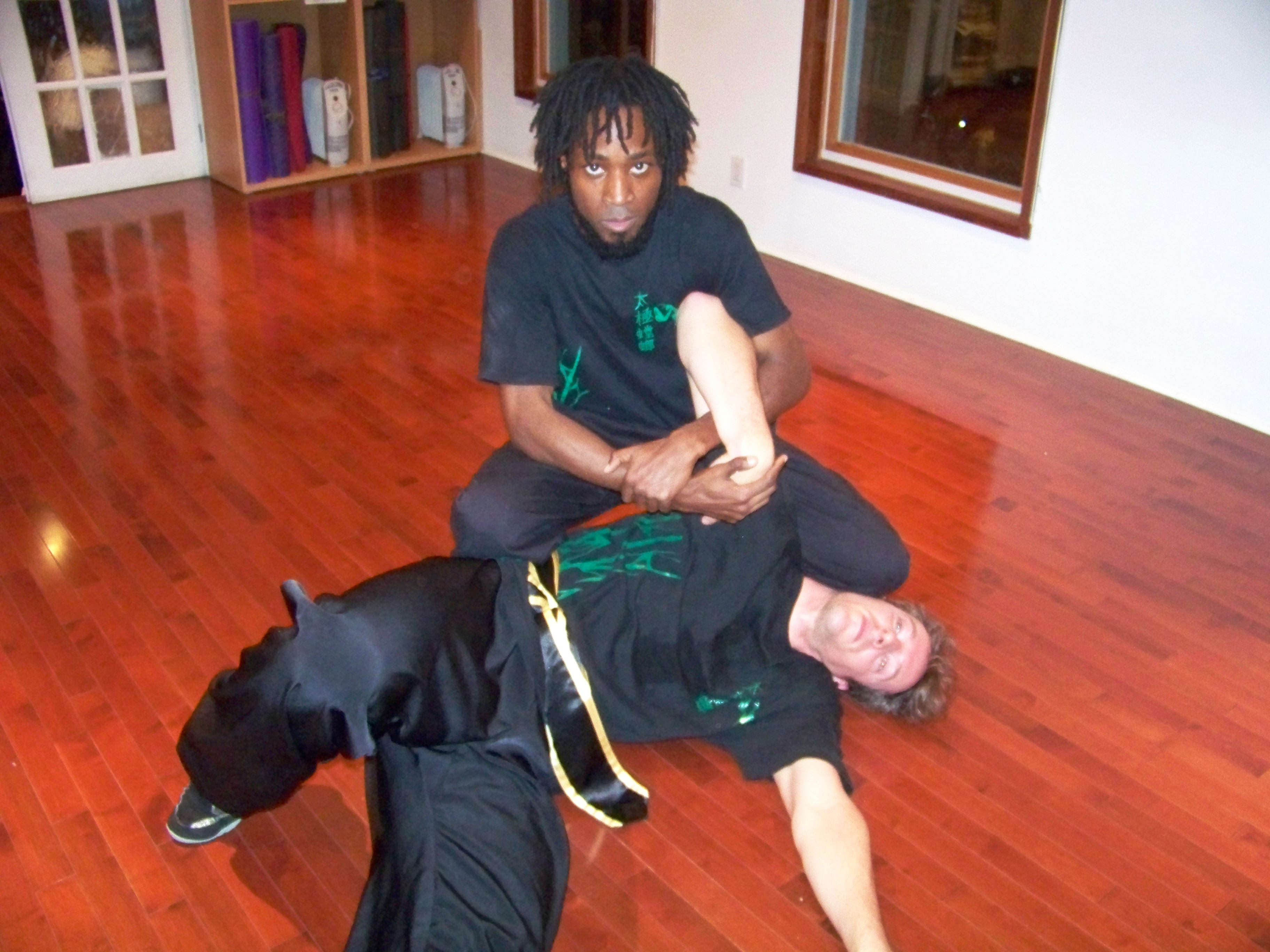
Sporadic uses his Kung Fu locks


BCP: The name of the album is Walking The Line. What message are you trying to convey to your listeners?

Sporadic: When I did my first release, The Alcatraz Bootleg EP, a lot of people thatbought it felt that it was too abrasive, whereas a lot of core hip hop heads embraced it and felt that it was a dope release. I felt that with the follow up release I would tone it down a bit for those that have never grown up in an area like Jane and Weston, but yet keep a bit of an edge.

BCP: Many different communities of colour believe that Hip Hop/Rap belongs topeoples of colour and that white rappers are appropriating such culture. What is your opinion?

Sporadic: Majority of the entertainers are people of colour so I feel that it still identifies with those communities. There have been some great white rappers like MC Search, Prime Minister Pete Nice, local rapper Theo 3, and of course Eminem. I feel whatis really appropriating the culture are the cookie cutter pop acts using the rap format and jacking lines or beats.

BCP: Four of your songs are about love for different women and one of your songsmentions your mom; all are done in a respectful way. In your song Triple Threat fellow rapper Scripts aka Sweats uses sexist and misogynist language. In other songs you also use such language. Why did you allow such disrespectful language to be on the album?

Sporadic: Well there’s never an intention to disrespect anyone with my music unless it’s a battle track. With a track like Triple Threat, the both of us jump on the track with the attitude of who can be the cockiest which creates the element of bragging on the track. At times I may use a word that seems derogatory like “bitch” to not just describe a dislikable act, but to add some tension and cause an emotional response from the listener.

BCP: How long were you working on the album?

Sporadic: I had started working on the album shortly after releasing the Alcatraz Bootleg EP, but didn’t get to start compiling the songs and recording them till 2007.

BCP: Are you working on a new album? If so, when do you expect it to be out?

Sporadic: I just finished a project with Tyme called Growth that will be released in the next few weeks through TopLeft Recordings. The 8-song EP has Tyme producing the majority of them. The lead single for the project, Foundation, will be released November 13, 2010.

BCP: Canadian Hip Hop/Rap still seems to be in the shadows of American Hip Hop/Rap. Why do you think that is? How can Canadian Hip Hop/Rap start getting more respect and recognition?

Sporadic: I think that Canadian hip hop/rap had been denied the spotlight in the US for many years, but it was still getting recognition from a lot of rappers, DJs, and underground listeners. Drake’s release has been able to put Canadian hip hop/rap into the mainstream, which is good because it creates an interest for someone to check out what else we’ve got and produced. Respect and recognition from the US has been there to some degree, but it’s hard for them to respect it when a lot of the top artists here are fighting for that recognition in a smaller market with only a handful of media outlets.

BCP: Walking The Line is a really good album. How is this album different from your previous albums? How has Sporadic grown since the first album?

Sporadic: Thanks, glad you enjoyed it. This album, like I said earlier, is more toned down from my first release. Definitely in regard to songwriting I played with different areas to show flexibility, but I feel that a lot has changed between that album and the new EP to the present moment. To keep the listener coming back you have to not only maintain a certain standard quality, you also have to give them something different like a surprise you planned just for them.

BCP: What advice do you have for young rappers out there just starting out and trying toput an album together?

Sporadic: Definitely do your homework and check the history of the music. There are many influences that created a culture through the music and dance so you have to be aware of that. Take your time, be original, truthful, and always make sure that you’re providing something new to add to the mix.

Tune in to Black Coffee Poet Friday November 12, 2010 for a video Sporadic “The Dark Poet” rapping, and for our first feature of BCPs “Poetry in Motion” series.

 

Posted in Poetry | Tagged , , , , , , , , , , , , | 1 Comment

WALKING THE LINE

WALKING THE LINE

By Sporadic “The Dark Poet”

Reviewed By Jorge Antonio Vallejos

Canadian Hip Hop has a bad rap! (pun intended.) 

How many Canadian artists get no airplay and no respect?  The list is too long for this review. 

It can be argued that Drake is Canadian and he’s top five.  No doubt, that is true.  But most people don’t see Drake as Canadian.  Shad, a native of Brampton, Ontario is making waves but he has not reached the heights of his contemporaries who contrast his positive message.

I remember joyriding with my crew as a teen while listening to Biggie, Scarface, Snoop, and the Rascalz. No matter what ride we grabbed our trusted mixed tapes came with us and the Rascalz got play everyday, several times a day.  If you’re thinking “the Rascalz?” to yourself they were a top Canadian Hip Hop group from Vancouver in the 1990s and the early millennium.  Their track Really Livin’ is a classic! A bad boy tune for real.

Before the Rascalz made it big in Canada it was Canadian Hip Hop’s Godfather Maestro Fresh Wes who everyone was listening to.  MCs starting popping up after him, some getting a rep, others overlooked, and the latter is the common case today.  One such artist is Sporadic “The Dark Poet”.  His second album appropriately titled Walking The Line is comprised of 15 songs that will keep you bobbing your head.  But am I the only one listening?

Walking The Line’s cover depicts Sporadic in front of a mic.  He’s got an intense look that matches his lyrics.  Although a young man, Sporadic’s beard shows his life experience and wisdom that flows from his lips: “I get more pumped than classic Reebok’s.”  True poetry from a man that has seen the running shoe turn from a necessity to style to scientific experiment.

Sporadic, not only a poet, but also an entrepreneur, reveals himself on the mic:

“I want to make money like the government can,

establish myself,

stop working for the man.”

All artists want this.  It’s the dream being chased by those willing to sit and write and later stand in front of a mic.  But not all artists have the will and skill that Sporadic does.  Real artists are influenced by their contemporaries, those that have come before them, and artists that are not in the same field as them.  Sporadic, a young Black man, pays tribute to the men that paved the way for him via different genres and arts:

“Rugged smooth talk,

similar to Cassius Clay,

words serenade the mic,

a la Marvin Gaye.”

Like many peoples of colour, there are no real role models for them today.  We have to look to the past.  Sporadic knows and shows the teaching, “In order to know who you are you have to know where you come from.” 

In Foundation Sporadic shares his life of hunger and being a byproduct of crime, doing time and paying his dues on Jane street.  All artists have a story that fuels their expression.  How many have a foundation they recognize, respect, and remember?  Sporadic cleverly shares wisdom after having his listeners relate to images he plants in their heads through a catchy chorus:

“Foundation, recognizing your block,

Foundation, throwing up a tag on the spot,

Foundation, chilling with your crew drinking brews

Freestyling under the light of the moon paying dues,

Foundation, something you got to have

If you want to have a plan then

You got to be the plan.” 

Part of achieving the success one attains in life is by surrounding oneself with positive people.  Sporadic, true to his name, has both positive and negative people on his album.  While sharing sound advice with his audience, he strays off on homophobic and sexist tangents that are backed by one of his guest rappers.

In Triple Threat guest artist Scripts aka Sweats is appropriately introduced with, “I fucking hate that guy.”  Fat phobia, sexism, misogyny, all come out of Scripts mouth without him thinking twice or breaking a sweat: “Even big girls get these nuts on their double chin.”  He later says,

“Skin white,

Game tight,

One of a kind,

So, na we aint the same type.”

Bullshit.

We already enough white rappers trying to prove themselves by putting others down.  Eminem has reached top five status for acting like an asshole and rhyming violently about women and queer folk.    

Although including such oppressive rhymes in Walking The Line, Sporadic show his true feeling for women and his true skill in three love songs: Crush, Love Revisited, and Love Lost.  There is a vulnerability displayed in the three songs that are not found anywhere else in Walking The Line.  Sporadic tries to mask his exposing his feelings through a chorus but comes clean in later lyrics.

In Crush, Sporadic raps:

“This aint a love song,

get with it shorty,

this is a crush song.”

If you have to say it’s not a love song, guess what? 

In the same song Sporadic raps, “Holding you tight like I’m scared to lose you,” then

“One in a million,

out of all the women I been with,

you’re the one I’m feelin’” 

The hypermasculinity shown in Sporadic’s other songs tries to sneak in and cover his romantic, open, and vulnerable side with no success.  You can see that the one time thug has a heart and he’s sharing it on the mic.

In Love Lost, “The Dark Poet” sheds light on how “It hurts but I’ll get over that” and shares, “I guess I never said it much.”  It’s a song of regret that has good background vocals and a story that many know all too well.

The strength of Walking The Line is Sporadic’s collaboration with female rapper Candee Bunn.  A modern day Bonnie and Clyde style song, the setting is a phone call from one love to another.  Both artists feed off each other, there is a nice back and forth that flows like a proper pouring of a pint of Guinness: slow, rich, and full of flavour. 

Love Revisited shows that female rappers hold their own, and are often better then many male rappers.  Promises of faithfulness and gangster love are backed by a strong piano beat.  You wish that Candee Bunn and Sporadic made more songs together or possibly and entire album.

Walking The Line has great beats, at times you feel like you’re riding around in stretched Cadillac in a Blacksploitation film.  There are hints of his inlflunces throughoutt the collection; one beat being very similar to New York State of Mind by Nas.  

Sporadic’s rhymes show the attention and detail he invests in his craft.  After listening to Walking The Line you know Sporadic will be coming out with a third album that will be better than the first two; he is not exaggerating when rapping

“I won’t quit like a DJ in the mix,

Stick to my foundation like a heroine fix.” 

Support Canadian Hip Hop!  To buy a copy of Walking The Line by Sporadic, or to contact him for a show, email him at sporadic.thedarkpoet@gmail.com.

 Tune in to Black Coffee Poet Wednesday November 10, 2010 for an inclusive interview with Sporadic “The Dark Poet”.


Posted in Poetry | Tagged , , , , , , , , , , , , , , , , , , , , , , , , | Leave a comment

QUEER LATINA POET JANET ROMERO READS HER POETRY

I first met Janet Romero at Toronto Women’s Bookstore five years ago.  After becoming a regular (I was there three times a week, or more) we chatted a lot eventually leading to Janet and the staff knowing what new arrivals I would be interested in buying.  

Conversations about books led to talks about politics to the “of colour activist communiuty” to Indigenous alliances and so much more.

After reading a bio on Janet before one of her performances I was intrigued to see that she identified similar to myself.  The words ” denied Aboriginality” caught my eye and I emailed Janet asking if she wanted to have lunch and chat identity.  Our lunch and conversation were great!

See and hear Janet Romero share her identity, sexuality, and writing process.  

Enjoy!  

Tune in to Black Coffee Poet Monday November 8, 2010 for a review of “Walking The Line” by Toronto MC Sporadic “The Dark Poet”.

Posted in Poetry | Tagged , , , , , , , , , , , , , , | Leave a comment

INTERVIEW WITH QUEER LATINA POET JANET ROMERO

Janet Romero-Leiva is a queer feminist latina visual artist and writer whose explores immigrant displacement, denied aboriginality, queer and of colour existence, living and loving in dos lenguas, and the continuous intersection of identities that shape who she is and how she moves in this world. janet immigrated to canada at the age of 7 and has since been trying to find her footing between america of the north and america of the south. she loves smoothies, cartwheeling and can often be found reading children’s books at the toronto women’s bookstore.

BCP: Why did you start writing poetry?

JR: It was by accident, I didn’t really know that is what I was doing…but I started writing because I felt a need to express and somehow release things  I was trying to make sense out of – like my queerness, my feminism, my latinidad, my indigeneity, my experience of being an immigrant child

BCP: What is your writing process?

JR: I write a lot when I am trying to sort something out – a thought, a feeling, an experience….mostly it’s from a feeling of discomfort or confusion. I will usually sit with the feeling for a while before I write about it and will usually write down a line or two so I can put it on paper and revisit when I feel capable of going back to that discomfort. When I go back to it I usually write about the experience itself and what feelings came up for me and when I have felt this before, then I go back an edit and edit again and again until I feel I’ve managed to capture the feeling more than the actual experience.

BCP: Who are your influences?

JR: Chrystos was the first poet I read that made me think I too could write – so I obviously love her, also Gloria Anzaldua, Cherrie Moraga, Audre Lorde, Qwo-Li Driskill, Lee Maracle.

BCP: You used to manage the Toronto Women’s Bookstore.  Did being surrounded by books help your writing?  Did you find a lack in books written by people of colour?  What is lacking, and what do you see as problems, in the publishing world?

JR: Yes and yes! The publishing world is lacking in feminist, queer, people of colour , trans people, working class people, folks with (dis)abilities, immigrant, older peoples writing. A big problem is that the majority of people in publishing are not the people on this list – they are white, middle/upper class, mostly heterosexual men,  so they do not see a problem with this. They have a huge monopoly on the publishing industry, making it very hard for smaller/independent publishers to make it. It’s not that no one is publishing people of colour, queer people, etc. it’s that the big publishers and bookstores make it very hard for the independents (publishers and bookstores to survive) to thrive and be able to stay in business. I think another factor is that because we as queer, people of colour , trans people, working class people, folks with (dis)abilities, immigrant, older people have not seen ourselves represented in literature it  is hard to imagine that this can change, so part of it is believing that this too is possible for us.

BCP: Much of your writing is political.  Do you also write about the fun stuff of life?  Why or why not?

JR: Ha! Ha! The fun stuff can be so boring! I don’t write about fun very often because it’s not something I feel the need to process or figure out – it just is!

BCP: Non-accessible academic writing, long and boring speeches, and yelling slogans on a megaphone are given precedence over poetry in the activist world. 

What role do you see poetry having in activism?  How can poetry get more than a quarter of a page in a magazine (if at all) and be used as more than an opener at events?

JR: I equate poetry with activism. We need to hear/know/understand the world from various perspectives and I think poetry allows us to express and hear things in a way that traditional methods (like speeches and academic writing ) do not because it evokes a feeling and when you leave a talk/conference/march you will forget the words you heard but the feeling will stay with you.


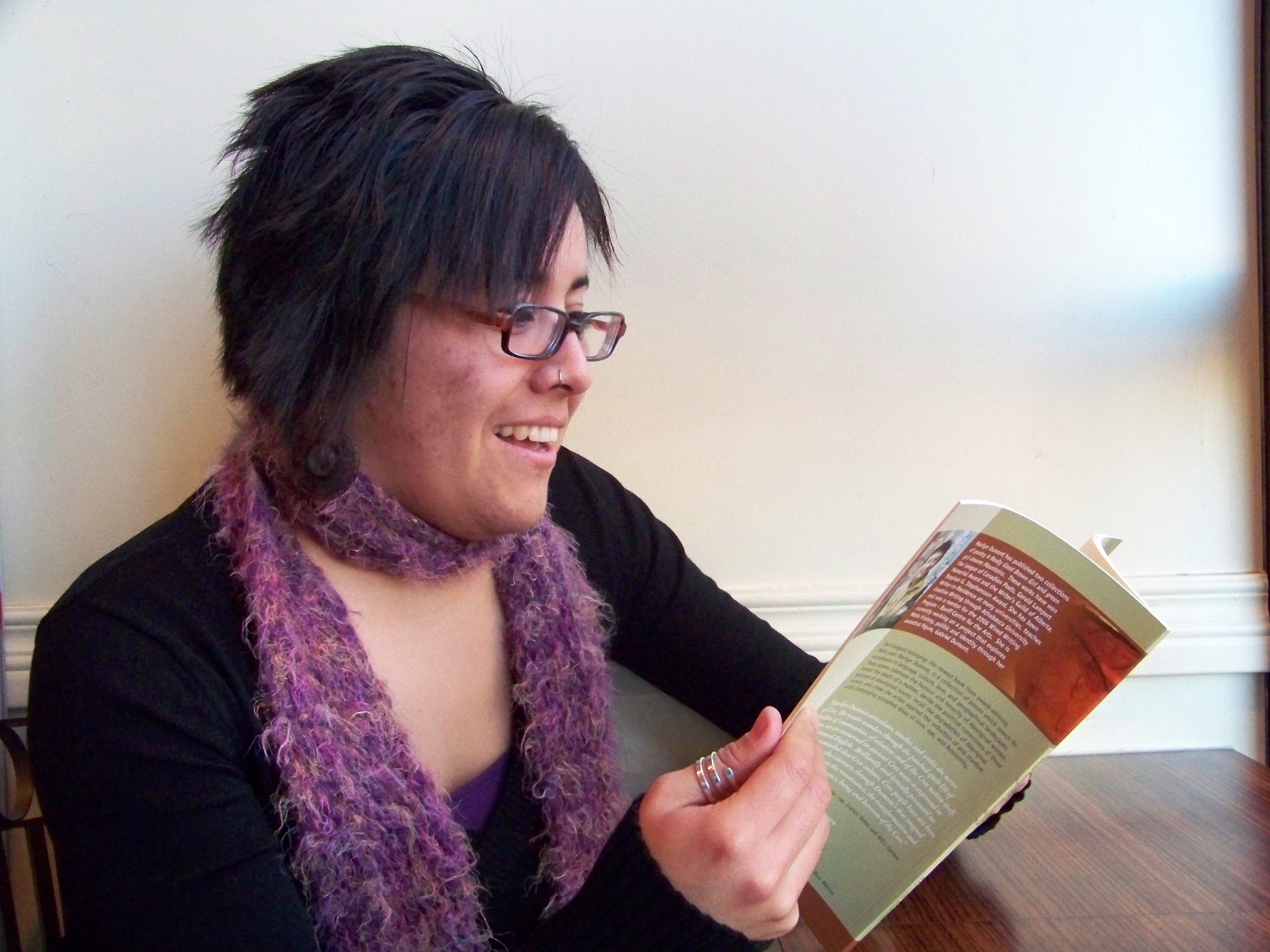
Janet Romero enjoying some poetry

BCP: Some your poems deal with Aboriginality.  Can you explain what you mean by Aboriginality? 

JR: To me aboriginality is the existence of aboriginal/indigenous blood/culture in my family/ancestry.  I use it mostly in reference to the denial of aboriginal blood that many Latin American folks suffer from…as if to admit we are part indigenous is to admit we are less.

BCP: How much queer content do have in your collection of poems?

JR: Probably about 80% to 90%, I always  manage in some way to incorporate queerness because it’s how I move in the world, so it’s hard to dismiss.

BCP: Have any queer writers influenced your writing?

JR: Oh yeah! I try to read mostly queers of colour writers, so…Gloria Anzaldua, Cherrie Moraga, Audre Lorde, Qwo-Li Driskill, and Chrystos (To read a recent interview with Chrystos click on https://blackcoffeepoet.com/2010/09/15/interview-with-chrystos/) 

BCP: Is there a book that you have read and re-read several times over?

JR: Borderlands by Anzaldua and Loving in the War Years by Moraga.

BCP: Have any Latina poets helped your activism as an Latina fighting for Latin@ rights?

JR: Gloria Anzaldua, Cherrie Moraga, Ana Castillo.

BCP: What books by Ana Castillo did you read, like, and found that influenced you?

JR: The Mixquiahuala LettersSo Far From God: A NovelLoverboys: StoriesI Ask the Impossible: Poems, and The Guaridans.

BCP: Writers/poets identify in so many different ways.  You are a woman of colour who is labeled as Latina and who is part Indigenous and who is queer.  How do you identify as a writer? 

JR: As a writer I identify with all these identities because my writing focuses on how I live within these identities.

BCP: When can we expect to see your collection of poetry on bookstore shelves?

JR: I would definitely like to have my work published one day but it is not something I am actively persuading at the moment….but one day.

BCP: What advice do you have for young writers, women of colour writers, queer writers?

JR: Keep on writing, regardless of what people say – good or bad – continue to write what you need to write. Share your writing, if no one hears what you have to say then it is only you who will benefit from your work, which is great and important as a growing and learning tool, but it is also great for us to hear you and in this way normalize our reality and be an influence to others who may  not have the words to express the many wonderful and difficult things we live as writers of colour, queer people, etc.

Tune in to Black Coffee Poet Friday, November 5, 2010 for a video of Janet Romero reading her poetry.


Posted in Poetry | Tagged , , , , , , , , , , , , , , , , , | 2 Comments

MY FATHER WAS A TOLTEC

My Father Was A Toltec

By Ana Castillo

Reviewed by Jorge Antonio Vallejos

1988 was a great year for poetry and poets of colour. 

Not Vanishing by Chrystos, my favorite book of poetry, was published in 1988; Audre Lorde had her ninth collection of poetry on bookstore shelves; and Chicana poet Ana Castillo came out with her fourth collection My Father Was A Toltec.

One of the classic texts in terms of Brown poetry, poetry of colour, revolutionary poetry, My Father Was A Toltec not only has a catchy name, it’s all true.  Castillo’s dad was a member of one of Chicago’s oldest gangs The Toltecs.  Named after one of the Indigenous nations of what is now known as Mexico, The Toltecs ran a hood in Chi town.  Brown men wearing fedoras and slacks with suspenders and shiny black shoes: cool, cocky, Chicano/Mexicano.

Castillo shares stories of Chicago life, what it was to be a “Dirty Mexican” in the 1960s, family trials, oppression, and the ever-present system of patriarchy.  And she does it in both English and Spanish, some poems not having translation—you got to love her defiance.  Castillo is saying, Soy Mexicana, deal with it.

Castillo, the daughter of a street warrior, was also someone not to be messed with.  Poems of her dad being slashed by a rival are followed by verses of Castillo herself getting it on with racist white girls.     

’88 was a year where Hip Hop, the then new street form of poetry, was still in its earliest stages.  ‘Ghetto’ terms were still that, language used by those who lived in what Castillo describes in one poem as “the hood” with an asterisk beside it and a translation provided at the bottom of the page: *neighborhood.  Now, with Hip Hop being the hottest music around, rich and middle class white kids walk into their SUVs talking about driving back home to “the hood”.  A lot has changed in twenty-years.

Sad.

Even more sad is that the really crucial things about our culture still have not changed. 

DIRTY MEXICAN, Castillo’s poem about being called exactly that, is a story of white on Brown violence, white boys killing a sex worker (“mutilated” to be exact), Castillo speaking out with chalk on the sidewalk—“MEXICAN POWER”—and in person:

“That’s right, honey, I’m Mexican!

Watchu gonna do about it?”

DIRTY MEXICAN is a saying that has deep roots.  When the colonizers came to the land now called Amerika they would say, “The only good Indian is a dead Indian”.  That was later used for Brown people from down South: “The only good Mexican is a dead Mexican”.  Signs on restaurant windows would say “No Dogs Or Mexicans Allowed!”  Then, Castillo and millions of others were being called “Dirty Mexican” even if they weren’t from Mexico (not all Spanish speaking Brown folk are from Mexico). 

Today, where white folks like to talk about the minority being the majority, ‘their land’ being taken by Brown folks from down South, and the building of fences guarded by machine gun carrying thugs the U.S/Mexico border, the reality of Castillo’s poem is back, some arguing it was never gone.

DIRTY MEXICAN is more than just a poem.  It’s history.  It’s story passed down.  It’s letting Brown folk know who we are and where we come from.  It’s a reminder of the vicious cycle of colonialism. 

As people with roots in the South and treated wrong in the north, we are not innocent, we have our own shit to deal with.  The most powerful poem in the collection that speaks to one of our biggest problems is SATURDAYS.  The poem points out in seven subtle yet smacking lines our history, and current upholding, of patriarchy.   

“Because she worked all week,” is the start of the poem.  “She” is Castillo’s mother, working “5 to 5”, like many women of colour.  Five to five, not the regular hours people complain about.  Saturdays was laundry day.  Castillo helped her mother do the laundry.  More work for a woman who worked 60 hours a week, probably for little pay, and way less than what a white woman would get paid.  This is still a reality in North Amerika. 

The poem takes you through the process of cleaning: washing clothes in the kitchen sink, hanging them outside on a line, the ironing, the folding, and then…

Castillo’s dad enters the picture, wearing the “tailor made silk-suit bought on her credit”.  “Her” meaning Castillo’s mother who adjusts his tie and then hears the audacious and sad words, “How do I look?”  They are not going out together.  He is going out to meet a different she, and Castillo’s mother knows. 

Bien Good,” she responds and keeps on ironing. 

Castillo further explains the scenario, the relationship, the culture, the sadness of it all:

“That’s why he married her, a Mexican

woman, like his mother, not like

they were in Chicago, not like

the one he was going out to meet.” 

As Brown folk we are quick to point out the wrongs happening to us form the outside in. Are we pointing out what we do to ourselves?  How many “she’s” and “not like’s” are in our lives?  How many do we know?  How many are being groomed to be both?

SATURDAYS is about a day in Castillo’s life in 1968 and published twenty years later.  It’s been twenty-two years since then and I don’t believe much has changed.  We’ve had strong women like Castillo and Gloria Anzaldua and Cherrie Moraga write, speak out, and do their best to effect change.  Where were the men during all this? Where are the men now?  Are there men who are speaking out?  Where are the changes? We always hear about Anzaldua, Castillo, and Moraga, where are the new Latin@/Mesitz@ peoples speaking out against all this?    

Saturdays are the last day of the week.  To Castillo and her mother it was the day the man in their life betrayed the family.  Saturdays are like this for many people. 

Through getting to know many peoples from down South I’ve had this sad reality shared with me over and over again.  I’ve been taught that there’s an unwritten rule in the South: “Every woman who gets married knows that one day her husband will cheat on them.  They still get married and they stay quiet.”

Castillo was not only recounting the events of every Saturday, she was calling for an end to such Saturdays.  While having a deep affection for her father, the Toltec, Castillo questioned him on the page, exposed his wrongs, and showed the true strength of her family: her mom.

My Father Was a Toltec has poems dedicated to influential women like Jean Rhys, other Chican@ poets, the President of the United States, and poems of promise as well as manifestos like We Would Like You To Know and In My Country.  Castillo challenges white folk, Brown folk, men, the system, and herself. 

Take the time to experience Castillo’s collection: read, re-read, be challenged, learn, put pen to pad, and enjoy.

Tune in to Black Coffee Poet Wednesday November 3, 2010 for an inclusive interview with Latina poet Janet Romero.


Posted in Poetry | Tagged , , , , , , , , , , , , , , , , , , | 3 Comments

PAGAN POET CHRIS MOORE READS HIS POETRY

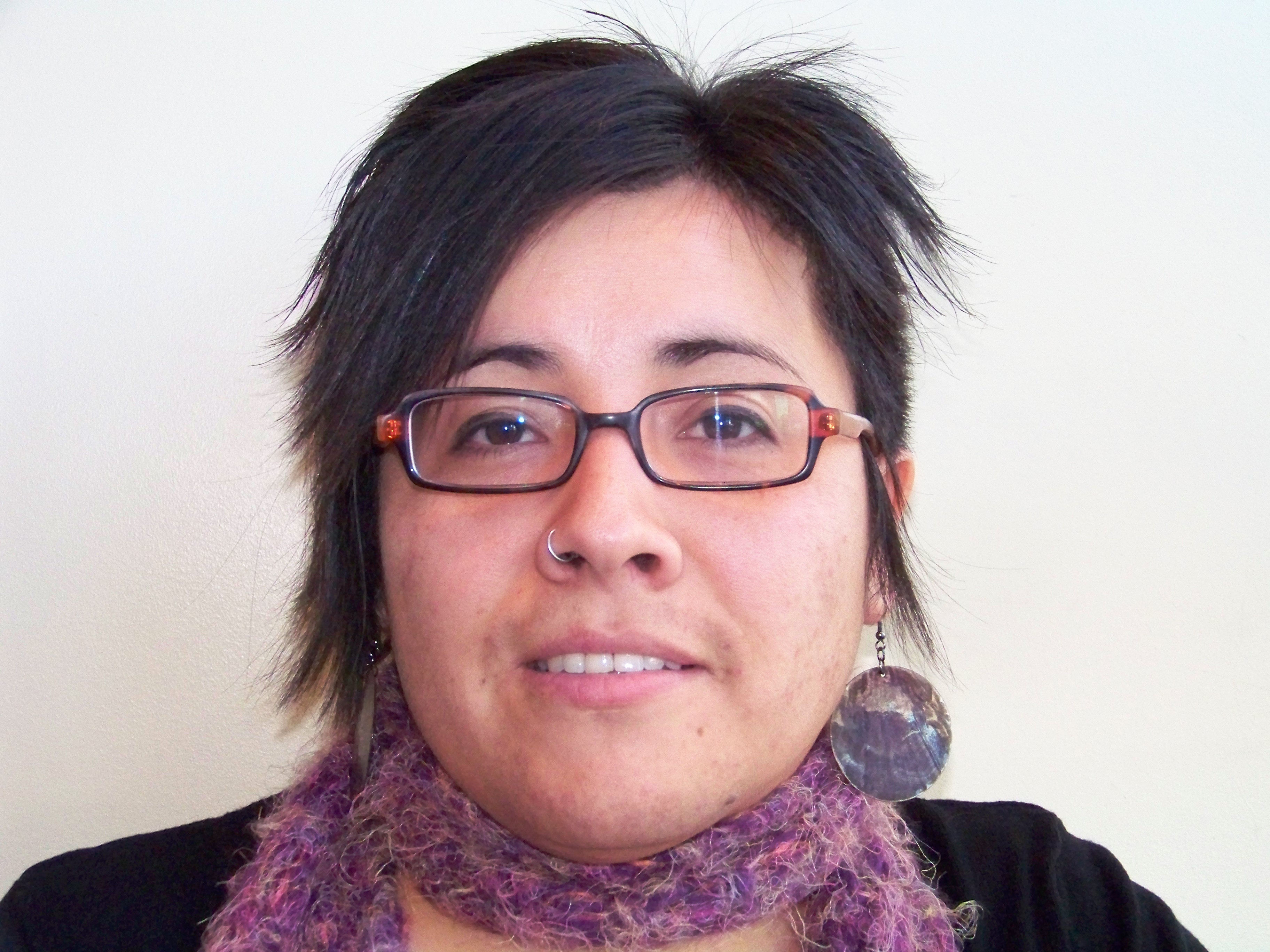
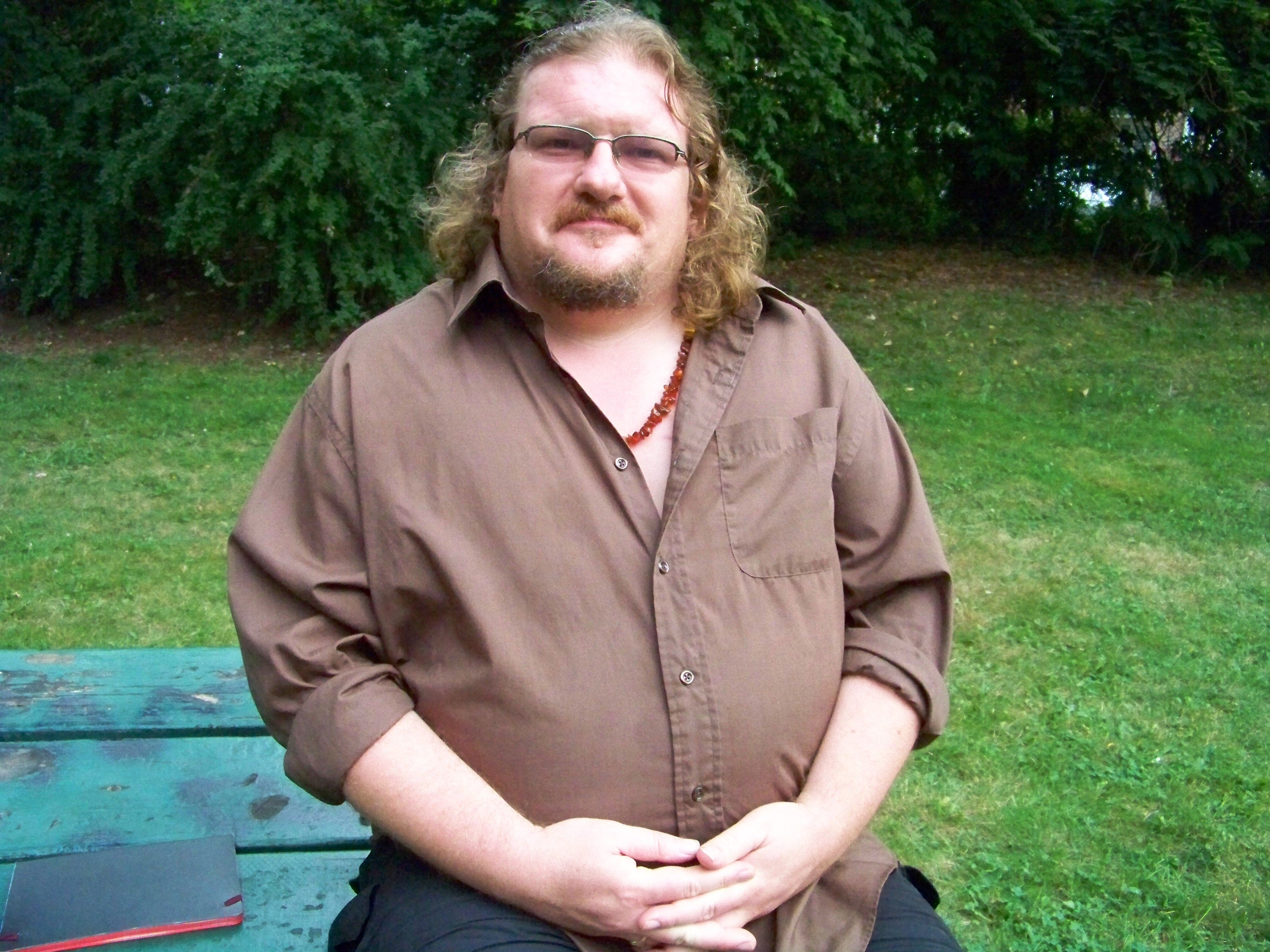
I met Chris Moore at my local coffee shop this past winter. We’d say, “Hi”, sit by one another, and then do our own thing: I’d write, he’d meditate.

One day we started talking politics, which led to him asking what I write while sipping coffee, and then we discovered that we are both poets.  

During the two months that I used to brainstorm what is now the online magazine “blackcoffeepoet.com”, Chris agreed to be interviewed, and taped reading his poetry for the mag.

Mark, the owner of the coffee shop where Chris and I sip, write, and chat, describes Chris’ writing as “Phenomenal!”

Enjoy Chris Moore’s very emotional, energetic, and elegant poetry.

Tune in to Black Coffee Poet Monday November 1, 2010 for a review of Chicana Poet Ana Castillo’s collection of poetry “My Father Was A Toltec”.

Posted in Poetry | Tagged , , , | Leave a comment

INTERVIEW WITH PAGAN POET CHRIS MOORE

Chris Moore first became a Priest of what he refers to as the “Old Religion” when he was initiated as a British Tradition Witch in the ninth month of 1999.  Already at that point, a proficient Rune worker, it was only a matter of time before he felt the pull towards the Northern Tradition of Witchcraft.  Almost immediately, he began conducting runic workshops, poetry readings, and storytelling based on Old Norse myths and legends.  As time progressed, he developed a spiritual practice that combined walking meditation, sitting meditation, followed by journaling.  Over time, more and more entries took the shape of poetry.

Now a High Priest of the Northern Tradition of Witchcraft, Chris acts as a storyteller for his new and extended spiritual family, some local Unitarians at whose Congregation he now co-facilitates a Pagan Grove. Poetry has completely replaced the diary style of entries in his journal and he has put more emphasis on sharing his work through readings, rather than as a solely personal reflection.

BCP: Why poetry?

CM: Why Poetry? Because I am lazy and I hate writing! But I get these incredible ideas bursting in my head. And I have to express them. But I am frustrated because my hand moves so slow across the paper. My mind is already on the next paragraph. But my hand is still struggling to finish the first sentence. My keyboarding skills are terrible, so typing things is even worse. With Poetry every word has to be carefully selected to carry the meaning of things in as few words as possible. It is much more compact. 

BCP: What is your process?

CM: My poetry emerges when it wants to, usually as a result of my meditation practices. Meditation leads me to poetry. And Poetry often gives me something to reflect on at the start of a meditation. The process feeds itself.

BCP: How long have you been writing poetry?

CM: Oh Hell, I don’t know. I remember writing as a kid, and not because the teacher told me to, but on my own, because I enjoyed writing Poetry.

BCP: Who are your influences?

CM: William Blake, William Shakespeare, and William Butler Yeats.

BCP: Your poetry is emotional, honest, and stimulating.  What do you try to convey to your readers?

CM: Thank you, every poem is different with its own take. Sometimes it is about simply letting people know they are not alone, we all feel the same feelings, we all suffer the same pains, and we all laugh.

BCP: Does your spirituality play a part in your writing?

CM: Absolutely, more than anything else! Meditation is a deeply spiritual practice. And it is from there that my poetry emerges. The two go hand in hand.

BCP: Do you see poetry as a form of prayer?

CM: Yes and no, sometimes they are, sometimes they are a comment or reflection on my own prayer that I wish to share with others.

BCP: Do you share your poetry in your workshops and sermons?

CM: What a brilliant idea! Actually, I don’t really; I sometimes use my poetry as prayer in circle, but almost never in my workshops. It simply never occurred to me. Thank you for that!


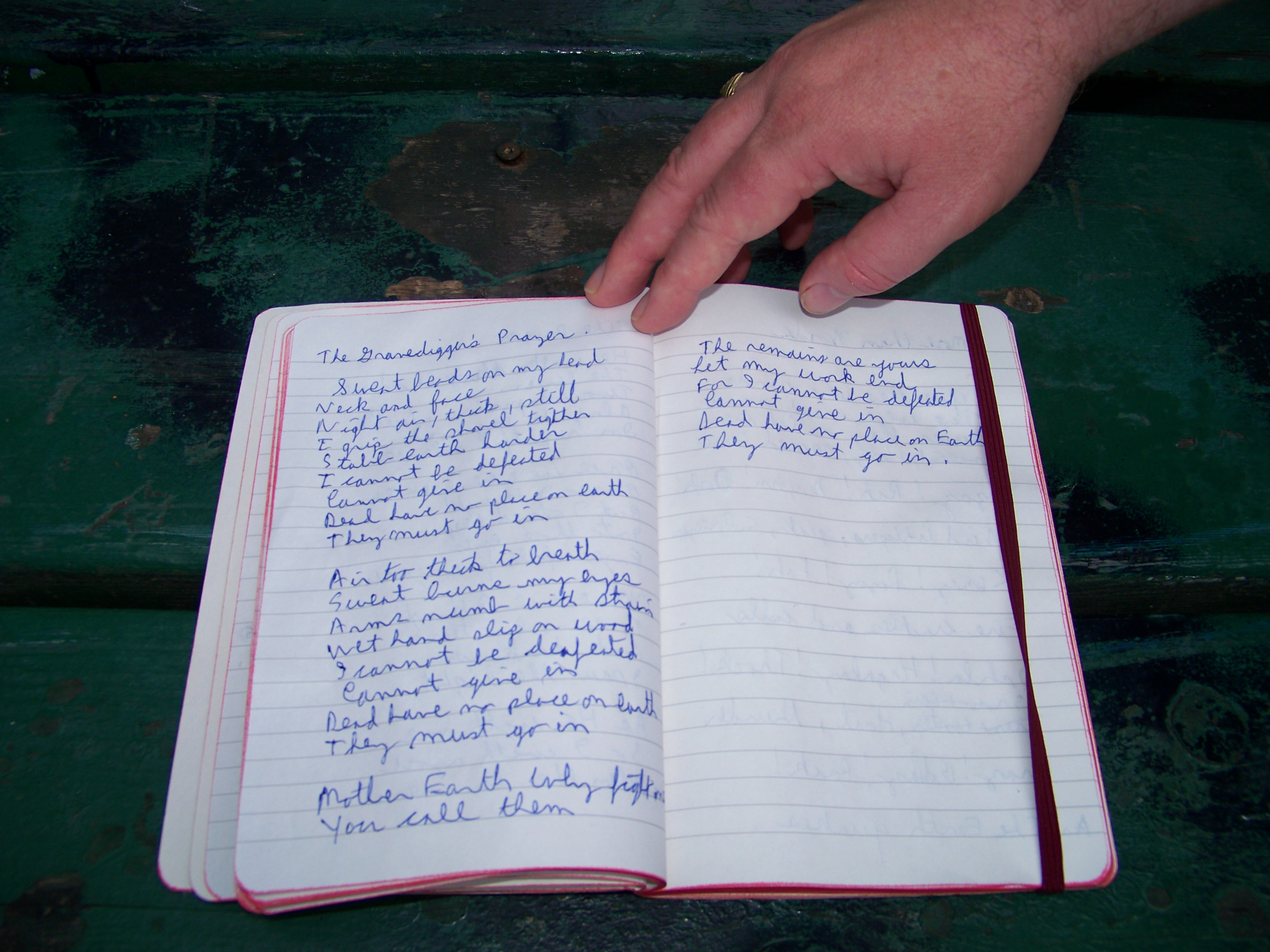
Chris Moore's poetry notebook

BCP: The poetry you have shared with me is earth based and focuses on death.  Is a lot of your poetry like that?

CM: No, some of it is. But I would not say most. But a lot?  Hmmm…… I think I will stick with no. I chose the ones I did because of the time of year when I read them. This was autumn. The late fall is a time to reflect on our own mortality and to understand that death is not some weird and horrible anomaly. It is our destiny. And I have found that being afraid of death is one of the things which prevents us from truly living. This is a great shame. You cannot avoid dying, so make the most of the time you have.

BCP: You used to run readings at coffee shops.  Why did you stop?  Would you consider starting those up again?

CM: There are two sides to my being, the contemplative and the activist. And I go from one to the other. I stop writing/reading when the time for meditation is reduced. I always make sometime for meditation, but poetry comes from the still periods of my life. I have spent a long time now in the labour movement. I recently stepped down as President of my local, so who knows….. 

BCP: What are you working on now?

CM: Loving-compassion, I am writing poetry on what I refer to as “loving-compassion” as a universal value we all need to display in our lives.

BCP: When do you expect to have your own collection of poetry published?

CM: When I get there, I promise, you will be the first to know. And I will be looking for an invitation to come back. So be careful what you wish for. But thanks for asking.

BCP: What do you want the Pagan and non-Pagan communities to get from hearing you read your poems?

CM: That there is a oneness to the Universe, Life is no accident. The natural order is awesome and deeply spiritual.  Love and compassion are truly the answer.

BCP: What advice do you have for other writers out there who are having difficulties with their writing, or who have yet to see their work in print, or who are afraid to perform their poetry?

CM: I will let you know when I have some! You are talking about me! The best thing I can say is you are not alone, everything you feel, others feel to. They can overcome their barriers, and you can overcome yours.

Tune in to Black Coffee Poet Friday October 29, 2010 for a video of Chris Moore reading his poetry.


Posted in Poetry | Tagged , , , , , , , | 1 Comment

THE BOOK OF CELTIC VERSE: A TREASURY OF POETRY, DREAMS, AND VISIONS EDITED BY JOHN MATTHEWS

The Book of Celtic Verse

Edited by John Matthews

Reviewed by Jorge Antonio Vallejos

It was a hell of a time finding an anthology of Pagan poetry for this weeks review.  I contacted three publishers, one author, looked for books in the library, and nothing.  Nada.  No writer or publisher got back to me.  And my local library system has to beef up its selection in terms of Pagan poetry.

Chris Moore, this weeks featured poet, ran downtown to a used bookstore and found The Book Of Celtic Verse: A Treasury of Poetry, Dreams, & Visions Edited By John Matthews.  Chris did this after I told him all the trouble I was having in finding a book to match him up with. 

“You buy it, I’ll review it, you keep it,” I said.

Within two hours the book was in my hand.  I hadn’t even left the spot where I had the conversation with Chris.  (Thanks Chris!)

Enough background info, let’s get to the review.

Editor John Matthews has written more than eighty books on Arthurian Legends, the history of Grail Studies, and many collections of poetry and short stories.  Mathews was a consultant on the film set of King Arthur directed by famed director Jerry Bruckheimer and has been on the New York Times best seller list for twenty-two weeks.  So, this 2007 anthology of Celtic Verse, or what Chris Moore and others call Pagan poetry, was put together by someone who knows what they’re doing.

The Celts, like many other groups of earth-based peoples, loved words and song and different forms of expression.  Early Celtic poets were called “carpenters of song” and “people of skill”.  (I wish poets were referred to with such respect these days.)

The poets featured in the anthology compiled by Matthews includes peoples from all over the Celtic World: Brittany, Cornwall, Scotland, Wales, and Ireland.  The works span hundreds of years and are split in to five sections:

1)    Spells and Incantations (The Poetry of Magic)

2)    The High Dream of Nature (The Poetry of the Natural World)

3)    Lovers Under Leaf (The Poetry of Love)

4)    Warriors and Warlords (War Songs and Praise Poems)

5)    Voices of the Spirit (The Poetry of Vision)

WARNING: reading poetry by dead white people is not Black Coffee Poet’s strongpoint.

Being raised by women I have always felt very comfortable with people of the female gender, often times preferring their company over that of peoples of other genders.  So, it is no surprise that I was struck most by the female carpenters of song in the first section of the book. 

Ella Young’s The Rose of Silence is a short poem that speaks to her fellow poets.

And every poet since time begun has dreamed

Of that hidden place

Young is referring to the High-Queen’s doon—her fortress.  I do not believe she means a real fortress.  Young is not writing of Buckingham Palace.  The Queen—Mother Earth—is the poet’s refuge, light, and inspiration.  The Rose of Silence being the metaphor for the force behind the many words that flow from Young’s pen, or inked tipped feather or piece of bone (?). 

Young uses concise language to bring forth gorgeous imagery to the reader.  She describes the beautiful pastures of her Celtic land as “green stillness” and a tree in winter as “silver tree”.

The Rose of Silence whispers, has you seeing the beauty of Young’s Celtic home, and can be read over and over having the reader notice new things.  While included in the section called Spells and Incantation, Young’s poem debunks the myth that poetry by pagans is demonic literature.  With silence being a virtue and practice in many spiritual traditions, and nature a gift from Creator revered by many, the spell here is the beauty that attracts gratitude and appreciation by both poet and reader.

The anthology has many anonymous writers.  My Step Is Heavy, found in the Lover Under Leaf (The Poetry of Love) section, is exactly that—Poetry of Love.  Within eight lines the 18th century writer brings forth sentiments that ring true yesterday, today, forever. 

A broken heart is the inspiration for the poem.  A heavy step, heavy heart, heavy breathing, all metaphors for the feeling that can lift you to the skies or smack you into the ground. 

My burden’s a load for three or four.

Who has not felt this?  This is real, raw, gutsy verse.  It’s not the Tom Cruise line that Hollywood makes its money off of.  The reader can relate without being fed falsities of what the most sought feeling in the world is about, and how it can go really well or really bad, the latter in this case.

Descriptions of a night of sleeping side by side without the acts spelled out have the reader using their imagination, wondering, remembering, wishing, realizing until the last line:

Oh, love is the courtier of my quest.

Will you come back, shall I expect you?

Shall I ever be free to seek my rest?

The experience of loving someone is filled with many questions and answers, and is always a constant learning process.  The anonymous writer does not leave the reader guessing but has reader asking similar, or the same, questions the writer is asking.  Love is a universal feeling with diverse experiences that we can all relate to somehow, sometime, hopefully.   

The Book Of Celtic Verse has much to offer.  Whether you want to learn about the warrior spirit, history, relationships, ways of living, ceremony, or how to write good, concise poetry that says something, John Matthews has chosen poems that offer a little something for everyone.  Enjoy.

Tune in to Black Coffee Poet Wednesday October 27, 2010 for an inclusive interview with Pagan poet Chris Moore.


Posted in Uncategorized | Tagged , , , , , , , , , , , , , , , , , , , , , , | Leave a comment

ANISHINAABE SPOKEN WORD POET LENA RECOLLET SINGS HER POETRY

Lena Recollet is an Anishinaabe, fulltime multidisciplinary, artist born in Toronto and raised on the Wikwemikong Unceded Indian Reserve.

A member of the Red Slam Collective, Recollet has been on tour sharing her poetry with many ears across different provinces.  Most recently performing at the Canadian Festival of Spoken Word 2010 in Ottawa, Ontario, Recollet has a full schedule of gigs lined up for the next few months.

A graduate of the Centre for Indigenous Theatre, and the winner of many awards, Recollet conducts improv and poetry workshops. 

You can contact Lena Recollet at lena3029@hotmail.com

Enjoy Lena Recollet’s powerful poetry.

Tune in to Black Coffee Poet Monday October 25, 2010 for a review of Celtic Poetry Anthology.

Posted in Poetry | Tagged , , , , , , , , | Leave a comment

INTERVIEW WITH MOHAWK POET JANET MARIE ROGERS

Janet Marie Rogers is a spoken-word poet from Six Nations Territory in Ontario, Canada who started writing in 1996.

Her literary passions are Native heritage, feminism, historical territories, human love, sexuality and spirit.

Rogers hosts Victoria, BC’s only Native radio program called “Native Waves” every Tuesday at 2:30 pm on CFUV 101.9 FM.  See her website at http://www.janetmarierogers.com

BCP: Why spoken-word poetry?

JMR: This is easy to answer. I was first exposed to poetry readings at a local pub. And there was plenty of “bad” poetry being shared. People droning on and reading a type of therapeutic poetry which is like masturbating in words. So I vowed then and there that I would NEVER bore my audience. Plus I believe in my words and wanted people to pay attention to my messages, so I began “teaching myself” the spoken word genre and its been growing from there ever since.

BCP: What is your process?

JMR: I wait for the good stuff. Some writers are disciplined and are able to write everyday. Myself, I know when a poem wants to be born. It is a strong energy in my stomach, then the words begin to sound in my head and I’m off to the races as they say. And during the execution of the poem, I keep telling myself to stay true, be honest, go deep, make it interesting and creative. I tell other writers and artists, there is no great crime than to be boring and un-original…I live by that code.

BCP: How long have you been writing poetry/songs?

JMR: Gosh, I moved from Toronto to Victoria BC in 1994. I had three years sobriety under my belt at that time and I was done with the Big Smoke. I had every intention to pursue a career as a visual artist and even had a solo show in Vic called “Rock, Paper, Scissors” based on petroglyph and pictograph images. I also started a women’s artists collective at the time which was pretty successful. I began writing in 1996 – and when the writing began piling up, I produced little books. I was tickled when people actually took money from their pockets to buy my writing – and the writing seemed to go farther in a shorter amount of time, than the visual work ever did…so I followed that.

BCP: Who are your influences?

JMR: Well, influences are fluid, they change from time to time – so recently I picked up a copy of Skin Like Mine by Garry Gottfriedson. His work is a shining example of an aware mature Indian writer who expresses his poems beautifully without watering down his politics. For me, this is good writing. I have had very talented writing mentors in my life like Jordan Wheeler and Richard VanCamp. I have a writing brother, Chris Bose who recently launched his book Stone the Crow. We support one another and have come up as writers simultaneously. I studied spoken word once, at the Banff Centre which has a fabulous program, unfortunately its run by a crazy lady Sheri D Wilson. She was the only challenge within that program.

BCP: Your poetry/songs are raw, honest, and stimulating.  What do you try to convey to your listeners?

JMR: Truth. Inspiration. Creativity.

BCP: How long were you working on the poems/songs that are featured in Firewater?

JMR: Some are older poems, but most of them are recent, like created in the last 3 years. None of the poems on the CD are published, but soon will be in my next book titled “Un-Earthed” with Leaf Press. Fall 2011

BCP: Why did you name the CD Firewater?

JMR: I love the idea of re-claiming words, especially words that were meant to degrade our people. Firewater is actually paying homage to two of the natural elements, Fire, which represents the creative forces in the word and water, which is essential to our life, water runs through the veins of the earth. But firewater also means booze…so like the booze reference, these poems work with that wild energy, that drunk and uninhibited energy. Its about power! and I’m surprised, more people haven’t taken me to task over this title…I was hoping for more controversy.

BCP: Water is a huge aspect of Firewater. It is present in many songs through drops hitting the ground, rain pouring, rivers flowing, and the ocean crashing.  Why did you choose to make water such a prevalent force in your CD?

JMR: That’s the work of my producer, Chris Bose…he was working with a brand new Mac program…I trusted him with the soundscapes and effects he worked into the poems.

BCP: The violin is an instrument that is in almost every song.  Are you playing the violin in featured in Firewater?

JMR: Know this name, Swil Kanim. He is from the Lummi nation in the colonized Washington State and I am lucky to know this man as a friend and to have collaborated with him on this project. His violin playing comes from very deep parts of the soul. And he is very fun to work with, a very funny guy and at the same time professional.

BCP: Drunken Shaman reminded me of the tragic events this year with those people in the U.S dying in the sweatlodge.  How did Drunken Shaman come about?

JMR: Hah, that poem had nothing to do with the poor souls who perished in the lodge. It is a story poem inspired by a real guy who I came across in Ottawa. He is a homeless Indian man and I really liked the way he tried to engage with me. He looked at me and guessed my nation, he told me he liked my shoes. He has good energy and worked his magic even though he didn’t have much. I respect homeless people because they actually have skills other people don’t. I’m not sure I could survive without money and a roof and a bed…

BCP: Addictions is a sad and scary poem/song.  You say, “life is short but not short enough for some.”  Addictions is hard hitting and also has a positive message in it while leaving the listener with shivers.  Was it difficult to write this poem/song?  Is it difficult performing it?    

JMR: I often loose it and break down and cry while performing this poem. It is powerful, thanks for feeling that. 

BCP: In Hurricane Rage you say, “Procrastination is comfortable.”  This is very true.  How do you advise our society to get out of their comfort zone?

JMR: Aim higher, want more, envision the very best version of yourself and go for it. Stop eating shit and do exactly what you want to do.

BCP:  Warriors Prayer sounds like the spoken-word version of the American Indian Movement song.  Has the AIM song been a big influence in your spoken word poetry?

JMR: I would LOVE to do a poem with the AIM song. I LOVE the AIM song. I sing that song with my pow wow drum “Big Crew” I believe my poems work with the same energy that’s within that song. Its all about empowerment.    

BCP: What are you working on now?

JMR: I’m working on putting a new book of erotic writing together. All my erotic poems with the art work of 8 native artists. The book is titled “Red Erotic” and I’m putting this collection out under my own publishing label “Ojistah Publishing” which means Star in the Mohawk language. So I’m going to start an Indigenous publishing house….come one come all.

BCP: Do you expect to have your own collection of poetry published sometime in the future?

JMR: Yeah, I have a book out now called “Splitting the Heart” which has a companion CD. and my next book “Un-Earthed” mentioned earlier with Leaf Press.

BCP: What do you want the Aboriginal and non-Aboriginal communities to get from reading Firewater?

JMR: I don’t work with pre-determined intentions like that. From the feedback so far, it sounds like people like the work and they get validation in some aspects in their own lives with some of the poems, so its doing what “good art” should do and that it is resonating back to the people, making them feel something, feeding their souls etc.

BCP: What advice do you have for other spoken-word poets out there who are having difficulties with their writing, or who have yet to see their work in print or on stage?

JMR: Just do it! Don’t wait for permission, just do it and keep it real.

Tune in to Black Coffee Poet Friday 22, 2010 for a video recording of Anishinabe poet Lena Recollet singing her spoken word poetry.

*********************************************************************************************

The Trans Inclusion Group hosts a FREE screening of: “LA DANY” 

Everyone welcome. Allies welcome. 

► LA DANY: is an intimate doc-portrait of the odd and extraordinary Dany Castaño Quintero, a transvestite street performer from Medellín, Colombia. For over 20 years, Dany has entertained the crowds that gather in Bolívar Park every Sunday following mass. Her improvised show, with its over- the-top depictions of kidnappings, rapes, murders and infidelities, is pure entertainment, high on audience participation and low on good taste. Dany endears the poor and dispossessed. With her theatrics and heart she’s become an icon for the city’s gay community. Dany is adored for her humour, spirit and generosity. But away from her adoring public, life is a struggle. Barely able to read or write, Dany forges a day-to-day existence to stay safe, sane and alive.        

Dany makes weirdness work. By playing with found objects, absurdity and her own identity, Dany ultimately plays with the constructions of joy, violence, imagination, reality, innocence, vulgarity, community, conflict, show and life, and gender and self. LA DANY celebrates art as activism and makes spectacle political. But what will you see in LA DANY? Come be her audience… 

DATE AND TIME: Monday October 25, 2010 

6pm-8pm 

FREE 

LOCATION: The Centre for Women and Trans People 

563 Spadina Ave. rm.100 

wheelchair accessible through Bancroft Avenue 

seating may be limited  

womenscentre.sa.utoronto.ca 

womens.centre@utoronto.ca

416-978-8201 

Vegan & nut-free meal/snacks (ingredient list available) 

Open discussion afterwards. 

For accessibility accommodations contact: tig.action.toronto@gmail.com 

*********************************************************************************************


Posted in Poetry | Tagged , , , , , , , , , , , , , , , , , , , , , , , , , , | 4 Comments