I first met Odel at a concert in Toronto. A couple of years later we ran into one another on Bloor Street. I heard a “Yo!” and saw an accompanying smile.
Odel passed me his new CD at the time Body, Mind, and Sold. I liked it.
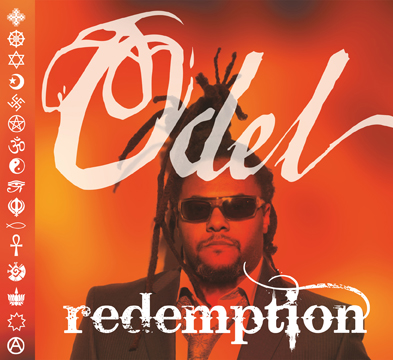
His latest CD, Redemption, runs in a new direction but it still spiritual.
Enjoy Odel sing a cover of the classic song The Harder They Come by Jimmy Cliff.
Tune in to Black Coffee Poet Monday January 16, 2010 for a review of Come Closer by Leanne Averbach.
Odel Johnson is a multidisciplinary roots reggae artist. Known as one of the North America’s best drummers, Odel has performed with many bands all over the globe including Juno winning Messenjah.
The creator of two albums, Body, Mind, and Sold, and the new album Redemption, Odel has proven to be a great songwriter as well as percussionist.
OJ: Roots Reggae is what feels natural to me since I have been exposed to it from birth.
BCP: You are a musician mostly known for his drumming. How long have you been writing songs? Have the two arts complimented each other? If so, how?
OJ: I have been writing songs as long I could remember; I’ve always loved poetry and story telling and have always shared them. Drumming has always been my outlet so they are fluent.
BCP: What is your process?
OJ: None really, I go with what I feel. Songs, and or poems, come from thoughts and melodies and harmonies that seem to come through natural muses that are in the atmosphere inspired by the elements, be it human or not. Then the words form with the music. I like to record live, hence all instruments are performed live to songs.
BCP: Who are your influences?
OJ: I am influenced by good music, from Bob Marley to Bob Dylan, listen to true expressions from all over the world, somehow my soul recognizes it.
BCP: Your songs are emotional, honest, and stimulating. What do you try to convey to your listeners?
OJ: I am connected to the songs emotionally because I believe through my experiences that they are true expressions of what I feel.
BCP: Your spirituality plays a large role in your music. Why?
OJ: Faith. I believe that love is the ruler of the universe and we all have it. Through music we get to express it and sharing music connects us spiritually. We all survive or not through it, depending on our own interpretations of it.
BCP: Do you see song as a form of prayer?
OJ: Yes.
BCP: The songs you have shared are very socially conscious. Where does this consciousness come from?
OJ: I guess growing up in a village where social living is the norm where everyone is “POOR” we work together to get things done, it becomes embedded in my consciousness, so my writing reflects always on my desire to live community.
BCP: You have had extensive relations with the Hopi Nation (and other Indigenous nations) over the years. Can you talk about that a little bit?
OJ: Music has taken me many places, and I always feel a sense of purpose wherever I go and every time I have been to any indigenous places I feel like the struggle against their own kindness, yet their spirit is so strong it instantly connects and bonds and is totally familiar.
BCP: What similarities do you see between Indigenous peoples and peoples of African descent? How can/does music help such peoples and other peoples of colour who have had it hard historically and currently?
OJ: The fact that we all faced the same demon of greed and exploitation and still have songs as to where we find solace in our spirituality and could share similar experiences in trying to preserve and maintain our cultures.
BCP: What are you working on now?
OJ: Different projects are in the mix right now, more music, tours and developing outlets for more socially conscious products and producers.
BCP: When do you expect to have your third album out?
OJ: Early 2012.
BCP: What advice do you have for other musicians out there who are having difficulties with their music, or who have yet to see their first CD out, or who are afraid to perform their music?
OJ: Believe in what you do and be true to yourself no matter what it takes, you will find a way to release what is inside. The muse has its own will to be free.
Tune into Black Coffee Poet Friday January 14, 2010 for a video of Odel performing his music.
When you think of roots reggae who do you think of? Bob Marley? Peter Tosh? All the big names that are now gone? Roots Reggae is alive and well and there’s a Jamaican-Canadian artist, Odel, who has put out a new CD: Redemption.
Drummer for many bands such as Juno award winning Messenjah, Odel has traveled around the world spreading his beats in good fashion. Now, with his second album, he is spreading good words just as he did with his first.
Redemption is different than Odel’s first CD Body, Mind, and Sold which was nominated for a Juno in 2005. The title alone lets listeners know that this is a spiritual album. Odel’s first was more political and hard hitting. Redemption is soft, smooth, and whispers positive melodies into your ear.
“When I was writing the songs for Mind & Body Sold the U.S. was in war times, but now, writing Redemption, the economy has caused a shift in people towards being more conscious and community oriented so I see it as a time of redemption,” said Odel.
With 10 songs, Redemption has a little for everyone: love songs, spiritual songs, and a couple of cover songs originally performed by the famous Jimmy Cliff.
Redemption, the title song, is slow, chill, and old school. Listening to it you remember why roots reggae has made such an positive impact on our world. Its main message is love for humanity, freedom, and unity:
“We’re singing songs of freedom, yes,
We’re singing songs of love, oh!
And yes we sing redemption songs,
Cause grandma and grandpa taught us how to love.”
Love for all is a big message in Odel’s album. So is love for a partner. In Into Forever Odel shows vulnerability by expressing how he feels for a loved one:
“I want to taste your smile,
and savor it for a while,
cause I want to hold you close,
as we dance into forever.”
Odel continues his romantic expression in For The Love of You. With a catchy beat, and female chorus, this is another song to play with a partner during a special moment. While it is roots reggae it has hints of Stevie Wonder with its passionate lyrics and Motown like background.
“I am living for the love of you,
I am giving for the love of you.”
There is no selfishness in Odel’s lyrics, a testament of his true love for music, all peoples, and the world.
Knowing Odel’s history as a musician, the political vibe that was ever present in his first album is missing in his second. Songs of being harassed at the border for being a dredlock of colour, and other songs criticizing the materialism of the world we live in were missed, greatly.
Looking forward to a third album, a mix of the first two with new experiments would be welcomed by longtime fans and ones new to Odel’s music.
Have any of you slept with Santa? Have you dreamed it? Have you joked about it? Augusten Burroughs has done all three!
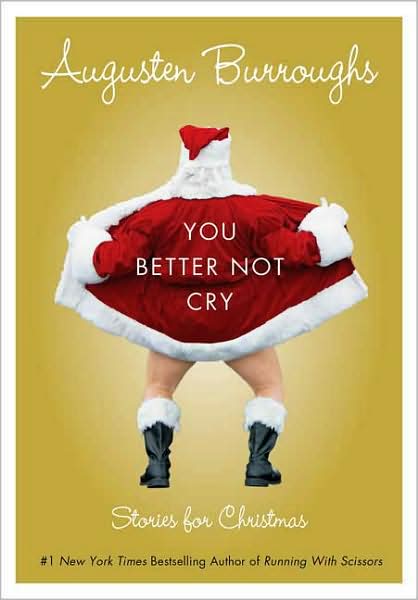
Author of several hilarious books, Burroughs’ newest essay collection, “You Better Not Cry”, is about Christmas, sort of.
“Fuck me Santa, fuck me Santa. I want to go blind. Make me blind,” writes Burroughs of his encounter with Santa at New York’s Waldorf Astoria Hotel in his essay “Ask Again Later”. Joke? To us it is. It wasn’t to Burroughs at the time. Now a reformed alcoholic, Burroughs ended up spending the night with an old French speaking Santa in one of his many drunken, wild, blacked out nights.
Imagine waking up to an old guy who is patting the mattress beside him while smiling at you. You don’t recognize the room, the person (in this case, Santa), or what day it is. Many of us can relate. But were we as horrified as Burroughs?
Burroughs’ Christmas gift that year was literally waking up to Santa and later re-evaluating his sex life and relationships. He formed “The Guy List” (this writer is sure that many can write up a guy/girl/person list) to figure things out:
“I’d scribbled the name of some identifying characteristic of every guy I’d ever had sex with”:
The Unfortunate One
Jukebox Man
Investment Banker Slime
Calvin Klein Model
Head Too Small
Something Wrong Down There Guy
Cocaine Guy From NYU
Breath Deformity
Burroughs started to see a pattern: “…there was a chilling commonality among them. I had been less than sober with all of them.”
At the essay’s end Burroughs sees the same Santa in a bar. Santa was not ho ho hoing, he was putting back some brews. He looked sad, worn out, pitiful. “Ruination” is how Burroughs describes him. And although Burroughs is an asshole in many of his essays, his good side comes out at the end of “Ask Again Later”. Burroughs shows empathy, he feels pulled to comfort the man who he regrets sharing a night with.
“I wanted to comfort him and fix him. I wanted to do something to remove his terrible hollow…Maybe this need to repair the broken man was a problem of mine. Maybe it is what therapists called “an issue”. The truth was I didn’t care. It didn’t matter.”
Burroughs is not a fan of Christmas and he doesn’t hold back. His critiques come from having a troubled childhood and from undeniable truths about how North Americans celebrate the largest money making holiday.
In “Why Do You Reward Me Thus?” Burroughs describes himself as a “miserable fuck”. His misery allows him to accurately question society’s actions, in this case, Christmas: “I just resent the mindfulness of it all. And our obedience.”
Like in all his essays, Burroughs is honest while he contemplates his life. After reading that he slept with Santa it was no surprise that he slept on the streets for two cold days–Christmas Eve and Christmas Day–with the homeless people in the laneway around the corner from his New York apartment.
As mentioned earlier, Burroughs is often an asshole. This writer comes to that conclusion by the way Burroughs writes of people. In this case, Burroughs refers to homeless people as “bums” and “horrible creatures” and writes, “They almost seemed like regular people”, after spending some time with them.
A white, middle class man, and practicing alcoholic at the time when “Why Do You Reward Me Thus?” was lived, Burroughs writes of his biggest fear: “My greatest fear: I would end up a bum, like one of them. A nothing.”
Through talking with “them” Burroughs realizes how “them” can be anybody, how they all had different lives before he met them in a laneway. One guy was a Semiotics major at Brown University at one point.
Burroughs is taught how there is no formula to becoming homeless. The ideology of laziness that we are taught in terms of the homeless being where they are goes back to Burroughs earlier comment of the “mindlessness of it all” and “our obedience”.
The Semiotics major shares truth with Burroughs: “It just happens. You don’t decide one day: I think I’ll go out and become homeless. It’s a whole set of circumstances that align in just the right way.”
Shirley, a former singer, now homeless person, can almost be credited for why I was able to hold and read “You Better Not Cry” and Burroughs’ other books. She pulled Burroughs from the laneway and took him to a park after watching him make a fool of himself for days, telling everyone that he wanted to be a “bum” and that it was his “destiny”.
Shirley’s talk with Burroughs on a park bench was one of movies: the guidance counselor scene where a little boy is saved from himself through the love and care of a person in a position of power. Shirley had seniority on the streets; it didn’t matter that Burroughs was white and had money; he was on her turf and she lovingly didn’t want him there.
“I would ask that you stop drinking because I know. I know what alcohol does to a person. Especially an ambitious young person with so many dreams and more talent than she knows what to do with,” said Shirley.
“Those are the ones the booze seems to hunger for the most. And once you are with the drink, oh, how it strip-mines the soul. In the end you wind up with nothing at all. And it’s like that for everybody. It doesn’t matter how rich you are or how poor or how white or how yellow or how much of whatever it is you have inside you. It just does not matter. The drink is stronger. It will always win and you won’t even know it is trying until it has,” said Shirley.
Burroughs sobered up in front of Shirley. “As much as I wanted to think of her as a homeless, rambling drunk, I could not,” writes Burroughs.
Truth will do that to you.
“And if I could, I would ask that you write. You kept saying last night that you had ‘whole worlds’ inside of you that needed to get out. Well, get them out, my dear. Focus on this. On something positive for yourself. And for others. I would ask that you set those worlds free,” said Shirley.
We all need a Shirley in our lives. And we all need to listen to her.
“You Better Not Cry” has your eyes water at some points. Many times you want to punch Burroughs, many times you want to hug him, many times you just laugh out loud while reading his memories, most times you are thankful that he listened to Shirley because so many of us don’t.
In seven essays Burroughs lives up to his hype and takes you back in to his life that often holds universal stories and truths. This writer can’t wait for what he comes up with next.
And it’s OK to cry.
Black Coffee Poet will be taking next week off and returning with more reviews, interviews, and poetry in the new year.
Tune into to Black Coffee Poet Monday January 10, 2011 for a review of REDEMPTION by Roots Reggae artist Odel Johnson.
Happy Holidays and Happy New Year from Black Coffee Poet!!!
Meeting Dani Couture this month was a pleasure. After a long exchange of email tag we finally met at Union Station in Toronto. Both of us were on time and happy to finally meet. After a customary handshake, smiles, and small talk, we jumped into real talk about life, writing, breaking bones, our youth, and how to record her without getting into trouble.
After being kicked off a bench and being told by security that we could not record Dani reading in Union Station (the train station) we hit the end of the subway platform and did our thing.
Enjoy.
Tune in to Black Coffee Poet Saturday December 25, 2010 for a review of “You Better Not Cry” by Augusten Burroughs.
Dani Couture was born in Toronto and raised on a number of Canadian military bases. She is the author two books of poetry. Her poetry, short stories, and essays have been widely published in newspapers and anthologies. Dani is also the creator of Animal Effigy, a photo-essay on tracking urban prey.
Contact: dani.couture@gmail.com
BCP: Why poetry?
DC: Because the most well-built architecture can carry the heaviest load.
BCP: What is your process?
DC: A quick rough draft and then weeks, if not months, of editing.
BCP: How long have you been writing poetry?
DC: I started writing poetry in high school after a rogue English teacher read Margaret Atwood’s A Women’s Issue in class. I began to write more seriously when I moved to Vancouver in 2001. I think the 72-hour bus ride from Windsor to Vancouver jostled something loose.
BCP: Who are your influences?
DC: The whos: John Berryman, John Ashbery, Karen Solie, Rae Armantrout, Margaret Atwood, Lisa Robertson, Mary Oliver, Tomas Tranströmer, and Dionne Brand to name a few. The whats: freighters, bears, roads, costume jewelery, skyscrapers, rivers, peregrines.
BCP: Your poetry is emotional, honest, and stimulating. What do you try to convey to your readers?
DC: Like a horror movie, I try to get the reader to take a second look at some commonplace item or idea they think they already know.
BCP: Why the name Sweet for your latest collection?
DC: My editor and publisher, Beth Follett, asked the same question. Sweet is a loaded word. It’s one of those words that depending on intonation or placement can mean any number of things. I enjoy it’s versatility and thought it a fit for the collection.
BCP: How is this second collection, Sweet, different from your first collection?
DC: If Good Meat was away, then Sweet is home.
BCP: My favorite poem in your new collection is War Games. How and why did this poem come about?
DC: When I lived on C.F.B. Kingston, we had several boxes of K-rations in our attic and my father was always preaching the virtues of being prepared. To this day, I still try to take note of the details of the day — licence plate numbers, the colour of a man’s jacket, the newspaper a woman was reading — in case I need it later. I guess my upbringing was good training for a poet and life in general.
BCP: How do you feel you’ve grown since your last collection?
DC: The writing has changed, there is no question about that, but to identify which roads I took to get from Good Meat to Sweet, I can’t really say. It feels as if I woke up in a different country one day and I didn’t know how I’d arrived there–by land, sea, or air.
BCP: You won first place in fiction for the This Magazine Great Canadian Literary Hunt. Do you feel your poetry has helped with your fiction or vice versa?
DC: Writing fiction helped open Sweet up. In the its initial stages, the poems in Sweet were quite tight, almost hermetic. I put the manuscript away and wrote fiction for several months. When I returned to the collection, I came with a different mindset and the word count grew considerably.
BCP: It is said that poetry and short story are cousins. Do you agree? Why or why not?
DC: Absolutely. With less word count comes more responsibility to get it absolutely right from beginning to end. Any mistep is glaring. I find novel-length fiction to be more flexible in this regard, but one needs to tread carefully there as well.
BCP: Poetry is the genre that gets little respect compared to fiction and non-fiction. You were one of the few poets to be invited to read at the International Festival of the Authors in Toronto 2009. How was that? How do you feel poetry was represented at the IFOA? How do you feel poetry is represented at literary festivals in general?
DC: I think that poetry garners respect, but also a deep fear among those who are unfamiliar with the form. And for them I offer my grandmother’s advice: Want to know what a poem means? Read it and see how you feel when you’re done.
IFOA was a great experience. The team who put the festival together put on a hell of an event. One of the readings I did was during the crime fiction night. I was worried I might bore the audience, but instead they were kind and curious and even bought some books after the reading. It was surreal to see someone walking around with a book by Ian Rankin in one hand and Good Meat in the other. I also had a good laugh at the number of people who mistook me for Denise Mina (http://www.denisemina.co.uk/) and asked me to sign copies of her books. All it all it was a memorable experience. Festivals are great opportunities for writers to meet other writers and to reach out to larger audiences. I’d love to see more poets invited to read at festivals.
BCP: What are you working on now?
DC: Several poems about freighters.
BCP: When do you expect to have your third collection of poetry published?
DC: Truthfully, I have no idea. I typically like to write to a theme and I’ve been writing to several themes lately. I’m just waiting to see which one wins out over the rest.
BCP: What advice do you have for other writers out there who are having difficulties with their writing, or who have yet to see their work in print, or who are afraid to perform their poetry?
DC: Keep at it. Keep reading, keep writing, keep submitting. If I’m having a problem with a particular poem I either put it away, go for a walk, or rewrite it from a different angle. And keep your drafts. It’s the only way to see where you’ve gone from those first lines.
Tune in to Black Coffee Poet December 17, 2010 for a video of Dani Couture reading poetry at Union Station.
Poets have a certain comraderie. We know what it is to sit, read, write, and get no respect. We are writers of a genre that has been forgotten, is taught for one week in high school, and maybe gets a page in a magazine. So, we support one another.
This past summer I had the pleasure of meeting Beth Follet, owner of Pedlar Press, at an independent book fair held in downtown Toronto. As I looked at the books on her table she commented on my black t-shirt that has the words STOP VIOLENCE AGAINST WOMEN written in red. After a short conversation about my shirt, writing, her books, and our shared politics, she gave me a copy of SWEET by Dani Couture.
“I don’t know if my editor wants a review of this. Maybe you should wait until I get the OK and then you can send me a copy,” I said.
“No. Take it. I want you to have it,” she said.
SWEET had not even hit bookstores yet. My politics got me a sweet deal; pun intended.
I realized afterward why Beth Follet gave me the book. It wasn’t because I freelance for XTRA!. It wasn’t because I am a young poet as is Dani Couture. It was because my shirt let her know that Couture writes about life and political things in a subtle way that gets you thinking.
SWEET is a small collection that spans 68 pages. Most of the poems are short. And the cover is real cute: pink lines with white letters and a teddy bear in the top right hand corner. You want to pick the book up immediately. I even thought about biting it.
Taking four years to write SWEET, many of the poems featured in what is Couture’s second collection have appeared in Canadian journals such as Exile Quarterly, Taddle Creek, and This Magazine. The first poem in the collection, Union Station, received second place in This Magazine’s 2007 Great Canadian Literary Hunt and was featured in The Best Canadian Poetry in English 2008.
Split in three sections “Lurch”, “Trudge, Groan”, and “Leap”, there is something in SWEET for everyone.
Reservoirs took me back to the time when my mom was diagnosed with Lymphoma. The cold hospital waiting rooms, the talks to pass the time with others waiting to hear news of their loved ones, the wait, those desperate waits, and the many things you notice as a result of those painful, solitary times.
Couture so cleverly describes some of the things she noticed:
“salt in palliative care
harder to find than cures”
They are two short lines that speak so much. Whether you are critical of our health care system, a conspiracy nut, a fence sitter, or someone who has not thought about such things because you haven’t had to sit in waiting a room wondering about a loved one, Couture gets you thinking, even questioning how far we have come, and how far we need to go in terms of the decline of our health care system thanks to the foresight or our ‘genius’ white politicians, and finding cures for the many deadly sicknesses we are falling to.
War Games, my favorite in the collection, took me back to my youth. I remembered playing in the backyard and the ravines surrounding my area, and the many movies that I did not understand at the time: Hamburger Hill, Platoon, Full Metal Jacket, Apocalypse Now, and The Deer Hunter.
Films that were a critique of war inspired Couture, myself, and thousands of other kids to emulate uniformed murder:
“Those times outside North Bay
we play Apocalypse Now
under the wooden raft—
a whole world fatigued
and a fist full of quotes:
I love the smell of napalm in the morning.
It smells like victory.”
And we wonder why we have problems?
Sweet, the title poem in the collection is truth. As I age I am more and more critical of our education system. Teachers I know all have students way below the required reading level; racism continues to be taught in our schools; and I can sadly say I’ve only had a handful of teachers whom I learned from and whom I truly respect.
Couture starts with a powerful line:
Children, here are the crayons you need to correct the stories.
The poet urges us to shake loose all the lies we have been taught. She’s not only talking to the little people, she’s talking the inner children found in adults. Couture urges big and small to find their own way, to resist and counter the untruths taught in school: racism, sexism, homophobia, and all their cousins.
I don’t understand everything Couture writes about. Some stuff just didn’t swallow; what did go down was as sweet as cake.
Thanks to Beth Follet for giving BCP a copy of “SWEET”.
Tune in to Black Coffee Poet Wednesday December 15, 2010 for an inclusive interview with Dani Couture.
Shaunga Tagore hates writing bios (but secretly likes it) and not so secretly works as a writer, editor, performer and arts-educator in Toronto. Please see the song “bitch” by meredith brooks for a more detailed and accurate personality profile. And check out the website: www.shaungatagore.com
Mel Gayle is a queer writer, reader, crafter, Buffy lover. Born a Jamaican-suburbanite she now spends her time amidst bookshelves in Toronto. To buy her zines contact Mel at melannie.gayle@gmail.com
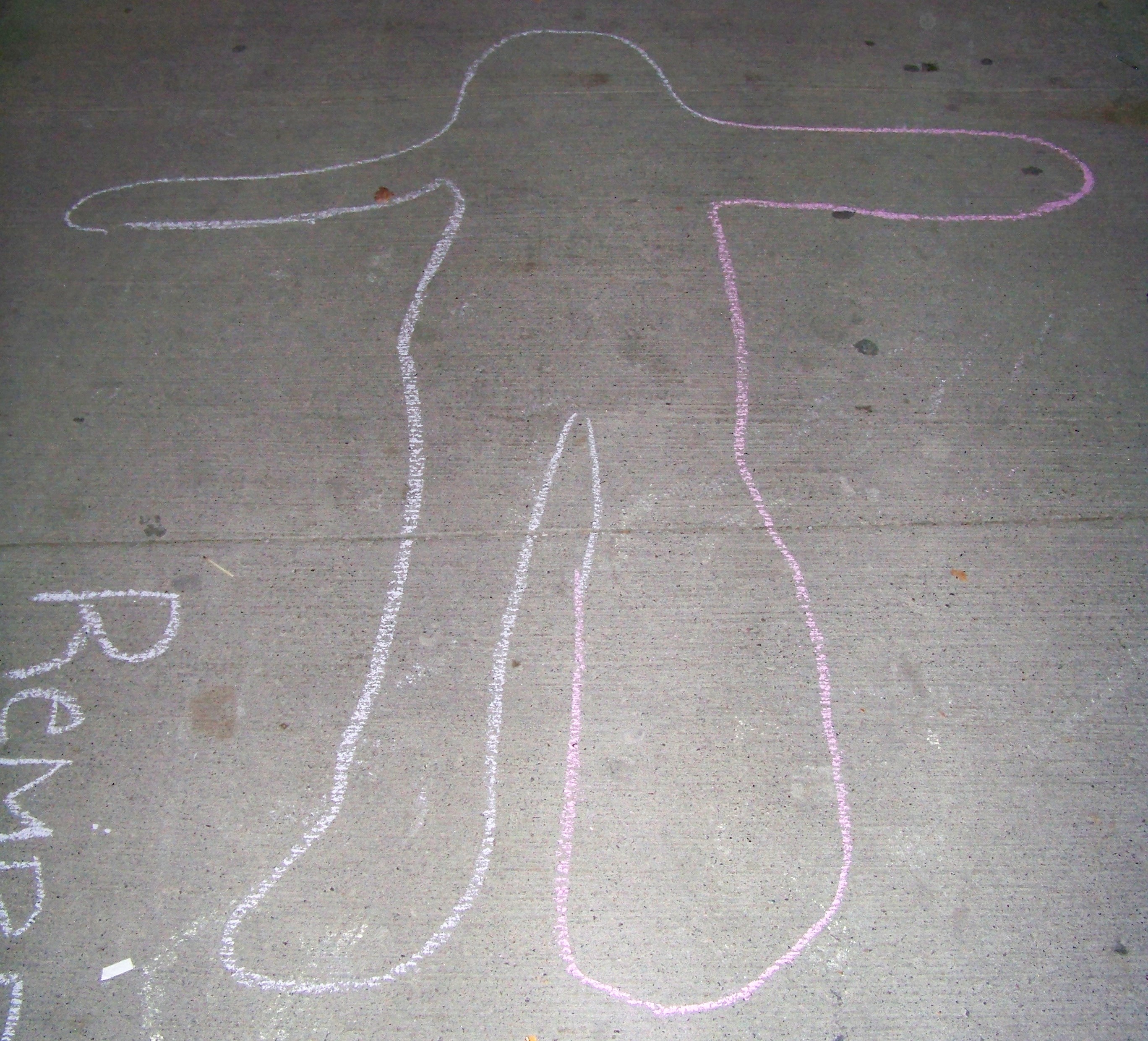
Black Coffee Poet wrote this poem in May 2009 after walking one of Toronto’s major streets for several blocks and seeing the same white face and red letters accompanying it: MISSING. When a white person experiences violence or goes missing they are given far more attention from the Canadian government, police, and media. This is Black Coffee Poet’s response.
Tune in to Black Coffee Poet Monday December 13, 2010 for a review of “Sweet” by Toronto poet Dani Couture.
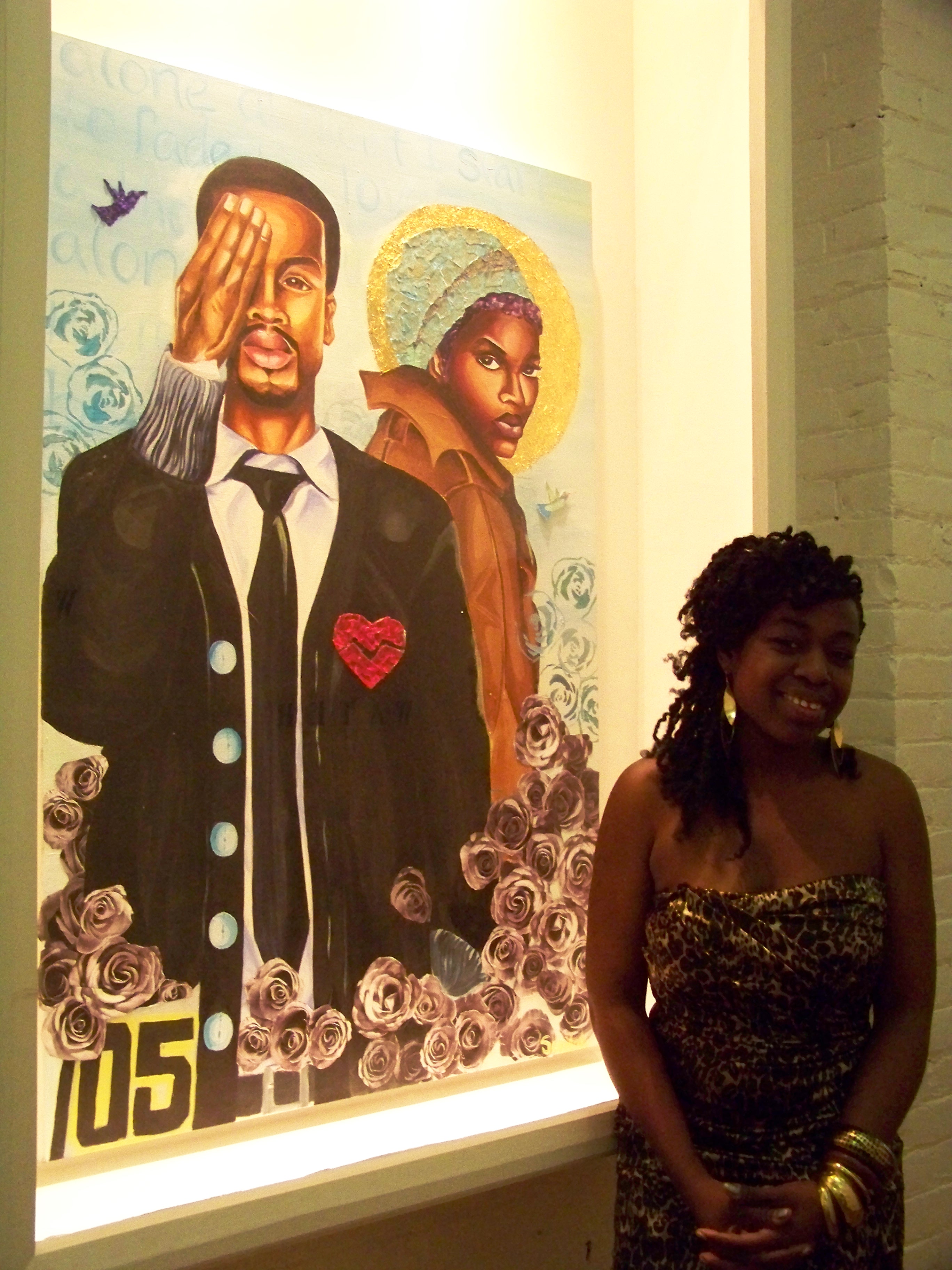
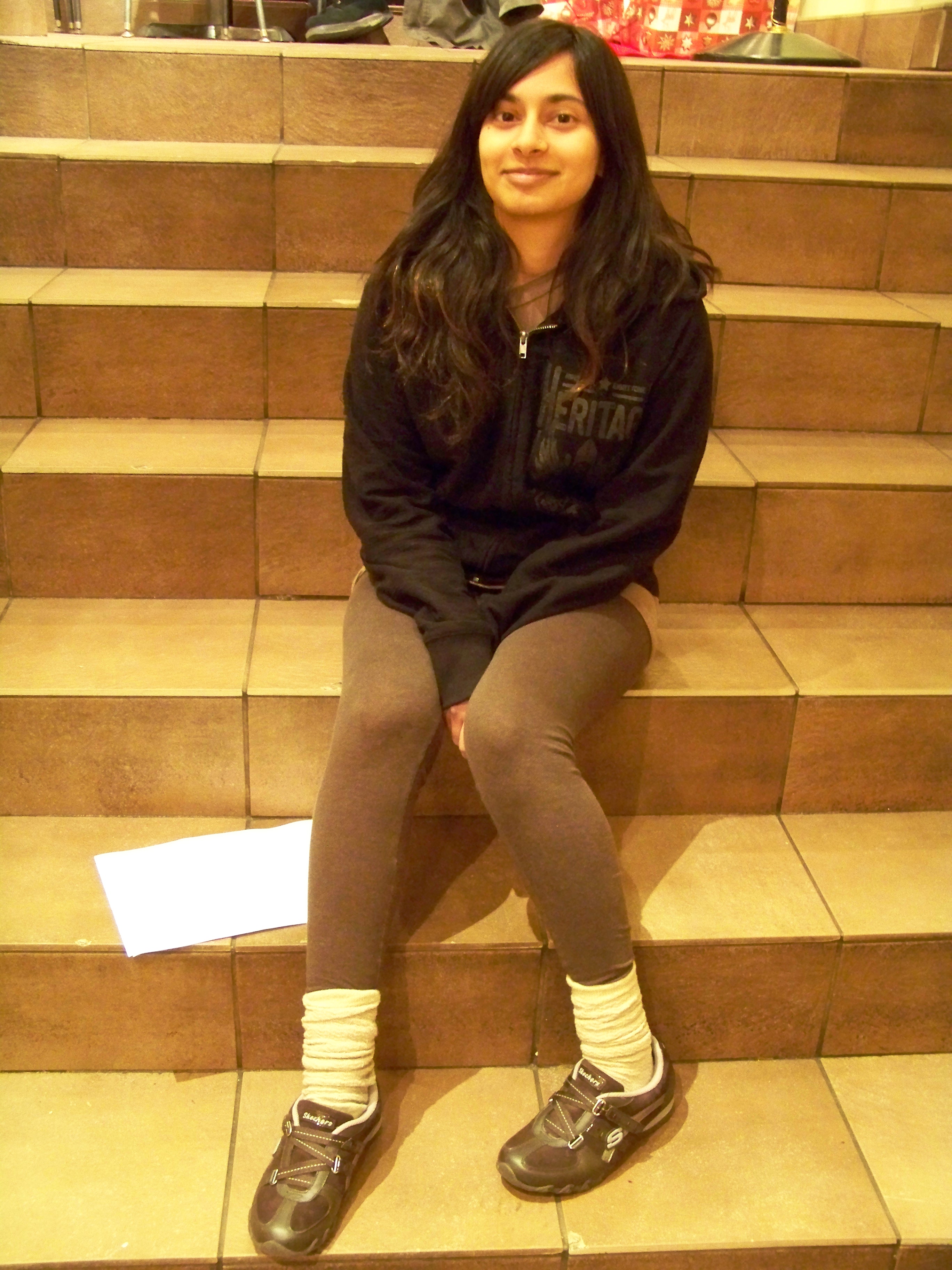
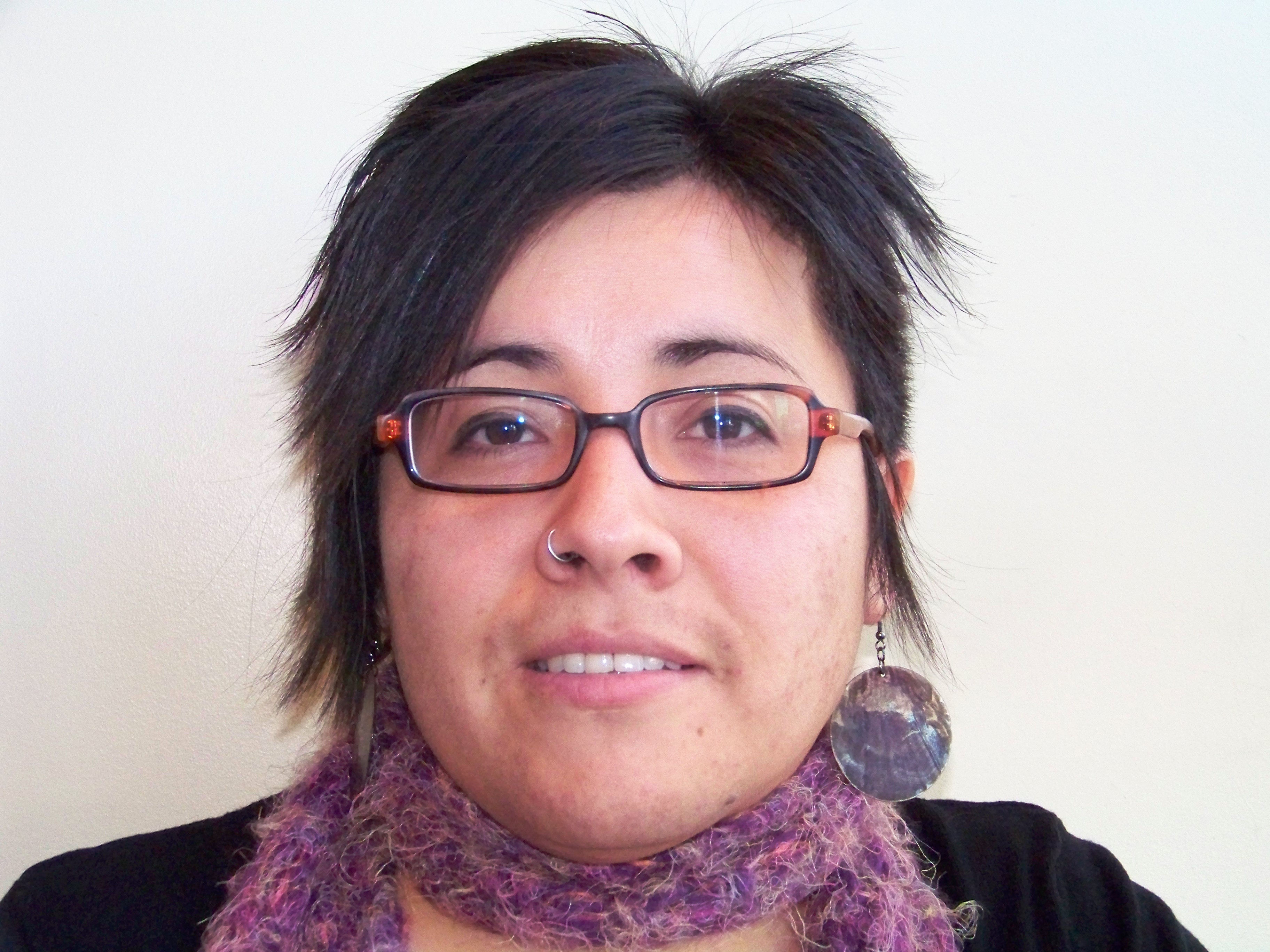
One of the hardest things that I have ever had to deal with is being a dark skinned black woman. For the longest time I felt uncomfortable in my own skin; these feelings came from my upbringing, my childhood experiences in elementary school, high school, and in my college years.
I went to a predominantly white catholic elementary school and an all girl catholic high school. The urban arts scene in Toronto has been transformative because it is filled with poets, artists, playwrights, actors and singers from all cultures and backgrounds who speak of their struggles, beauty and pain. It was there that I learned about the hardships and beauty of culture and skin tones.
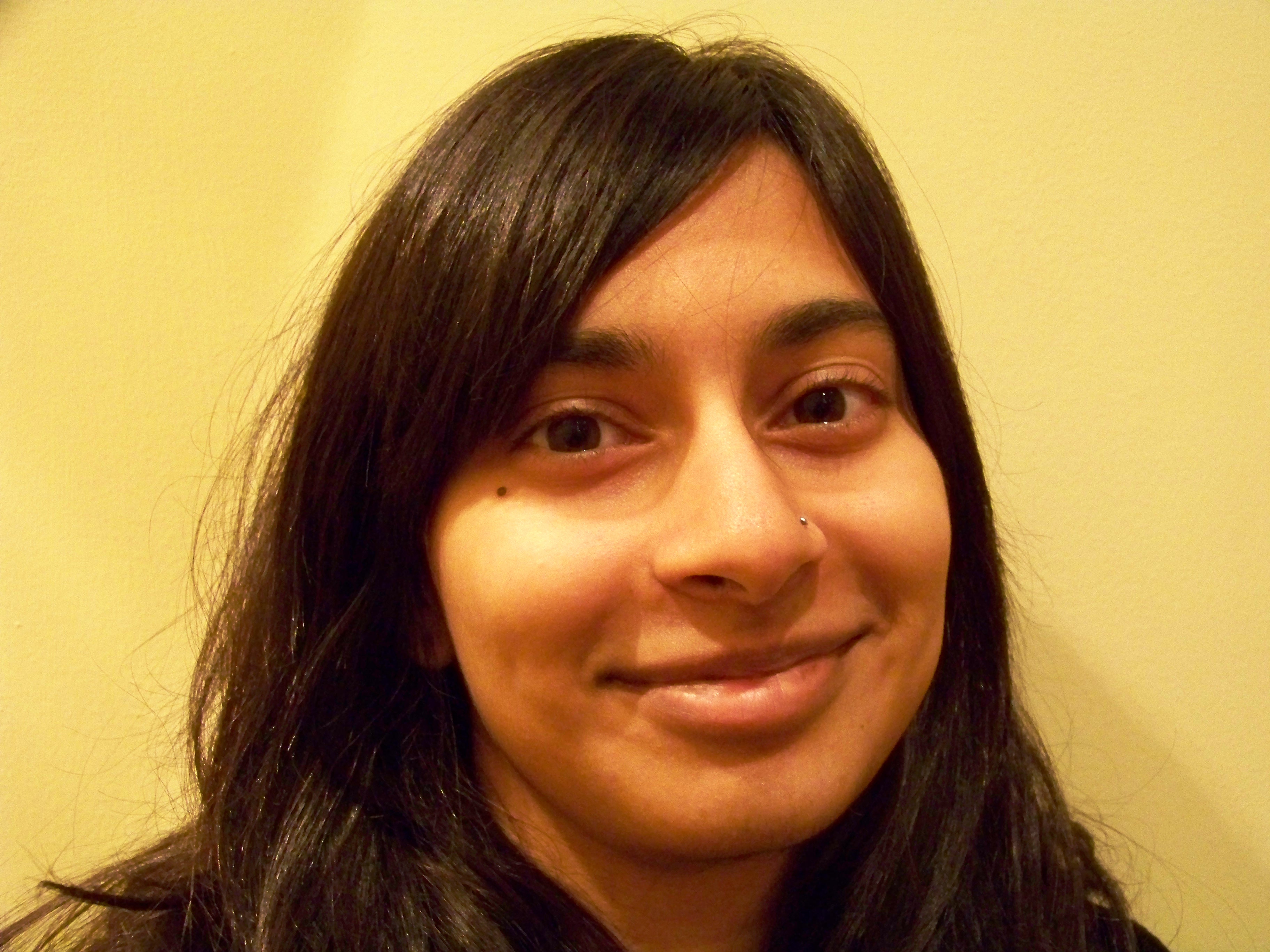
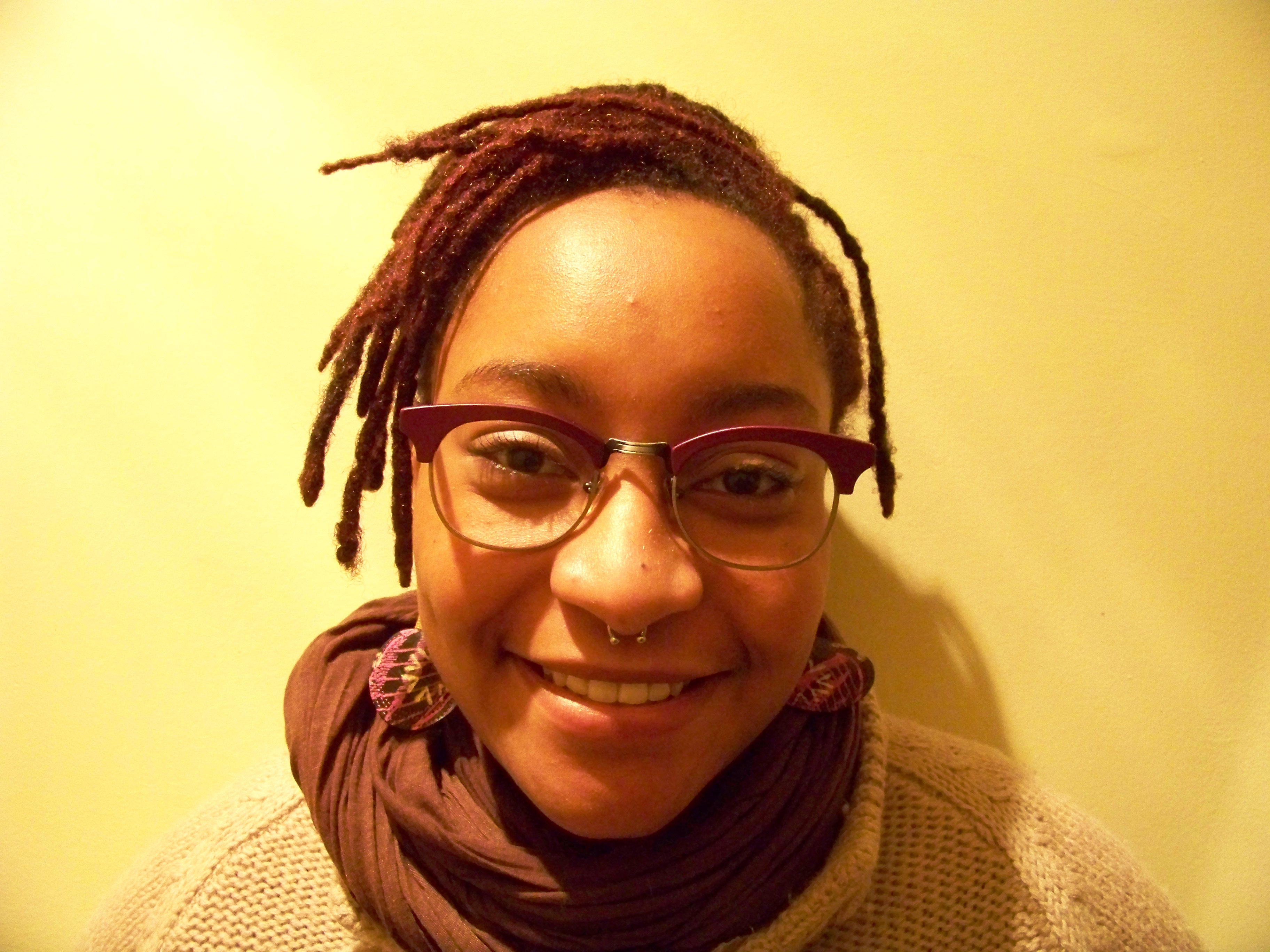
Visible/Invisible is a collection of four images that represent all the things I have ever longed for, from childhood to my adult life––love, affection and then acceptance. It is my hope to show that the only way to love yourself is to fully accept who you are.
ST: At a very young age — probably when I started writing with chalk on my bathroom door, or adding my own two cents to my parents’ biology textbooks they tell me I was always furiously flipping through. I experienced a lot of racism, (hetero)sexism and different kinds of regulation at a young age too, and I think what that did was make me really quiet and closed up in a lot of ways. But expressing myself creatively was something I did to become myself again – whether that be through writing, acting, music, or just telling stories about how I imagined my life to be, instead of the scary, oppressive way I often experienced it as.
JR: What writers/poets/activists have influenced your writing?
ST: First and foremost, my family: my parents and sister created an environment for me where creativity was valued and encouraged. Now still, there are so many ways I am creatively inspired by the lives and perspectives of my friends and family, even in ordinary moments. I’m also lucky to be a part of Asian Arts Freedom School (a creative arts and radical Asian history/politics group), where the conversations and stories continually influence and push my own writing.
As for famous people — some that come to mind: Arundhati roy, Jhumpa Lahiri, Shyam Selvadurai, Audre Lorde, Gloria Anzaldua, Leah-Lakshmi Piepzna Smarasinha, Himani Bannerji, Andrea Smith, Beatrice Culleton Mosionier, as well as Enakshi Dua and Priscila Uppal who worked with me and helped me so much on my manuscript.
JR: The erasable woman is your masters thesis project, why did you choose to write it in poetry? Was this challenged? How and why?
ST: I was just sick of writing like an academic (ha ha). My topic was exploring colonial violence against racialized queer women, as well as how broad systems of oppression or histories can manifest intimately on women’s bodies, and in personal relationships. I find that poetry can express this intimacy in ways academic writing cannot. A lot of people in academia would not consider poetry a legitimate way to express theory or politics, but poetry IS theory, it IS knowledge, it IS political. I was really lucky to end up with a supervising committee who understood and supported this kind of project (Ena and Priscila). Anybody who pissed me off during grad school about this or other topics, I probably ended up writing an angry poem about so it’s all good.
JR: Why the title The Erasable Woman?
ST: The Erasable Woman is a title of one of my poems and I feel it fits the entire collection. A major theme that runs through my manuscript is erasure…being forgotten, lost, ignored, invisible, expendable, disposable. At the same time it asserts a physical, spiritual, sexual, emotional, undeniable presence in the midst of being/feeling erased. that’s one of the ways I tried to express the complexity of what it means to experience oppression and survive/resist it at the same time.
JR: This week Black Coffee Poet is dedicating its space to bringing awareness to the issue of violence against the Womyn Forgotten on Decemeber 6th, how does your collection of poetry speak to this issue?
ST: Erasure is such a key and powerful way that violence is allowed to continue. Black Coffee Poet is calling this week: Remembering the Women on December 6th. This speaks to the ways in which racism and other oppressions in feminist movements is ignored and the well-being of women of colour is not considered. As well, the value of challenging sexism, homophobia and transphobia in a lot of anti-racist or queer initiatives is often marginalized and not given enough importance. So many things in this world are structured through erasure: mainstream education denies the violence of colonial conquest on this land by largely painting it as a benign, peaceful process; national media doesn’t pay enough attention to the ways in which violence impacts marginalized bodies or communities; survivors in/of abusive relationships are silenced and shut down when they try and fight/talk back; queer or unconventional love/desire is constantly trivialized and demonized; expressing or feeling certain kinds of emotions is constantly minimized. There are all these ways that the experience and process of erasure contributes to violence and to breaking apart bodies, relationships, communities and selves that deserve to remain whole. I wanted to explore the topic in my own way through my writing.
JR: How does your identity as a womyn of colour (and other ‘identities’) influence and factor into your work?
ST: I can’t separate myself from my social position (or my mashup of ‘identities’), and I can’t separate myself from my writing (I don’t believe that anyone can), so it all becomes intertwined. In this particular work it was important for me to centre the voice of a queer woman of colour, because it’s not a perspective that’s often given attention – in literature, feminism, anti-racism or queer politics.
JR: What other topics/themes are covered in the erasable woman?
Haha, that quote is from a recent Andy Warhol art exhibit, but it fits my writing too! But other than that: body politics, queer politics, colonial/sexual/physical/emotional/spiritual violence, intimate relationships, community relationships, experiences/notions of home and (be)longing, surviving, creating, and generally kicking ass.
JR: How is writing about the issue of violence against womyn in poetry different from writing about it in non-fiction or fiction?
ST: I find that writing/creating/expressing a similar topic in different genres can bring different purposes, meanings, or value to different audiences. There would be certain things I would be able to say about violence against women of colour through poetry that I wouldn’t have the space to say through academic language – just because of the restrictions/shape of the form. Similarly, I recently performed a dance piece at an asian arts freedom school festival (earlier this fall) that was inspired by 3 poems I wrote in my manuscript, but brought a different level of meaning to the poems that I wasn’t able to express in words. There are so many ways to resist violence – and all have their values and limits – whether its poetry, other creative arts, non-fiction, organizing a rally or a conference, supporting someone close to you during a rough time, even just having a conversation where you discuss the ideas. They can all be useful in different contexts, depending on what message you’re trying to convey and to whom.
JR: You use some images in your collection (photos along with drawings), can you tell us why and how you came to this decision?
ST: I always start with a feeling or idea that I need to express (sometimes desperately), and I follow my intuition, as well as work with my skill set, to give shape and form to that feeling/idea the best and most honest way I can figure out how. For example, at one point I wanted to create something that expressed how the bodies of women of colour are judged and marked by oppression just by living in the world. So, one of the pieces that appears in my collection (bodysnatchers) contains a series of photos with oppressive words actually written on the body. It just made the most sense.
JR: Unfortunately, folks reading the review of The Erasable Woman and this interview have not had the pleasure of reading your work because it is currently not available to the public, can you tell us what your plan/hopes are for this wonderful collection of poetry?
ST: The Erasable Woman is still a work in progress that i am currently fine-tuning, and I’m hoping to get it published in the near future! I’m really excited about how it’s shaping up and have been doing readings at various events in the city. Please check out my website (which is new and still under construction), but you can read some of my work there or check out other things I’m up to. And feel free to email me at shaunga.tagore@gmail.com if you want to get in touch about anything!
Thanks so much to Janet for the thoughtful questions and for reviewing my work. Thanks also to Jorge (Black Coffee Poet) for putting in the work to create this space!
Janet Romero-Leiva is a queer artist who has lived in Toronto since she was taken from the south of the Americas in search of the ‘American Dream’.
Tune in to Black Coffee Poet Friday December 10, 2010 for videos of Shaunga Tagore, Mel Gayle, and Jorge Antonio Vallejos (Black Coffee Poet) reading their poetry about STOPPING Violence Against Women forgotten by mainstream media and many white feminists.
One of the hardest things that I have ever had to deal with is being a dark skinned black woman. For the longest time I felt uncomfortable in my own skin; these feelings came from my upbringing, my childhood experiences in elementary school, high school, and in my college years.
I went to a predominantly white catholic elementary school and an all girl catholic high school. The urban arts scene in Toronto has been transformative because it is filled with poets, artists, playwrights, actors and singers from all cultures and backgrounds who speak of their struggles, beauty and pain. It was there that I learned about the hardships and beauty of culture and skin tones.
Visible/Invisible is a collection of four images that represent all the things I have ever longed for, from childhood to my adult life––love, affection and then acceptance. It is my hope to show that the only way to love yourself is to fully accept who you are.
This, after reading Shaunga Tagore’s The Erasable Woman.
The Erasable Woman– the title alone tells you how brilliant this collection is – filled with poetry that will make you want to look at your naked body endlessly, redefine your feminism, visit your grandmother, learn the language of your ancestors, bring awareness to violence, be a better person. Yes, all this and more from a magical master’s thesis…I have never read a thesis in poetry and I am honoured for this to be my first.
For me, poetry is all about how I feel when the words on the page echo through my throat and into my body. It’s about the images that sketch themselves into my memory and long to be translated on to paper/canvas/wood. If it was possible to do both simultaneously at this very moment (writing and drawing), it’s what I would be doing…after re-reading (for the 3rd time) The Erasable Woman, or perhaps while re-reading it.
Tagore’s writing creates this incredibly desire to want to feel every sensation in your body, from how it feels to be touched along your collarbone to the flowing of nutrients into your bloodstream. There is nothing you want to miss about how your body is responding to her words, how her words are stirring feelings you cannot afford to dismiss because if you happen to forget to acknowledge the body part/the feeling/the sensation, you will have missed a beautiful/painful story.
Filled with loss and longing, love and laughter, strength and determination, The Erasable Woman brings me back to some of my most loved queer poets/writers…Gloria Anzaldua, Chrystos, Audre Lorde, Anna Camilleri and Quo-li Driskill. Tagore has created a place where we can once again desire…for stories and histories re-told, for justice and justified anger, for hungry love and feared satisfaction.
Two of my favourite pieces in this collection are a slam on feminism in academia and my 12 year old body in the bathtub. In the slam, which is an academic must-read, Tagore speaks to all ‘those’ well intentioned feminists who have managed to convince themselves (and sometimes us too), that letting people of colour into academia is a favour that can only be re-paid by silent acceptance of the rules they have created for us. Let’s just say she very eloquently tells them where to go! And then there is the 12 year old girl in the bathtub discovering the wonder of her own body and how water on skin feels and fills her, how a sunday ritual becomes a daily desire for that which is unnamed, unacceptable, unspoken…yet so satisfying.
And as if this is not enough, we are privileged to see how this beautiful poet translates some of her words into images because two of the pieces include photographs/drawings (bodysnatchers and postcard stories). This adds a level of intimacy to the collection that allows the reader to experience poetry from a visual lens…which is incredible!
Now comes the part I suspect you might not want to, or be prepared to hear. So remember I mentioned that this is Tagore’s master thesis? Well it’s true, which translates into it not being in book form available for purchase…yet. This means if you ever hear of her reading somewhere, you must go! It also means you/me/we need to support local poets/writers by buying their work…so put your money where your politic is!
Listen….
and you will discover that though The Erasable Woman might appear to be about one thing, as you read it you will come to realize that just when you expected a piece to continue talking about race or class or sexuality or language, the next word, next line, will take you in a direction you did not expect to go…but you’ll be so grateful you were there for the ride!
Janet Romero-Leiva is a queer artist who has lived in Toronto since she was taken from the south of the Americas in search of the ‘American Dream’.
Tune in to Black Coffee Poet Wednesday December 8, 2010 for an interview with Shaunga Tagore and a video of Anishinaabe poet Lena Recollet performing spoken word about self empowerment.
One of the hardest things that I have ever had to deal with is being a dark skinned black woman. For the longest time I felt uncomfortable in my own skin; these feelings came from my upbringing, my childhood experiences in elementary school, high school, and in my college years.
I went to a predominantly white catholic elementary school and an all girl catholic high school. The urban arts scene in Toronto has been transformative because it is filled with poets, artists, playwrights, actors and singers from all cultures and backgrounds who speak of their struggles, beauty and pain. It was there that I learned about the hardships and beauty of culture and skin tones.
Visible/Invisible is a collection of four images that represent all the things I have ever longed for, from childhood to my adult life––love, affection and then acceptance. It is my hope to show that the only way to love yourself is to fully accept who you are.

 I first met Odel at a concert in Toronto. A couple of years later we ran into one another on Bloor Street. I heard a “Yo!” and saw an accompanying smile.







 Black Coffee Poet