HONOURING BLACK HISTORY MONTH 2011: NIGHT BIRD BLUES

Night Bird Blues

By Jorge Antonio Vallejos

Braithwaite and Whiteley’s new CD is appropriately named Night Bird Blues as Braithwaite’s voice soars on every track.  Pulling her listeners in, keeping them, and then letting them fly away in between songs only to come back is what Braithwaite does. 

Diana Braithwaite not only shines in studio where you can pause, stop, break, and regroup to make the best CD possible, she is just as talented live.  A packed crowd at the Silver Dollar Room in Toronto, January 15, 2011, had the pleasure of seeing Braithwaite sing, clap, and dance in celebration of Blues legend Curly Bridges’ 77th birthday.

An award winner both in Canada and the U.S, Braithwaite introduced herself to birthday partiers as a descendent of runaway slaves who came to Canada via the Underground Railroad.  Singing songs of protest and history, the birthday crowd was into Braithwaite and her partner Chris Whiteley from beginning to end.

Just as captivating is Night Bird Blues. Starting off with a slow tune titled It’s a Brand New Day, a song of love lost and found, a violin accompanies Braithwaite’s opening, “It’s a brand new day”.  For a first song it’s fitting: new CD, new song, new day, new experience.

“Put your troubles behind you,

and love, it may find you.” 

A slow horn breaks up the song leaving time for thoughts of heartbreak and heart building. Its lyrics are truthful but not preachy, and very soothing.  It’s A Brand New Day is a short lullaby that could be used in films and commercials.

All The Rubies is old school Blues, this writer’s favorite type of Blues: broken heart lyrics!  A slow guitar melody plays throughout as Whiteley sings and Braithwaite hums. A gambler sings of money loss, his weeps and moans, and of course losing his love; “The gal I loved left me all alone.” 

“All the rubies in Walsagee cannot help me win that girl,” sings Whiteley.

There are no loud yells or moans in All The Rubies yet you still feel Whiteley’s pain.  His teary lyrics are soothed with Braithwaite’s vocal balm.  You could fall asleep to her hum, feel safe, and dream of having all the rubies needed to get your love back.

As much as this writer likes old school Blues it does get tiring to hear of the woman who likes money and jewelry and leaves her man for someone who can provide such things.  Many women could care less for material possessions and would take the poor man who treats her right over the sugar daddy who’s an ass.  Where are those songs?  Those are songs and CDs this writer wants to own and review.

Night Bird Blues has different Blues songs throughout: Judge and Jury Blues, Night Bird Blues, Bumblebee’s Blues, and the Greedy Blues.  Braithwaite and Whiteley have a diverse collection demonstrating how vast the Blues are and can be.  Whether you are listening to Braithwaite and Whiteley live or in the comfort of your own home, once you give them your ear, or pop the CD in, you might just stay up all night.

Posted in Poetry | 1 Comment

HONOURING BLACK HISTORY MONTH: JAMAL HARVEY RAPS A TRIBUTE TO THOSE WHO CAME BEFORE HIM

Jamal Harvery is poet, rapper, and improv actor.  Winning awards for his dedication to helping youth, Harvey is now living in the big city pursuing his artistic dreams.

Writing the rap in the video below for those who came before him, Harvey is proud of who he is and where he comes from.  

Giving thanks is important to Harvey and he does so through his art.  Listen to Jamal Harvey thank his ancestors and current Black heroes for fighting to make his life as a better one.

Posted in Poetry | Tagged , , , , | Leave a comment

HONOURING BLACK HISTORY MONTH: AN INTERVIEW WITH BLACK POET KAIE KELLOUGH

Kaie Kellough has been based in montréal since 1998.  He is a bilingual author, editor, educator, & general word-sound systemizer. His bop-inflected vox & text syncopate canada’s solitudes. kaie has dubbed & inked his way from coast to coast, B.C  to QC, N.S to the U.S.

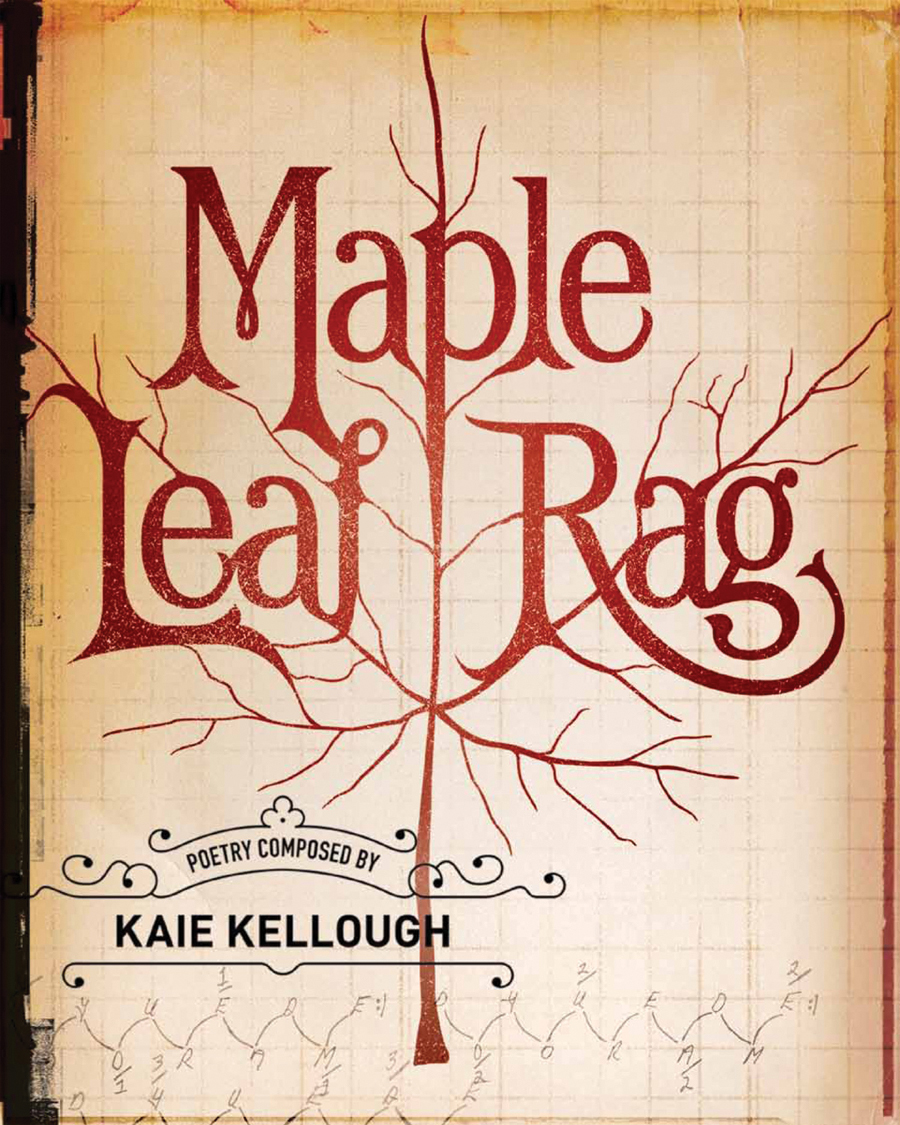
Kaie’s latest book is Maple Leaf Rag (poetry, Arbeiter Ring Publishing, April 2010). He is the author of Lettricity (cumulus press, ‘04) & co-editor of the talking book anthology (Cumulus Press, 2006).  He was writer in residence for the ‘05 Toronto International Dub Poetry Festival.  Kaie & his work have been featured on CBC Radio, Zed T.V, & BRAVO TV.  In 2008 he was the subject of a short national film board doc titled ebon flow.

Kaie has conducted language & sound workshops across Canada.  He is set to record a suite of the poems in Maple Leaf Rag with instrumental accompaniment in 2010.  The recordings, titled Vox Versus, will be available on this website.

BCP: Why poetry?

KK: Poetry can deeply engage the sonic and rhythmic qualities of language. Poetry’s versatility has also always been of interest. A poem can be purposed toward silent reading, stage performance, audio recording, video (videopoem), and even language-art installation. I try to create works that have this built-in flexibility, works that will function – or that will lend themselves to interesting interpretation – on and off the page.

BCP: What is your process?

KK: This depends on the kind of work I am doing. When I was working on Maple Leaf Rag, walking became a big part of my creative process. Even in mid-February, I would take late-night walks around Baldwin Park, which is very close to where I live. On those walks I would talk out my ideas and try to find points of intersection between them. Very often, the moment I got home I had the first lines of a poem in mind, or I knew how to edit something I had already written. These walks helped me discover ways to employ word-games, other devices, or literary constraints that I found interesting.

Lately I’ve been composing sound-poems, and these begin with vocal sound itself. Once the sound has been structured into a pattern, a visual, text-based representation is created. These text-based representations are my own versions of scores.

I’ve also been writing fiction, and that process has its particularities. For me, fiction it is not guided by sound or by more abstract devices (like literary constraints or word-games). It is linked to remembering, and to the ways we remember experience; what we feel when we remember. I often begin with an image, which is linked to an event or series of events, and progress from there.

BCP: How long have you been writing poetry?

KK: It’s 2011, so I’ve been writing since about 1995.

BCP: Who are your influences?

KK: These days I try to draw influence from a broad range of sources – both literary and extra-literary. I look to music, linguistics, visual arts, urban planning, recycling, journalism, internet searches, advertising, graphic design, everyday speech, etc. I take things I think I can use, ideas or structures that might work well in a literary context.

My formative influences included poets from the Harlem renaissance, poets from the Black Arts Movement (BAM), like Jayne Cortez, poets from the Caribbean and the Antilles, like Kamau Brathwaite, Aimé Césaire, and Jean Binta Breeze. Formative influences also came from the English and American canons. Modern Canadian writers like George Elliott Clarke and Wayde Compton, who are both brilliant, taught me how to seam these influences together.
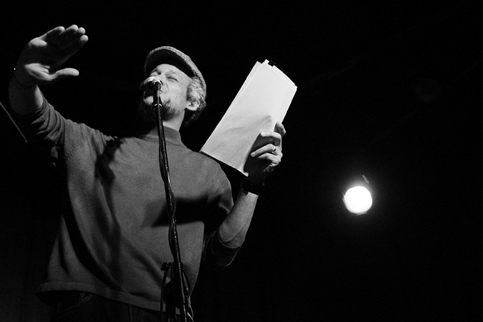
BCP: Your poetry is emotional, honest, and stimulating. What do you try to convey to your readers?

KK: Thanks for the generous comments. Overall, I try to present a unique experience of language, something that people will not get from a popular song, a novel, a newspaper article, a conversation, or otherwise, an experience that people can only access through poetry. I want that experience to be at once sonic, highly visual, and conceptual.

BCP: This is Black History Month. What does Black History Month mean to you? What do you want to see come out of Black History Month that has not come out in the past?

KK: Black History Month is tricky. I’ve always been interested in the histories of people from the African Diaspora, and during BHM there are often excellent presentations and performances to be seen. Much BHM programming is family-friendly as well, so it can provide good learning opportunities for children.

Since moving to Montreal in 1998, I’ve never been part of any BHM celebrations. This may be because I didn’t grow up within Montréal’s Black community, and I have never lived in the areas where the community is concentrated.

BCP: The poetry you have shared has lots of history in it. At times I felt like I was in a really fun history class that got history right. Is there conscious effort on your part to educate readers about Black history through your poetry?

KK: Concerning English speaking Black cultural production, Toronto is a hub. New York is a massive engine. But Montréal is just a little piston. This has two different consequences for artists. It can drive artists after a kind of “authenticity,” drive them to fit into the trends established in the major centers. At worst, this drive for authenticity can equal mimicry. At best, it can help to found a local branch of a foreign tradition, and that branch can become more responsive to our local experience. On the other hand, living outside of the major centers can release us from narrow constructions of authenticity. This can allow us to create more freely, to select freely from Black history, and to mix and match elements that seem unlikely: mixing the social protest poem with constraint-based writing, for instance.

I’m interested in local histories, local voices, and in how events that have a larger, moreinternational scope intersect with the local. How do we use those events to create our own identities? What is our place within that larger context? And how do international events resonate locally? In Montréal, these questions are relevant to our language. In public places you can hear people nimbly switching from French to Creole to English, or from Arabic to French, or from Spanish to French to English. This movement from one language to the next is accompanied by an ability to mix slang expressions, postures, and cultural references. I’ve tried to produce an equivalent of that process in poetry.

BCP: Many Black heroes are mentioned in your poetry. It was refreshing to see names like Angelique and Sojourner Truth. Most times, Black heroes that are written about are men like Martin Luther King and Malcolm X. How did you gain such consciousness about female Black heroes? Are you a feminist?

KK: I think you’re giving me more credit than I deserve.
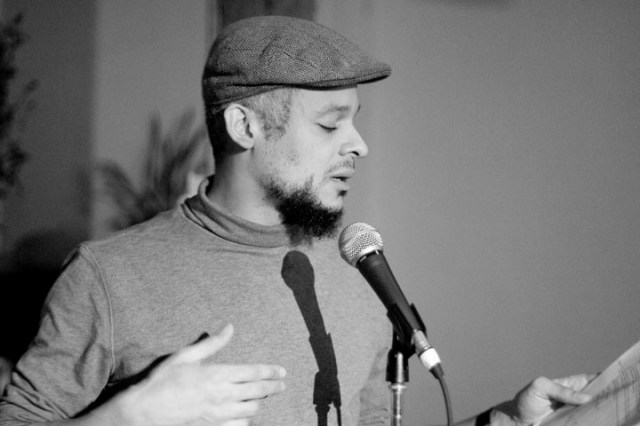
BCP: There is a great respect for boxers in your collection. You dedicated an entire poem to Bernard Hopkins, a living legend who is not very recognized outside of the sport. Why the interest in boxing?

KK: I was a young kid during one of the last great periods of North American boxing. That period was written about in an interesting book called “Four Kings,” that chronicles the careers of Sugar Ray Leonard, Marvin Hagler, Thomas Hearns, and Roberto Duran. Back then, boxers were mainstream celebrities. Surar Ray Leonard and Marvin Hagler were featured in Coke and Pepsi advertisements. Hagler even appeared on The Cosby Show. I was exposed to boxing back then, when major bouts were televised on CBS Wide World of Sports. Nowadays, in North America, the sport’s public presence has shriveled, but I still follow it.

BCP: Your poetry is very musical and is described as jazz infused. Do you see poetry, boxing, and jazz as having things in common?

KK: Yes, rhythm.

BCP: What are you working on now?

KK: I just finished a full-length CD, called Vox Versus. It moves between sound poetry, lyric poetry, and a few language games. The CD is based around duets – collaborations between poet (voice) and instrumentalist. There are collaborations with trap kit, upright bass, a DJ’s sound- collages, piano, trumpet, and with another voice. It should be released this summer. The CD was recorded in early 2010. Over the last year it’s gradually been mixed, listened to, mixed some more, listened to, mixed yet more, and finally mastered. It’s a first recording, so I’m excited about its release.

I’m also working on some short fiction. It’s going slowly, but it’s given me a completely new side of performance to explore – that of storytelling.

BCP: When do you expect to have a new collection of poetry published?

KK: I don’t have any expectations right now. I have a small group of new poems, and I’m developing them gradually. I’ll soon return to them, but now I’m focused more on oral performance, and short fiction. I try to work on different kinds of projects, and to have a series of different projects ongoing at any moment.

BCP: Can you give readers a short recommended reading list for Black History month?

KK: Some excellent cancon:

The Hanging of Angélique (Afua Cooper)

Execution Poems (George Elliott Clarke)

Zong! (M. Nourbese Philip)

49th Parallel Psalm (Wayde Compton)

BCP: What advice do you have for other writers out there who are having difficulties with their writing, or who have yet to see their work in print, or who are afraid to perform their poetry?

KK: Do it, pursue it. If you don’t, you’ll regret it.

Tune in to Black Coffee Poet Friday February 4, 2011 for a video of local poet and musician Jamal Harvey rapping about Black History Month.

Posted in Poetry | Tagged , , , | 1 Comment

HONOURING BLACK HISTORY MONTH: AN INTERVIEW WITH ROOTS REGGAE STAR RUPERT HARVEY AND A REVIEW OF “MAPLE LEAF RAG”

Maple Leaf Rag

Reviewed by Jorge Antonio Vallejos

“I chose Maple Leaf Rag as my book’s title because if it fuses jazz music with our national symbology. While the title celebrates the unity of black culture and Canadian culture, it also suggests a malais, a critique,” says Kaie Kellough.

Kaie Kellough, a well traveled dub poet now living in Montreal, writes of the people everyone writes of when talking about Blacks and their fight for equality: Martin Luther King and Malcom X.  Not to knock these men but it does get tiring when everyone mentions their names as if no other Black heroes and heroines exist. So, when Kellough writes of rarely mentioned Black heroes alongside never mentioned Black heroines you begin to see how special his collection is.

Kellough’s poem flux, the first in Maple Leaf Rag, mentions one of Canada’s most important historical figures that people do not learn about in most school settings: Marie Joseph Angelique.  Angelique was a slave accused of burning down her owners house and half of Old Montreal in the 1700s.  (Read Afua Cooper’s The Hanging of Angelique to learn more about this brave woman.)  Angelique is not the focus of the poem but her presence is appreciated:

“i flex forth and froth back as angeliques ashes.”

Although Angelique is gone she is not forgotten.  Whether she did cause the fire is disputed.  What is clear is that for some Black writers like Kellough and Cooper who try to bring a certain conciousness to Canadians about their omitted history Angelique’s fire burns on.

Not only does Kellough flex and froth he runs smooth like a current. Flux starts out with “i am the river” and flows through history, identity, peoples and places all through clever word play.  Kellough becomes a body of water that spans hundreds of years from the colonization of Turtle Island to slavery to our present day.  He ends with:

“i am the river.  my lisp fuses english, french, iroquois, kreyol.”

Kellough’s flow goes further than most poets and his writing of Angelique is just one example.

Have you heard of “Jelly Roll” Morton? 

jelly roll in canaan land is again more than a poem, it is a history lesson.  “Jelly Roll” Morton is the inventor of jazz.  A Creole man from New Orleans, “Jelly Roll” saw all the hardships Blacks faced and pressed on to bring the world the beautiful music we now know as jazz.  Morton was described by whites as:

“a real character that one.  watch him.  a flashy coon who plays cat house tunes.”

Kellough writes of Morton being “high-yellow” and many whites accepting him for having lighter skin.  He writes of whites not knowing the difference between peoples from “senegal, cote d’ivoire, martinque, nouvelle-orleans, quebec, acadie.”  Sadly, many whites still don’t know or care that there are differences.   

Nothing stopped Morton the visionary: “you knew that you were making history: you had come like the magi bearing gifts: culture, news from the wider world, the sound of music to come.” 

Kellough fuses history and the present when writing, “the slave becomes the emissary of culture.  Today’s stained skin is tomorrow’s beauty.”

How things change!

In pardner hand savings plan Kellough teaches the reader about indentured (neo slaves) workers who were taken to England from Jamaica in the 1950s: 

“shipped across to land

on the I, the one

the island, the wicked step

mother inglan.  origin of this jutting

tongue that licks us down.”

Jamaicans were “indentured to rebuild a blitzed britain”, wanted were their “hands and backs alone”, and “once the imperial capital is rebuilt, we shall be weround with paid passage back home.”    

The pardner hand was a savings method practiced by these groups of Jamaicans on cheque day.  Everyone pooled together to give one person a tenth of their cheque and the recipient would rotate from week to week.  In tough times like these the pardner hand might be one method to ease economic stress.

Kellough again shows his difference in showcasing a current fighter who has already made history rather than go the conventional route of putting Muhammad Ali on a pedestal; an overdone practice. 

In the executioner, Kellough writes of Black Philadelphia boxer Bernard Hopkins.  Hopkins is the self proclaimed “American Dream”.  Born in a ghetto and doing five years in prison, he literally fought his way out of poverty:

“i have fought everywhere, from streetcorner scrums in south philly, with twenty brothers in a tight circle barking and betting filthy, crumpled money, to jimmied jailhouse rings: blankets spread on a concrete floor.”

From homemade rings to fighting on the biggest stage in Las Vegas, Kellough accurately describes Hopkins when writing “i am the darkhorse that tramples critics’ predictions”.  Kellough’s description of the sweet science is just as accurate:    

“boxing is no democracy.  the poor are cast, spoiled ballots, into its deciding ring.”   

The dedication to Bernard Hopkins is inspiring and true but there lacks of critique of a fallacy Hopkins continually promotes: The American Dream. In such a clever and critical collection Kellough does not highlight one of the major things that keeps many people of colour down, has them drown in rivers at the U.S-Mexico border, and is the foundation of slavery and colonization: greed masked as a dream.   

Kellough not only entertains the reader with his poetry he teaches them about people and places they might not have heard of.  His lessons are at times subtle, “a rebound from this transatlantic transplantation, and overt, “shackled in a shack on ile goree, or labored through the middle passage”.  

Kellough is not ragging on the maple leaf.  Rather, he paints it’s true colours: red, black, white, and all the colours that have come and are coming.  Too bad our flag wasn’t created by Kellough and people who think like him.  His collection brings much needed truth, colour, and history.  

Tune into Black Coffee Poet February 2, 2011 for an inclusive interview with Kaie Kellough.

Posted in Poetry | Tagged , , , , , , , , , , , | 1 Comment

BLACK MUSICIAN CHAYA AUSTIN SINGS A SONG

Chaya Austin is a self taught musician who writes her own songs.  Constantly evolving, Austin experiments with her guitar and piano and learns something new with each session.

Influenced by artists of different genres, Austin is coming up with her own style to match her homegrown lyrics.

Look out for Austin’s live shows and future CD.

Enjoy Chaya Austin’s song!

Tune into Black Coffee Poet Monday January 31, 2011 for an inclusive video interview with Canadian Roots Reggae star Rupert Harvey talking Black History Month, the “N Word”, and Black vs. Brown vs. Red violence.  Also, a review of Maple Leaf Rag by poet Black poet Kaie Kellough.

Posted in Poetry | Tagged , , | Leave a comment

INTERVIEW WITH YOUNG BLACK ARTIST CHAYA AUSTIN

Chaya Austin is a mixed race, Toronto based, multidisciplinary artist.  Currently finishing up high school, Chaya writes music and practices playing her guitar and piano regularly. 

Taking vocal lessons for the last year, Chaya is working on an album and dreams of spreading her positive message to the world. 

BCP: Why music?

CA: I feel like my writing and music is the most natural way for me to express and reveal myself to others.

BCP: What is your writing process?

CA: 80% of the time I have writers block; but usually how it goes is I sit down with my guitar and play around with chords until I find something unique, and then I find my inspiration through the sound of those chords, and relate them to my emotions.

BCP: How long have you been writing songs?

CA: Since summer 2009.

BCP: You are a fan of Etta James.  Why do you like her so much?  What have you learned from her that you incorporate into your own music?

CA: I like Etta James because of the soul she puts into her music plus she has a gorgeous voice. I try to incorporate the same jazzy and classy feel into my own creations. 

BCP: Who are your other musical influences?

CA: Bob Marley, Damian Marley, Alicia Keys, Peter Tosh, Billie Holiday, Michael Jackson, Barrington levy, Tupac Shakur, Pearl Jam, and many more.

BCP: Your songs are emotional, honest, and very spiritual.  What do you try to convey to your audience?

CA: I try to put across having a positive attitude, and looking towards each day as a new opportunity to discover something original about your own self. I also want to express unity between people despite of our differences, and appreciation of what we have.

BCP: Why does your spirituality play a part in your writing?

CA: My spirituality definitely plays a part when I write my music because it keeps me writing true to myself and not putting out negative and shallow messages in my music. Sometimes when I write I feel like my spiritual conscience comes out.

BCP: Do you see a song as a form of prayer?

CA: It can be, similar to psalms; songs can be about giving thanks to God, or could be a gesture of thanks given specifically and intimately to God.

BCP: You recently had your first show.  What was that like?

CA: At first a little scary, but feeling the support of everyone there really made it a great experience that without a doubt will give me confidence for my next performance.

BCP: What do you think of the music industry’s current state?  Do you find it easy or hard to find artists you relate to?

CA: Today’s music industry is very corrupt in my opinion. I find new mainstream music to be the most mind-numbing material out there; really, I think there’s nothing good about it. It’s hard for me to relate to any new mainstream artists because their music has very little for me to relate to, I think the same goes for a lot of other people. My taste in music is really old school so I don’t even really pay attention to most new artists.

BCP: Black History Month is coming up.  What does Black History Month mean to you as a young Black artist?

CA: To me black history is a time to unify ourselves no matter what color. Some people are half black and reject their African roots; so I think that this month there should be a lot more discussed about our descendents; where we came from and what our people went through, because sometimes we forget.

BCP: What are you working on now?

CA: I’m trying to buckle down and write as much music as I can, but at the same time make sure its material that I agree with and is me. I’ve also recently took up piano, and have been composing on there as well.

BCP: When do you expect to have your own CD?

CA: Hopefully in summer or before the end of the year.

BCP: When is your next performance?

CA: A Breast Cancer benefit in February 2011 with the date and location to be announced.

BCP: What advice do you have for other young artists like yourself?

CA: My biggest advice is to ignore other artists and be yourself; what this world is lacking of is originality; the best music is music that comes from the heart and that’s something that only you yourself can do. It’s better to be hated for being yourself than be loved for someone your not.

Tune into Black Coffee Poet Friday January 28, 2011 for a video of Chaya singing one of her songs.

Posted in Poetry | Tagged , , , | Leave a comment

THE BEST OF ETTA JAMES

The Best of Etta James

Reviewed by Jorge Antonio Vallejos

If you do not know Etta James by name and face you have probably heard her music in films, coffee shops, at events, and on the radio.  She is “The Queen of Blues” to many.  She is the inspiration many Black artists had while growing up.  And she is a legend that is still alive.

 Being a woman of such historical importance it was a surprise she was snubbed by the Obama Administration a couple of years ago.  Beyonce was given the nod to sing one of James’ songs at the inauguration of the first ever Black President of the United States.

A harder slap in the face is not possible.

Shame!

James paved the way for singers like Beyonce.  And she lived through the many horrific things Blacks endured for Obama to even need his famous campaign slogan “Change We Can Believe In”.

Regardless of all she has seen James has thrived and so has her music.

Eleven songs make up The Best of Etta JamesAt Last, her most famous song (this writer first heard it in the film Goodfellas as a teen) kicks off the CD.  And it’s pure poetry:

“You smile, oh

and then the spell is cast,

and here we are in heaven,

for you are mine at last.”

James uses rhyme, repetition, metaphor, and life experience to bring her audience close to her subject.  It is true that what we are taught love ‘is’ is not the reality but you still get sucked in by James’ voice and lyrics.  Eyes close, heads nod, and people wish they were slow dancing with that special someone.

“I’d would rather go blind, boy, than to see you walk away from me, child,” sings James in  I’d Rather Go Blind.  Her ex is talking to someone else and then walks away with his new lady.  How many of us have been there? Thought that?  Felt that?  If not blindness, than tears have come.  The toughest of the tough have cried over someone.  The toughest of the tough will continue to cry over others.

James sings about a feeling and word that is constantly misused and abused: love. There is no tackiness to her songs, just raw truth. If Van Gough is respected for cutting his ear off for a sex worker (Big Up to sex workers!) he was in love with, what’s wrong with feeling like going blind after love loss?

There is a boldness in James’ songs that is not present in today’s music.  True boldness, not profanity masked as art or violence portrayed as bravery. 

In Stop The Wedding you hear James sing on yet something else many of us wish we would have done, or were tempted to do.  This writer has felt like it once, twice…a few times.  It might be a joke to most but there is that small percentage of people who have tried to stop a wedding.  James would be proud.

After hearing the beginnings of the Here Comes The Bride followed by the Pastor asking if anyone objects to the wedding to “speak now or forever hold their peace” you hear James kick in strong with a high pitched yell:

“Wait! Wait! Stop the wedding!” 

James tells the story of a wedding happening out of spite.  Hurt feelings turned to madness, revenge, and two hearts to be broken accompanied by a mellow piano beat.  “You belong to me and I belong to you,” sings James. 

The song builds slowly.  James’s song is like a lullaby, a whisper, and is a plead to the man she loves not to make a mistake.  James sings with good intentions not jealousy.  Why marry someone you do not love to spite the one you do?  Really, it’s three hearts to be broken, not two.

“No! No! No! No! Don’t do it!  Stop the wedding!” ends the song the only way it can: powerfully.

And there is no other word to describe The Best of Etta James but powerful.  Filled with heartfelt lyrics you wish there were more than eleven songs on the collection.  It is a great start for people new to James.  And it is a great reminder to long time fans of  how important James is to music.  Through slow songs, hard songs, whispers and yells, James fills you the way few artists can.  While listing to The Best of Etta James and writing this review something had a hold of me; pun intended. Enjoy.

Tune into Black Coffee Poet Wednesday January 26, 2011 for an interview with young Black multidisciplinary artist Chaya Austin.

Posted in Poetry | Tagged , , , , , , | 1 Comment

LEANNE AVERBACH READS HER POETRY

I read Leanne Averbach’s first book Fever three years ago.  It was one of those amazing finds in a sale bin at Toronto Women’s Bookstore.  The name attracted me first.  Once reading the personal poems inside I new the book was worth more than $2.99.  “Steal!” I thought to myself.  

Last year I had the pleasure of hearing Leanne read her poetry at Toronto’s Art Bar Poetry Series held at Clinton’s Tavern. “Read The Funeral,” I yelled.  

“You know The Funeral?” said Leanne into the mic.  

Poets are often amazed that people buy and read their books let alone know the names of their poems.

Leanne kindly signed my book and gave me a huge “thank you” for taking the time to read her work and for coming out and support her reading.

Leanne to took the time to read a poem from her new collection Come Closer for blackcoffeepoet.com last November.  

Enjoy!

Tune into Black Coffee Poet Monday January 24, 2010 for a review of The Best of Etta James.

Posted in Poetry | Tagged , , , , | Leave a comment

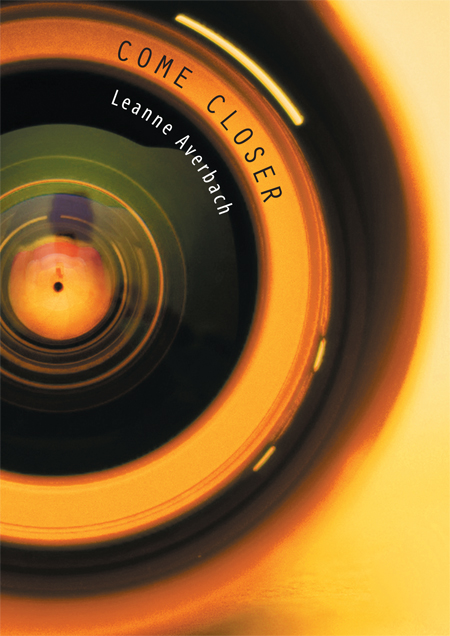
COME CLOSER

Come Closer       

By Leanne Averbach

Reviewed by Jorge Antonio Vallejos

Reading Leanne Averbach’s first book Fever will leave you floored.  If you’re a poet, her poem The Funeral will have you thinking of how much you need to grow as a writer.  Her descriptions and metaphors flash on and off in your head for a long time after. 

In The Funeral you’ll see rain flooding the scene with sadness as opposed to washing it away; umbrellas with rods barely holding up and “aching to snap”; and contemplative thoughts as the casket is lowered:

“She was a cruel woman.

Still we came, felt our ancestors pull

At the hems of our overcoats.”

Describing Averbach as gifted does not do her justice; she is creative, bold, and well read.

It’s no surprise that Averbach was nominated for the Gerald Lampert Memorial award for a first book of poetry in 2006 for Fever.  The Funeral alone should have gotten her the prize.  This review is not a rant about the past and shady award processes, it’s a celebration of her new book Come Closer

In the same fashion as Fever, Averbach brings you real close and personal into her life. Poems about activism, incarceration (featured in Descant 150), love lost, immigrant family struggles, and the history of the blues bring you closer to Averbach’s life.

My Youth Machine Rolled, Smoked To Its Stub explores the voyeurism of those locked up.  “Tales of my youth are a big hit at parties” starts the poem.  The want to know about those doing time, what got them there, and the experiences they had while behind bars.  It’s also about the incarcerated wanting their stories known, being centre stage and feeling important for a moment. 

Prison has always intrigued those who have never been.  John Cheever wrote Falconer, Stephen King wrote The Shawshank Redemption, both writers never being jailed and most of their readers never being jailed either, both books becoming best sellers, King’s turned into an Oscar nominated film.  So, those writers who have been inside such as Averbach have a one-up on most of society who want to know about jail from a distance, a very far distance.

While enjoying the attention of sharing her experiences, the stories at parties and the poem in Come Closer are a form of activism.  Averbach’s writing My Youth Machine Rolled is a form of exposing the brutalities of arrest and incarceration through the arts:

“cops cleaving

me to their sedan…

The beefy woman in uniform

watching me bathe

through a slit.”

Averbach writes of her brain shredded by the constant buzz of a shining light in her cell.  Also shredded is her fame, fast, once leaving jail.  No longer a novelty on the inside for fellow activists to boast about, Averbach writes, “The quicksand of celebrity, how important I must be.”

Teacups and Mink, a thirteen part poem, takes readers through the life of the Averbach family: leaving Tchernovka, Russia in 1921; crossing the Atlantic; her father peddling Canadian streets for money and hustling his way to owning businesses and then dying.  It felt like the poetry of the first book with the struggles of family and the transparency of their hardships. 

“I remember my mother’s affairs with books and boys,” writes Averbach.  Subtle. Honest.  Brave.  Young writers share the fears of what their families will think of their work airing out the dirty laundry; Averbach has long moved past that.  Experience shows in her writing.  By reading her work closely you’ll catch such lines and wish whole poems were written about things like her mother’s affairs.

Averbach is at her most creative in A Brief History of the Blues.  The title says it all.  You are swept through the lives of many of the Blues unsung heroes: Blind Willie J, Baby Face T, Pappa Charlie Jackson, Peetie Wheatstraw.  Averback writes of their trades, deaths, inspirations, disappearances, and styles.  You want to run and YOUTUBE them or hit the Silver Dollar room for its Blues night. 

In her activist style Averbach plays with famous book titles while deconstructing society’s problems. In Grand Central Station He Sat Down and Wept (named after the popular novel by Elizabeth Smart with the similar title: By Grand Central Station I Sat Down and Wept) Averbach writes of a homeless man who is ignored—like most homeless folk—and who hungers for McDonalds.  Another poem which uses the same title as Virginia Wolf’s famed book, To The Lighthouse, Averbach take you into Wolf’s world.

Come Closer sees Averbach take you into her life, play with her titles, trace the history of her favorite musicians, and expose the ever growing prison industrial complex.  It’s a fun read, a sad read, a worthwhile read.  The pomes that touch you will be re-read several times.  Poets both experienced and new can learn from Averbach’s style.  More poems about affairs and family secrets such as seen in Fever would not only have been appreciated but also have the collection live up to its title: Come Closer.

Tune in to Black Coffee Poet Friday January 21, 2011 for a video of Leanne Averbach reading her poetry.

Posted in Poetry | Tagged , , , , , | Leave a comment

I DREAM: HONOURING DR. MARTIN LUTHER KING JR.

Today is Martin Luther King Jr. Day.  I remember hearing his famous speech as a young child.  It was always something I enjoyed hearing.  And it was always something of inspiration and importance.  

Since the time Dr. King recited that speech much has improved for many peoples but there is still a lot that has to change.  

Dr. King’s speech is poetry.  It is repetition turned to beauty.  It is something never to be forgotten.  It is something we are still trying to achieve.  It is the encouragement for the poem (in progress) seen below:

I Dream       

By Jorge Antonio Vallejos

I dream that Dr. King’s message is never forgotten

I dream that We all begin to dream

I dream that We can learn from Dr. King’s dream and dream further

I dream that Reds, Blacks, Browns, and all peoples of colour continue to rise up

I dream that All peoples start to get along and live in community

I dream that Aboriginal peoples get their lands back

I dream that Aboriginal women STOP being murdered and disappearing

I dream that Women of colour start being treated equally to white women

I dream that Women’s bookstores start opening up at a rapid rate, globally

I dream that Straights STOP fearing Queers

I dream that Trans Reverend Cindy Bourgeois gets her own church

I dream that Trans folk get proper recognition for Stonewall

I dream that Trans Peoples STOP being murdered and disappearing

I dream that Sex Workers STOP being murdered and disappearing

I dream that Sex Workers are recognized as legitimately employed

I dream that People learn the difference between Sex Work and Sex traffic

I dream that Christian extremists STOP funding the wars in Iraq and Afghanistan

I dream that conservative Christians STOP fearing Islam and Buddhism and other religions

I dream that conservative Christians STOP having a pity party and admit their horrible history

I dream that Palestinians get their land back

I dream that Sheriff Joe Arpaio has a lobotomy

I dream that Post Secondary education becomes FREE

I dream that the Prison Industrial Complex grinds to a halt

I dream that 100% literacy becomes a global phenomenon

I dream that Books never die

I dream that Peoples with Disabilities are seen as gifts and not burdens

I dream that I’ll see an Aboriginal Prime Minister and President in my lifetime

I dream that I’ll see a Latino/Mesitzo Prime Minister and President in my lifetime

I dream that I’ll see a Black Prime Minister in my lifetime

I dream that Mexicans will STOP drowning in rivers at the U.S-Mexico border 

I dream that the Minute Men’s time is DONE

I dream that Mother Earth is respected

I dream that Peoples Stop relying on computers

I dream that Boys learn to respect women

I dream that Boys learn it’s OK to cry

I dream that Boys learn to be real men

I dream that Dead Beat dads CEASE to exist

I dream that Mommas LOVE will carry me for the rest of my life

Posted in Poetry | Tagged , , , , , | 2 Comments