WINNING BY LOSING: 4 STORIES ABOUT WRITING

Winning is a concept that many try to embrace.  “I want to be the winner!” is what people often say and believe.  Hall of Fame NFL coach Vince Lombardi is often quoted for his thoughts on winning:

“Wining isn’t a sometime thing; it’s an all time thing.  You don’t win once in a while, you don’t do things right once in a while, you do them right all the time.  Winning is a habit, unfortunately so is losing.” 

Lombardi’s thinking is black and white; you either win or you lose. 

I disagree. 

Often in boxing and mixed-marital-arts the true winner of a fight does not get the “W”.  It’s usually due to bad judging, and sadly, at times, corrupt judging.  Regardless, the fighters and the crowd know who really won.  During interviews you’ll hear the fighter who was ripped off say, “I know in my heart that I won.”  And the crowed will back them up.  There is a peace of mind within the fighter; they know the truth and so do their supporters.

Often when this happens the ‘loser’ gets more opportunities than the ‘winner’ because everyone knows who really won.  More opportunities means bigger fights, more money, and unofficial acknowledgement of being the ‘winner’.

This applies to many things in life.

What is winning?  Is it having your hand raised?  Is it winning that near impossible lottery number?  Is it having fame and recognition?  Is it writing a NY Times bestseller?  Is it being published in big newspapers, magazines, literature journals, and websites?  Is it getting into an elite MFA program?

I think winning is

  1. Having peace of mind
  2. Being treated with dignity and respect
  3. Losing something to gain something

Here are four stories on how I’ve won by losing:

Dignified Java

I used to do lots of my writing at an independent espresso bar 15 minutes from my place.  They had a great marble table that sat about 12 people and their Americano’s were the best I’ve ever had. 

I chose this place because I didn’t want to support big business.  I’d left another coffee shop in the area because the white owner treated her of colour staff like third class citizens.  And she left the coffee out way too long. 

The espresso bar owners were nice at first.  I’d go there about five times a week.  One espresso cost me $2.50 and I’d get an overpriced brownie once in a while. 

I’d sit, write, mind my own business, and leave.  Total time was about three hours.  That’s regular in coffee culture.

The owners knew I was a writer.  I’d bring in copies of XTRA! so the place wouldn’t be so hetero normative.  And I’d bring in some other local newspapers to counter their mainstream stuff.

After about a year I had a slight altercation with one of the owners.  As the place was closing she was cleaning up the tables and grabbed one of my papers that I had brought in.  One, XTRA!, I had planned on leaving there.  The other was one that I had not read yet and planned on taking home.

“I was going to take that,” I said to her.

“I was going to grab it so others can read it,” she said.

“Go ahead,” I said.

She took the paper that I brought to a stack and then commented out loud to her husband:

“I’m sick of people coming here and thinking this is their office!” 

It was closing time so I packed my stuff.  As I said, “Thanks, see you later,” which is what I always do, and I saw her scowl at me as her husband said, “Goodbye.” 

I never went back.

I decided to go to a place that was closer, cheaper, big business, and had nowhere near as good coffee, but treated me well. 

Very well.

A recent change in the ownership saw me say my goodbyes to the owner who I saw 6 times a week for almost two years:

“Mark, thanks for everything.  I started coming here because another place was rude to me and you have always treated me with dignity and respect. Good luck.” 

We shook hands and smiled loving smiles at one another.

I don’t get amazing coffee at the place I now go to.  There is no beautiful décor, no marble table, no cool music.  But I’m treated with dignity and respect.  And that’s more important than anything.

The cool independent shop folded a year later; they lost a lot of clients; no doubt from the energy they were giving out that myself and others I know experienced.

Great White Lefty

Two years ago I scored a gig with a big ‘lefty’ website run by white people. Their one and only of colour staff had wanted me to write for them for two years.  I agreed to write paid articles only. 

I don’t write for free anymore except here on blackcoffeepoet.com

Things started shifty.  I was told I would be paid double of what my first cheque was.  The overused word/excuse “misunderstanding” was given; I decided to stay; big name publications with large readerships have writers overlook things sometimes.

I was being paid and read which is a great combo.  But like my 4th mom said, “At what cost?”

After much haggle, unanswered emails, and shady editing, not being paid for an opinion piece the Editor in Chief agreed to publish and pay and later pulled, I was put through what you would expect right wing publications to do to their writers.

My review of a book about Palestine was not to their liking because I was honest.  I was being paid to write reviews, not to big up causes they promoted.  I support Palestinians but the book was not amazing and I questioned things the author said, focused on, and left out. 

I was asked to interview the author about my criticisms.

I got paid to write reviews not do interviews. 

I explained to my editor that if she wanted an interview I would be glad to do it for more money.  Not the wage I was getting, which was half of what I was originally told I’d be getting.

Drama.

My editor booked an interview with the author after I stated she would need to agree to pay me for it and didn’t.  I explained the situation to the author.  He was understanding and said it was the editors idea. 

I stood my ground.

“I didn’t realize it would be too much trouble to request a couple of quotes for your review,” snarked the editor in an email.

Again, I got paid little, and for reviews not interviews.

I received an email saying I would not be paid for my review and that it would not be published.

I approached my contact of colour and told her the situation.  I can only imagine the written lashing she gave my section editor over email.  The following two days saw two very interesting emails:

1. “I just received an e-mail from *** about your last review. I’m very sorry for any miscommunication about the interview and review…”

2. “My apologies again that the review of To Love A Palestinian Woman didn’t work out and will not be published on ********. I’m just writing to let you know that payment for your review To Love a Palestinian Woman will be arriving sometime next month.”

I cashed my cheque and published the review on blackcoffeepoet.com followed by a lengthy interview with the author and never wrote for them again. 

A recent chat with a fellow writer of colour who I hooked up with Great White Lefty said, “Jorge, they are so careful with me. I think it’s because of what you said and did.” 

My standing up made it a better place for others like me.  Too bad they didn’t follow their ‘lefty’ politics and treat all us folk of colour justly from the start.

The Fuck You Smile 

I used to write for a small mag run by peoples with a long history of battling oppression.  Similar to the story above I was having emails ignored with no concrete dates on payment and publication given.  One thing preceded this: I was asked to be part of the editorial board; ask me how many meetings I’ve been invited to.

Two things followed all this that were the last straw:

1. I had my byline not included in one of my articles.  If you’re a writer you know how important it is to be given credit for your writing; that’s what the byline is for. 

2. When I brought it to the editor’s attention I was given an apology via email.  When we met in person I was given another apology along with a ‘promise’:

“I am so sorry about that!  And so this never happens again I want you to be the Copy Editor,” said my editor.

I was told I’d be paid for the copy editing and that I could do it online, or they would provide me with hard copies of the pre-published mag for me to mark up with a pen. 

How many issues do you think I copy edited?

The new mag came out with one of the editors friends listed as Copy Editor.

All I got after that was a smile.

The Wait List

If you read the ABOUT page on blackcoffeepoet.com you know that I started this online magazine as my own MFA in Creative Program.  I made the wait list to an existing program and didn’t get in so I researched MFA programs and made my own; hence BCP!

Lots of people ask if I’m going to re-apply. 

Through blackcoffeepoet.com I

1. Get free books.

2. Do lots of reading.

3. Meets writers.

4. Make contacts in the writing world.

5. Engage in multimedia: writing, recording video, running a website.

6. I’m being read in four continents.

7. I’m growing as a person, poet, reader, and journalist. 

I still send my work out to journals, magazines, and newspapers.  I get to run my own self taught program while practicing and merging my art and politics.  And I’m building my platform as a writer who is writing books to be sold and read in future.

I’m not saying that I won’t re-apply to the MFA program or another program.  I’m enjoying what I’m doing now; blackcoffeepoet.com is going really well; and I’ll be celebrating blackcoffeepoet.com’s one year anniversary September 13th, 2011!

I recently met famed poet Dionne Brand at a literary event.  I walked up to her and introduced myself:

“Dionne Brand, I’m Jorge Antonio Vallejos.”

“Oh, you’re at *****,” she said.

“No, I didn’t get in,” I said. 

“I remember your name and your work,” she said.

I almost fell over. 

Dionne Brand, Toronto’s Poet Laureate and Griffin Poetry Prize 2011 winner read my application portfolio and remembered my name and work! 

I’ve never met Dionne Brand in person.  But she had met me via my words as I have met her.  It’s one the biggest highlights of my writing career; it’s the biggest highlight for me as a poet.  It was validation.  

It’s one of the things that keeps me going.

So, the last few years has seen me lose a few things: great coffee, big readership via a big website, a couple of paid gigs, and a spot in an MFA program. 

But, I have won something greater in every case: peace of mind, respect, dignity, my own publication, and acknowledgement from one of the world’s great poets of colour. 

Winning in the conventional way of looking at things isn’t everything.  Sometimes losing isn’t so bad as you may think.
Posted in Poetry | Tagged , , , , , , , , | 5 Comments

PICK YOUR BATTLES WISELY: LIFE LESSONS APPLIED TO WRITING

Last weekend I walked away from a guy trying to start a fight with me.  I wasn’t scared; I wasn’t outnumbered; I wasn’t tired, sick, or recently injured.  I was doing what was the smart thing to do: avoid confrontation unless I’m attacked or backed into a corner. 

I had the opportunity to walk away and I did.

The verbal assault was unexpected.  These things tend to be.  It’s only in high school that people announce a fight.  I was in my neighbourhood on a day that was going well.  Then…

Being accosted and insulted is nothing new to me.  I’ve been treated like crap by white people many times in my life.  This is someone I know loosely and who was being friendly all week until this day.  He insulted me, looked at me with disgust, tried to intimidate me with his tone and body language, and then turned his head dismissively. 

I wasn’t to buying into it.  I walked away.

I know this man has been taught by society that he can talk down to people who look like me.  He’s been taught that he is superior to people who look like me.  He’s been taught that his skin brings him many more privileges than people who look like me.  He’s been taught that his people are the rightful owners of this stolen land.

I also know that he’s been through a lot.  He has a history or abuse, which he’s taken in, and now tries to replicate.

My first reaction while walking home was, “Who the fuck does that skinny little white boy think he is?”  Images of using my fists, elbows, and knees followed.  Then I decided I had done the right thing; the fight, or the one sided affair that would have happened, would have not solved anything or been worth it.

There are enough men with brown skin and colonial last names in prison as it is.  Me beating up a white boy would have landed me in the jail for 18 months or so.  I would have probably been arrested by someone who looked like him; faced a judge who looked like him; and then have to listen to abuse from guards who look like him. 

Not interested.  

When I talked to my brother from another mother that night he was shocked and happy that I walked away:

“Bloodclot! Ya woulda murda ‘im back in dem days.” 

Today is a new day. I’ve learned over the years how to walk away from confrontations.  As good as it feels to win a fight, it feels shitty when you have your ass handed to you; and I’ve had my ass handed to me a couple of times.  It also feels shitty to go through all the garbage that can come with fighting: police, injuries, paybacks, stress etc.

I’ve come too far in life to go back to that.

Why am I writing about avoiding confrontations in this magazine primarily dedicated to literature and writing? 

Because, the writing world has a lot of power trippers, abusers, and people looking to take advantage of others; this includes ‘lefty’ publications.  Again, it doesn’t help if you’re not part of the dominant class.

A few years back saw me get into lots of confrontations with editors and readers practicing racism and censorship. 

While writing an essay about violence against women at the hands of men of colour (yes, it’s not only white men who abuse women of colour) I encountered my first experience with censorship.  My editor at the time was battling me over a line she thought was too controversial:

“I pissed blood for thirteen days.  Thirteen fucking days!”

It was a quote from a woman I knew who had an STD passed on to her by her cheating boyfriend.  (I did not name the woman.)

I was not willing to let go of the quote.  My editor was not willing to publish the quote. 

A line had been drawn by both parties, which turned into a standoff, which then turned to a nasty email war.    

I was advised by one of my mentors to let it go and not write the piece for that publication.  I sent the editor an email telling her so, and we didn’t talk to one another for years.  We experienced awkward moments at events we both attended like standing side by side in silence and being introduced to one another by people who didn’t know our history. 

All this could have been avoided if we just let our egos go, communicate like adults, and then decide to part ways on this assignment and possibly work together in future.

We never did have a conversation about the whole dilemma but we’ve since worked together with great results.  And I’m happy about that; it doesn’t always work out that way.  

Some time later, while writing my column The Condor’s View for University of Toronto newspaper The Window, I had my words “people of colour” changed to “coloured people” by the Editor in Chief. 

Surprisingly, he was of colour. 

When it was brought to my attention that my words had been so grossly and unjustly changed, I confronted my editor and received a racist response.  (Yes, people of colour can practice racism.  It’s not top down like white people.  It’s lateral.  And it’s wrong). 

At our monthly meeting with the masthead several editors agreed that the change of wording was wrong, racist, and should have been given a correction in the following issue.  Our editor refused to write a correction and argued that “people of colour” was incorrect English and stood by his choice to re-phrase my words to “coloured people”.

Six of us protested. Two of us were fired: my section editor and I. 

It was a battle worth fighting.  We stood for what we believed in.  We stated our case and did not back down.  We were happy with our decision.

When I told this story to an editor at the Toronto Star she pointed at me and said, “You have a future in this business!”

The following year I was asked back to the paper by the new Editor in Chief, and the year after that I was the first elected Editor in Chief in four years. 

I was fired by guy who got the position by default.

In my letter to sex work activist Wendy Babcock last week I wrote about how Wendy knew how to pick her shots.  We have to know how to pick our battles too.

There’s a time to fight, and sometimes it’s best to walk away.

The only reason [people] fight is because they are insecure; one [person] needs to prove that he is better or stronger than another.  The [person] who is secure within [themselves] has no need to prove anything with force, so [they] can walk away from a fight with dignity and pride.  [They are] the true martial artist—a [person] so strong inside [they] have no need to demonstrate [their] power.  —Ed Parker

Posted in Uncategorized | Tagged , , , , , , , , | 1 Comment

REMEMBERING WENDY BABCOCK: A LETTER AND A POEM

August 12, 2011

Dear Wendy,

As I write this letter I’m listening to Get Up, Stand Up by Bob Marley.  It’s what you believed and did.

I remember meeting you at a meeting for the first Reclaim The Streets rally that we helped organize with folks in Toronto’s downtown east-side in 2008.  You were open, honest and respectful.  Community, not individualism, was on your mind and in your heart.

As ideas, laughter, and good vibes circulated the room, you were at the center of it all.  Not because of your position at the table but because you were one of the main sources of all three.

Our introduction turned to group work, to lots of laughs, smiles, hugs, and flirting every time we saw each other after that.  And your honesty was warm and loud:

“We met before, Jorge!  At Carolyn Connolly’s first vigil.  I smudged you!” 

Laughter followed.

Seeing you in action was a pleasure.  Your speeches, chants, sign holding, and telling the cops to “Fuck off!” were beautiful.

When you come to mind I think of an ally who is also an activist; the two don’t always meet.  Your work toward stopping violence against Aboriginal Women and Women of Colour was awesome not only because your mind and heart teamed into action, but because your weren’t Aboriginal or of colour and you cared.  I can’t say that about a lot of white women, white people.

Your lead in the fight to make sex work safe, accepted, and appreciated was one of insider consent but you didn’t put that in peoples face.  Rather, you embraced allies on all levels: spiritually, emotionally, physically, and mentally.

If an ally made a mistake you didn’t pounce on them like many activists in Toronto tend to do.  You practiced patience, kindness, and self control and you saved your energy for the battles you saw as important.  A good fighter picks their shots, remains calm, maintains balance, and strikes when they see an opening and when the time is right.  A good fighter also learns from their losses and gets back up after being knocked down or knocked out.  My interactions with you saw you do all that.

You had leadership skills that most people lack but that didn’t see you pointing fingers and ordering people around.  You often stood at the front lines, something that most so-called leaders are too cowardly to do.  And although you knew a lot about a lot of things you recognized that some knew more than you in other fields and you were willing to learn by listening and doing your own research.

You displayed true character at the Gladstone late last year when sharing the stage with other groups that you disagreed with, and with people who defamed your name behind your back on many occasions.  You recognized, unlike many, that it wasn’t about you; it was about the cause, the work, the people, and positive change.  

It’s because of your words, energy, time, and all I’ve written above that I decided to join the Bad Date Coalition for a year.  Seeing you work for the first rally to happen, and be a success, I was assured that BDC was a good cause and organization.  Your drive was inspiring, your analysis bang on, and your work ethic should be studied, written about, and emulated.

I was honoured to be invited to your 30th birthday party two years ago.  Walking along the Danforth saw me gather food for my poem Shane It Isn’t Fair that you liked.  A couple of months later saw the ultimate validation via your smile followed by an embrace and a kiss when I read you White Van at the corner of Greenwood and Danforth.  I remember your words: “This should be read at the court case going on right now!” 

I’ve attached White Van to this letter for you.  It’s said that sound never stops traveling.  Every time someone plays the video it will add to the circle of the never ending words you loved. 

May White Van be a blessing, a hug, a smile, and a kiss every time you hear it circle Mother Earth and the universe. 

We were supposed to meet in early July (2011) for a lunch that didn’t happen.  Your last week of physical life saw you inviting me out on Face Book.  I wish it had worked out. 

We’ll have our lunch once I leave my physical form and join you up there.  Our much awaited hangout sessions will see feasts on the stars and non-colonial planet traveling.

Until then, prayers, poems, smiles, hugs, and a kiss,

Jorge Antonio Vallejos

Posted in Poetry | Tagged , , , , , , , , , , , , , , | 3 Comments

SHOWING UP PART 2: HUMBLE TIPS ON WRITING

A couple of days ago I wrote about Showing Up.  It’s a concept that has been on my mind for a while.  I relate it to commitment.  After challenging someone last year who was in a position of power and practiced favoritism I came up with my own definition of commitment: keeping your word, showing up, and being present.

I also wrote about how showing up to me means coming to the page everyday.  Coming to the page to me is my journal, my notepad where I write my poems, this laptop I’m writing on, the unread books and magazines and newspapers stacked up in my room, the two manuscripts I’m slowly working on.

I’ve been having trouble showing up.  I’ve not shown up everyday like I used to.  And I have not kept a commitment with a magazine recently.  So, the concept is something I still have to remind myself about, battle, live, and the tips below are helpful and applicable to all writers; that means me too!

1. Claim Yourself A Writer

Last weekend I ran into a young woman re-reading Arundhati Roy’s The God of Small Things for the third time.  We talked about the book and her studies in literature.  Then I asked her a question that brought out a common answer that I don’t like:

“Are you a writer?” I said.

“I want to be a writer,” she said.

“Do you write?” I said.

“I write short stories,” she said.

“Then you’re a writer,” I said.

If you write you are a writer!  You are a writer because you not only want to be one, or say you are one, you do the work to be one: you sit and write.  The young woman I write of above is a writer; part of that is being a reader, which she is. 

You don’t have to be published to be a writer.  Some people journal everyday, others write stories for their families, and some people get published widely; all are writers.

Claim yourself as a writer.

Sometimes my friends and relatives refer to me as wanting to be a writer.  I immediately correct them:

“I am a writer!” I say.

2. Know Why You Write

Writing is a choice.  I often hear “We write because we have to” in the writing community.  I get that.  We are compelled to express ourselves in different ways: on the page, in a blog, a tweet etc.  You still choose to do it and you take action.

A former writing partner of mine once said, “I write to have a relationship with myself.”  I loved that.  Although I don’t say that’s why I write it is a big part of it.

In the last couple of years I have stated, “My writing is my activism”.  My poems, essays, and articles are about challenging different forms of oppression and STOPPING violence against women.

Years ago when I was going through a tough time I told myself, “Writing is the cast to my broken spirit.”  My spirit is no longer broken and I don’t want to describe it as such ever again. So, that is out the window.

Figure out why you write and focus on that.  Come up with a mantra or a statement like the ones above to remind yourself of why you write and start writing.

3. Time and Place, No Time and No Place

Many writing books advise writers to figure out their most productive time of the day and to set out to write during that time or times.  Experts also say to find the place you are most comfortable when writing and match time and place.  Great.  It does work for some.  Not all.

I do have a place where I write.  It’s my local coffee shop.  I write at different times during the day: morning, afternoon, evening.  So, I do the conventional writing with time and place matched.

But.

Yes, there’s a “But”.  Many of my poems, and a short story recently, have been written in bed at two in the morning.  I spring out of bed sometimes to write down an idea, or a rough draft of a poem or story.  I keep a notepad with a pen resting on it near my bed.  No coffee, no table, not laptop, and very little light. 

Some of the poems I’m most proud of have been written on the subway, in parks, in stairwells, and on my bed.  No specific time, no specific place. 

Be flexible.  Set your time and place, have no time and place, just write.

Show Up: read, re-read, write, re-write, submit, publish, and do it all over again.

Posted in Uncategorized | Tagged , , | 3 Comments

SHOWING UP

An interview I saw on TV two days ago with a former gangster has sparked lots of contemplation in me the last couple of days.  The interviewee had brown skin like me, a colonial name like me, and was in a better place than he used to be; also like me.

“You have to show up everyday,” he said. 

I not only believe in that way of thinking, I lived it for a long time and I’m trying to get back there.

Showing up means something different for a lot of people.  In the interview it meant showing up to Homeboy Industries, a place to help recovering addicts and former gangsters stay away from crime and drugs.  For me showing up means showing up to the page everyday.  “The page” in my life is my journal, my notepad where I write my poems, the unread books, magazines, and newspapers I have stacked up in my room, my laptop, and the two manuscripts I’m slowly working on.

I remember sitting alongside one of my mentors, Lee Maracle, four years ago and talking about showing up without saying “showing up”.  Lee and I were sitting at two computers side by side.  We chatted as we typed.  I did my thing and she did hers.  Then one of the biggest lessons in my writing career happened.

“Have you been writing?” said Lee.

Writing to Lee means poetry, fiction, plays, creative non-fiction etc.  I had been writing four articles a month for The Window, a University of Toronto newspaper, where I had my own column The Condor’s View, and I was writing essays for school.  But I wasn’t writing anything classified as creative.

“No, I haven’t had time,” I said.

All of a sudden I felt eyes on me.  Lee turned her head to the left to stare me down (I mean stare downs like I’ve had in the West Detention Centre as a youth).  With her fingers still on the keyboard, Lee, my writing mom, gave me a verbal lashing: 

“I worked three jobs and raised four kids and still wrote everyday.  I broke down doors for you.  Don’t you dare tell me you don’t have time,” said Lee.

I’m usually up for a good fight.  But, I shut the fuck up.  Lee was right.

Lee turned her head and went back to typing.

I’ve noticed that lots of my fellow writers have had trouble showing up recently.  Some have come to me for advice and support.  People think because I update blackcoffeepoet.com three times a week and write for two newspapers that I don’t face the same difficulties as other writers.

To be honest, in terms of creative writing, I haven’t shown up in a while.  My journaling has been sporadic, my notepad has seen few poems written this summer, I took three weeks off blackcoffeepoet.com last month while visiting two Cree communities (Moosonee and Moose Factory), and I have not touched my two working manuscripts. 

I’ve also not kept a commitment to write a piece for a local magazine because of insecurities and fear; and I’m embarrassed about that! 

Showing up isn’t easy.

Life isn’t easy.

If we’re gonna make it we’ve got to figure out what showing up means in our lives and make sure to be present everyday.

Only you can show up.  No one can, or will, show up for you. 

As I write this I’m listening to My Life by Pharoahe Monch.  It’s a Hip Hop song that reminds me of who I am as a writer and why I write:

My life is all I have

My rhymes

My pen

My pad


I done made it through the struggle

Don’t judge me

What you say now

Won’t budge me


Cause where I come from

So often

People you grew up

They be layin’ in a coffin


But I done made it through the pain and strife

It’s my time now

My world

My life


My life

Show up: sit, read, re-read, write, re-write, submit, publish, and do it all over again, daily.

Posted in Uncategorized | Tagged , , | 3 Comments

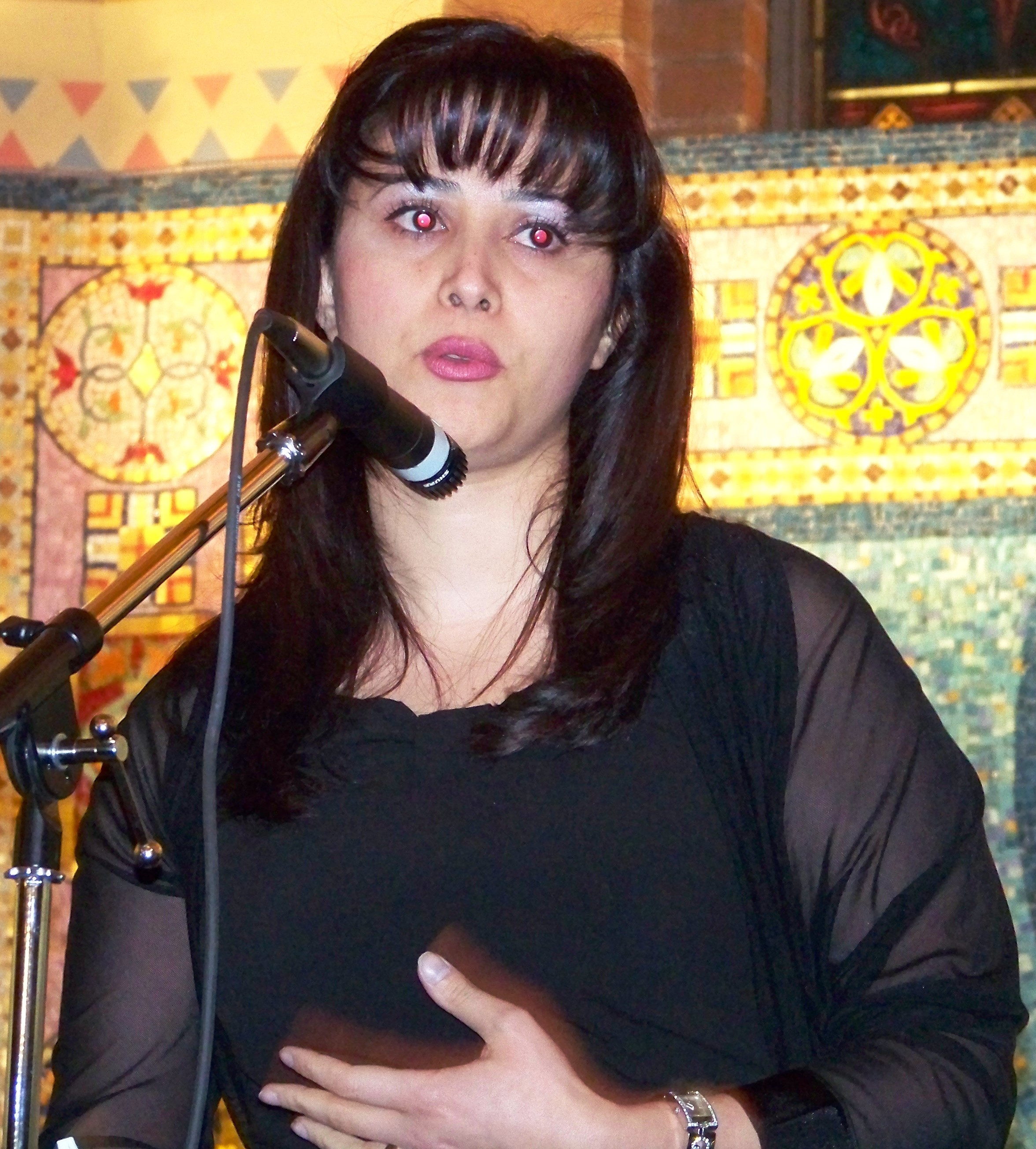
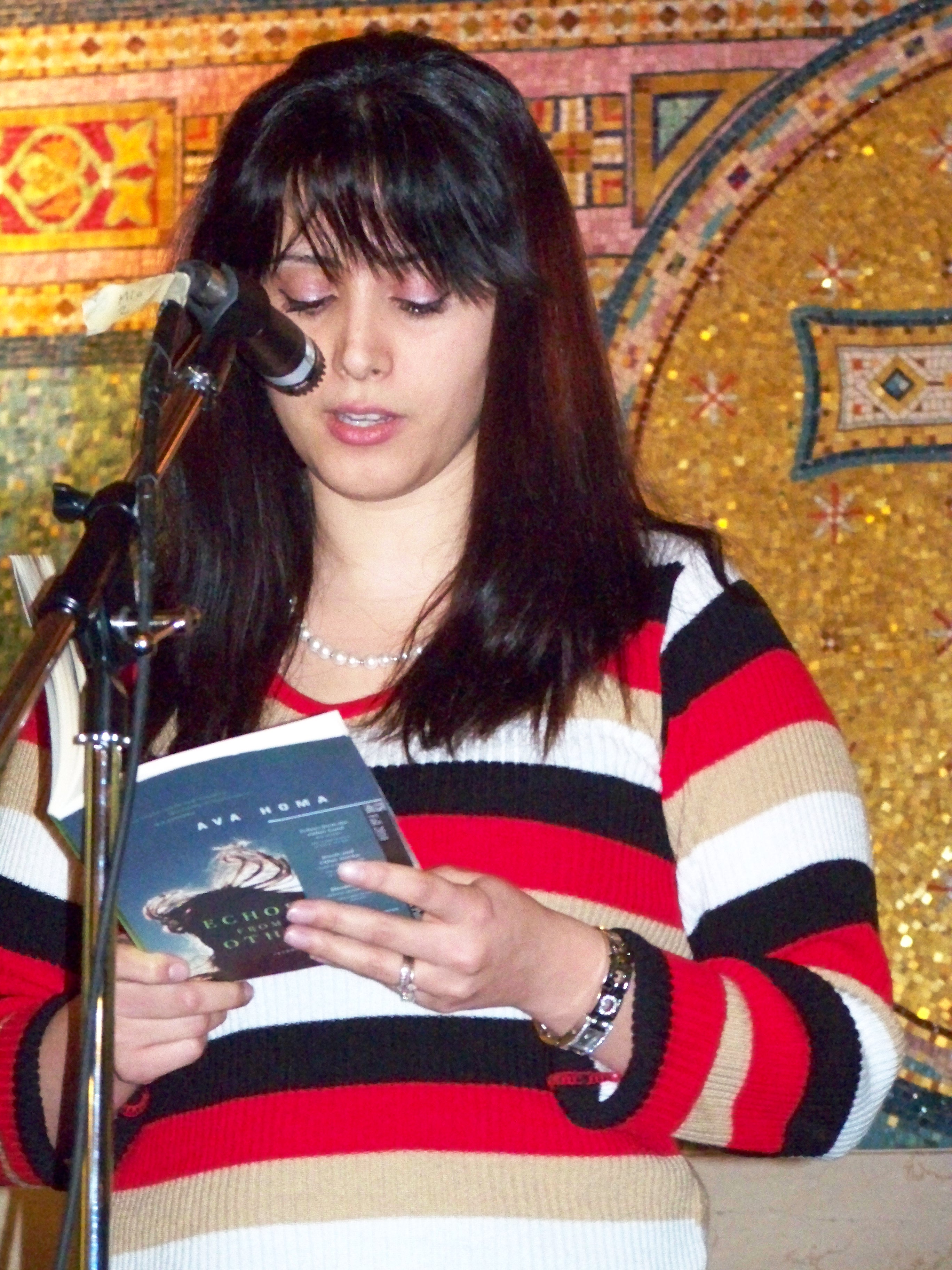
KURDISH WRITER AVA HOMA READS FROM “ECHOES FROM THE OTHER LAND”

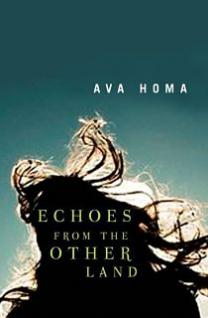
Meeting Ava Homa to tape her reading from her collection of short stories Echoes from the Other Land was fun.  We chatted literature, publishing, writing, and of course, reading.  Coffee, sun, and laughter filled a two hour session.  

Enjoy Ava Homa read from her book Echoes from the Other Land.

Posted in Uncategorized | Tagged , , , | 1 Comment

INTERVIEW WITH KURDISH WRITER AVA HOMA

Ava Homa is author of Echoes from the Other Land  which was just nominated for the the world’s largest short story award: 2011 Frank O’Connor International Short Story Award. Ava is a Kurdish-Canadian, writer-in-exile, with two Masters’ degrees one in English and Creative Writing, another in English Language and Literature.Echoes from the Other Land has a running theme of resistance by modern Iranian women under an oppressive regime. Ava’s writings have appeared in English and Farsi journals, as well as the Windsor Review and the Toronto Star.  She was a writer in Iran, and university faculty member. In Toronto, Ava writes and teaches Creative Writing, English, and ESL.

ML: Why do you enjoy writing?

AH: I can’t help it J I get the urge, it can be anytime, anywhere: in the middle of the night or while driving, swimming, walking in a trail or on the beach. At such times, I just have to write in a notebook or on the sand or just text myself with my cell phone. I am not always successful, though.

In addition, writing for me is a form of reflection. It makes decision-making easier for me especially when I feel confused. Also, I see writing as a form of therapy. It helps me when I’m trapped in unhappy situations. Writing is my world, is everything to me. I’m obsessed.

ML: What is your process?

AH: Of completing a piece of fiction? It varies from piece to piece. In general, I can say it’s like gardening. I have the seed of the idea and then I have to plant and attend to this seed regularly before it blooms. That means, in order for a vague idea to become a complete story, I need to work on it every day for a few months. I might only get to write a few hours a day but I’m always thinking about my story for example, about the different ways my characters can react to situations, and various ways my plot can proceed.

Usually, after three months when I feel a chapter of a novel or a short story is complete, I leave it for a while-a month or two- before I get back to it and read it from a reader’s point of view. I mean, I try to detach myself from my work and read it as a third person, as if this writer has applied for a contest and I am the judge.

ML: How long have you been writing poetry? Stories? 

AH: Since childhood. I can’t remember the first time. My mother tells me that I used to be totally happy with a pencil and a notebook for hours. I know I completed my first “manuscript” when I was in grade five. It was an animal story: a bird who missed her mother and was stuck in a forest. It contained some of my drawings too. After that I wrote on and off for all my life but I took my first Creative Writing workshop in 2002. I went from workshop to workshop and a couple of instructors told me that I had a gift and I should continue writing. I listened J 

ML: Who are your influences?

AH: That’s not that easy for me to say. My motivation for writing was internal. No one in my family or friends encouraged me because I wouldn’t share my writings with anyone for a long time.  Do you mean which authors influenced me the most? I am a voracious reader, I swallow books. It’s not really easy for me to see who influenced my writing the most because it has not been conscious. I later realized that Hemingway, Carver and Salinger have had the highest impact on my style. I loved those writers’ techniques very much. Overall, in every book that I read, I find something to admire and I automatically pick up on them.

ML: Your book of short stories, Echoes from the Other Land, is a wonderful achievement. How long did it take to write?

AH: I appreciate that comment, May Lui! I worked on that book almost every day for four years. I would think about stories, write, re-write and revise each story for over six months.

ML: All the stories in your book are from a woman’s perspective. Do you consider yourself a feminist? Why or why not?

AH: Nowadays, feminism is such a broad term that when somebody asks me if I am a feminist I should ask what they mean by that word. There is no “ism” that I absolutely accept and identify with. If I am to find a title for my interests, I’d say I am a humanitarian. The reason I wrote from women’s point of view was because I believe women in Iran need more help than men. Their situation is worse than men’s although every person living under an oppressive regime needs help unless they are part of that regime.

ML: Share with readers of this blog what your inspiration was for the various stories in your book.

AH: First and foremost, I love writing for the beauty and power of writing. But, it is also an affirmative action. Women’s situation in Iran must change. Moreover, I heal through writing and I hope I can help my readers heal too. I think Iranians are a traumatized nation due to everything we had gone through. I am a Kurd and my history is more painful than other Iranians. There are many personal and historical reasons behind my writing.

ML: Were any of your stories based on your personal experiences?

AH: Not really. I wrote a few stories based on my personal experiences and they did not turn out too well so I did not include them in this collection. I think a professional writer should stay detached from her work. Writing about myself makes that difficult for me.

ML: Themes running through all your stories include relationships between men and women, isolation, anger and fragmentation. Can you tell us more about this?

AH: I like to write about things that transcend time and place. Human relationships overall – be it men-women or same sex couples- intrigues me. Humans are complicated beings and when someone wants to connect to somebody else at different dimension, whether emotionally, physically or mentally, things get very complicated. I think people can write about relationships for the rest of history.

Isolation, I believe, is an inseparable part of our life, too. We fall in love, work, live in a community, make friends, some of us marry and start a family … to make believe we are not lonely. I think some parts of us stays inaccessible, no matter how many people we have around us. Anger and frustration are temporary results of such situations.

ML: What was the process like getting your book published?

AH: I was very lucky in that regard. TSAR was the first and only publisher I sent my manuscript to and M.G.Vassangi loved my work. He endorsed it for me, something his wife told me he hasn’t done for anyone else. 

ML: Any publishing tips for emerging and unpublished writers?

AH: Publication is a very tricky business. Don’t let rejections get to you. In addition to the fact that writing is subjective, publishers have enormous limitations in what they can publish. Nevertheless, try to see the reason for the rejection and if it makes sense to you work it out in your manuscript. Always seek to improve your writing. There is no end to that process.

Write for the sake of writing. If you get published fine, if not just continue writing. Let me tell you a secret, my friend, getting published is a huge distraction from writing.   

ML: You run writing workshops occasionally. Tell us more about that.

AH: Over the course of a 5-session workshop, I discuss crafting a piece of fiction: “How to create characters who breathe on the page,” “The art of writing dialogue,” “Plot is the thing: Suspense and conflict,” “Point of View” and “Setting.” I distribute five short stories to the participants prior to the beginning of the workshop. During each session, participants are encouraged to read the text and analyze one element mainly. After that, members will be asked to read their own work out loud and get constructive feedback from peers. This way the workshops help the writers build skills from session to session. I will probably have some more workshops in the fall or winter. Your readers can check my website for updated information. http://www.avahoma.com

ML: What are you working on now?

AH: I am currently working on the manuscript for a novel called Hush. Hush is a novel told from multiple points of view that captures both the life of a nation at large and that of a family in detail. Hush shows the ordeal of the Kurds in both Iran and Iraq as well as the 2009 post-presidential election crisis in Iran. This novel shows both sides of the story that consist of hope and horror, solidarity and betrayal, pain and strength.

ML: Is there anything that you want Iranian communities, in the diaspora or elsewhere, to get from your writing?

AH: I think habitualization is human’s enemy and saviour at the same time. It’s the reason we can survive even extremely tough situations and it is the reason we internalize injustice. I want all my readers and not just my fellow country people to re-think some already established ideas such as gender roles, the role religion plays in everyday life, etc. I also think we need circles of healing. After years of living under tyrannical regimes, economic instability and all forms of oppression, we need to get together, tell tales, support and understand each other, get rid of our internal “windigo” and recover.

ML: What advice do you have for writers out there who are having difficulties with their writing, or who have yet to see their work in print, or who are afraid to perform their poetry?

AH: It’s unfortunate that being published and recognized is mistaken for being a great writer. I have seen more under-appreciated talents than I’ve seen worthwhile “big names.” Write for your soul and for the beauty of writing. Everything else is just noise. If you are true, honest and patient with your talent, you’ll finally get what you deserve. 

ML:  Are there any other comments that you’d like to share about your writing, the writing process and getting published?

AH: Thanks to you May Lui and to Black Coffee Poet! I wish you and your audience tons of happiness.

May Lui is a Toronto-based writer who is mixed-race, anti-racist, feminist and an all-around troublemaker. She blogs at maysie.ca, ranting and raving at any and all injustices and uses the f-bomb regularly. She’s been published in the Toronto StarFireweed MagazineSiren Magazine, in the anthology With a Rough Tongue: Femmes Write Porn, at section15.ca and rabble.ca. Contact her atmaysie@rogers.com

Tune in to Black Coffee Poet Friday August 5, 2011 for a video of Ava Homa reading from her book “Echoes from the Other Land”.

Posted in Uncategorized | Tagged , , , , , | 2 Comments

ECHOES FROM THE OTHER LAND (STORIES) BY AVA HOMA

Echoes from the Other Land (Stories)

By Ava Homa

Review by May Lui

Reading the stories in Echoes from the Other Land, I found myself absorbing and learning perspectives and realities that are both similar and very different from the world that I’m familiar with. Ava Homa writes of a world of urban Iran, a world where women; single, divorced and married; negotiate and navigate a sometimes unfriendly and harsh world of religious police, family, religion, narrow views of women’s sexuality and societal expectations for women.

She does this without using the Western tropes of how Iran is “othered” when white secular Christians write about Iran and other Middle Eastern countries. Her perspective is much needed in the landscape of Canadian fiction, and intensely valuable on its own.

Ava Homa is Iranian-born, of Kurdish ancestry. Her stories suggest her unique perspective on what it means to be marginalized and part of a minority. This is reflected in her characters, who are often nonconformists who aren’t understood by their family and friends.

Each story could be a novel in itself. Each story drops us into a world where we must quickly become oriented, as the narrative is already moving quickly starting from the first paragraph. Homa simply begins each story mid-way through a moment in the lives of her characters, and we need to carefully read to understand the full context and the parameters in which the various characters, all of whom are women in their 20s, find themselves.

In A River of Milk and Honey Homa writes: 

People say they hate the Komiteh because they are constantly harassing everyone, but I see that people fear each other more than they fear the police. (page 41)

Themes weave in and out of all the stories; one theme is the tension as well as the interlocking aspects of isolation and connection. So many of her characters are isolated, some of their own choosing, some because of society’s notions of what is “acceptable” for women and others through repressive political and religious systems. Her complex and sometimes troubled characters respond and react against this isolation, as well as their own needs for connection, in different ways, all of which draws the reader into each story.

In Glass Slippers Homa writes:

Yusef has never yelled at you or laid a hand on you, has never bullied you. He knows poetry by heart, cares for spar-rows, feels pity for the fish imprisoned in the small pond ofthe yard, and loves flowers. You love him. (page 68)

In Silk Shawl Homa writes: 

I flipped through the four channels. As usual, three of them featured blathering mullahs, and the last, football.  I turned off the TV.  (page 83)

Another theme that’s very strong in Homa’s stories is told through the young women who are her main characters, and how they chafe, struggle, fight, resist and rebel against the many restrictions in their lives. They drink, they have sex, they pray, they wear the veil, they don’t wear the veil, and they wish for things to be different.

Homa’s characters also want what all young women want: to express themselves separately from what their parents want for them; to fall in love; to be loved; to be good at their jobs; to be happy.

Homa uses very tight, descriptive prose that takes us right into the moment of the story. She describes sights, smells, textures and sounds, as well as emotions, disagreements and passions that cut deeply to the heart of knowing her characters from the inside. She does this with an almost painful honesty, a striking truth and vulnerability that cannot be dismissed or ignored. Homa also moves the reader through lies, deceptions, anger, jealousy, fear, as well as tenderness, kindness and love.

The breadth of Homa’s stories go from a woman in a very unhappy abusive marriage; to divorce; disability; cross-dressing; friendship; the lines between friendship and sexual attraction; self-harm and much more.

Each story ends too soon. We’re left wanting more, wanting some kind of closure to stories which at times feel unresolved. Since that’s how life is most of the time, that’s another truth that is a reflection, an echo.

A wonderful collection from this excellent writer. Recommended.

May Lui is a Toronto-based writer who is mixed-race, anti-racist, feminist and an all-around troublemaker. She blogs at maysie.ca, ranting and raving at any and all injustices and uses the f-bomb regularly. She’s been published in the Toronto StarFireweed MagazineSiren Magazine, in the anthology With a Rough Tongue: Femmes Write Porn, at section15.ca and rabble.ca. Contact her atmaysie@rogers.com

Tune in to Black Coffee Poet Wednesday August 3, 2011 for an inclusive interview with Ava Homa.

Posted in Uncategorized | Tagged , , , , | Leave a comment

UP NORTH: WEEK 2

Hey all,

A quick update: I’m now in Moose Factory doing a variety of things: meeting community members, attending Gathering Of Our People, interning with the local TV station, chilling with cool people.

My schedule has been hectic: Go Go Go.

I’ve not written much or read anything.

Today was a chill day because I’m sick and have a headache. Not sleeping and being on the go caught up to me.

Back in a few weeks.

Peace,

Black Coffee Poet

Posted in Uncategorized | Leave a comment

UP NORTH

Dear friends,

I’m in Cochrane, ON, soon to be in Moosonee, and then Moose Factory on an exchange for the next 3 weeks. 

blackcoffeepoet.com won’t be as frequent, or focused on poetry, as is the case during regular weeks.

Stay tuned in to see where I’m at and how I’m doing.

Enjoy the rest of July.

Peace,

Black Coffee Poet

Posted in Uncategorized | Leave a comment