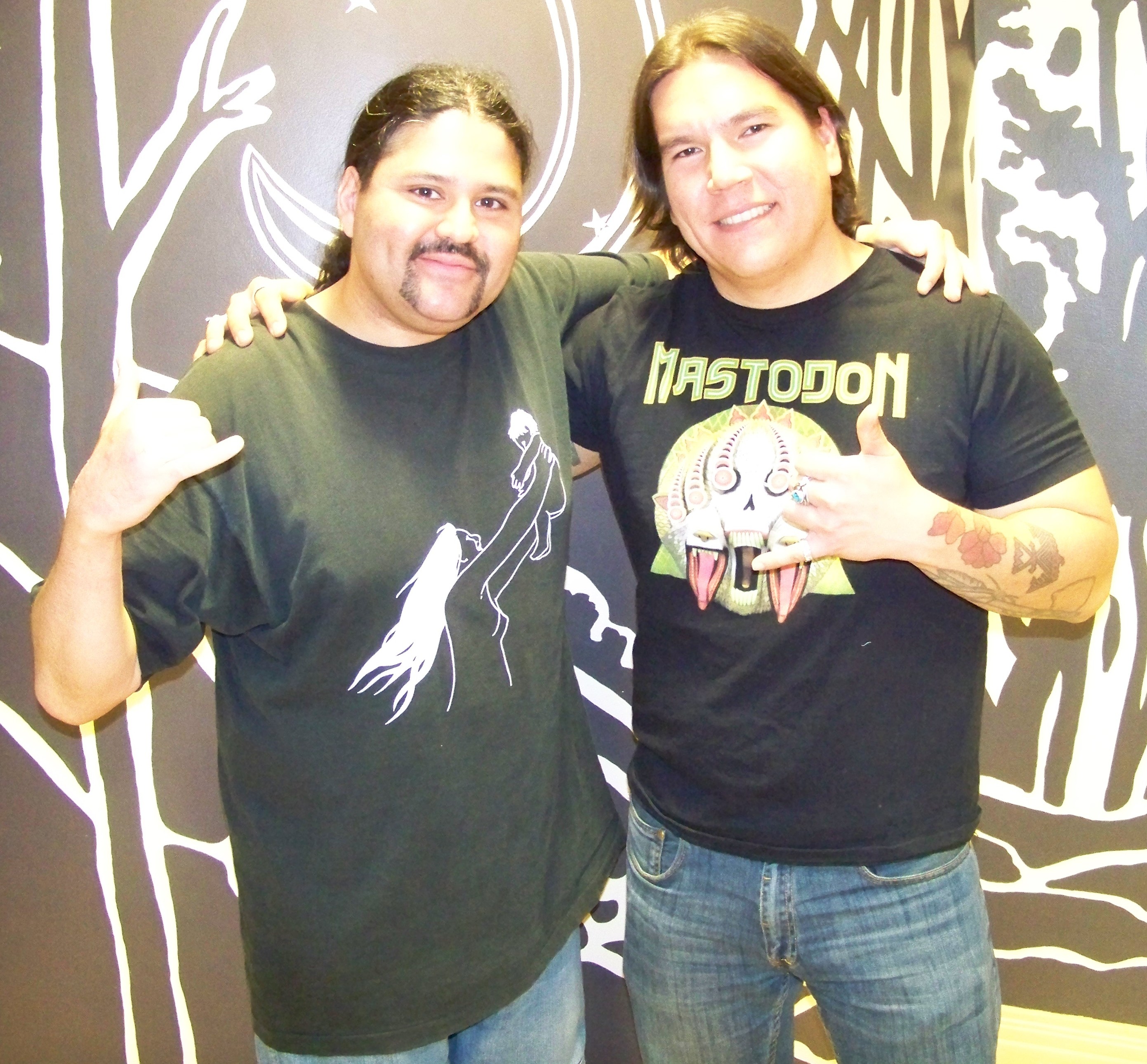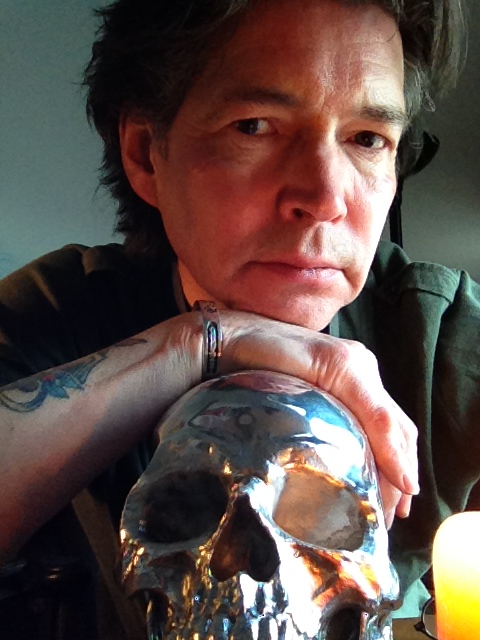
TWO-SPIRIT WEEK 2012: INTERVIEWS WITH DEBORAH MIRANDA, LOUIS CRUZ, AND DOE O’BRIEN

Deborah A. Miranda is the author of two poetry collections, Indian Cartography and The Zen of La Llorona,  Miranda is an enrolled member of the Ohlone-Costanoan Esselen Nation of California, and is of Chumash and Jewish ancestry as well.  Her mixed-genre manuscript Bad Indians: A Tribal Memoir, will be published in 2013, and her collection of essays, The Hidden Stories of Isabel Meadows and Other California Indian Lacunae is under contract with U of Nebraska Press.  Associate Professor of English at Washington and Lee University, Deborah teaches Creative Writing, composition, and literature.

MP: What was your involvement in editing Sovereign Erotics? How was it?

DM: I was invited to join Qwo-Li Driskill, Daniel Heath Justice and Lisa Tatonetti on this project a few years after a few of us had presented the first panel on Native American erotics at a Native conference.  We’d been discussing the idea of putting together an anthology of Native literature that addressed Two-Spirit issues for quite some time.  In my essay Dildos, Hummingbirds and Driving Her Crazy: Searching for Native Women’s Love Poetry and Erotics, I explored the fact that although Native people writing about erotic topics had long been a part of Native literature, it was rarely, if ever, addressed in critical analyses or included in most anthologies of love poetry.  It was invisible, or more to the point, it had been invisibilized in the same colonizing move that denies Native history, presence, and sovereignty.  This ‘erasure’ meant that critical collections and analyses of Native Two-Spirit literature about love and erotics were also pretty much non-existent.  By putting together an anthology of this literature, we reasoned, we would be bringing Native Two-Spirit writing on the literary map in a big way.  No more excuses for ignoring it when a whole anthology exists!  As far as the actual process went, I could not have asked for better colleagues.  Qwo-Li, Daniel and Lisa are hard-working, conscientious, talented scholars, and Qwo-Li and Daniel are fantastic creative writers in their own right.  Add to that the real affection that exists between the four of us – affection and respect that comes from years of working together in the field of Native literature – and we actually had fun doing the editorial work.  We used email and Google Docs to stay organized, came up with rubrics to comment on and discuss literary pieces.  Lisa, especially, took on a lot of the grunt work of proof-reading and contacting authors, formatting the final document, and other tedious chores.


MP: Would you like to see another collection like Sovereign Erotics published in the future? Would you want to be involved in it?

DM: Absolutely!  We have just touched the tip of the iceberg in terms of what our Two-Spirit literary community has to offer.  I’d love to be involved in such a project.


MP: From your story, Coyote Takes a Trip, what can you tell your readers about Coyote?

DM: Coyote is an old, old trickster-hero in my Native Californian heritage; in this story, I play on many of his usual traits such as lechery, laziness, his need for constant stimulation and excitement, his attraction to risky situations, and his sheer capacity for rule-breaking in order to shake things up.  Readers who are familiar with Coyote (or some other trickster, like Raven, Rabbit, Iktomi) will recognize my Coyote as the being who thrives on chaos, which creates the change needed to grow, adapt and survive.  This is not just a personal strategy, but a collective strategy for communities.  Coyote exists because oftentimes communities become stuck in a rut, or too concerned with rules and ritual to take the risks necessary for survival.  Readers who are not familiar with the trickster figure will get the same idea, but in a different way; they’ll see a Coyote who is lonely and depressed, down on his luck, and whose life is transformed by the possibility of an erotic connection with another being.  In this case, I stretch the definition of ‘the erotic’ in ways that many Native people do: the erotic is not just a sexual yearning, but a sense of comfort, humor, companionship, joy in being alive, and a sense of empowerment.


MP: What are you hoping to convey to your readers with your story?

DM: In its most basic message, this is a story about expanding one’s openness to power – the power of the erotic, the power of love, the power of crossing over the barriers between different kinds of energies.  It’s about challenging ourselves to take risks that can lead to accessing that creative, rich power possible.  The story is also about recognizing that the Two-Spirit community is as old as any Native community, and we have an inheritance, a legacy, and a purpose.  Coyote feels most balanced when he is with Juanita – whether it was at the beach before he knew she was ‘aqi, or when he meets her again on the bus, or after he is separated from her later.  I want readers to notice that, to ask themselves, why is that?  what does Juanita the ‘aqi have that fulfills Coyote?  


MP: What can you tell us about the cultural context in which Coyote thrives in?

DM: I think tricksters are essential to any world belief system.  Human beings work so hard at figuring out the rules of the physical and spiritual world!  We create language, governance, religion, music, art … and they all come with rules and rituals, regulations, do’s and don’ts.  The problem comes when we make our lives so safe, so predictable, that we lose our ability to innovate, to meet new challenges, to deal with the unexpected or tragic.  A trickster like Coyote is the crazy, creative, inventive energy that gets us out of that rut and comes up with solutions that our rules won’t allow us to see.  So in terms of cultural context, Coyote is always with us, but he (or she!) really thrives when times are tough or, paradoxically, boring.  When we are in danger of being devoured by some outside danger or our own inner ennui.  


MP: Is there something about Coyote’s spiritedness—how he carries himself in your story—that we can learn from? Is there something about it that we shouldn’t learn?

DM: Oh, Coyote is a consummate teacher, if we pay attention.  “How he carries himself in this story” – he’s alternately cheating on his girlfriend, feels abandoned and lonely, scams a flight to Albuquerque, ogles women; he is constantly avoiding any responsibility for a relationship.  Which of us hasn’t been that Coyote?  Ultimately, though, Coyote chooses to (we hope!) commit to someone who he finds not just sexy, but whose calm, matter-of-fact reckoning with the world could be the companionship/balance he’s been missing.  He takes a chance; he sees beneath the surface; he remembers and embraces a part of his inheritance that could lead to mutual empowerment.  I tried to draw on the traditional ways that Coyote stories teach us what to do, what NOT to do, and make it contemporary.


MP: Do you think Coyote would ever settle down and live in a house? 

DM: Not for long.  Coyote isn’t made to be sedentary.  If he were, then he would no longer be Coyote.  And that’s okay.  Too many Coyotes would make the world a lot more chaotic!  Luckily, I get the feeling that Juanita knows just how to handle such a Coyote.

How would you like to see the ‘aqi regarded by society in these contemporary times?

That’s a tough question.  We no longer have traditional ‘aqi, or the gender role of ‘aqi that Coyote remembers in the story.  But that alternative, ‘third’ gender role has always existed in various forms, with various cultural roles; it changes with the time, the culture, the need.  What I hope my story shows is the realization that gender fluidity is the norm, and that in fact, without it, we flounder in restrictions, false boundaries and disempowering ‘either/or’ thinking.  Two-Spirit people are defined not just by sexual orientation or attraction to same sex, but by a sense of responsibility for the balance of powers, energies, that keeps the world from destruction.  If my story can in anyway lead to that realization for someone who sees third genders as abominations or ‘wrong,’ that would be amazing; if it helps someone understand their own potential, incredible.


MP: What do you find most enjoyable about your experiences with your writing?

DM: For me, writing is searching for that ‘right’ note.  Whether tuning a drum or pulling a flat note up to true, writing is all about finding the language to illustrate some image, some idea, some experience, in a way that resonates with the image, idea or experience in me.  Can I communicate that?  Can I move the idea from within my body to another person’s body via language?  When it works, when I’m successful enough that the note in me sings out and creates a resonant vibration with someone else, or even just with the language itself, I am happy.  Connection, communication – I crave that.  I also think this is partly because story is one way of writing ourselves into a world that often tries to erase us.  Those of us whose histories are heavy with erasure find making story regenerative, joyful.  Oh, let’s say it:  storytelling is an erotic activity!
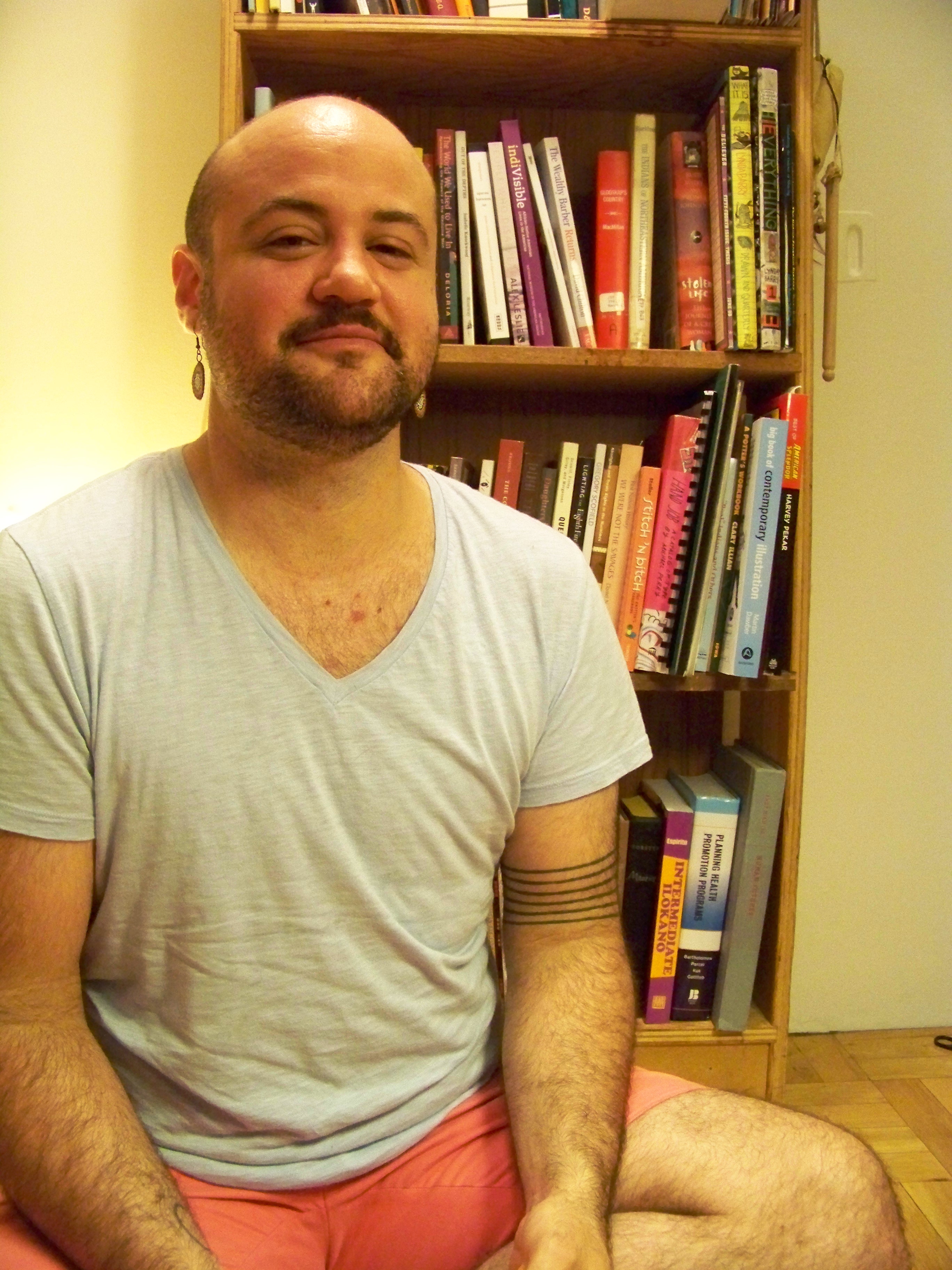
Louis Esmé Cruz is Mi’kmaq/Acadian and Irish.

His work can be found in the forthcoming Queer issue of Poetry is Dead, as well as Sovereign Erotics: A Collection of Two-Spirit Literature, Feminism FOR REAL, and GLQ: A Journal of Gay and Lesbian Studies: Sexuality, Nationality and Indigeneity.

He is available for specialized art workshops, readings and presentations.

You can reach Louis Cruz via email at louiscruz@gmail.com

MP: What is your relationship to your story, Birth Song for Muin, in Red?

LC: Birth Song for Muin, in Red is a gift to all of us who have to leave our lands and families so we can be ourselves, finding sanctuary in unfamiliar riverbeds. I wrote it for all the Wabanaqi who aren’t ready to come home yet, those of us from where the sun rises with colonized genders and sexualities, and the children still coming. This is also a mediation between expectations of what the past can offer us in terms of tradition, when displacement and genocide have very real effects in the current moment, and those needing balanced stories to remember why 2spirit people are powerful and crucial to decolonial movements.

MP: How does your Mi’kmaq culture inform how you weave your story?

LC: My experience of my Mi’kmaq-ness is intertwined with my experiences of Acadian- and Irish-ness. My family tells stories which can be useful in healing ruptures created by doctrine. There’s also stories which are harder to tell, which can become a kind of poison, so that inspired me to reinterpret the story of Muinji’j. There’s this idea of Aboriginality that I’m trying to kill here, after coming to the realization that none of us were meant to survive and the ways we all did, and still do, are as varied as the land bases we come from.

MP: What is the relationship between your story and Ruth Holmes Whitehead’s story Traditional Story: The Boy Who Visited Muni’skw (sp: Muin’skw) from The Mi’kmaq Anthology?

LC: My understanding of the original story is that Ruth Holmes Whitehead is retelling it from Silas T. Rand, who “collected” it from Wallis and Wallis, as well as Elsie Clews Parsons. Birth Song for Muin, in Red is a written interpretation, of a written interpretation, of a written interpretation, of an oral tradition. Written stories are oral traditions, and vice-versa. The Stone Canoe: Two Lost Mi’kmaq Texts by Elizabeth Paul and Peter Sanger, illustrated by Alan Sylliboy, provides cultural, academic and artistic analyses to stories originally collected by Rand during his time as a Christian missionary.

Things have happened that have divided people into all these specific and sophisticated categories. Reclaiming traditions can mean Indigenizing trans stories, queering Native stories or feministing Indigenous queer stories to ground these separations. I wrote this at a time when I felt it important to create something that would reflect a coming together of all these hyper-categorized experiences.

MP: In your story, there’s a part where Muini’skw—the diva bear mentor—asks Muinji’j—the young bear/human girl/boy—to “accept the responsibility for his unique ability to see the soft space between women and men, bears and humans.” Would you consider this “soft space” the difference between Western-centered LGBTQ identities and Indigenous two-spiritedness?

LC: There are many different ideas about what makes someone a woman or a man, all of them culturally-specific. The genders I’m grappling with here are the ones affected by colonial legacies on Turtle Island, which is to say that gender violence aimed at Wabanaqi women, 2spirit people and men can keep us from benefiting from each others’ medicine. In Whitehead’s telling of this story, Muin’skw is supportive of her adopted son’s return to his people because she knows Muinji’j has the ability to understand things from multiple perspectives. She comprehends the bigger picture beyond the borders of their intimate relationship.

A lot of people are taking the time to learn about trans people, from different cultural perspectives, and this is because many of us people who are living what is now called transgender experiences, realize that people don’t know what and who we are unless we tell them. It’s also true that we can go through a periods of mourning because we do not have ways of understanding our own being. This is exciting, but also concerning, because it’s happening right on top of Indigenous genders and sexualities. Inclusion is an important value to LGBTQ communities, so it’s wonderful that people want to work together to fight transphobia. I’m concerned that inclusion may actually be working against Indigenous sovereignty, 2spirit sovereignty, which asserts our inherent right to our homelands, traditions and governance structures without having to pick between just two genders. There are treaties that are supposed to support this. This soft space refers directly to the ruptures within our own land-specific cultures, caused by colonial legacies, and the need to heal these for ourselves. Hopefully everyone will benefit from this, though it’s not the goal.

MP: This story goes against many LGBTQ narratives where the main character returns to the community of their origin rather than leaving it completely after finding a community that accepts them. Muinji’j eventually finds “wholeness” through this process. Do you think non-Indigenous LGBTQ individuals can find “wholeness” as well through this narrative?

LC: It’s important that 2spirit people create together because we already know what wholeness looks like, it’s built into our bodies and our cultures. Some lovely friends and I have started an arts collective, Tities Wîcinímintôwak, with one of our projects being a Two-Spirit Skillshare. We have between us many skills and a desire to keep learning outside of institutions, while also sharing skills about how to navigate them, when necessary. The idea is that we are building community by learning and making art together, taught by each other. We’re so fancy that we even have a blog: 2spiritskillshare.tumblr.com. Workshop schedules will be posted there soon, so check back often if you want to know what we’re up to.

Ok, so back to the story. I don’t know if it’s helpful to queer and trans settlers, it’s not really my goal, though I’m honoured if it does. This narrative is complicated, starting with the fact that it’s been rewritten by various people who have different interests, myself included. Is this what decolonization looks like? Where’s the line between respecting Indigenous cultures and appropriating them? How do we reclaim things that have been stolen from us, and what does it mean that settlers want to learn from this process? I’m no expert in appropriation, but I’d point you toward Qwo-Li Driskill and Colin K. Donovan’s Anti-Racist Haircutting Flyer at http://dragonflyrising.wearetheones.info/order.php,

Jessica Yee at http://www.racialicious.com/,

Adrienne K. at http://nativeappropriations.blogspot.ca/ if you are interested in listening to strong Indigenous voices.

MP: In your poem, my mom names us, you touch on your relationship with your mother, and your desire to know what your mother was like, “before the violence broke her.” What do you think your mother would have been able to give you before the violence broke her?

LC: my mom names us is a memory for the future. We can’t change the fact that all of these utterly heinous things have happened and are still happening to us, though we do need to keep moving while being honest about what we see, while carrying a lot of kindness toward ourselves and each other. I wish I had written a dedication at the beginning of this poem to Native women of all genders cuz it’s a lil too easy to slip into literal interpretations of “my mom names us”. I’m inspired by the queer, Indigenous, feminist poetry of Deborah Miranda, Gregory Scofield and Qwo-Li Driskill. Deborah Miranda’s book of poems, The Zen of La Llorona, literally helped me write it. She gave me permission to dream a future where queer, Native femininity and mothering is centralized, out of a horrific memory of colonial violence.

MP: Do you think we can draw beauty and strength from our parents’ experiences that have “broken” them—trauma from violence, migration, assimilation, institutions, etc.—as the younger generation?

LC: Yes, it’s crucial that we do the work to hear our parents’ stories in order to learn from them, even if it means taking some time to hear our own pain, first. My relationship to my parents experiences is as a continuation of their best hope, as their child, their grandchild. I am here because of the spiral of history, so to them I say wela’lin, merci. Genocide tells us that our parents are only one way, which is also the story that tells them that we, as 2spirit people, are abominations. I try to remember that everything that’s happened to our ancestors is still alive with us today and keep close my responsibilities to our continuance and renewal.

MP: What do you find most enjoyable about your experiences with your writing?

LC: Making sense out of all the different conversations I have going on inside my heart and trusting to give them back to the world that created me.
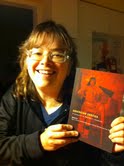
Doe O’Brien is a regional outreach worker in the Greater Toronto Area.

She writes poems and short stories and has been published in both genres.

Doe is a contributor to Sovereign Erotics: A Collection of Two-Spirit Literature.

BCP: Why do you write poems and short stories?

DOB: I have always written poems to express my feelings.  I started writing them when I was around 11 or 12 years old.  I never thought about writing short stories until I was asked to for a writing class at Humber a few years ago.  I enjoyed writing a short story that was complete and tidy.  It is like capturing an event.  It gives you enough time to care about someone to be impacted by their lives.  And then you can still make it home for dinner.

BCP: Has writing in one genre helped the other?  Do you prefer once genre over the other?

DOB: I want to be able to write fiction with the same level of metaphoric language.  So yes, writing poetry helps me to get there. 

BCP: What is your writing process?

DOB: For poetry I have to follow the feeling or though that consumes me.  Then I write thoughts on paper with ink as they come out.  I don’t think too much.  And when the feeling comes that the jar is empty, I take a look back at what is there, and I rewrite it again, and naturally the editting takes over, and I change words, or realise that some lines don’t need to be there at all.  Sometimes, I will write with a focus on a style of poetry, or a theme, but I mostly write freely.  It is the edit that is more thoughtful. 

A short story stays in my mind for a long time before I go to write.  And when I write it is on a computer.  I like the feel of my fingers hitting the keys and I like the sound.  I start with the line and let the creative process take it away.  I have an outline in my head of what I think is going to happen, and when I am writing it is ‘the fill’ that is being created – the atmosphere, the colour of hair, or the make of the car.  I am often surprised at what the characters say or do as my imagination takes over and I just type type type.

BCP: Your story The Perfect Picture is about coming out.  Was it hard to write?  Is it somewhat autobiographical?

DOB: It is a coming out story that is made up of different experiences that I have had.  They are not experiences that I had together, or thought to myself at the time that they would end up together, but they are good moments that have happened, and I put it in this story. 

BCP: Many coming out stories have an unhappy ending.  It was good to read one that was positive.  Why did you choose to write a positive fictional story about coming out?  Was it deliberate or is that where the story took you?

DOB: I did not have a bad time of coming out, and I wanted to tell a story that reflected that.  This is not my coming out story as it happened.  I grew up in Northern Ontario, not in the Prairies, but some of that conversation did happen between my mother and I. 

BCP: Your poem Living Memory has elements of productive and corrosive anger in it.  You describe the Seventh Generation as the “Saving Seventh Generation ready to change the world”.  Is your description of this prophecy and reality one that comes from feeling pressure to change things for Indigenous peoples in this colonial society now called Canada?

DOB: I am really influenced by Jeannette Armstrong’s poetry.  I have always been haunted by History Lesson.  I wrote this poem as a tribute to Two Spirit people in that vein of writing.  Our own history needs to be told, and that I why I wrote that poem.  In order for us to understand our present, we must know our historical past, our lived past, and where we can go in the future.  We can and will change the world.  I am not an activist that often goes out in protests with signs, but I believe that every day me living my life is a form of activisim as I live with my wife and we are raising our two children.  We are showing that love can be created every day in simple ways – and that can change the world.

BCP: The title of the collection where your poem Living Memory and your short story The Perfect Picture appear in the anthology Sovereign Erotics.  What does the title Sovereign Erotics mean to you?

DOB: I am still trying to figure that out.  Right now, I feel like we are owning our identities and our stories that have to do with who we are as Indigenous writers who are Two Spirit or allies.

BCP: What advice do you have for other Two-Spirit writers out there?

DOB: If you have stories inside you, share them.  It helps to get them out, too.  It doesn’t always matter if they get published. In our oral cultures, it matters more if they get told.  Tell your friends, and tell your families.  Learn from real events and then make some up.  It is only when we all have a voice in this Circle that we will truely be healed as peoples.

Mykelle Pacquing was born and raised in Toronto with his ancestors from Maharlika, the traditional name of the Philippines which means, “The Creator’s Land.” He is of Tagalog (People of the River) and Ilocano (People of the Bay) ancestry. Mykelle is a student at Trent University pursuing graduate studies in song, dance, and story with traditional Indigenous teachers.

Tune into Black Coffee Poet Friday June 29, 2012 for videos of Louis Cruz and Doe O’Brien reading from Sovereign Erotics!!!

Posted in Uncategorized | Tagged , , , , , , , , , , , , , , | 3 Comments

TWO-SPIRIT WEEK 2012: REVIEW OF “SOVEREIGN EROTICS: A COLLECTION OF TWO-SPIRIT LITERATURE”

Sovereign Erotics: A Collection of Two-Spirit Literature

Edited by

Qwo-Li Driskill

Daniel Heath Justice

Deborah Miranda

Lisa Tatonetti

Reviewed by Mykelle Pacquing

I was excited to hear that a new collection of Two-Spirit literature was going to be published after I had seen the publicity poster for Sovereign Erotics.

I often feel it’s not necessary for me to discuss my sexuality and gender because, quite frankly, it’s none of your darn business! But, at the same time, I carry my sexuality and gender to every freakin’ place I go. So it’s difficult not to be public about it—such as how I carry my gender and how I make relationships with others—but I also feel it’s not necessary to disclose every single preference and every single experience I’ve had regarding my sexuality and gender; especially within the ubiquity of the internet when such information in the wrong hands can make life particularly difficult.

However, I also feel when my faith and my courage are being tested, and that when it is necessary, I must do something.  In this case, write a review about Sovereign Erotics to bring attention to Indigenous LGBTQ and Two-Spirit writers.  This might cause difficulty to arise in one’s life, which is why I must be strong in my resolve to let my voice be heard; which is why this collection, to simply exist, is an incredible act of resistance against the centuries of violence, genocide, humiliation and dehumanization that generations of Indigenous LGBTQ and Two-Spirit people have experienced, and, sadly, continue to experience.

It is a swath in the Western canon of literature that asserts that Two-Spirit people have, and continue, to exist.

Indian women expressing the erotic is almost as frightening to America as if the skeletal witnesses in anthropology departments and national museums had suddenly risen from their boxes and begun to testify. The mythology of a nation built on ‘discovery,’ ‘democracy,’ and ‘manifest destiny’ begins to fall apart, and the old foundation, bereft of bones, cannot hold it up. 

Younger individuals, such as myself, flourish under the work that other Two-Spirit people have made before us. Sovereign Erotics is no exception to this work. It is a testament to the generations of love, hurt, and joy that has been experienced and now passed down. All us younger ones have to do is honour and flourish under this work—which makes me feel incredibly privileged and incredibly humbled to be in this time and place to write this review.

It can be a disorienting emotional process if you try to blast through all the works in Sovereign Erotics. There is so much being presented in the literature that to attempt to read the entire book quickly would rob you of the emotional depth that each piece offers. You may also be put through emotional experiences that can be personally triggering, or the experiences of loved ones who struggle with the same.

In Craig Womack’s The King of the Tie-snakes you can feel Josh’s hurt and anger when he’s betrayed by his love/friend Jimmy when he couldn’t move past his homophobia:

“Josh couldn’t find the right words for his rage. He felt all the words flaming up before his eyes and burning away like stubble before he could use them. In church he had heard Jesus’ words to the centurion: Speak the Word and you shall be healed. He no longer believed.”

In Remember: She Bought Those Panties For You you can feel M. Carmen Lane’s frustration when her friend cannot identify the two-spiritedness within her:

“This is the difference between being a butch Black lesbian and a Two-Spirit Indian Man. Not nadleeh or winkte (misogynist academics always focus on the men who are women) but a Man Spirit with big Black Woman titties and a flat Indian ass.”

You can feel the grief and gravity of Qwo-Li Driskill’s (Auto)biography of Mad, which leaves bare the tragic implications of how our “conditions” can be rendered so trivial.

And you can feel Agder cry and cheer as he struggles through the violence at home and finds his true self as Denarra in Daniel Heath Justice’s Ander’s Awakening, which draws from Justice’s Thorn and Thunder trilogy:

Understand me well: This is going to stop. The girl hair, the dresses, the whore paint—all of it… Now, clean yourself up and then off to the store with you, or you’ll get another beating.

Later:

It wasn’t vanity that made him quiver with suppressed sobs. It was a dream realized, all the more precious from the long-harboured fears of its impossibility. 

His voice was weak. “I’m… I’m…” 

From behind, Pontie slipped his arms around Ander’s waist and whispered into his ear. “Yes, sweets—you’re beautiful. But then, you always were to me. Now you can see it, too.”

Sovereign Erotics is not just for Indigenous LGBT and Two-Spirited people, but their friends, their families, and anyone who loves them. There will be something here that you can draw strength from, no matter who you love, and no matter how you carry yourself.

Mykelle Pacquing was born and raised in Toronto with his ancestors from Maharlika, the traditional name of the Philippines which means, “The Creator’s Land.” He is of Tagalog (People of the River) and Ilocano (People of the Bay) ancestry. Mykelle is a student at Trent University pursuing graduate studies in song, dance, and story with traditional Indigenous teachers.

Tune into Black Coffee Poet Wednesday June 27, 2012 for interviews with Deborah Miranda (co-editor of Sovereign Erotics), and contributors Doe O’Brien, and Louis Cruz.

Posted in Uncategorized | Tagged , , , , , , , , , , | 2 Comments

WIN A COPY OF “MIDNIGHT SWEATLODGE”!!!

Writer Waubgeshig Rice and his publisher Theytus Books have agreed to give away 6 copies (3 each) of Rice’s short story collection Midnight Sweatlodge!

Answer the 3 questions below and email me at blackcoffeepoet@gmail.com with Midnight Sweatlodge Contest Answers in the subject line.  No cutting and pasting answers.

1. Read my review of Midnight Sweatlodge.  How does Waubgeshig Rice describe winter?

2. In his interview, Rice talks about his short story Solace.  When did he write it, and what for?

3. In his video reading what does Waubgeshig Rice say was “scrubbed” from his community?

The first 6 people to answer all 3 questions right win a copy of Midnight Sweatldoge!

Contest ends Friday June 29, 2012.

SHARE and Tweet contest details to all your friends!

Good luck!

Posted in Uncategorized | 1 Comment

“TOBACCO WARS” CONTEST WINNERS

We have 6 winners for last week’s Tobacco Wars contest!

Big thanks to Paul Seesequasis and Quattro Books, author and publisher of Tobacco Wars, for donating 3 copies each to the contest.

Congratulations goes to:

Kim C. (Nanaimo, British Columbia, Canada)

Zoi D. (Toronto, Ontario, Canada)

Matt H. (Calgary, Alberta, Canada)

Nicole G. (Woodbridge, ON, Canada)

Roxanne B. (Edmonton, Alberta, Canada)

Shayla E. (Winnipeg, Manitoba, Canada)

Posted in Uncategorized | Leave a comment

WAUBGESHIG RICE READS FROM “MIDNIGHT SWEATLODGE”

Polite, humble, and cool are three words I use to describe Waubgeshig Rice.

Working with Waubgeshig to videotape him reading was easy.  He was patient and funny and appreciative of my work.

I enjoyed reviewing and interviewing Waubgeshig Rice about his book Midnight Sweatlodge.

Watch, enjoy, SHARE and Tweet this video.

Subscribe to the Black Coffee Poet YOUTUBE Channel: 117 videos:

Poetry, music, interviews, VLOGS, workshops, readings and roundtables.

Posted in Uncategorized | Tagged , , , , , , , , , , , | 2 Comments

INTERVIEW WITH WAUBGESHIG RICE

Waubgeshig Isaac Rice is a broadcast journalist and a writer. He lives in Ottawa and grew up in a beautiful place called Wasauksing.

His dad is Ojibway and his mom is Canadian, and he is proud of his background.  Rice speaks German better than he speaks Ojibway.  Music is the second most important thing in his life.  

He likes books that make you re-read the last 20 pages right after you finish.  His favourite teams are the Leafs, Raptors, Blue Jays, and Bills.  Rice’s first book is Midnight Sweatlodge.

BCP: Why short story?

WR: When I first learned about literature in high school I was really drawn to short stories and how powerful they can be. It started in Grade 9, studying classic stories like Edgar Allen Poe’s The Tell Tale Heart and Isaac Asimov’s All the Troubles of the World. I really enjoyed creative writing in my free time, so I tried to write stories of my own. I looked at the world around me – the rez – and tried to capture some of those unique experiences in short stories. I think a short story can concisely and effectively capture a specific and unique lesson or experience and really resonate with readers in ways longer fiction can’t.

BCP: What is your writing process?

WR: My writing process honestly doesn’t involve a whole lot of actual writing. When I get an idea for a story, essay, or some kind of piece, I usually spend most of my time thinking about it. Whether it’s while out walking, driving, or just relaxing in my home, I try to thoroughly get the details and the story straight in my head before actually writing out a linear text. I’ll make some crucial notes, but I like to make sure I have the creative process committed to memory before actually typing out the story. That way, I find the physical process of writing much easier.

BCP: Who, or what, are your influences?

WR: My biggest influences are Aboriginal writers like Thomas King, Jordan Wheeler, Lee Maracle, Richard Wagamese, Louise Erdrich, Joseph Boyden, Beatrice Culleton, Richard Van Camp, and the rest in the contemporary Aboriginal literary canon. Seeing their unique stories in print inspired me to pursue my own path to become an author. As for non-Aboriginal authors, I’m a big fan of Ernest Hemingway, Hunter S. Thompson, Chuck Palahniuk, Dougas Coupland, Henry Miller, Isaac Asimov, and Arthur C. Clarke.

BCP: How much of Midnight Sweatlodge is autobiographical?

WR: I get this question a lot. The only story that’s directly based on something that happened in my life is Dust. In the mid-1980s there was a protest in my community of Wasauksing against CN crews that were taking sand from a sandpit. CN didn’t have an operational rail line through our community anymore, so our people were getting fed up about it. It was a pretty monumental moment that I believe led to an important reclamation of Anishinaabe culture in my community. The version in Midnight Sweatlodge, however, is greatly fictionalized. The real protest ended peacefully and no one was hurt. With the version in the book, I wanted to pay tribute to other Aboriginal activists like Dudley George who lost their lives standing up for their land and their people.

BCP: You are a journalist by trade.  Is it hard to switch from non-fiction to fiction?  Has being a journalist helped with your fiction?

WR: I don’t find it too difficult switching up between the styles of writing. I often equate it with the difference between swinging a golf club and a baseball bat. You’re using a lot of the same muscles, just in a different way for different results. However, I do find it hard after a long day of working to a deadline to come home and try to write fiction. Being a broadcast journalist can be very intense with stressful deadlines, and when you’re using all your creative energy to meet those deadlines, there’s often little left in the tank when you get home to work on other projects. Lately I’ve been writing fiction in the morning before I go to my day job as a journalist, and I find that’s been working.

BCP: The dialogue in your stories is amazing!  How did you get it to be so accurate and crisp?

WR: Chi-miigwetch! I haven’t had much feedback on the actual dialogue in the book, so I appreciate you noticing. I think that’s due to the role of the oral narrative in reviving our culture when I was growing up. I was really drawn to a lot of the stories about Anishinaabe traditions, and the ways they were told by the elders really captivated me. The spoken word is crucial in our culture. Although there aren’t a lot of teachings in Midnight Sweatlodge (I also wanted to stay away from that), I learned early on in life that the detail in dialogue is crucial and I wanted to convey that in those stories.

BCP: Theytus, a small Aboriginal press, published Midnight Sweatlodge.  Do you prefer to work with an Aboriginal publisher?

WR: When I first started shopping my manuscript around, Theytus jumped on it immediately and were hugely supportive from the get-go. They recognized that there would be an audience for Midnight Sweatlodge and they worked really hard to get it out there. I’m not sure if other publishers would have recognized that right away. Also, this is my first foray into fiction, so I really didn’t have any experience prior to this. Theytus took a chance on me, and I will always be grateful to them. They’re a strong, creative, and really supportive team.

BCP: You deal with difficult themes in your book: suicide, addiction, corruption, wife abuse.  Do you ever fear that your book can be used to ‘confirm’ stereotypes of Aboriginal peoples?

WR: I was originally worried about that, but at the same time those are real issues that a lot of communities deal with. I didn’t want to sugarcoat what life on some reserves can be like. Although there are really negative themes in the book, I thought it was really important to provide context as to why life was like that for some of the characters. They’re all dealing with lingering effects of colonialism and being excluded from an evolving society around them. Ultimately, I wanted to tie the stories together with a theme of healing and spiritual reconciliation. While they contend with various forms of abuse, there’s an underlying hope.

BCP: In all your stories when you describe an Aboriginal character’s skin you use the colour “brown”.  With some many Aboriginal folk living with different skin tones (white, black, brown) why do you choose the colour brown consistently?

WR: I think that’s because that’s what I remember seeing growing up. Where I’m from, people are various tones of brown. I didn’t consciously exclude other skin types Aboriginal people may have. I wanted to provide some uniformity to the characters. It wasn’t a major factor in writing the details, though. It’s really just a visual aide.

BCP: The word “ancient” is used to describe ceremony and ways of life in your book.  To some folk that word is problematic.  Why do you use it?

WR: That’s a good point. I used it because I wanted to convey how far the characters in the book are from their traditional way of life – physically, emotionally, and spiritually. Most of them have no concept of what it is to be Anishinaabe. People lived that way generations before them, but they have no tangible connection to it, therefore they perceive it as “ancient”. But the reality is, they’re closer to it than they think. As the characters begin to bond with the old way of life, it becomes less “ancient” to them and it helps define them as contemporary Aboriginal people.

BCP: How has your community taken to your book?

WR: My community has been hugely supportive. It really warms my heart to know that so many people from Wasauksing have read it and have enjoyed it. Although the community in Midnight Sweatlodge isn’t named, it represents Wasauksing in a lot of ways – mostly physically and spiritually. I hope a lot of people see the underlying positivity in the book and the potential for greatness that’s always been there.

BCP: You are writing about a ceremony that many people are still secretive about.  Has that brought you any harsh criticism?

WR: I haven’t heard any harsh criticism, but I have been questioned quite a few times about why I choose to write about such an intimate and sacred ceremony. The stories deal with a lot of harsh, negative and painful issues, and to provide the characters a sense of hope and an opportunity to heal and move forward, setting them in a sweatlodge was crucial. When I was a kid, it’s what I saw help the young people in my community. Also, I chose to write about the sweatlodge in the most basic way possible. I wanted to make sure I only skimmed the surface, and wrote about what any newcomer would learn when coming to a sweat. I don’t have the right to go into detail about the traditional teachings that led to the ceremony being gifted to us. So I basically wanted to provide a setting and an idea that this is one way people can gather and share their stories, all under the guidance of traditional wisdom.

BCP: Your writing is very political. What do you try to convey to your readers?  Is there a specific audience you are trying to reach?

WR: Essentially I want to convey to readers what the young Aboriginal experience in this country can be like. By no means am I trying to create a singular reference point for life on the rez. As Aboriginal people, we are born into political struggles whether we like it or not. Political struggles define us as a people. They unite us and divide us. They draw us closer and pull us away from non-Native Canada at large. But I feel that’s only a minor theme in the stories in Midnight Sweatlodge. The main audience I’m trying to reach is young Aboriginal people, and the secondary audience is the rest of North Americans who are unfamiliar with us.

BCP: Was it hard to write some parts of your book?

WR: The hardest parts to write were the sweatlodge scenes in between the stories. All of the stories were written at various points of my life when I was much younger. I revisited them later in my adulthood and tried to tie the stories together with the sweatlodge setting. I had to really unify some of the facts, details and chronology. The stories also switch between voices. For example, the first two stories Dust and Solace are in the first person, while Bloodlines and Aasinabe are in the third. I tried my best not to make it confusing for the reader, but for a while I really felt like I bit off more than I could chew. At the end of the day though, I just hope it’s enjoyable for people who read it.

BCP: Bloodlines is my favorite story in your book.  It deals with such a touchy subject: mixed race relationships. What made you go there?

WR: That was a story that almost didn’t make the cut. I originally wanted to include six stories in the collection. I cut two almost immediately because I didn’t think they fit with the overall theme of healing that I wanted to accomplish. I also didn’t think Bloodlines fit, because it was set in the city, and I was worried people might think it was too personal of an anecdote. But if I cut that too, I definitely wouldn’t have had enough material for a book – Midnight Sweatlodge is barely 100 pages as it is! So I just had to suck it up and keep it in. And honestly, it’s one of the stories I’ve had the most positive feedback about. I think a lot of people who leave their communities and date outside of their own cultural backgrounds can relate to it. I’m glad you like it! Miigwetch!

BCP: How long were you working on Midnight Sweatlodge?

WR: It was more than a decade in the making. That wasn’t a period of constant writing, by any means, but from when I wrote the first words to the actual publication, we’re talking at least 15 years. I wrote the first version of Solace – the oldest story in the collection – for a grade 12 English class (around 1996). I wrote the other stories in my spare time in the years that followed. I had a lot of short stories sitting on the shelf, but I saw it as more of a hobby, and never really seriously pursued trying to get them published. Once I was done university I revisited them and started looking at ways to develop them further and see about getting them published. In 2004 I applied for a grant from the Canada Council for the Arts to do that. I was awarded the grant and spent a couple of months revising/rewriting the stories and working on the unifying sweatlodge concept. I finished that in 2005, but sort of left it on the back burner again. In 2008 I dusted off the project and started sharing it with friends and other mentors in publishing. They overwhelmingly encouraged me to shop it around, so in 2009 I started pitching it to publishers, and Theytus graciously offered me a contract. They hooked my up with editor Jordan Wheeler, and in 2010 we started working on tightening it up. We were both working full time, so we worked on it when we could. It was finally published in June of 2011.

BCP: You are part of an Aboriginal writing a group.  How has being part of the group helped you?  How does this group differ from other writing groups you have participated in?

WR: When I lived in Winnipeg I was fortunate to be invited to join the Aboriginal Writers Collective. It was a great opportunity to bounce ideas off of other seasoned writers like Duncan Mercredi and Rosanna Deerchild and get some great feedback. Here in Ottawa I’m part of an artists’ collective called Fresh Tracks. You can’t grow as an artist/writer without the criticism of your peers and the mentorship of strong, veteran voices. It’s crucial for anyone looking to share their work on a bigger scale.

BCP: What are you reading now?

WR: Right now I’m undertaking some light, entertaining summer reading with Slash’s biography.

BCP: What will you be publishing next?

WR: I’m working on a full-length novel that picks up on one of the major themes in Midnight Sweatlodge. I hope to have it finished by the end of the summer.

BCP: What advice do you have for other writers out there?

WR: Write with pride. Write without fear. Believe in your stories. Share them with everyone.

Tune into Black Coffee Poet June 22, 2012 for a video of Waubgeshig Rice reading from “Midnight Sweatlodge”.

Posted in Uncategorized | Tagged , , , , , , , , , , , , , , , , , | 4 Comments

MIDNIGHT SWEATLODGE

Midnight Sweatlodge

By Waubgeshig Rice

Reviewed by Jorge Antonio Vallejos

Dynamite comes in small packages! 

Have you heard the above saying before?  It usually applies to people.  I think of my five foot mom, a woman of colour, who doesn’t take shit from anyone when I hear that saying.  But this saying can be applied to many things; in this case an eighty-five page collection of linked short stories by Ojibway writer Waubgeshig Rice: Midnight Sweatlodge.

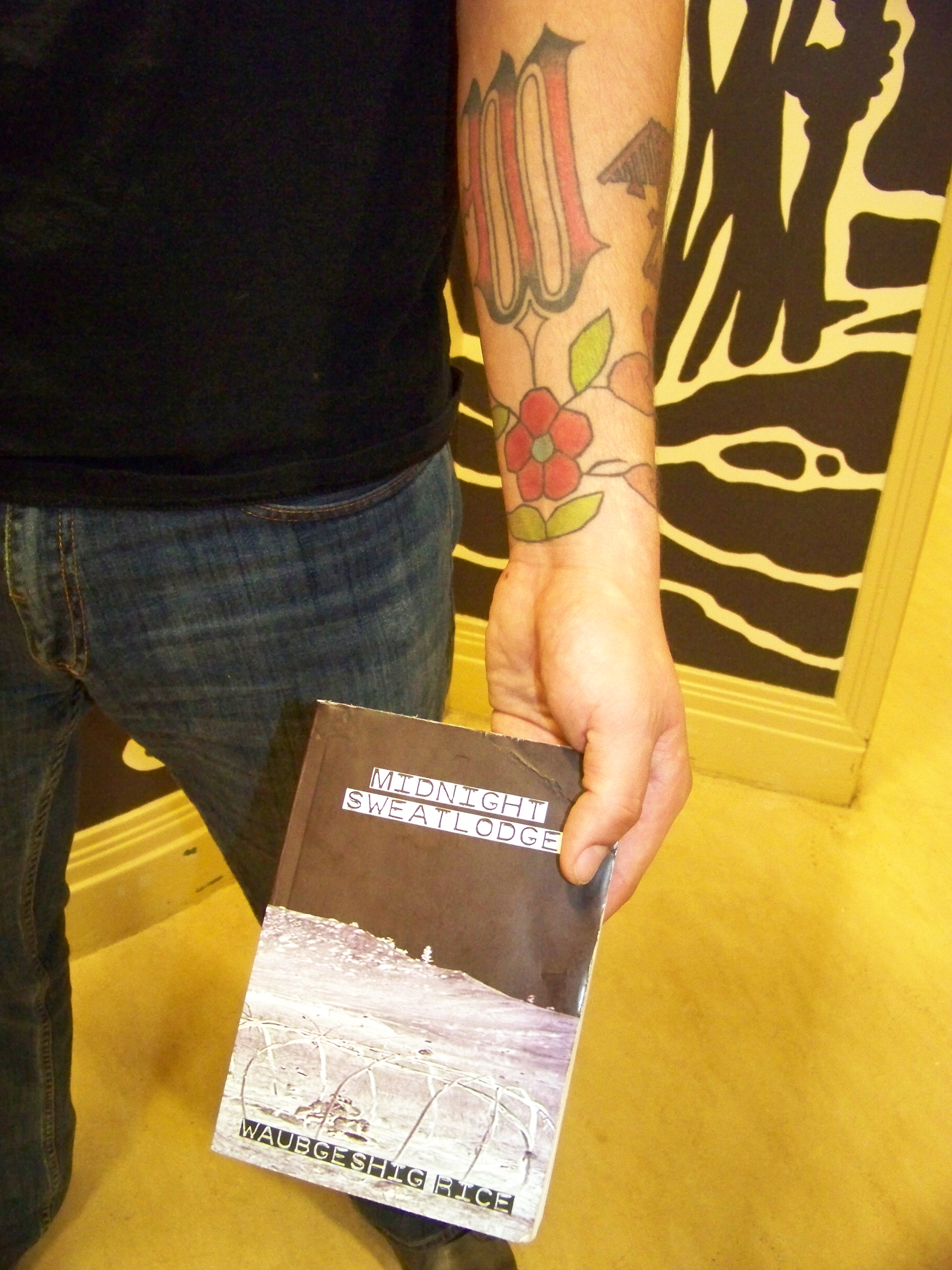
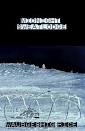
The front cover of Rice’s book is a picture of a sweatlodge taken with a night vision lens.  The tarp that usually covers the lodge is not there.  What you see is the frame of the lodge: willow trees bent and tied together in a womb like structure.  In the middle you see a pile of Grandfathers (rocks) that are integral for sweatlodge ceremonies.

The cover, with its blueish-grey image reminiscent of a sonogram, is speaking to the teaching of the sweatlodge being the womb of Mother Earth.  It’s also showing the reader the transparency that follows once opening the book’s pages: stories of different peoples participating in ceremony and experiencing healing via the sharing of painful life stories.

Opening the pages of Midnight Sweatlodge is the start of a literary ceremony that is led by a writer who is a great storyteller.  Putting the book down is hard.  You’ll hold in your urge to go to the washroom, or you’ll take the book with you.  No matter what age you are the grooves on your face will change from smiles to sadness to shock and will end with a mixture of all three. 

The collection is broken into four parts:

Dust

Solace

Bloodlines

Aasinaabe

Each story takes you into the lives of people participating in the same ceremony: the midnight sweatlodge.

If you’ve never been to a sweat Rice takes you through the ceremony from beginning to end via different snippets that start the book, continue at the end of each chapter, and end before the last story begins.  Rice’s words have you feeling the cold of waiting outside the lodge wearing just a towel and feeling the warmth once inside the lodge during the ceremony.

An Elder speaking to the eight participants at the start of the sweat is also speaking to the reader:

“For many of you, this is the first time you’ve ever done this.  But it isn’t the first time you’ve been here.  This is your mother’s womb.  You have come here for healing.  This is a sacred place and when you leave here tonight you’ll feel that love once again.  Come in and sit down,” (p. 2).

And so the journey begins.

Dust, the first story, takes you into a small unnamed Aboriginal community.  Two brothers are the main characters.  In just eighteen pages the reader learns about present day reservation life and the history that led up to it.  Rice talks of the “ugliest season” being winter because of the boredom that leads to drinking and violence; he shows you people assimilating to Canadian culture via throwing away their moccasins for penny loafers and cutting their hair; and he shows you who is responsible: church and government.

“It was a community in healing, the older generation still getting used to being stuck here.  They didn’t talk much about the old days or the old ways.  That was beaten out of them early on.  But after three generations there was a bit of a spark.  Our dad didn’t tell us anything about being Ojibway, but, once in a while, he would lay down a piece of ancient wisdom.  He was still coming to grips with understanding himself.  His parents grew up speaking only Ojibway.  He grew up speaking Ojibway and English.  And we grew up speaking mostly English.  That’s how quickly our culture had been scrubbed from our community,” (p. 12-13).

Dust deals with many things: questions of identity; land disputes via an armed standoff; death; and spirituality.

With crisp and realistic dialogue Rice takes you into a conversation that’s probably happened thousands of times and will probably happen thousands more:

“Big brother,” he asked.  What’s a sweatlodge?”

“I dunno,” I replied.  “I think you do that when you get cold in winter.  Why?” 

“Nate was talking about it at the beach the other day when we were swimming.  He said it’s what Indians do.” 

“Well…did we ever do something like that?”

“No.”

“Then I don’t think it’s what Indians do.  I think we just go to church.” 

Bloodlines, the third story in the collection, is about a mixed race relationship as well as white-Aboriginal relations.  A couple, the male being Aboriginal and the female being white, return home from a party, talk, make love, go to ‘sleep’ and have an intense talk in the middle of the night.  First described as “a love built on five year of learning, conflict, understanding, and passion”, conflict seems to be the overriding factor.  With the male feeling the pressure of “racial obligations” he remembers his family as he stares at the ceiling in bed:

“They say racism only comes with power, but no on is above looking past colour.  Most Indians only want Indians to be with Indians.  That’s especially what parents, aunts, uncles, and grandparents want.  That’s what he felt, anyway.  She felt it too, but he always reassured her.  Especially tonight, in front of all her friends from wealthy neighbourhoods in far away places who converged in this urban stew of colour and culture,” (p. 54).      

After hours of a tense sleeplessness an argument ensues and again Rice displays his gift of writing dialogue:

“Are we seriously gonna talk about this again?” she asked.

“About what?” he replied, knowing fully well.

“We can’t help who we are or where we come from.  But I thought we loved eachother?  Isn’t that enough?”

“Yeah … it is … “

“Well, what’s the fucking problem?”

“Nothing.”

Blank, frustrated stares into the ceiling ensued, (p. 57).

Mixed race relationships can be tough and Bloodlines will ring true for many.

Rice looks into many societal problems, race being a big one.  Throughout the collection when Rice describes an Aboriginal characters skin he writes “brown”.  But not all Aboriginal folks are brown.  Many are black, white, or a mix of brown, black, and white.  Why the consistent description of “brown”?

A word used in the collection that I found bothersome was “ancient”.  Rice uses this word to describe Aboriginal ceremony and teachings.  When I think of the word ancient I think of something that is obsolete, out of date, no longer relevant.  The sweatlodge ceremony and teachings are here today and will be here for a long, long time.

Midinight Sweatlodge is an awesome read.  Fun, fast, and unforgettable.  While reading Rice’s stories I felt the same as I did when reading Sherman Alexie and Richard Van Camp for the first time: elated.  On his website Rice writes, “I like books that make you re-read the last twenty pages right after you finish.”  I’ll be re-reading Rice as I do Alexie and Van Camp and it won’t just be the last twenty pages. 

Midnight Sweatlodge starts with a spark that turns into fire and the entire collection is a bang!

Tune into Black Coffee Poet Wednesday June 20, 2012 for an inclusive interview with Waubgeshig Rice.

Posted in Uncategorized | Tagged , , , , , , , , , | 3 Comments

WIN A COPY OF “TOBACCO WARS”!!!

Writer Paul Sessequasis and his publisher Quattro Books have agreed to give away 6 copies (3 each) of Seesequasis’ novella Tobacco Wars!

Answer the 3 questions below and email me at blackcoffeepoet@gmail.com with Tobacco Wars Contest Answers in the subject line.

1. In her review of Tobbacco Wars how does May Lui describe the well known narrative of Pocahontas?  (There are 3 key words.)

2. In his interview with May Lui which writer does Paul Seesequasis credit with being his biggest influence?  Name 1 writer and write their full name.

3. In his video reading for blackcoffeepoet.com Paul Seesequasis describes Bear Woman’s claws as ____ and ____.

The first 6 people to answer all 3 questions right win a copy of Tobacco Wars!

Contest ends Friday June 22, 2012.

SHARE and Tweet contest details to all your friends!

Good Luck!

Posted in Uncategorized | 1 Comment

PAUL SEESEQUASIS READS “TOBACCO WARS”

Paul Seesequasis and I met at a Toronto tea shop last winter to tape this video.  Our talk focused on literature and journalism and the discipline of writing.  I was amazed at Paul’s wisdom.

After chatting for an hour I taped Paul read from his novella Tobacco Wars.

See an amazing interview with Paul Seesequasis.

Enjoy Paul read from Tobacco Wars.  

SHARE, Tweet and comment.

Subscribe to the Black Coffee Poet YOUTUBE Channel: 116 videos:

Poetry, music, interviews, VLOGS, workshops, and roundtables.

Posted in Uncategorized | Tagged , , , , , , , , , , | 1 Comment

INTERVIEW WITH PAUL SEESEQUASIS

Paul Seesequasis is a writer and a journalist.

He was the founding editor of the award-winning Aboriginal Voicesmagazine, and the recipient of a MacLean-Hunter journalist award.

His short stories and feature writings have been published in Canadian and international publications. 

Tobacco Wars is his first novella.

ML: What is your writing process?

PS: It’s not so much about a regimented process, but about finding that imaginative space, that momentum that takes you on a journey. I need distraction to challenge me – that can be the white noise of a crowded station, motion such as walking or driving a car, or having rock music or the TV playing in the background. I also like to write outside, in cafes, bars, shopping malls, on trains or planes. With pen and moleskin, old school. Sitting in a studio doesn’t do it for me nor does silence. It’s like grabbing little sparks that fly from the most unexpected places, a snippet of overhead conversation, a comment on a reality TV show, and then writing it down and taking it from there.

I don’t write with a linear plan or a sense of a story arc. Tobacco Wars is evidence of that. It’s a little like pieces of a half-completed puzzle. I prefer it half-completed. One reviewer referred to Tobacco Wars as an “anti-book”.  I think it’s more like channel surfing or turning the dial on the radio that provides new ways of thinking about culture and history and myth.

ML: How long have you been writing?

PS: Certainly, since I was young boy at school, though it was never my dream to be a writer. My great hope was to be a visual artist or a rock musician. To me that has always seemed more immediately visceral; to create a song that grabs people or a painting that changes perception. And the adulation, or at least how I imagined it as a teenager – the girls, cars, sex and drugs –it was a pretty infantile desire really, fortunately squashed by a lack of talent. The real writing came later, stumbling into journalism and finally novel writing.

ML: Who are your influences in terms of writers?

PS: Haruki Murakami, Don Delillo and Jeannette Winterson would top that list. Then there are the Latin Americans; Borges and Cortazar and also Kathy Acker, Bill Borroughs, and Thomas Pynchon. Of Native American writers, I would certainly say James Welch, Tomson Highway and Joy Harjo, perhaps some Louise Erdrich. But Murakami tops the list. 1Q84 is to me brilliant, occasionally exasperatingly so, but in 900 pages he turns on this little strange vibe, like a Cronenberg film or Lynch, which I love. When a writer throws in exploding dogs, or mechanical talking ducks like in Pynchon – how can you not be seduced?

ML: How long did it take to write your novella, Tobacco Wars?

PS: Six months. 113 pages in the end. So fairly quick but even more productive as there’s likely another 113 pages that never made it in. It consumed me. And though I was working full-time and had two kids half that time, it was always a part of me. I lived it, breathed it.  No matter how tired I was or how tempting it was just to do something else, Tobacco Wars called. There was no time for writer’s block. In fact I dislike that term. If you are going to write then write. If you can’t, just don’t.

I was blessed to have a first reader and editor, the marvelous poet and media artist Adeena Karasick, who was along with me from inception, and that was invaluable. Particularly, as Tobacco Wars is so fragmented, intentionally, and riffs on many things, many of which go undeveloped. When you’re writing that way it’s such a gift to have that person who can pull you back, offer a different perspective, or slap you down when necessary. And she still does.

ML: I found the character of Bear Woman the most interesting. There’s a lot of very graphic descriptions of bodies, bodily functions and sexuality with her. She seems to go between being all-powerful and, in the modern-day context, extremely marginalized in her separation from nature. Tell us about your process with Bear Woman and how you’ve depicted her.

PS: Thank you for that. I quite like her too. Yes, she is a little mystical and shamanistic yet she is also marginalized and destitute.  She is the past but she is also the present; very sexual in her way, and also flatulent, excretive and sweating as we all are. She is human. She is decidedly female. And for all the bear-baiting and being abused and incarcerated, she survives.

Bear Woman’s sexuality has drawn ire from some critics but it is deliberate on my part. The colonization of the Americas has inflicted many things upon Indigenous peoples but the perversion of a healthy sexual life within our communities has to be one of the most tragic aspects. And far too rampant are the generational affects from the abuses committed by priests in the residential school system, the severing of familial bonds and the subsequent dysfunctions – abuse, incest, targeting of Indigenous women, children, what we see on the streets –Bear Woman bears that. She will not be cloistered. She will fart, shit, piss, have sex, as all women do. And, she perseveres in beauty. That, in itself, in this context, is a revolutionary act.

ML: The narratives in Tobacco Wars are mostly non-linear and told from a very clear Aboriginal perspective, both the “classic” myth about Pocahontas, as well as the role of tobacco (historically and post-contact). You weave two different, but connected, storylines and timelines together. Tell us about your process of writing this particular narrative in this way.

PS: Well, the myth of Pocahontas, is a good way of putting it. In literature, the relationship between fact and history is complicated. Often representations of her have been completely devoid of historical fact or recreated through a range of imaginative lenses. Pocahontas has been Disney-fied, that is likely the most recognized meme today, but she is also been fetishized in Halloween costumes, German Indian re-enactorist culture, even in porn films, believe it or not.

So, she lingers.

From the get-go, I was not interested in the prevailing memes of her. Rather, since tobacco was the commodity that brought her to England, and here we should recognize that tobacco, at this point went from the sacred to the profane – so too, did Pocahontas go from the natural to the exotic. Tobacco Wars becomes about weaving these two seemingly disjointed strands together. It’s a meta-history, one that exists between fact and fiction, that transgresses colonial boundaries, draws sustenance from orality, boasts “who says it can’t be this way?”

Similarly, with the italicized bits of the book. There is a storyteller there. A trickster, a rogue. playing with us. Reminding us that there are untold stories, lost memories, whispers in the woods.

ML: You’ve written the European characters, almost all of whom are male, in extremely unflattering ways, particularly John Rolfe and Ben Jonson. While I enjoyed reading their stories from the perspective you took, have you experienced any negative reactions to this portrayal?

PS: Well, as a male, perhaps I can be allowed a certain insight. Yes Rolfe is the businessman, cold and consumed with little else but profit, whereas Jonson is the bad boy, lecherous but impulsively creative. It is reductive to boil men down to one of these two tropes but I do feel, if anything, I have given these two the benefit of the doubt. The views of men in the 1950s would shock and appall most people today. Can you imagine the views and beliefs of a European man in the early 1600s? We are creatures of our times. And they hadn’t even progressed to witch burnings yet. Salem was still to come.

And there is more to Jonson than his carnal cravings. He presents a masque in the new world, convinces King James to assemble a fleet to do so, romances Pocahontas, romances the idea of the “indian”. His is the outside gaze, flawed but, in his case, not infused with malevolence.

ML: What advice do you have for writers out there who are having difficulties with their writing, or who have yet to see their work in print?

PS: Well cliché time, but firstly read. And read. Whatever novels, poetry or short stories that grab you. Learn from those writers you admire. Then write. Some people are blessed and have their voice from the get-go. Others sweat, hit their thumbs, and take years to learn their trade. But view writing as a trade. A discipline.  If you are going to write then write.  Then read aloud and listen. Develop a thick skin. Don’t take things personally. Throw envy out the door. There will always be someone who wins the awards, sells more books, gets laid more often.

Lastly, find people to read your work and don’t diss them. Lastly, the publishing world is in turmoil.  But there are options now – many –to being published. You have choices. But most of all, read.

ML: What are you working on right now?

PS: A new novel, a kinda Native Two Lane Blacktop (google that if you’re under 40). A little Cree rock’n roll existentialist trip. And also a graphic novel on the Popul Vuh, in collaboration with Gesu Mora, a very cool Indigenous-Mexican artist.

ML: And last question, are there any other comments that you’d like to share about your writing, the writing process and getting published?

PS: Simply, to quote a master:

“Art is affirmation.”

―N. Scott Momaday, Ancient Child

ML: Thank you, Paul!

May Lui is a Toronto-based writer who is mixed-race, anti-racist, feminist and an all around troublemaker.

May blogs at maysie.ca, ranting and raving at any and all injusticesand uses the f-bomb regularly.

She’s been published in the Toronto StarFireweed MagazineSiren Magazine, in the anthology With a Rough Tongue: Femmes Write Porn, at section15.ca and rabble.ca. Contact her atmaysie@rogers.com

Tune into Black Coffee Poet Friday June 15 for a video of Paul Sessequasis reading from his novella “Tobacco Wars”.

Posted in Uncategorized | Tagged , , , , , , , , , | 2 Comments