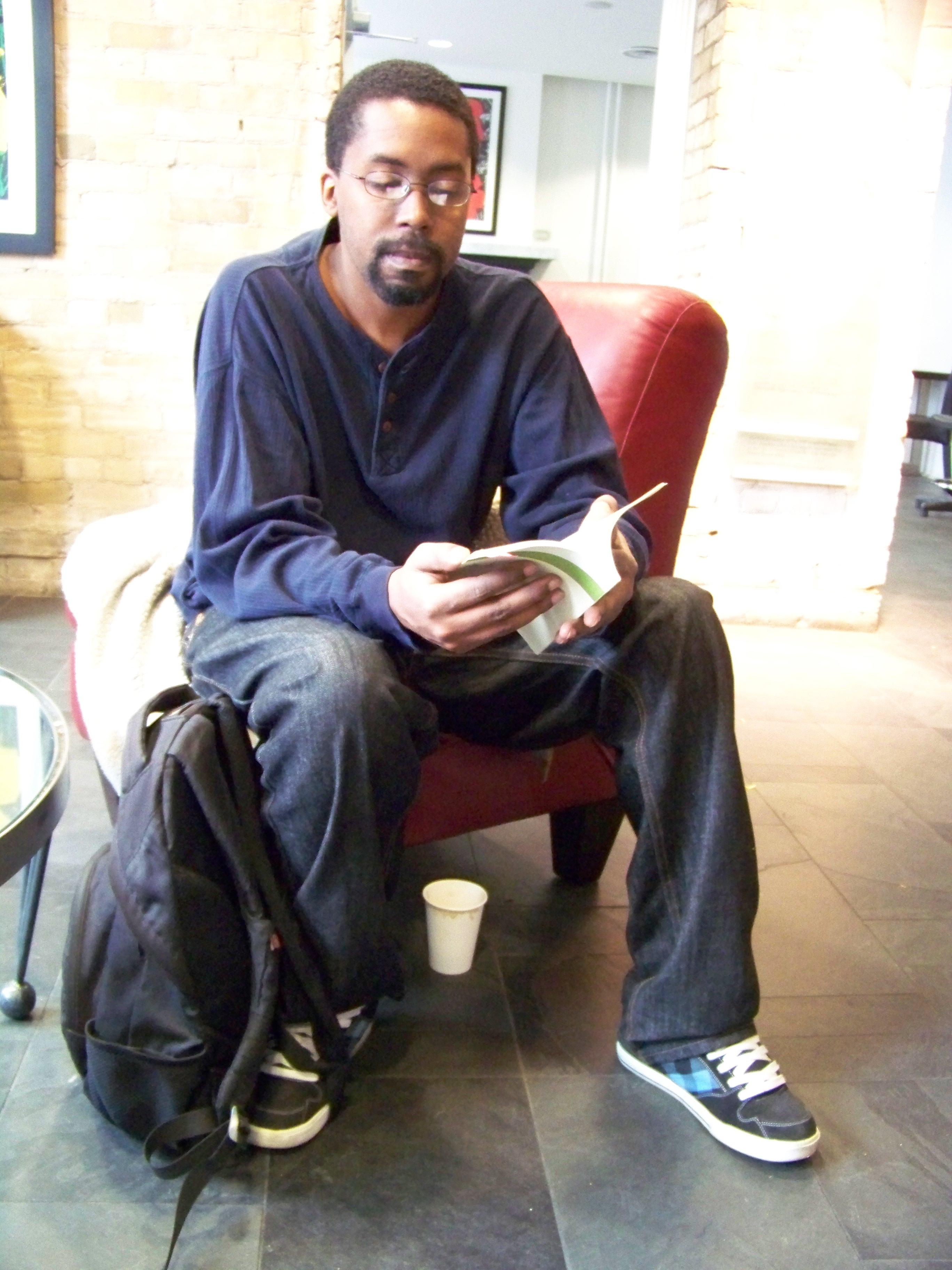
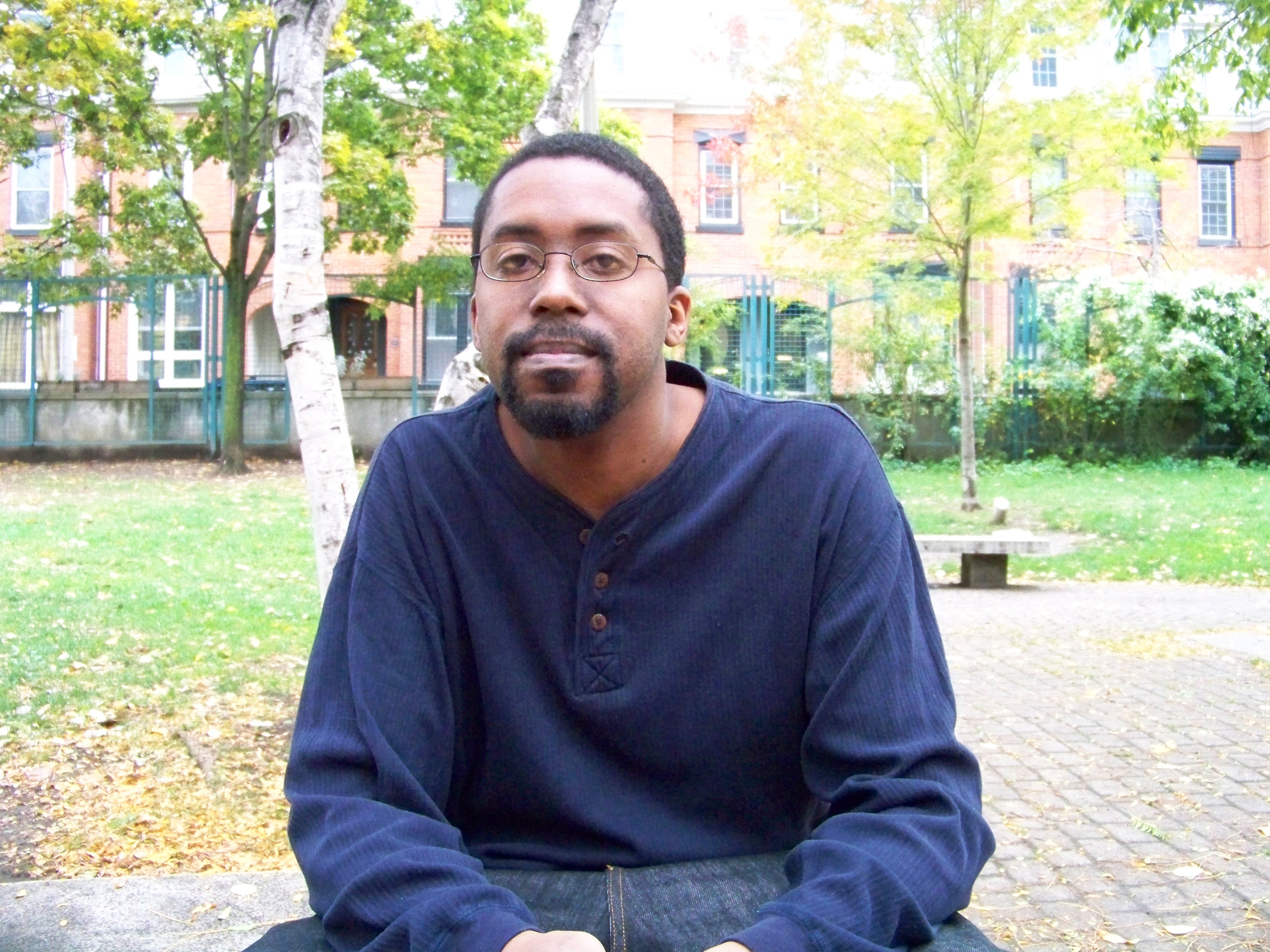
Dane Swan was born and raised in Bermuda to a Bermudian father and Jamaican mother. Visiting family involved trips to small villages in Jamaica and big cities like New York. The great story-tellers he heard in these communities were his only literary professors. At seventeen, Dane moved to Canada with his brother to further their education.
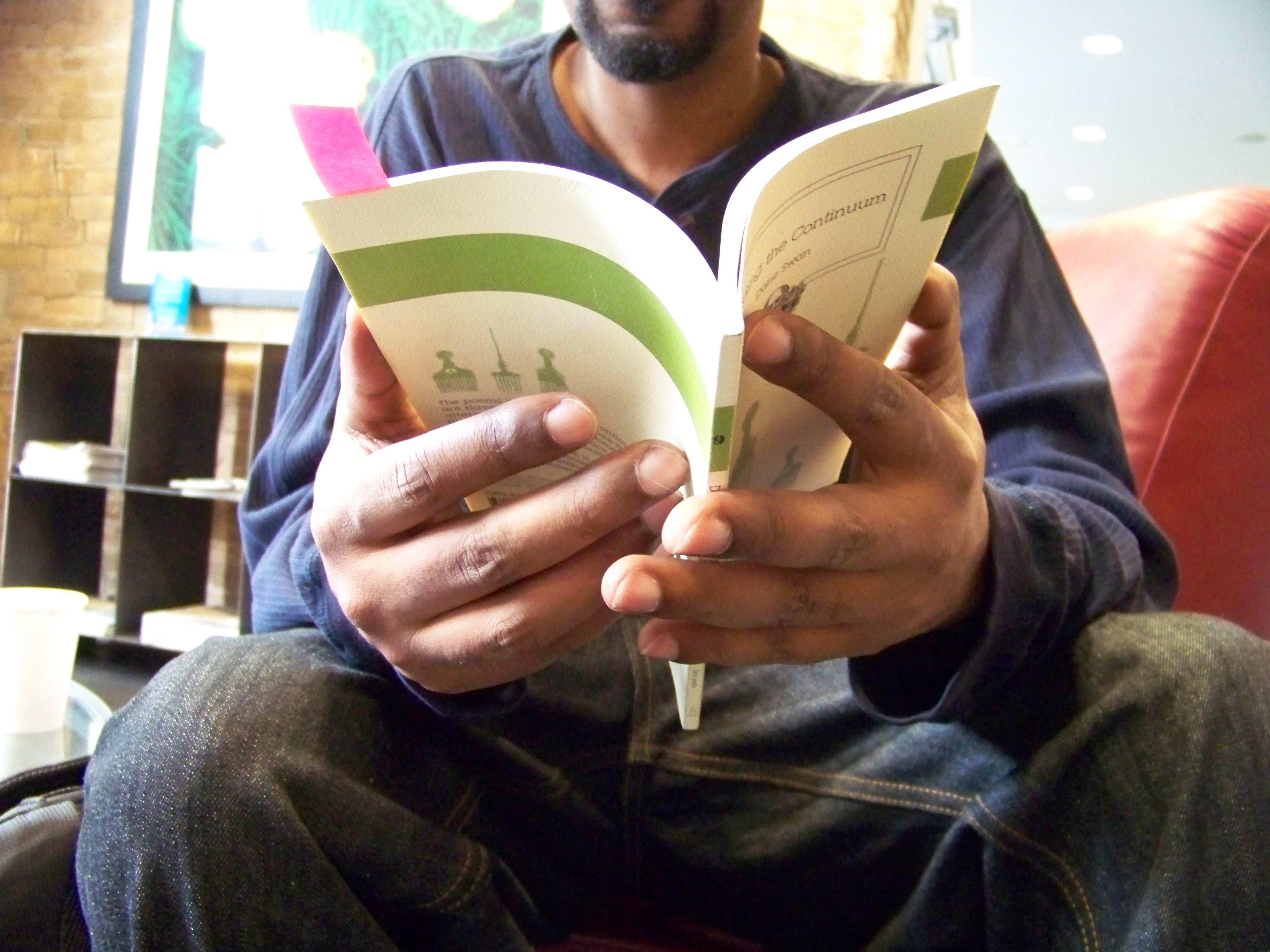
Dane’s poetry can be found on CD, 12” Vinyl, MP3, in anthologies and in poetry reviews. This is his first full-length collection of poetry in print: Bending The Continuum.
BCP: Why poetry?
DS: Why not poetry? I consider myself a writer rather than a poet to be honest. From my perspective I find that poetry is the most demanding genre. The author has numerous limitations in poetry, as well as numerous freedoms other genres don’t accept. Finding the perfect balance is always an addictive challenge.
BCP: What is your writing process?
DS: Usually I’ll think about a subject, or inspiration for a few days. If needed, I’ll write a note on my cell phone, or on paper. By the time I sit down with something it’s usually just a matter of putting the poem to page, or computer, and editing.
BCP: What writers have been the biggest influence on you?
DS: Honestly, my greatest influence is myself. As a writer it’s part of the job to read others, but I’m always amazed when I write something that impresses me. I become afraid that I’ll never write a poem up to that standard, and try to write another poem that puts pressure on me to improve more. As far as poets I recommend to others, I find that I recommend particular books, not poets– the modern poet is pretty inconsistent. I guess Wanda Coleman, Franz Wright, from Canada Len Gasparini. I’m not her biggest fan, but Dionne Brand‘s Land to Light On, may be the only perfect book of modern Canadian literature I’ve read. It’s brilliant. If you go into that book with no preconceived notions, and question how amazing that book is, you’re not a writer.
Non poets is a lot easier: Austin Clarke, Hubert Selby, a long list of genre authors like Tolkien and PK Dick. Rappers like Tupac, and Rakim. Not to forget Bob Marley, Peter Tosh, and a long list of reggae artists as well.
BCP: In your interview on One Voice Radio you talked about the hard life that a poet lives. What keeps you going?
DS: I honestly couldn’t tell you. I guess a firm belief that God gave me one talent, and it wasn’t to find stable relationships that create responsibilities. I can’t even honestly say that I enjoy writing. I’ve tried to quit numerous times, but when things around me fall apart the one thing I can grasp on to is the talent to write work that other people can relate to, and enjoy.
BCP: Is there a preferred style of poetry you like to write?
DS: Genre doesn’t exist. There are different ways you have to manipulate your work so that it fits a medium. Medium exists. For me writing is writing, I just shape my work for the audience I want to reach.
BCP: You’ve talked about Canada not being very supportive of artists of colour. Can you elaborate?
DS: Gladly. I’ve lived in Canada 18 years (off and on). In the late 90’s early 2000’s I hosted one of Canada’s first All Canadian Hip Hop Campus Radio shows, Lunchbreak, on CKCU FM in Ottawa. While hosting that show– and the handful years after I moved to Toronto– I witnessed the majority of “non-white” rappers who I built relationships with move to the US. Not to become superstars, but merely to have a fair chance at doing what they loved. While the worst, least talented bands in genres that were considered “white” easily were given grants, record deals they didn’t deserve, distribution deals, etc., bankable talents in urban genres were forced to ply their trade in the US. A few years ago, I was chatting with a Juno nominated artist who complained to me that this nonsense is still going on.
Sadly, the brief time that I’ve spent as a part of Canada’s literary community I’m seeing the same thing. If you don’t have a name, and you’re “black”, good luck getting that second book published. My best guess is that half of the black poets who came up from Toronto around the time I joined the community currently reside in the US, or are no longer a part of the community. I’m talking brilliant writers who ply their trade elsewhere because they feel ostracized by the funding system, the publishers, the academia. Organizations like “the League” perpetuate it with Draconian definitions of poetry, yet control of government dollars. Certain publishers “support” one poet of color a year to fit into multi-cultural boxes for funding. It’s sad. I have a hope that one day we will be able to read true Can-lit. Not just poems about the open plains, but poetry that effortlessly, and authentically speaks of the various cultures that Canada is built on. Unless things significantly change, the poets who could write those works, whether they are Black, white, Aboriginal, Asian, Hispanic, etc., will be so alienated by the environment that they will adopt another home, and be championed there rather than here.
BCP: Amongst many poets there seems to be a divide between those who identify as “book poets” and those who identify as “spoken word poets”. You have a book and you used to run a spoken word night. What are your thoughts on the riff between writers of both styles? Were you ever conflicted at some point? Do you have a preference?
DS: It’s all nonsense. We all have our particular tastes; but do I get angry because you like “chocolate-chocolate chip” ice cream, and I like “cookies n cream”? The conflict isn’t between fictional genres. The conflict is created because of the limited government funding that certain organizations are dependent on. Personally, if I ran a poetry organization, and I was losing money to “Slam” poetry organizations because the government saw “Slam” as a more inclusive, young, exciting genre, and politically wanted to be seen as supporting youth, you know what I’d do? I would invite “Slam” poets into my organization. That’s how the real world works. Segments of the literary community have no sense of how the real world works. Instead, they would rather alienate potential members of their scene, blacklist people, and write uneducated diatribes without caring for debate. Why? Because they deem that the easiest way to maintain access to what little money (private and government) is available for poets.
BCP: I’ve noticed that most poetry readings have very few people come out to support and listen. “Fifteen people is a good audience” is a phrase and belief in the traditional, book poetry scene. I attended one of your spoken word events and it was packed! What do you think is the difference?
DS: Marketing helps. Having features who connect with the audience helps (spoken word may have an advantage at that). It’s tough. Once you lose momentum with a series you become forced to actually spend money on big name features. That said, paying features a fair share helps. I know I’ve been asked to read at events where there’s a cover but none of the poets are paid. Do you think I would invite anyone to an event like that? The best promoters often are the poets themselves. If the poets aren’t pushing the event, and are just showing up the event will fail no matter the genre.
DS: 3 months to write, a year to edit. Bending The Continuum was published a year earlier than I planned. I had written the first third, and was looking for a chapbook publisher for it. I also had a handful of poems published in a chapbook called Narcotics//Flora by Burning Effigy Press. I thought I was one, maybe two more chapbooks away from having enough material for the manuscript.
I did a feature at the Artbar Reading Series, impressed Elana (my editor), and received a phone call the next week. I then had to write a manuscript in a month so that I could get my contract (What an intense month). To me, the editing process was more important. I’m an ornery person sometimes, but the difference between a writer, and a hobbyist is the ability to take criticism. It was tough, but I learned a lot. Probably too much. My next editor and I are destined to debate things.
DS: When Adebe interviewed me (for Sway Magazine’s website) just before the book launched I explained this, but if it’s okay I would love to go more in depth. When I was writing “Bending” a poet essentially proclaimed war on spoken-word poetry locally. The poets in my home “genre” who tried to defend our “genre” were too emotional, too passionate (as should be expected of spoken-word artists). I wanted to defend our good name. “Bending” is a shot across the bow. It’s me stating, “Yes we may be over-passionate-performance poets, but we are still poets of merit.” I also felt at the time that black poets in the literary community were being type caste. I wanted to write something that would challenge the people creating that poisonous environment. I wanted to write an important book. Not in the, “get shortlisted” way, but in a way that opened doors for future poets who try to get published.
The thing that amazed me is how quickly Elana got what I was trying to do. At our first meeting she basically stated what my intent for the manuscript was. I was blown away. That’s why the name is Bending the Continuum, the original name for the manuscript was, “More than the Eclipse,” but Elana suggested “Bending,” it fit what I was trying say.
BCP: You don’t hide from ‘touchy subjects’ such as race and class like many poets tend to do. What has been the overall response to that?
DS: I’m a black person living in Canada. Racism exists. The one person I ever asked to marry me had a racist mother. If racism didn’t exist I would be a married lawyer with a billion kids living in Belleville, Ontario. One of her (the ex-fiance) friends was a woman who had never had a black friend. She asked me one day if it was okay if she asked random questions about black people that may appear racist, but were actually a product of just not knowing any black people. I said, “Yes, ask away.” I quickly realized that the real way to combat racism isn’t to be polite, or fear hurting peoples’ feelings, it’s to have non-judgmental open dialogue. I can’t say that I have experienced negative responses because that is part of my poetry. If anything, it’s led to more open dialogue– and that’s what I want.
Class? Yes I’m poor, but I have a cousin who was knighted by the Queen of England — he’s silly rich. I remember when my parents struggled to get by, and had three kids in a one bedroom apartment back in Bermuda; but I also remember when my mom got paid over $100,000.00 a year for a handful of years. Class is fluid. Being rich, or poor has nothing to do with the quality of person, or friend you can be. Yet for some reason people like to place shame on being poor, or wealth. Who cares. Are you happy? Is the reason you’re not happy connected to the fact that all the people you know are of the same class, and have small minds? Then get out there, and meet new people. That’s pretty much my opinion on class.
BCP: Here is an excerpt from a racist comment I did not publish on my site:
“…you’re a racial minority poet who can’t shut up about the fact that you’re a racial minority and how society “makes you feel”. Which basically means that your so-called poetry is completely indistinguishable from every other black/latino/brown/whatever poet in this country who talks about nothing except their “identity”.”
Is this something you have faced because of the poems you write that touch on race?
DS: In everyday life: sure. As a poet? No. I’m all about open dialogue. Not a big fan of “white” guilt so I try my best not to insinuate it in my work. That said, being “black” has a very distinct definition. By definition we are a race that does not exist. We are not Africans– that part of our lineage was stolen. We are not European– the rapes, and mutually accepted mixed race relationships of our ancestors never existed– yet the culture we created to survive in an environment where we are outcasts is widely considered the culture of the society we exist in. What is the West without our music, dance, art? How much of our culture is passed off as “white” because we are ignorant of our own past? Don’t get it twisted, there are “white-black” people to. The best part of being “black” is being part of a race with an open door policy. If you are willing to take the hardships, you are welcome to the glory (Just avoid that N word).
As far as “identity” defined by the author of that letter, I would politely point out that a large amount of “white” poets in this country often imitate other “white” poets. Should I get upset when I go to a reading and another “white” poet who lives in an urban area proclaims the beauty of a lake he’s never been to while he sips a latte? A lot of poets are published because of said imitation. I don’t think repetition of subject is a uniquely “minority” poet issue. Yes, there are more ways to skin a cat, but I’ve been egged, physically attacked, had death threats via phone for being black– a little email wouldn’t bother me. I think the email brings up two things:
1) The ignorance of the author in the repetition of themes by his “race’s” literature.
2) If I received said email I would also step back, and make sure my work was nuanced. I would also ask if that was the response I wanted. It’s a good sign if people passionately hate your work, but are you satisfied with the rationale?
BCP: What are you working on now?
DS: I have a manuscript of poetry inspired by Charles Mingus in Guernica‘s hands, a Novella exploring the hours surrounding a fictional bizarre assault floating around to various publishers, and I’m starting to put together the framework for a novel as well. Always making music for fun with my buddy Dan D’Onorio, and a workshop on writing and social justice that myself and Patrick Connors are struggling to get completed. Almost forgot, I have work being published/released by my good friends in France the Paris Collecitive, another poem is getting published with the super-cool zine Chrysalis and one of my favorite post-modern poems is getting published by awesome art/multimedia supporters Papirmasse. Mona “Faith” Moussa, and I are also trying to put together a project but she’s a busy touring poet– who knows what will happen with that. Easiest way to keep track is join my Fanpage on Facebook, follow me @danejahras or visit my blog DaneSwan-writer.blogspot.com every once in a while, and check the columns for updates.
BCP: What advice do you have for young poets out there?
DS: Don’t become a poet. If by mistake you become a poet:
1. I am sorry.
2. Read.
3. Meet people who are different than you, and make an honest effort to get to know them.
4. Read.
5. Find your own voice.
6. Accept rejection– writing is rejection.
7. You haven’t read enough.
8. Accept more rejection.
9. Write, you are a writer.
10. Accept criticism as much as rejection, use that criticism to learn how to edit your work.
11. Read more, and if you STILL want to be a poet my sincere apology.
BCP: Thanks for writing a great collection of poems!
DS: You’re welcome. It’s a pleasure writing work that people enjoy.
Tune into Black Coffee Poet Friday February 8, 2013 for a video of Dane Swan reading from Bending The Continuum.
Meeting Dane Swan before absorbing his book gave me an idea of what I was going to be reading: well written poems that didn’t pull punches.
The Pugilist is an example of this. Using boxing imagery Swan writes of this fight called life, and shows the reader how everyone is in the ring and the referee isn’t always fair.
There’s no place called paradise—just graces in time, writes Swan. The ebbs and flows of a boxing match are the analogies Swan uses to illustrate the highs and lows of a person’s time on earth:
arms raised in victory
losses while dazed and confused
remembering the good times via story
returning to the gym
You could say Swan is the pugilist, as is every poet. Victory coming in the way of being published; losses via rejection letters; memories re-lived while giving a reading or talking to a young poet; the gym being the page and how a writer always returns to it.
The written jabs continue in Being Black. Swan is not beating the reader up; rather, he’s getting their attention, word by word hitting their chin: look here, pay attention, this is my story and the story of many who look like me.
Unemployment, police harassment, lynching, and being treated worse than a sex offender because of the colour of his skin, Swan is pointing out realities that some people label exaggeration and imagination. But the strength of the poem, and its challenge to racism, is when Swan points to the subtleties that are the core of Canadian racism: making someone invisible:
Being introduced five times
to someone, still
they pretend
not to know you.
I feel Swan. To me he’s talking about some people inside Toronto’s literati. You could do a reading for someone (or a group), be published in a journal, or be interviewed, many times to fill in their ‘diversity’ quota, or Aboriginal person or person of colour spot, and then be ignored the next day on the street.
It happens. It’s happened to me!
Treated as ‘other’ and “outsider” is a horrible feeling. Swan mixes in personal history, politics, and activism in this poem. He shows you what many don’t see, never will see, but need to see, at least via words. All is right especially Swan’s clever and subtle definition of “home” via the use of quotations.
Being black is police harassment,
not getting jobs. An outsider
in your “home” land.
As non First Nations peoples this is not our “home”. We are treated as outsiders by the real outsiders who do so to falsely authenticate their ‘right’ to stolen land and deny their history, and present, of being outsiders. This is not their home, my home, or Swan’s home. And it’s definitely not the place of these outsiders to treat us like we don’t belong.
The way the first outsiders practice subtle racism Swan practices subtle solidarity with First Nations peoples via his use of quotations.
Swan’s craft is tight, his politics are right, and his poems take flight. He takes you on a journey as he writes about family, drink, discrimination, love, spirituality, and the most important thing in his life: poetry. Swan is a word warrior and he’s fighting the good fight.
Bending the Continuum is a short collection. But don’t be fooled, as they say, “Dynamite comes in small packages!”
Tune into Black Coffee Poet Wednesday February 6, 2013 for an inclusive interview with Dane Swan.
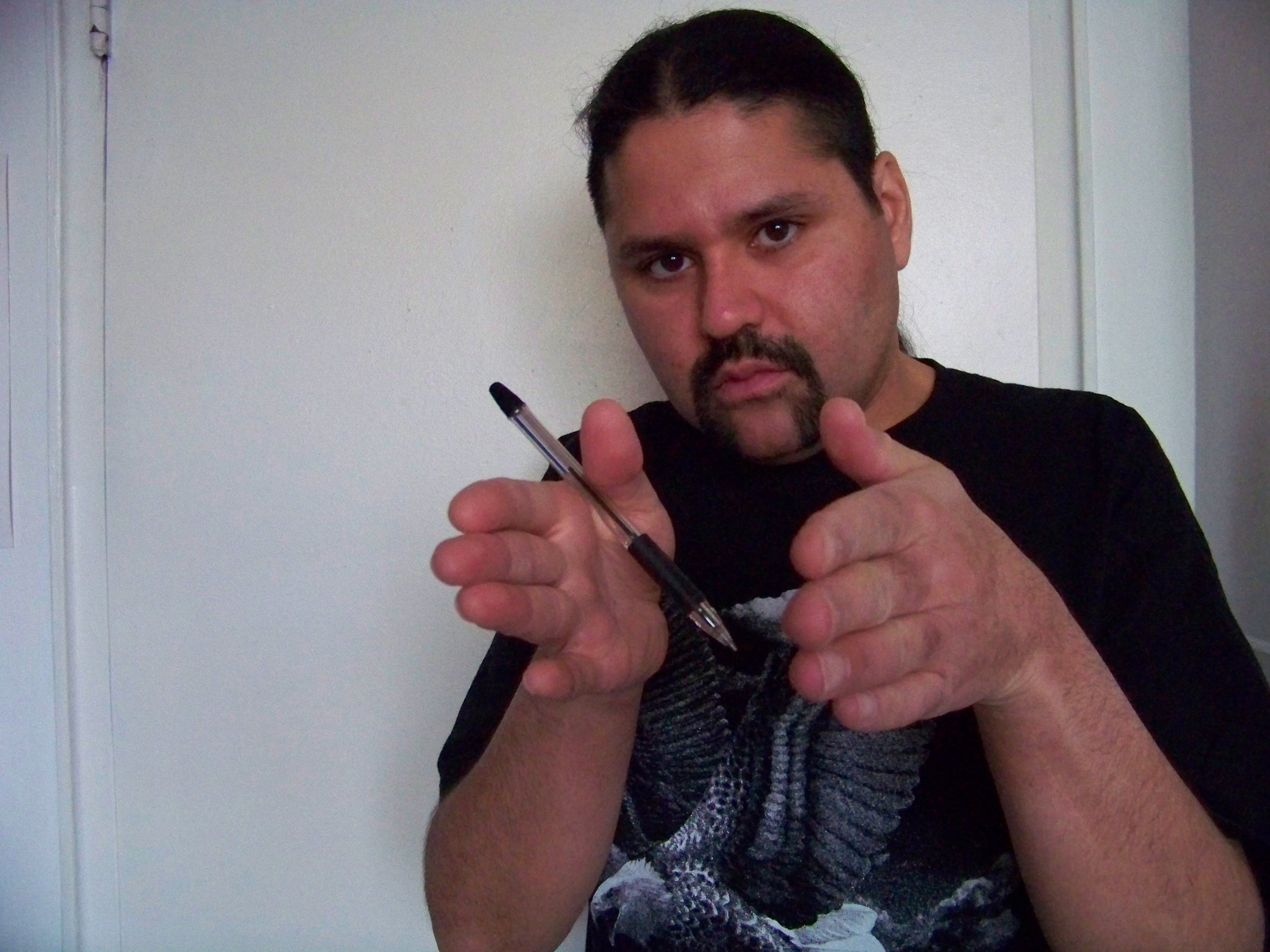
All videos are shot by me and stick to my vision which is to highlight and give exposure to peoples, writers, and issues left out of mainstream media and the publishing world: Aboriginal, Of Colour, LGBTQ, Disabled, Sex Worker…
Do you have something to say about activism, academia, blackcoffeepoet.com, current events, literature, life, or politics? Is there something on your mind that mainstream media is not covering? Have you written something that has not found a home?
Write a Letter to Black Coffee Poet or an Opinion Editorial!
I welcome writing on:
Decolonization
Book Culture
Feminism
Local and International Politics
LGBTQ Life
Spirituality
and so much more…
There is no need to pitch a Letter or Op-Ed as they are not articles. Keep in mind that not all Letters and Op-Eds submitted will be published, and they are their own genres of writing to be written with care, respect, and thoughtfulness like any other genre.
If you are new to blackcoffeepoet.com read the publication and find out what it’s about before submitting. Here at three resources for that: ABOUT and Black Coffee Poet and Popular Posts.
Submit toblackcoffeepoet@gmail.com with Letter to BCP or Opinion Editorial in the subject line.
Submissions must include full name, phone number, and address of sender. Home addresses and phone numbers will not be published. I reserve the right to edit letters and opinion editorials. Letters run from 50 to 30o words. Opinion Editorials run from 700 to 800 words. Due to the volume of submissions I can not acknowledge or publish every submission.
Thank you for your support, time, and consideration.
Sometimes Community Is About Knowing When To Say “No”
By Jorge Antonio Vallejos
In 2005 author Rick Moody said something that stuck with me. He shared his disappointment with some of his fellow New York writers who were trying to get the spotlight after 9/11. The media was scrambling for quotes from well-known New York City residents about the attack. Moody declined.
His sentiments were (I’m paraphrasing), “I’m an author. I write books. I know books. I don’t have to comment on everything.”
Moody felt that because he lived in New York didn’t mean he had anything of real substance to say about 9/11. Plus, he was not in any of the towers that crumbled, and he hadn’t lost anyone in the towers; really, although he could see the smoke and havoc from his balcony, he was far removed. Let those closely affected comment. Let those who had gotten involved speak.
Not everyone thinks like Moody.
Being a writer in a community that fights different forms of oppression in this colonialist society sees me being asked to speak at different places from time to time.
Sometimes I say, “Yes.”
Sometimes I say, “No.”
In my case it’s more than having the skill, will, access and privilege of writing that has some people ask me to speak. I’m of colour, outspoken, well informed on certain topics, and in some circles I’m well known.
Also, being Brown with long black hair, and having so many Indigenous friends from different nations, has many folk assume that I’m a First Nations person.
“I thought you were a full blooded Anishinaabe,” said my Saulteaux friend Verne about the first time he saw me.
“I’m Spanish-naabe,” I said. All of us in the room laughed.
I’m Indigenous.
I’m mixed race.
I’m someone who was born here but I’m not from here.
People with good politics will understand the line above. I’m not First Nations, this is not my land, I’m a guest here on the stolen land now called Canada.
So when I’m asked to speak on topics about First Nations peoples I always ask if the organization has looked for First Nations speakers. I live in Toronto. Some Native people call Toronto “The Big Smoke” for a reason: there are 80 000 Native people who live here. Some Native people also jokingly call Toronto “the biggest reserve in Canada.”
Years ago Ojibwe professor Jean Paul Restoule asked me to give a talk to his class about Native Spirituality. At the time I was going to sweat lodge ceremonies every full moon, and I had been doing so for years. I was (and still am) part of a circle of men who do ceremony.
I was honoured but I said, “No.”
I told Jean Paul that although I was capable of doing the talk I did not feel comfortable doing it. With so many Native people in Toronto who practice traditional ways I thought he should ask someone from the Native community.
Yes, I am Indigenous. Yes, I was (am) part of a circle. Yes, I was confident in my speaking skills and knowledge. No, it’s not my place to do such a talk, especially since Toronto has a wealth of Native Elders, speakers, and people who live traditionally.
Similarly, yesterday, I got an email asking me to speak at an event this coming Friday night:
Are you able to speak @ Idle No More concert friday night?
Native youth playing @ Idle No More fundraiser & wanted a speaker. Thought of you immediately. Fri. night @ Hard Rock Cafe. Are you free or willing?
I responded:
I’m not free.
To be honest, I also think there are people much better suited to talk about Idle No More. I’ve not written about it at all cause I think others are doing such a great job.
I haven’t been to any of the protests due to sickness. And like I stated above, and in my last post about being in community not competition, there are many people who’ve invested time and energy into Idle No More and I’m not one of them. Big media to small blogs are covering Idle No More; I focus on literature by writers ignored by the mainstream (Native, of colour, queer…) and mix my politics in.
Idle No More is a movement. There is no leader or face to the movement regardless of what mainstream media says and who they highlight. Thousands of people are involved; again, I’ve not been one of them.
I was honoured that a person whose politics I respect, and who works for a Native organization, asked me to speak. But it wasn’t my place.
Could I have done my research on Idle No More and given a good talk? Yes.
Would it be right? No.
Many of the causes I am involved in are connected to Idle No More but they are not Idle No More:
A similar but different situation happened in October 2012. The awesome group Feminsits Of Colour Organize out of York University asked me to speak about the problems around the December 6th Vigil.
I was not only hounoured, I said, “Yes.”
For years I’ve attended the problematic vigil in Toronto with the yellow sign you see above. I’ve also written about it for different publications and done entire weeks on the problems of December 6th on my website. It’s come to the point where December 6th organizers now point me out in the crowd during the vigil: tokenism.
I shared the stage with activists Zainab Amadahy and Kim Crosby this past December 6th as part of a candlelight discussion called Remembering Otherwise: Centring Race in Gender Advocacy. I felt comfortable doing it. I felt I had a place there. I had done much work before that date, and I’ll continue to do more.
That wasn’t the case with this weeks speaking request.
Sometimes community is about knowing when to say, “No.”
I’ve been running my website for two years and five months. My concept in terms of how I highlight writers is original: review, interview, video. It’s a whole week on a writer. How I weave my politics in to the site is cool but other writers do the same.
Many other writers.
And sometimes the stuff that I post compliments and overlaps with what other writers post. We strengthen our causes and learn from each other.
Yesterday, a friend turned new blogger wrote me an email that was surprising and nice:
Hey sweets,
heads up on direction that blog post from last week is taking….looks like I’ll be doing a regular (weekly) go at it so I wanted to touch base with you. I just got a domain on Dreamhost and got WordPress up on it. I want to make sure before I give this a go that we’re on the same page and that I don’t tread on any toes because we share so many intersecting commonalities….thoughts? I want to go in the right direction and be mindful of the wonderful work that is already out there…
Both of us are of colour and have lefty politics. We care about many of the same issues:
Did you see my last VLOG: Write Your Path. Check it and SHARE.
We should do coffee as fellow bloggers and share ideas. If you have any questions I can share what I know, and vice versa.
Hugs,
BCP
She responded:
I would love to have coffee and talk! Better yet, give me a few days to kick this flu and come for dinner so I can send you off with some books, as promised…
There are so many things to write about. Just because we may highlight the same issues does not mean we are the same people. Even though we have similar politics we approach things from different angles. We all have our own writing style and our own ideas about how to do things.
And not everything will overlap. For example, I have not written anything on the Idle No More movement. Everyone is doing that from big media to little known blogs. And many are doing a much better job than I would as their hearts are solely focused on the issue. I’m focused on literature with lots of politics mixed in. My site can be one that people view before or after they read about Idle No More and the many other movements and topics I do not write about.
There’s room for all of us. We may have visions for the same destination such as ending oppression but we’re all on our own paths.
She ended our correspondence with:
I like the ‘Community, not competition’ sentiment… I share it whole-heartedly…

 Reading and reviewing Dane Swan’s book Bending The Continuum was a pleasure.


 Black Coffee Poet